Bio 1110 Exam 1 (based on the book)
 Call Kai
 Learn
Learn Practice Test
 Spaced Repetition
 Match
Match Flashcards
 Knowt Play
1/188

There's no tags or description
Looks like no tags are added yet.
Name | Mastery | Learn | Test | Matching | Spaced | Call with Kai | Chat |
|---|
No analytics yet
Send a link to your students to track their progress
189 Terms
Principle 1: cells are the simplest units of life
Organism: can be used to term all living things (maintain internal order seperate from teh environment)
Cell theory:
All living things are composed of one or more cell (unicellular: one cell and multicellular: multiple cells)
cells are the smallest units of life
new cells come from pre-existing cells by cell division
Principle 2: living organisms use energy and are composed of matter
The maintence of organization requires energy; therefore, all living things auire and use energy from their enviornment to maintain internal order.
cellular respiration: the release of energy through chemical reations that breakdown energy-yielding nutrients.
Metabolism: energy used to synthesis the components that make up individual cells and living organisms. involved in the breakdown and synthesis of cellular molecules.
photosynthesis: plants, algae, and certain bacteria harness light energy to produce their own nutrients.
Principle 3: living organisms interact with their enviornment
all organisms must respond and interact to changes in their enviornment an dother organisms they may encounter.
Ex: many species develop thicker coatsof fur to protect themselves in winter
principle 4: living organisms maintain homeostasis
homeostasis: living organisms regulate their bodies to maintain relatively stable internal conditions
all organisms continually regulate their cellular metabolism so that nutrient molecules are used at an apptopriate rate and new cellular componenets are synthesized when they are needed.
princple 5: the genetic material provides a blueprint that allows organisms to grow, develop, and reporduce
to sustain life from one generation to the next organisms must reproduce
off spring tend to have very similar characteristics to their parents becuase all organisms contain genetic material composed of deoxyribonucleic acid (DNA), which provides a blueprint for the organization, development, and function of living things
DNA is heritable so offspring get inherit DNA from their parents
Genes: are a segment of DNA that govern the characteristics, or traits of organisms. They are transcribed as mRNA or messanger RNA, in which they are then translated into a polypeptide ith a specific amino acid sequence.
protein: is composed of one or more polypepetides, and tehy are largly responsible for traits in living organisms.
genome: entire genetic makeup of an organism
principle 6: population of organisms evolve from one generationb to the next and are related by an evolutionary history
Evolution or biological evoltion: heritable change in a population of organisms from generation to generation, which cause populations to be better adapted to the enviornment.
We also all share a common ancestry
principle 7: the structural features of living organisms determine their functions
structure determines function pertians to all biological organisms
ex: webbed feet in ducks helps them swim
principle 8: New properties of life emerge from complex interactions
Emergent properties: when individual componenets of an organism interact with each other or with the external enviornment to create novel structures and functions,
principle 9: biology is an experimental science
biologist gather additional information to form a hypothesis, which is proposed explanation for a natural phenomenon, and then they run experiments to test teh validity.
principle 10: biology is a quantitative science
biologist analyze data in a quantitative way and use mathematical apporches to make predictions
principle 11: biologists use models and simulations to test experimental predictions and convey their ideas
Scientific model: is a conceptual, mathmatical,or physical depiction of a real world phenomeon
principle 12: biology affects our society
the works of biologists have far-reaching effects on our society
ex: insulin
living organisms are studied at different levels of orgaization
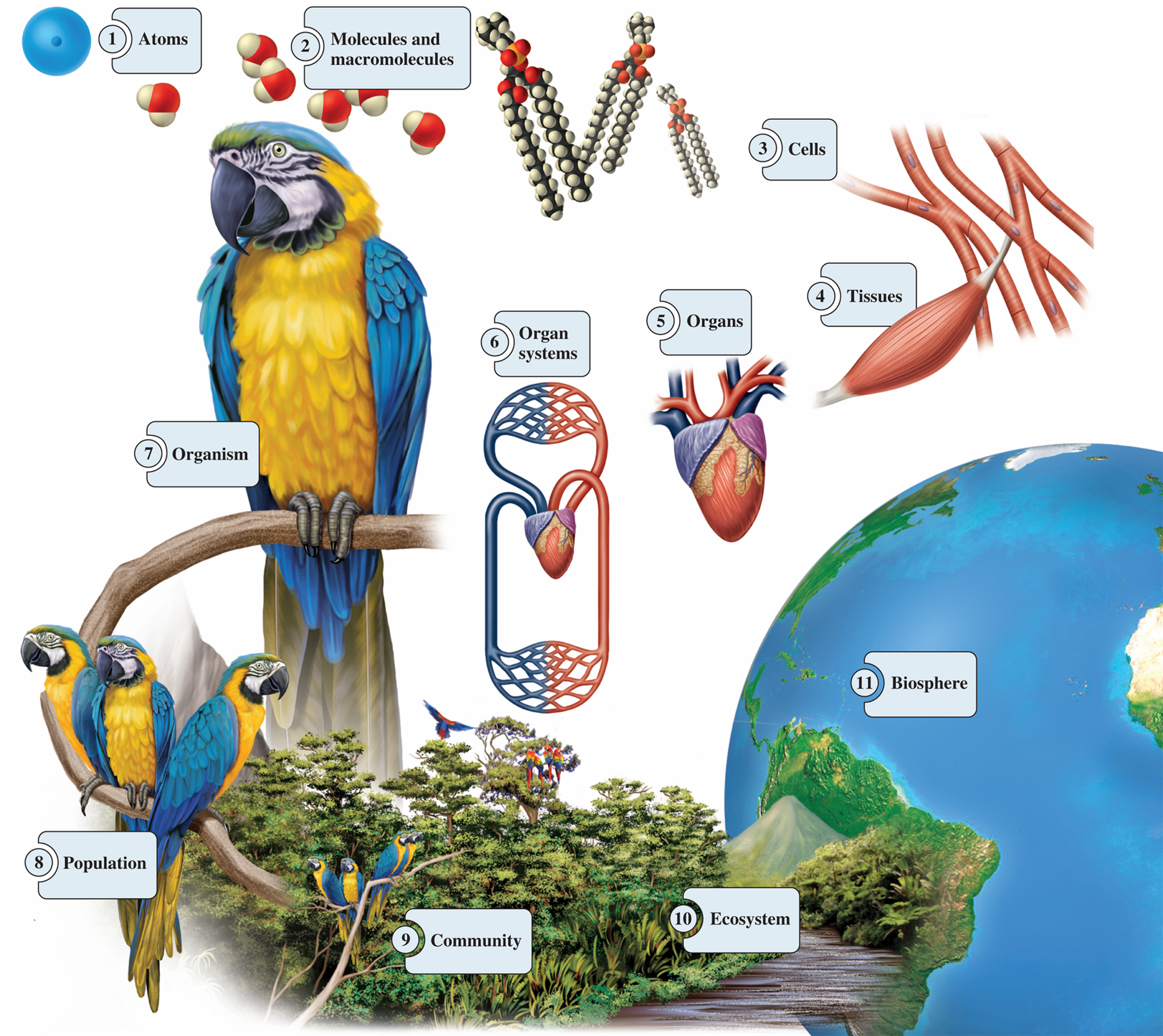
molecules and macromolecules
atoms bond together to form molecules. many smaller molecules can bond together to form large polymers called macromolecules.
Exapmles of macromolecules: carbohydrates, protiens, and nucleic acids
hypothesis vs. prediction
Hypothesis: is a proposed explination fro a natural phenomenon.
Ex: maple tress drop their leaves in autumn becuas ethe shortened amount of daylight
Prediction: expected outcomes that can be shown to be correct or incoorect. Should be testable (hypothesis can be shown to be consistent or inconsistent with data that are ibtained via experimentation.
also can be faslifiable: show to be incorrect by additional observations or experimentation
theory
is a broad explination of some aspect of the natural world that is substained by a large body of evidence.
two key attributes of a scientific theory
constistency with a vast amount of know data
the ability to make many correct predictions
hypothesis testing
observations are made regarding a natural phenomenon
these observations lead to a hypothesis that tries to explain the phenomenon. A useful hypothesus is one that is testable because it makes specific predictions
experimentation is conducted to dtermin eif the predictions are correct
the data from the experiment are analyzed
the hypotheis is consideredd to be consistent with the data or it is rejected

well designed experiment
many experiments need a control group (not subject to one particular variable) and an experimental group (sample has a variation that doesn’t occur in the control group)
need a common form od analysis to determine if the data collected from the two groups is truly different
Valid experiments are repeatable (obtained results over multiple occasions)
features of living organisms
living organisms use energy and are composed of matter
the structural features of living organisms determine their functions
genetic materical provides a blueprint that allows organisms to develop, grow, and reporduce
new properties of life emerge from complex interactions
biologists use models and simulations to test emerimental predictions and convey their ideas
subatomic particles in an atom

modeling of a nitrogen atom

main elements in all living organisms
oxygen, carbon, hydrogen, nitrogen

covalent bonds
in which atoms share a pair of electrons, can occur between atoms whose outer shells are not full.
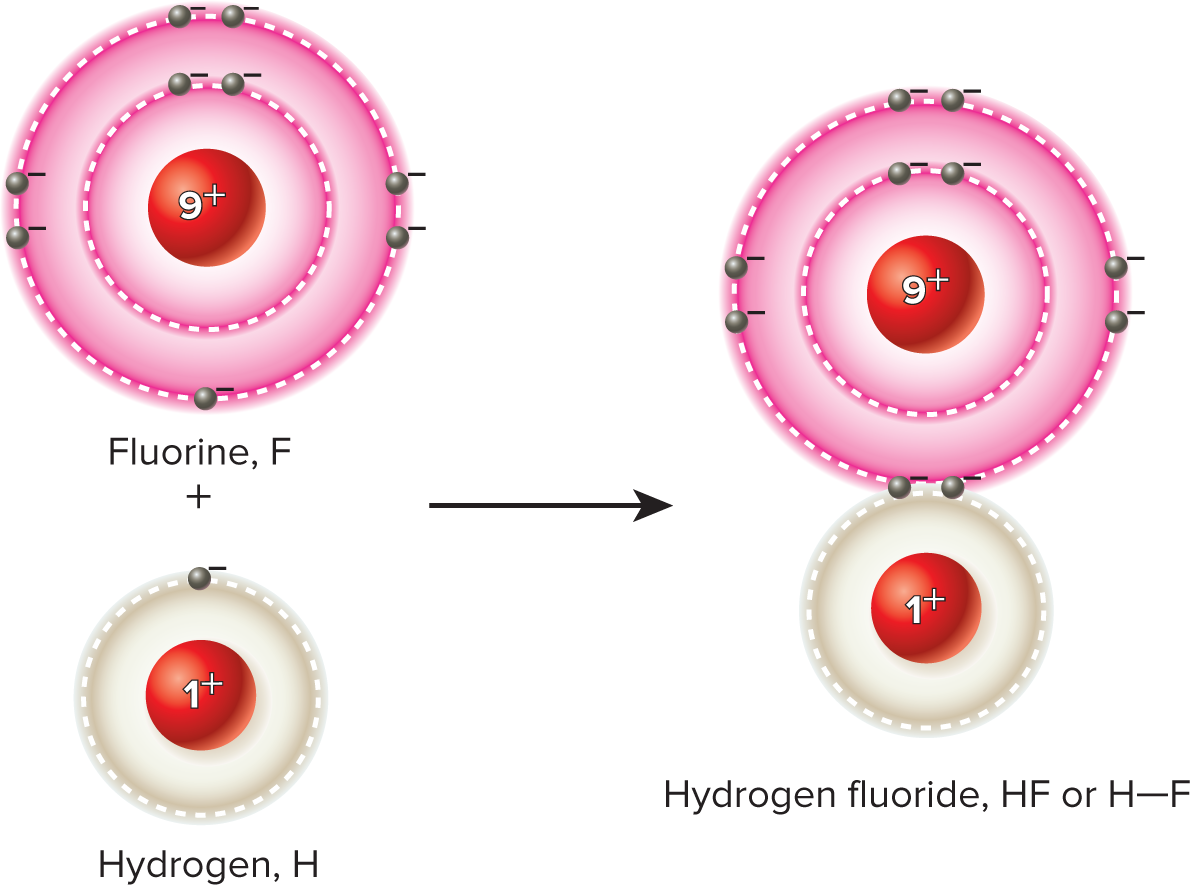
electronegativity
is a measure of an atoms abitilty to attract electrons in a bond with another atom

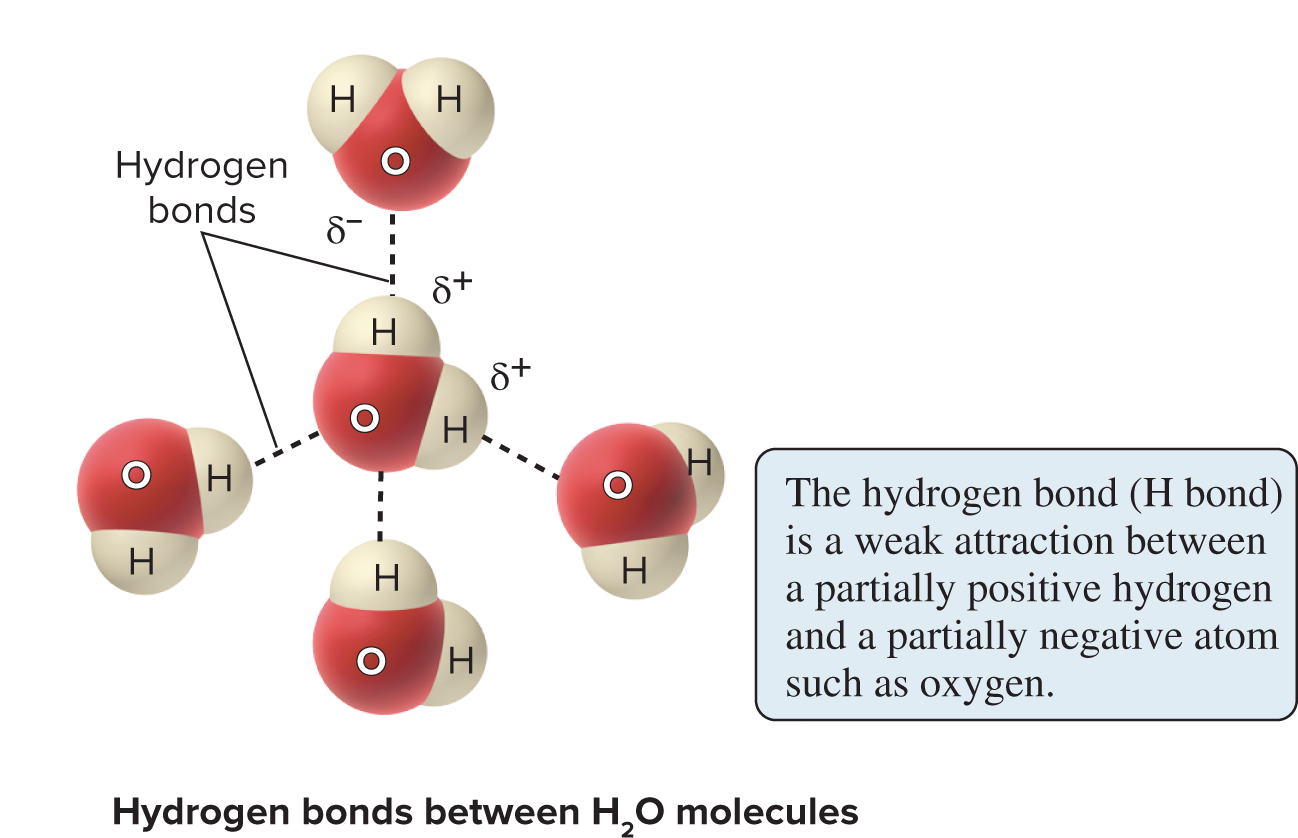
hydrogen bond
ability of one molecule to lossely associate with another molecule through a weak interaction.
form when a hydrogen atom in on epolar molecule becomes electrically attracted to an electronegative atom in another polar molecule.
cations vs. anions
cations: ions with a net positive hcarge
anions: ions with a net negative charge
ionic bond
when a cation bonds to an anion

solutes vs. solvents
solutes: substances that dissolve in liquid
solvents: the liquid that dissolves substances
for a substance to dissolve in water…
it must be eletrically attracted to the H2O molecules
the oxygen in water has a slight negative charge
the hydrogen in water has a slight positive charge

hydrophilic vs. hydrophobic
hydrophilic: “water loving” polar/ionic molecules that dissolve in water
hydrophobic: “water fearing” nonpolar molecules that don’t dissolve in water
amphipathic
molecules that have both hydrophilic and hydrophobic reagions
when mixed with water, long, amphipathic molecules may aggregate into spheres called micelles where the nonpolar ends move toward the interior and the polar/ionic ends facinging the exterior

heat of vaporization
heat required to vaporize 1 mol of any substance at its boiling point
heat of fusion
the amount of heat energy that must be withdrawn or released from a substance to cause it to change from the liquid to teh soild state.
specific heat
as the amount of heat energy required to raise the temperature of one gram of a substance by one degree celcius
heat capacity
the amount of heat energy required to raise the temperaute of an entire object other a particular amount of a substance
cohesion
the ability of like molecules to noncovalently bind to each other; the attraction of water molecules to each other
adhesion
ability of different molecules to be attracted to each other
water can adhere to surfaces to which it can hydrogen bond such as paper towels.
surface tension
is a measuer of the attraction between molecules at the surface of a liquid.
in the case of water, the attrictive force between hydrogen bonded water molecules at the interface between water an dair is what causes water to form droplets
pure water has the ability to dissociate to a very small extent into..
hydroxide ions (OH-) and hydgrogen ions (H+)
[H+] [OH-] = [10-7 M] [10-7 M] = 10-14 M
pH
the mathmatical expression of a solution’s hydgrogen ion (H+) concentration, defined as the negative logarithm to the base 10 of the H+ concentration
pH= -log10[H+]
![<p>the mathmatical expression of a solution’s hydgrogen ion (H+) concentration, defined as the negative logarithm to the base 10 of the H+ concentration </p><ul><li><p>pH= -log<sub>10</sub>[H+] </p></li></ul><p></p>](https://assets.knowt.com/user-attachments/c78907ad-05cb-4770-a549-2072c59d87f5.png)
orgainc molecules include:
lipids and macromolecules such as proteins, nuecleic acids, and some carbohydrates.
hydrocarbons
molecules that are predominantly or entirely C-H and C-C bonds, and are hydrophobic

biologically important functional groups that bond to carbon

dehydration (condensation) reation
two molecules from a covalent bond and become a single molecule, usually with the release of a small molecule of water.

hydrolysis reaction
polymers are broken down into their constituent monomers
water molecule is used to break, or lyse, the linkage that holds monomers together
Carbohydrates
Structure: the general formula is Cn(H2O)n, where n is a whole number.
Function: simple carbohydrtes are metabolized to make ATP, which is used as a source of energy. Larger carbohydrates, called polysaccharides, store energy or may play a structural role, as in plant cell walls. Some carbohydrates function as molecular tags, allowing recognition of specific cells and molecules.
Ex: simple sugars, such as glucose; larger polysaccharides, such as glycogen, starch, and cellulose
Lipids
Structure: lipids are nonpolar molecules that are primarily composed of carbon and hydrogen, with some oxygen.
Function: lipids are a key part of cell membranes and function as hormones and in energy storage; in animals, they act as insulators and shock absorbers
Ex: phospholipids, estrogen, testosterones, triglycerides
proteins
Structure: a polypeptide is a structural unit composed of a linear sequence of amino acids. A protein is a functional unit composed of one or more polypeptides.
Functions: proteins play a key role in cell structure and carry out a diverse array of cellular functions; for example, there are proteins involved with gene expression and regulation, motor protiens, cell-signaling proteins, metabolic enzymes, structural proteins, and transporters
Nucleic acids
Structure: a linear sequence of nucleotides; DNA is double stranded. RNA is single stranded but may have double stranded regions
Function: DNA stores genetic information in units called genes. RNA is made using DNA as a template and provides access to that information
Ex: DNA and RNA
what groups are found in certain carbohydrates?
amino (-NH2)
sulfate (-SO4-4)
monosaccharides
simplest carbohydrates
most common contains 5 carbon, called pentose, or 6 carbon called hexos
pentose: ribose and deoxyribose which are part of RNA and DNA molecules
hexoses: galactose, glucose, and fractose (they have the same chemical formula but are arranged differently so they are isomers)

glucose importance in the cell
very soluble in water and circulates in the bood or body fluids of animals, where it can be transported across cell membranes. Once inside the cell, glucose can be metabolized by enzymes into smaller molecules, thereby relesing energy
this energy is then used to produce ATP, which, in turn, dircetly powers a variety of cellular processes
disaccharides (two sugars)
monosaccharides linked together during dehydration reaction
sucrose (composed of glucose and fructose) is the major transporter of sugar in plants
fromed by glycosidic bond (dehydration reaction between two sugars)

polysaccharides
many monosaccharides are linked together to form long polymers
starch: found in plant cells
glycogen: present in certain types of animal cells
cellulose: found in the cell walls of plant cells
peptidoglycan: found in the cell walls of certain bacteria
chitin: found in cells walls of fungi and the exoskeletons of arthopods
glycosaminoglycans: found in the connective tissue and teh extracellular matrix in animals

solubility of polysaccharides
starch and glycogen, the bonds form between carbons 1 and 4, and between 1 and 6. The high degree of branching in lycogen contributes to its solubility in animal tissues. This is because the extensive branching creates a more open structure, in which many hydrophilic -OH functional groups have access to water and can hydrogen bond with it.
starch is less branched, making it less soluble
starch and glycogen are used to
store energy in the cells
they cane be hydrolyzed to yield monosaccharides, which are metabolized to provide the energy to make ATP
they are an effecient manes of storing energy for those times when a plant or an aminal cannot obtain sufficent energy from its enviornment.
cellulose, peptidoglycans, chitin, and glycosaminoglycan play a
structural role
cellulose has a linear arrangement for carbon- carbon bonds and no branching which allows a vast number of hydgrogen bonds to form between plant cell walls.
the hydrogen bonds from between -OH groups on carbon 3 and 6
peptidoglycan: found in cell walls of certian bacteria; consist of sugars and amino acids.
chintin is a tough polysaccharidee that forms the external skeleton of insects and crustanceans (lobster, shrimp) ad ell as the cell waslls of fungi
glycosaminoglycans in the ECM and provides a structural framework in cells of animals
lipids definition
fatty acids or their derivatives that are poorly soluble in water
triglycerides, phospholipids, steriods, and waxes
triglycerides (fat)
consist of a glycerol molecule linked to three fatty acids .
Glycerol is a three-carbon molecule with on e-OH group bonded to each carbon.
a fatty acid is a chain of carbon and hydrogen atoms with a carboxyl group (-COOH) at one end

the fatty acids found in triglycerides and other lipids differ with regard to their…
lenght and the presence or absence of double bonds
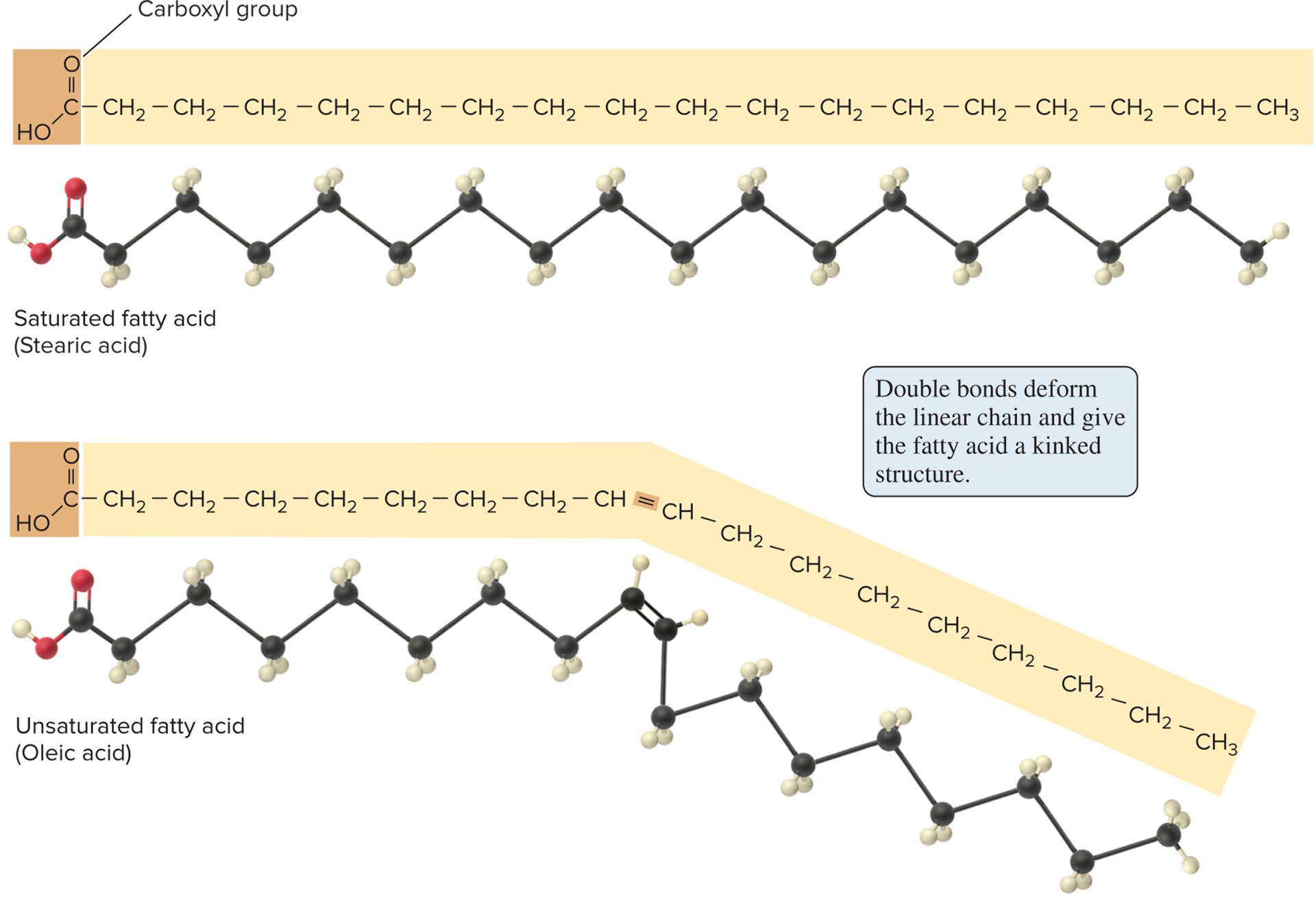
saturated fatty acids
all carbons in the hydrocarbon chain are linked by single bonds (C-C). the term saturated indicates means that each carbon has a maximal number of attached hydrogens.
monosaturated fatty acids contain one C=C double bond that introduces a kink into the linear shape
polyunsaturated fatty acids contain two or more C=C double bonds
the hydrocarbon tain of a fatty acid does not
for a hydrogen bond with water and is very hydrophobic.
triglycerides are important for
storing energy
they hydrolysis of triglycerides releases their fatty acids, which can be metabolized and provide energy to make ATP
phospholipids
similar structure to triglycerides but have. athird -OH group of glycerol liked to a phosphate group instead of a fatty acid.
small polar or charged nitrogen coniating molecule is attached to this phosphate.
the glycerol, phosphate group, and charged molecule constitute a polar (hydrophilic) head and the two fatty acids from nonpolar (hydrophobic) tails
in water, they form a phosophlipid bilayer with the polar heads interacting with water and the nonpolar tails facing inward

steroids
have a distinctly different chemical structure than other lipids
4 fused rings of carbon atoms
sterols: conatains an -OH group at a particular carbon. found in fungi, plants, and animals.
cholesterol: found in cell membranes of animals, where it contributes to the membrane structure and function. in animal cells, synthesizes steroid hormones like estrogen and androgens.

waxes
secreat onto the surface of leaves of plants and the cuticles of insects.
all waxes contain one or more hydrocarbons and long structures that resemble a fatty acid attached by its carboxyl group to another long hydgrocarbon chain.
most waxes are nonpolar and exclude water.
also have structural element like honeycomb
proteins involved in gene expression and regulation
make mRNA from a DNA template; synthesize polypeptides from mRNA; regulate genes
Ex: RNA polymerase assists in synthesizing RNA from DNA
motor proteins
initiate movement
Ex: myosin provides the contractile force of muscle
defense proteins
protect organisms against disease
Ex: antibodies help destroy bacteria or viruses
metobolic enzymes
increase rates of chemical reactions important in energy balance
Ex: hexokinase is an enzyme involved in glucose metabolism
cell- signaling proteins
enable cells to communicate with each other and to sense the enviornment
Ex: notch proteins coordinate growth of cells in developing animals
structural proteins
support and strengthen structures
Ex: actin provides shape to the cytoplasm of plants and animal cells. Collagen gives strength to tendons
transporters
mediate movement of solutes across membranes
Ex: glucose transporters move glucose from outside cells to inside cells, where it can be used for energy
proteins are polymers of…
amino acids
all amino acids contain a carbon atom, called a-carbon, that is linked to an amino group (-NH2) and a corboxyl group (-COOH).

what happens when amino acids dissolve in water at a neutral pH?
the -NH2 group acts as a base and accepts a hydrogen ion, becoming positivily charged
the -COOH group acts as an acid and loses a hydrgoen ion and becomes negatively charged
amino acids found in proteins are distiguished by their
side chains
the arrangement and chemical features of teh side chains cause proteins to fold and adopt their three-dimensional shapes
certain amino acid chains may be critical in protein functions
Ex: amino acid side chains with specific regions of enzymes are essential for enzymes to catalyze chemical reactions
20 amino acids found in proteins
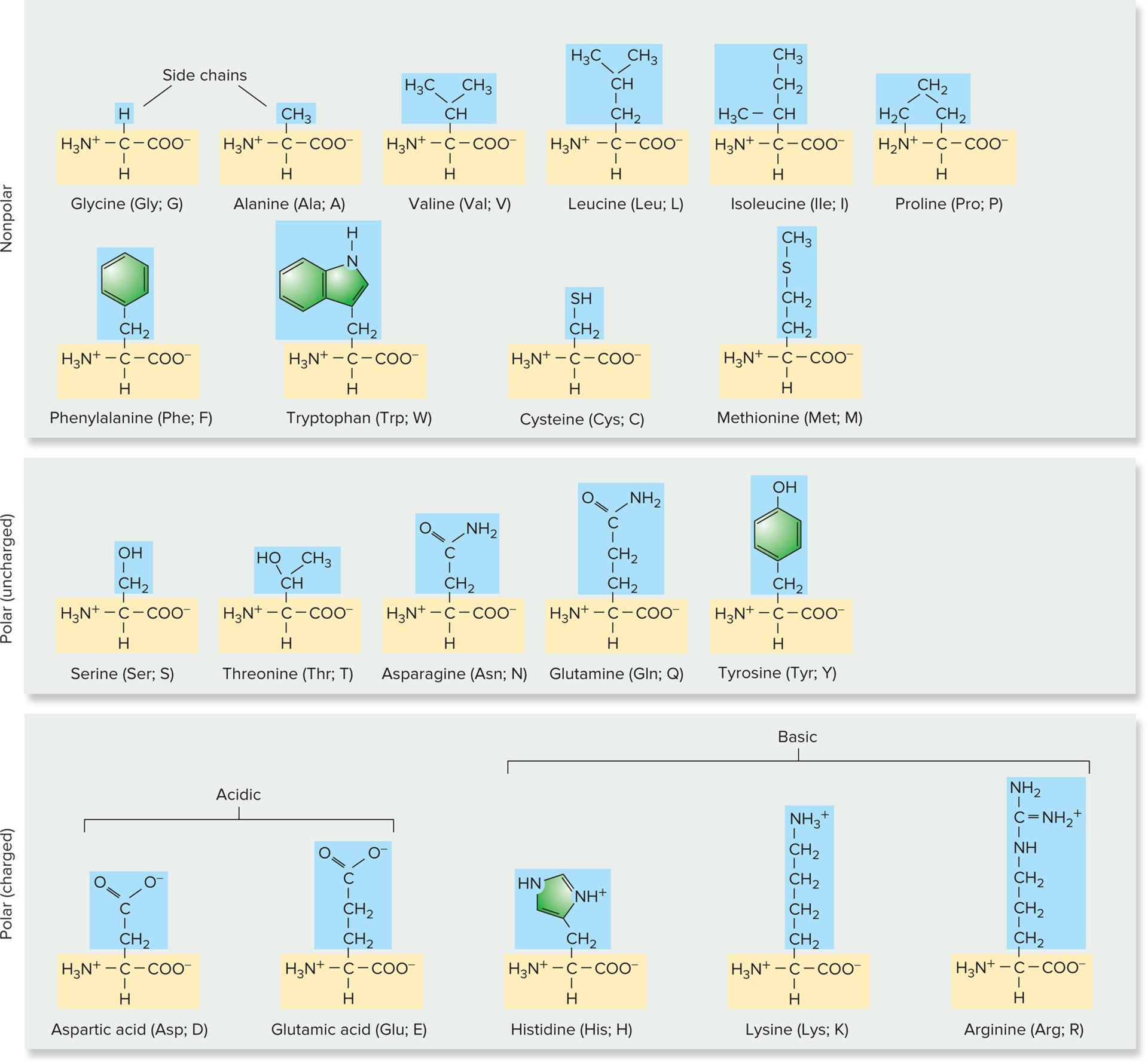
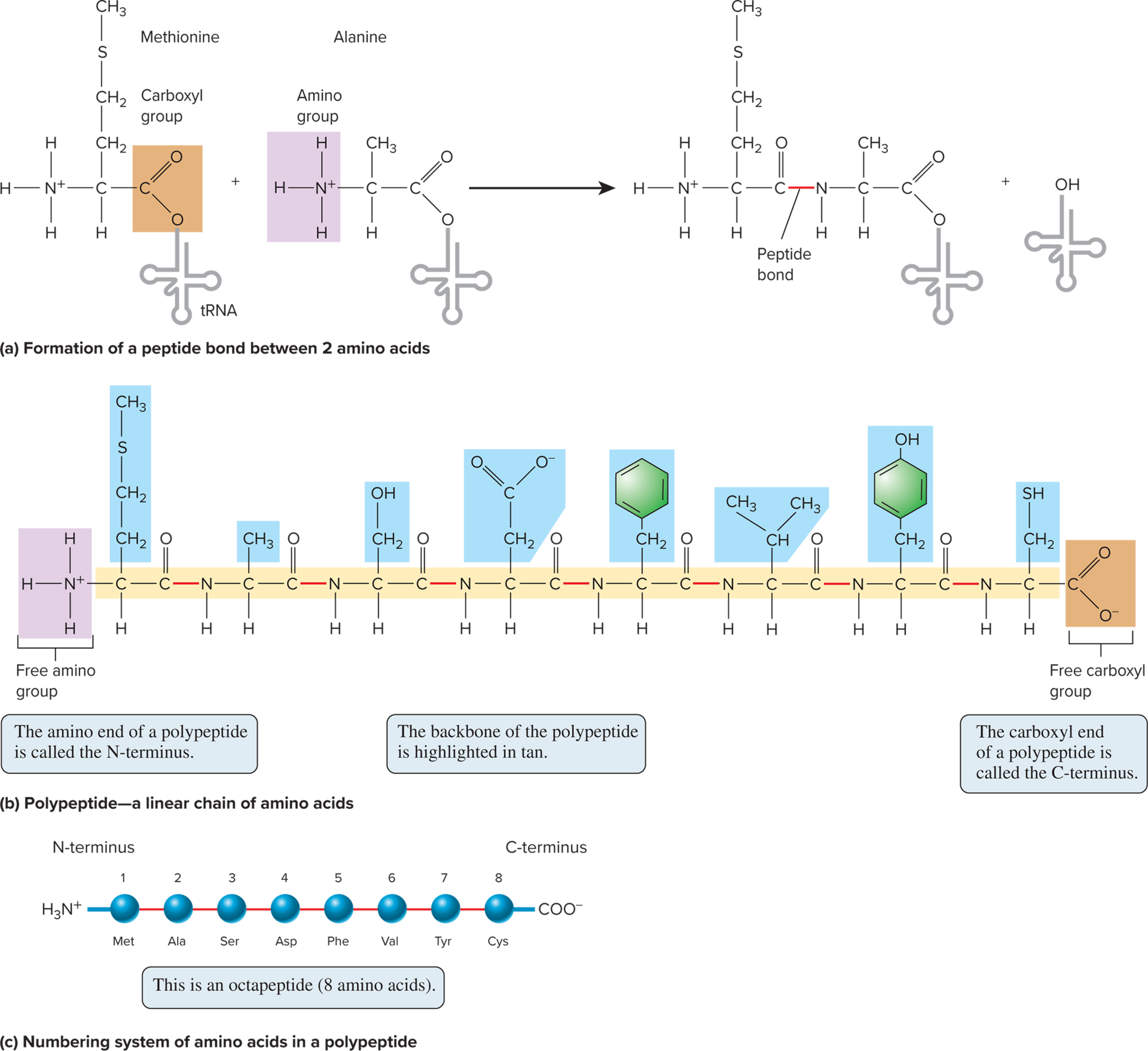
peptide bond
a covalent bond that links amino acids in a polypeptide
polypeptide: a structural unit compose of linear sequence of amino acids
a protein is a functional unit compose of one or more polypeptides that have folded or twisted into precise three- dimensional shapes
primary structure of proteins
is the amino acid sequence of its polypeptides.
determined by genes (they carry the information for the production of polypeptides with specific amino acid sequences)
mutations withing genes can alter the amino acid sequence and affect teh proteins function

secondary structure of a protein
folding (that can be irregular) in certain regions can have a repeating folding pattern (contribute great strenght)
basic types are a helix and B pleated sheets
a helix: a polypeptide backbone forms a repeating helical structure that is stabilized by hydrogen bonds alonbg the length of the backbone. occurs atr irregular intervals which cause the backbone to twist to a helix. the hydrogen linked to a nitrogen atom formation a hydrogen bond with an oxygen atom, which in turn is double bonded to a carbon atom.
B pleated sheets regions of a polypeptide backbone lie parallel to each other. hydrogen bonds netween hydrogen linked nitrigen atom an a double bonded oxyegn form between these parallel regins. causes a repeating zigzag, or pleated, shape

tertiary structure of a protein
the polypeptide from the seondary structure folds and refolds upon itself to assume a three-dimensional shape
includes all secondary structures plus any other interactions involving amino acid side chains.
final structure for some proteins

Quaternary structure of proteins
proteins that consist of more than one polypeptide.
Ex: hemoglobin (made of 4 protein subunits)

factor that detemine protein structure
hydrogen bond: large number of weak hydrogen bonds collectively produce a strong force that promotes protein folding and stability
ionic bonds and other polar interactions: positively chared side chains may bind to negatively charged side chains via ionic bonds
hydtophobic effect: the nonpolar or hydrophobic amino acids are found in the center of teh protein, minimizing contact with water
van der walls dispersion forces: atoms within a molecule haev temporary attractions for each other if they are an optimal distance apart (tertiary and quaternary structure)
disulfide bridges: the side chain (-SH) of cystine can react with an -SH group of another cysteune side chain to form a covalent bond. can occur within or between polypeptides.
nucleic acids
macromolecules that are responsible for the storage expression, and trasmission of genetic information.
DNA: store genetic information
RNA: decode the information in the DNA to instruct for linking a specific sequence of amino acids to form a polypeptide
three components of a nucleiotide (Monomers in the polymers of DNA and RNA)
a phosphate group
a pentose sugar (deoxyribose or ribose)
a single or double ring of carbon and nitrogen atoms known as a base

DNA
contains 5 carbon sugar deoxyribose
Purine bases: Adenine (A) and Guanine (G) haev fused double rings of carbon and nitrogen atoms
Pyrimidine bases: Cytosine (C) and Thymine (T) have a single ring structure
double helix two strands of nucleotides coiled around each other (heald by hydrogen bonds)
A pairs with T and G pairs with C

RNA
consists of a single strand of nucleotides
sugar in each nucleotide is ribose
Thymine (T) base is replaced by Uracil (U)
Other forms of RNA:
messanger RNA (mRNA)
ribosomal RNA (rRNA)
transfer RNA (tRNA)

to understand the origin of life, we can veiw the process as occurring in 4 overlapping stages:
Stage 1: necleotides and amino acids were produced prior to the existence of cells
Stage 2: nucleotides became polymerized to form RNA and/or DNA, and amino acids became polymerized to form proteins
Stage 3: polymers bacame enclosed in membranes
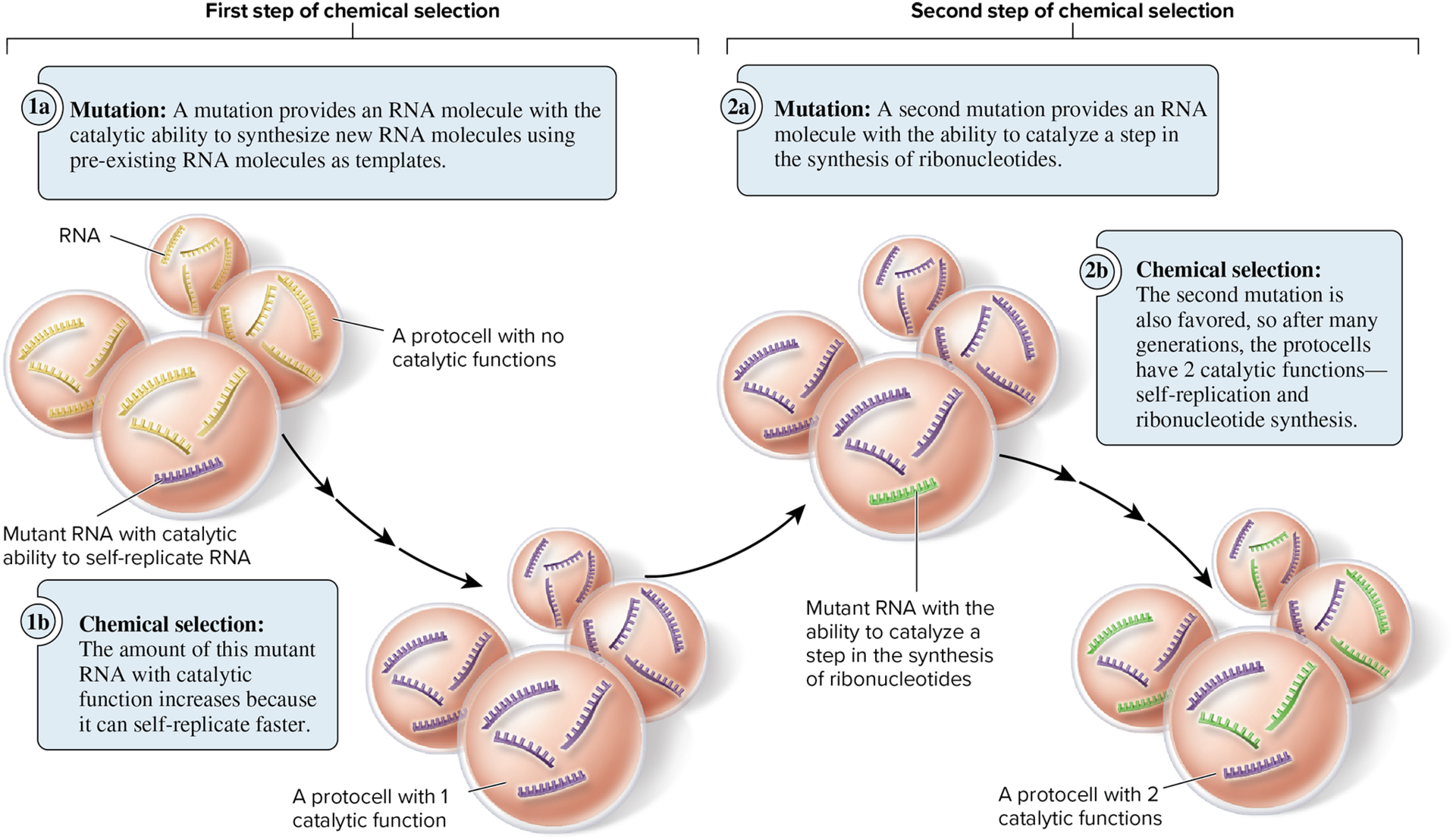
stage 4: by a process of chemical selection, polymers enclsoed in membranes acquired properties that are associated with living cells.
RNA importance as the first macromolecule
RNA have the ability to store information in its nucleotide base sequence
due to base pairing, its nucleotide sequence has the capacity for self-replication
RNA can preform a varirty of catalytic functions. the results of mayn experiments have shown that some RNA molecules function as ribozymes- RNA molecules that catlyze chemical reaction
cells structures are primarily determined by four factors:
Matter: found in all living things composed of atoms, molecules, and macromolecules.
Energy: neede to produce molecules and macromolecules to carry out cellular functions
Organization: all living cells have the ability to build and maintain their internal organization. Normally by protein-protein interactions that create intticate cell structure and faciliate processes in which proteins interact in a consistent series of steps.
Information: all living things have genomes, entire complement of genetic material, and its material is passed. from cell to cell (parent to offspring) and contain information on how to produce proteins.
prokaryotic cells
have a simple structure
lack a membrane enclosed nucleus
two categories: bacteria and archaea
bacteria cells typically include: Plasma membrane, cytoplasm, nucleoid, ribosomes, cell wall, glycocalyx, pili, and flagella.

plasma membrane
a bilayer of phospholipids and embedded proteins that forms a barrier between the cell and its external enviornment
cytoplasm
the region of the cell contained withing the plasma membrane
nucleoid
the location of the genetic material (DNA). The nucleoid is not a membrane-bound compartment
ribosomes
cell comeponents involved in polypeptide synthesis
cell wall
a relatively rigid structure that supports and protects teh plasma membrane and sytoplasm. The cell-wall composition varies widely among prokaryotic cells but commonly includes peptides and carbohydrates. The cell wall, which is relatively porous, allows most nutrients in teh enviornment to reach the plasma membrane
glycocalyx
an outer viscous covering curronding many species opf bacteria. It traps water and helps protect bacteria from drying out. Certain strands of bacteria that invade animals bodies produce a very thick, gelatinous glycocalyx called a capsule that may help the avoid being destroyed by the animal’s immune system or may aid in teh attachment to cels surfaces
pili (singular, pilus)
hairlike projections that allow cells to attach to surfaces anf to each other
flagella (singluar; flagellum)
long appendages that provide prokaryotic cells with a way to move, called motility