SCI Levels

0.0(0)
Studied by 0 people
call kaiCall Kai
Locked
learnLearn
examPractice Test
spaced repetitionSpaced Repetition
heart puzzleMatch
flashcardsFlashcards
GameKnowt Play
Card Sorting

1/8

encourage image

There's no tags or description

Looks like no tags are added yet.

Last updated 9:02 PM on 8/22/26
Name
Mastery
Learn
Test
Matching
Spaced
Call with Kai
Chat

No analytics yet

Send a link to your students to track their progress

9 Terms

1
New cards

DCML does what?

Fine/lite touch, proprioception, vibration

2
New cards

Spinothalamic does what?

Crude touch, pain, temperature

3
New cards

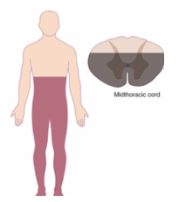
Anterior cord syndrome

-Caused by flexion injuries

-Bilateral loss of motor, pain, and temperature

-SPARED: proprioception, discriminative touch

MOST COMMON


<p><span style="background-color: transparent;"><span>-Caused by flexion injuries</span></span></p><p><span style="background-color: transparent;"><span>-Bilateral loss of motor, pain, and temperature</span></span></p><p><span style="background-color: transparent;"><span>-SPARED: proprioception, discriminative touch</span></span></p><p><span style="background-color: transparent;"><span>MOST COMMON</span></span></p><p><br></p>
4
New cards

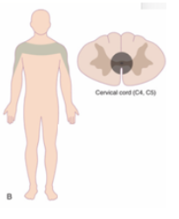
Central Cord Lesion

-Hyperextension injuries in the cervical region

-UE>LE involvement

-Bilateral loss of pain & temp

-Proprio & discriminatory sensation are preserved

-Function retained in all other spinal regions

-Sacral sparing (usually retains bowel/bladder/sexual function)


<p><span style="background-color: transparent;"><span>-Hyperextension injuries in the </span><u><span>cervical region</span></u></span></p><p><span style="background-color: transparent;"><strong><span>-UE&gt;LE involvement</span></strong></span></p><p><span style="background-color: transparent;"><span>-Bilateral loss of pain &amp; temp</span></span></p><p><span style="background-color: transparent;"><span>-Proprio &amp; discriminatory sensation are preserved</span></span></p><p><span style="background-color: transparent;"><span>-Function retained in all other spinal regions</span></span></p><p><span style="background-color: transparent;"><span>-Sacral sparing (usually retains bowel/bladder/sexual function)</span></span></p><p><br></p>
5
New cards

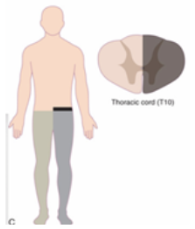
Brown Sequard Syndrome

-Damage to one side of the spinal cord (stabs, GSW)


-Ipsilateral: Proprio, vibration, weakness 

-Contralaterally: Pain/Temp are lost


<p><span style="background-color: transparent;"><span>-Damage to one side of the spinal cord (stabs, GSW)</span></span></p><p></p><p><span style="background-color: transparent;"><span>-Ipsilateral: Proprio, vibration, weakness&nbsp;</span></span></p><p><span style="background-color: transparent;"><span>-Contralaterally: Pain/Temp are lost</span></span></p><p><br></p>
6
New cards

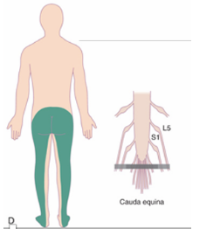
Cauda Equina Syndrome

-Damage to the lumbar and/or sacral spinal roots (Below L2)

-Saddle anesthesia

-Flaccid lower limb paralysis

-Flaccid bowel/bladder sphincters

-Lack of penile erection

-LMN injury

-Asymmetric weakness


<p><span style="background-color: transparent;"><span>-Damage to the lumbar and/or sacral spinal roots (Below L2)</span></span></p><p><span style="background-color: transparent;"><span>-Saddle anesthesia</span></span></p><p><span style="background-color: transparent;"><span>-Flaccid lower limb paralysis</span></span></p><p><span style="background-color: transparent;"><span>-Flaccid bowel/bladder sphincters</span></span></p><p><span style="background-color: transparent;"><span>-Lack of penile erection</span></span></p><p><span style="background-color: transparent;"><span>-LMN injury</span></span></p><p><span style="background-color: transparent;"><span>-Asymmetric weakness</span></span></p><p><br></p>
7
New cards

Complete Cord Lesion

-Bilateral loss of all modalities

-Bilateral leg weakness
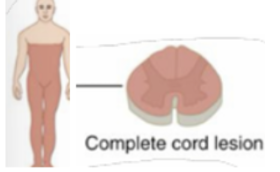


<p><span style="background-color: transparent;"><span>-Bilateral loss of all modalities</span></span></p><p><span style="background-color: transparent;"><span>-Bilateral leg weakness</span></span></p><p><br></p>
8
New cards

Contralateral Spinothalamic Tract Lesion

-Contralateral loss of pain, temp, and light touch
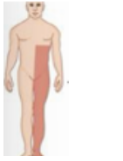
<p><span style="background-color: transparent;"><span>-Contralateral loss of pain, temp, and light touch</span></span></p>
9
New cards

Posterior Cord Syndrome

-Extremely rare

-Loss of proprioception below the level of the lesion, leading to severe gait deviations (ataxia)

-Preservation of motor, pain, and light touch



