MEMORY AND LEARNING UNIT 6 & 7
 Call Kai
 Learn
Learn Practice Test
 Spaced Repetition
 Match
Match Flashcards
 Knowt Play
1/47

There's no tags or description
Looks like no tags are added yet.
Name | Mastery | Learn | Test | Matching | Spaced | Call with Kai | Chat |
|---|
No analytics yet
Send a link to your students to track their progress
48 Terms
cognitive psychology vs behavior analysis? 2 pts
cognitive psychology- concerned with describing and explaining memory through theoretical structures/models derived from observations using metaphors
behavior analysis- concerned with describing the functional relation between the behavior under study and its controlling variables
difference between STM and LTM according to the behavior analytic perspective? 2 pts
viewed as different patterns of behaviour controlled by past experiences whose main difference is how much time has passed between the original stimulus and the behaviour it influences.
As Palmer (1991) explained, what lasts is not the memory itself, but the influence (stimulus control) that the past experience has on current behaviour.
cognitive psychology: learning and remembering definition? 2 pts
memory- different systems where acquired behavior is stored and at a later time retrieved
learning- a process of how the events or stimuli are encoded, stored, and afterward retrieved
behvaior analysis: learning and remembering? 2 pts
learning- a process of change in behavior that will maintain over time
remembering- endurance of the selected environment-behavior relations
descriptions of behavior in functional relation to the environment
definition of remembering according to palmer? 3 pts
defined in two categories:
behavior that is brought under control of a stimulus (one at a time) and is still under the control of that stimulus/ the control of a stimulus of the same class when presented at a later time
behavior is brought under control of a stimulus and reinforcement is later made contingent on appropriate behavior in the absence of the stimulus
differences lie in whether the behavior is shown in the presence/absence of the stimuli that is conditioned to the response
doanhoe and palmer: reminding vs remembering? 2 pts
reminding- stimuli presented after a delya reminds participants of the correct responses
remembering- no such stimuli no remind the participants of the correct responses
behavior analysis: remembering definition? 1 pts
behavior under stimulus control and STM and LTM are distinguished between thorugh the time between the stimuli presentations and emitted reponses
functions of remembering? 5 pts
concerned with how an organisms present behavior can be occasioned by past event ; between a stimulus and an opportunity to respond
rehearsal- repetition of information to keep it in memory or help transfer it into long-term memory; what is reproduced on all occasions after the first is not the original but one’s own reproduction of it
memory as a response can both be a classical response or an operant one
memory is not only linked to emotions but also places
although response to past stimuli can be the same it can be controlled by various factors; if the event is not present to evoke the response then the description of the event can be used instead an that can be shaped to improve accuracy
mnemonics? 5 pts
techniques for increasing the likelihood of remembering e.g. rehearsal
mnemonic systems make the learner less dependent on rehearsal
an example of such a technique would be the conversion of a sequence of symbols into a sentence
mnemonics show that what the learner remembers depends on what the learner does
function by either organising info or providing additional memorable Sd that will be emitted during recall
metaphor of storage, retention, retrival? 4 pts
an episode of remembering is defined by the inital learning of an item, the passage of time, and the opportunity for recall
initial learning is said to result in storage of the item which determines how the item is retained over time
a period of retention is followed by the opportunity for recall
recall of the item is retrieval from storage
dual model? 4 pts
proposed by william james (1890)
memory would be composed of primary memory and secondary memory
primary memory- immediate memory; conscious with a short duration
secondary memory- longterm duration; permanent but less accessible
information-processing approach? 3 pts
the human mind worked as a computer program
info stored in the states or representation of the system to be retrieved and manipulated later
requires the capacity to encode/enter info into the system, the capacity to store it, and the capacity to find and retrive it
structural memory models? 1 pt
memory is composed of different structures with differnt functions

modal model? 5 pts
representative of many similar models
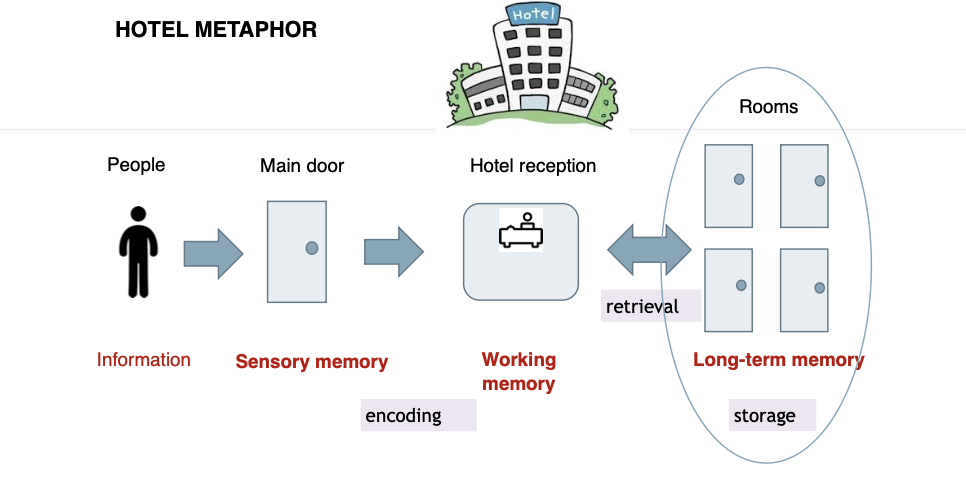
establishes the distinction between STM, LTM and sensory memory
assumes that info flows from left to right
sensory memory represents the initial senso-perceptive process of info that is processed in parallel
senso-perceptive processes involve different brain areas
sensory memory? 4 pts
very brief storage (1/4-1/2 a second) of info within a specific modality e.g. visual or auditory
sensory effects of a stimulus continue briefly after the stimulus has been removed
iconic memory- brief storage of visual info; visual sensory memory
echoic memoyy- brief storage of auditory info; auditory sensory memory
short term memory? 6 pts
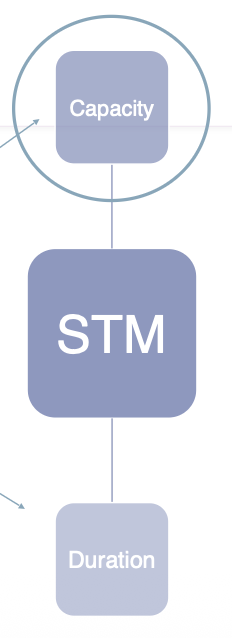
limited capacity and duration
info fades quickly but not as fast as sensory memory
the longer the info is held in short term memory the better the learning
rehearsal loop- process through which we maintain info in the STM longer
recall is determined more by our behavior with respect to past stimuli than by the stimuli itself
the more overtly one rehearses the better their recall
digit span task? 1 pt
used to measure the capacity of STM and requires remembering items and the order in which they are presented; longest sequence that can be repeated without error
primacy vs recency? 2 pts
primacy- the first elements of a series are best remembered because they are more repeated and more attention is paid to them indicating that they have been transferred to the LTM
recency- the last elements of a series are best remembered because they are still contained in the STM
long-term memory? 5 pts
a system/systems assumed to underpin the capacity to store info over long periods of time
explicit/declarative memory- knowledge that you can declare and you are aware of this knowledge e.g. data and facts, specific events etc and is related to memories of declarative knowledge
episodic memory- a system that is assumed to underpin the info capacity to remember specific events; has spatial and temporal components
semantic memory- a system that is assumed to store general knowledge of the world; has no spatial and temporal components
autobiographic memory- episodic and semantic info about ourselves
explicit memory? 4 pts
can be learnt quickly but is also forgotten faster
involves an intentional and conscious remembering process whether based on personal events (episodic mem) or facts (semantic mem)
episodic and semantic memory
knowing “WHAT”
episodic memory? 10 pts
memory for a specific autobiographical evento
learned in a single exposure
tagged with spatial and temporal context
consciously accessible
can be communicated flexibly
info is orgnaized by time
episodic memory allows us to relive the past and use this info to imagine the future
it is more vulnerable to interferences; to be forgotten and changed espeically when emotions are involved
develops in late childhood and is more vulnerable to age and neurological deterioration
affected by amnesia
semantic memory? 5 pts
memories for facts or general knowledge about the world
can be learned with single exposure but can also be strengthened by repetition
consciously accessible
not necessarily tagged with a context
can be communicated flexibly
implicit/non-declarative memory?
related to knowledge you can just do rather than declare e.g. physical and motor skills such as cooking and driving
memory related to procedural knowledge
knowing “HOW”
acquires through practice and repetition
slowly learned but once acquires it is difficult to forget
involves an automatic recall from past experiences (no effort)
unconscious
not affected by amnesia and does not worsen with age
relation between declarative and non-declarative knowledge? 2 pts
when learning a new procedure we need declarative knowledge to make sense of the procedure
once we have become experts in the given skill our declarative memory is free and the procedure is almost automatic
the forgetting curve? 5 pts
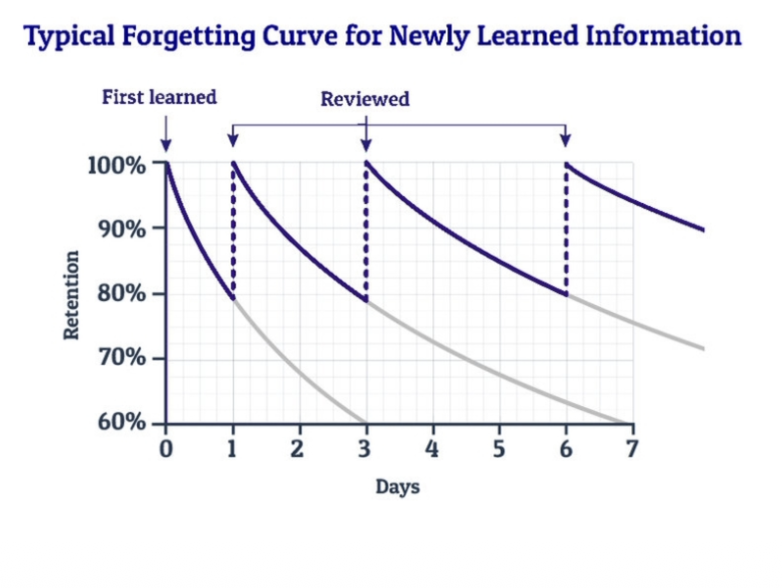
most forgetting occurs in the first few hours or days after learning
info that survives this stage might last in memory indefinetly
the forgetting curve describes how memory fades over time without review and how spaced repetition dramatically slows that decay
retention drops steeply in the first 24 hrs then levels off
each reiew rests the curve at a higher baseline so that the decay becomes progressively slower
depth of processing? 5 pts
memory strength was proposed to be a byproducts of how deeply you process info rather than which “box” it ends up in
processing is hypothesized to happen on a continuum from shallow to deep
deep processing was found to produce better memory after an experiment where ppts had to answer either semantic questions or structural questions showed than those who were answeting semantic questions later recalled more words
even at the semantic level more elaborate processing produced better recall than enncoding it in a simple sentence
elaborative encoding- the more connections and contexts you build around a memory the more retrieval hooks you create
transfer-appropriate processing? 6 pts
states that memory is best when the mental processes used at learning match those used at retrieval
challenges the LOP theory and found that deeper processing is not as important as the overlap between encoding and retrieval of a memory
classic experiment- two groups studied the same word list; one semantically (does it mean something pleasant?) and the other phonologically (does it rhyme with "train?"); on a standard recall test, semantic group won but on a rhyme-recognition test, the phonological group won
context-dependent memory- the environment at learning becomes part of the memory trace itself and when testing environment matches learning environment the contextual cues act as retrieval hooks that make the target memories easier to access
state dependent memory- the internal physiochological state becomes part of the trace meaning retrieval is better when one’s internal state matches their internal state during learning
mood congruent memory- goes a step further and states that not only do you recall memories better in the same mood but retrieval of memories that match one’s current mood is easier
the fading effect? 1 pt
emotional intensity associated with neagtive memories fades faster over time than the emotional intensity associated with positive memories of comparable original strength; memories remain accessible but the feeling they elicit in you decays
the depression memory loop? 1 pt
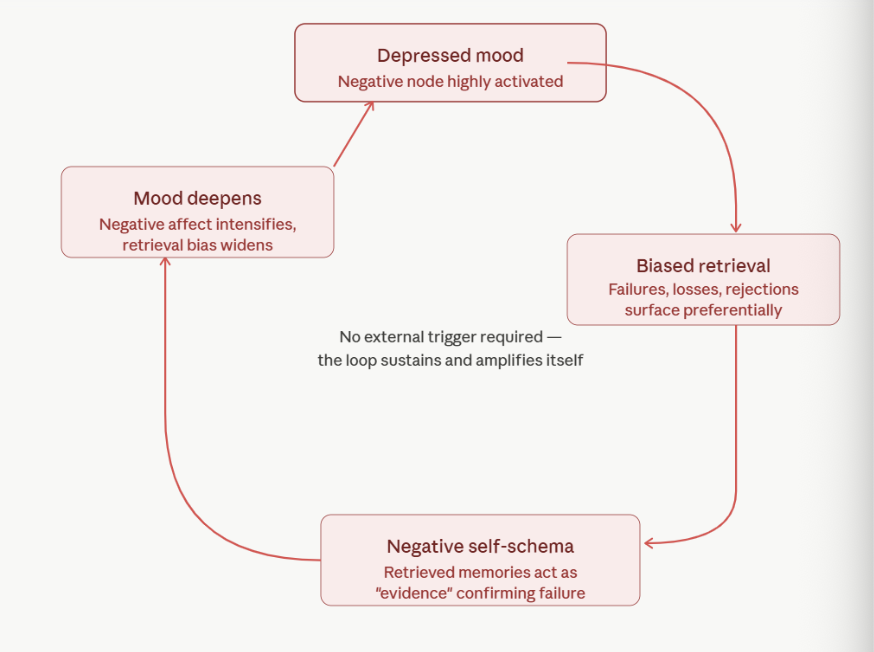
depressed mood→ biased retrieval e.g. failures and losses→ negative e self-schema e.g. retrieved memories act as evidence of confirmed failure→ mood deepens i.e. negative affect intensifies widening the retrieval bias
interference? 5 pts
explains forgetting as competition between old and new memories rather than passive decay
proactive interference (PI)- earlier learning projects forward in time and impairs your ability to recall something learned later
retroactive interference (RI)- more recently acquired material reaches back and degrades memory for something learned earlier
ppts who slept between learning and testing forget far less than those who stayed awake because sleep prevents RI
steep early drop in retention is partly driven by the interference of waking experience in the hours after learning
source amnesia? 4 pts
the failure to remember where or when you learned something even when you retain the content itself
this reveals that we know and how we know it are stored and retrieved by different systems; source memory is fragile while content memory is robust
cryptomnesia- you believe you have had an original idea when un actuality you encountered it before but forgot this encounter
misattribution- you remember the content but assign it a wrong source
false memory? 4 pts
the phenomenon of remembering events or details that never occurred with the same subjective confidence and vividness as genuine memoriees
fuzzy trace theory- encoding always produces two parallel traces; verbatim trace (exact surface details) and gist trace (meaning, pattern or essence)
verbatim trace fades faster than gist trace and gist traces are thought to cause false memories when they are strong enough to support a recognition or recall response and their parallel verbatim trace has degraded
eyewitness testimonies are vulnerable because info introduced after tha fact can become incorporated into the memory itself without knowledge
memory distortions vs disorders? 2 pts
distortions- normal forgetfulness that should not raise alarms
disorders- forgetfulness that create impairment
what is transience? 1 pt
decreasing accessibility of memory over time that to some extent is normal with aging; damage to the hippocampus and temporal lobe can cuse extreme forms of it
what is absent-mindedness? 1 pt
lapses of attention and forggetting to do things that occurs during the encoding and retrieval stages
what is blocking? 1 pt
temporary inaccessibility of stored info e.g. tip-of-the-tongue syndorme
what is suggestibility? 1 pt
incorporation of misinformation into memory due to leading questions, deception, or other causes
what is bias? 1 pt
retrospective distortions produced by current knowledge and beliefs
what is persistence? 1 pt
unwanted recollections that people cant forget e.g. the intrusive memories of PTSD
what is misattribution? 1 pt
attribution of memories to incorrect sources or believing that you have seen or heard something you haven’t
amnesia? 5 pts
total or partial loss of memory involving grossly impaired episoduc memory and preserved working, semantic, and implicit memory + intelligence
cause is organic
anterograde amnesia- inability to acquire new info and ermember events post injury
retrograde amnesia- inability to remember the past/facts that occured pre injury
traumatic/disociative amnesia- forgetting info related to trauma and is not organic (avoidance symptoms in PTSD)
anterograde amnesia? 4 pts
a problem in encoding, storing, or retrieval info that can be used in the future
events pre injury are generally remembered without problems but memories post injuty are not retained
STM remains normal but when distracted they no longer know what they were talking about
memory of motor skills and habits is preserved (implicit) and new skills can be learned despite them not remembering that they learned this suggesting the formation of memory traces
retrograde amnesia? 3 pts
a problem accessing events that happened in the past
patients often suffer from both retrograde and anterograde amnesia however the severity of anterograde amnesia is not highly correlated with the degree of retrograde amnesia suggesting different origins
measuring the degree of retrograde amnesia present is difficult because the tester does not typically remember the material
dementia? 7 pts
umbrella term describing symptoms that occur when the brain is affected by diseases
typically progressive and associated with aging
vascular- reduced O2 supply to the brain causing cell death following a stroke or a series or strokes
dementia wth lewy bodies- progressive dementia caused by abnormal protein deposits called Lewy bodies building up in the brain leading to degeneration of the main tissue
fronto-temporal- deterioration of neurons in the frontal and or temporal lobes resulting in changes in behavior and personality and could lead to difficulties with language
semantic dementia- progressive loss of semantic memory involving fialing comprehension of bth words and pictures and is associated with atrophy of the temporal lobes particularly in the fronto-temporal region
alzheimers- increasingly severe deficit in episodic memory in elderly people and is the most prominent cuase of senile dementia (over 50%_
warning signs of Alzheimers? 9 pts
memory loss that affects jobs skills
difficulty performing familiar tasks
problems with language
disorientation to time and place
poor/decreased judgement
misplacing things
changes in mood or behavior
changes in personality
loss of initiative
diagnosis of alzheimer's?
requires that there is a memory inpairment together with at least two other deficits that can include problems of language, action control, perception, or executive function
diagnosis depends on post-mortem examination of the brain tissue revealing amyloid plaques and neurofibrillary tangles
typically develops through a series of stages beginning in the medial temporal lobes and hippocampus creating initial memory probelms beofre progressing to the temporal and parietal lobes and other regions
deficits in alzheimer's memory? 4 pts
characterized by a defective episodic memory
semantic memory declines as the disease progresses associated with degree of temporal lobe atrophy
implicit memory- intact priming on relatively automatic taks but reduced primin on more complex tasks
working memory deficit occurs but is typically less marked than that of episodic memory
what is reminiscence therapy? 1 pt
helps patients maintain a sense of personal identity by recollecting their past e.g. making a personal life story book with pictures and momentos of earlier moments