Childhood Illnesses
 Studied by 5 people
 Call with Kai
 Learn
Learn Practice Test
 Spaced Repetition
 Match
Match Flashcards
 Knowt Play
1/57

There's no tags or description
Looks like no tags are added yet.
Name | Mastery | Learn | Test | Matching | Spaced | Call with Kai |
|---|
No study sessions yet.
58 Terms
Sepsis
What is sepsis?
The body’s response to an infection causes injury to its own tissues and organs through widespread inflammation
Sepsis
What can sepsis cause?
Septic shock
Organ failure
Death
Sepsis
What is septic shock?
The most severe stage of sepsis, defined by:
Persistently low blood pressure
Poor blood flow to organs
Cellular and metabolic dysfunction
Sepsis
Which patients is sepsis especially hard to spot in?
Babies
Young children
Sepsis
What can you do to help prevent infections that can lead to sepsis?
Keep up to date with vaccines
Clean and care for any wounds
Take antibiotics correctly
Wash hands regularly
Do not ignore symptoms
Sepsis
Why may treatment for sepsis in children be delayed?
Children often exhibit unclear signs and symptoms
Sepsis
When should you call 111 or 999 for a child with suspected sepsis?
Call 111 or see your GP
If a child under 5:
Is not feeding
Is vomiting repeatedly
Has not passed urine for 12 hours
Call 999 or go to A&E
If a child:
Is breathing very fast
Has a fit or convulsion
Looks mottled, bluish or pale
Has a rash that does not fade when you press it
Is very lethargic or difficult to wake
Feels abnormally cold to touch
Sepsis
NICE Sepsis Risk Stratification
Who is it for?
children aged 5 - 11
Sepsis
NICE Sepsis Risk Stratification
High Risk
What action should be taken if ANY high-risk criterion is present?
urgent referral to emergency care
Sepsis
NICE Sepsis Risk Stratification
High Risk
High-risk behavioural signs
Altered mental state
Appears ill
Not waking or staying awake
Sepsis
NICE Sepsis Risk Stratification
High Risk
High-risk respiratory rates and oxygen saturation
Age 5: RR >= 29
Ages 6 - 7: RR >= 27
Ages 8 - 11: RR >= 25
Oxygen saturation < 90%
Sepsis
NICE Sepsis Risk Stratification
High Risk
High-risk heart rates
Age 5: >= 130 bpm
Ages 6 - 7: >= 120 bpm
Ages 8 - 11: >= 115 bpm
Sepsis
NICE Sepsis Risk Stratification
High Risk
High-risk skin signs
Mottled or ashen skin
Cyanosis (bluish discolouration of skin, lips, tongue)
Non-blanching rash
Sepsis
NICE Sepsis Risk Stratification
Moderate-high risk
Features
Not behaving normally
Decreased activity
Moderate tachycardia or tachypnoea
Capillary refill >= 3 seconds
Reduced urine output
Temperature < 36oC
Sepsis
NICE Sepsis Risk Stratification
Moderate-high risk
Management
If child has an impaired immune system = refer to A&E
If a clear alternative diagnosis = treat and give safety advice
If no clear diagnosis = refer to A&E
Sepsis
NICE Sepsis Risk Stratification
Low-risk
Features
Child is behaving normally
No moderate or high-risk criteria
Sepsis
NICE Sepsis Risk Stratification
Low-risk
Management
Advise parents on what symptoms to monitor
Explain when/how to seek medical help
Sepsis
NICE Sepsis Risk Stratification
Key point
ONE RED FLAG = IMMEDIATE REFERRAL TO A&E
Meningitis
What is meningitis
Inflammation of the 2 inner meninges (the pia and arachnoid mater) of the brain and spinal cored
Meningitis
Meningitis can either be…
infection or non-infective
Meningitis
What is the difference between bacterial meningitis and meningococcal disease?
Bacterial meningitis: any bacterial infection of the meninges
Meningococcal disease: a type of bacterial meningitis, infection of the meninges by N. meningitidis
Both are notifiable diseases » healthcare professionals are legally required to report suspected or confirmed cases to public health authorities
Meningitis
Causes of meningitis in:
Children 3 months+ and adults
Neonates (<1 month)
Children 3 months+ and adults
Neisseria meningitidis (meningicoccus)
Streptococcus pneumoniae (pneumococcus)
Haemophilus influenza type b (Hib)
Neonates (<1 month)
Streptococcus agalactiae
Escherichia coli
S. pneumoniae
Listeria monocytogenes
Meningitis
How are bacterial meningitis and meningococcal disease transmitted?
Aerosol
Respiratory droplets
Direct contact with upper respiratory secretions e.g. coughing, sneezing, kissing
Meningitis
Where do the infectious secretions that transmit meningicoccal disease originate from?
the upper respiratory tract
Meningitis
What is the usual relationship between Neisseria meningitidis and humans?
It is usually commensal - lives harmlessly in the human nasopharynx without causing disease
Meningitis
What is an incubation period?
What is the typical incubation period for meningitis?
The time between exposure to an infectious organism and the appearance of symptoms
3 - 5 days
Meningitis
Which age group has the highest incidence of bacterial meningitis and meningococcal disease?
Children under 2
Meningitis
How does the incidence of meningitis change during childhood?
declines with age
Meningitis
Why is meningococcal disease considered particularly serious in paediatrics?
It is a leading infectious cause of death in children
Meningitis
Symptoms
Fever
Vomiting
Irritability
Upper respiratory tract symptoms
Seizures
Neck stiffness
Bulging fontanelle (soft spot)
High pitched cry
RASH
Meningitis
Which classic signs of meningitis and are often absent in infants with bacterial meningitis?
Neck stiffness
Bulging fontanelle (soft spot)
High pitched cry
Meningitis
Features of the rash
Usually starts as small, red pinpricks before spreading quickly and turning into red and purple blotches
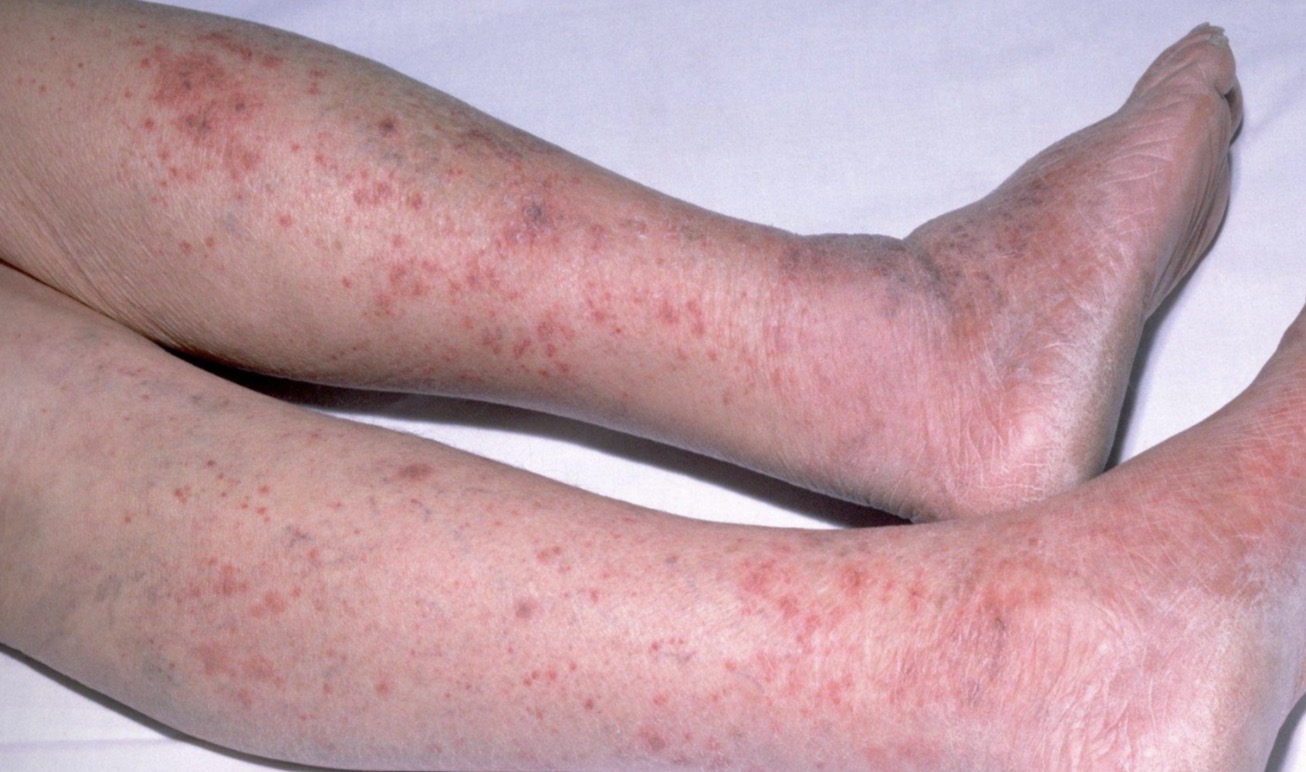
Meningitis
What feature of meningitis indicates sepsis?
The rash does not fade if you press the side of a clear glass firmly against the skin » CALL 999
Meningitis
Treatment for bacterial meningitis
Tests in hospital to confirm diagnosis
Treated in hospital for at least a week
Treatments include:
IV Antibiotics
IV Fluids
Oxygen through a face mask
Meningitis
Treatment of viral meningitis
Tends to self-resolve within 7 to 10 days:
Get plenty of rest
Take painkillers and anti-sickness medication
Meningitis
Which vaccinations offer protection against meningitis?
MebB vaccine
The 6-in-1 vaccine
Pneumococcal vaccine
Hib/MenC vaccine
MMR vaccine
From when will routine MMRV vaccination be introduced in the UK?
1 January 2026
What infections does the MMRV vaccine protect against?
Measles, mumps, rubella, and varicella (chickenpox)
At what ages will routine MMRV doses be given?
12 months
And
18 months
What vaccine does MMRV replace in the childhood schedule?
The MMR vaccine in the routine 2-dose schedule.
Which children are affected by the wider schedule changes from January 2026?
Children born on or after 1 July 2024
What change is made to the hexavalent (DTaP/IPV/Hib/HepB) vaccine schedule?
An additional 4th dose at 18 months
Why is the extra hexavalent dose at 18 months being introduced?
To provide longer-term protection against Hib infection
Measles
Measles is usually a self-limiting condition with symptoms usually resolving over the course of about a week. Which of these prodromal symptoms is least likely to be for measles.
A. Fever
B. Cough
C. Corzya
D. Conjunctivitis
E. Pain
E. Pain
Measles
The main complications of measles are of the respiratory tract or central nervous systems. Which complication is LEAST appropriate in a patient with measles
A. Otitis media
B. Pneumonia
C. Blindness
D. Convulsions
E. Deafness
E. Deafness
Measles
Measles is a highly contagious infection caused by a morbillivirus of the paramyxovirus family. Which statement is the MOST appropriate for a child with measles.
A. The person is infectious from when symptoms first appears (around 4 days before the rash) to 4 days after the onset of the rash.
B. Measles is spread by direct contact with infectious droplets or by airborne transmission from breathing, coughing or sneezing
C. The viruses can remain potentially infectious in the air for up to 4 hours after a person with measles has left.
D. Once infected the person usually develops lifelong immunity.
A. The person is infectious from when symptoms first appears (around 4 days before the rash) to 4 days after the onset of the rash.
Measles
A 6-year-old child suffering from measles should stay away from nursery or school. What is the LEAST appropriate management option
A. To rest and drink adequate fluids
B. Take paracetamol or aspirin for the symptomatic relief
C. Stay away from nursery or school for at least 4 days after initial development of the rash
D. Should avoid contact with pregnant women.
B. Take paracetamol or aspirin for the symptomatic relief
Slapped Cheek Disease (Parovirus B19)
A child with her mother visits your pharmacy with suspected parvovirus B19 infection. How many days after the rash or symptoms developed is the child considered no more infectious?
A. 1 day
B. 2 days
C. 5 days
D. 7 days
C. 5 days
Slapped Cheek Disease (Parovirus B19)
If a child is suspected of fifth disease. Which of the following statement is LEAST appropriate?
A. Avoid contact with people at increased risk of complications
B. Symptom relief can be with analgesia
C. In a healthy child with fifth disease will need a laboratory investigation to confirm the diagnosis
D. Parovirus B19 infection can cause slapped cheek
C. In a healthy child with fifth disease will need a laboratory investigation to confirm the diagnosis
Slapped Cheek Disease (Parovirus B19)
Slapped cheek syndrome is common in children and should get better on its own within how many days
A. 1 week
B. 2 weeks
C. 3 weeks
D. 4 weeks
B. 2 weeks
Slapped Cheek Disease (Parovirus B19)
In order to reduce the risk of spreading the virus that causes fifth disease, which statement is LEAST appropriate for general advice
A. Wash your hands often with water and soap
B. Use tissues to trap germs when coughing or sneezing
C. Bin used tissues as quickly as possible
D. Give analgesic including aspirin to the child when required.
D. Give analgesic including aspirin to the child when required.
Scarlet Fever
Scarlet fever usually lasts for how many weeks
A. 1 week
B. 2 weeks
C. 3 weeks
D. 4 weeks
A. 1 week
Scarlet Fever
Which one of the following statement is LEAST appropriate for scarlet fever?
A. If a child has scarlet fever, stay away from school for 24 hours after you take the first dose of antibiotics
B. You can spread scarlet fever to other people until 48 hours after you take the first dose of antibiotics.
C. Don’t share cutlery, cups, towels, clothes, bedding or baths with who has symptoms of scarlet fever
D. Use calamine lotion or antihistamines to ease itching.
B. You can spread scarlet fever to other people until 48 hours after you take the first dose of antibiotics.
Scarlet Fever
A child shows a white coating on his tongue which peels leaving the tongue red, swollen and covered in little bumps. This appearance of the tongue is known as
A. Strawberry tongue
B. Scarlet fever tongue
C. Red tongue
D. Raspberry tongue
A. Strawberry tongue
Scarlet Fever
A child with symptoms of scarlet fever, shows first signs of this condition by showing flu like symptoms. How many hours later will a rash appear on this child.
A. 12 – 24 hours
B. 24 – 48 hours
C. 12 – 48 hours
D. 24 – 72 hours
C. 12 – 48 hours
Hand Foot and Mouth Disease
Hand foot and mouth disease usually gets better on its own. Within how many days does a child with the disease get better?
A. 7 – 10 days
B. 10 – 14 days
C. 7 – 14 days
D. 10 – 21 days
A. 7 – 10 days
Hand Foot and Mouth Disease
Which of the following statements about hand foot and mouth is LEAST appropriate when giving general advice to parents or carers of child with the condition
A. Keep the child off School or nursery while they’re feeling too unwell to go
B. Child needs to wait until all the blisters have healed before going back to School
C. Wash soiled bedding and clothing on a hot wash
D. Most likely to spread symptoms to others in the first 5 days after symptoms start.
B. Child needs to wait until all the blisters have healed before going back to School
Hand Foot and Mouth Disease
For a patient with symptoms of hand foot and mouth, which of the following statements is LEAST appropriate as an advice
A. Drink cool fluids such as fruit juice to sooth the mouth and prevent dehydration
B. Eat soft foods like yoghurt
C. Take paracetamol or ibuprofen to help ease a sore mouth or throat
D. Avoid hot, salty and spicy food
A. Drink cool fluids such as fruit juice to sooth the mouth and prevent dehydration