EDEXCEL A-LEVEL PURE MATHS (4): GRAPHS & TRANSFORMATIONS
 Call Kai
 Learn
Learn Practice Test
 Spaced Repetition
 Match
Match Flashcards
 Knowt Play
1/20

There's no tags or description
Looks like no tags are added yet.
Name | Mastery | Learn | Test | Matching | Spaced | Call with Kai | Chat |
|---|
No analytics yet
Send a link to your students to track their progress
21 Terms
What is a cubic function?
- A cubic function has the form ax³ + bx² + cx + d, where a, b, c and d are real numbers and a is non-zero.
- The graph of a cubic function can take several different forms depending on the exact nature of the function.
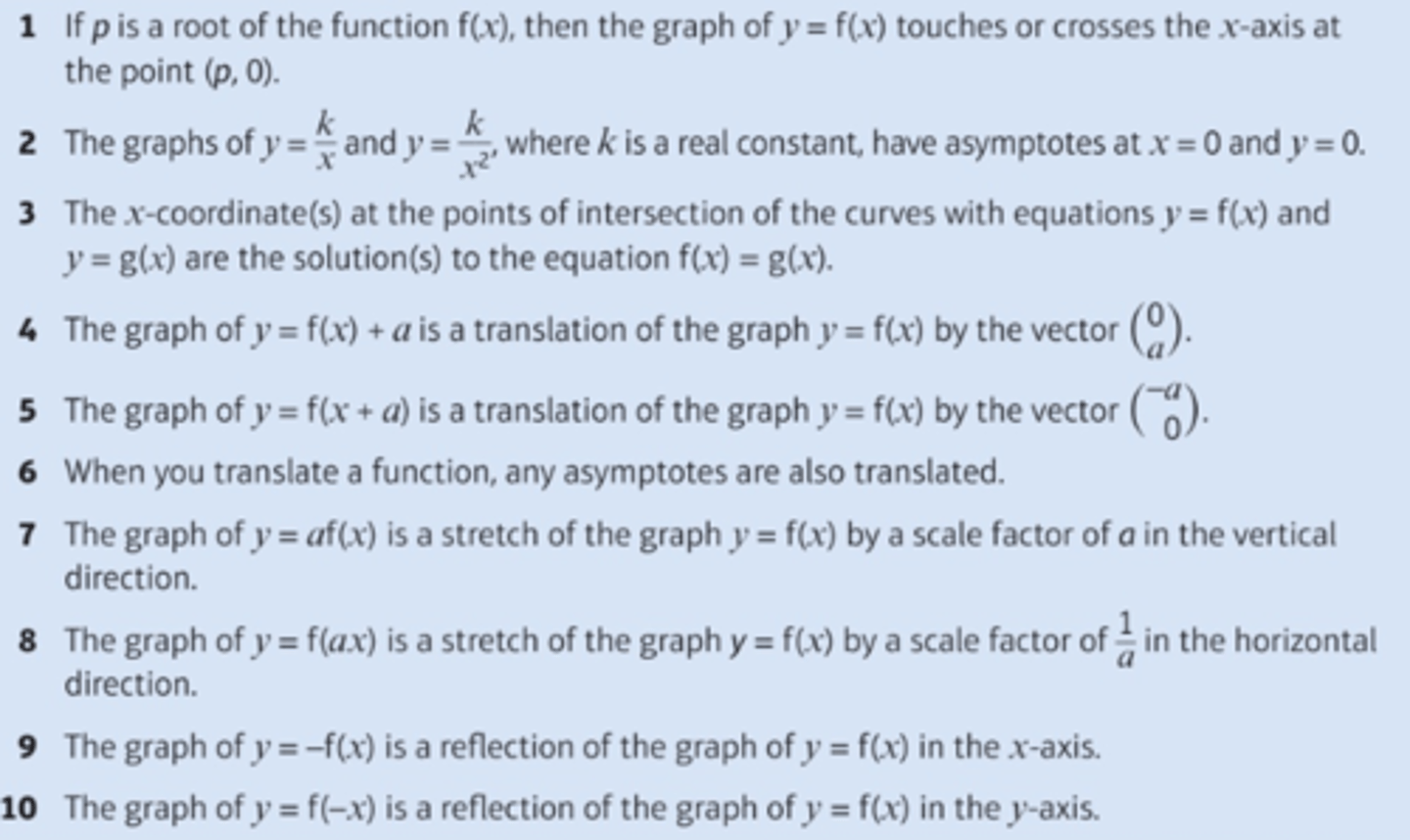
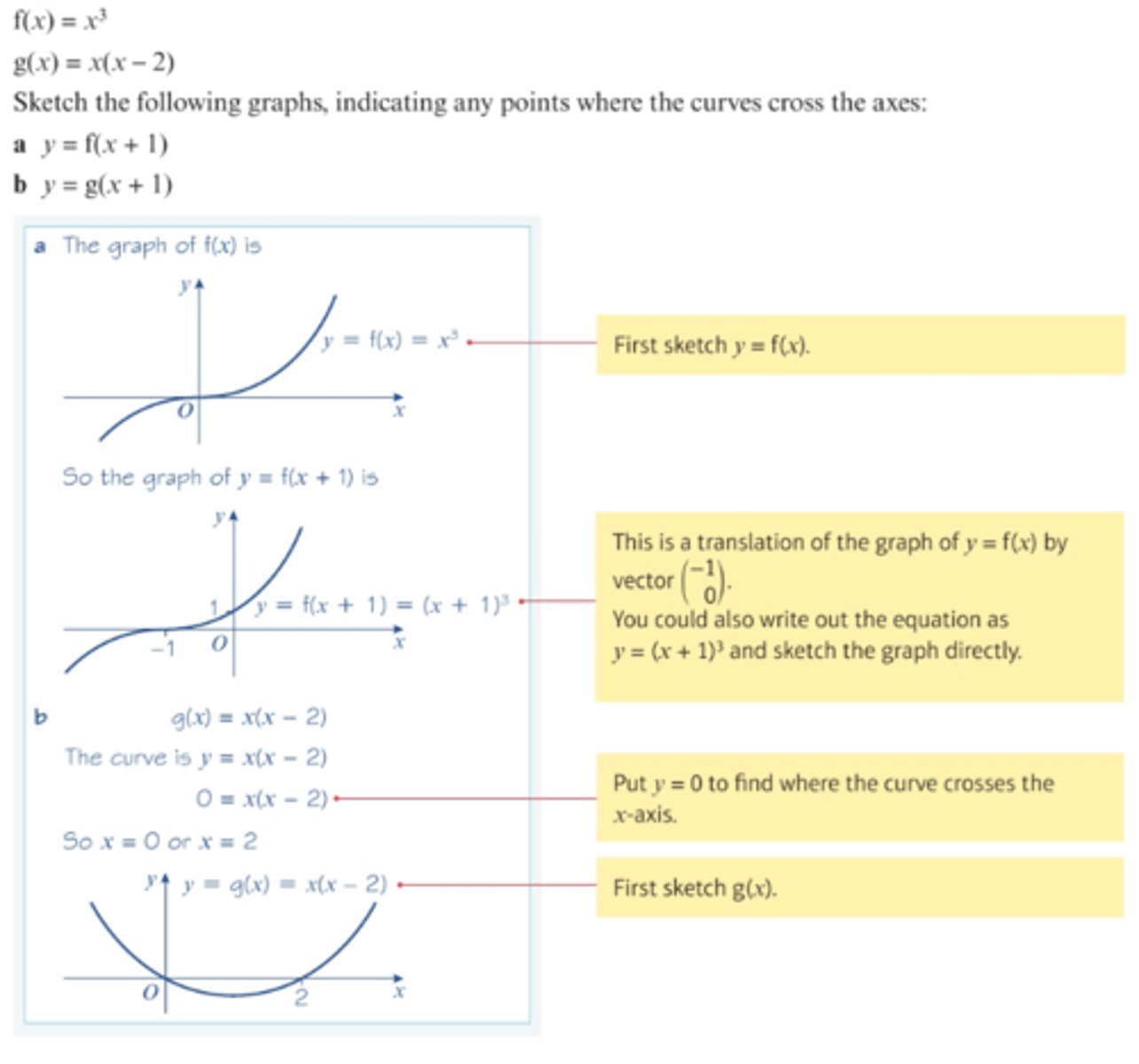
- If 'p' is a root of the function f(x), then the graph of y = f(x) touches or crosses the x-axis at the point (p, 0).
- You can sketch the graph of a cubic function by finding the roots of the function.
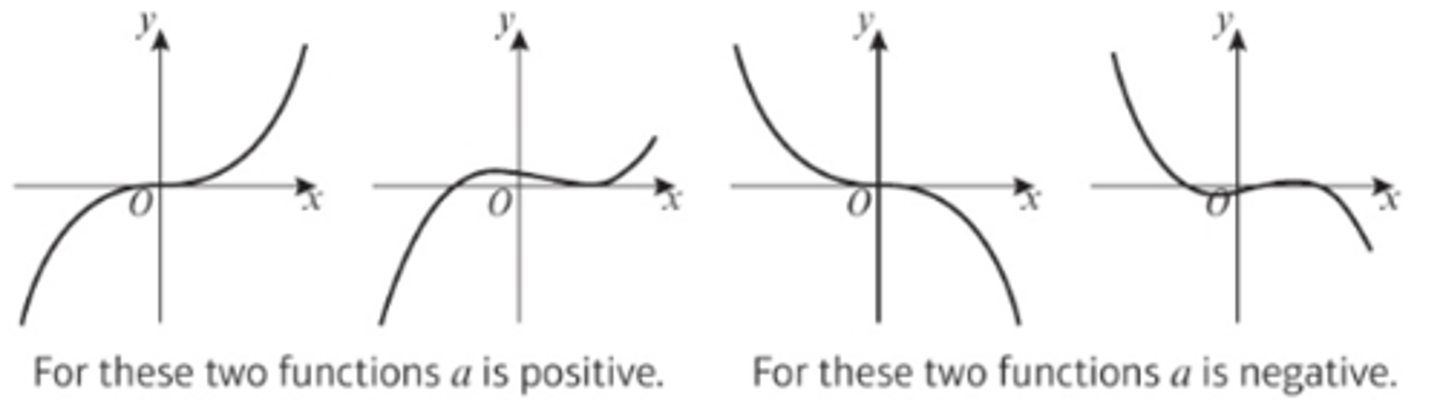
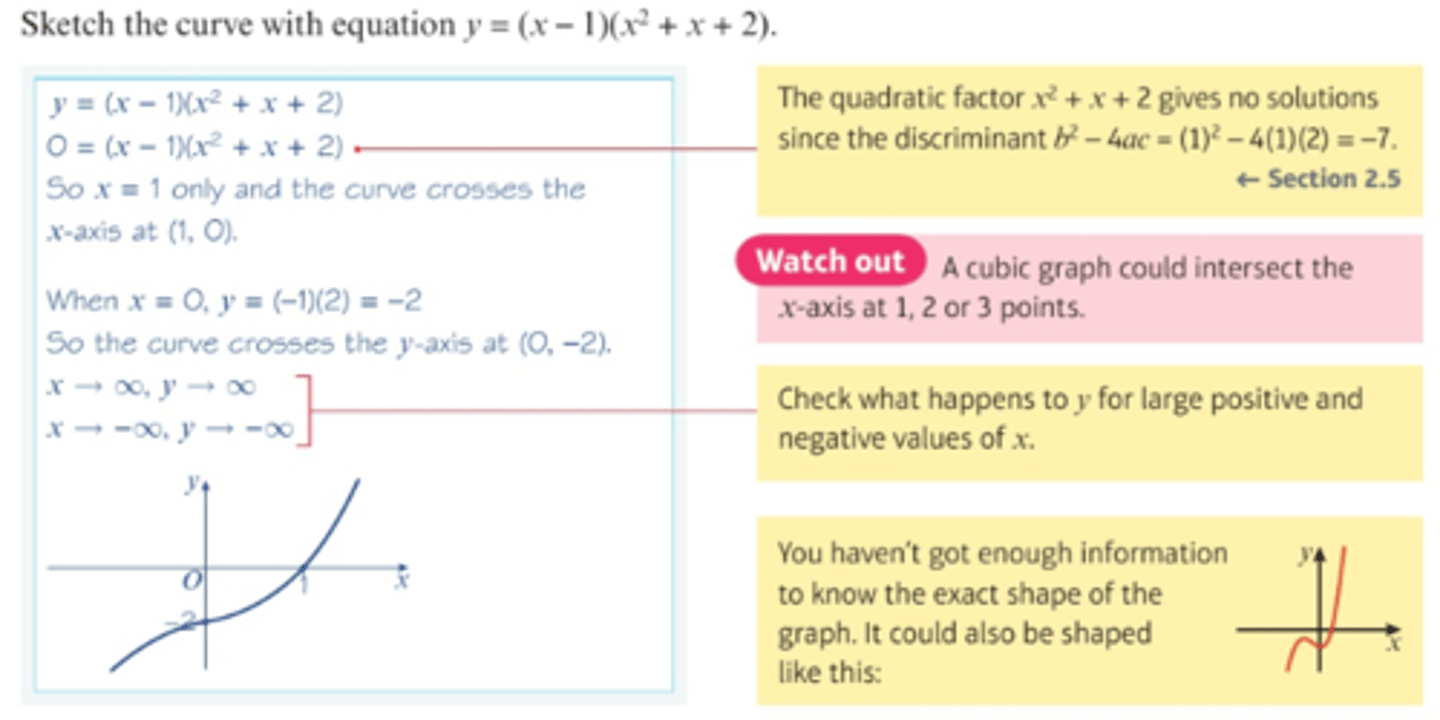
What are some examples of sketching graphs of a cubic function?
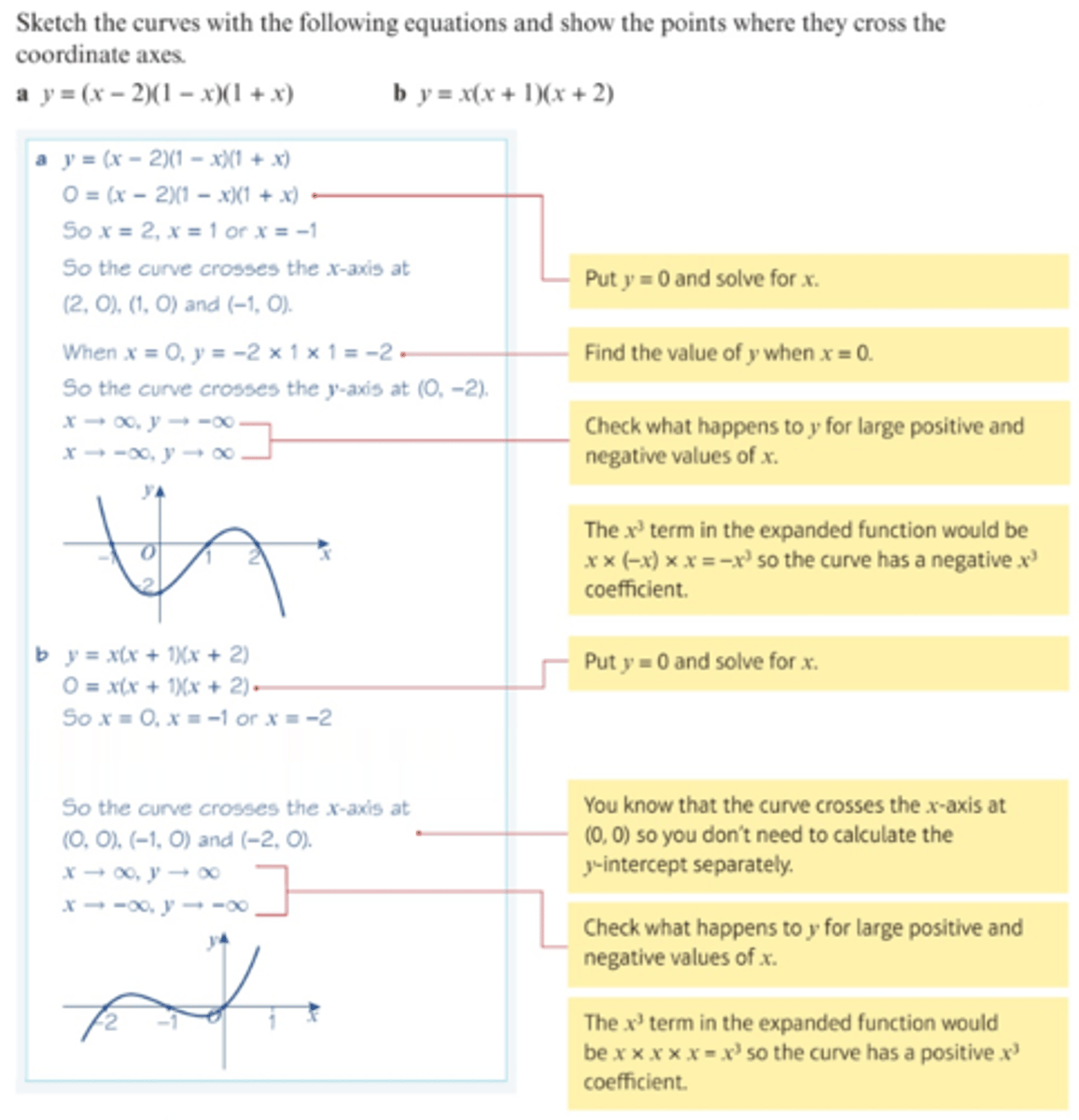
What are some more examples of sketching graphs of a cubic function?
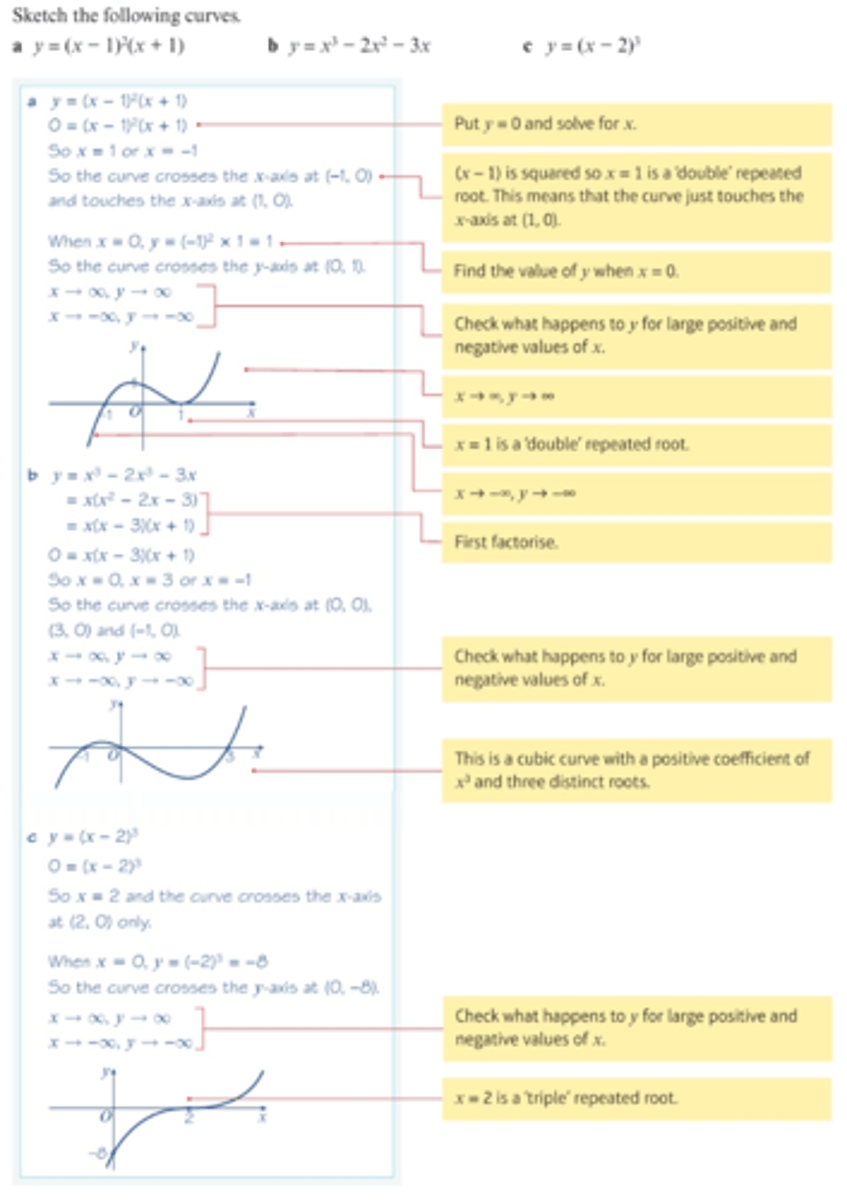
What are even more examples of sketching graphs of a cubic function?
What is a quartic function?
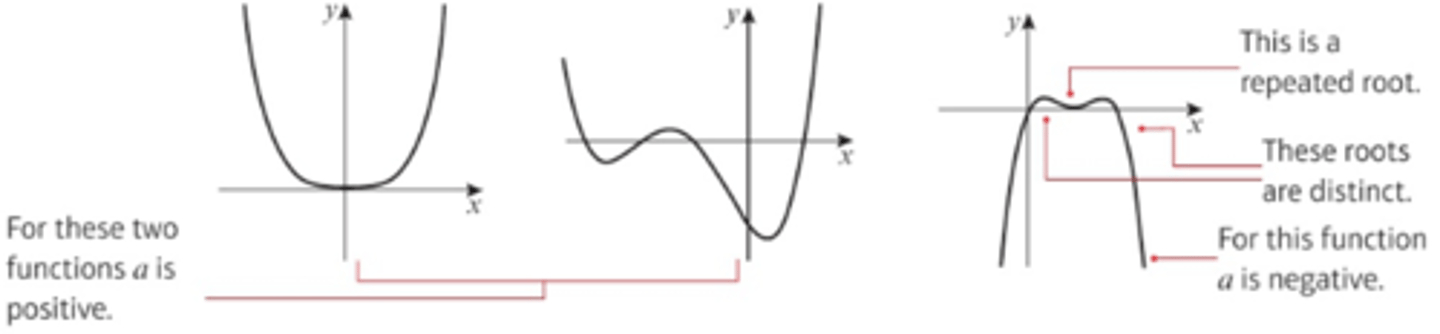
- A quartic function has the form f(x) = ax⁴ + bx³ + cx² + dx + e, where a, b, c, d and e are all real numbers and a is non-zero.
- The graph of a quartic function can take several different forms, depending on the exact nature of the function.
- You can sketch the graph of a quartic function by finding the roots of the function.
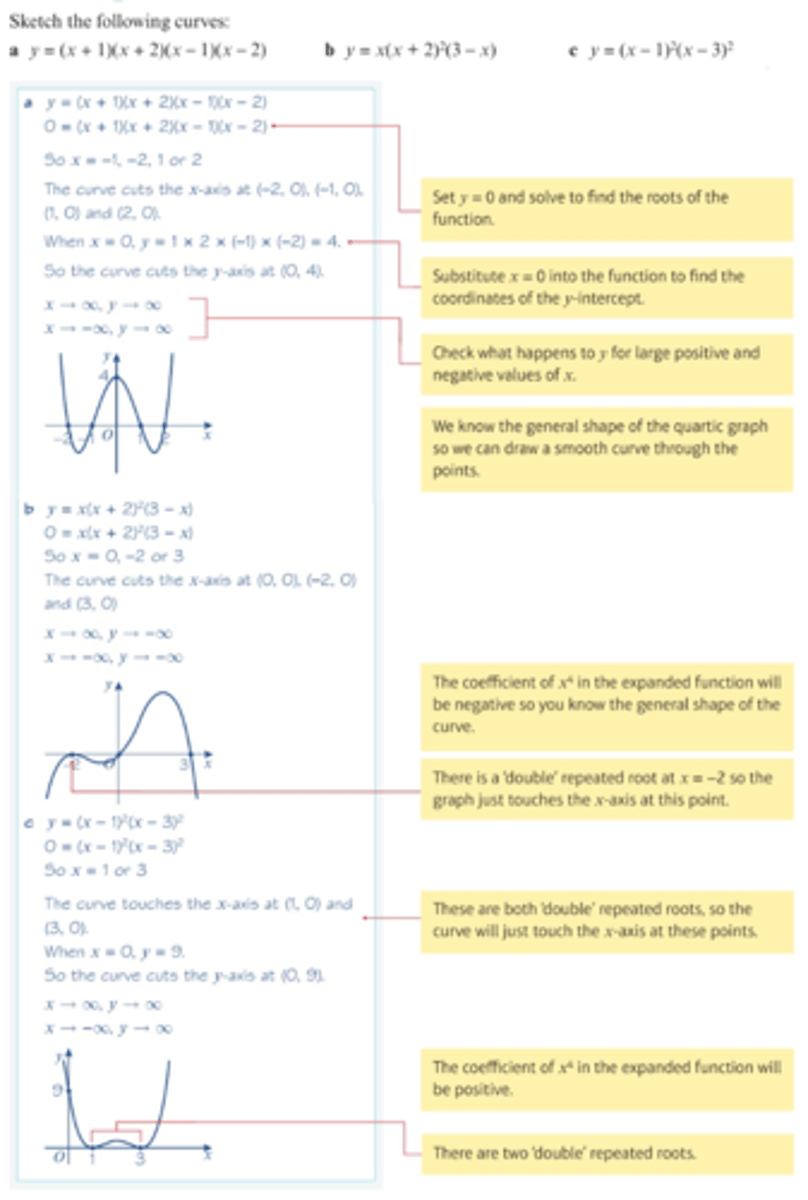
What are some examples of sketching graphs of a quartic function?
How can you sketch graphs of reciprocal functions?
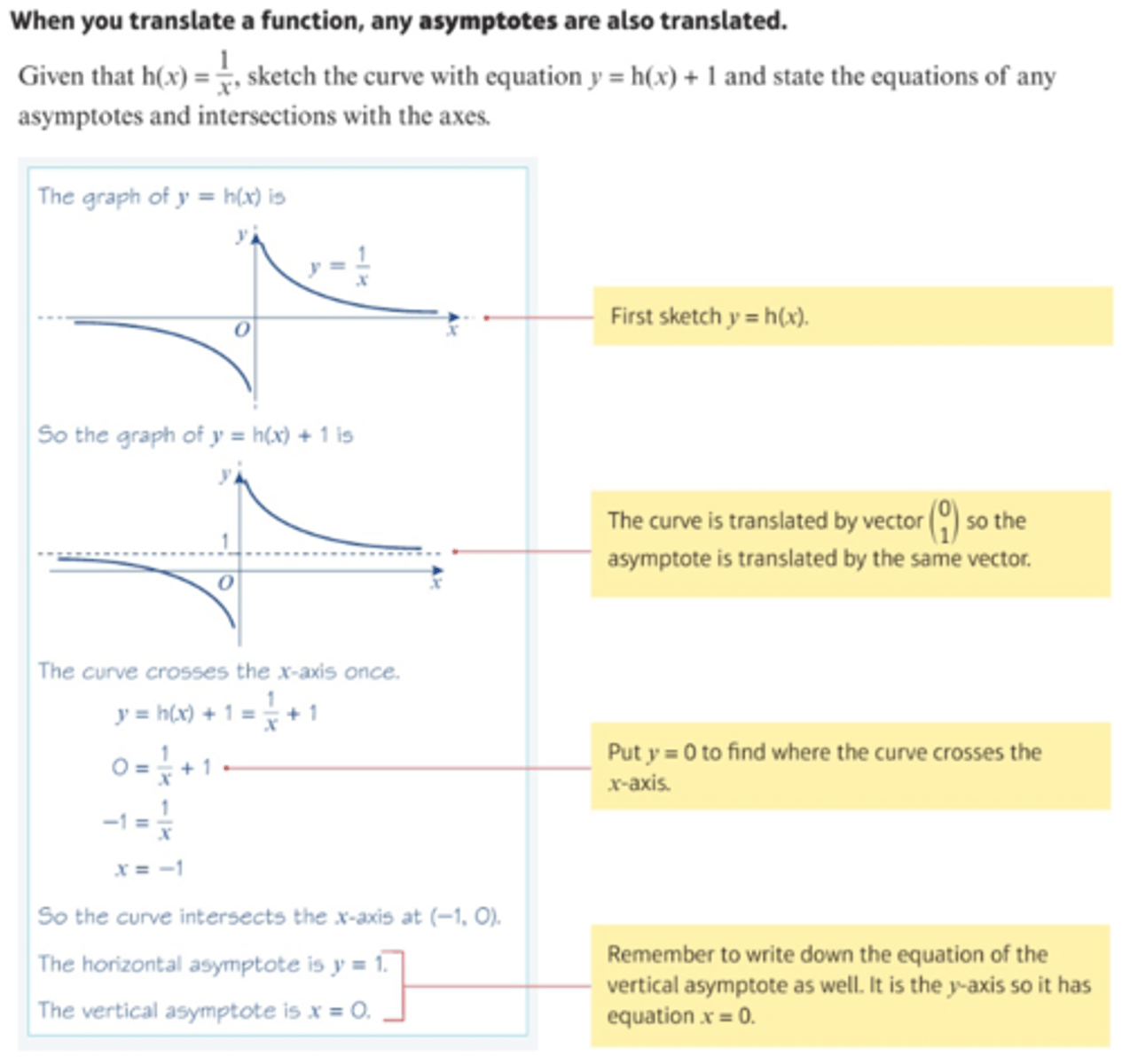
You can sketch graphs of reciprocal functions such as y = 1/x, y = 1/x² and y = -2/x by considering their asymptotes.
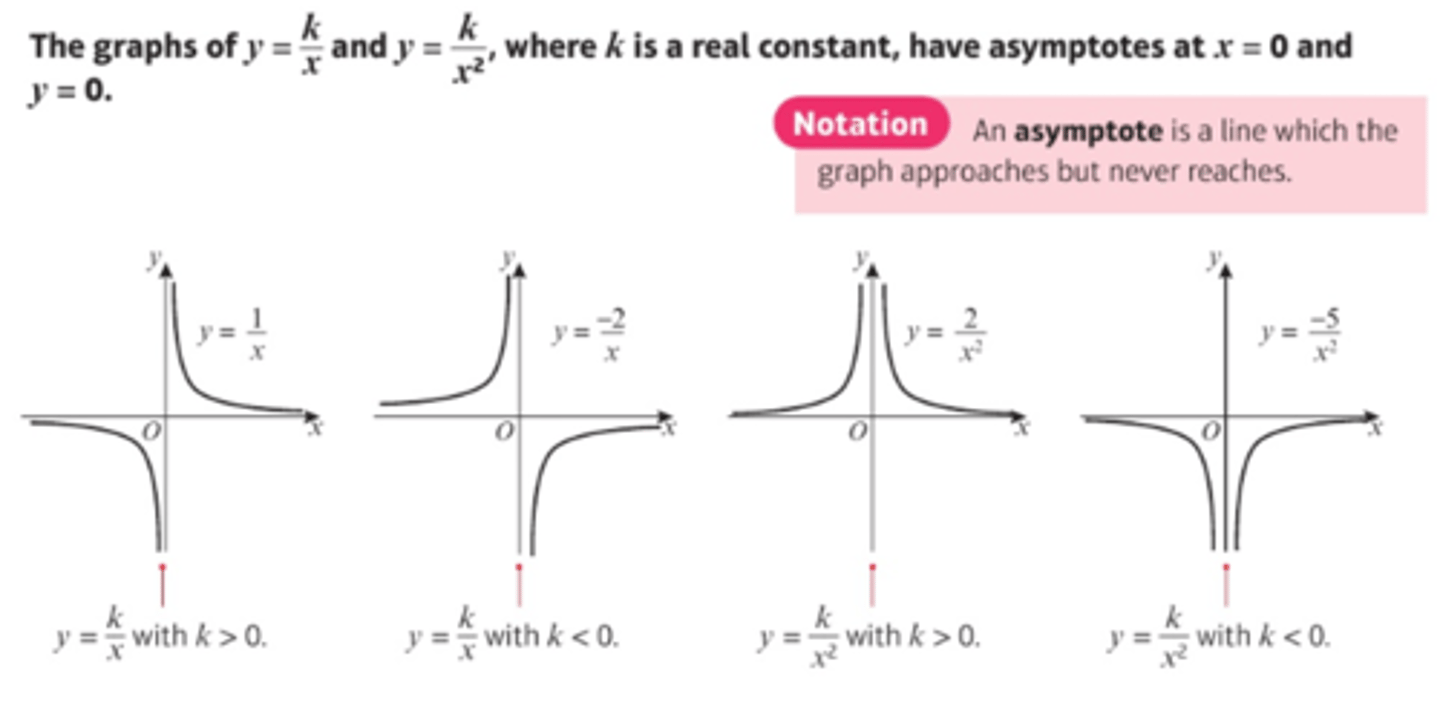
What are some examples of sketching graphs of reciprocal functions?
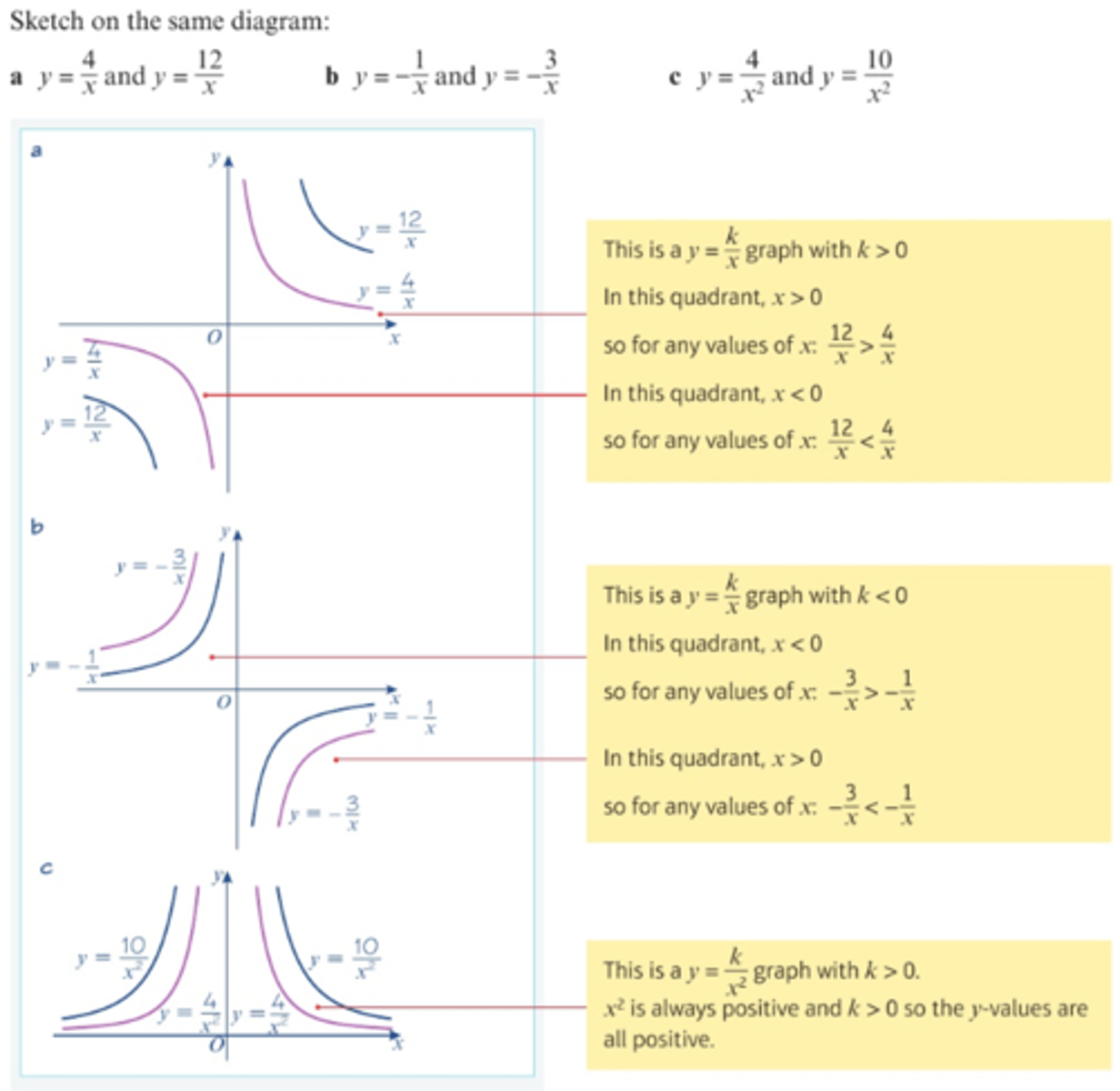
How can you sketch curves of functions to show points of intersection and solutions to equations?
The x-coordinate(s) at the point of intersection of the curves with equations y = f(x) and y = g(x) are the solution(s) to the equation f(x) = g(x).
What are some examples of sketching curves of functions to find points of intersection and solutions to equations?
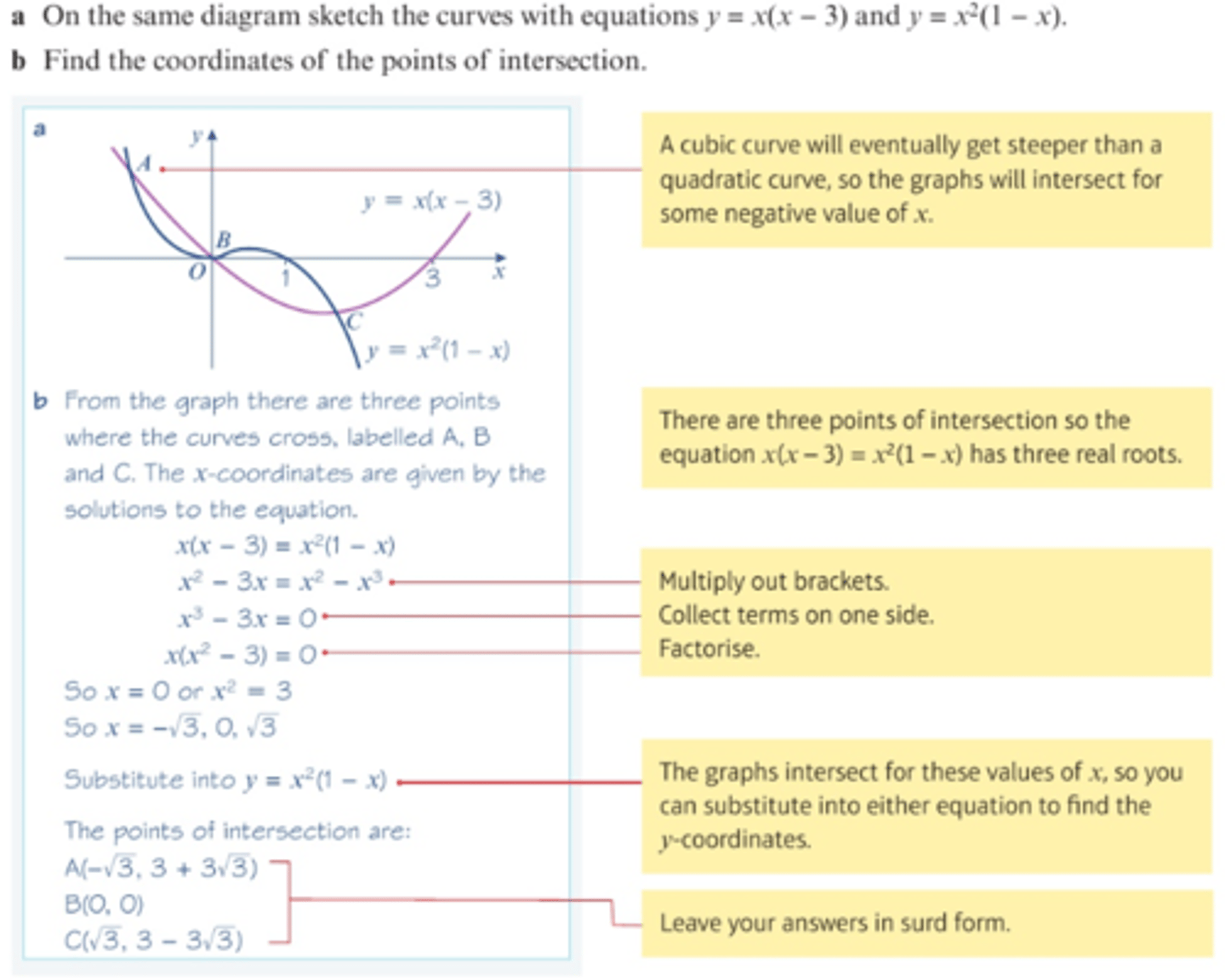
What are some more examples of sketching curves of functions to find points of intersection and solutions to equations?
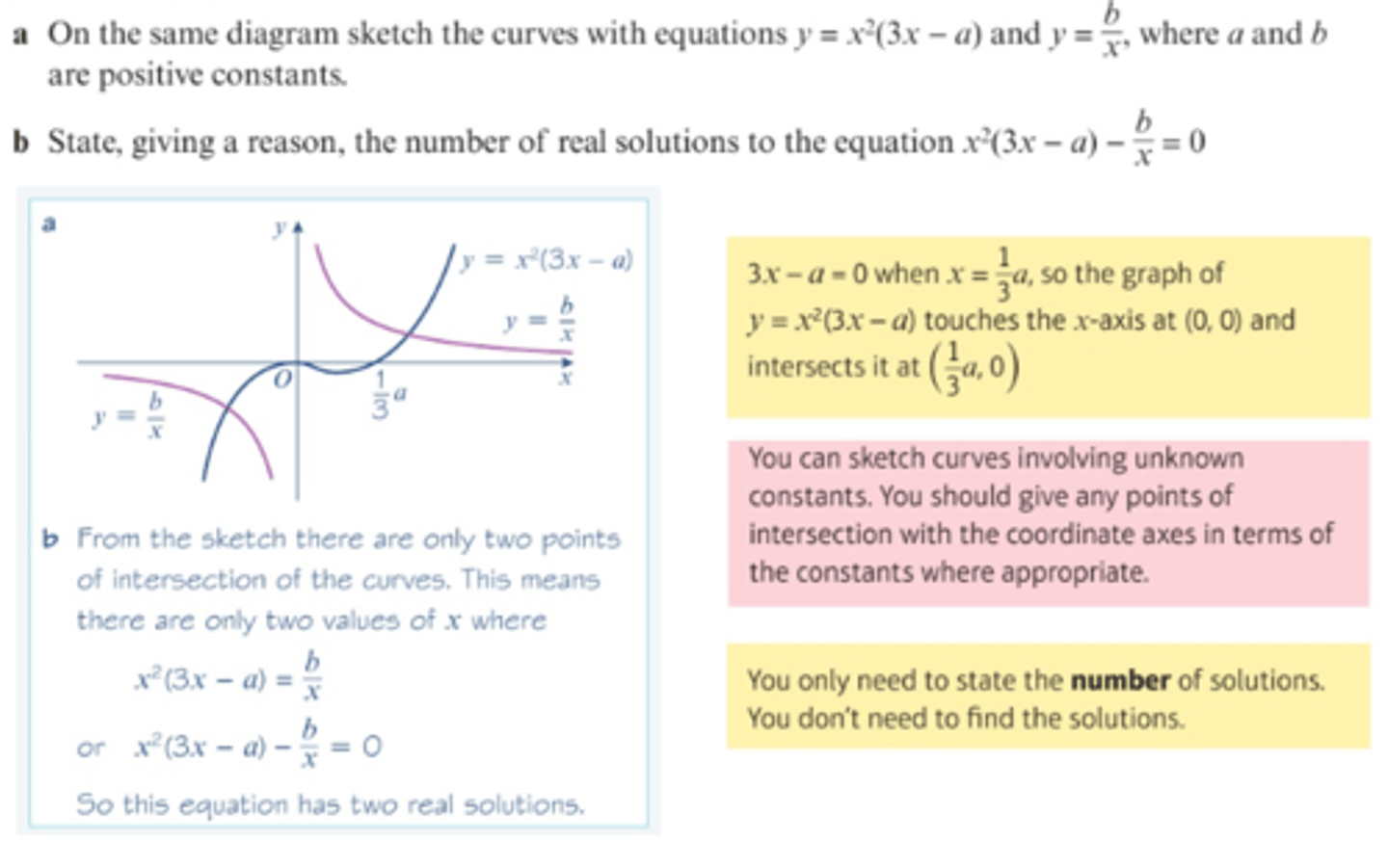
What are even more examples of sketching curves of functions to find points of intersection and solutions to equations?
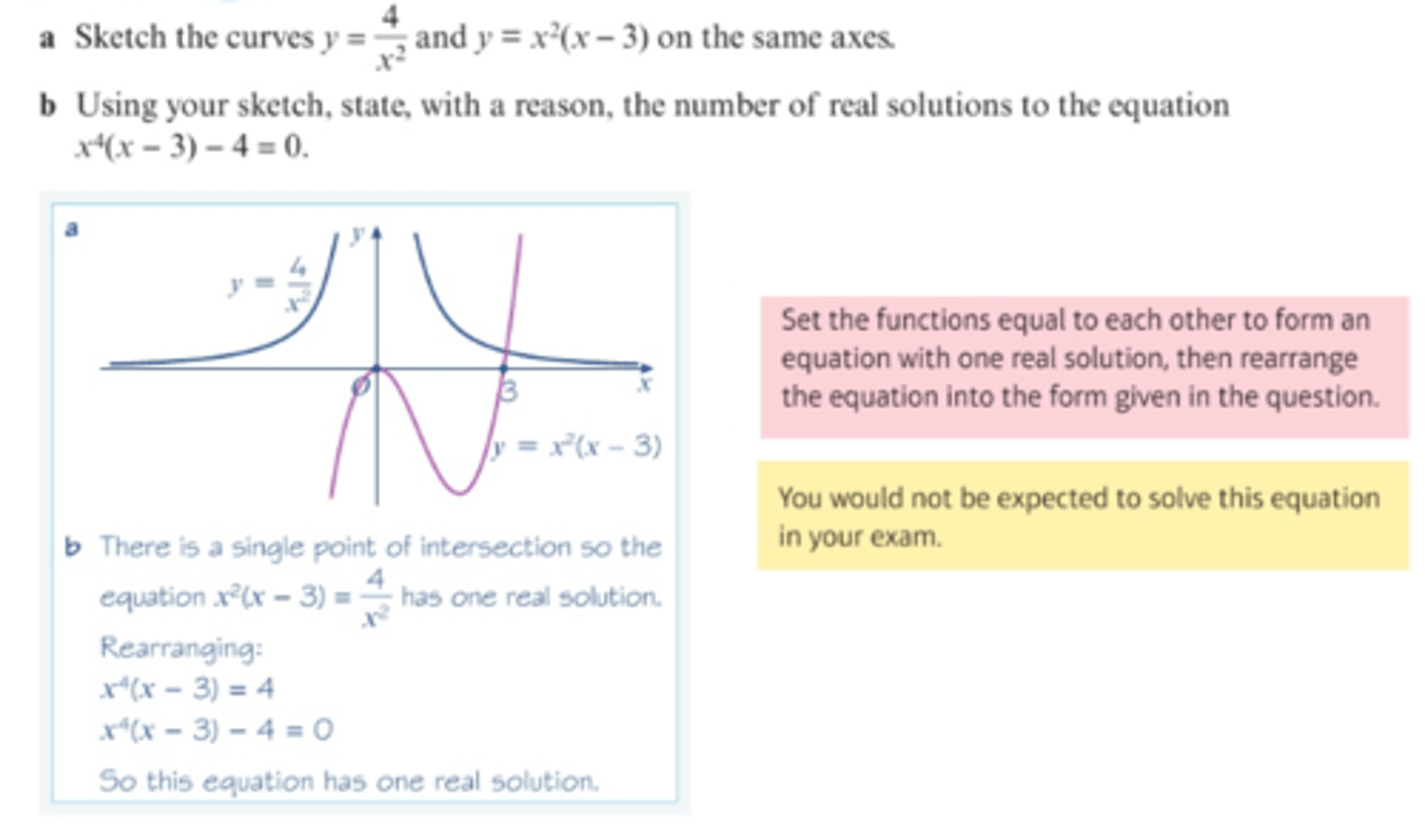
How can you transform graphs?
- By altering the function.
- Adding or subtracting a constant 'outside' the function translates a graph vertically.
- The graph of y = f(x) + a is a translation of the graph y = f(x) by the vector (0 a).
- Adding or subtracting a constant 'inside' the function translates the graph horizontally.
- The graph of y = f(x + a) is a translation of the graph y = f(x) by the vector (-a 0).
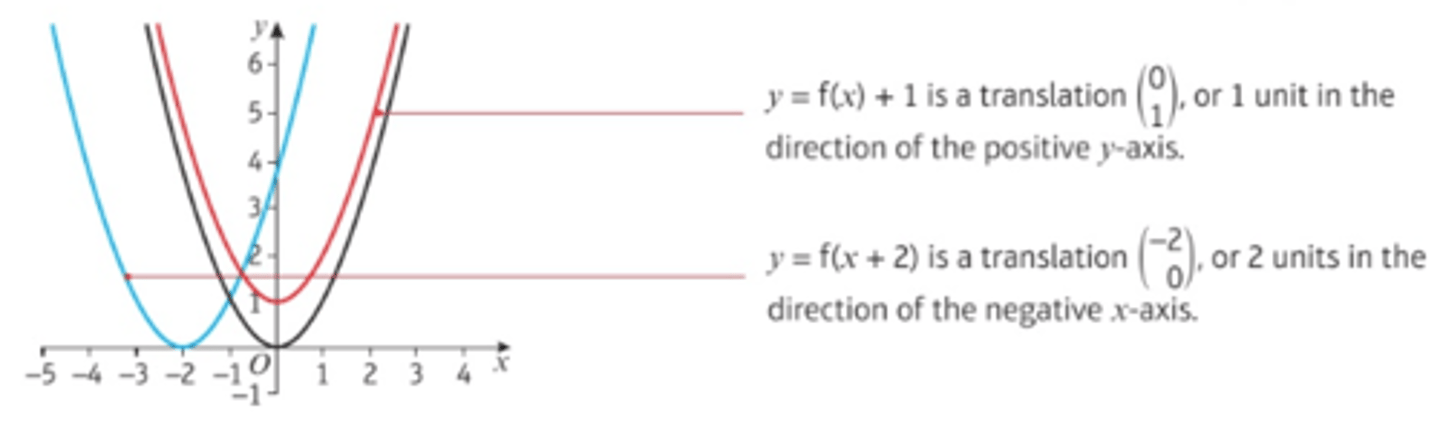
What are some examples of transformations of graphs?
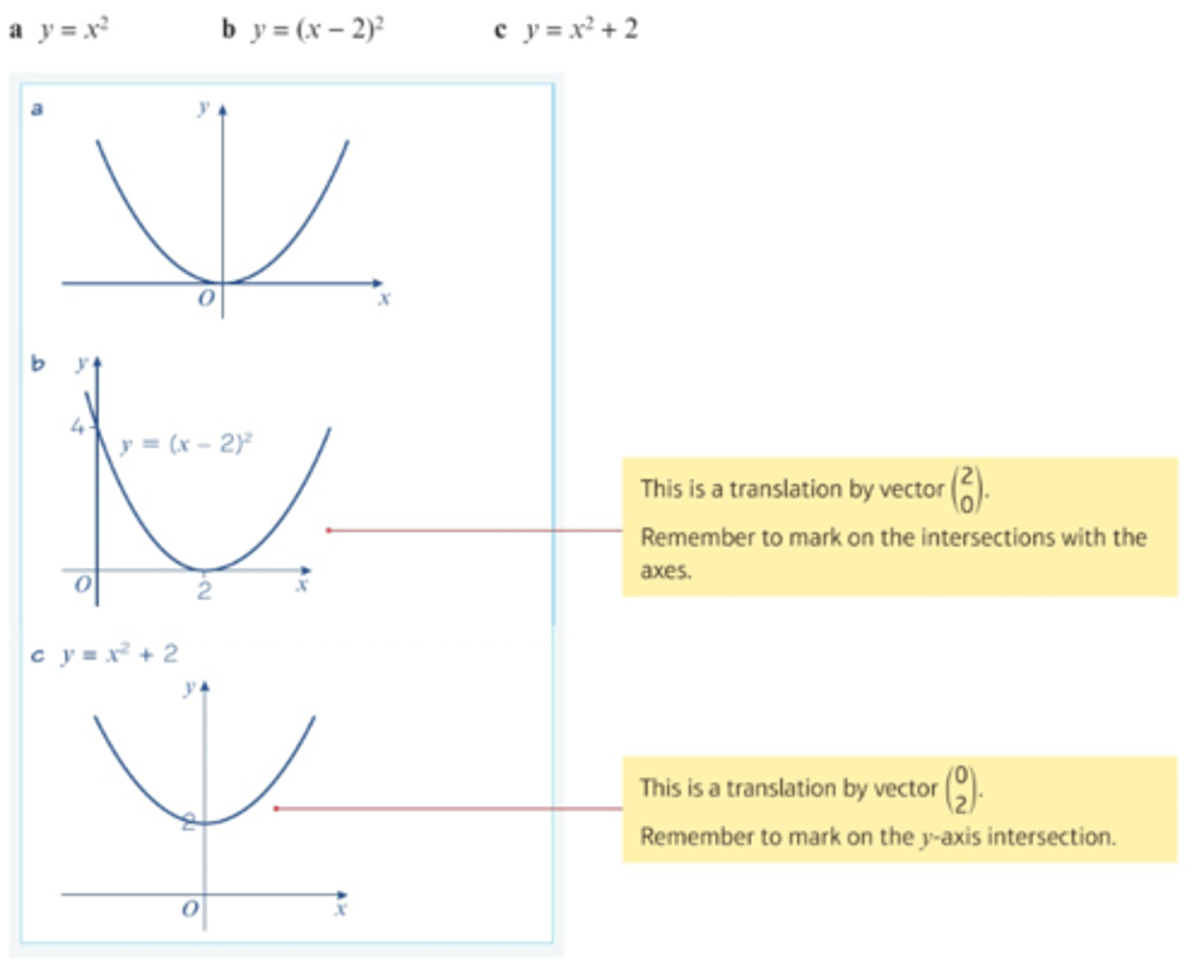
What are some more examples of transformations of graphs?
What are some examples of transformations of graphs with asymptotes?
How can you strech graphs?
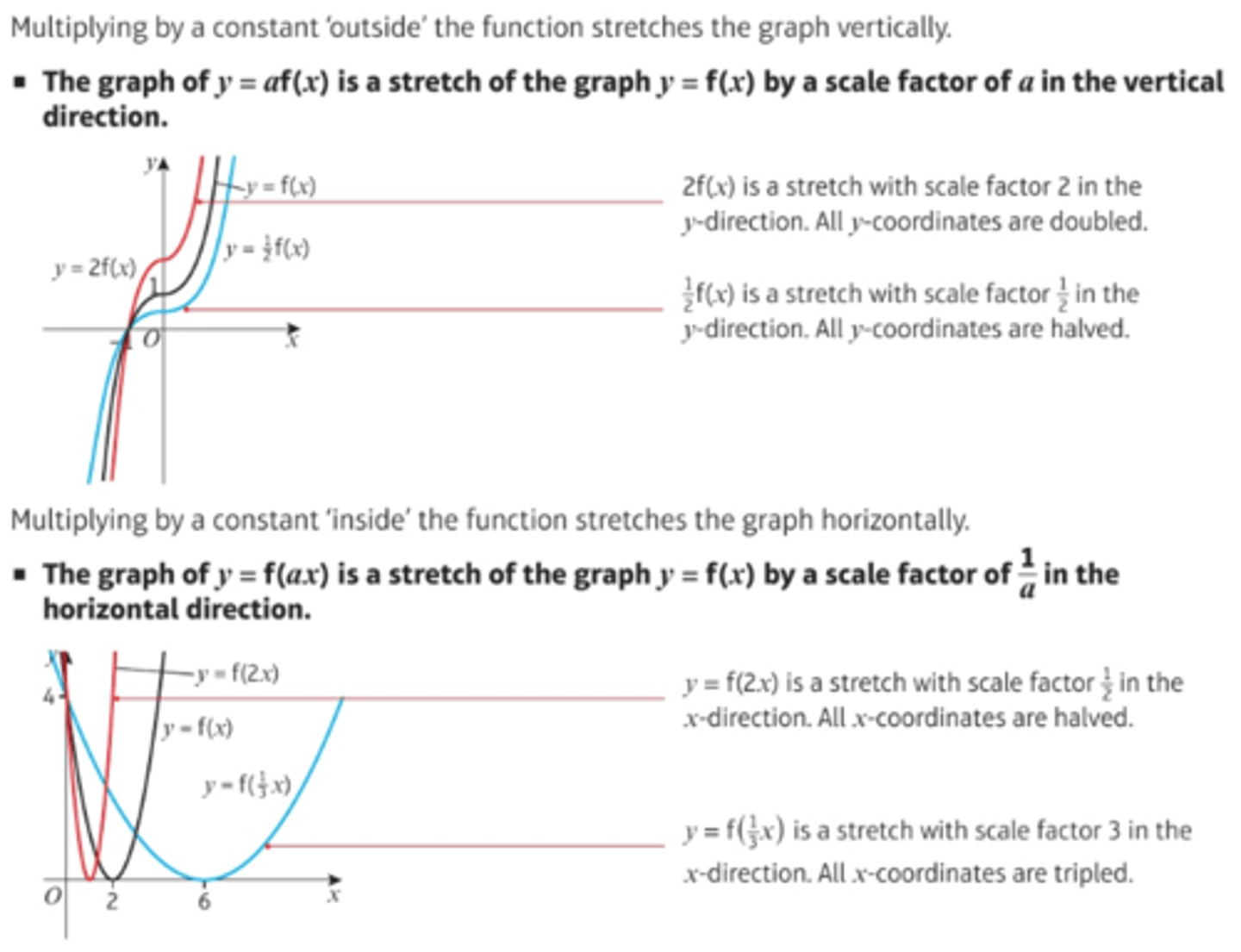
What are some examples of streching graphs?
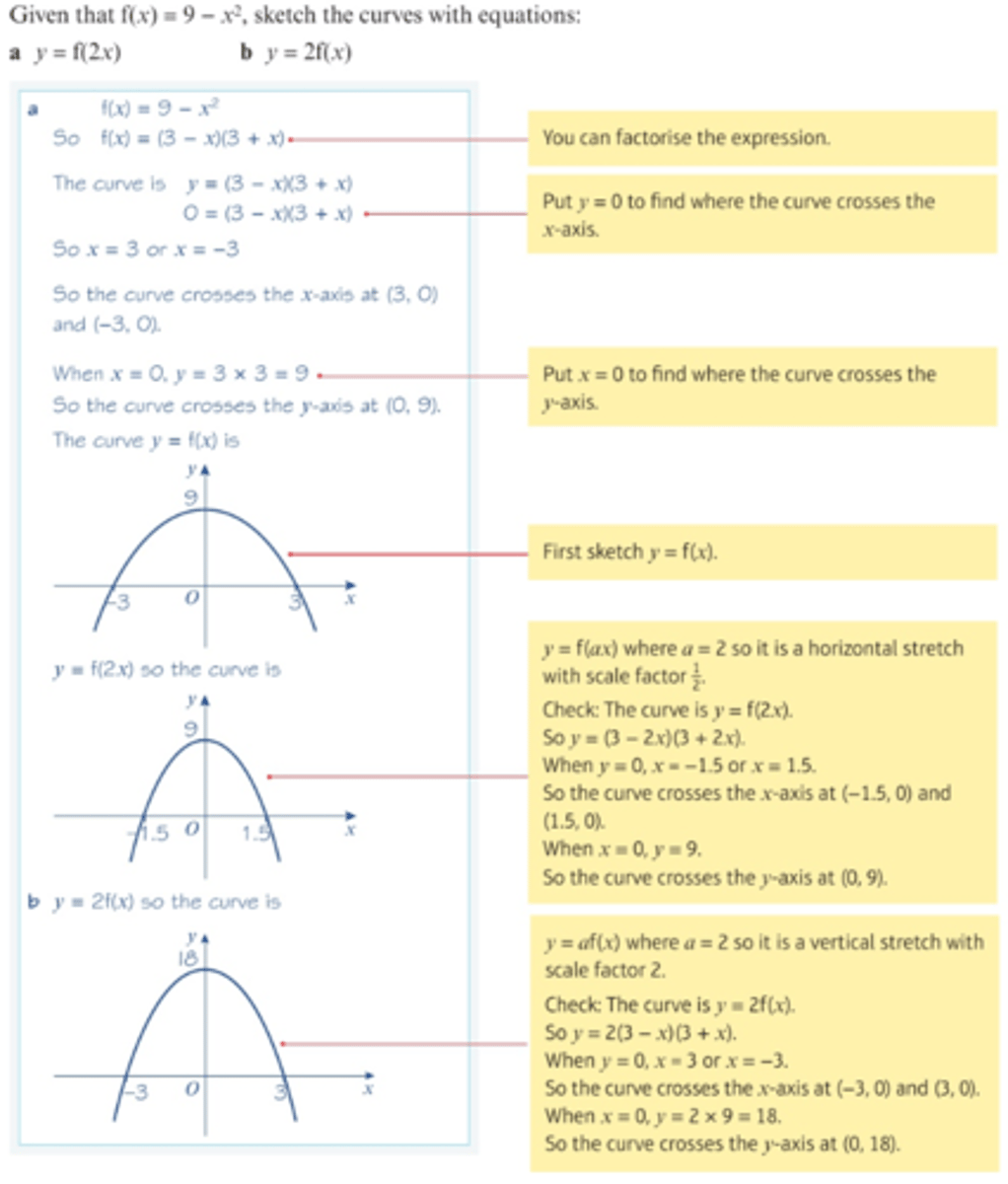
What are some more examples of streching graphs?
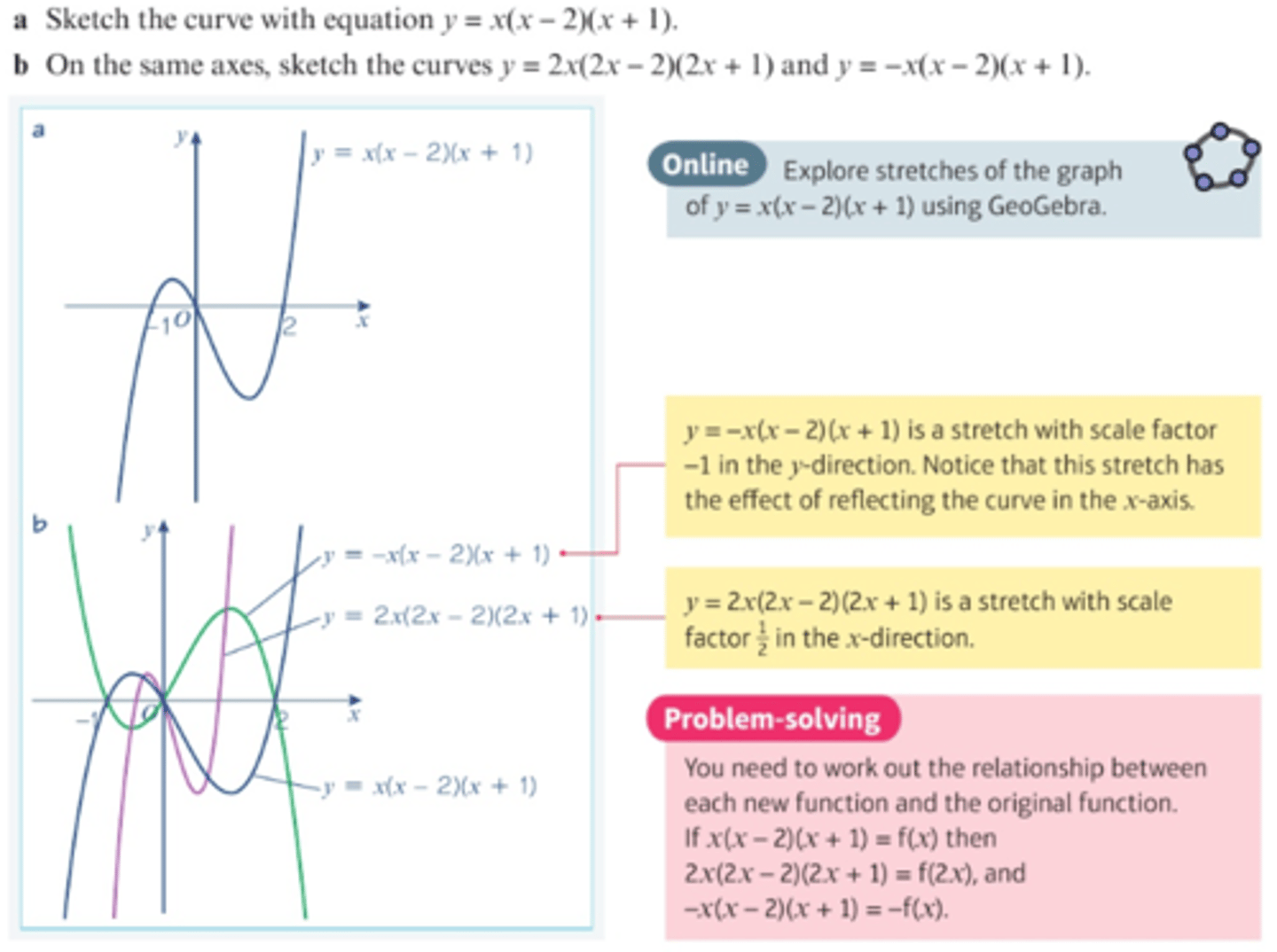
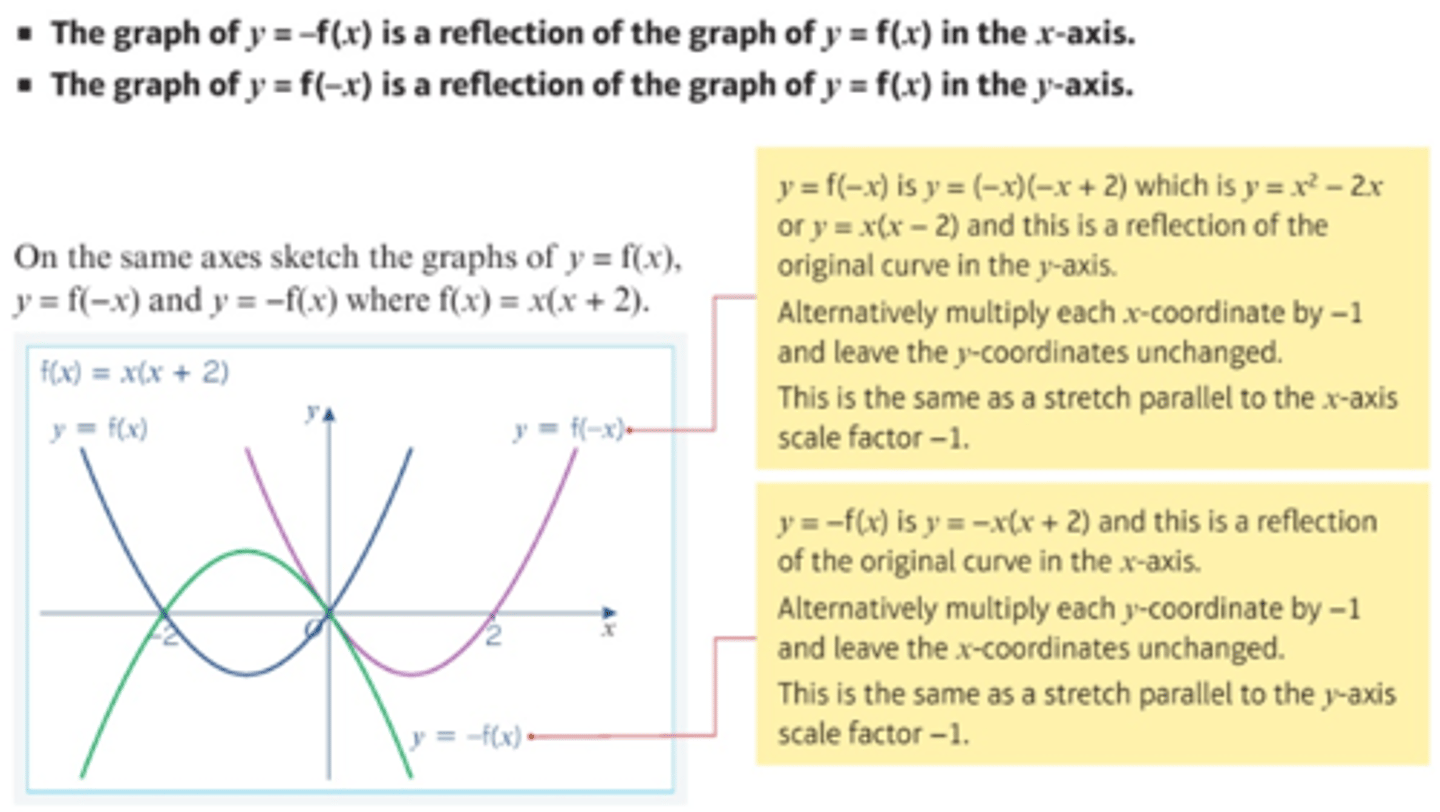
How can you reflect graphs, and what is an example of a reflection of a graph?
EDEXCEL A-LEVEL PURE MATHS CHAPTER FOUR: GRAPHS & TRANSFORMATIONS
(MAKE SURE YOU KNOW THE FOLLOWING)