cell signaling
 Studied by 0 people
 Call Kai
 Learn
Learn Practice Test
 Spaced Repetition
 Match
Match Flashcards
 Knowt Play
1/17

Earn XP
Description and Tags
final unit
Name | Mastery | Learn | Test | Matching | Spaced |
|---|
No study sessions yet.
18 Terms
what can cell signaling also be known as
signal transduction
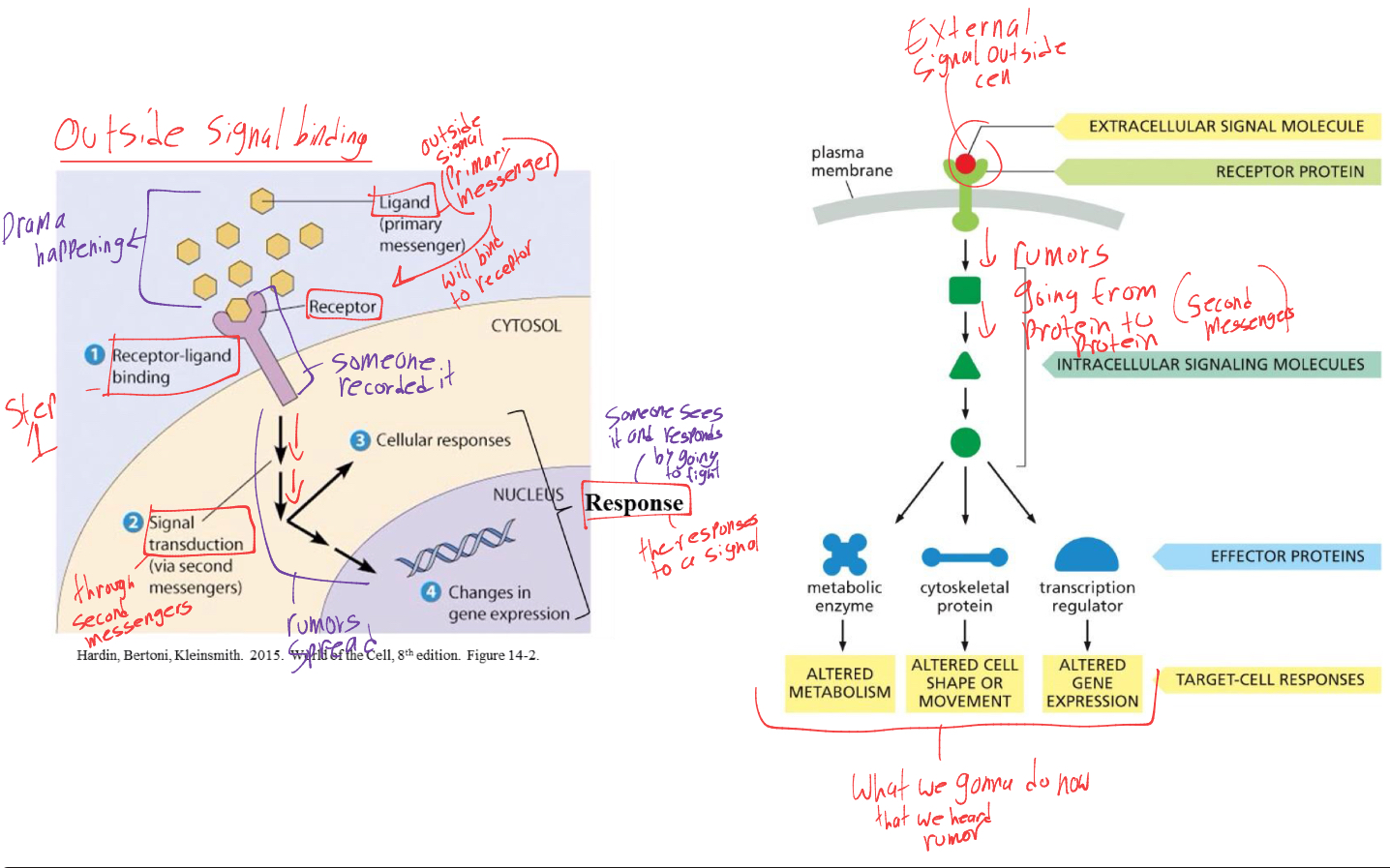
what is the simple process of cell signaling
ligands. signal molecule(primary messenger) binds to receptor in membrane
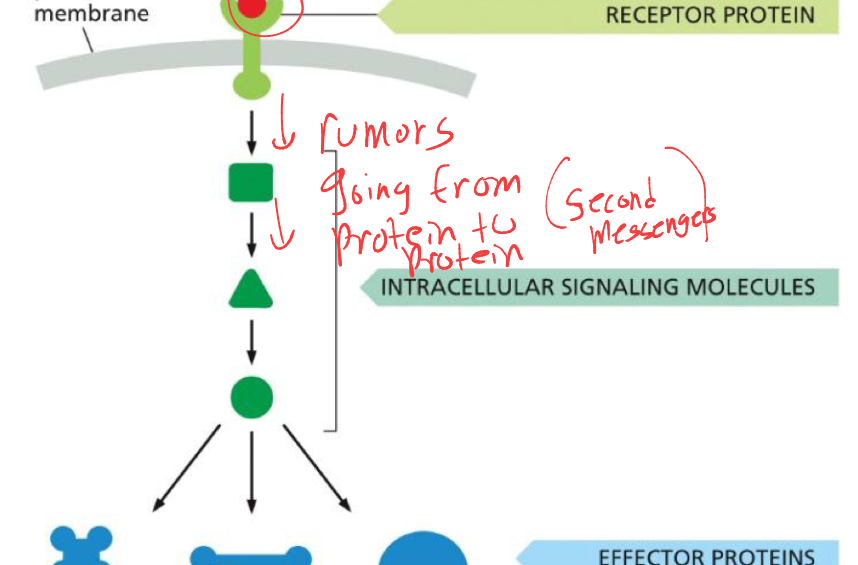
second messengers report signal to eachother (intracellular signaling proteins)
a response takes place in the target cell
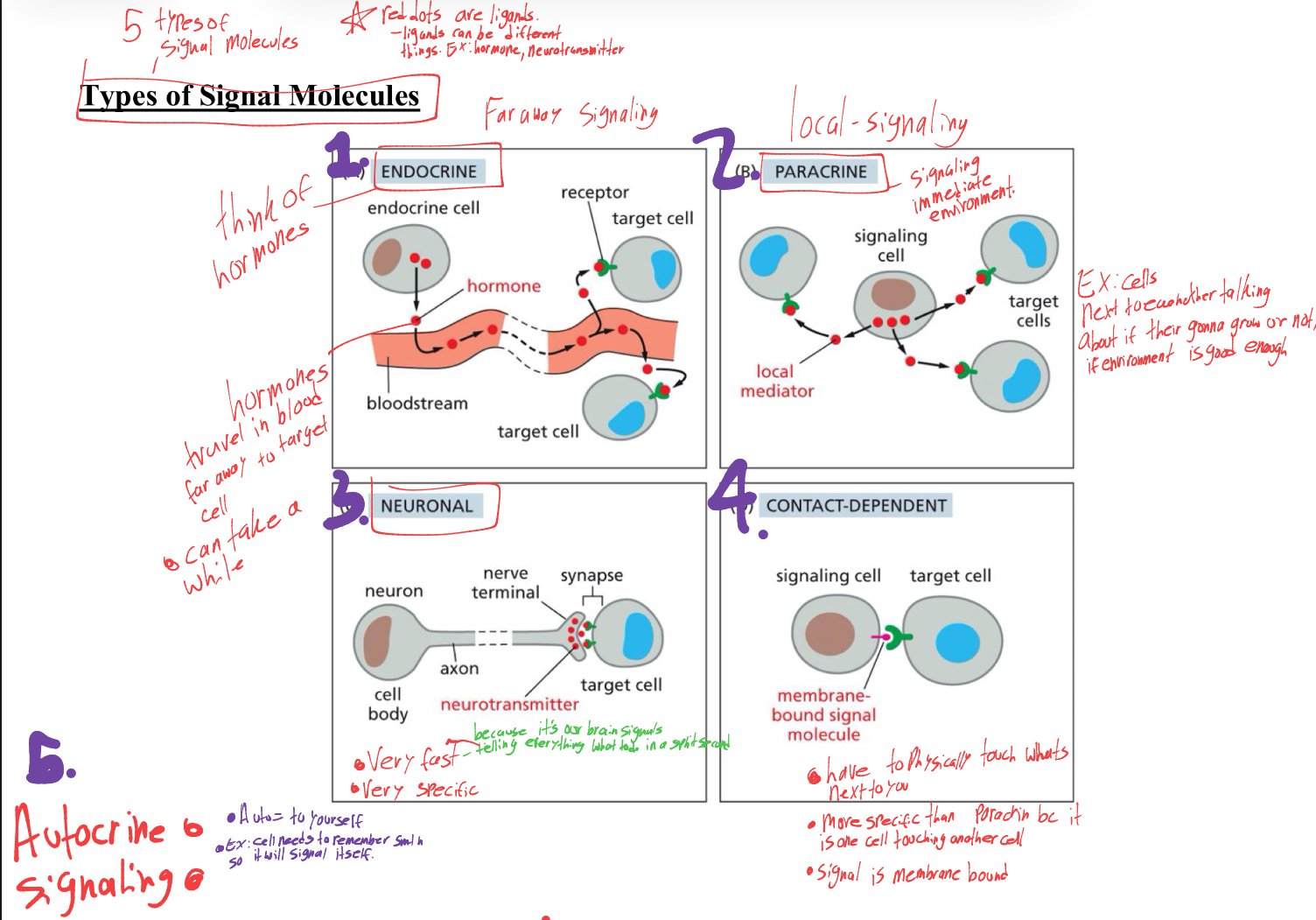
what are the 5 types of signal molecules and how they work
endocrine- take a while and signal far away (ex. hormones traveling in blood far away to target)
paracrine- signal local environment (ex. cells next to each other deciding if they want to grow or not)
neuronal- very fast and specific (its our brain signals telling specific things what to do)
contact-dependent- have to physically touch whats next to you, more specific that paracrine bc touching things, signal is membrane bound(cannot leave membrane)
autocrine: telling yourself what to do (signaling itself to remember)
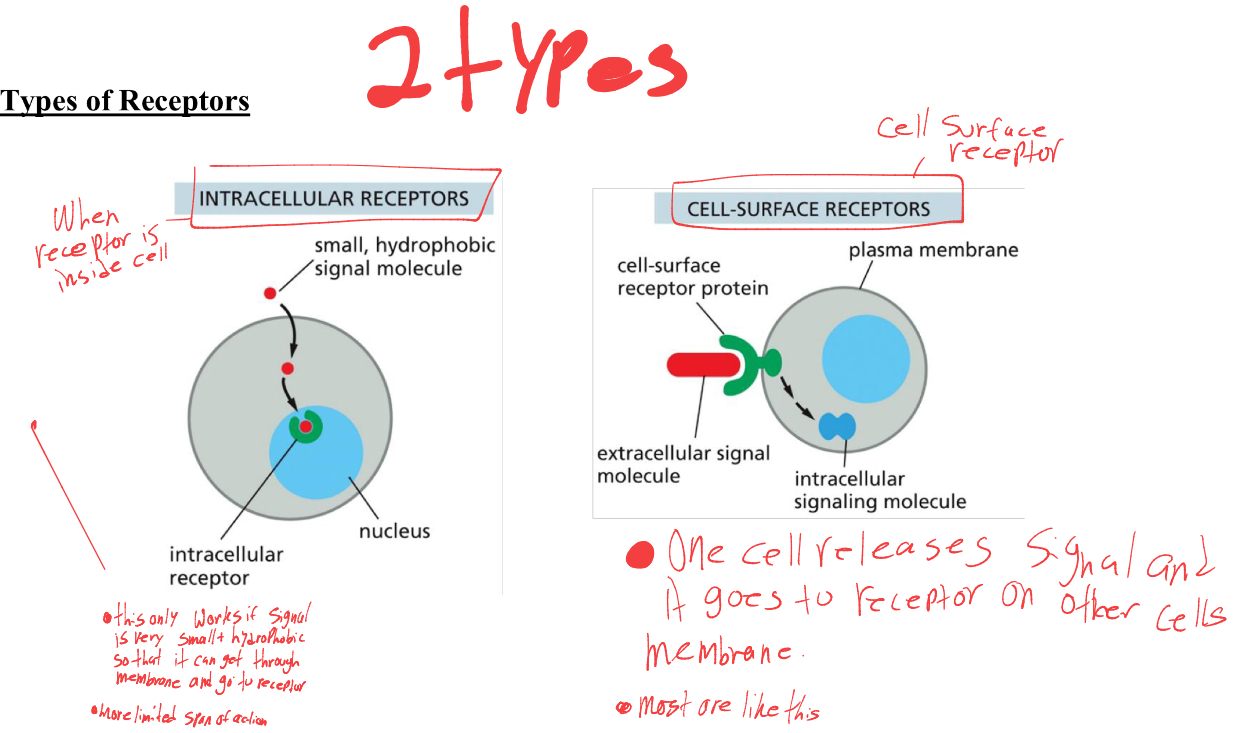
what are the 2 types of receptors and their traits
intracellular receptor- when the receptor is inside the cell. (only works if signal is very small+hydrophobic so it can enter membrane to get to receptor.) makes it more limited
cell- surface receptors- one cell releases signal and it goes to receptor in other cells membrane. most receptors are like this.
can one signal produce only one reaction
no, it can cause different reactions depending on the cell it binds to.
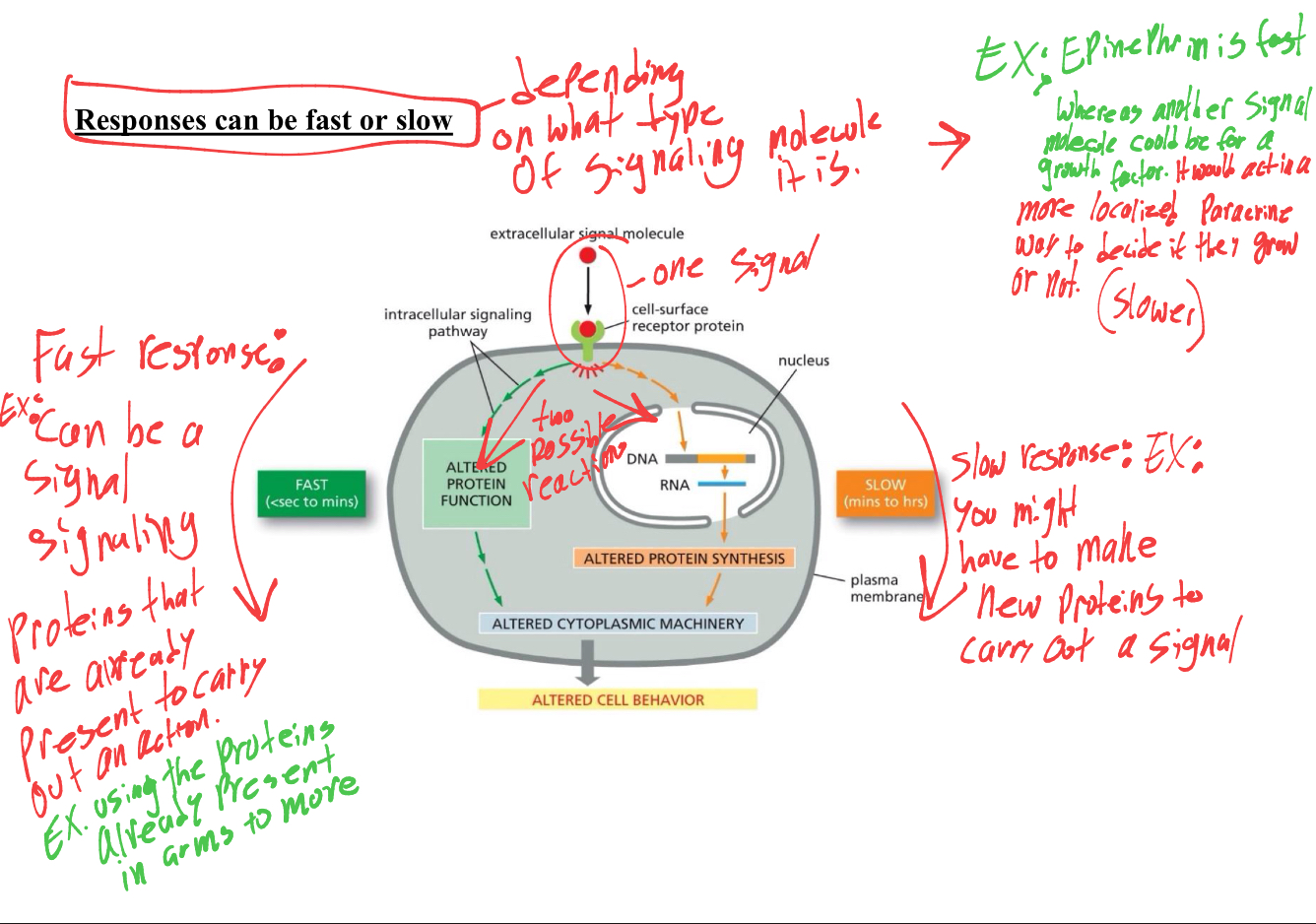
what can the speed of responses be to a signal
fast or slow depending on what type of signaling molecule it is.
fast response- can be signaling proteins that are already present (ex. neuronal signal signaling movement of arm)
slow response: you might have to make new proteins to carry out a signal, (could be a growth signal acting in a paracrine signal with cells deciding to grow or not)
the intercellular proteins have molecular switches. what are the 2 types, and why do we need to be able to reset things quickly (switching it off is resetting it like shutting down a computer)
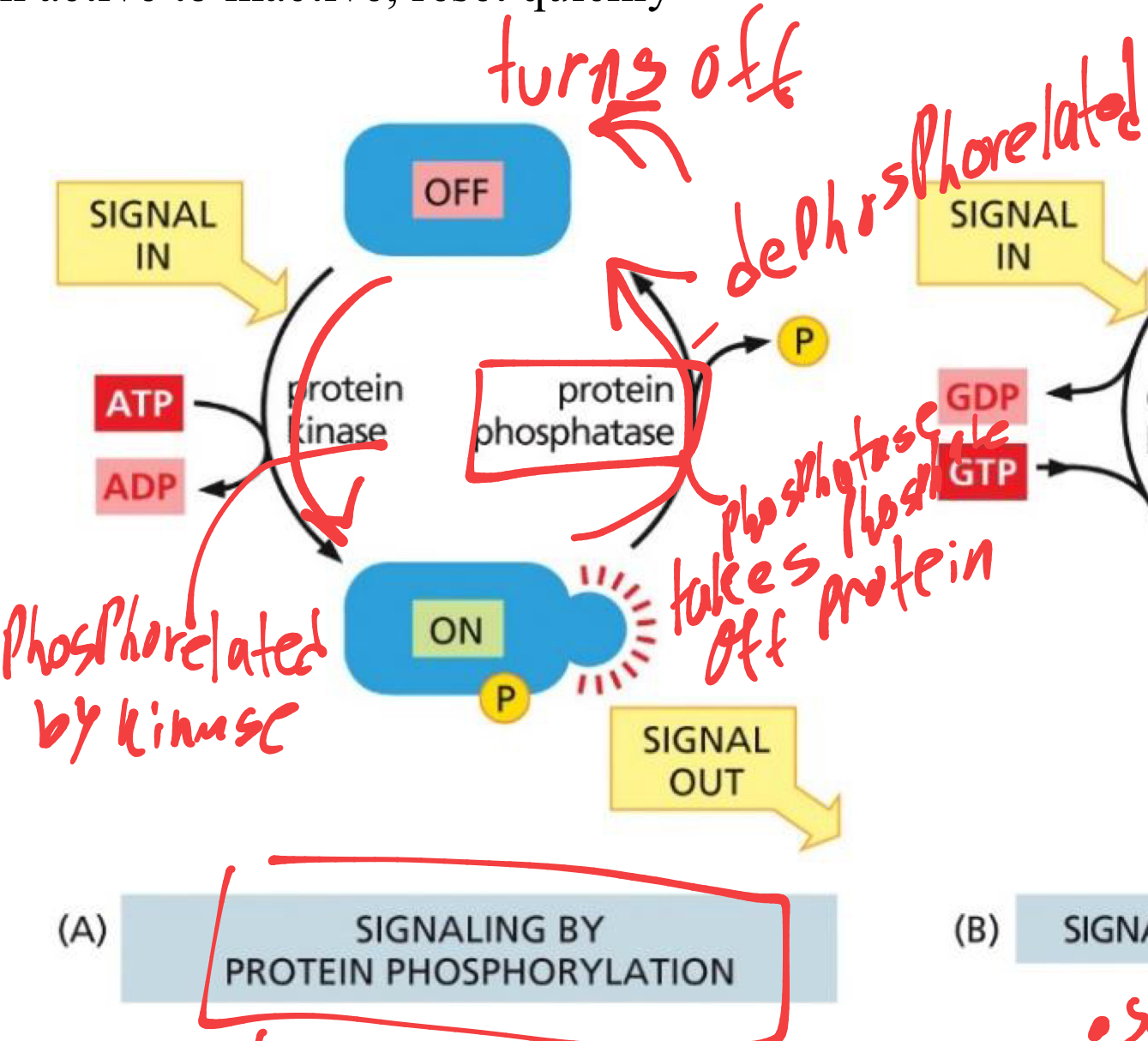
signaling by protein phosphorylation
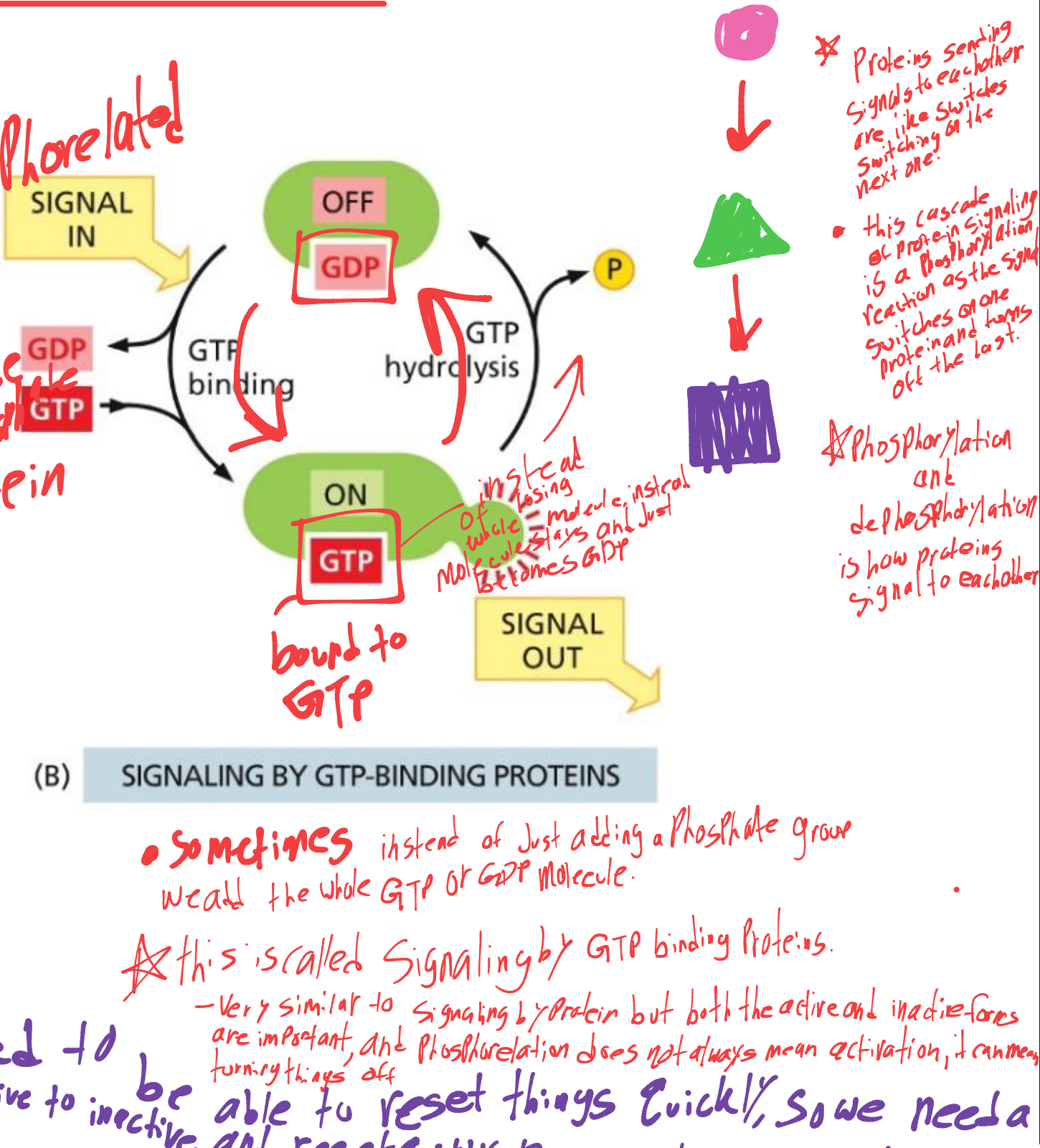
signaling by GTP binding proteins
because we need the cell to be able to go from active to inactive and reset quickly, because having something turned on too long is bad.
how does signaling by protein phosphorylation work
as the signal enters the protein, the protein activates as it is phosphorylated by kinase,
and as single leaves, the protein is dephosphorylated by phosphatase and turns back off
how does GTP binding proteins work
why is it nice and whats a side note
as signal enters protein GDP leaves the inactive protein and GTP binds to active it,
when signal leaves protein, GTP hydrolyzes (Turns back into GDP by losing water) and protein becomes inactive again
this is nice bc the protein doesn’t have to lose a whole molecule. unlike other one.
side note, phosphorylation won’t always mean activation, it can turn things off too
what are the 3 types of signal transaction pathways and what does signal transaction mean
ion channel coupled receptors
G-protein couples receptors
enzyme couples receptors (receptor tyrosine kinases (TRK))
it means a signal transferring from one cell to another (cells talking to eachother)
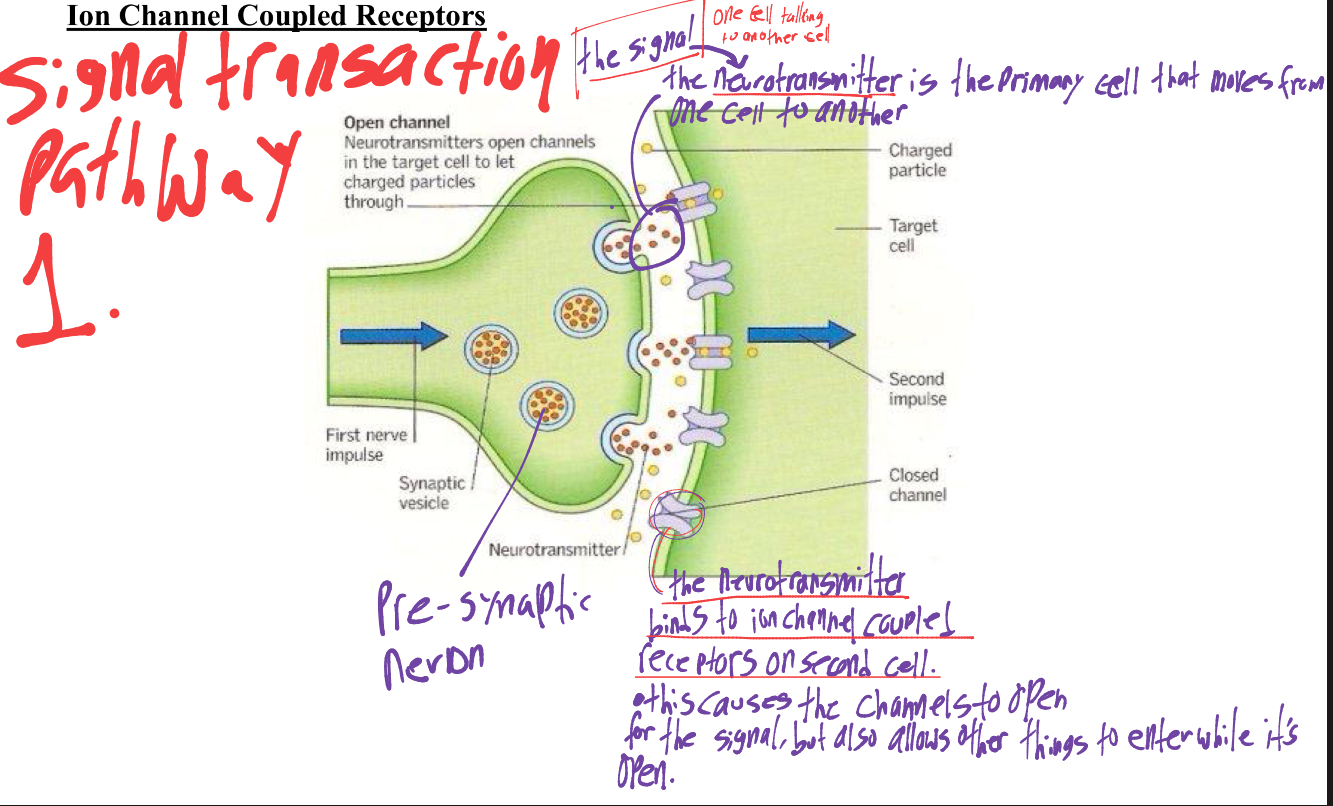
how do the ion channel coupled receptors work
and what is a consequence of the channels being open
the calcium channels open letting in calcium, triggering the vesicles in the pre- synaptic cell to travel to the membrane, releasing the neurotransmitter, into the synaptic cleft (space between the cells) and the neurotransmitter goes to the ion channel coupled receptors on post-synaptic cell.
but while channels are open, other things can flow into the cell too
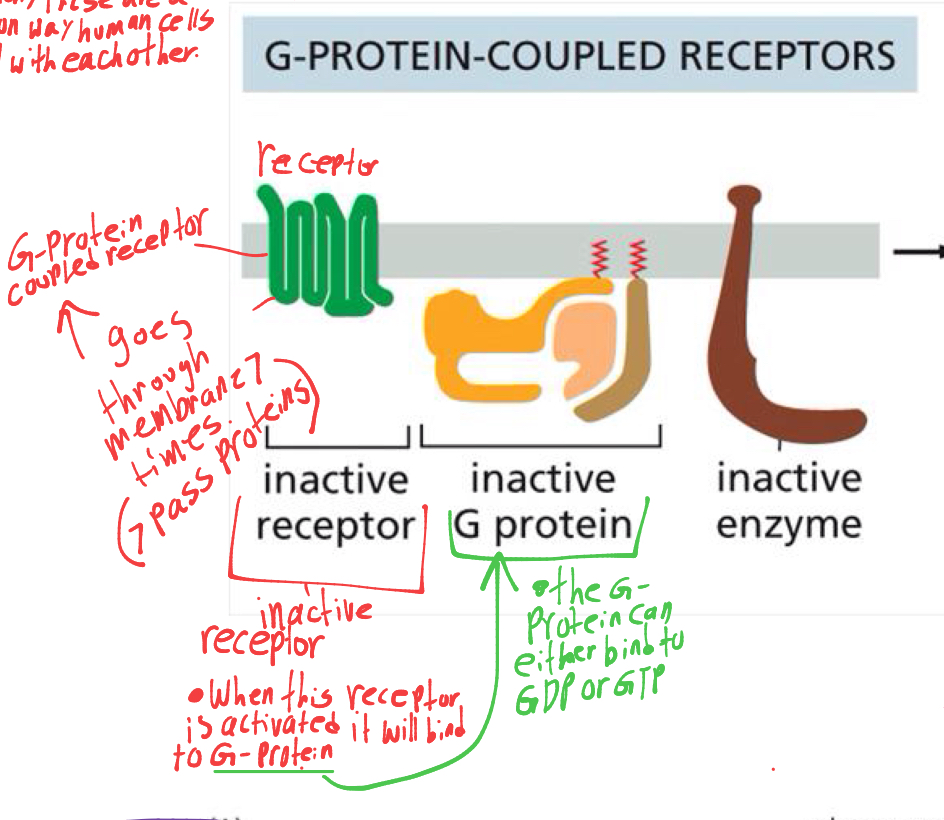
what is significant about G protein coupled receptors and its enzymes on the membrane
and what Is this signaling pathway used a lot for
the receptor goes through the membrane 7 times, and will bind to G-protein once activated
the G-protein is inactive when bound to GDP and activates when bound to GTP. the g-protein is also known as G- trimeric protein.
this is a very common signaling pathway, it is also how human cells signal to eachother.
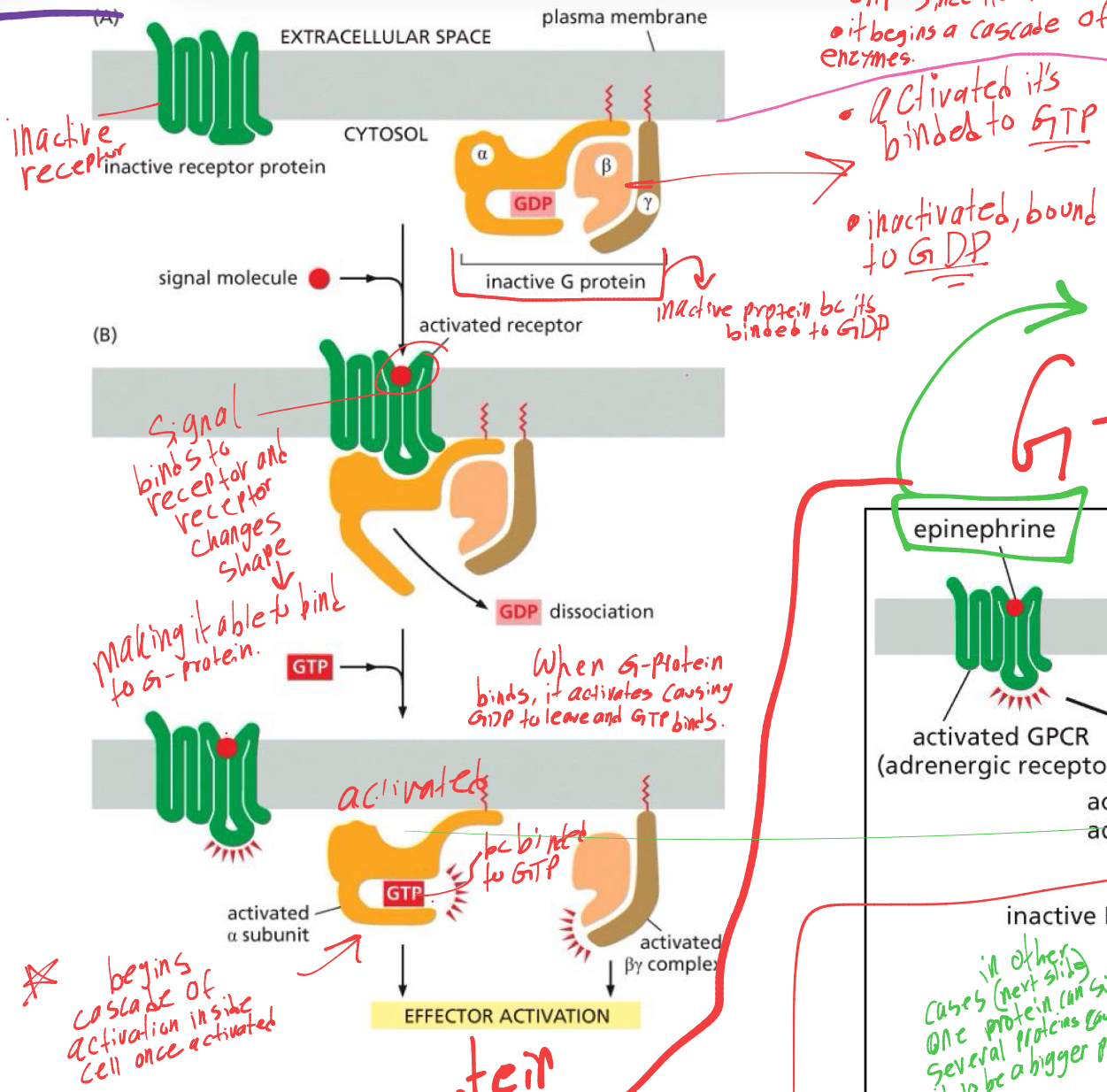
what are the steps to the g-protein coupled receptor
signal comes in from another cell and binds to receptor, causing a shape change in the receptors bottom, allowing G- protein to bind.
G- protein activates after binding, and releases GDP and binds to GTP, beginning the cascade to other proteins.
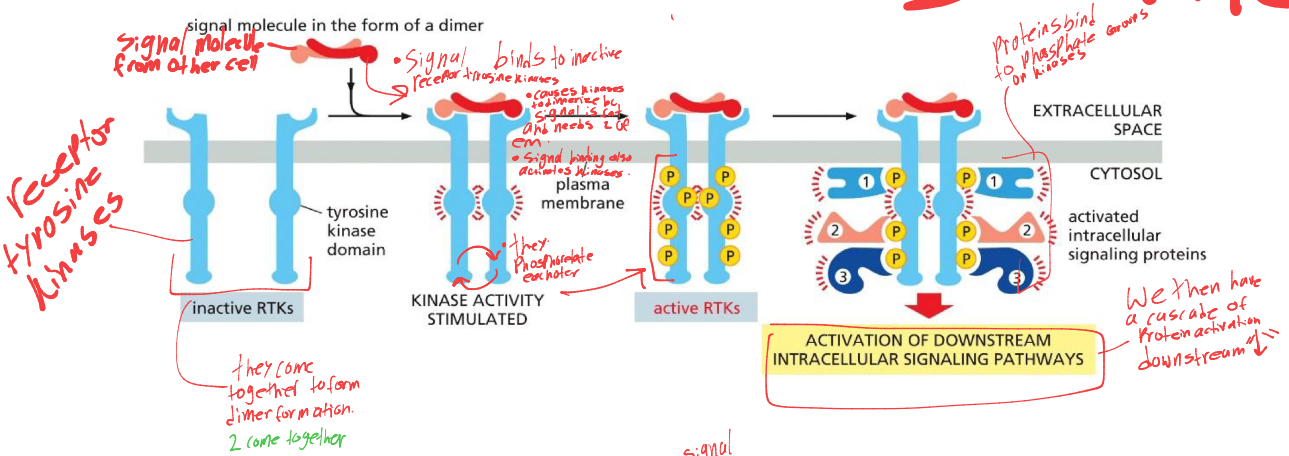
what are the first steps of receptor tyrosine kinase
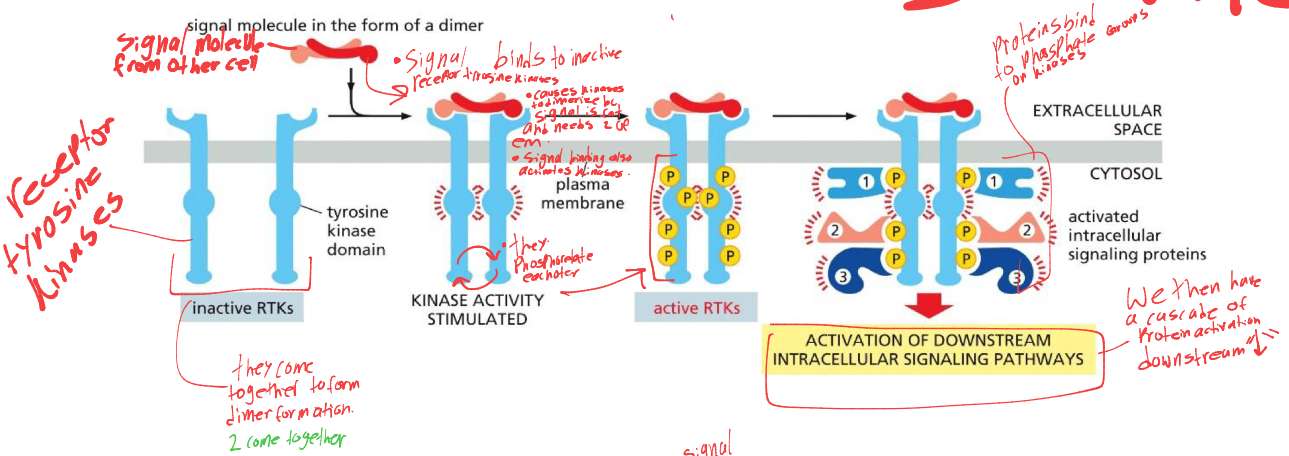
the RTK’s are inactive. a signal binds to RTK’s causing them to dimerize (come together)
signal also activates kinase, which makes RTK’s phosphorylate eachother, activating the receptors
proteins then bind to the phosphate groups on kinases, causing the cascade of signals downstream.
what directly gets phosphorylated in TRK’s
and what binds to these things
they are lined with tyrosine amino acids, and they are easy to be phosphorylated.
and the part of the protein that will bind to phosphorylated tyrosines is the SH2 domain
after the first initial steps, what do receptor tyrosine kinase usually activate in the cascade and what are the steps of this activation
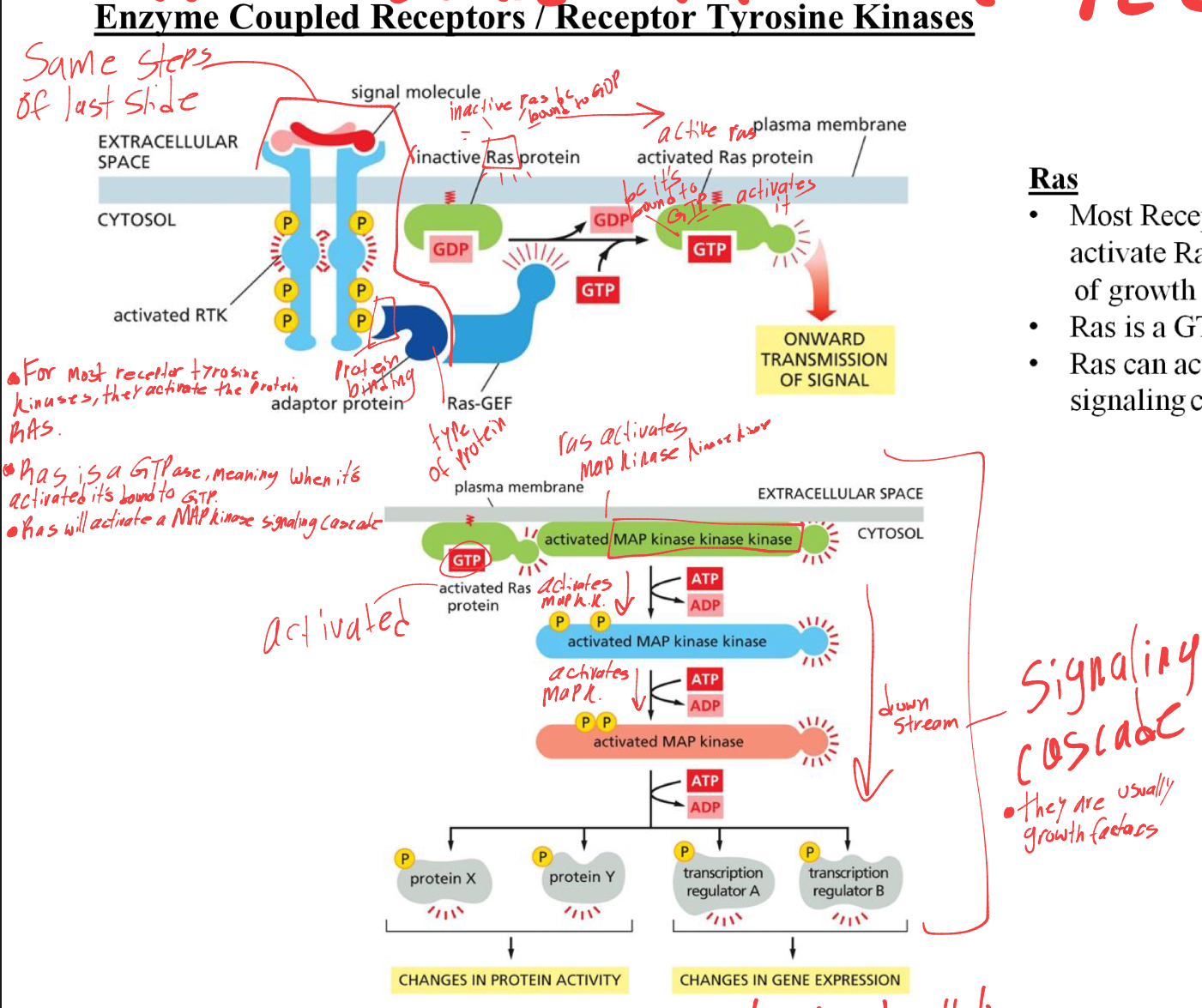
the ras protein is activated in the signal cascade.
Ras is a GTPase meaning when its bound to GTP it activates and when bound to GDP its deactivated.
once activated, the Ras protein will begin a signal cascade to the MAP kinase proteins (Mao kinase kinase kinase)
these are growth proteins.
what are certain qualities about the RAS signal cascade pathway it initiates.
and what kind of mutations can it gain
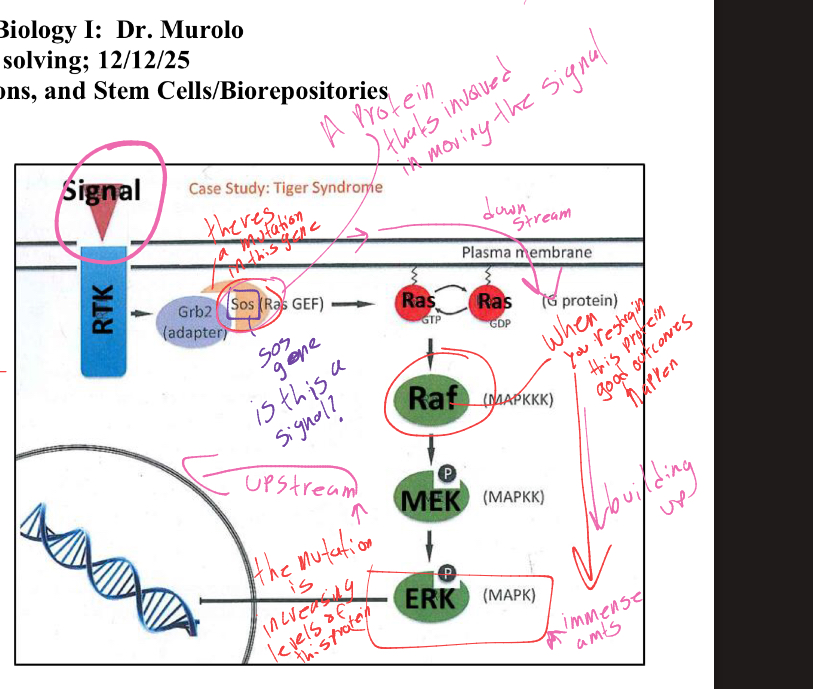
the signal travels downstream of the cascade, and anything before is upstream (upstream=going backwards)
if a dominant mutation is in a protein in the cascade then it will cause the protein to GAIN A FUNCTION meaning it will stay activated and not turn off.
when a protein in the cascade is always turned on, the immense amount of single will build up at the end protein of the cascade.
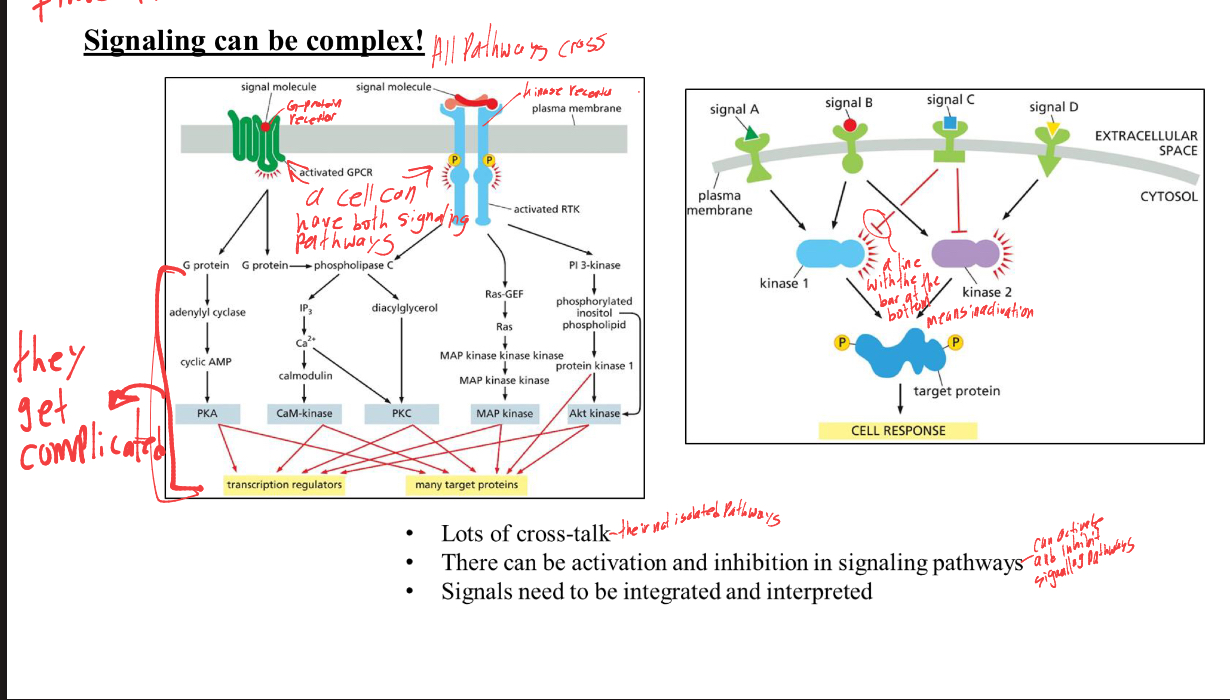
are signaling pathways simple
no. they are complex and can intersect eachother (cross-talk)
one cell can have multiple types of signaling pathways
signaling pathways can activate and inhibit things