plant biology lecture 8- secondary growth in stems
 Call Kai
 Learn
Learn Practice Test
 Spaced Repetition
 Match
Match Flashcards
 Knowt Play
1/25

There's no tags or description
Looks like no tags are added yet.
Name | Mastery | Learn | Test | Matching | Spaced | Call with Kai | Chat |
|---|
No analytics yet
Send a link to your students to track their progress
26 Terms
what is an annual plant
plants that complete their growth in a single year
plant dies after seed production
no secondary growth
what is a biennial plant
plants that take 2 years to complete life cycle
usually goes dormant over winter
resumes vegetative growth after dormancy
reproduced then dies
aka ‘winter annual’ plants
what is a perennial plant
plants the live for more than 2 years
reproduce then go dormant over winter
resume vegetative growth afterwards
some plants can die but some can live for thousands of years
where does secondary growth come from
lateral meristems
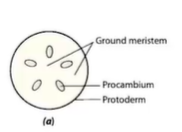
where in the plant stem is this diagram
close to the apical meristem
the primary meristematic tissues are identified
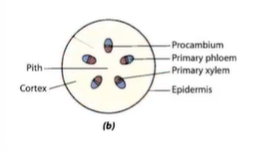
where in the plant stem is this diagram
further down the stem
vascular bundles are differentiated
procambium is seen
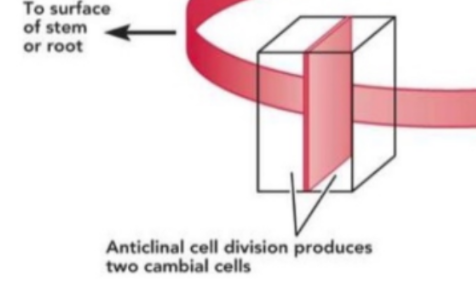
what is anticlinal division
plane of division is perpendicular (90 degrees) to the surface of the plant tissue
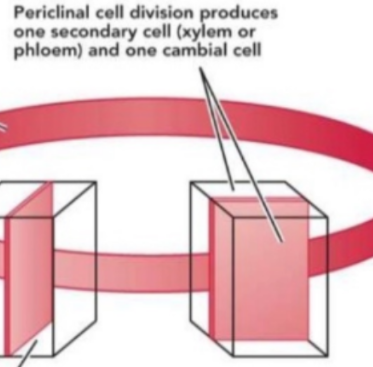
what is periclinal division
plane of division runs parallel to the surface it’s closest to
whats another name for vascular bundles
fasicles
how does transition from primary to secondary growth begin
molecular signals come from the procambium in each vascular bundle
signal tells parenchyma cells to become meristematic (begin to actively divide)
procambium turns into vascular cambium (a lateral meristem)
vascular cambium divides and creates secondary xylem/phloem
occurs in a ring around the stem
primary phloem/xylem gets pushed out and sometimes crushed
what types of initials does the vascular cambium have
fusiform initials and ray initials
what are fusiform initials
Much longer than wide
Producing xylem and phloem cells that will transport material along the plant’s vertical axis
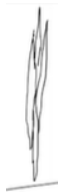
what are ray initals
Square-like shape and more even
Produce vascular rays (xylem and phloem) that will transport materials across the width of a plant stem
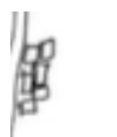
what does the periderm consist of
phellogen, phelloderm and phellum
what is phellogen
cork cambium. produced phelloderm to the inside and phellum to the outside of cells
what is the purpose of the phellum
to protect the stem
produced secondary wall that is suberised and lignified and tightly packed together
what is phelloderm made of
parenchyma cells (secondary cortex)
what are lenticels
region of periderm with lots of intercellular space
allows for gas exchange
near stomata
seen at small woody dots along a stem
what happens to the apical meristem at the end of a growth season
will produce scales instead of phytomers to protect the apical meristem during end of season
what is wood
the secondary xylem that vascular cambium produces
how do trees produce early wood
vascular cambium in trees from from dormant to active after a season, and produce secondary xylem/phloem
spring has favourable conditions (water) so vascular cambium produces larger cells (early wood)
how do trees produce late wood
when season progresses, growing conditions become less favourable, and vascular cambium produced late wood
what is heartwood
the darker wood in the middle of a tree trunk. made of dead xylem cells filled with resins and tannins for structural integrity
not conductive
what is sapwood
conductive lighter outer wood. sap oozes out of tissues
where can vascular cambium and phloem be found on a tree
in a thin later on the outside of the wood
what are vascular rays
made of xylem/phloem parenchyma (thin primary cell walls)
run across the trunk
creates weak points + cracks along the wood. represents where xylem rays were produced