Module 8: Instrument Design and Classification
 Call Kai
 Learn
Learn Practice Test
 Spaced Repetition
 Match
Match Flashcards
 Knowt Play
1/48

There's no tags or description
Looks like no tags are added yet.
Name | Mastery | Learn | Test | Matching | Spaced | Call with Kai | Chat |
|---|
No analytics yet
Send a link to your students to track their progress
49 Terms
Design characteristics of periodontal instruments can
vary widely among manufacturers, consider handle, shank, and working end design
Instruments with ergonomic design help
prevent musculoskeletal injury during instrumentation, larger handle diameters and lightweight handles require less pinch force
Handle design is important in
prevention of musculoskeletal injury during instrumentation,
Recommended handle design
large handle diameter, lightweight hollow handle, handle tapers near shank, and raised texturing

Which is balanced
B
what does it mean for periodontal instrument to be balanced
working ends are aligned with long axis of handle, ensures that finger pressure applied against handle is transferred to working end for calculus removal
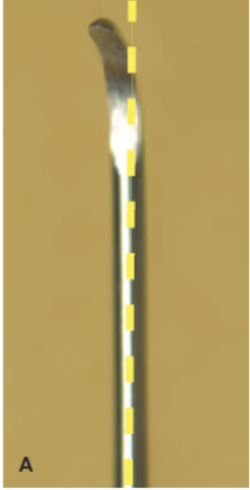
Simple shank:
also called straight shank
shank is bent in one plane, front to back, used primarily on anterior teeth
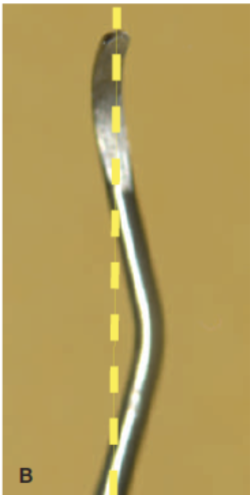
Complex shank:
also called angled or curved shank
shank is bent in two planes, front to back and side to side, used primarily on posterior teeth
Shanks on most periodontal instruments are bent in
one or more places to facilitate placement of working end against tooth surface
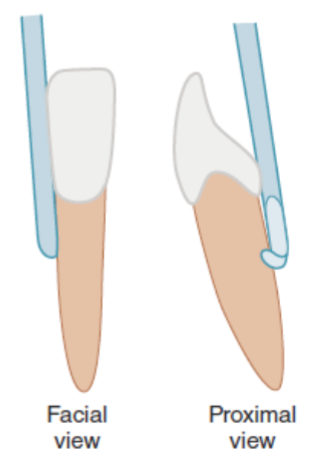
Why simple shank for anterior teeth
anteriors are wedge shaped and simple shank is long enough to reach along crown and onto root
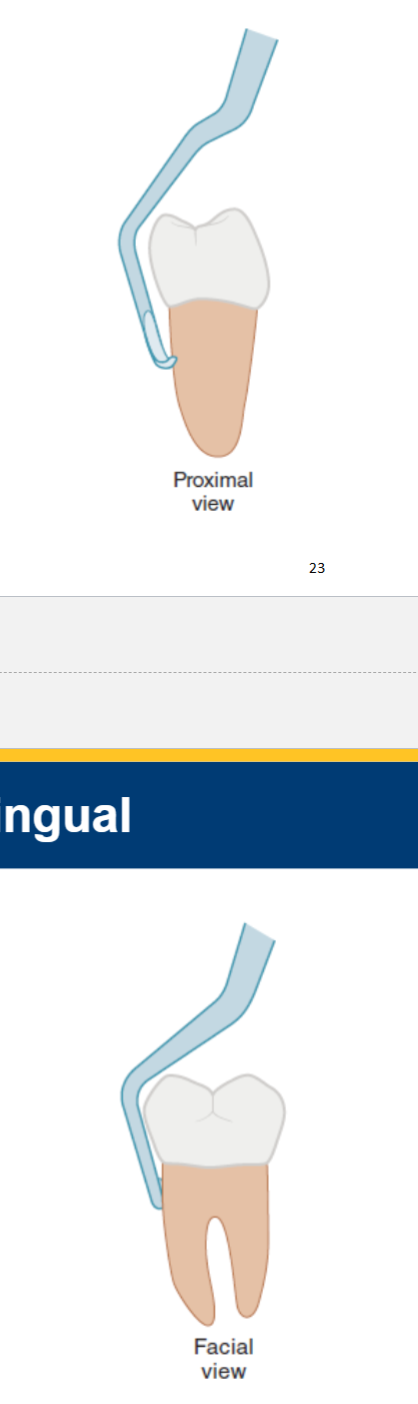
Why complex shank on posterior teeth
posteriors have large, bulky crowns that are larger in diameter than roots, side to side bends allow you to reach mesial and distal surfaces of root, front to back allow you to reach facial and lingual surfaces of root
Removes heavy deposits
rigid shank
Removes small to medium deposits
flexible shank
Flexible shank characteristics
enhances amount of tactile information transmitted to clinician’s fingers, desirable for explorers used to detect deposits beneath gingival margin, vibrations created when working end quivers over tooth surface irregularities, vibrations are transmitted from working end through shank and into handle
Function shank:
portion of shank that allows working end to be adapted to tooth surface
Lower shank:
portion of functional shank that is nearest to working end, also called terminal shank

What is the heart portion
lower/terminal shank
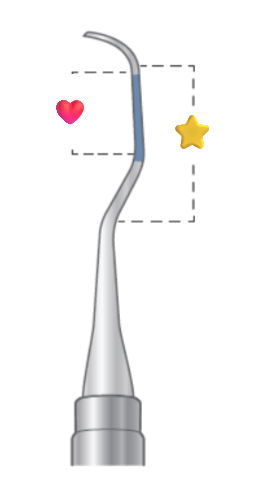
What is the star portion
functional shank
What type of shank for supragingival use on anterior teeth
simple shank with short functional shank length
What type of shank for subgingival use on anterior teeth
simple shank with long functional shank length
What type of shank for supragingival use on posterior teeth
complex shank with short functional shank length
What type of shank for subgingival use on posterior teeth
complex shank with long functional shank length

What is A
standard lower shank
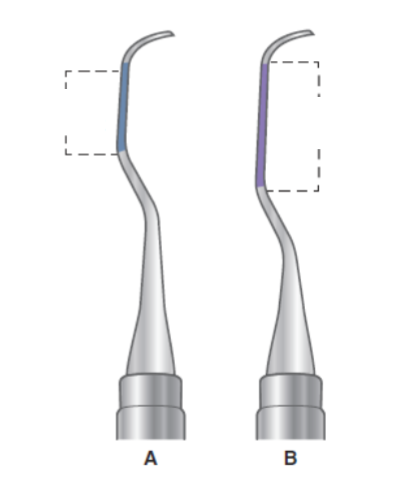
what is b
extended lower shank
instruments with extended lower shanks can reach
middle and apical third of root surface
What are single ended instruments
probes and mirrors
Double ended instruments may have
unpaired working ends or paired working ends
Unpaired working ends have
dissimilar working ends
Paired working ends have
mirror image working ends
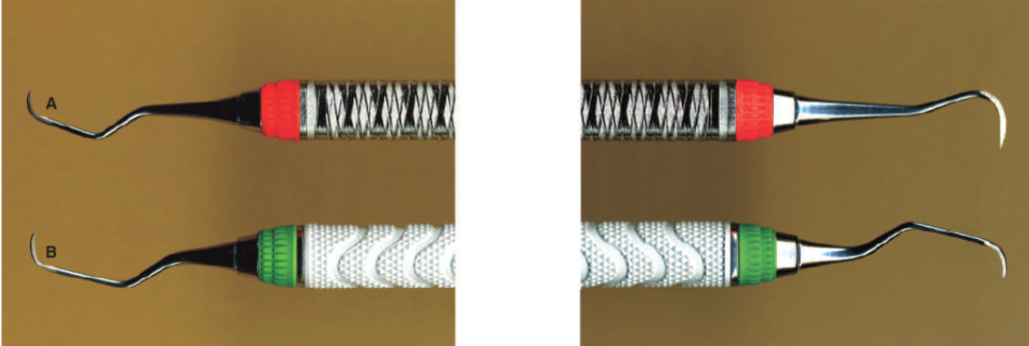
Which is paired working end
green
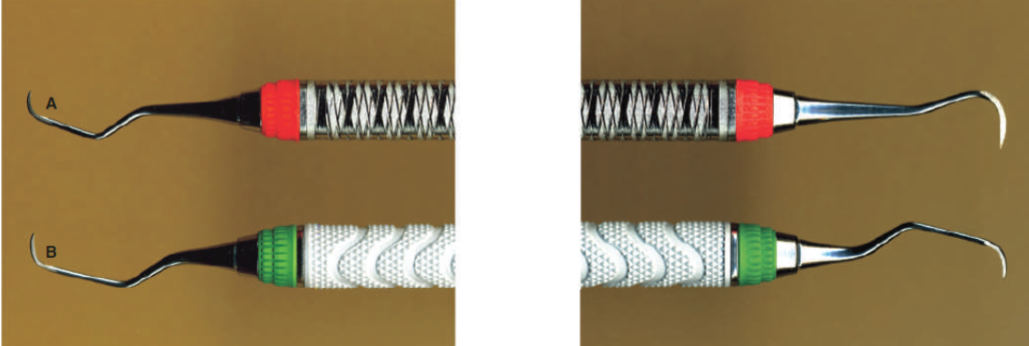
which one is unpaired
red
What determines an instrument’s function
working end design
Parts of working end
face, back, lateral surfaces, cutting edges, toe or tip
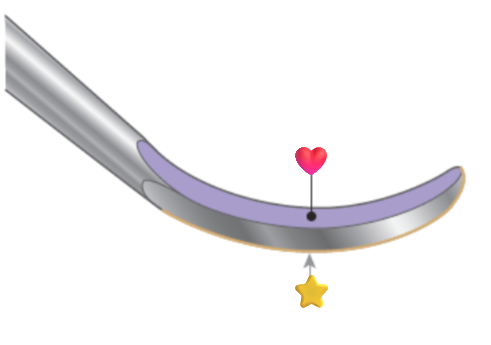
Heart
face

star
back
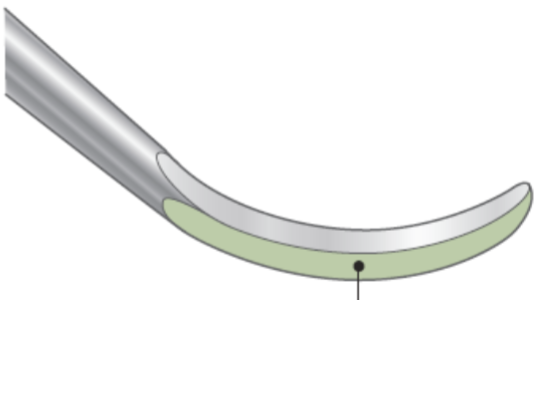
lateral surface
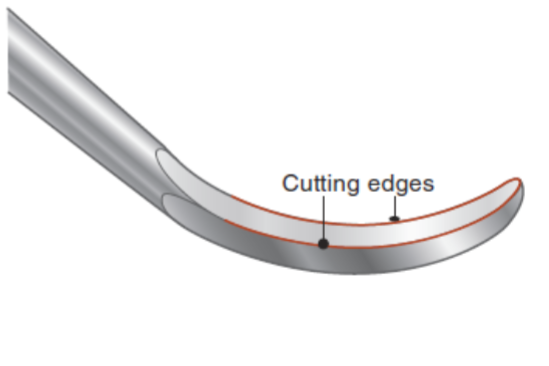
cutting edge is sharp edge formed where face and lateral surfaces meet, most working ends have two cutting edges

toe

tip
Cross section of working end determines whether
instrument can be used subgingivally, below the gingival margin, or is restricted to supragingival use
Working ends that are triangular in cross section are
limited to supragingival use
Working ends that are semicircular in cross section may be used
supragingivally and subgingivally
Curets have what cross section and can be used
semicircular, supragingivally and subgivivally
Sickle scalers have cross section and can be used
triangular, limited to supragingival use

What is a probe
slender instrument used to evaluate health of periodontal tissues, blunt rod shaped working end
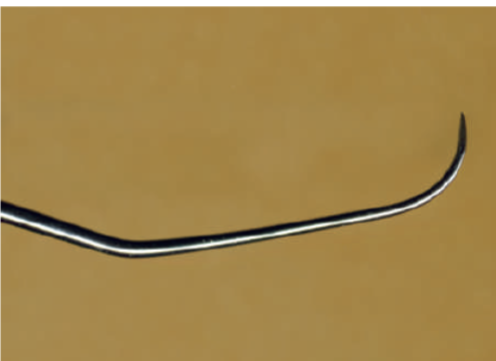
explorer
used to locate calculus deposits, tooth irregularities, and defective restoration margins, circular in cross section

sickle scaler
used to remove supragingival calculus deposits, triangular in cross section, pointed tip, pointed back

curet
used to remove calculus deposits, semicircular in cross section, rounded toe, rounded back

periodontal file
used to crush large calculus deposits, each working end has several cutting edges