art history final exam fall 2025 (Elizabeths Version)
 Studied by 0 people
 Call Kai
 Learn
Learn Practice Test
 Spaced Repetition
 Match
Match Flashcards
 Knowt Play
1/24

There's no tags or description
Looks like no tags are added yet.
Name | Mastery | Learn | Test | Matching | Spaced |
|---|
No study sessions yet.
25 Terms
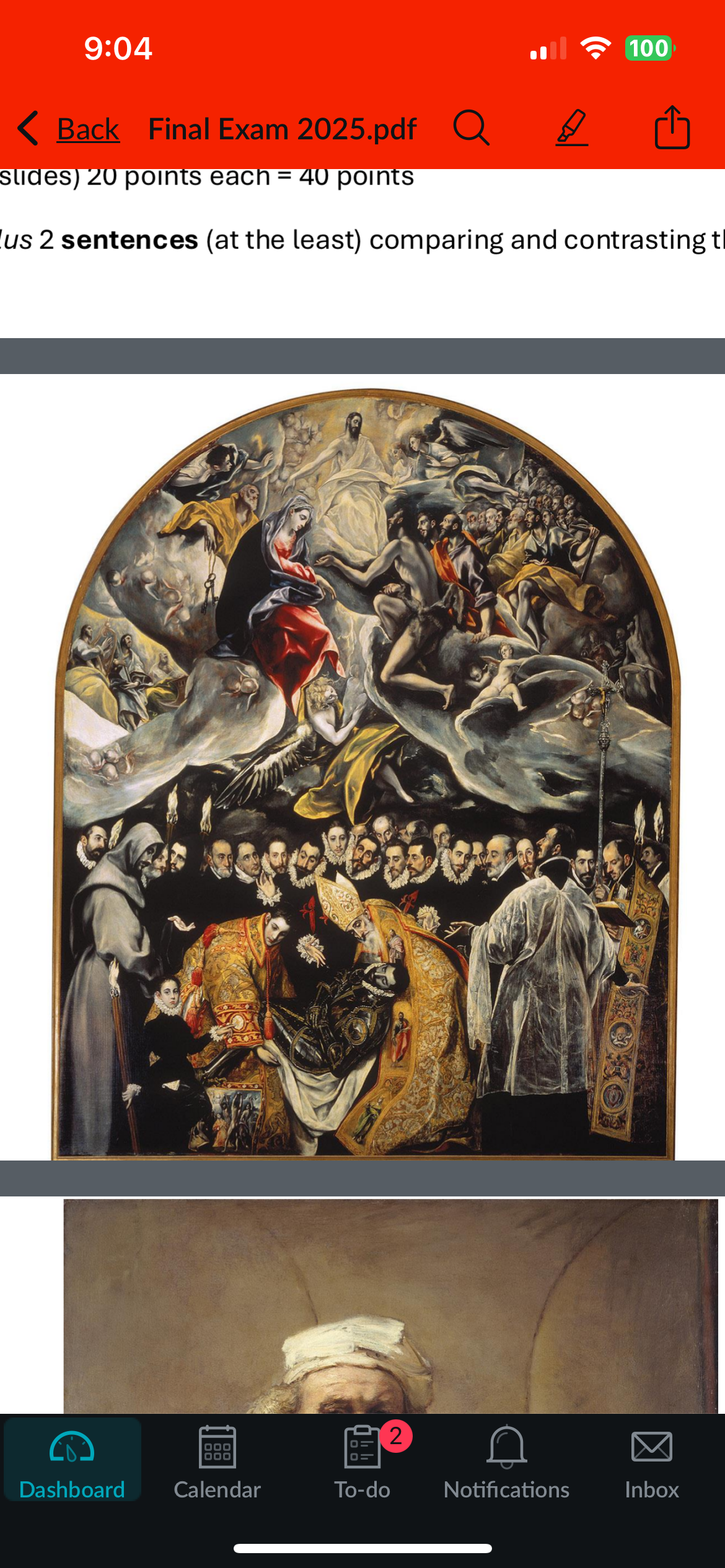
The Burial of the Count of Orgaz
El Greco
Spain
1586 (mannerism)
NO rational space near the top wrinkles on clothing
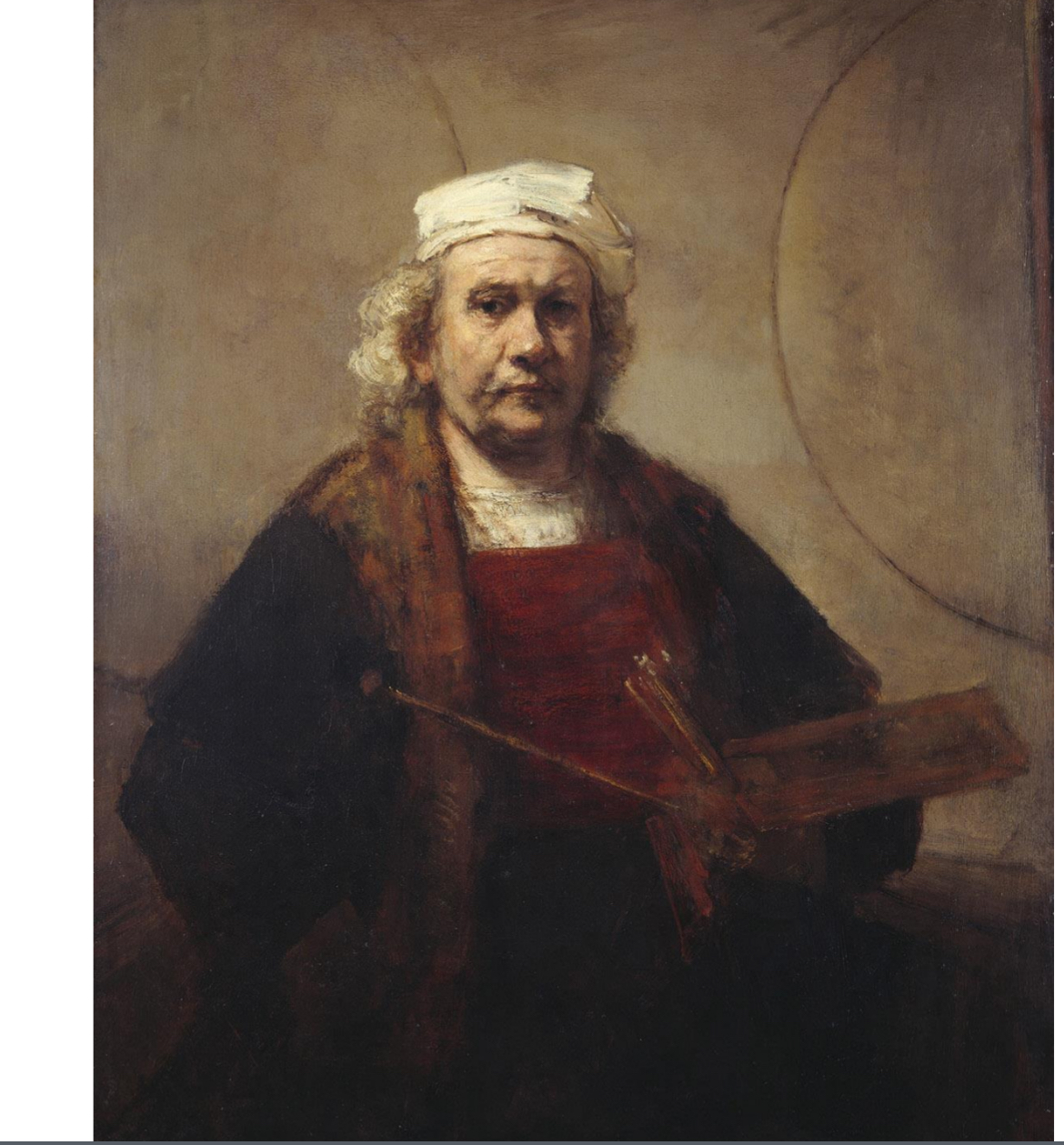
Self-Portrait with Two Circles
Rembrandt
Netherlands
1655– 59. (Dutch Baroque)
Chiaroscuro and impasto, very loose gestural painting technique for the time. Unspecified Circles in background. Depicts himself humbly with wrinkles, looks as though he is contemplating his death. One of the first to convey deep emotions in his portraits.
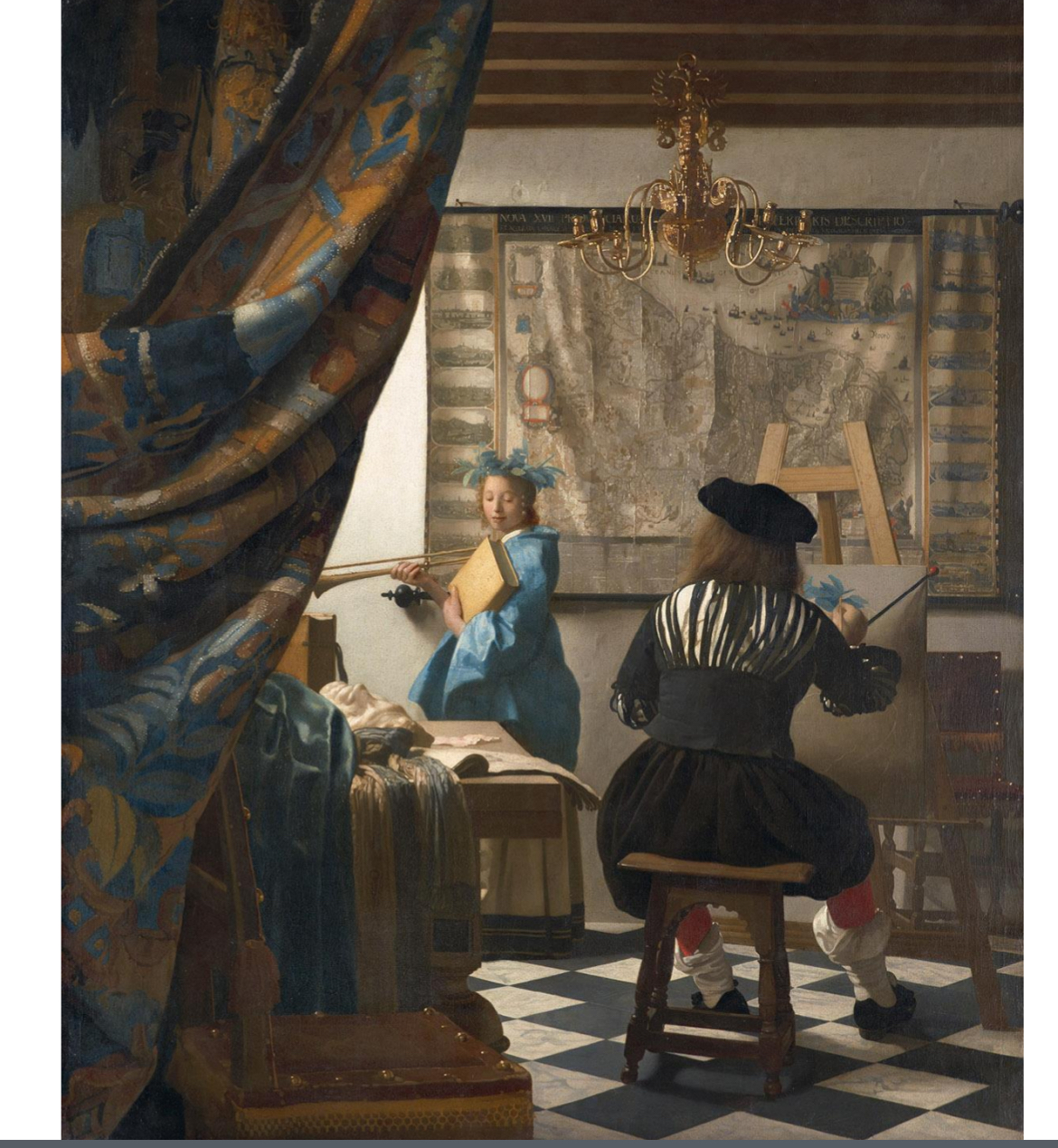
The Art of Painting
Johannes Vermeer
Netherlands
1666–68. (Dutch Baroque)
materialist (floor fabric chandelier) Theater (mask/music horn/book knowledge) map for the world highlighting Spains skill at cartography. Highlights art and attempts to uplift it. Depicts Leo the godess of history
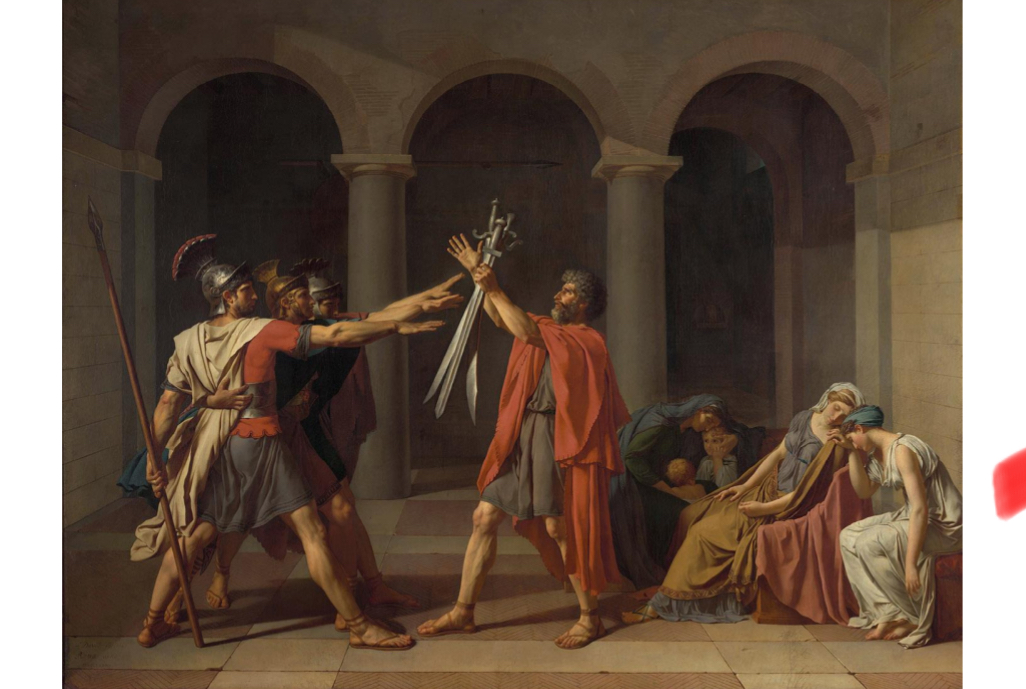
The Oath of the Horatii
David
French
1784 (Neo-classical)
Depicts a roman story about sacrificing themselves to fight for Rome. Shows the masculine ideal during that time, thus the men are heavily idealized. Uses Liner perspective.
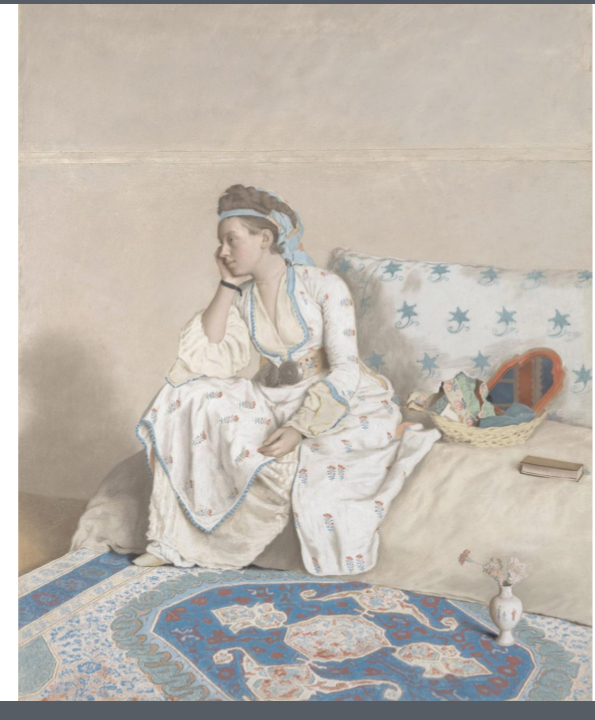
Marie Fargues, Wife of the Artist, in Levantine Costume
Liotard
Netherlands
1756–58 (enlightenment)
lighting is bright, flat background with orthogonal lines in the rug. Not much shadow on the face. Orientlist performance of turkish clothing. Depicting a “cultural understanding” of turkish culture
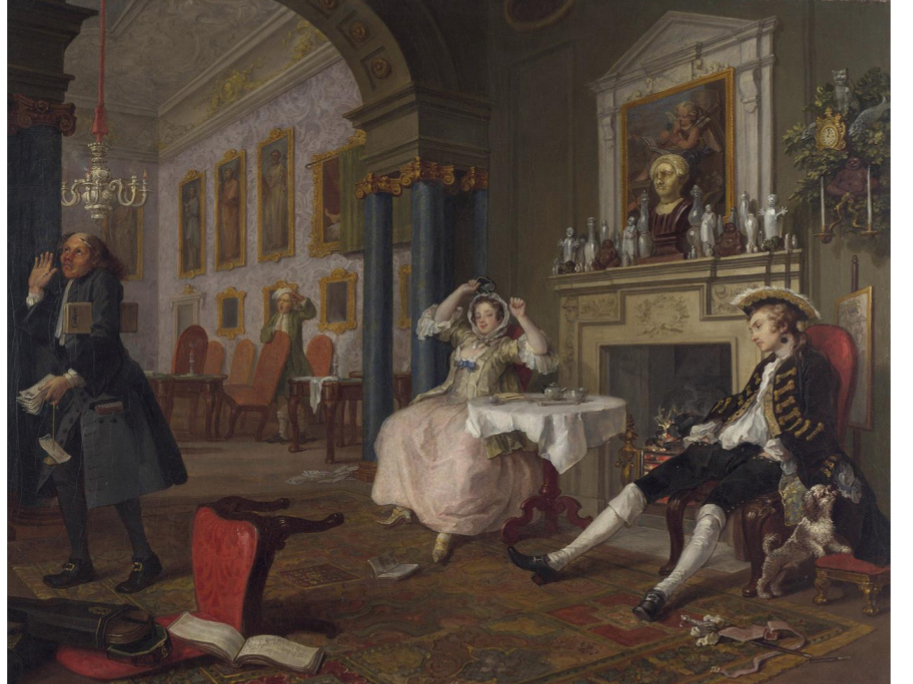
“The Tête à Tête,” from Marriage A-LaMode, c.
William Hogarth
England
(Enlightenment)
Satirization of the “conversation piece” and wealthy people with tacky taste. Depicts a chaotic marriage of convenience. Husband is implied to be adulterous by the maids clothes in his pocket which is revealed by the dog (traditionally representing fidelity)
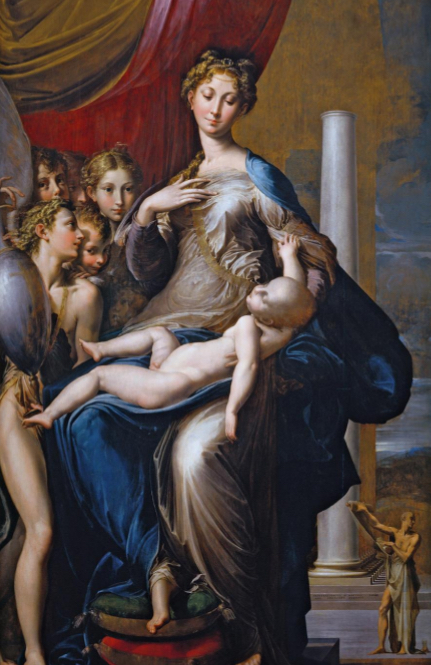
Madonna of the Long Neck
Parmigianino
Italy
1534 (Mannerism)
Break from rationality of science and realism. Pushing abstraction post renaissance. Uses Chiaroscuro.
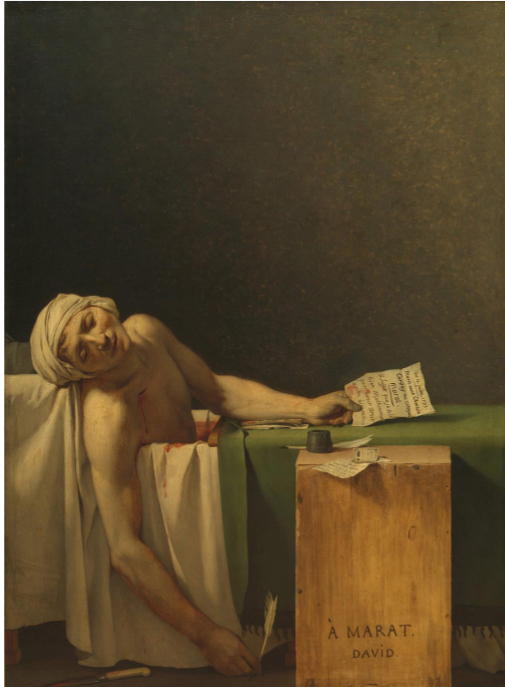
The Death of Marat
Jacques-Louis David
1793.
Oil on canvas
5 ft. 5 in. × 50⅜ in
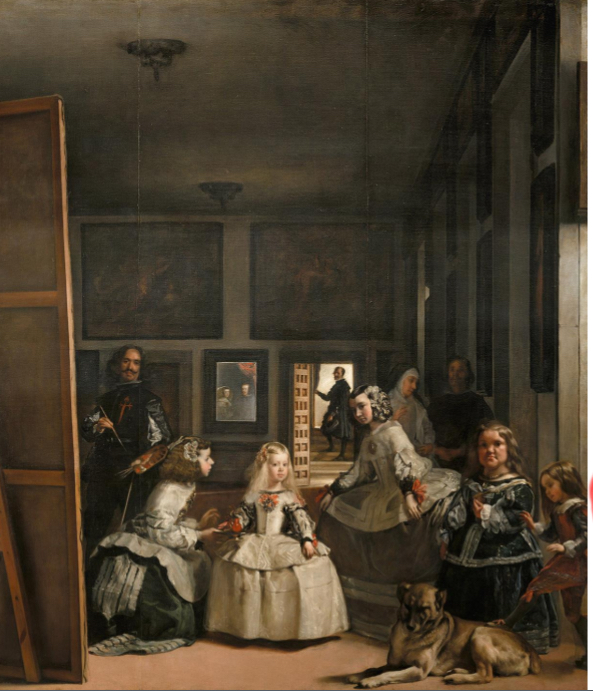
Las Meninas (The Maids of Honor)
Diego Velázquez
1656. Oil on canvas
10 ft. 5⅛ in. × 9 ft. ½ in.
captures a sense of reality while also highlighting the illusory nature of depiction
Princess Margarita—the only heir to the Spanish throne—stands in the center foreground surrounded by her attendants (las meninas), along with two people with dwarfism who were members of the king’s court.
The princess appears to be posing for her portrait, though her back is turned to the painter behind her
That painter is a self-portrait of Velázquez, standing with palette and brushes in front of a massive canvas
Velázquez was not only painter to the king but also a palace chamberlain
The red cross on his chest indicates his membership of the Order of Santiago,
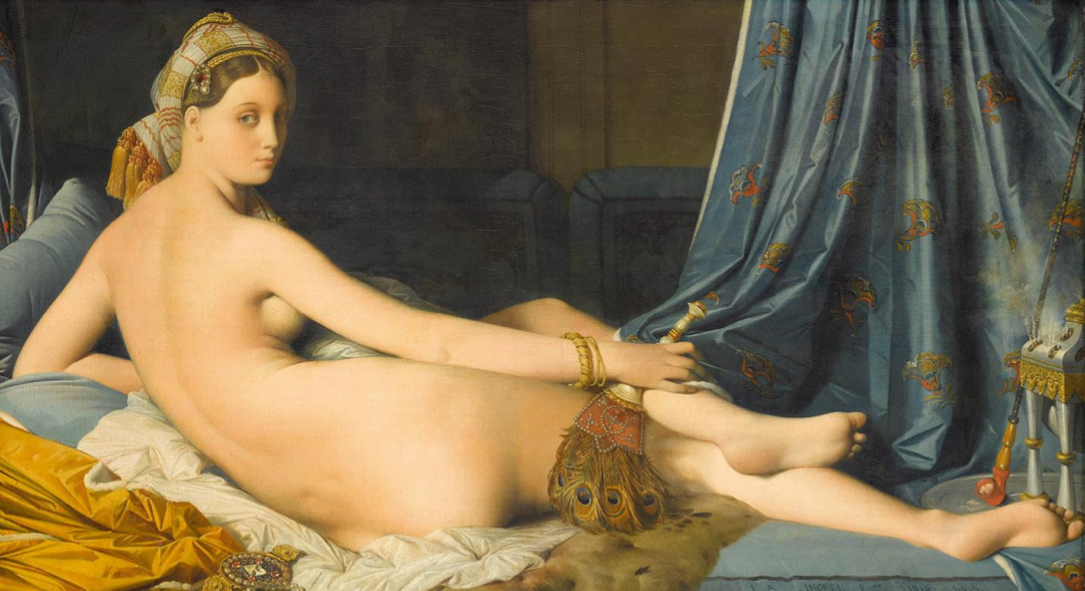
Jean-AugusteDominique Ingres, La Grande Odalisque
1814
Oil on canvas
36 in. × 5 ft. 3 in.
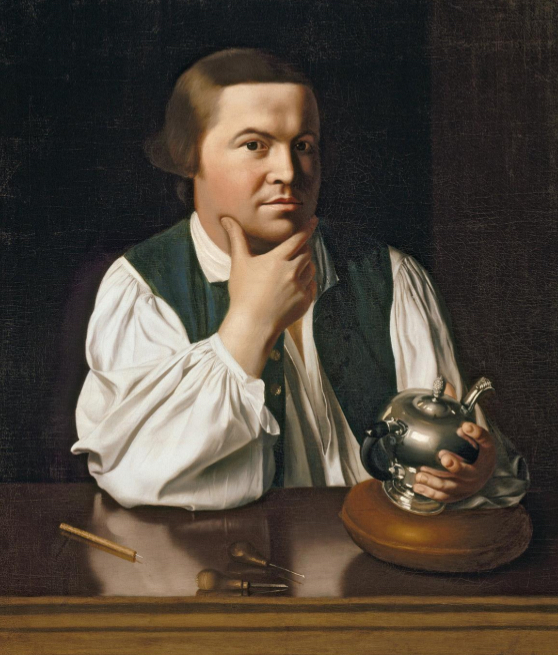
Paul Revere
John Singleton Copley
1768.
Oil on canvas
35⅛ × 28½ in.
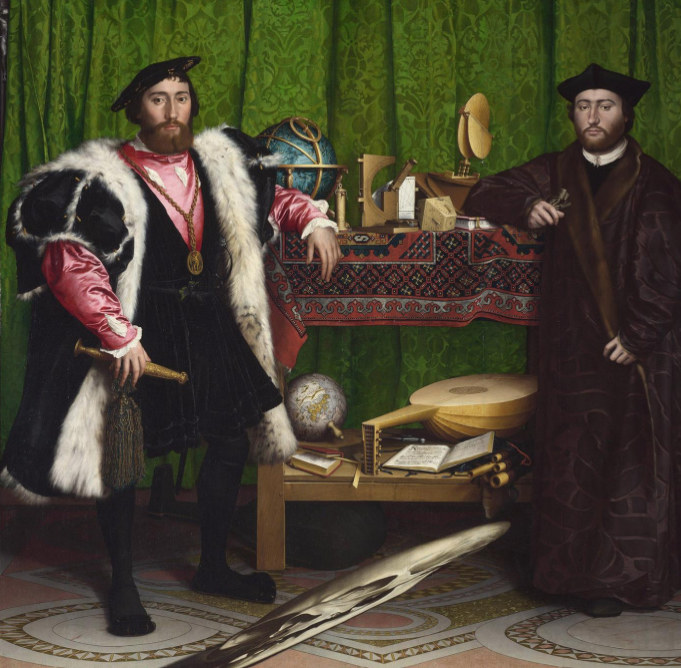
The Ambassadors
Hans Holbein the Younger
1533
Oil on panel
6 ft. 9 in. × 6 ft. 10 in.
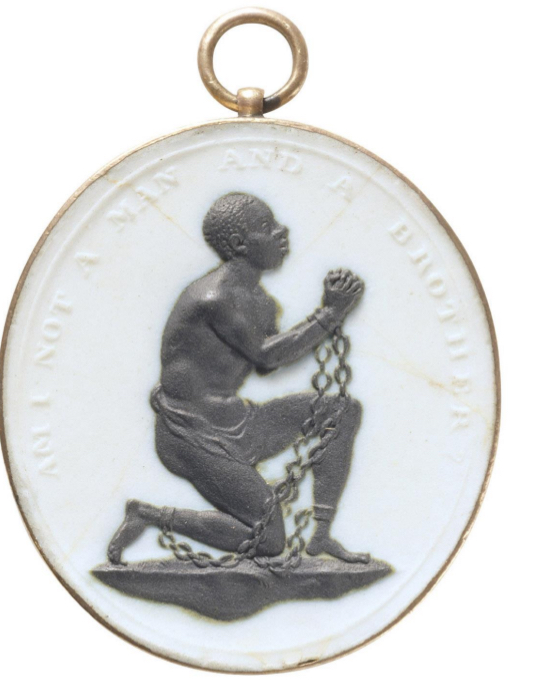
Am I Not a Man and a Brother?
William Hackwood (modeler) for Wedgwood
1787
White jasper, black basalt, and gilt metal
1¼ in. high
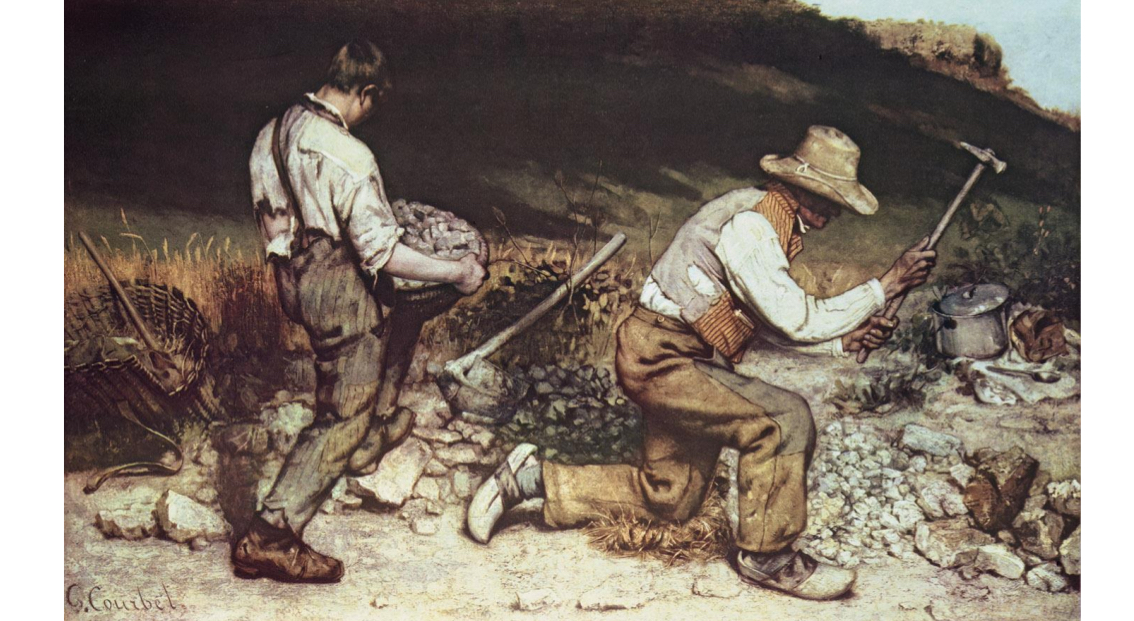
The Stonebreakers,
Gustave Courbet
1849– 50
Oil on canvas
5 ft. 5 in. × 8 ft. 5 in
Formerly Gemäldegalerie, Dresden, Germany (destroyed in the bombing of Dresden, 1945)
depicting hard labor and concern for the poor, old and young. Bodies under strain, earthy colors and land that is dark enclosed and trapped, cant see their faces, represent an “every man” Awkward poses, not composed, thick paint stones + detail in landscape, self conscious of what labor feels like. Courbet was Socialist.
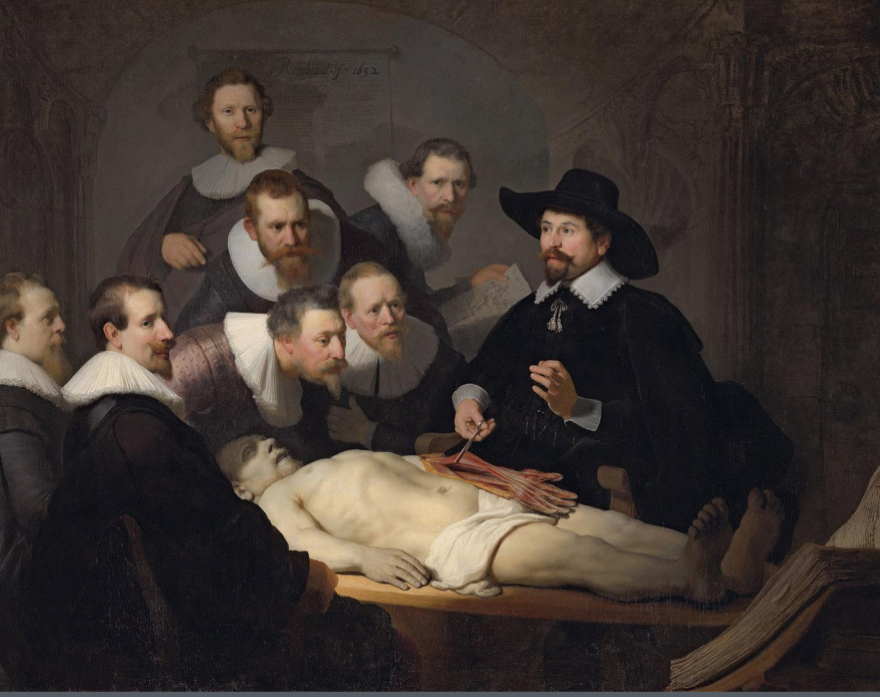
The Anatomy Lesson of Dr. Nicolaes Tulp
Rembrandt
Netherlands
Baroque
1632
Uses asymmetry to highlight Dr. Tulp. Considers the viewer, making it feel like we are part of the circle. Includes chiaroscuro. Highlight of the hand alludes to its importance in art making.
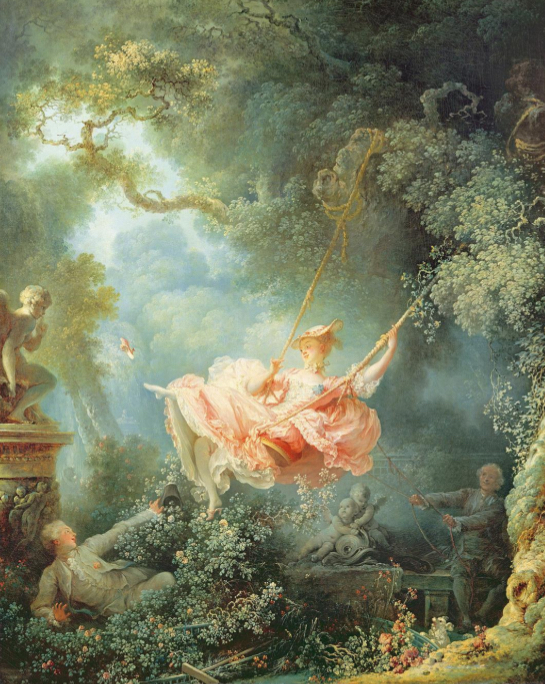
The Happy Hazards of the Swing
Fragonard
France
1767 (Rococo)
Comically Sexual Narrative, man is looking up her skirt at the “climax” of her swing. Cupid shushing on the left. Idealizes nature. Rococo era only depicting wealthy people.
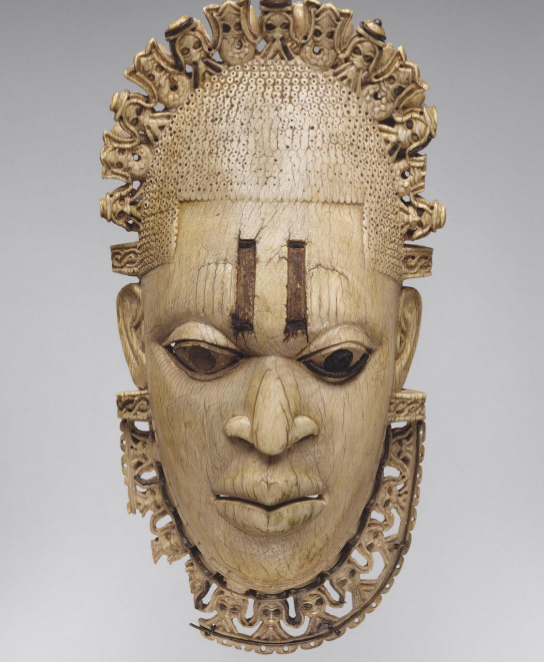
Pendant portraying Queen Idia
the Iyoba, kingdom of Benin, sixteenth century
Ivory, iron, copper
height 9⅜ in
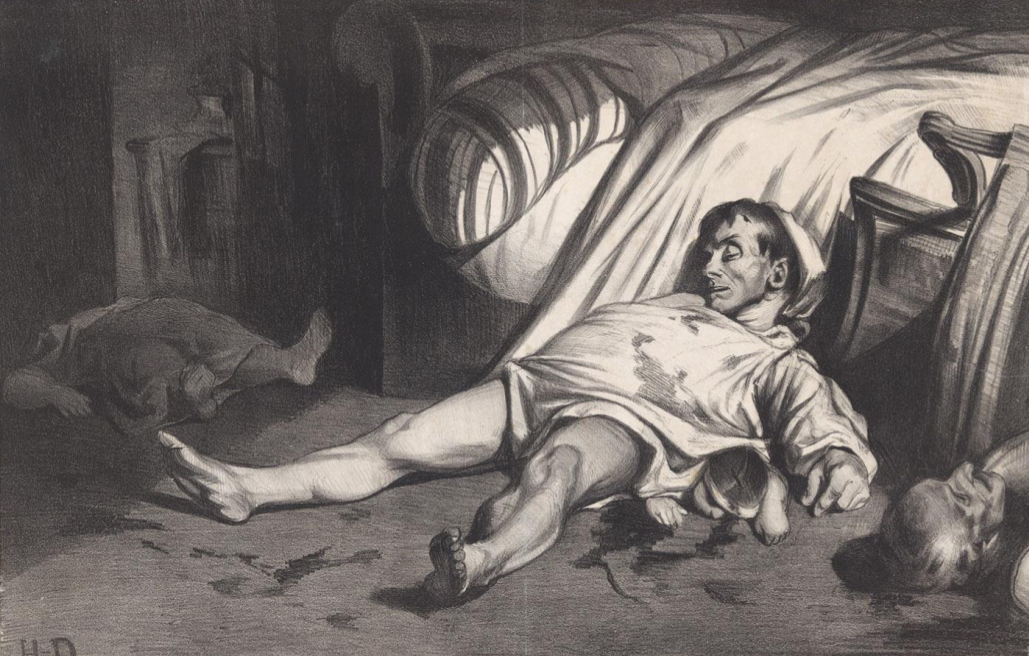
Rue Transnonain on April 15, 1834
Honoré Daumier
french
1834 (Realism)
Depicts a the death of 4 generations of a working class family after the police conducted a random raid on there house in response to a strike. Not idealized, working class focus, foreshortened body alluding to paintings of Jesus.
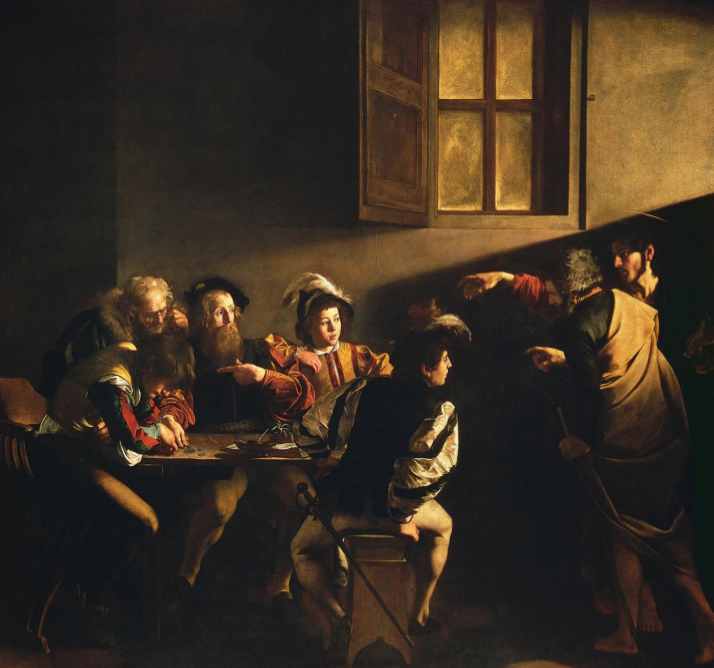
The Calling of St Matthew
Michelangelo Merisi da Caravaggio
1599–1600
Oil on canvas
10 ft. 6 in. × 10 ft. 9 in
Considered Baroque naturalism, based on a dark, dramatic, and vividly realistic treatment of his subjects
represents the moment in which Jesus calls Matthew, at that time a tax collector named Levi, to follow him.
The scene is one of spiritual conversion, the moment in which a lost soul is called to Christ
the strong diagonal line created by the light flooding in from an unseen window, is directed at the bearded man
A strong contrast of dark and light, known as tenebrism, adds a sense of drama to the image.
Caravaggio enjoyed visual ambiguity, which allowed the viewer to interpret the work subjectively
Levi sits among a group of opulently dressed but spiritually bankrupt men gathered around a table counting their riches, while Christ and his brawny companion, Peter, are barefoot and dressed as humble travelers.
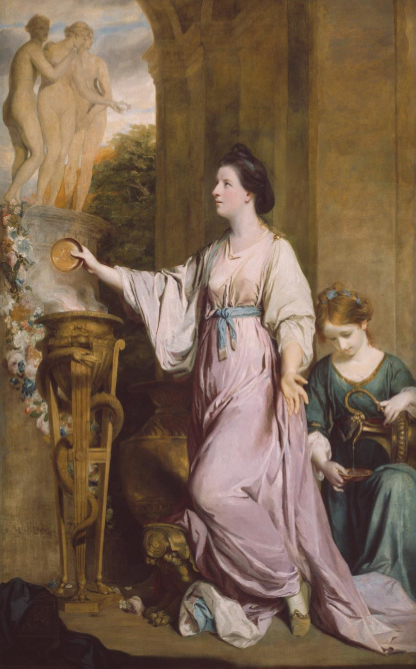
Lady Sarah Bunbury Sacrificing to the Graces
Joshua Reynolds
England
1763–65 (Neo Classicism)
Creates contrast using the light to highligh whiteness, in line with the Neo classicist ideas of aligning whiteness to of purity, intellectuality and civilisation.
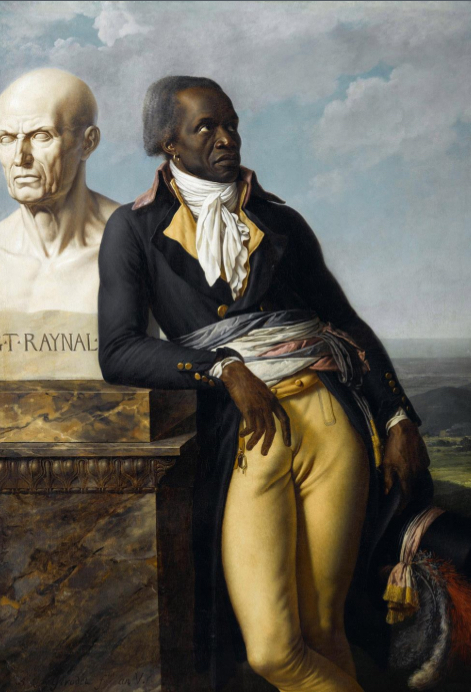
Portrait of Citizen Belley, ExRepresentative of the Colonies
Anne-Louis Girodet
French
1796–97 (Neo Classical)
He stands next to the white marble bust of a Abolitionist Writer. Has a french flag wrapped around his waist. Racistly highlights his large penis through his pants.