Micro midterm 2 practice questions
 Call Kai
 Learn
Learn Practice Test
 Spaced Repetition
 Match
Match Flashcards
 Knowt Play
1/113

There's no tags or description
Looks like no tags are added yet.
Name | Mastery | Learn | Test | Matching | Spaced | Call with Kai | Chat |
|---|
No analytics yet
Send a link to your students to track their progress
114 Terms
Which virus is confined to India, Southeast Asia, and Micronesia?
Nipah virus
What is the reason for Africa's high rate of TB infection?
Co-infection with HIV/AIDS
How many types of parainfluenza infect humans?
2
What is the second point of entry into the body?
Gastrointestinal tract
Control groups are always used in which type of study?
Analytical
Which human system is involved with the majority of hospital-acquired infections?
Urinary
What is psittacosis (ornithosis) commonly known as?
Parrot fever
What is the most common vector for diseases?
Insects
What type of transmission occurs when a pathogen rides?
Vehicle
Microbes that infect the genitourinary tract are sometimes referred to as?
Sexually transmitted diseases
Mastoiditis is a potential complication of which condition?
Otitis media
What is a host's ability to mount an immune defense called?
Immunocompetence
Which nation has the highest TB rates with immigration into the US?
Mexico
What is the old-fashioned name for the disease known as lockjaw?
Tetanus
Which virus entered the US in 1999 and is now found in all contiguous 48 states?
West Nile
Which condition may present with subconjunctival bleeding?
Pertussis
What is the morbidity rate?
The number of individuals affected by a disease during a set period divided by the total population
Koch's postulates provide a template for what?
Disease transmission and communicability
Which condition does not present with a cough?
Respiratory syncytial virus
What are reservoirs for pathogens?
Animals, humans, and nonliving surfaces
What is the deadliest of the viral hemorrhagic fevers?
Ebola
Which continent has the highest number of TB infected persons?
Africa
What do Clostridia spp produce?
Some of the deadliest neurotoxins
What is the associated mortality rate of untreated aspergillosis?
100%
What feature of the pseudostratified ciliated columnar epithelium is destroyed in pertussis?
Cilia
Enterotoxins work by damaging the lining of what?
Intestines
What test is used to determine prion infections?
ELISA
What form of prion disease is spread to and from humans via cannibalism?
Kuru
Which type of epidemic is over more quickly?
Common source
What type of epidemiological study is concerned with the physical aspects of patients and the spread of disease?
Descriptive
What is a carrier?
Someone who is infectious but never shows signs or symptoms of illness
How is the Sin Nombre virus spread?
Inhalation of dried rodent urine and feces
When symptoms develop slowly and the disease lasts a long time, what is it called?
Chronic
What is a severe complication of untreated otitis media?
Mastoiditis
What is a disease that has never been seen before classified as?
Emerging
Where does the lower respiratory tract begin from a microbiological perspective?
Trachea
What is coccidiomycosis also known as?
Valley fever
Where in the cell does parainfluenza replicate?
Cytoplasm
What is a virus transmitted to a human host by an insect bite called?
Arbovirus
How can prions be destroyed?
None of the above (cooking, disinfectants, autoclaving)
What was the only indicator signifying infection with HIV early in the AIDS epidemic?
Pneumocystis
In an illness, when do the first signs and symptoms of a disease appear?
Prodromal
What are reasons for the increase in tuberculosis?
Co-infection with HIV/AIDS, increased immigration of infected persons, increased number of institutionalized elderly (all of the above)
In an illness, what is the earliest period free of signs and symptoms?
Incubation
Which nations have more cases of avian influenza in birds?
Poor
What are diseases transmitted from animals to humans called?
Zoonotic
What is bacterial sinusitis commonly misdiagnosed as?
Allergic rhinitis
When an incidence of a disease is higher than expected, what is it called?
Epidemic
What is the expected mortality rate of uncomplicated influenza?
0.1-2.5%
Which of the following is not a test for tuberculosis?
Ghon
What is the most dangerous effect of endotoxin poisoning?
Disseminated intravascular clotting
What is Lipid A?
An endotoxin
What are transmissible spongiform encephalopathies also known as?
Prions
What stereotype of influenza is associated with influenza pandemics?
A
What is the total number of people infected within a population at any given time called?
Prevalence
What are coiled macrophages indicative of?
Infection with Legionella pneumophila
What does biological vector transmission involve?
Insects, bites
What type of contact transmission occurs when an uninfected person is exposed to a pathogen via touching an infected reservoir?
Direct
How many categories of bacterial toxins are there?
2
What is a place where a pathogen grows and accumulates called?
Reservoir
What controls direct damage to the host?
The immune response
Which virus is known in the US as Sin Nombre?
Hanta
What is a disease that occurs in epidemic proportions throughout the world called?
Pandemic
What is walking pneumonia caused by?
Mycoplasma pneumonia
Hypercapnia is associated with ________, and is an _________ level of ___________
RSV, elevated CO2
What does the parenteral route refer to?
Breaks in the skin that allow the passage of microbes
What is the reservoir for influenza?
Aquatic birds
What is the number one point of entry into the body?
Respiratory tract
What are hemolysins?
Exotoxins that destroy WBCs and RBCs
What substance is found ONLY in the walls of all gram-positive bacteria?
M proteins
What majority of emerging diseases are caused by?
Viruses
What is the most common normal flora to cause infection in both the upper and lower respiratory tract?
Staphylococcus
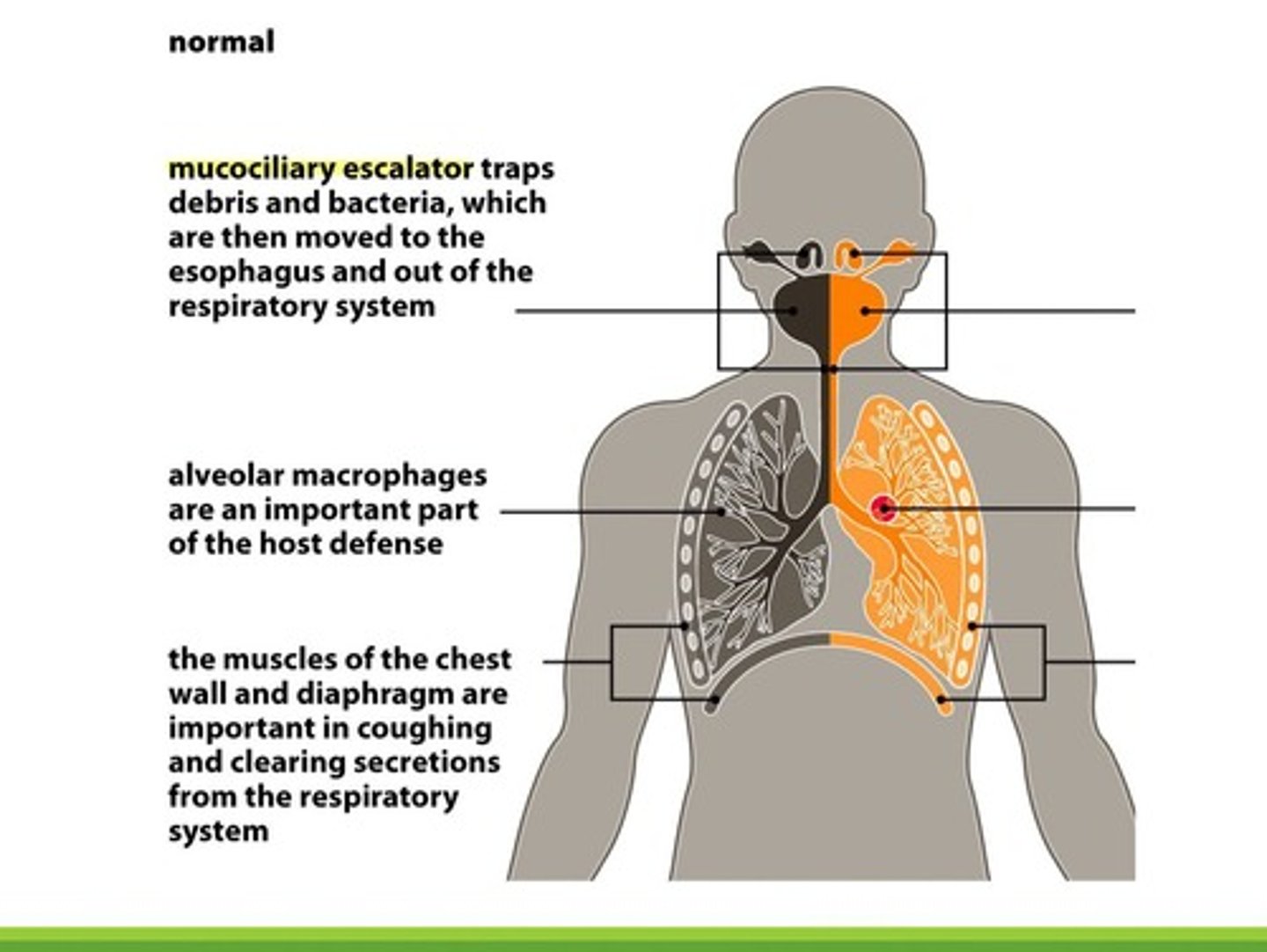
What is the most important part of the respiratory tract's defense system?
Mucociliary escalator
Which of the following are components of triple antibiotic therapy for TB
Pyrazinamide Isoniazid
What type of study is predominantly concerned with cause and effect?
Analytical
What type of contact transmission occurs when an uninfected individual inhales infected particulate matter expelled from an infected person?
Droplet
Endotoxins are released from dead ________ bacteria in the form of _________
Gram -, Lipid A
What genus of bacteria have mycolic acid in their cell walls?
Mycobacterium
What is the etiologic agent of Q fever?
Coxiella
In an illness, the highest chance of secondary infection occurs in the ________ period
Period of decline
What are contributing factors to emerging disease trends?
Global travel, war, lack of vaccination (all of the above)
What disease may present with a pseudomembrane composed of bacteria, fibrin, and cell debris?
Diphtheria
What does Lipid A elicit?
A strong immune response
Which of the following grows in the placenta of infected mammals?
Coxiella
What is a common complication of untreated sinus blockage?
Sinusitis
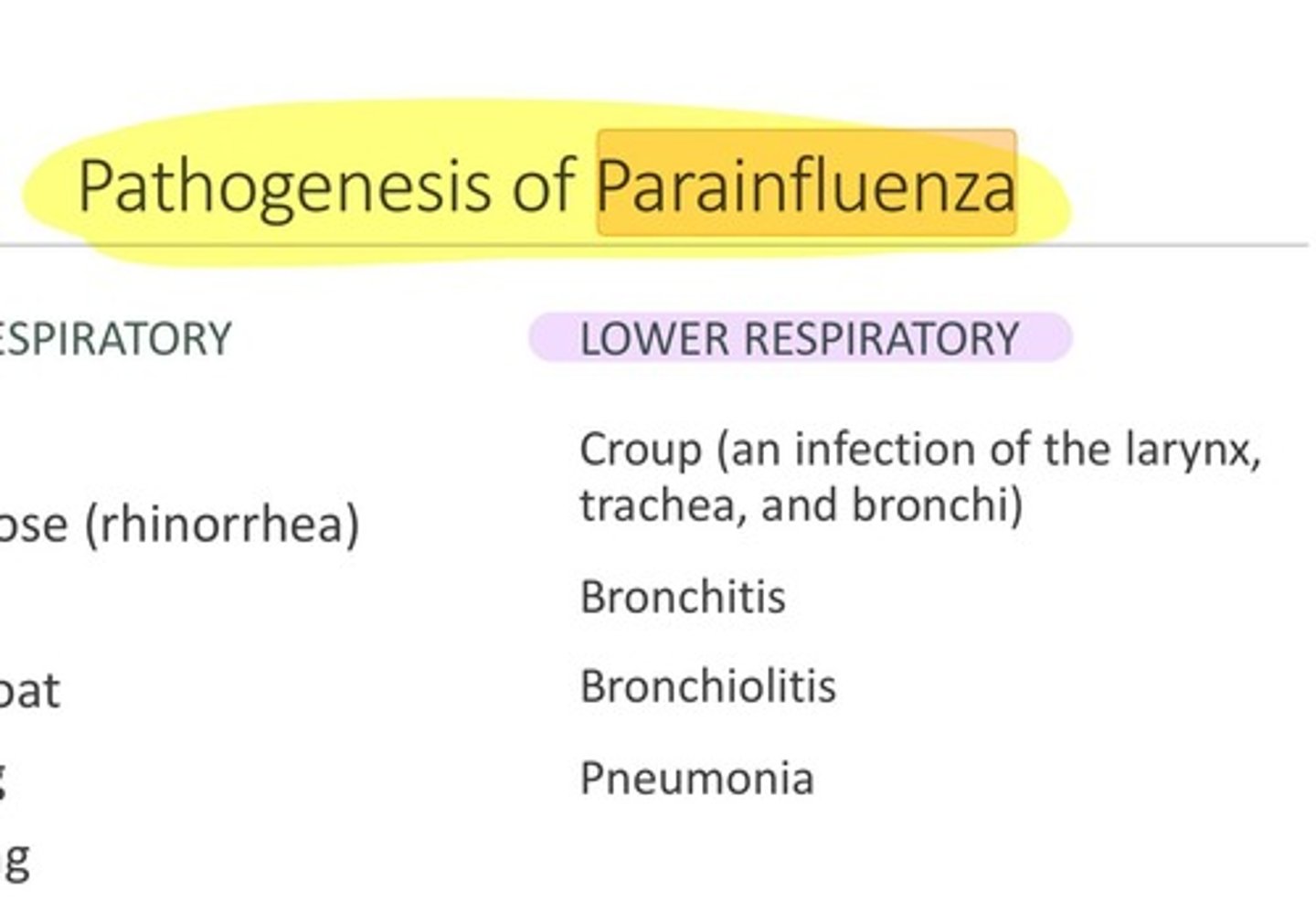
What is croup also known as?
Parainfluenza
What disease is commonly known as strep throat?
Pharyngitis
What is the correct order of pertussis?
Prodromal, catarrhal, paroxysmal, convalescence
What is an infection acquired after being treated in a hospital or clinical setting called?
Nosocomial
What is patient zero most commonly associated with?
Propagated epidemic disease
What is an accumulation of bacteria residing on a surface called?
Biofilm
What is the number of new cases of a disease contracted within a set population during a specific timeframe called?
Incidence
period of illness
Major signs and symptoms (immune response is strongest)
period of decline
signs and symptoms of the disease wane/subside; patient is vulnerable to secondary infections
What is the recovery period of infection called
Period of convalescence
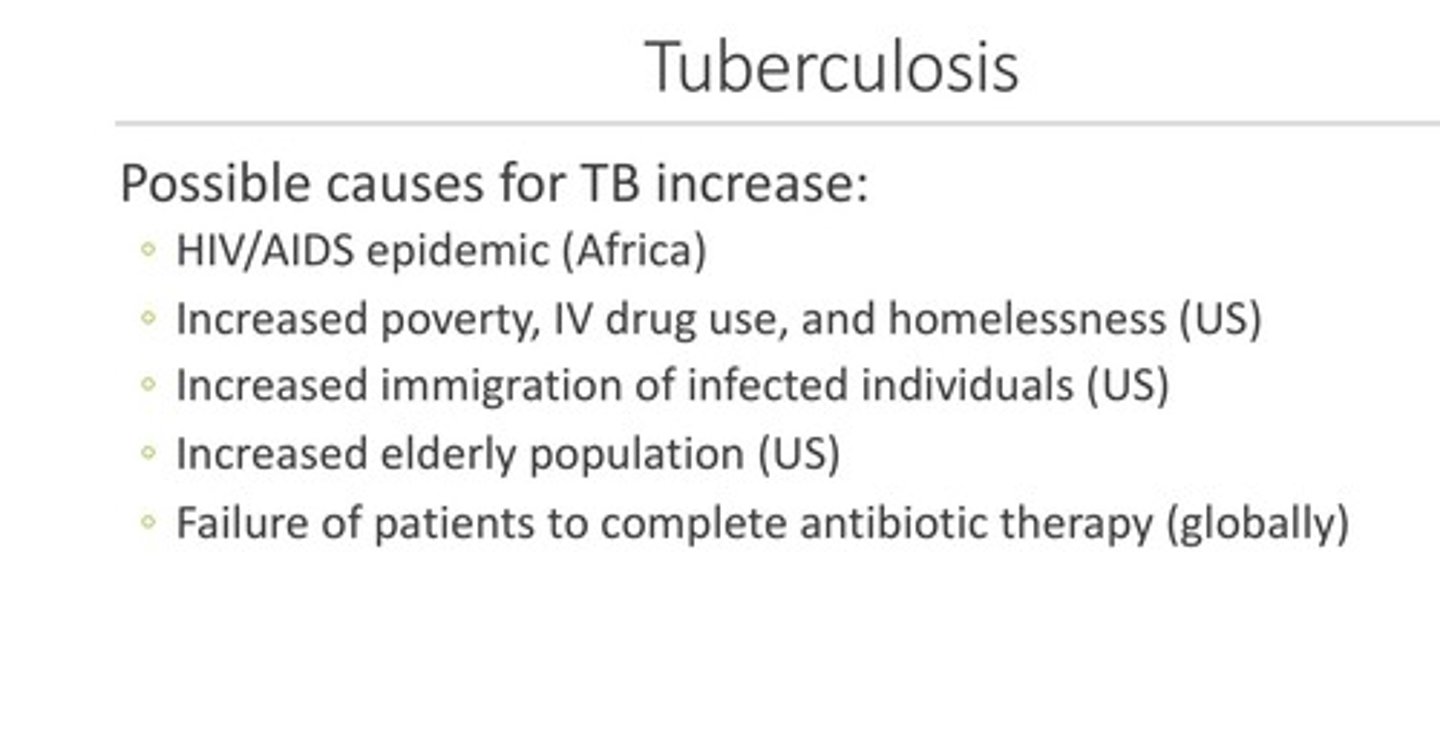
What are the possible causes for a TB increase?
- HI/AIDS epidemic (Africa)
- increased poverty, IV drug use, and homelessness (US)
- increased immigration of infected individuals (US)
- Increased elderly population (US)
- Failure of patients to complete antibiotic therapy (globally)
direct contact transmission
There is no intermediary between the infected person/animal and the uninfected person
What does the mucociliary escalator do?
Traps debris and bacteria, which are then moved to the esophagus and out of the respiratory system
Incidence
The number of new cases contracted within a set population in a specific period
Prevelance
Total number of people infected within a population at any given time