mph toolkist #2: how is health expressed
 Call Kai
 Learn
Learn Practice Test
 Spaced Repetition
 Match
Match Flashcards
 Knowt Play
1/12

There's no tags or description
Looks like no tags are added yet.
Name | Mastery | Learn | Test | Matching | Spaced | Call with Kai | Chat |
|---|
No analytics yet
Send a link to your students to track their progress
13 Terms
type of disease: 7 causes
Infectious
Noninfectious
Genetic
Autoimmune
Degenerative
Deficiency
Environmental
type of disease: 4 transmissions
Direct
Indirect
Air-borne
Vector-borne
type of disease: 3 durations
Acute
Chronic
Recurrent
type of disease: 5 systems affected
Cardiovascular
Respiratory
Digestive
Neurological
Endocrine
5 diff approaches used to reveal causes of disease
Etiology: Identifying the causes of diseases, which can be infectious agents (bacteria, viruses, fungi, etc.), genetic mutations, environmental factors, or a combo
Human genetics
Genomics: interactions between genes and the environment
Pathogenesis: how diseases develop and progress, including the cellular and molecular changes that occur
Molecular Epi: distribution and determinants of disease in populations, w/ a focus on identifying the molecular mechanisms and factors involved
4 main body levels where disease occur
Molecular level: chemical building blocks
Cellular level: basic units of life
Organ level: structure made of tissues with specific functions
Whole organism-function level: complete living human body
natural history of disease
how a disease develops in a person over time if no treatment or prevention is used
3 main components of disease transmission
agent/pathogen
environment
host
think about bi directional triangle
how the body translate its interaction with the environment
Embodiment
Body incorporates and adapts to circumstances
Biomarkers
Measurable feature of physiological processing
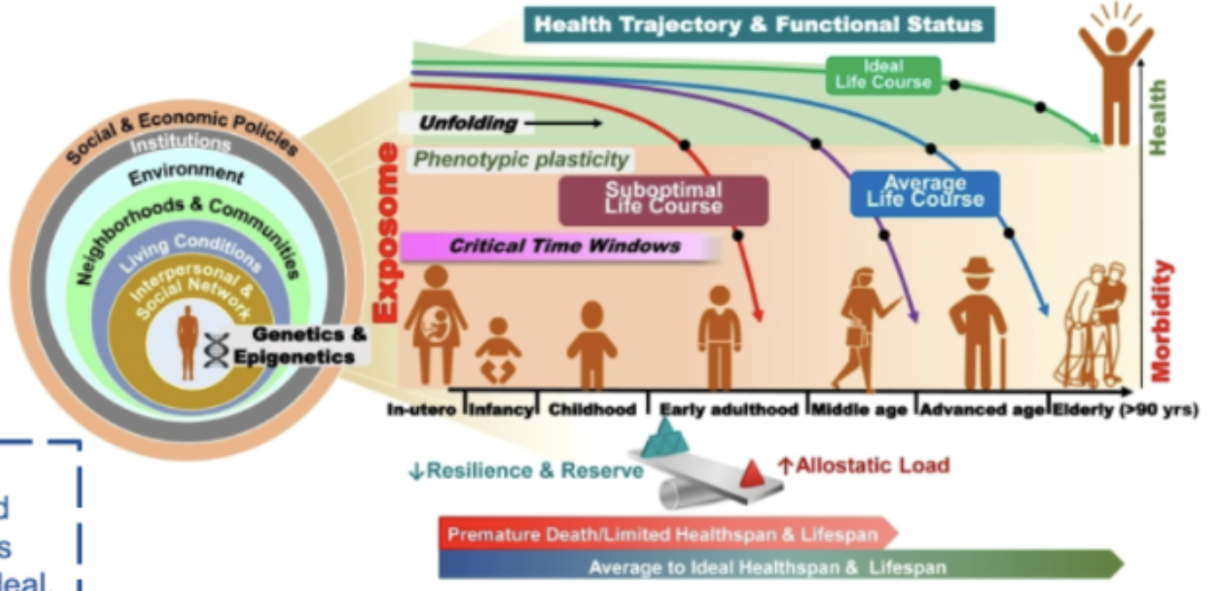
Allostatic load
Biological systems in place that regulate our responses to stressors (ex: blood pressure or cortisol)
Wearing down the body and brain, resulting from chronic overactivity or inactivity of physiological systems
Gene environment interaction
Genes alter the organism’s sensitivity to environmental features and vice versa (ex: stressful life events, depression and serotonin uptake)
Exposome & 4 main components
All internal & external environmental exp that an individual experiences throughout life. Health & disease results from cumulative/dynamic interactions
4 main components
Ecosystems influence
Social factors
Environmental factors
Lifestyle factors
3 main pathways intervene in health status
Envrionmental: obesogenic (contribute to weight gain & obesity) and developmental environment (all conditions a person encounters where they live, grow, and play)
Developmental: path dependency (past decisions impacting now), paretnal effects, and early life
Individual: non-genetic inheritance, epigenetic process (chemical → dna changes), and new biomarkers
4 levels that contribute to health development
molecular
individual
societal
ecological
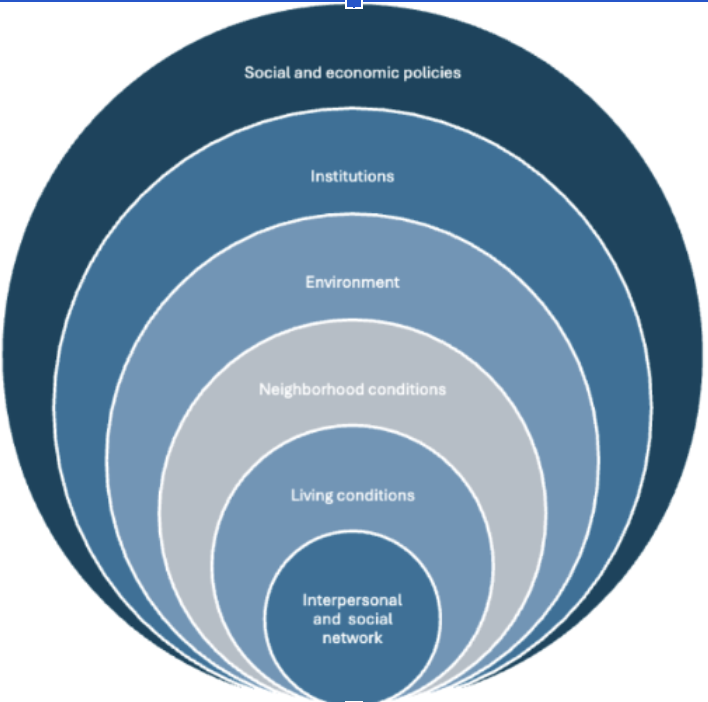
health trajectory and functional status