Anatomy Lab 1 Exam
 Call Kai
 Learn
Learn Practice Test
 Spaced Repetition
 Match
Match Flashcards
 Knowt Play
1/189

There's no tags or description
Looks like no tags are added yet.
Name | Mastery | Learn | Test | Matching | Spaced | Call with Kai | Chat |
|---|
No analytics yet
Send a link to your students to track their progress
190 Terms
where does biological waste get disposed
biohazard container
where do scalpel blades, broken glass, and needles get disposed
sharps container
where do paper products and packing materials get disposed
general trash
where does liquid waste get disposed
liquid waste

what organs are apart of the lymphatic system (5)
tonsils, lymph nodes, thymus, spleen, lymphatic vessels

what organs are apart of the respiratory system (5)
nasal cavity, pharynx, larynx, trachea, lungs
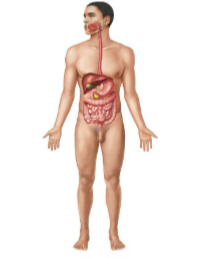
what organs are apart of the digestive system (9)
mouth, salivary glands, esophagus, liver, stomach, gallbladder, pancreas, large intestine, small intestine

what organs are apart of the integumentary system (3)
hair, skin, nails
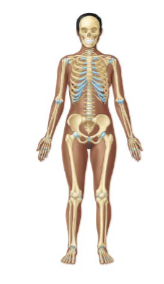
what organs are apart of the skeletal system (2)
bones, joint

what organs are apart of the muscular system (1)
skeletal muscles
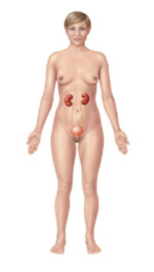
what organs are apart of the urinary system (4)
kidneys, ureters, urinary bladder, urethra

what organs are apart of the female reproductive system (5)
mammary glands, uterine tube, ovary, uterus, vagina

what organs are apart of the nervous system (3)
brain, spinal cord, nerves

what organs are apart of the male reproductive system (4)
prostate gland, ductus deferens, testes, penis
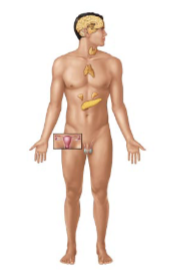
what organs are apart of the endocrine system (6)
pineal gland, thyroid gland, thymus gland, adrenal glands, pancreas, ovaries or testes

what organs are a part of the cardiovascular system (2)
blood vessels, heart
superior
above
inferior
below
anterior
in front of
posterior
in back of
medial
closer to midline of the body
lateral
further from the midline of the body
proximal
closer to the point of origin
distal
further from the point of origin
superficial
closer to the surface of the body
deep
further from the surface of the body
supine
lying on back, face upward
prone
lying on front, face downward
palmar
anterior aspect of hand
dorsal (for hands & feet)
posterior aspect of hand, top aspect of foot
plantar
bottom aspect of foot
what comprises the axial region
head, neck, trunk
what comprises the appendicular region
upper and lower limbs, pectoral and pelvic girdle
what are the vertical cuts (4)
sagittal, midsagittal, parasagittal, frontal
sagittal plane
divides the body into left and right portions
mid-sagittal plane
divides the body into equal left and right halves
parasagittal plane
divides the body into unequal left and right portions
frontal (coronal) plane
divides the body into anterior and posterior portions
what plane produces a horizonal cut
transverse
transverse plane
divides the body into superior and inferior portions
oblique plane
cuts the body at an angle

what are the two subcavities that make up the dorsal body cavity
cranial cavity and vertebral cavity
what does the cranial cavity contain
the brain
what does the vertebral cavity contain
the spinal cord
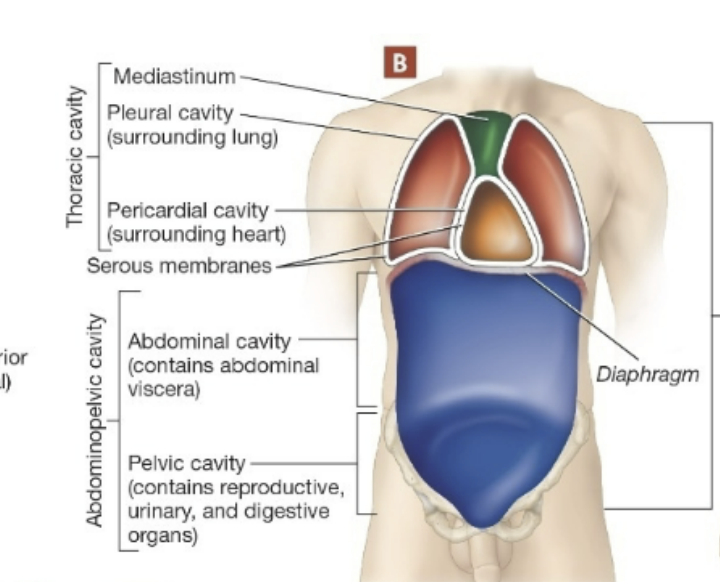
what sub-cavities comprise the ventral body cavity
thoracic cavity and abdominopelvic cavity
what does the thoracic cavity contain
the heart and lungs
what does the abdominal cavity contain (4)
liver, stomach, intestines, spleen

what organs are found in the RUQ
liver, gallbladder

what organs are found in the LUQ
spleen, stomach

what organs are found in the RLQ
appendix, cecum

what organs are found in the LLQ
sigmoid colon
what are the two layers of a serous membrane
parietal and visceral
the parietal layer is the
outer layer that lines the walls of the body cavity
the visceral layer is
the inner layer that adheres directly to the surface of internal organs
pleura
associated with the lungs
pericardium
associated with the heart
peritoneum
associated with abdominal organs
what is serous fluid
fluid that lubricates internal cavities

what is number 7 showing
illuminator

what is number 8 showing
the condenser in blue, the diaphragm is right above it

what is number 2 showing
revolving nose piece (to hold multiple objective lenses)

what is this line pointing to
the rheostat (adjust light intensity)

what is number 9 showing
mechanical stage

what is number 6 showing
stage (to hold specimen)
carry the microscope with two hands, one hand on the ____, and one on the ____
arm, base
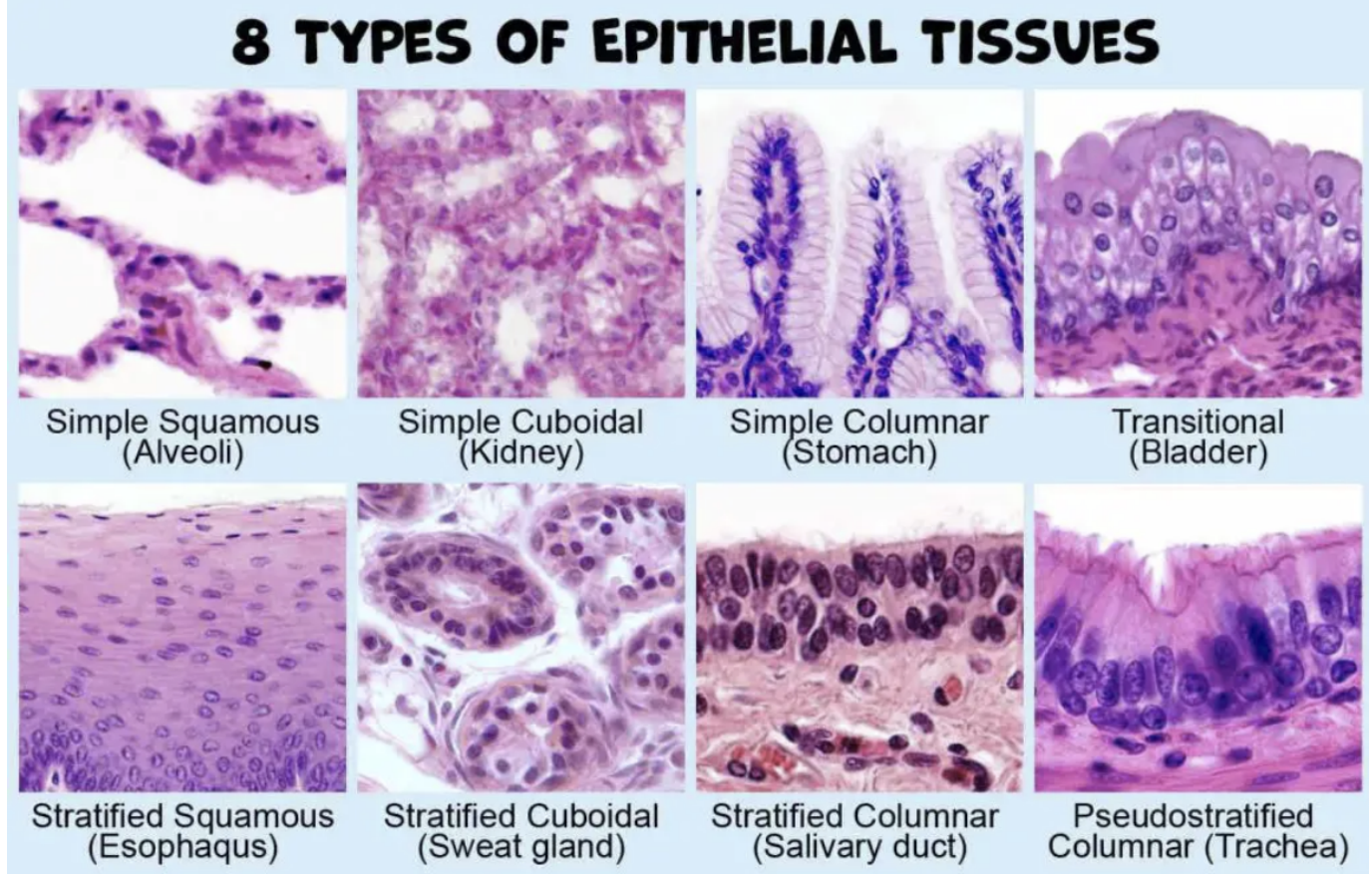
what are the 8 types of epithelial tissues
simple squamous, simple cuboidal, simple columnar, transitional, stratified squamous, stratified cuboidal, stratified columnar, pseudostratified columnar

simple squamous: physical appearance
1 layer flat
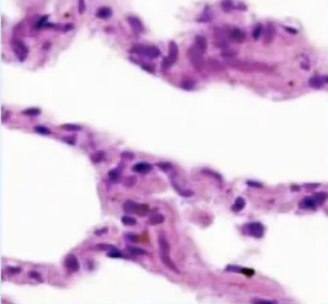
simple squamous: function
diffusion

simple squamous: location
kidney, lungs, blood vessels

simple cuboidal: physical appearance
1 layer, cubes

simple cuboidal: function
absorption and secretion (cuboidal)
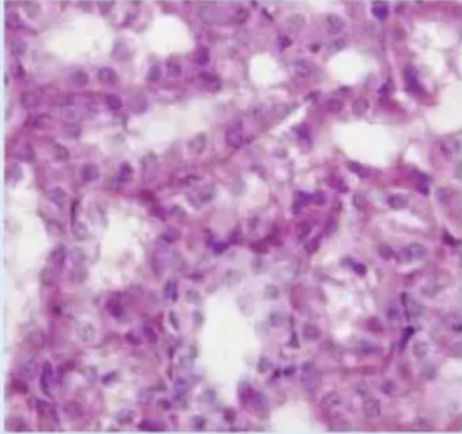
simple cuboidal: location
kidney tubules, ducts, and secretory portions of small glands

simple columnar: physical appearance
1 layer, tall

simple columnar: function
absorption and secretion (columnar)
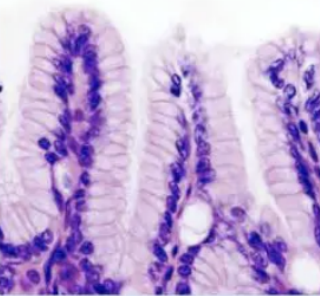
simple columnar: location
digestive tract
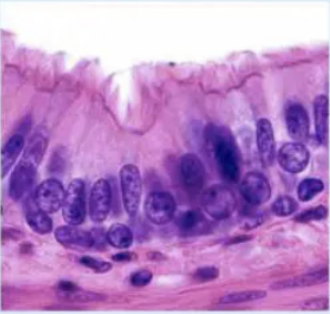
pseudostratified columnar: physical appearance
layered, cilia

pseudostratified columnar: function
moves mucus

pseudostratified columnar: location
trachea

stratified squamous: physical appearance
many layers, flat on top
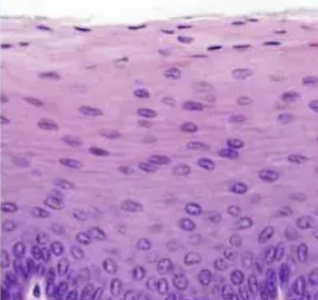
stratified squamous: function
protection

stratified squamous: location
skin, mouth, esophagus

stratified cuboidal: physical appearance
usually 2+ layers, cube cells

stratified cuboidal: function
protection and secretion (stratified cuboidal)

stratified cuboidal: location
sweat gland ducts

stratified columnar: physical appearance
many layers, tall cells on top

stratified columnar: function
protection & secretion (stratified columnar)
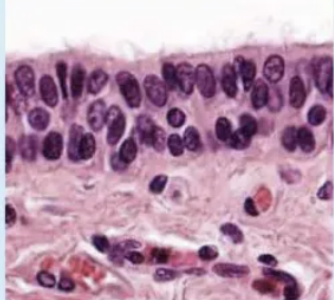
stratified columnar: location
male urethra, large ducts

transitional: physical appearance
many layers, rounded up

transitional: function
stretching
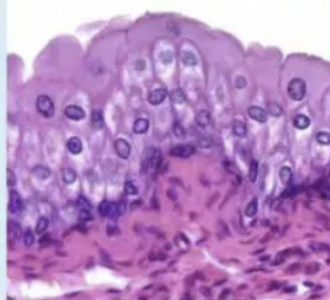
transitional: location
bladder
what are the two subclasses of connective tissue proper
loose connective tissue and dense connective tissue
what are three types of dense connective tissue
regular, irregular, elastic
what are three types of loose connective tissue
areolar, adipose, reticular
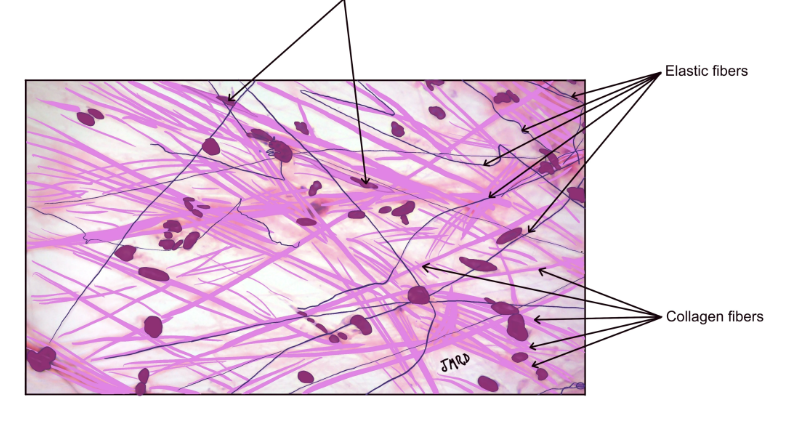
areolar (loose connective): physical appearance
loose fibers, lots of opens space
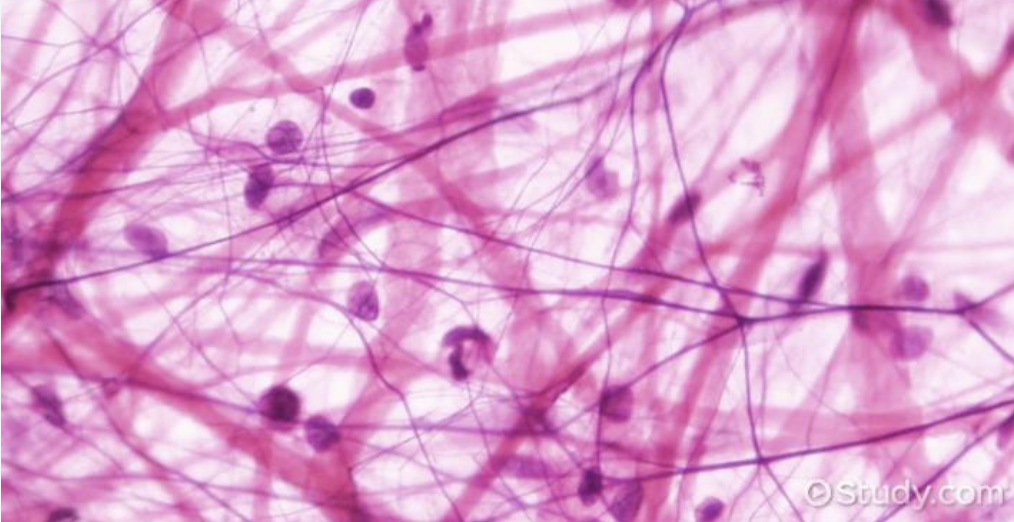
areolar (loose connective): physical appearance
loose fibers, lots of open space

areolar (loose connective): function
wraps/cushions

areolar (loose connective): location
under skin, around organs (areolar)

adipose (loose connective): physical appearance
large empty looking fat cells

adipose (loose connective): function
stores fat, insulation
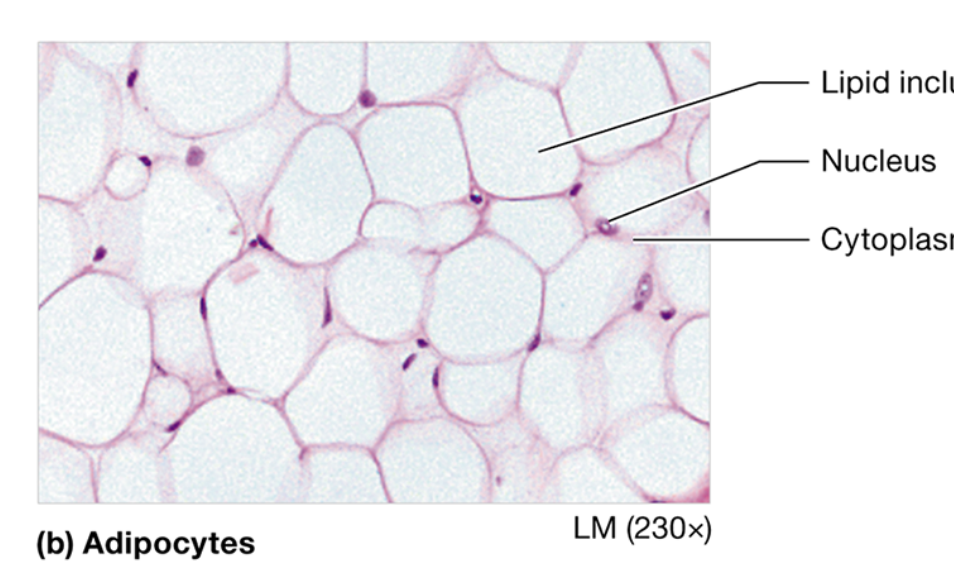
adipose (loose connective): location
under skin, around organs (adipose)