BIO 2: Lipids
 Call Kai
 Learn
Learn Practice Test
 Spaced Repetition
 Match
Match Flashcards
 Knowt Play
1/38

Earn XP
Description and Tags
Name | Mastery | Learn | Test | Matching | Spaced | Call with Kai | Chat |
|---|
No analytics yet
Send a link to your students to track their progress
39 Terms
Ampiphatic molecules that store energy
Lipids
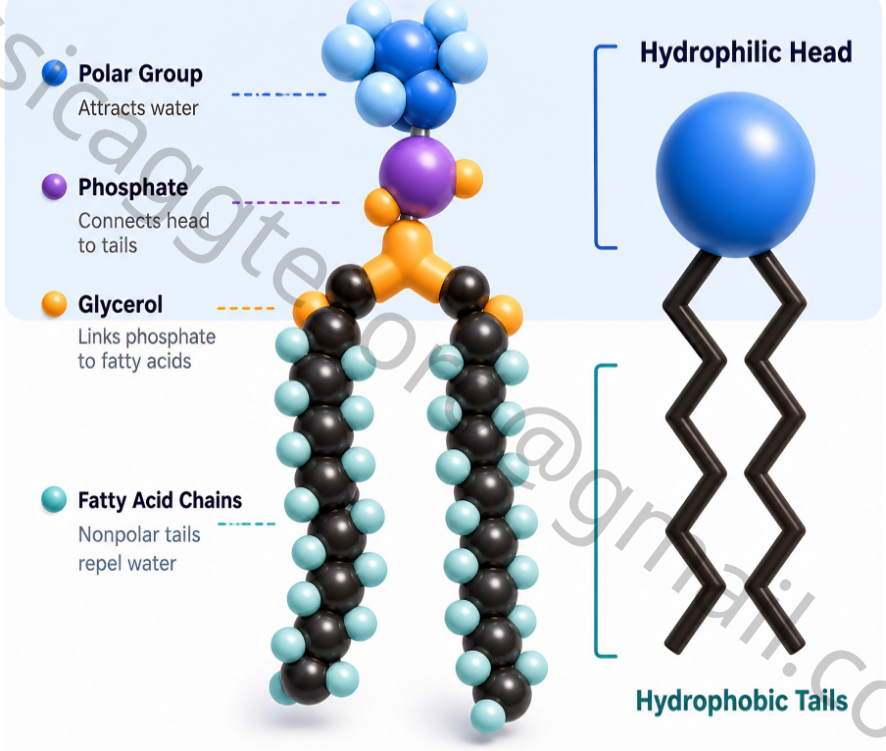
An amphipath or amphiphile is a molecule that has both polar (hydrophilic) and nonpolar (hydrophobic) parts.
What are the 4 components of lipids?
Polar groups
PO3
Glycerol
Fatty Acid chains
1,2 Hydrophilic kasi polar
3,4 Hydrophobic kasi nonpolar
The only non-polymeric biomolecules
Lipids
What form of lipids naturally occur?
Cis, even number of carbons
Lipids are soluble in ____ and insoluble in ___.
organic solvents; water
What kind of bond does lipids have?
Ester bonds
Hydrolyzable Lipid: 3 Types
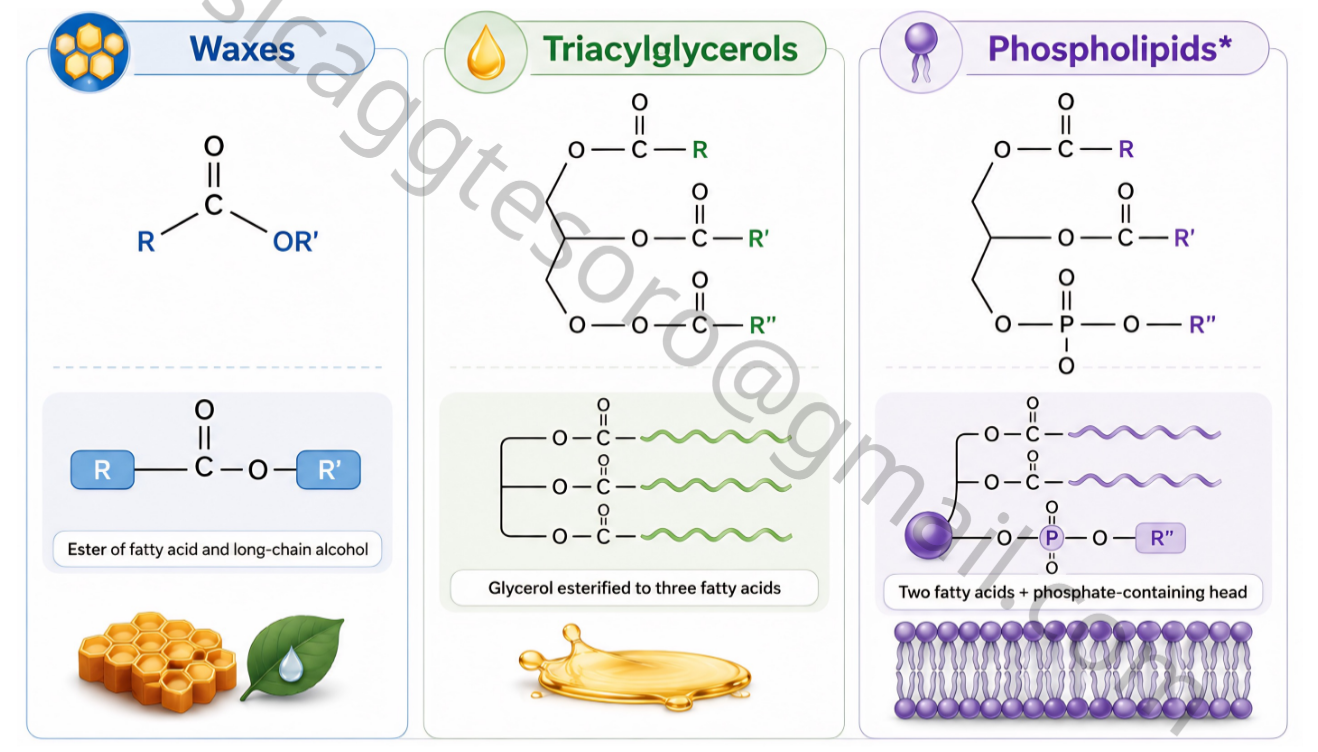
Biological Waxes
= simplest hydrolyzable lipids
= esters from: high MW ROH + 1 fatty acid (RCOOH)
= hydrophobic, used in water-proofing
> cosmetic > food industry (coat) > plant biology (gabi)TAGs (Triacylglycerol/Triglyceride)
= most abundant lipid
= fats/oils
= 3 FA + 1 glycerol
> saturated > unsatPhospholipid
1. PAGs /Phospoacylglycerol/ Phosphoglyceride
2. Sphingomyelins)
= organic derivatives of phosphoric acid with
> glycerol/sphingosine > 2 FA > phosphate
= “membrane lipids”
Hydrolyzable Lipid: What is the basic hydrolysis of TAGs?
Saponification
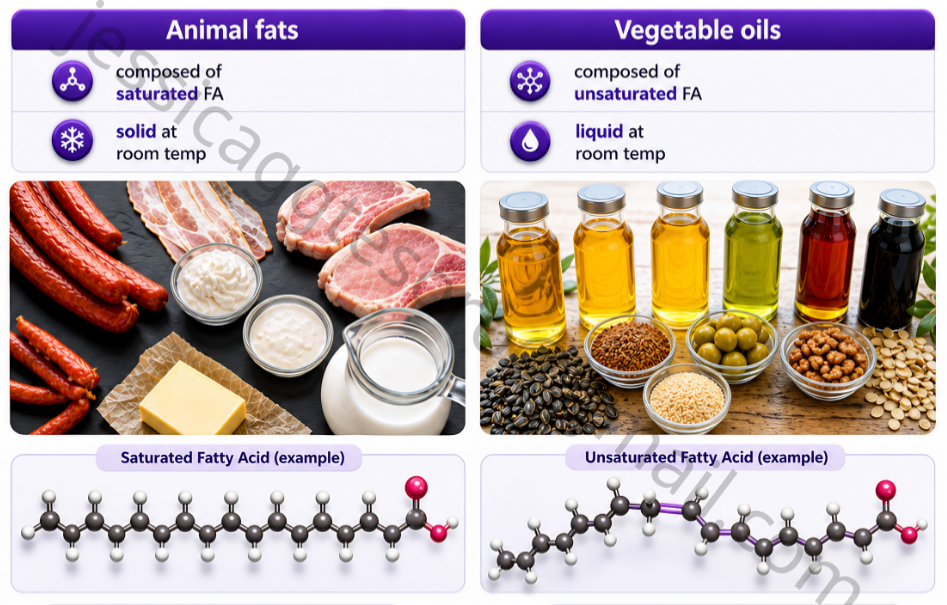
Hydrolyzable Lipid: Saturated vs Unsaturated Fatty Acids
Saturated = linear, no double bonds, solid, animal fats, less reactive (↑C ↑MP)
Unsaturated = bent cis, with double bonds, liquid, plant oil, (↑double bonds, same #C, ↓MP more prone to breaking)
C=C are e- rich, more reactive, more prone to degradation
Hydrolyzable Lipid: Name all C10-C30 Saturated Fatty Acids
(Ca)rush (La)ng Muna Para Safe Ako,
Baby (Lig)oves (Ce)ute Mo Mahal
Capric Lauric Myristic Palmitic Stearic Arachidic,
Behenic Lignoceric Cerotic Montanic Melissic
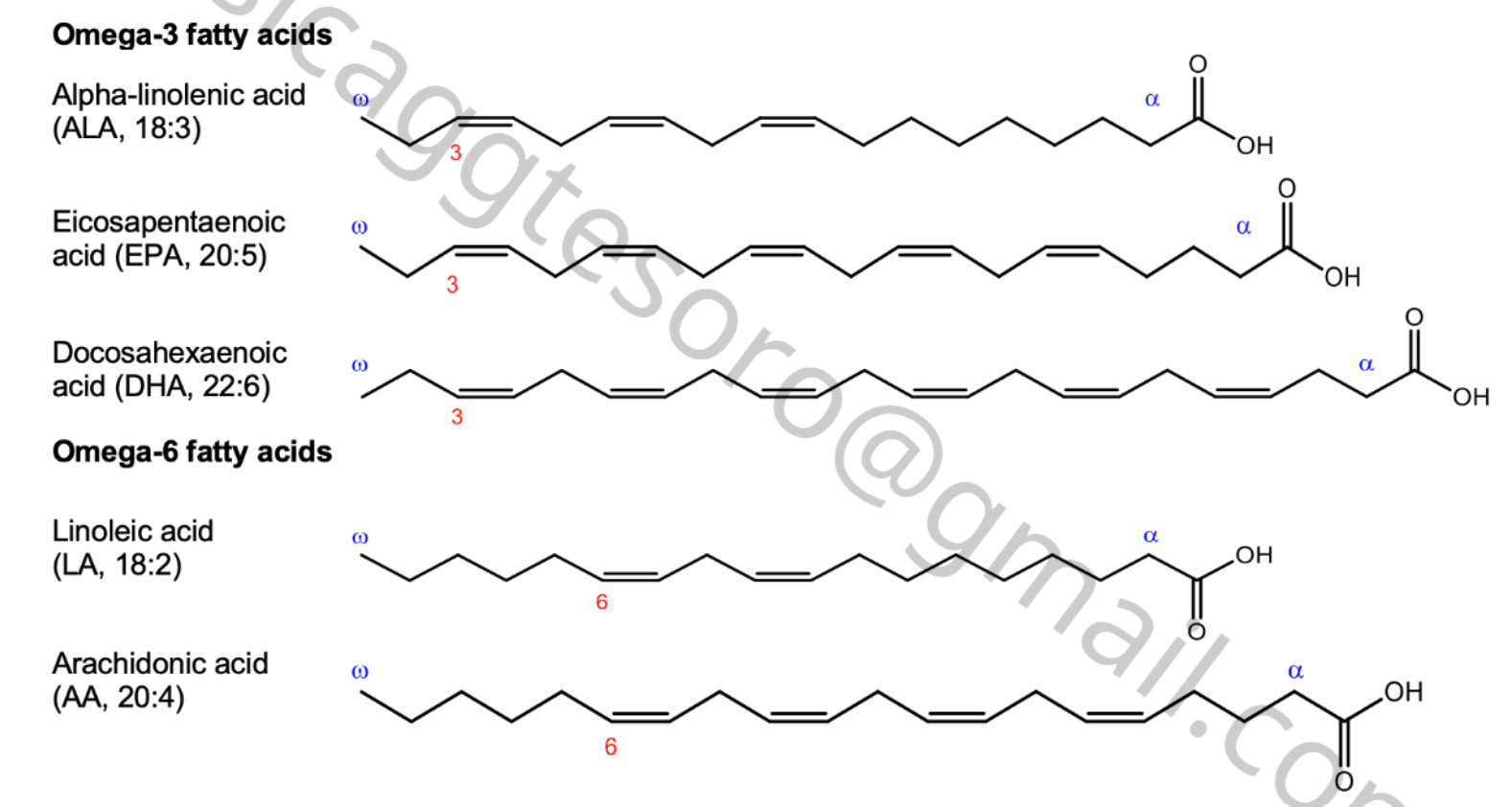
Hydrolyzable Lipid: What are fatty acids with 2 or more double bonds?
Polyunsaturated fatty acids (PUFAs)
Hydrolyzable Lipid: What are PUFAs that the body can’t synthesize?
Essential fats PUFAs.
Hydrolyzable Lipid: What are two essential omega-3 and omega-6 PUFAs?
Alpha-linoleic acid = omega-3 = fish
Linoleic acid = omega-6 = plant, soy, nuts
(3,6 are the position of the first C=C)
Hydrolyzable Lipid: What is the chemical process of adding H2 that can reduce the double bonds of unsaturated bonds, hence extending the shelf life?
Hydrogenation (C=C →(Pt)→ C-C)

Hydrolyzable Lipid: The only unsaturated fatty acids that has a linear structure.
Trans fats
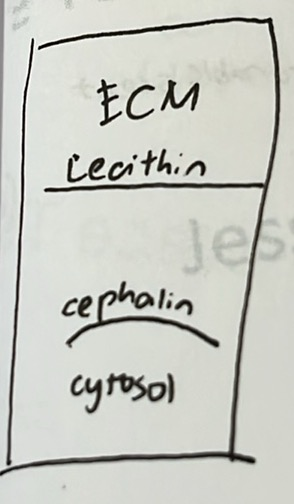
Hydrolyzable Lipid: What type of phospholipid forms the principal lipid component of most cell membranes, which is also the 2nd most abundant lipid?
PAGs, Phosphoacylglycerols, Phosphoglycerides
Hydrolyzable Lipid: 2 Types of PAGs
Cephalin
= Inner leaflet (cytoplasmic side) of the lipid bilayer.
= Functions:
> Supports and stabilizes membrane curvature.
> Plays a key role in blood coagulation pathways.Lecithin
= Outer leaflet (exoplasmic side) of the lipid bilayer.
= Functions:
> Maintains the structure and fluidity of the cell membrane.
> Aids in the transport and metabolism of lipids.
Hydrolyzable Lipid: What type of phospholipid is a sphingolipid found in animal cell membranes for insulation of nerve fibers?
Sphingomyelin (Myelin sheets)
Hydrolyzable Lipid: Differentiate PAGs, Sphingomyelins, and ceramides in terms of where they’re derived from.
PAGs = derived from glycerol
Sphingomyelins = derived from sphingosine
Ceramides = derived from sphingosine
Hydrolyzable Lipid: Which has both a structural and functional role? Phospholipid or steroid?
Phospholipid
What type of lipids cannot be broken down further into smaller units by aqueous hydrolysis?
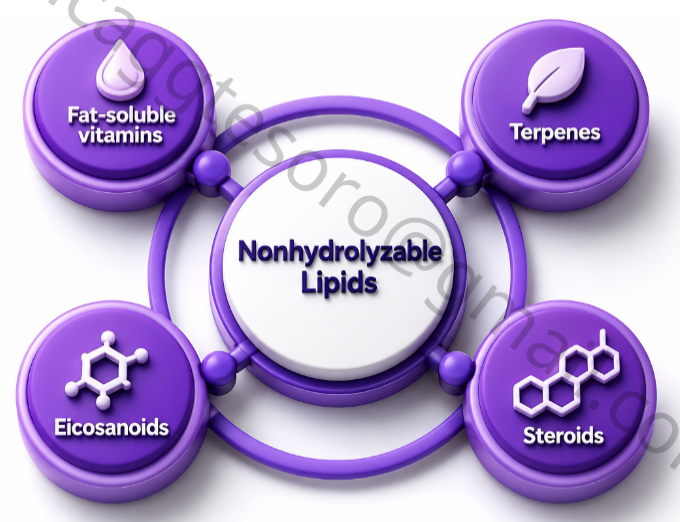
Nonhydrolyzable lipids.
What are the 4 types of nonhydrolyzable lipids?
Fat-soluble vitamins
Eicosanoids
Terpenes
Steroids
Nonhydrolyzable Lipids: What are the 4 fat-soluble vitamins?
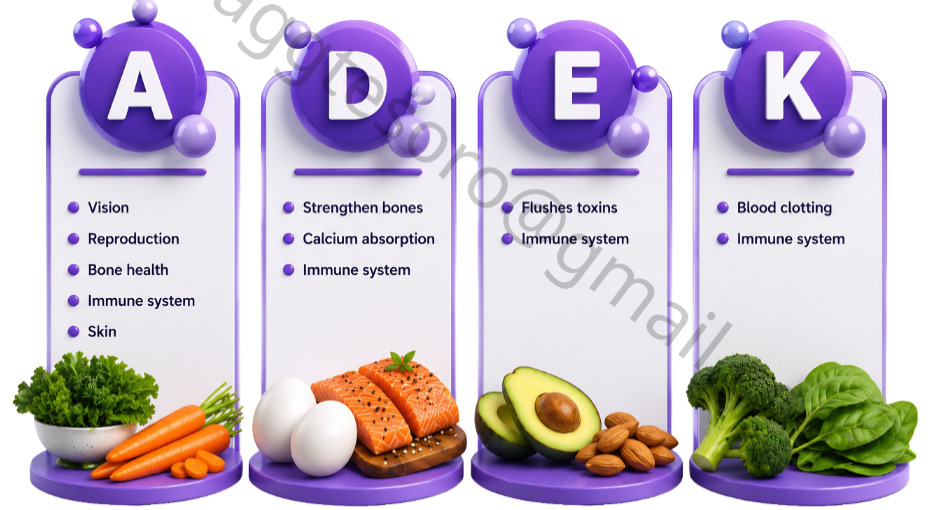
A D E K
found in fruits, veg, fish, liver, and dairy products.
in excess = stored in fat cells
Nonhydrolyzable Lipids: Discuss the functions of Vitamin ADEK.
Vit A = retinol, vision
Vit D = cholecalciferol, calcium absorption
Vit E = tocopherol, anti-oxidant (“Myra E”)
Vit K = phylloquinone, helps in blood clotting, immune system
Nonhydrolyzable Lipids: Discuss all 8 vitamin B complexes.
TaRa Na PaPy Bili Fries and Coke |
Thiamin Riboflavin Niacin PantothenicAcid Pyridoxine Biotin FolicAcid Cobalamin
1 2 3, 5 6 7, 9, 12
(walang 4 8 10 11)

Nonhydrolyzable Lipids: What is the metal cofactor of Vitamin B12? Cobalamin
Cobalt
Nonhydrolyzable Lipids: Biologically active compounds derived from arachidonic acid.
Eicosanoids
Nonhydrolyzable Lipids: What are the 4 classifications of eicosanoids?
Prostaglandins
Thromboxanes
Prostacyclins
Leukotrienes
Nonhydrolyzable Lipids: ___________ blocks COX 1 and 2 enzymes that stops the creation of prostaglandins (pain signaling molecules).
Aspirin and Ibuprofen

Nonhydrolyzable Lipids: Fragrant l ipids composed of repeating units of isoprene (5 carbons). Give 6 types of it.
Terpene
Monoterpene 10 C
Sesquiterpene 15 C
Diterpene 20 C
Sesterterpene 25 C
Triterpene 30 C
Tetraterpene 40 C
Nonhydrolyzable Lipids: Type of triterpene that is the intermediate of cholesterol.
Squalene
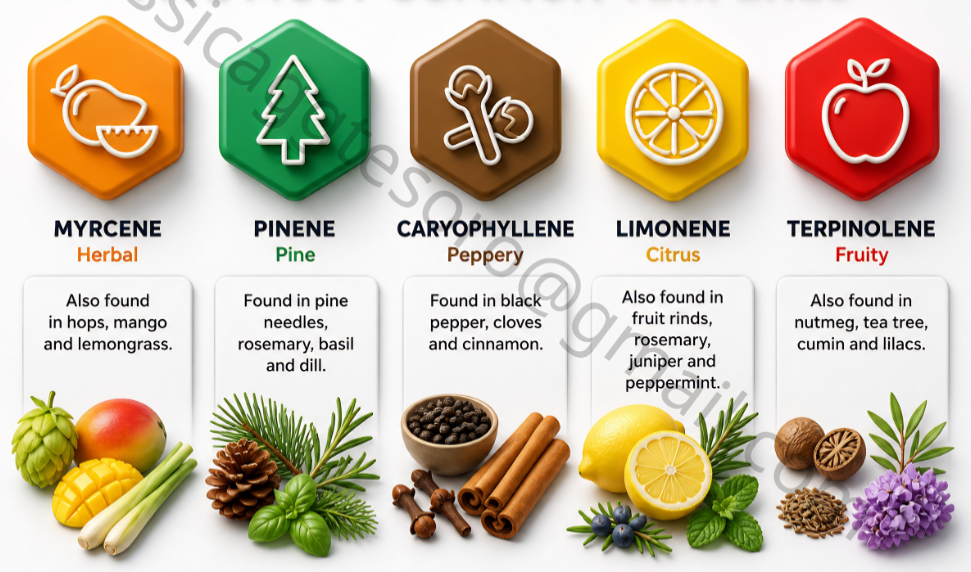
Name 5 common terpenes.
Nonhydrolyzable Lipids: Biologically active tetracyclic lipids (3 cyclohexane + 1 cyclopentane)
Steroids
Nonhydrolyzable Lipids: ____ are steroids secreted by endocrine glands, and can be classified as: s*x and adrenal cortical steroids.
Hormones
Lipids naturally self-assemble into organized structures due to their amphipathic nature. Name 3 structures.
Micelle
Lipid bilayer
Vesicle/Liposome
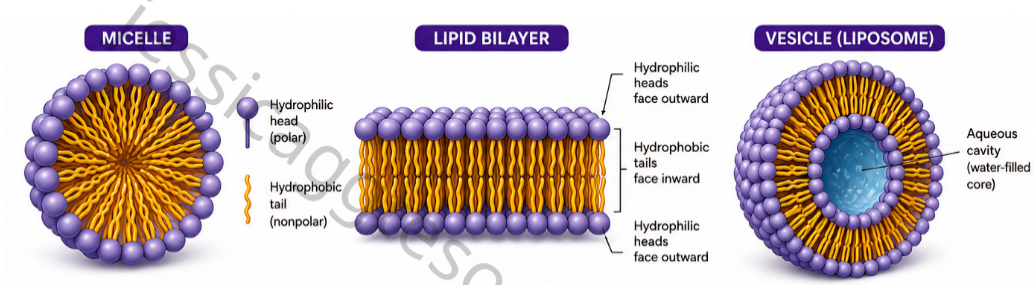
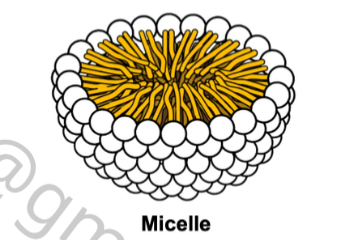
___________- 1-layer spherical aggregates, fatty acid cone shape. Aids in solubilizing hydrophobic substances, particularly in digestion.
Micelle
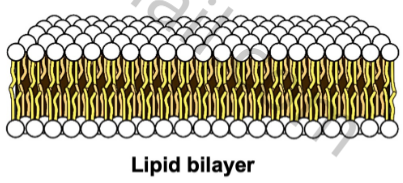
________ - 2-layer phospholipid with 2 hydrophobic tails face inward. Inverted cone (droplet) shape, cylindrical. Forms the structural basis of biological membranes acting as a selective barrier
Lipid bilayer
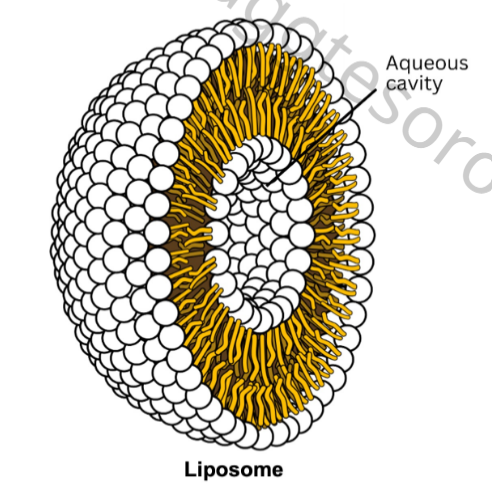
____________ - formed by lipid bilayers enclosing an aqueous structure, forming a spherical structure. Cylindrical lipids. Protects the structure of molecule. Serves in intracellular transport and drug delivery.
Liposome
Which among the lipids are the most abundant?
TAGs
PAGs