PEDIATRIC DENTAL MATERIALS
 Call Kai
 Learn
Learn Practice Test
 Spaced Repetition
 Match
Match Flashcards
 Knowt Play
1/46

Earn XP
Description and Tags
ppt
Name | Mastery | Learn | Test | Matching | Spaced | Call with Kai | Chat |
|---|
No analytics yet
Send a link to your students to track their progress
47 Terms
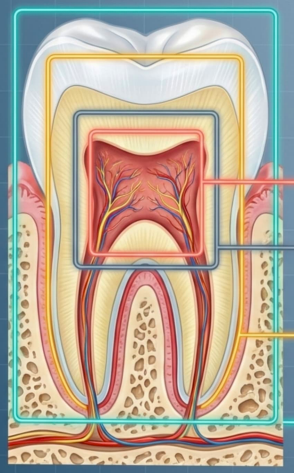
Zone 1
Deep Vulnerability
Pulp Capping & Liners

Zone 2
Inner Interface
The Dentin Base (Cements)

zone 3
Structural Body
The Core Build (Amalgams & Resins)
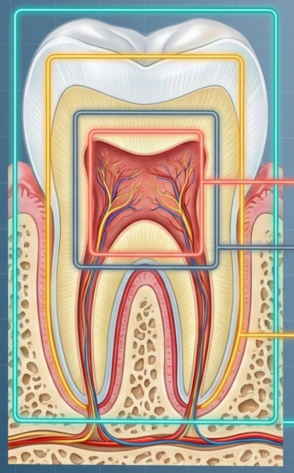
Zone 4
Outer Shield
Surface Defense (Sealants & Crowns)
pathway A: stepwise caries removal of deep carious lesion
Visit 1: Partial Removal & Medicament
Provisional Restoration
Visit 2: Final Removal & Definitive Restoration
goal: Goal is tertiary dentin formation and environmental change. Requires second visit.
pathway B: Single-Visit Excavation of removal of deep carious lesion
Maximum Removal (No Exposure) & Medicament
Definitive Restoration
goal: Eliminates inadvertent pulpal exposure risk during re-entry. Requires single visit compliance.
Calcium Hydroxide (CaOH)
chemical defense:
Highly alkaline (pH ~11). Prevents bacterial invasion.
primary use:
Direct pulp capping and deepest cavity preparations. Placed exclusively on dentin.
clinical caution:
High solubility. Must not be left on enamel or axial walls.
Poor seal and low compressive strength require an overlying high-strength base.
formulations of Calcium Hydroxide (CaOH)
Two-paste system: Catalyst reacts with base to form amorphous calcium disalicylate
Visible light-cured: Better clinical success, less susceptible to hydrolysis.
Zinc Oxide-Eugenol (ZOE)
primary use:
Material of choice for pulp chamber filling postpulpotomy/pulpectomy. Provides strong sedative effect on the pulp.
clinical caution:
Eugenol directly inhibits the polymerization of resins. DO NOT use as a base under resin-based composites without an intervening glass ionomer layer.

composition of Zinc Oxide-Eugenol (ZOE)
Powder: Zinc Oxide, rosin for fracture resistance, zinc acetate accelerator
Liquid: Eugenol.
Reaction forms an amorphous chelate of zinc eugenolate.
Glass lonomer Cement (GIC)
primary use:
Type III Liners/Bases.
Exhibits less marginal microleakage than ZOE or CaOН.

types of glass ionomer cement
Type I: Luting
Type II: Restorative
Type III: Liner/Base
Type IV: Sealant
Type V: Orthodontic
Type VI: Core Build-up
GIC Setting Reaction
Initial Set:
Gel Phase: Carvable but moisture susceptible. Calcium ions bind rapidly
The Fluoride Halo:
Released via dissolution and diffusion. Taken up by adjacent enamel and dentin to create a dernineralization-resistant inhibition zone (enhanced remineralization and antibacterial effects).
Rigid Cross-linking:
Slower trivalent aluminum ions lock the structure, providing ultimate strength.
Zinc Phosphate & varnishes
mechanics:
The oldest luting cement (zinc oxide/magnesium oxide + phosphoric acid/water). Reaches 50% strength in 10 mins.
key strengths:
Highest modulus of elasticity among cements.
Excellent mechanical support under amalgam.
Provides thermal insulation.
clinical cautions:
Extremely acidic fresh mix (pH 1.3-3.6). Mandates a CaOH sub-base in deep cavities to prevent pulpal irritation.
Cavity Varnishes are indicated under amalgam to reduce microleakage and inhibit penetration of corrosion products into dentin.
Interface Sealing: The Dentin Hybrid Layer
Unlike traditional cements that rely on phosphate-calcium chemical bonds, contemporary dentin bonding requires smear layer removal (or alteration via self-etching primers).
Mechanical Interlocking:
Monomers infiltrate the demineralized dentin matrix. Subsequent polymerization creates a highly retentive, physical micro-mechanical bond.
Phosphoric Acid Etch → removes the Smear Layer

examples of Acid-Base Reaction
ZOE
Zinc Phosphate
Polycarboxylate
examples of Dual-Cured
Resin-Modified GIC
examples of Polymerization Reaction
Resin-based cements
Bioactive Cements
Glass particles in a resin matrix. Bonds to tooth structure, releases calcium/fluoride. Ideal for stainless steel, porcelain, and zirconia crowns.

Dental Amalgam
Alloy Configuration
Spherical or lathe-cut particles mixed with mercury (the wetting agent that initiates setting).
Preparation Standard
High-copper admixed or unicompositional precapsulated alloys are strictly recommended to ensure precise ratios and minimize vapor risks.
Physical Requirements
Must withstand 11,600 psi compressive strength at 1 hour. Maximum 5% creep allowed.
ideal composition of dental amalgam
Zinc
Tin - 2-30%
Copper
silver 40-74%
Mercury (unreacted limit)
Eliminating the Gamma 2 Phase

Gamma 2 Vulnerability
Tin-Mercury binding is responsible for early fracture, high creep (viscoelastic dimensional change under load), and severe pitting corrosion.
The Copper Solution
Replacing the tin-mercury phase with a coppertin phase drastically decreases corrosion and secondary weakening. Spherical high-copper amalgams are the least susceptible to failure.
Resin-Based Composites
The Matrix
Viscous fluid nonvolatile monomers. Bis-GMA (synthesized from bisphenol A and glycidyl methacrylate) is the standard. TEGDMA lowers viscosity for better handling.
The Filler
Silane-treated particles that bond to the polymer matrix. Barium glasses add radiopacity. Increasing filler volume increases wear resistance and stability while reducing thermal expansion and polymerization contraction.
The Organic Matrix
Bis-GMA or TEGDMA
The Inorganic Filler
Quartz, silica, barium glasses
Microfill (0.04-1 µm)
Highly polishable. Recommended for anterior, highly visible areas with minimal masticatory stress.
Macrofill
High filler percentage (80%). Large particles accelerate wear of the surrounding matrix. Poor esthetics.
Hybrid / Nanofill
Combines sizes. Small particles pack closely between larger ones, minimizing unfilled resin, maximizing wear resistance, and allowing high luster.
Shrinkage Threat
Causes marginal leakage, ingress of bacteria, secondary caries, and postoperative sensitivity.
Conventional Mitigation
Max 2mm increments. Time-consuming and risks introducing voids.
Bulk-Fill Mechanics
Modifying the Bowen monomer (hydroxyl-free Bis-GMA) lowers viscosity and reduces polymerization shrinkage stresses by over 70%, allowing safe 4mm placement.
Modified Monomer Chemistry:
Highly branched methacrylates absorb stress.
Light-Curing Units
Visible light-activated materials contain initiators (e.g., camphorquinone) that absorb light optimally at 470 nm to generate free radicals.
QTH (Halogen)
Wavelength Output: Broad-spectrum (400-500nm)
Heat Emission: High (Requires fan)
Intensity (mW/cm²): 400 - 1200 (Degrades)
Clinical Pros/Cons: Intensity degrades over time, requires maintenance.
LED (Diode)
Wavelength Output: Narrow spectrum (440-490nm)
Heat Emission: None (Quiet)
Intensity (mW/cm²): High (Multi-LED)
Clinical Pros/Cons: Battery-powered, no heat, newer units broaden spectrum.
PAC (Plasma Arc)
Wavelength Output: Violet-blue (400-500nm)
Heat Emission: Low (Filtered)
Intensity (mW/cm²): >1000
Clinical Pros/Cons: Faster cures but generates higher shrinkage stresses. High cost.
Argon Laser
Wavelength Output: Single wavelength (~490nm)
Heat Emission: Variable
Intensity (mW/cm²): >1000
Clinical Pros/Cons: Extreme intensity but very high cost limits widespread use.
Traditional Resin Sealant
Hydrophobic Bis-GMA diluted with low-weight monomer for fluid penetration.
Modern Resin Sealant
Hydrophilic, bisphenol-A free, offering better adaptation and seal in moist environments.
Compomers
A hybrid cross between resin-composite (wear resistance, polishability) and glass ionomer.
Requires visible light-polymerization to complete the primary setting reaction.
Uses methacrylate primers to bond, making acid-etching optional.
Stainless Steel Pediatric Crowns
Composition: Iron (65-73%), Chromium (17-20%), Nickel (8-13%)
Indication: Material of choice for badly broken down posterior teeth
Clinical Note: Requires precise trimming and crimping to ensure optimum gingival health.
Monolithic Zirconia Pediatric Crowns
Strength: Extremely high flexural and compressive strength.
Gingival Response: Highly polished, glossy surface is highly favorable to gingival tissue.
Wear: Demonstrates more favorable opposing-tooth wear than porcelain
Cementation: Cemented using bioactive or resin-modified glass ionomer cements.
Bases & Liners
Deepest preparation areas, exposed dentin prior to etch, direct pulp caps. NEVER leave on enamel.
primary materials:
СаOH
Luting Cements
Cementation of stainless steel and zirconia crowns, structural sub-bases under amalgam. GIC provides fluoride release.
primary materials:
GIC, Zinc Phosphate, Bioactive
Core Restoratives
High copper admixed for pit/fissure and interproximal. Resins for esthetic Class I-V (Hybrids/Nanofills for optimal wear and polish balance).
primary materials:
Amalgam, Resin-Composite
Chamber Fills
Obliterating primary pulp chambers following pulpotomy or pulpectomy. Do not use under resins without GIC layer.
primary materials:
Zinc Oxide-Eugenol (ZOE)