tmua p2
 Call Kai
 Learn
Learn Practice Test
 Spaced Repetition
 Match
Match Flashcards
 Knowt Play
1/76

There's no tags or description
Looks like no tags are added yet.
Name | Mastery | Learn | Test | Matching | Spaced | Call with Kai | Chat |
|---|
No analytics yet
Send a link to your students to track their progress
77 Terms
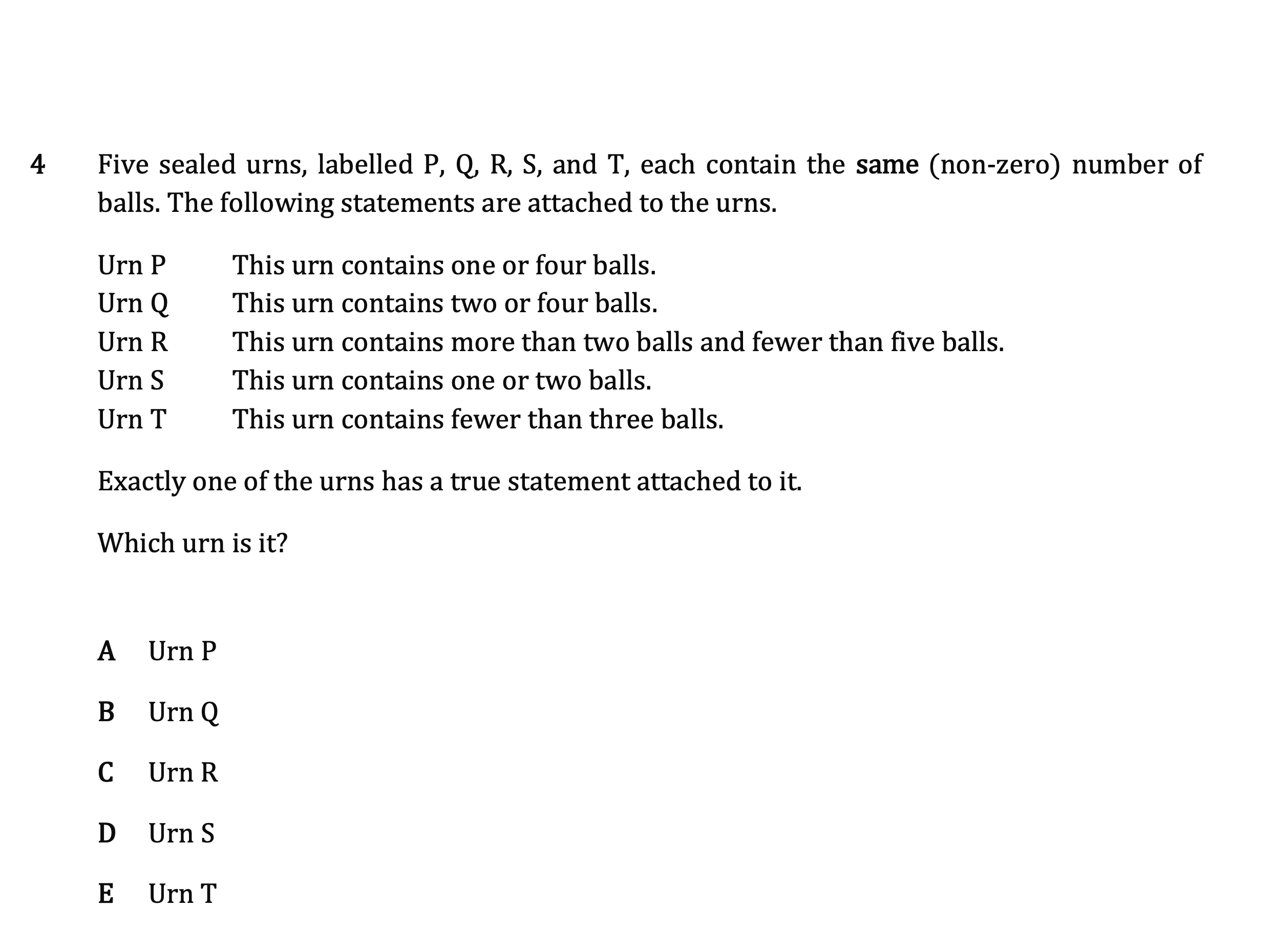
C

D
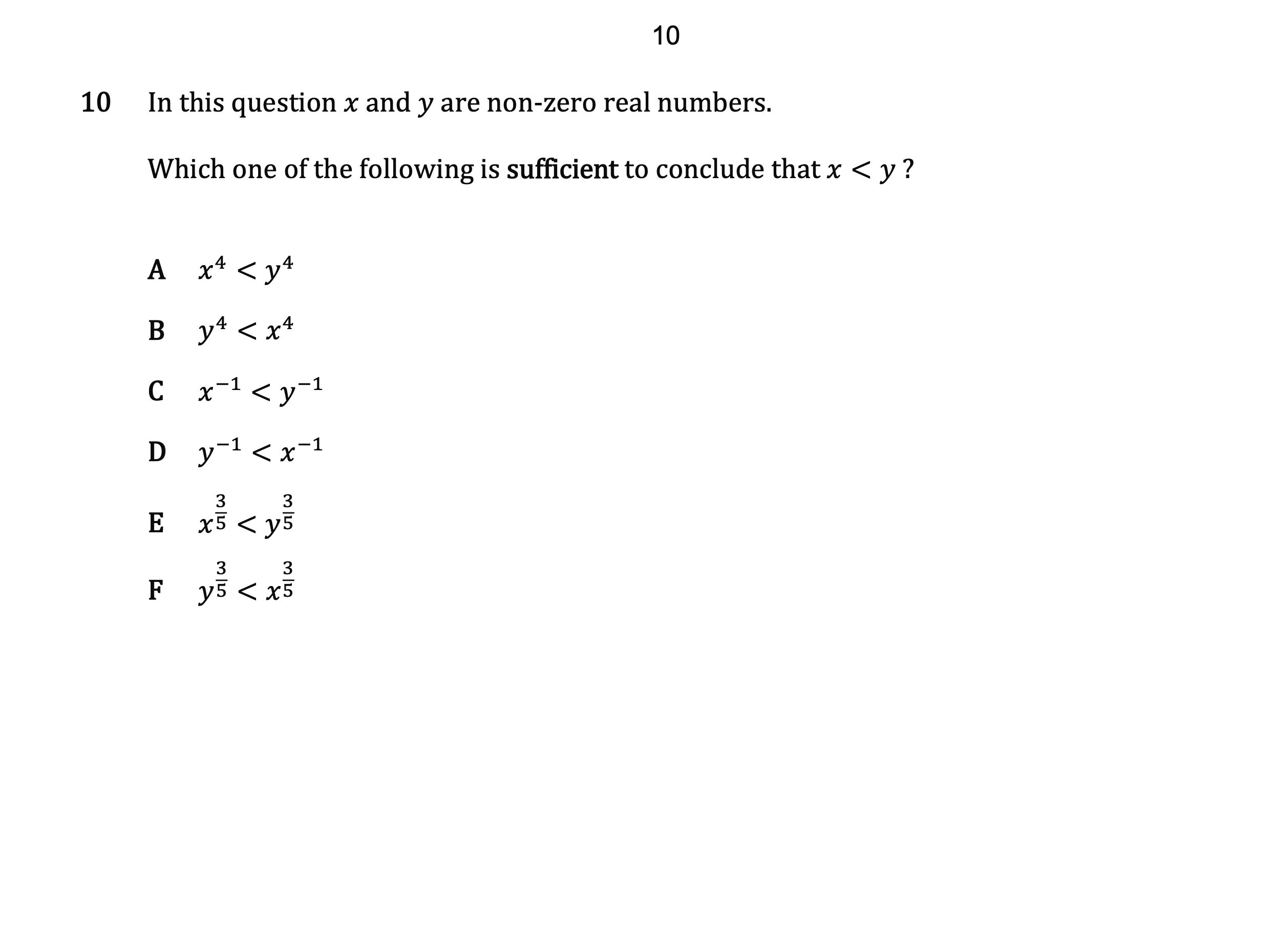
E
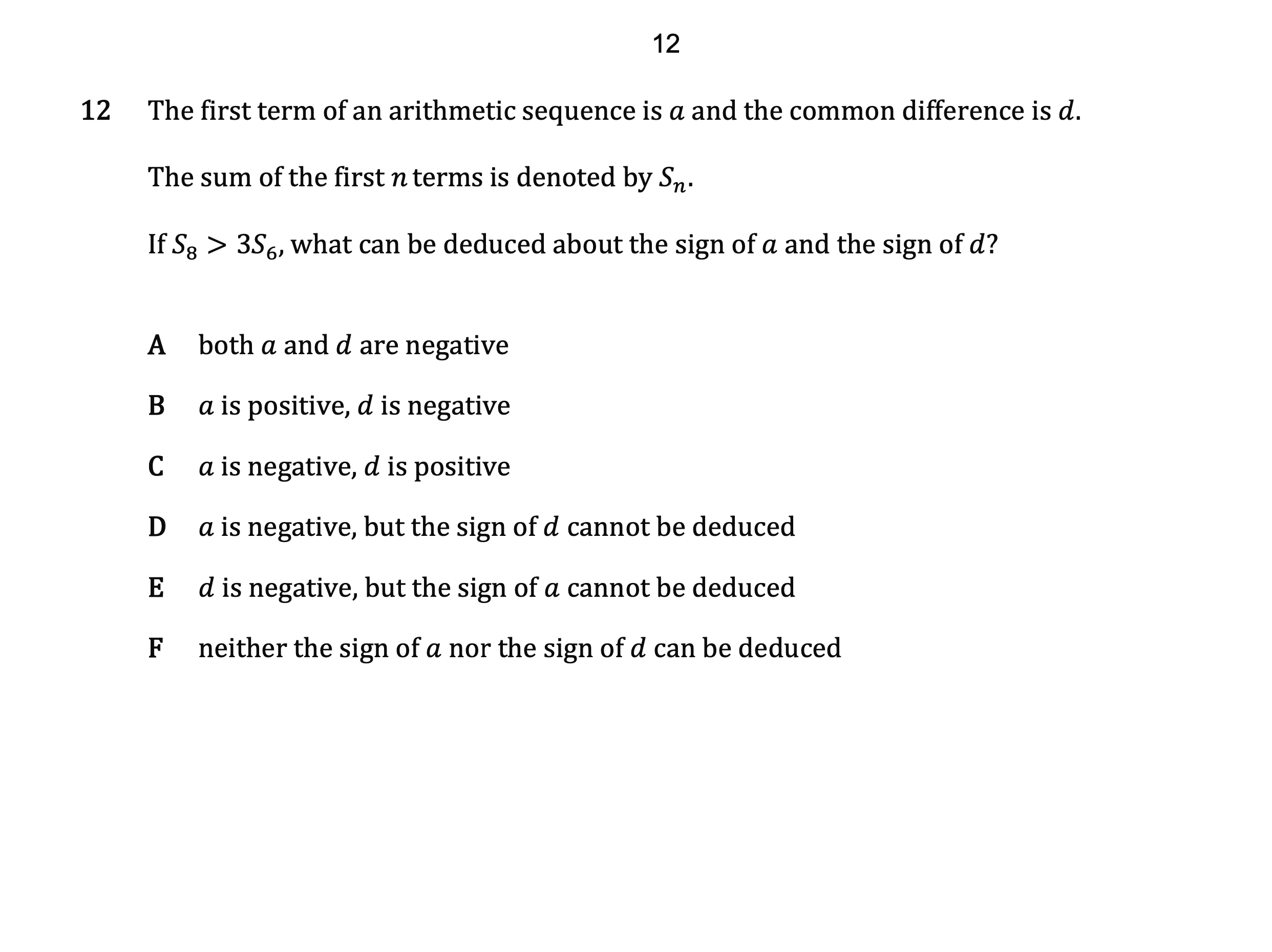
F
E
B
C
H
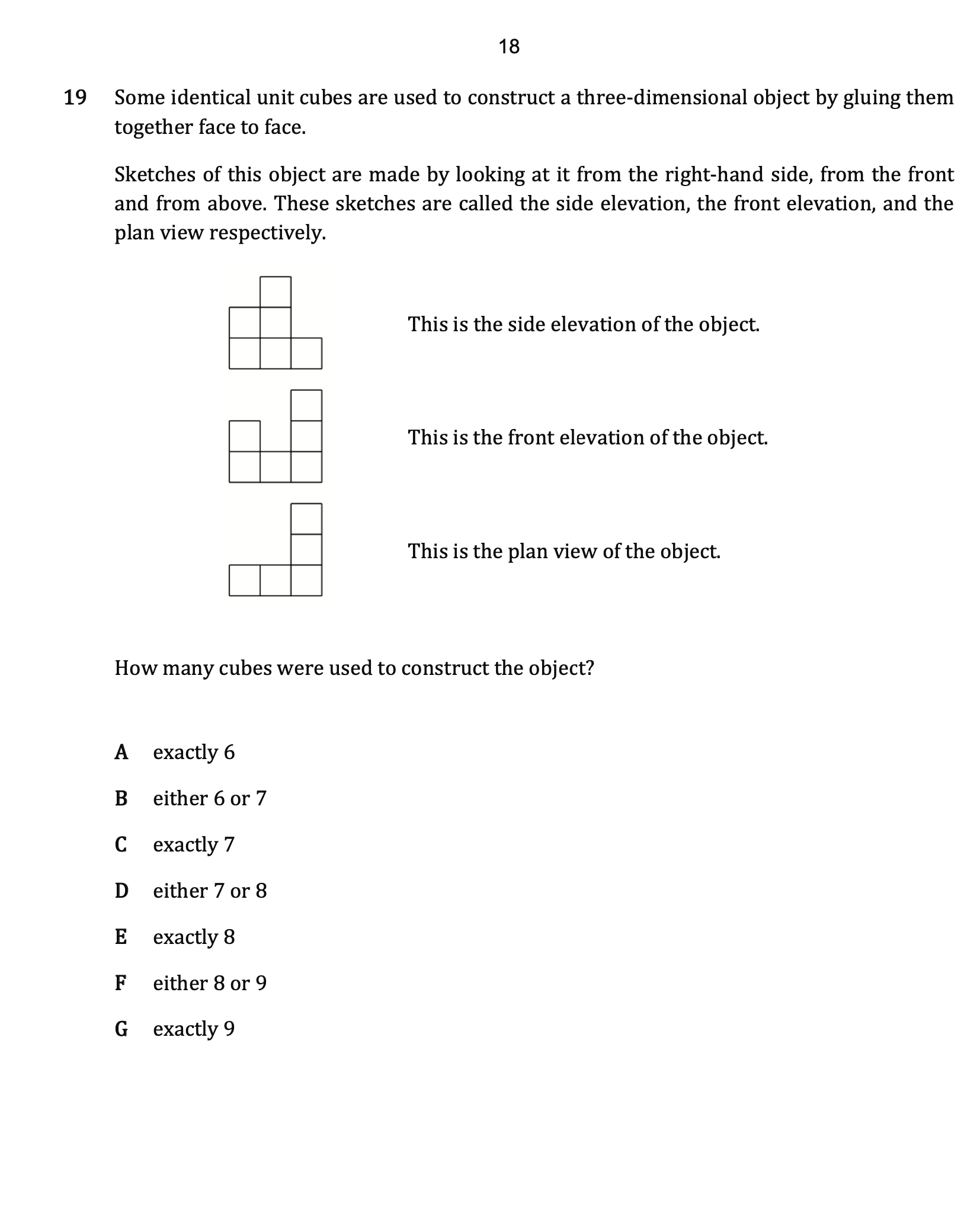
F

E

E

B
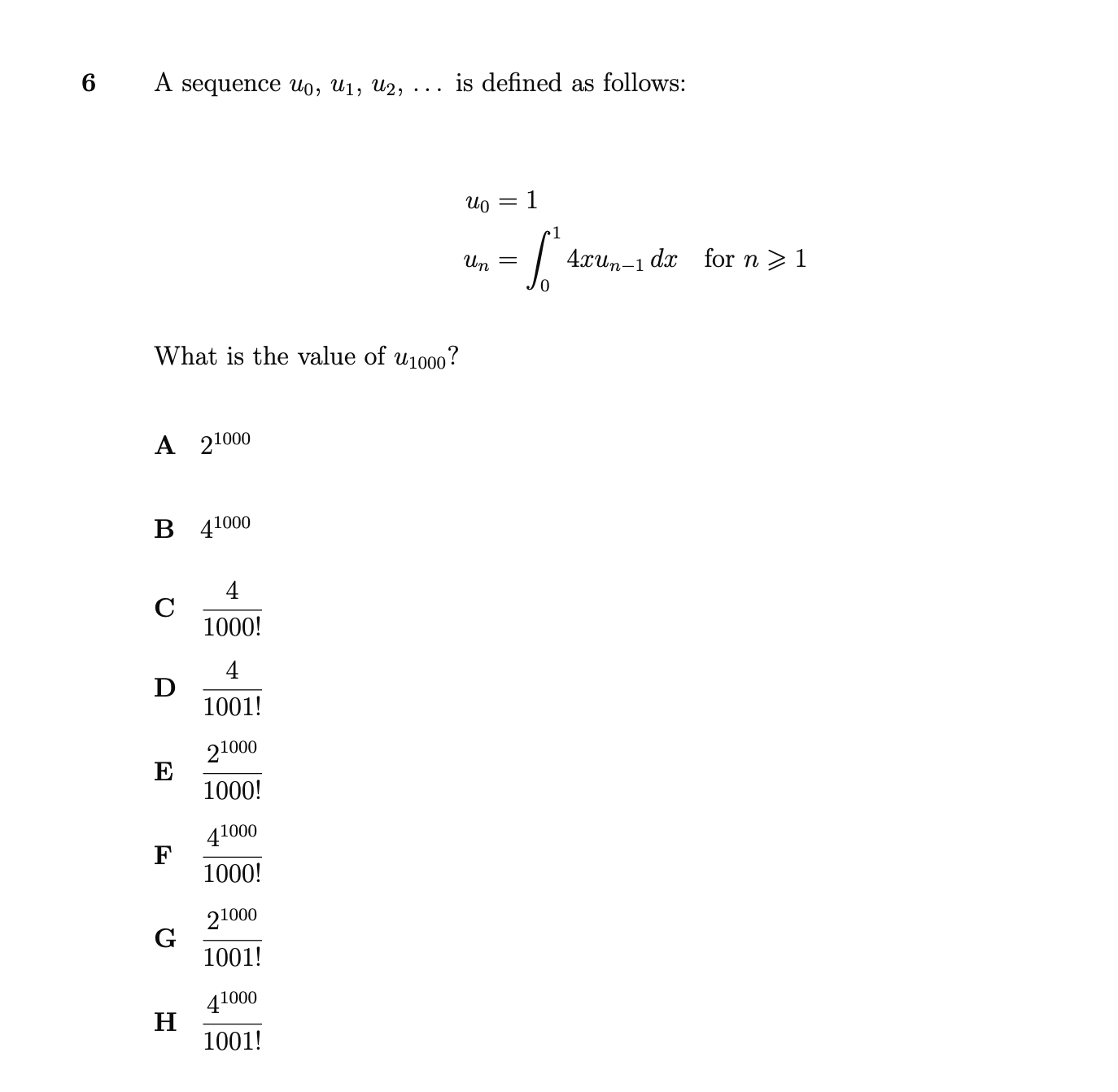
A
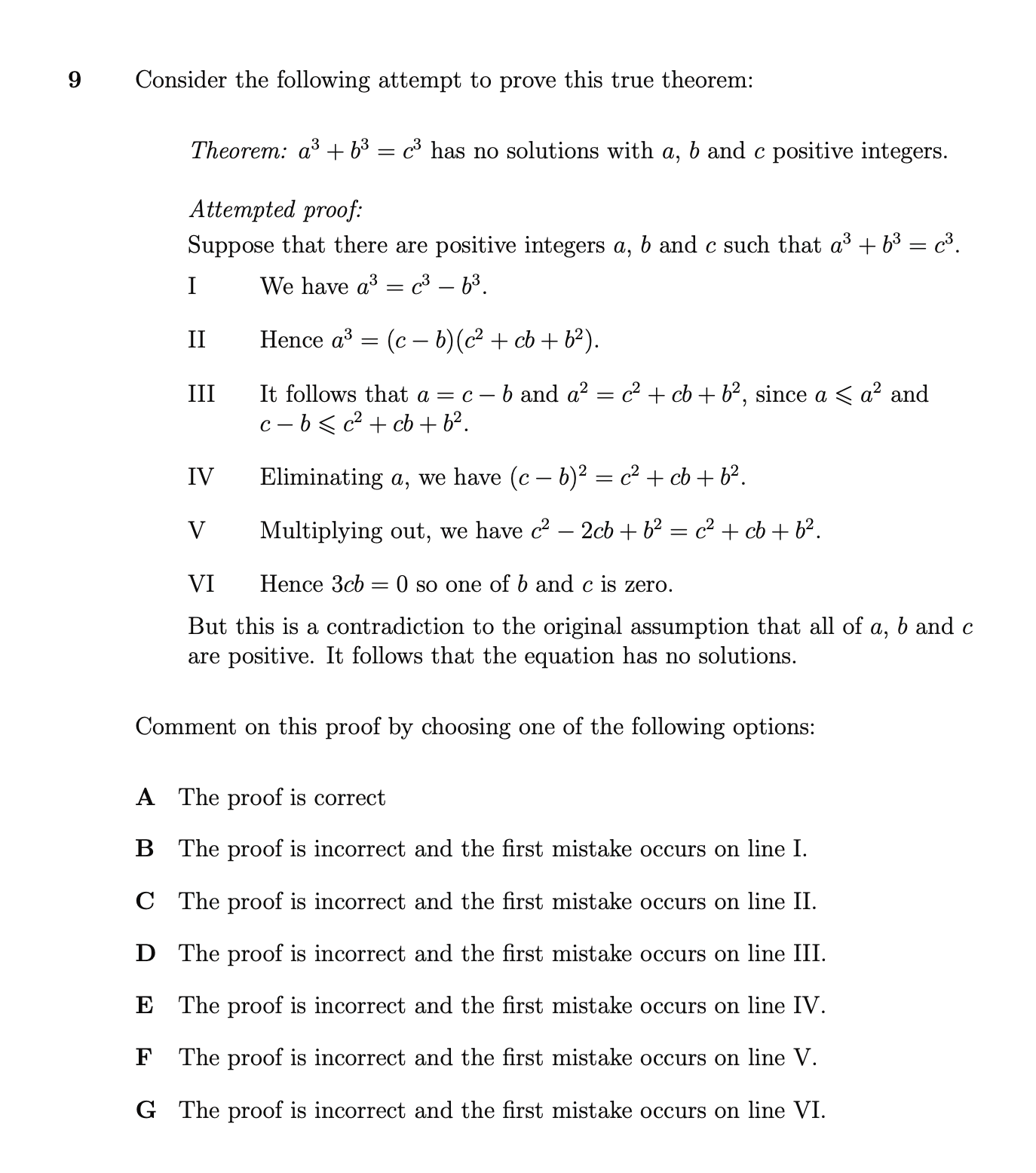
D
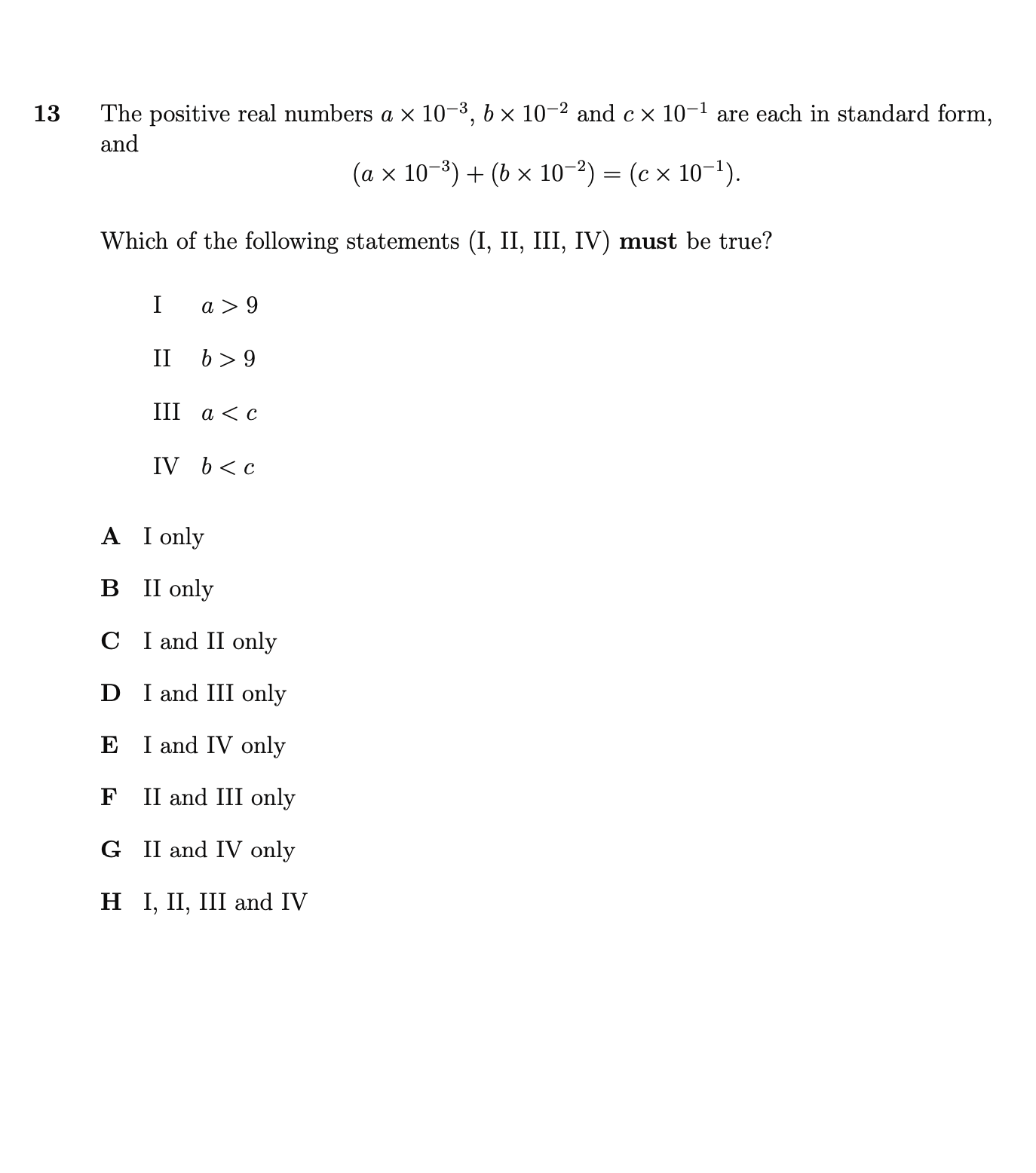
B

F

D

C
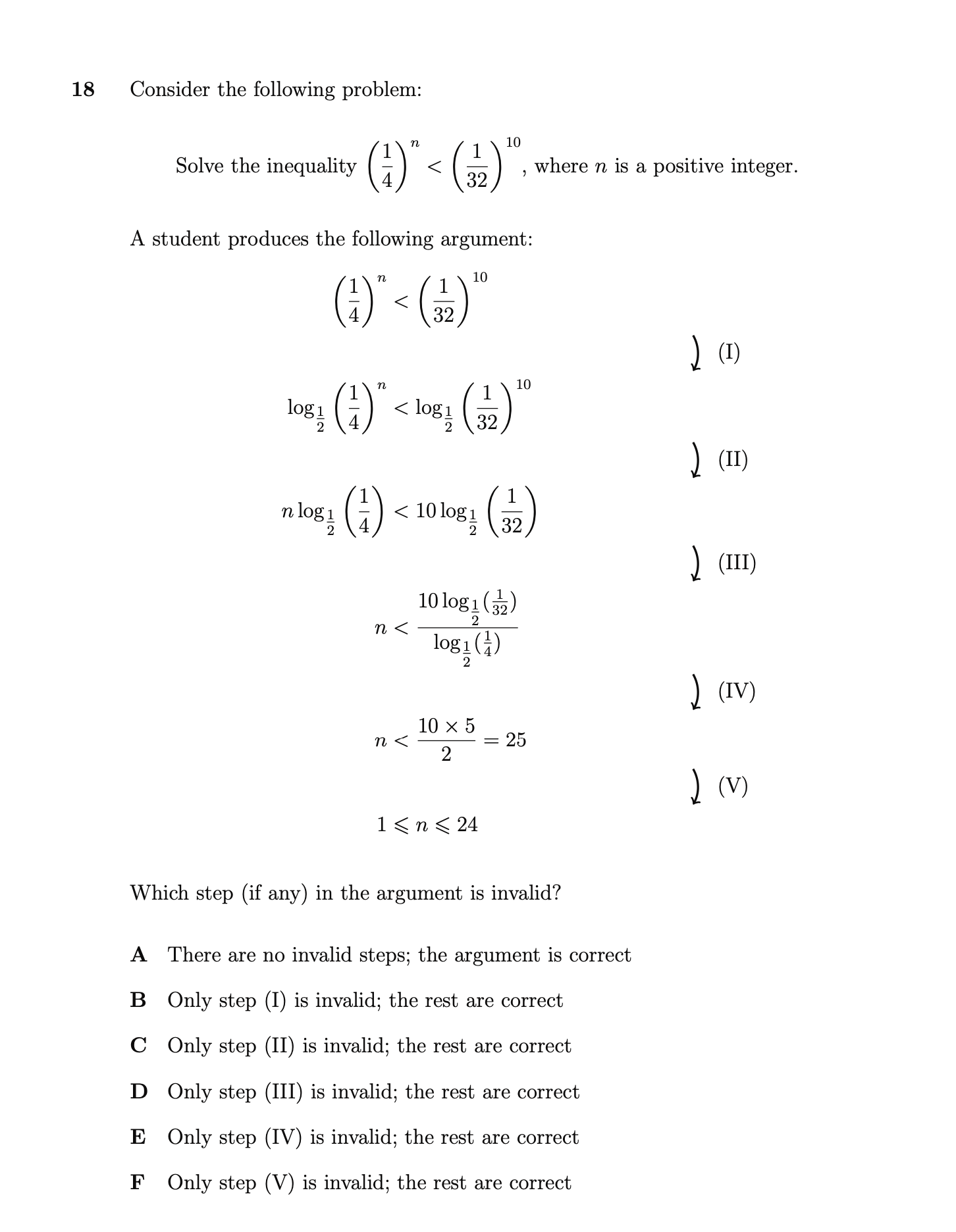
B

E
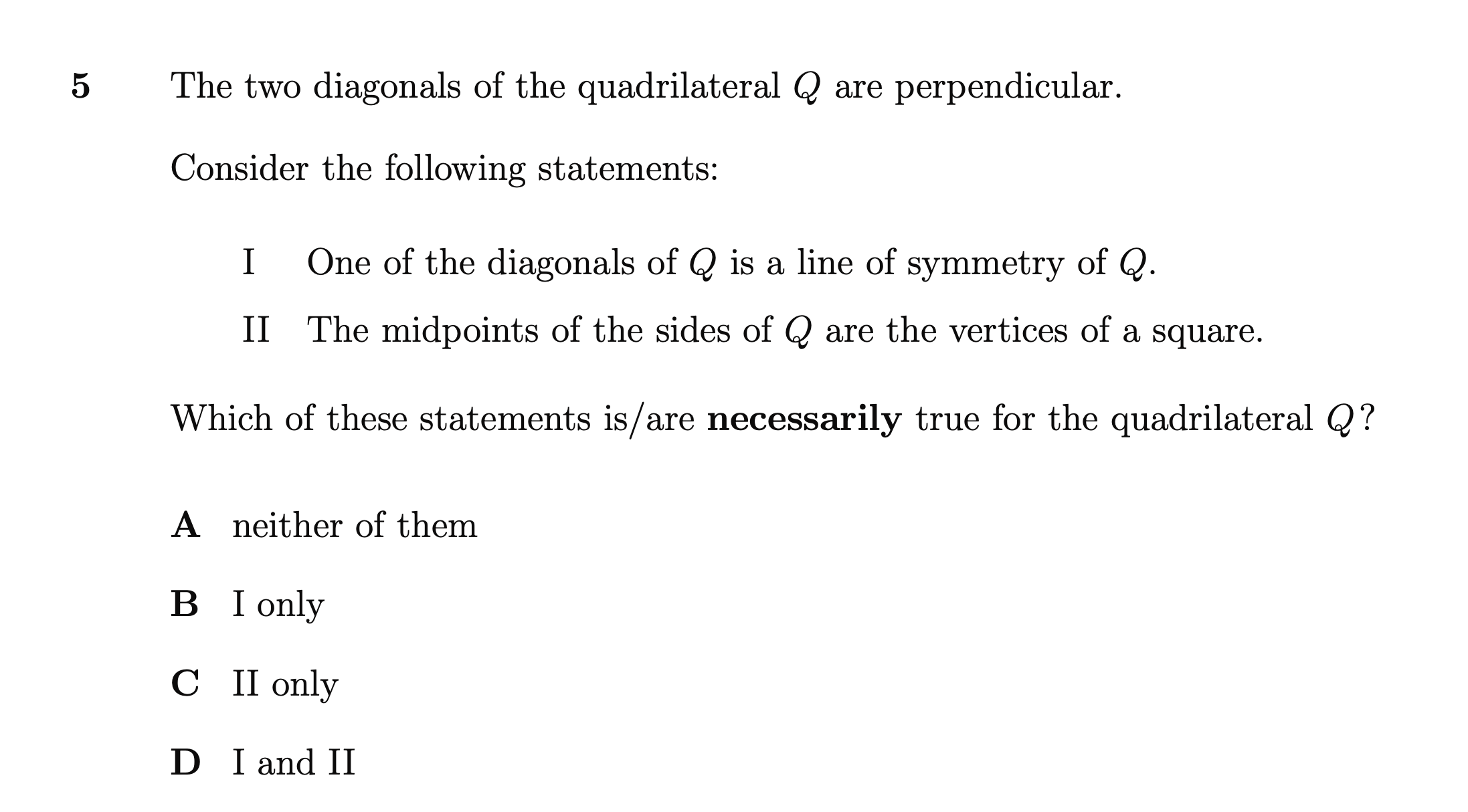
A
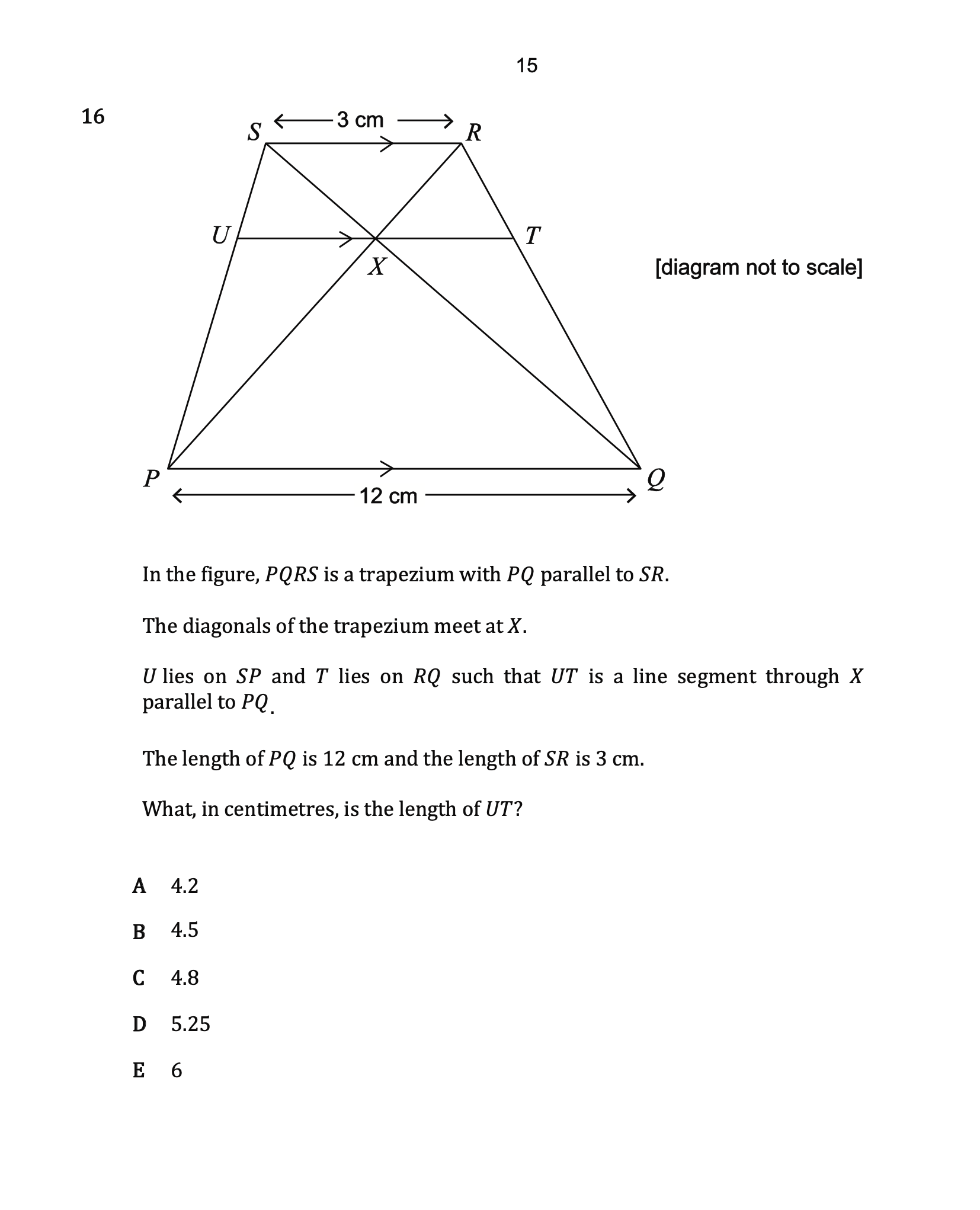
trapezium
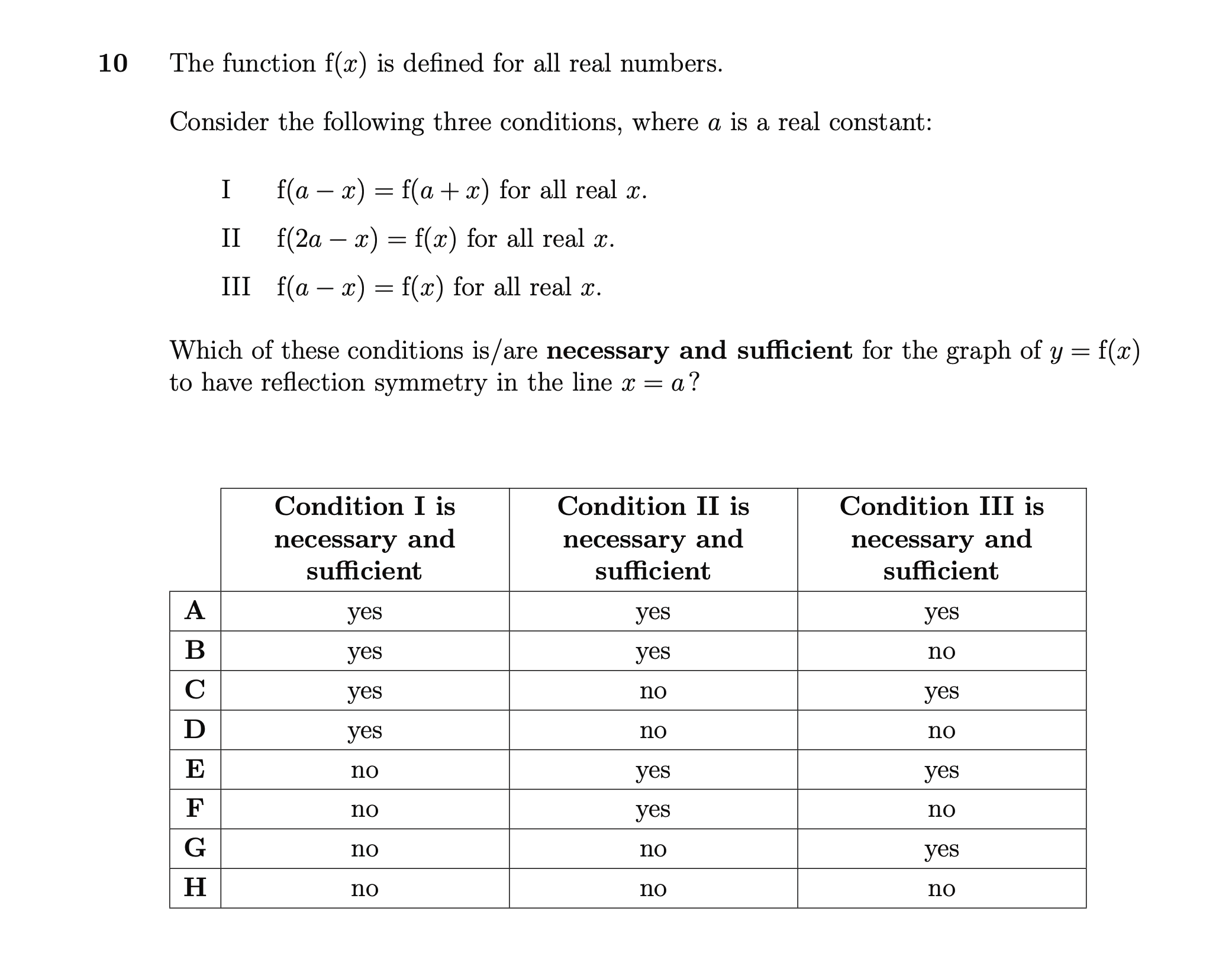
B
1 is just the function equation for line of symmetry at x = a
if we let x = a + s, then 2 is also just 1
3 obviously not true

F
square rooting has 2 solutions
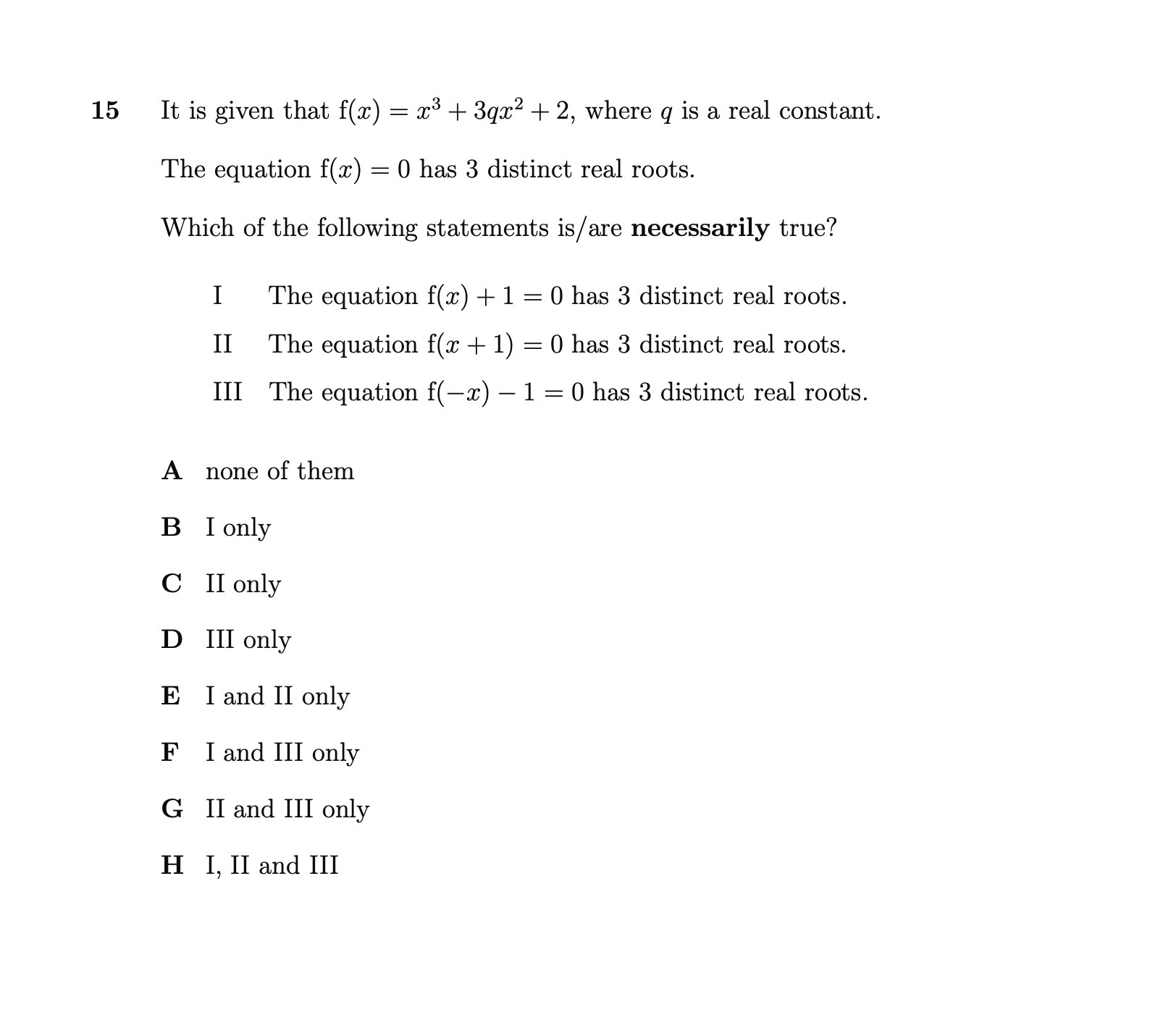
G
2 as moving it left and right won’t change the roots
3 as when you reflect it in the x axis, the positive TP will be greater than the y-intercept so subtracting 1 will not affect the roots
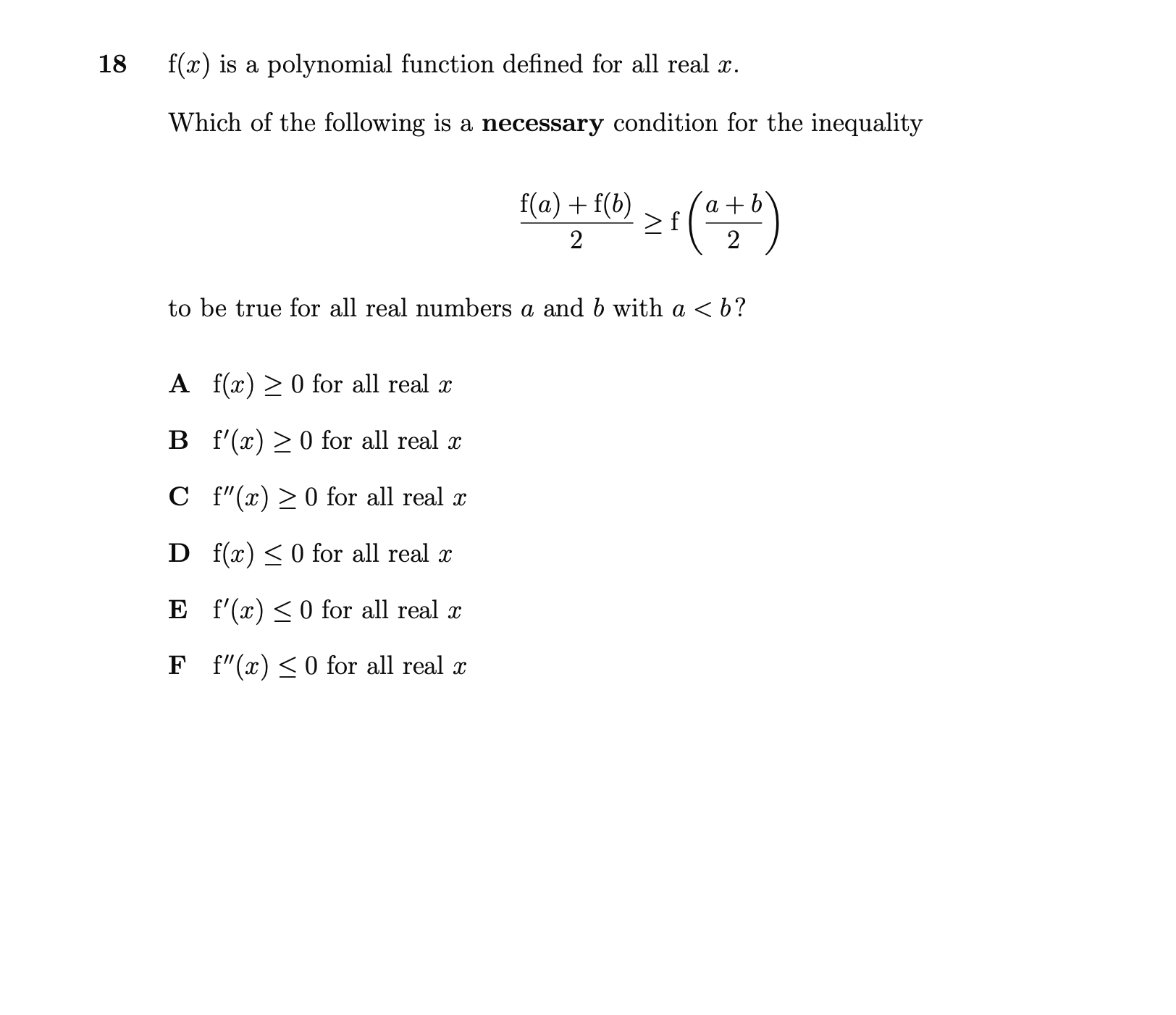
C
graph needs to be concave for values to hold so C
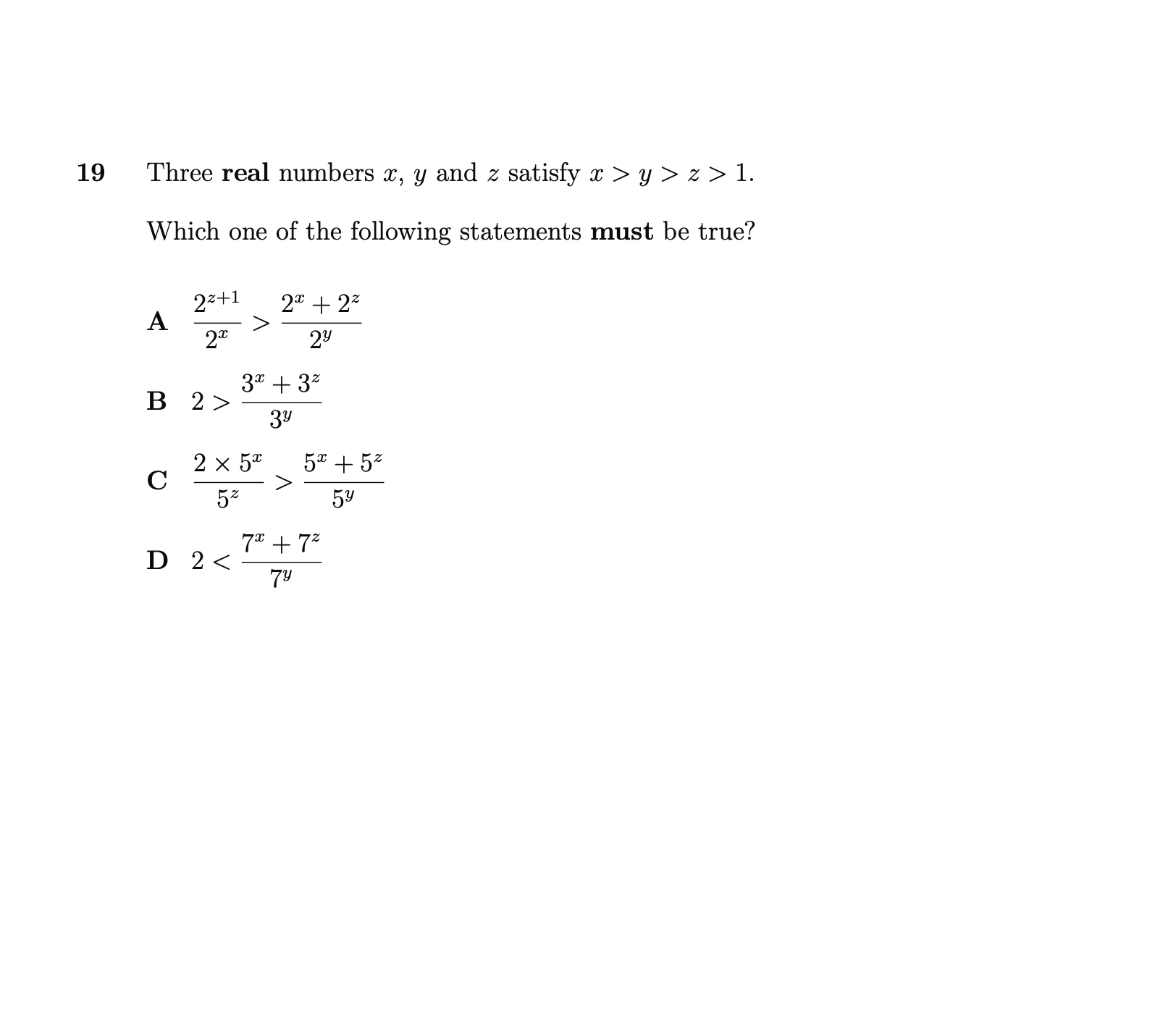
C
just using counter examples
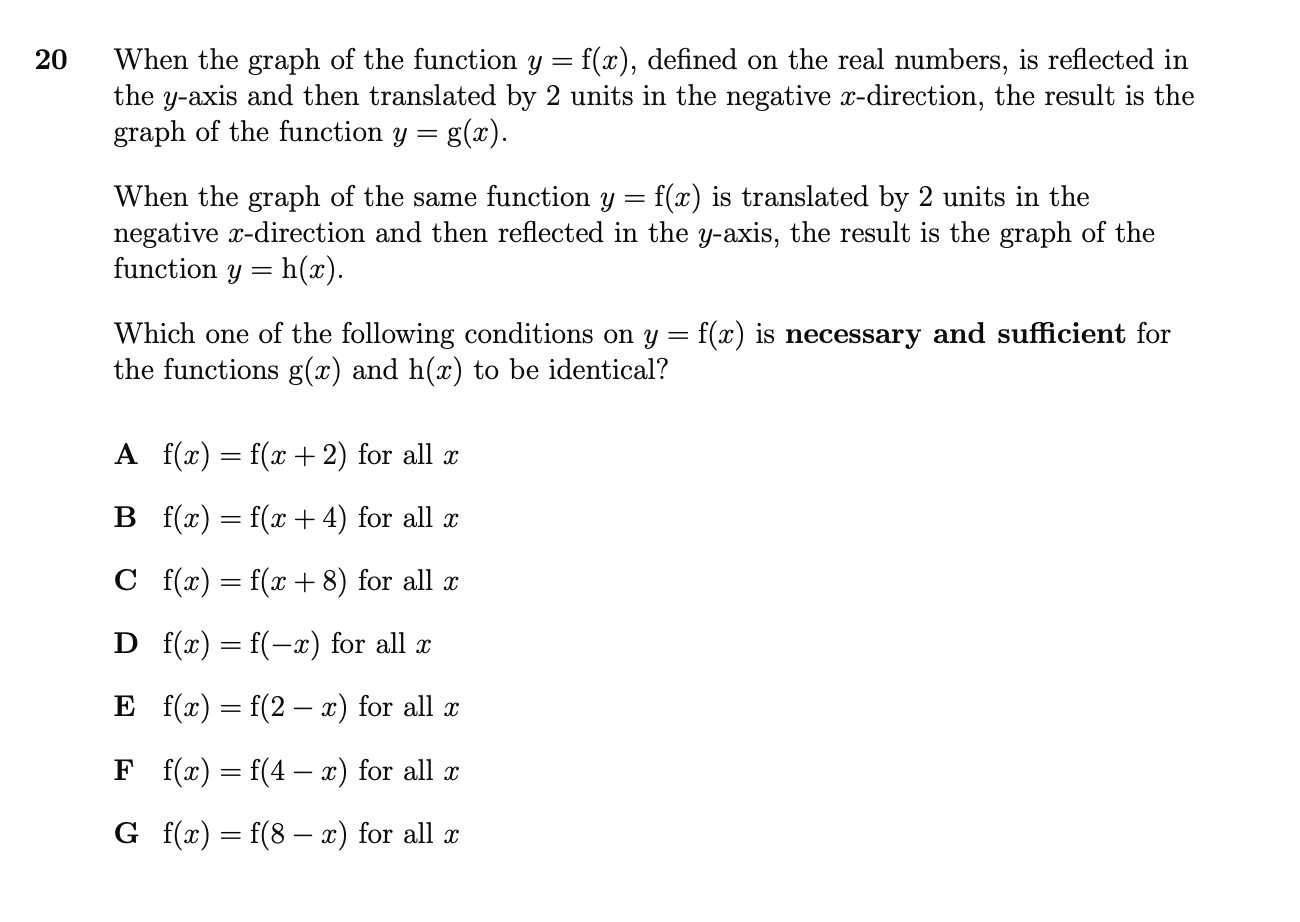
B
g(x) = f( -x -2 )
h(x) = f( - x + 2 )
this simplifies to f(x) = f( 4 - x )
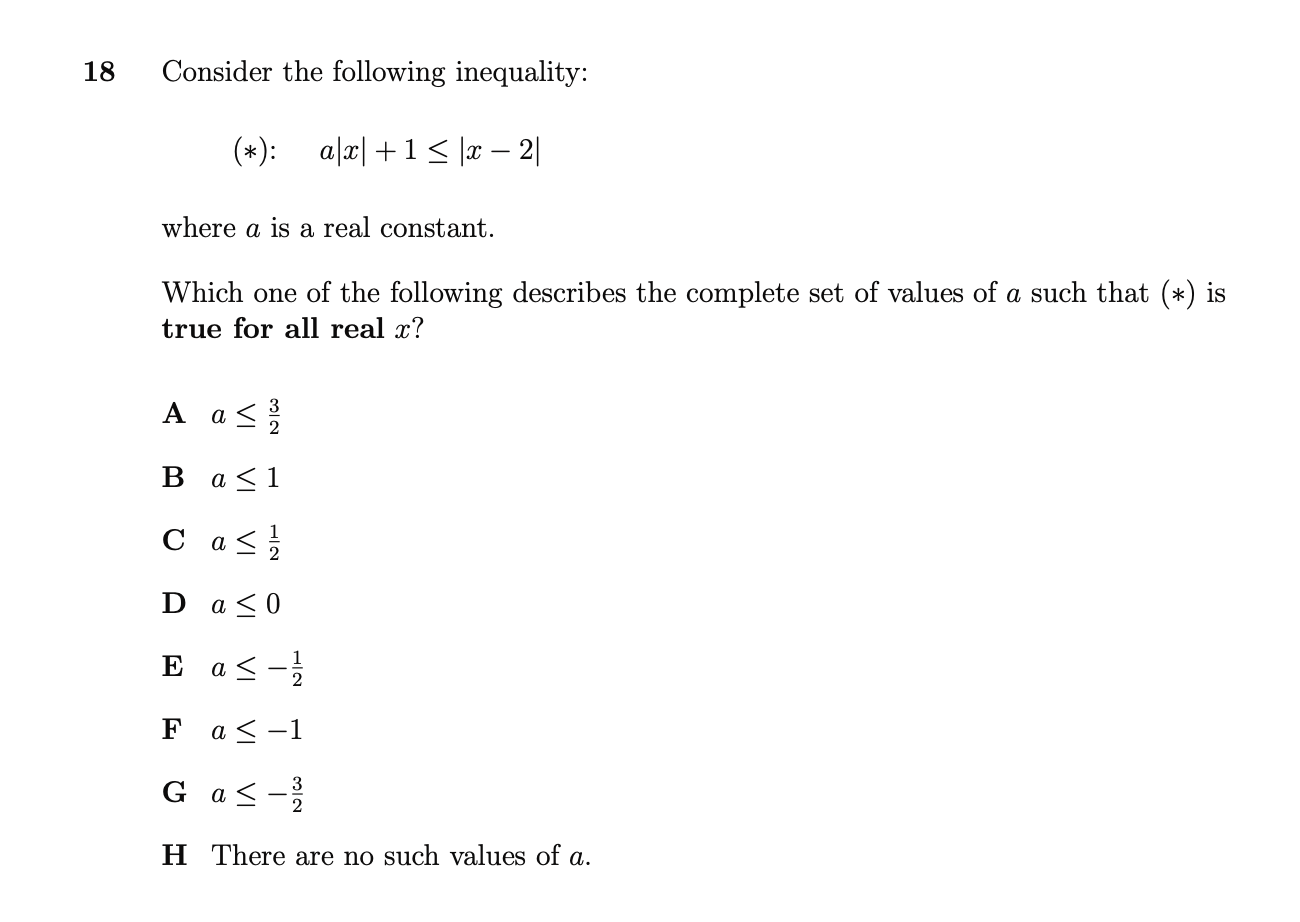
E
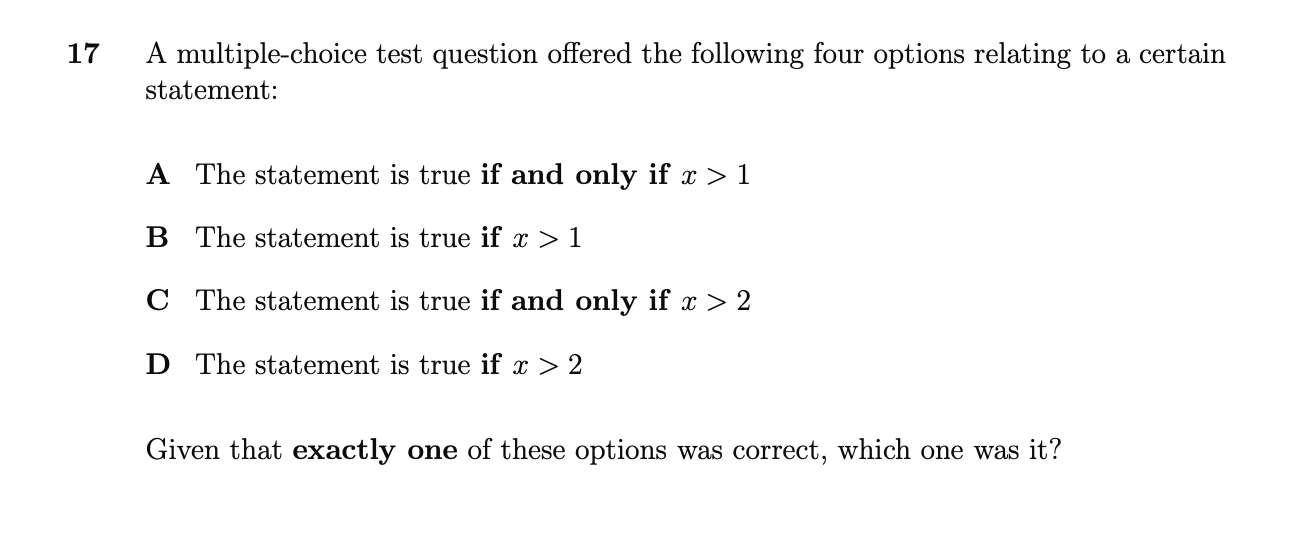
D
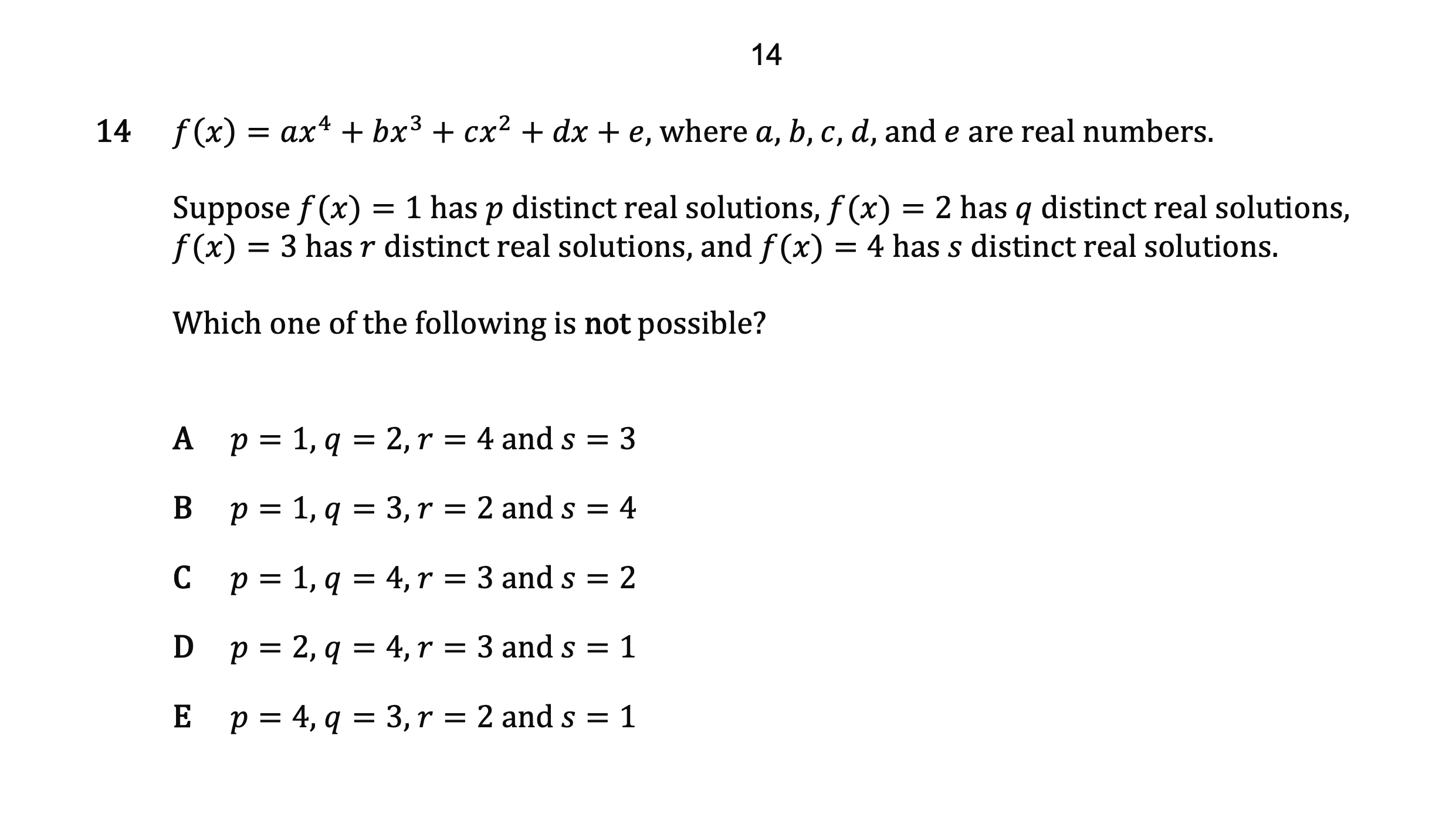
cannot be A and C as they both imply B and D
cannot be B as B true implies that D true
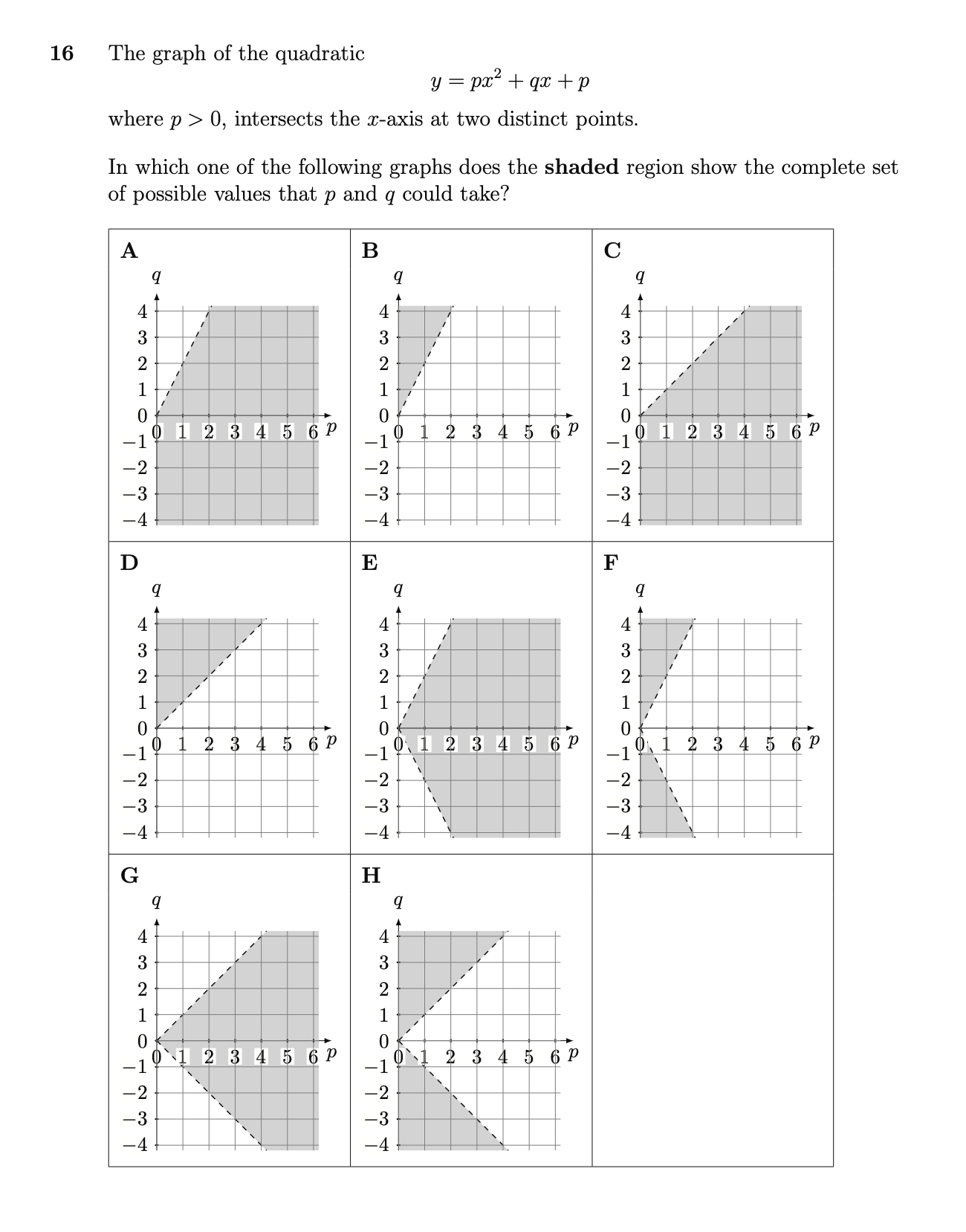
F
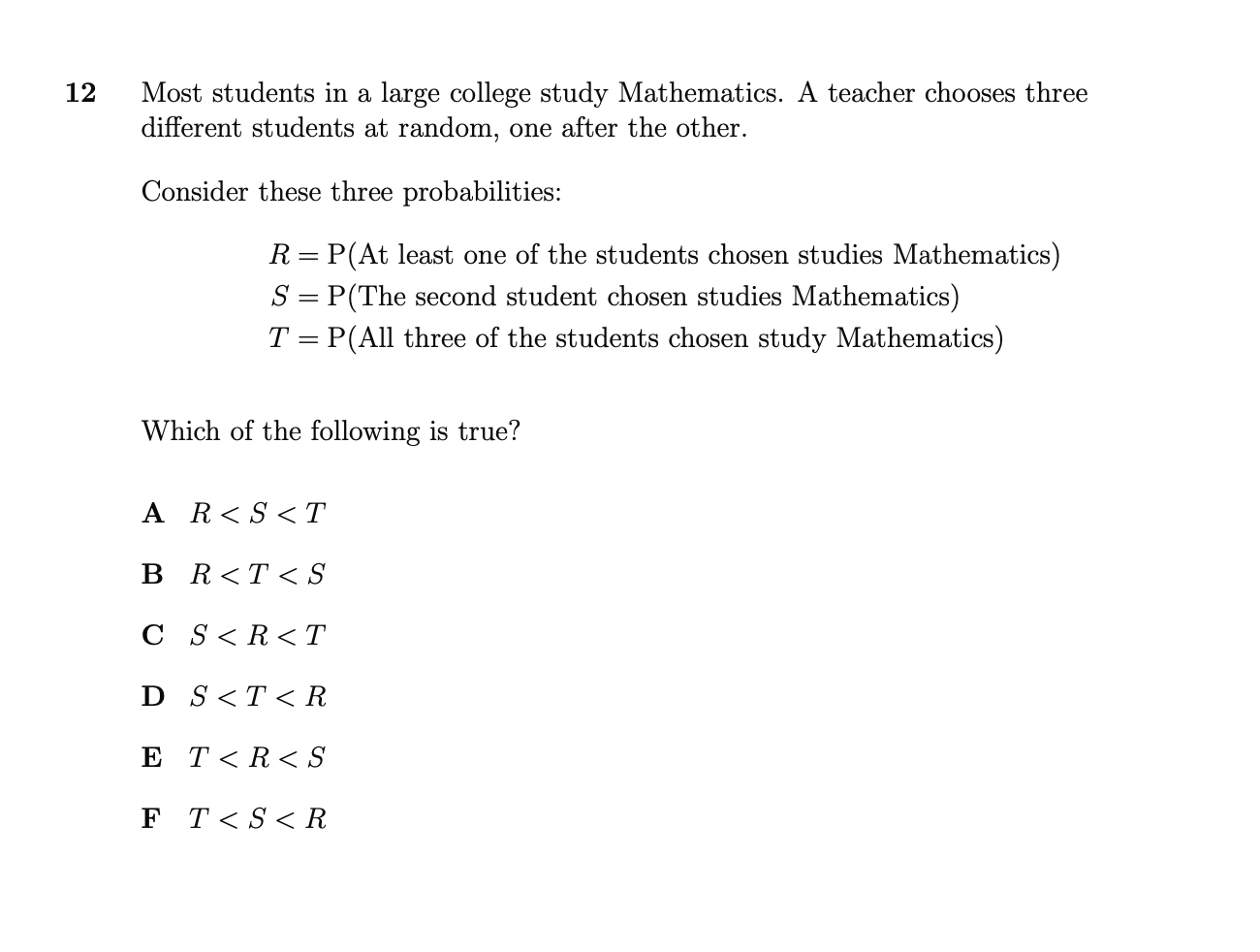
F

A
Counter examples
consider odd series where a, a + d …. a+4d = 20
5a + 10d = 20 , a = 2 , d = 1
2 , 3, 4, 5, 6 —> counter example to 2 and 3
9,11 CE to 1
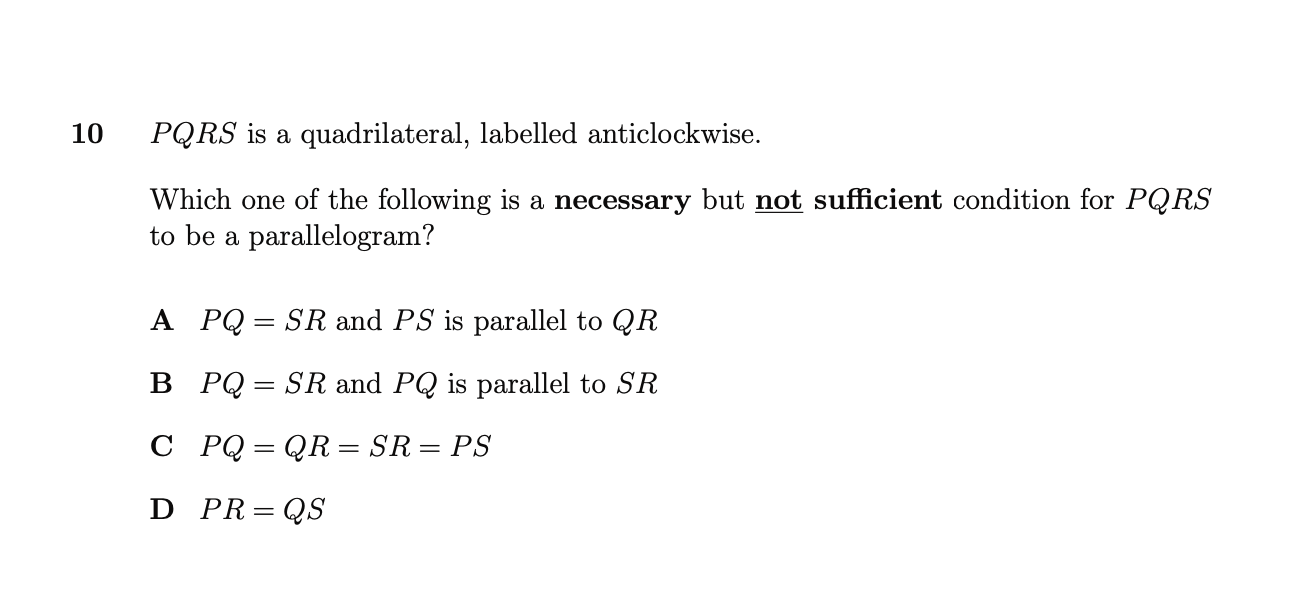
A
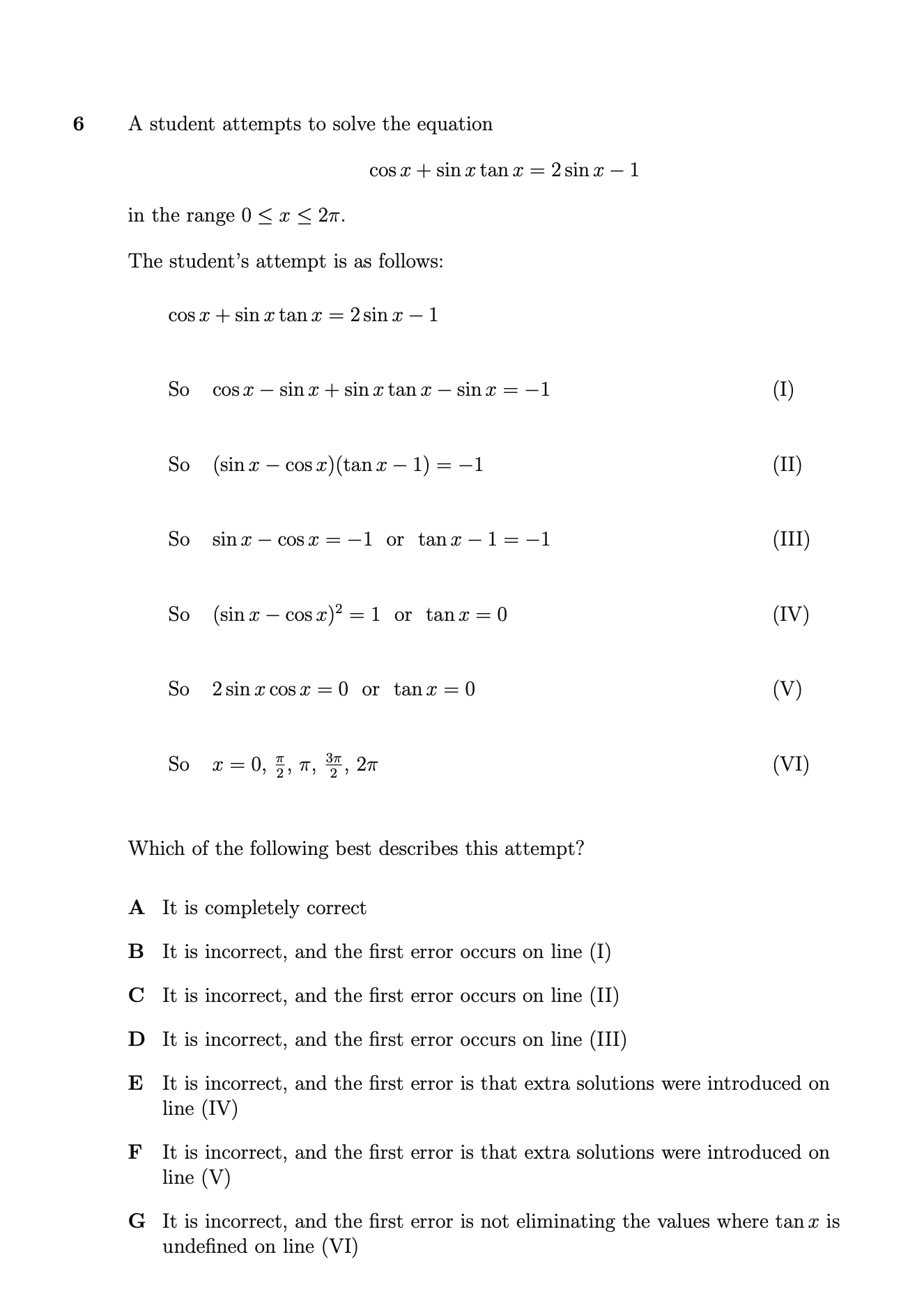
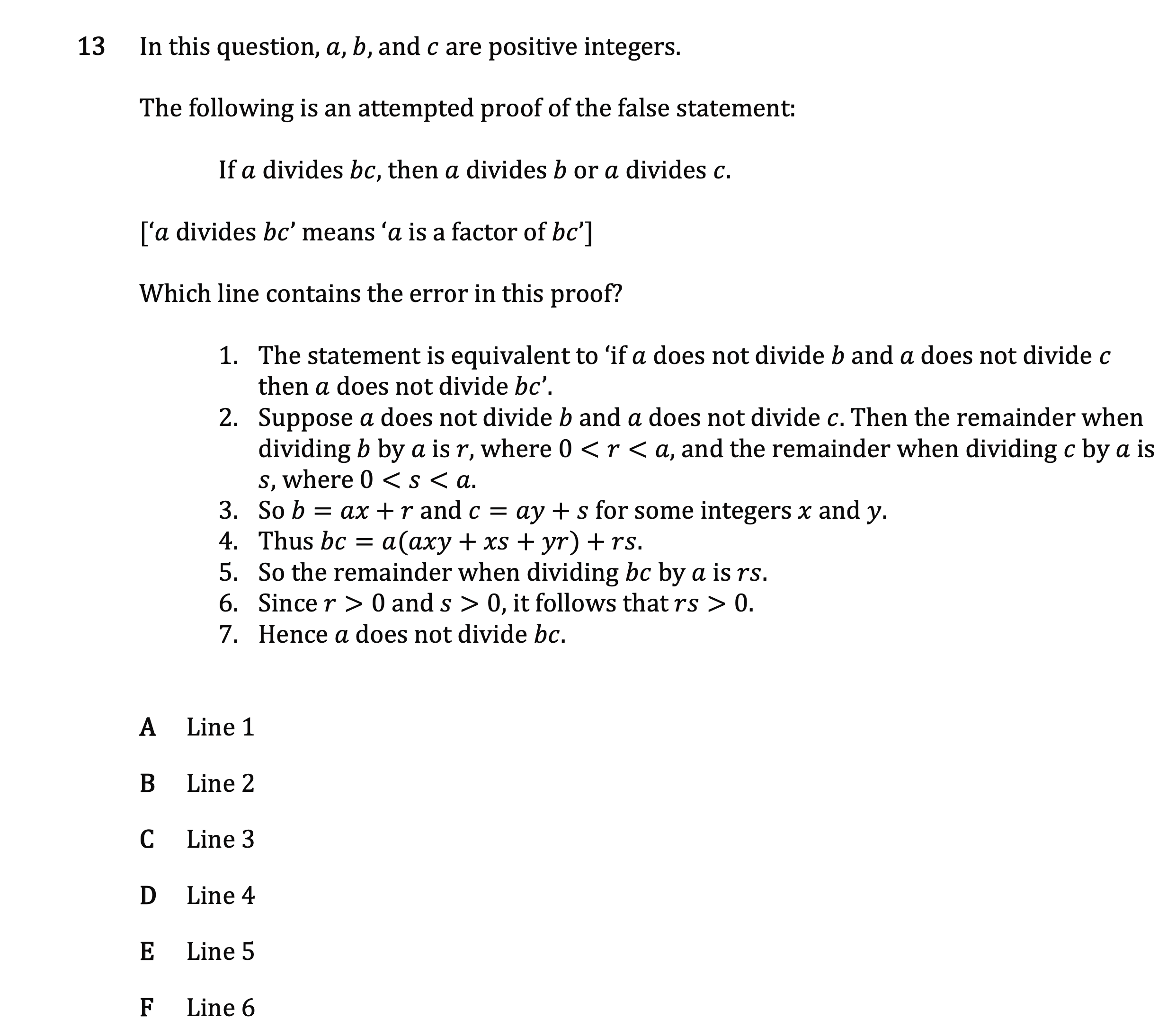
line 3
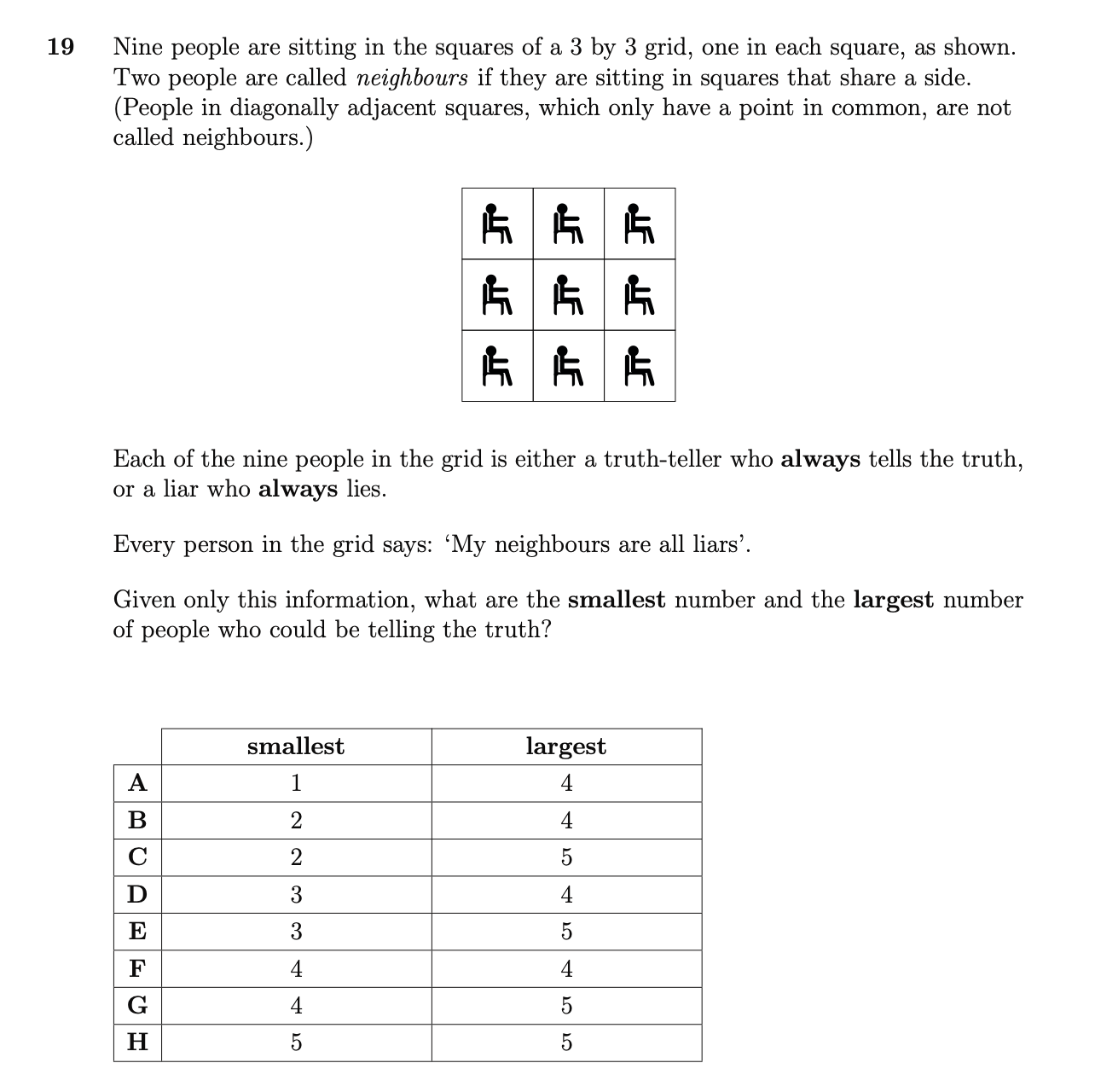
F
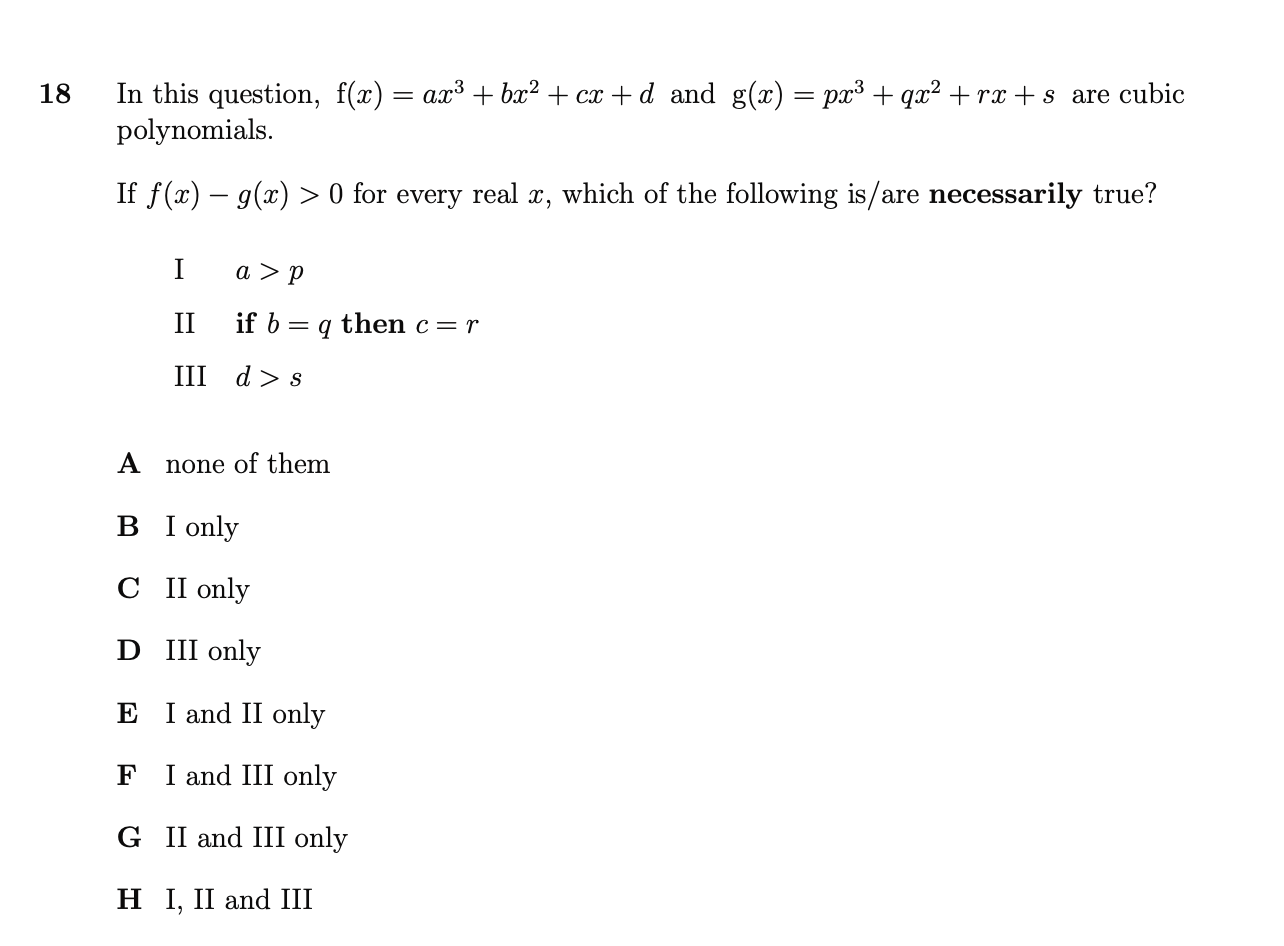
C
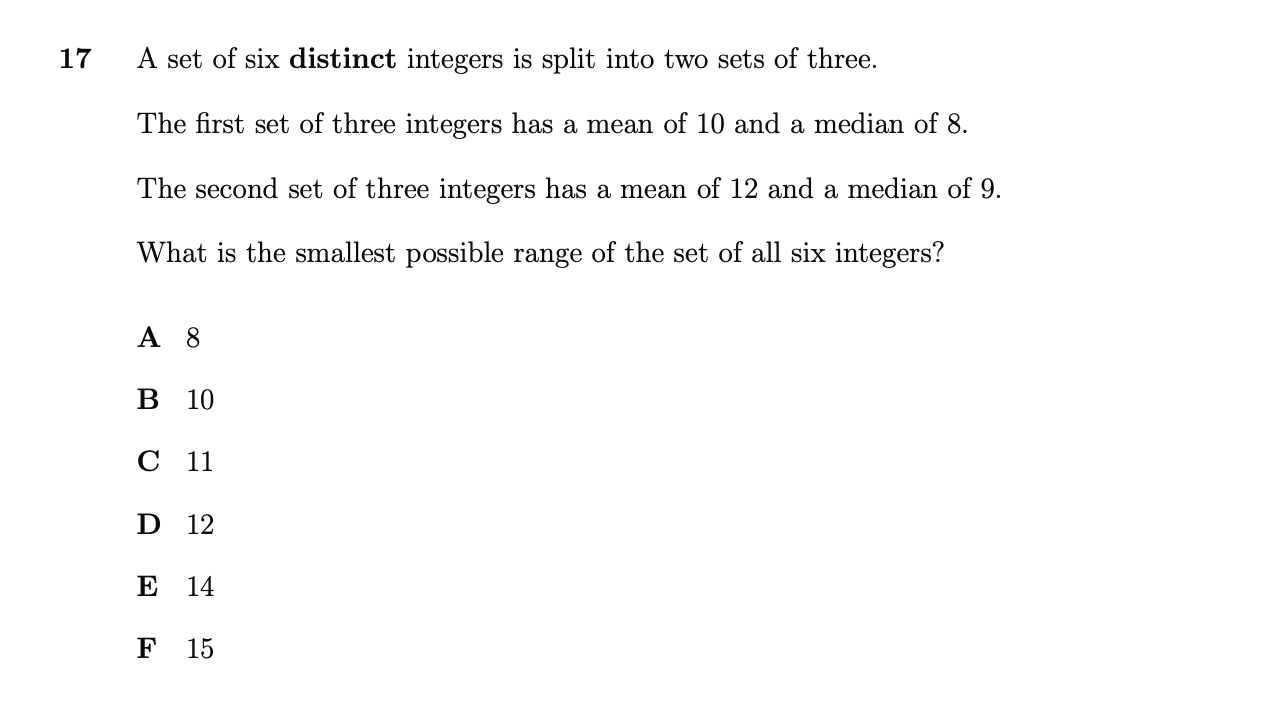
F
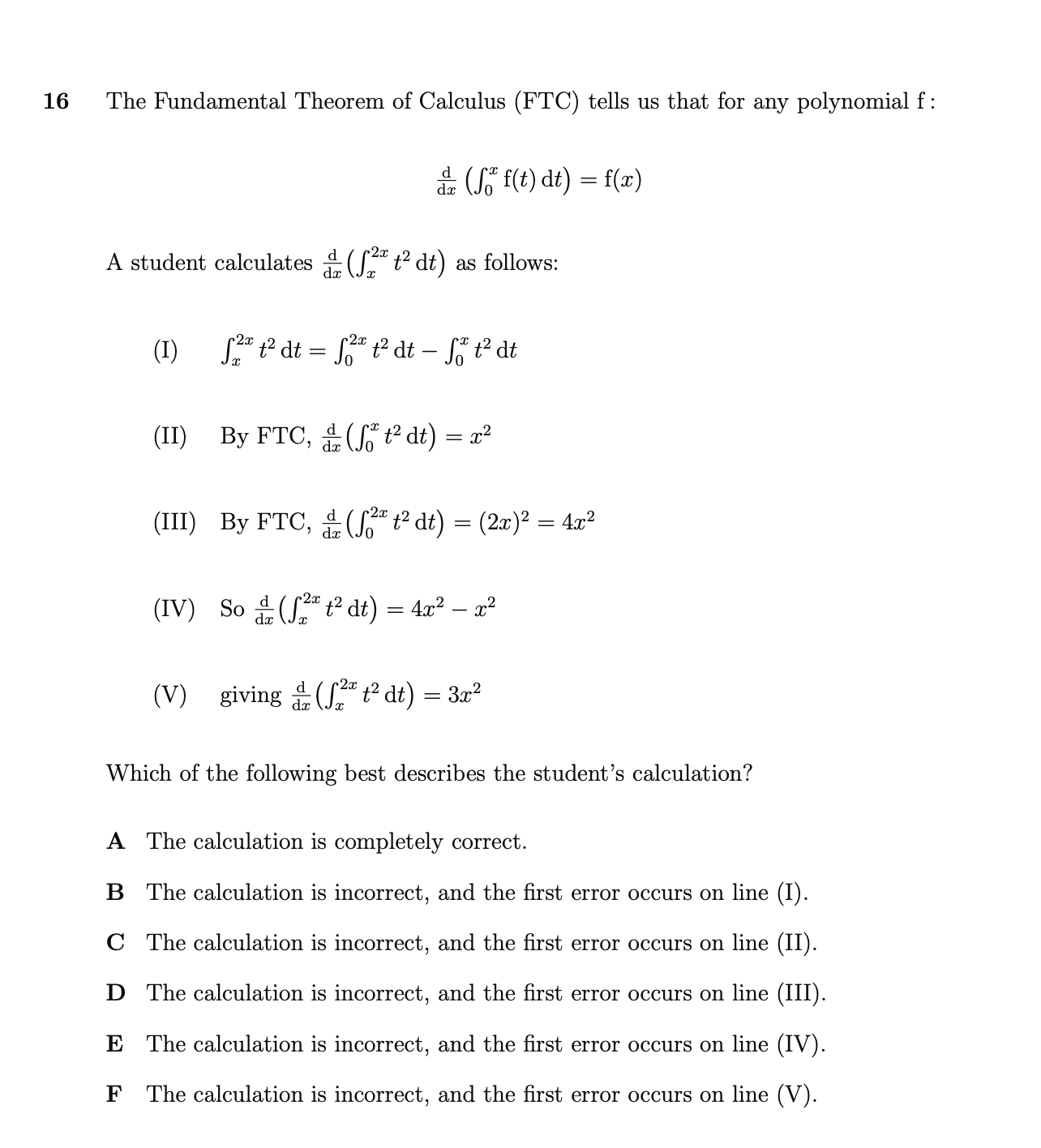
E
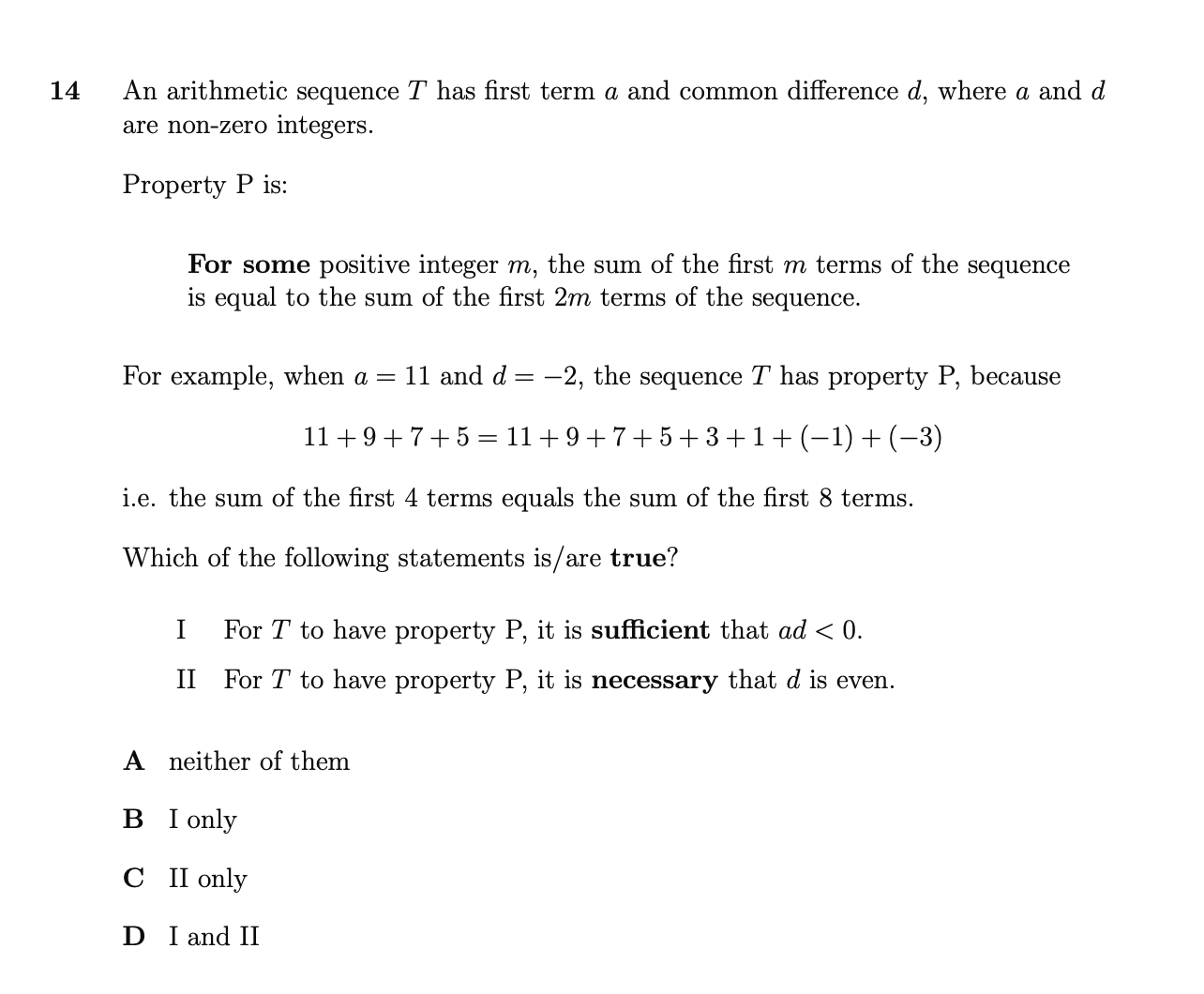
C

A
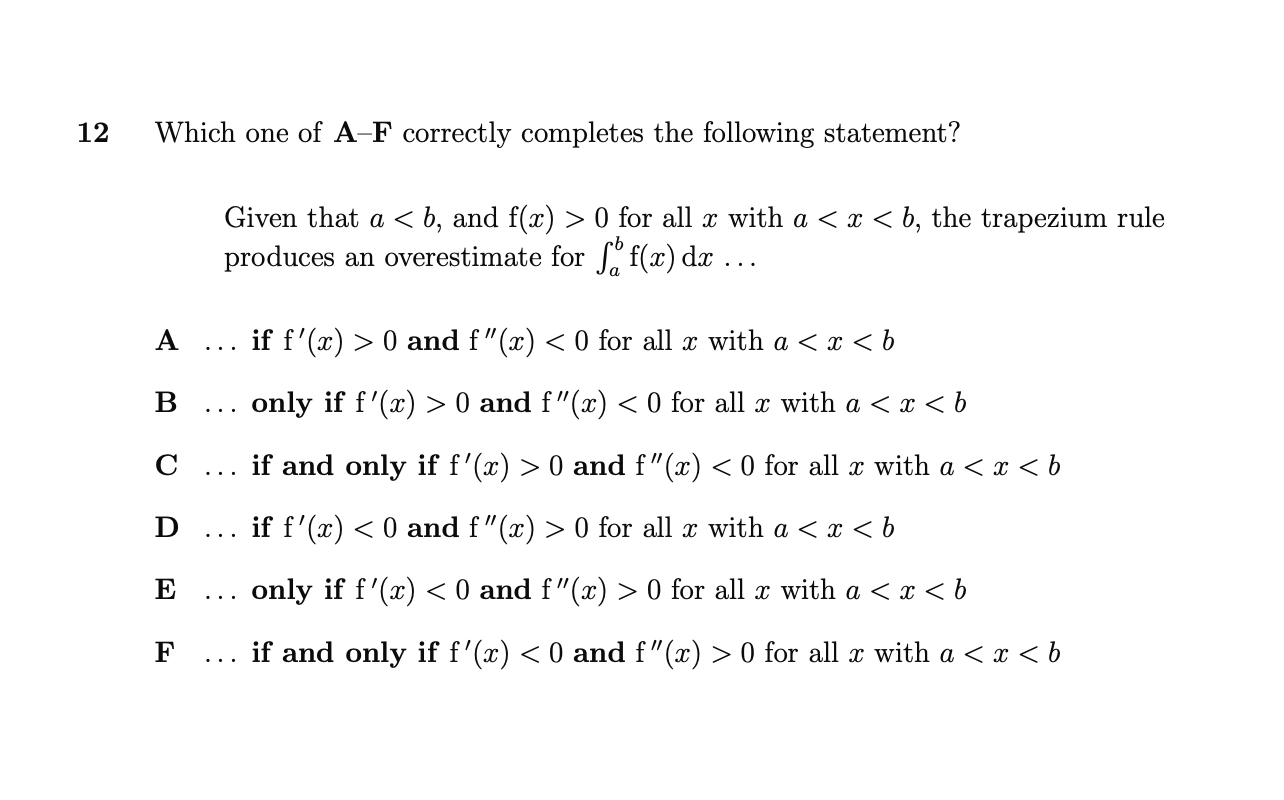
B

C

E
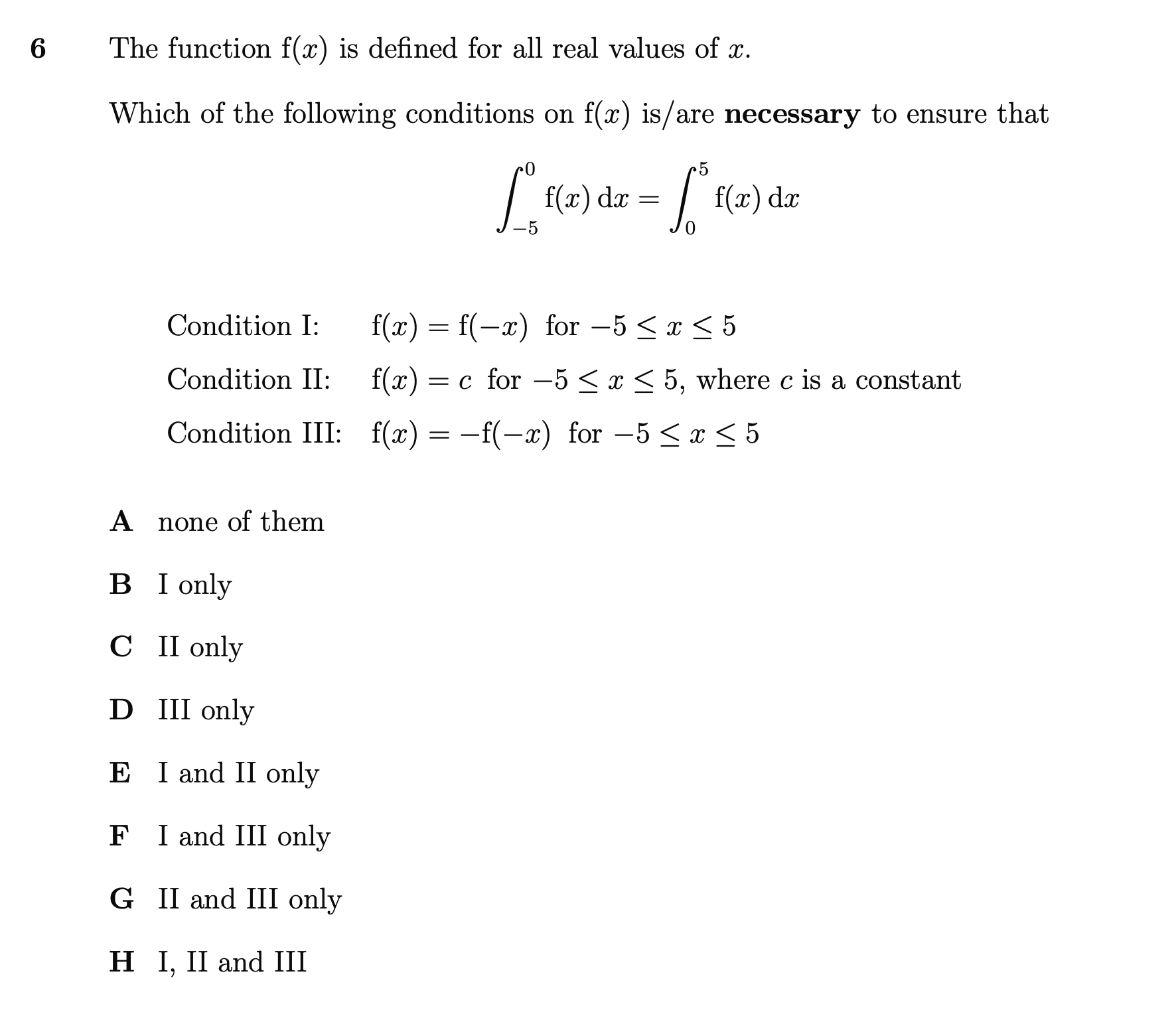
D
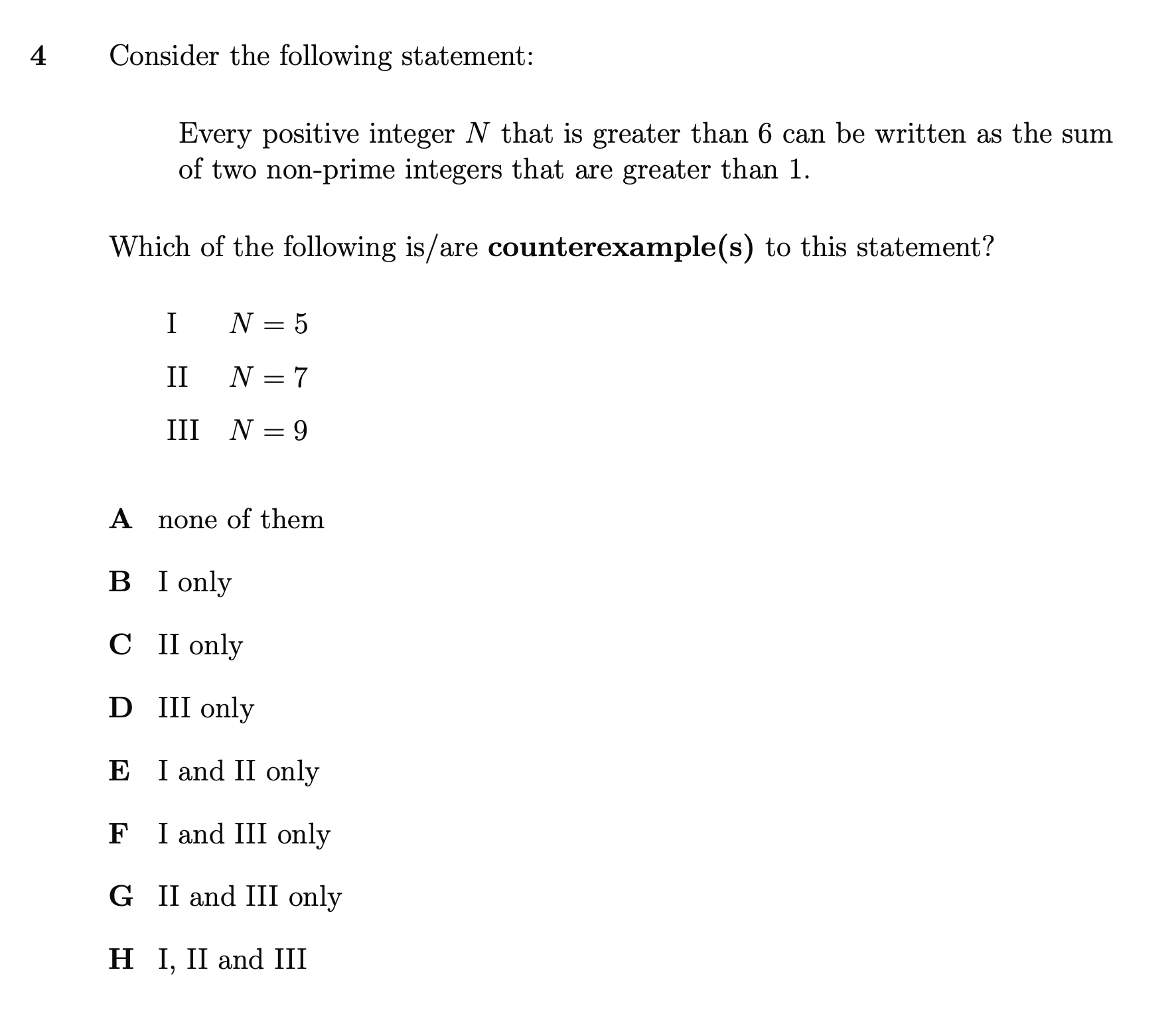
C
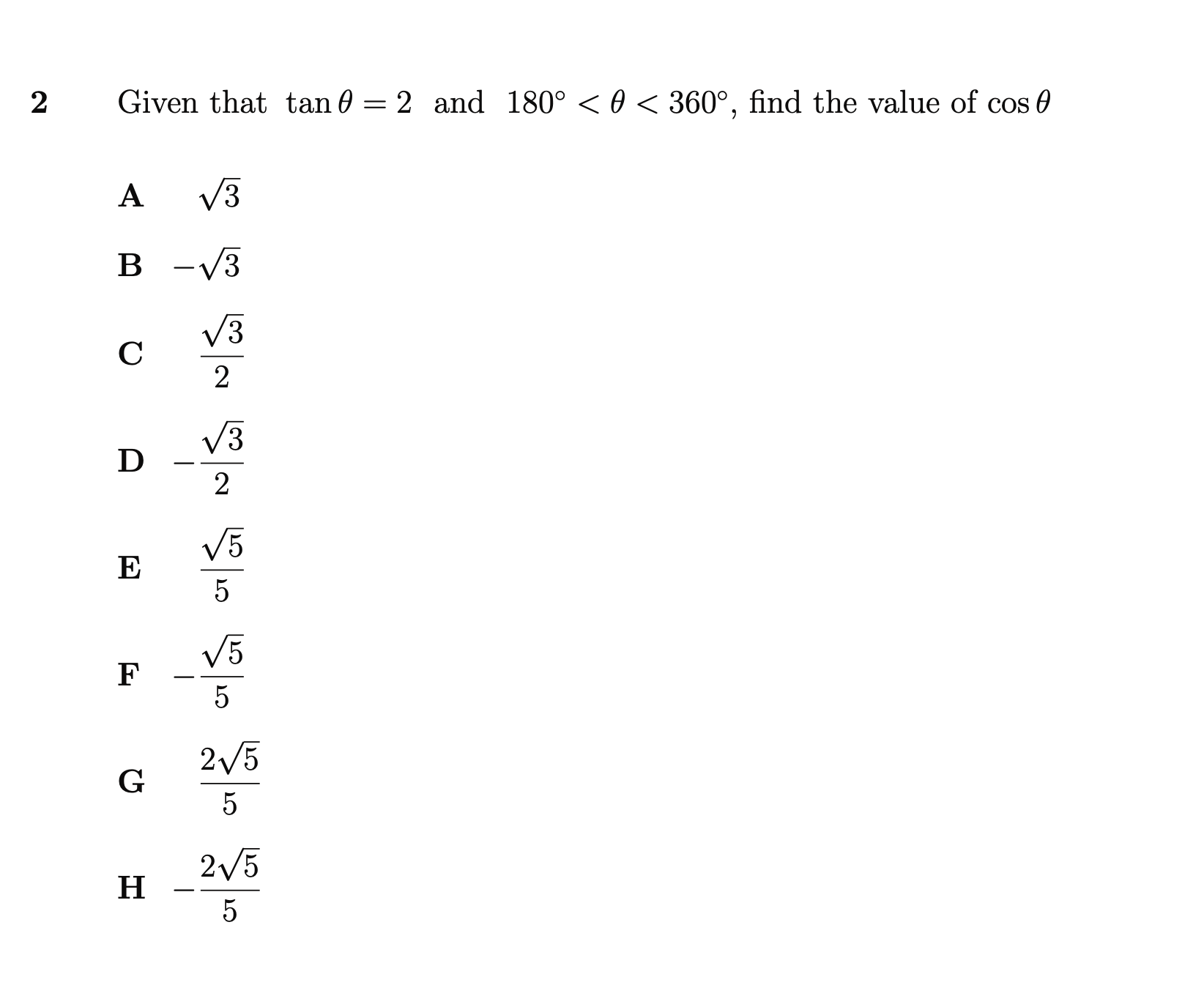
E
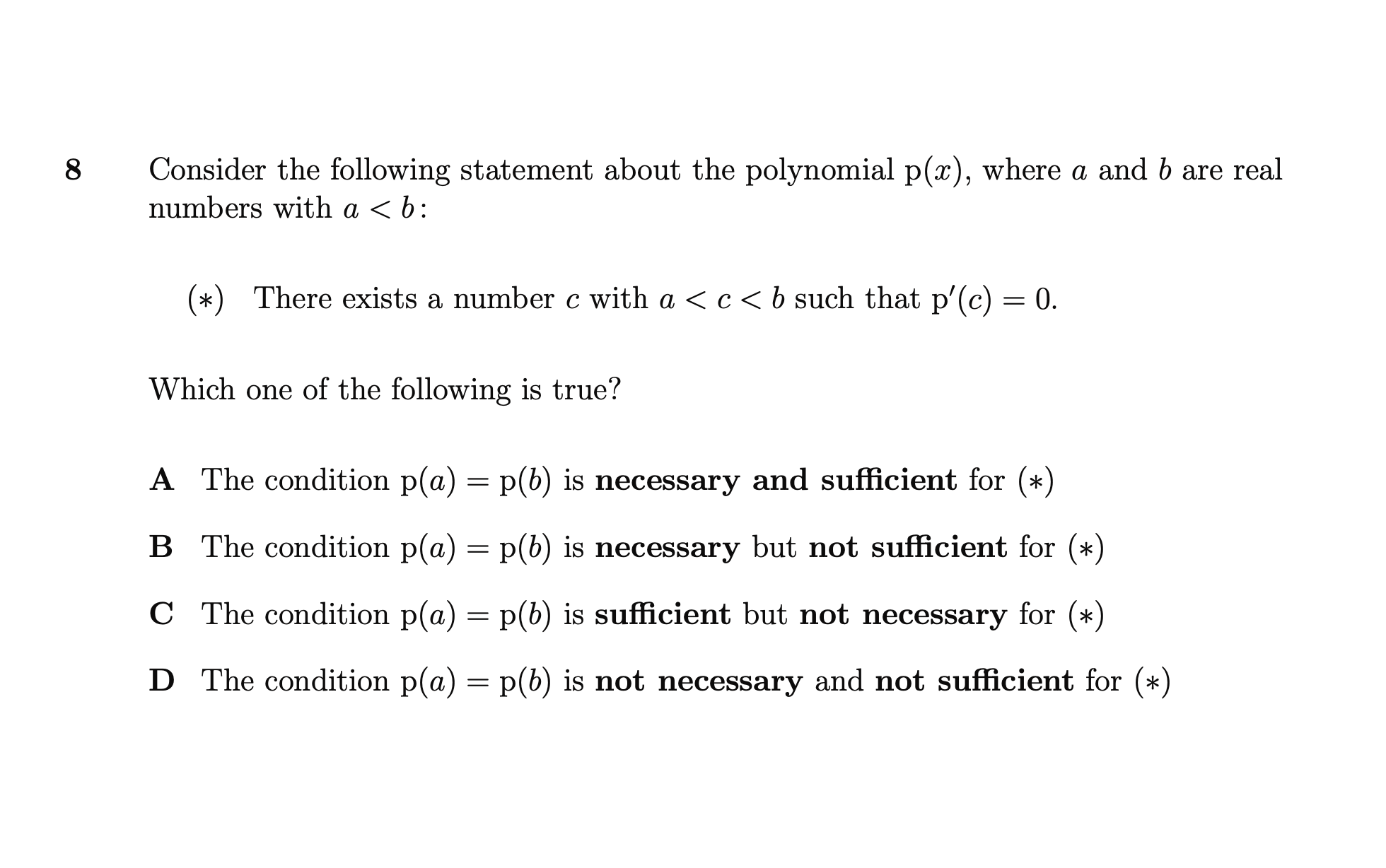
C

B

F

F

D
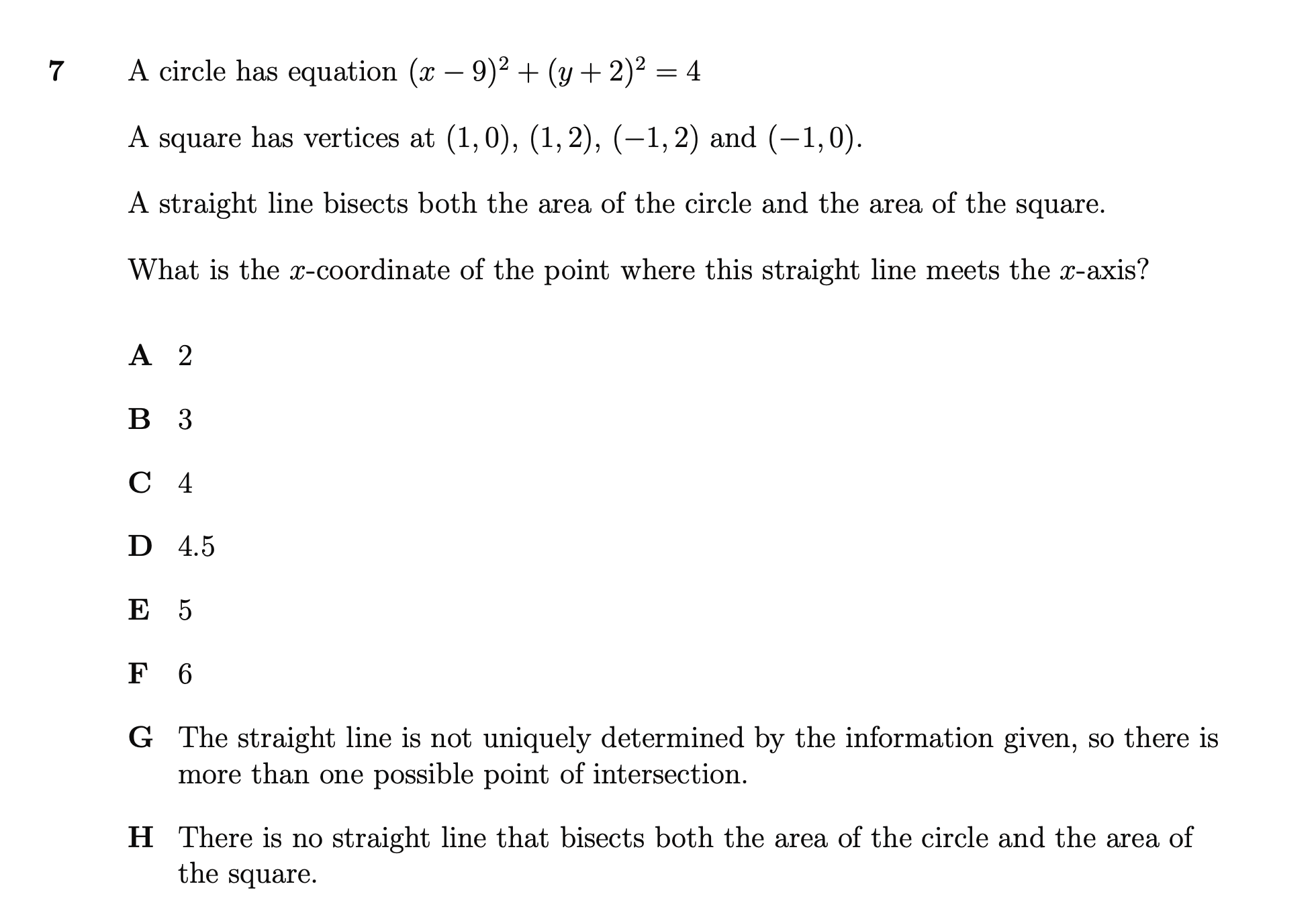
B

E
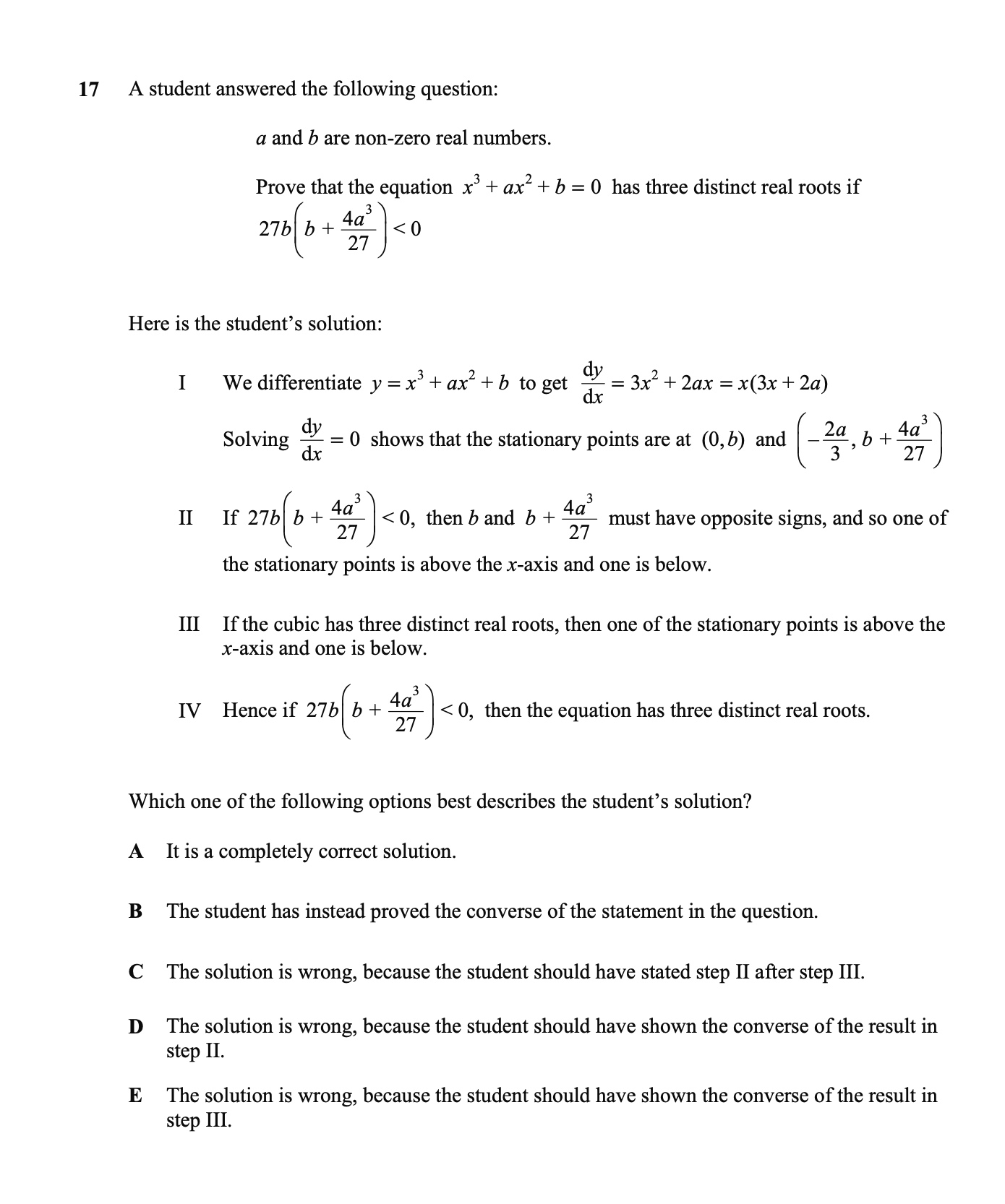
e

d
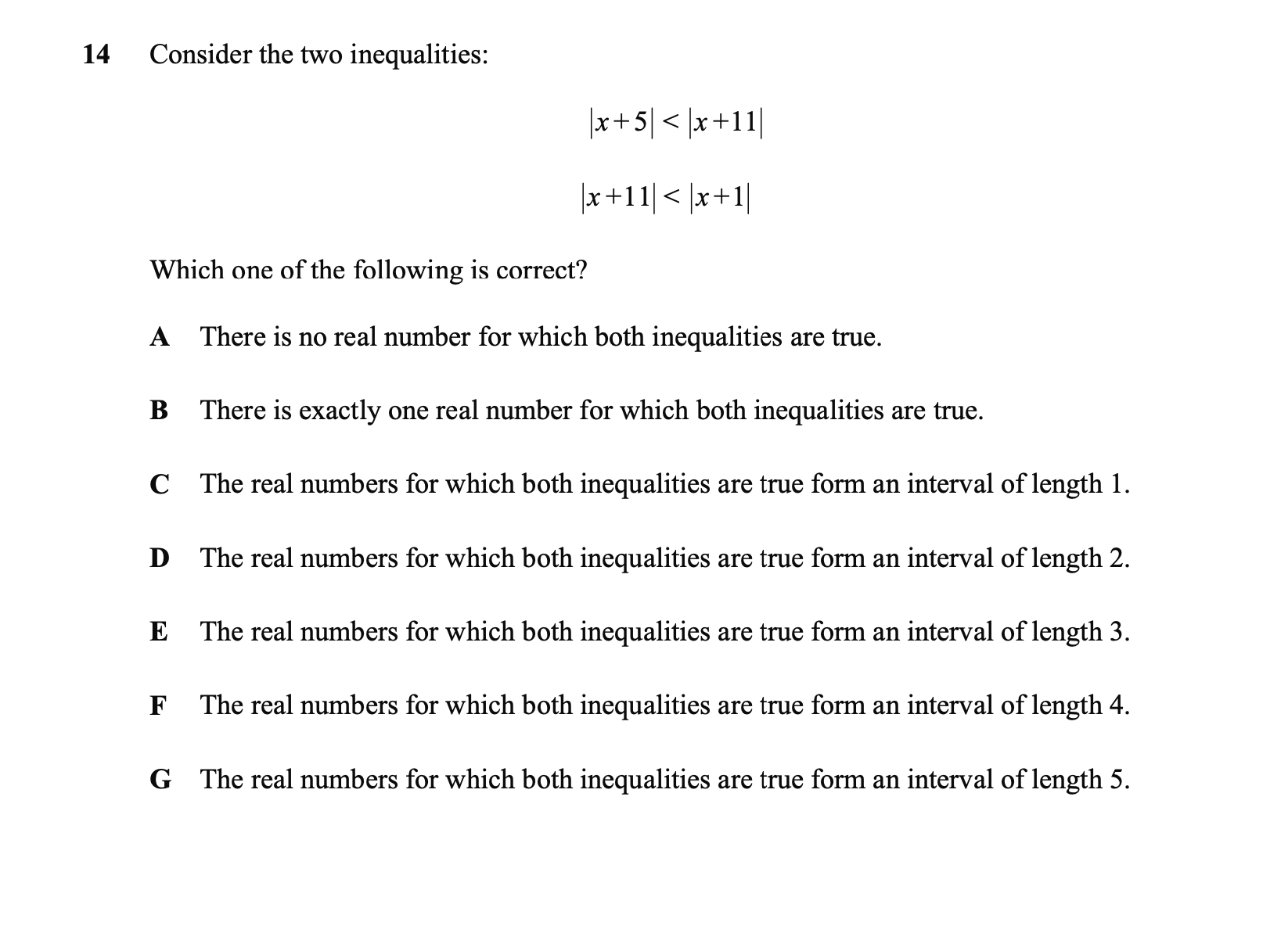
D

F
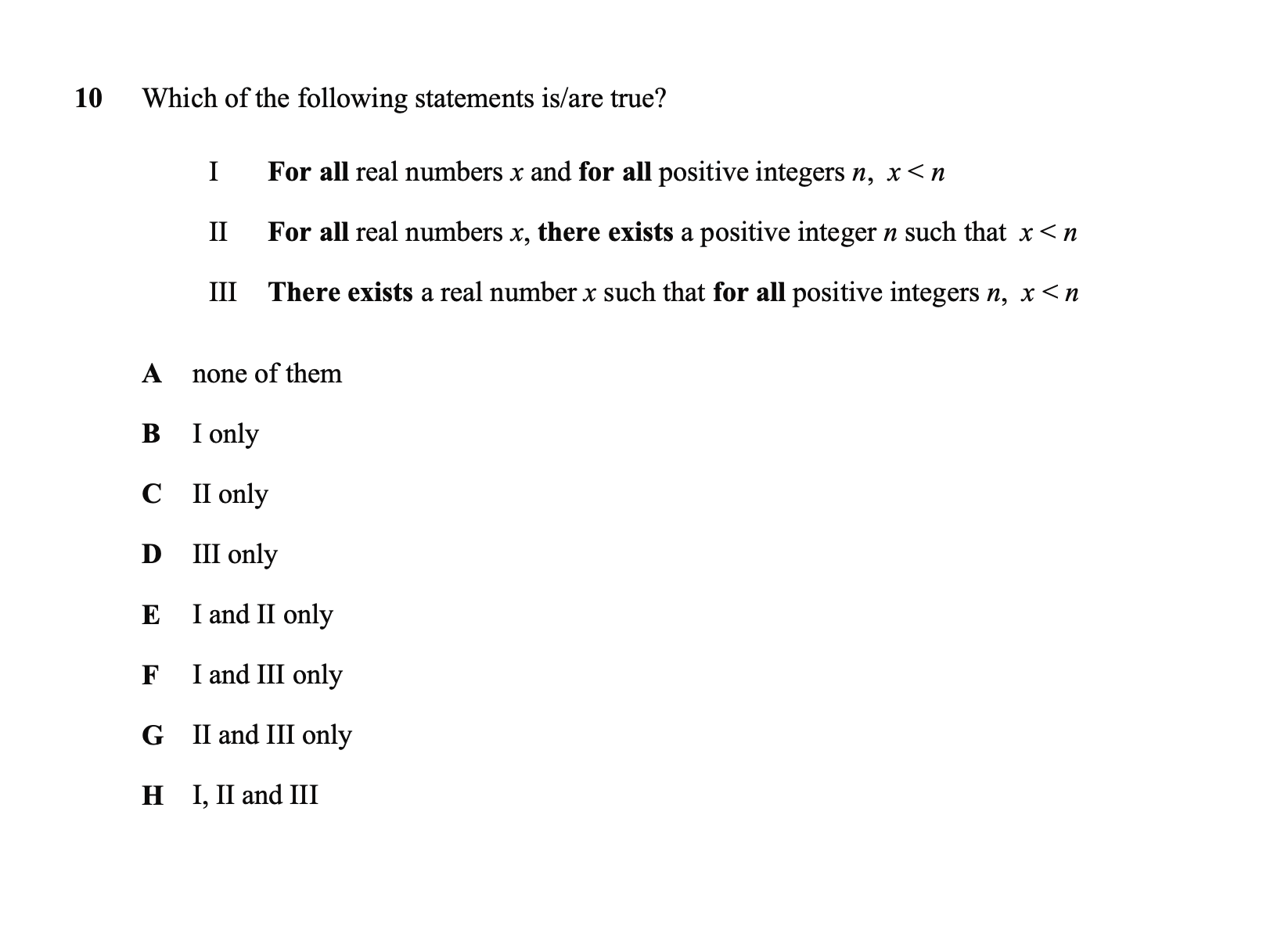
G
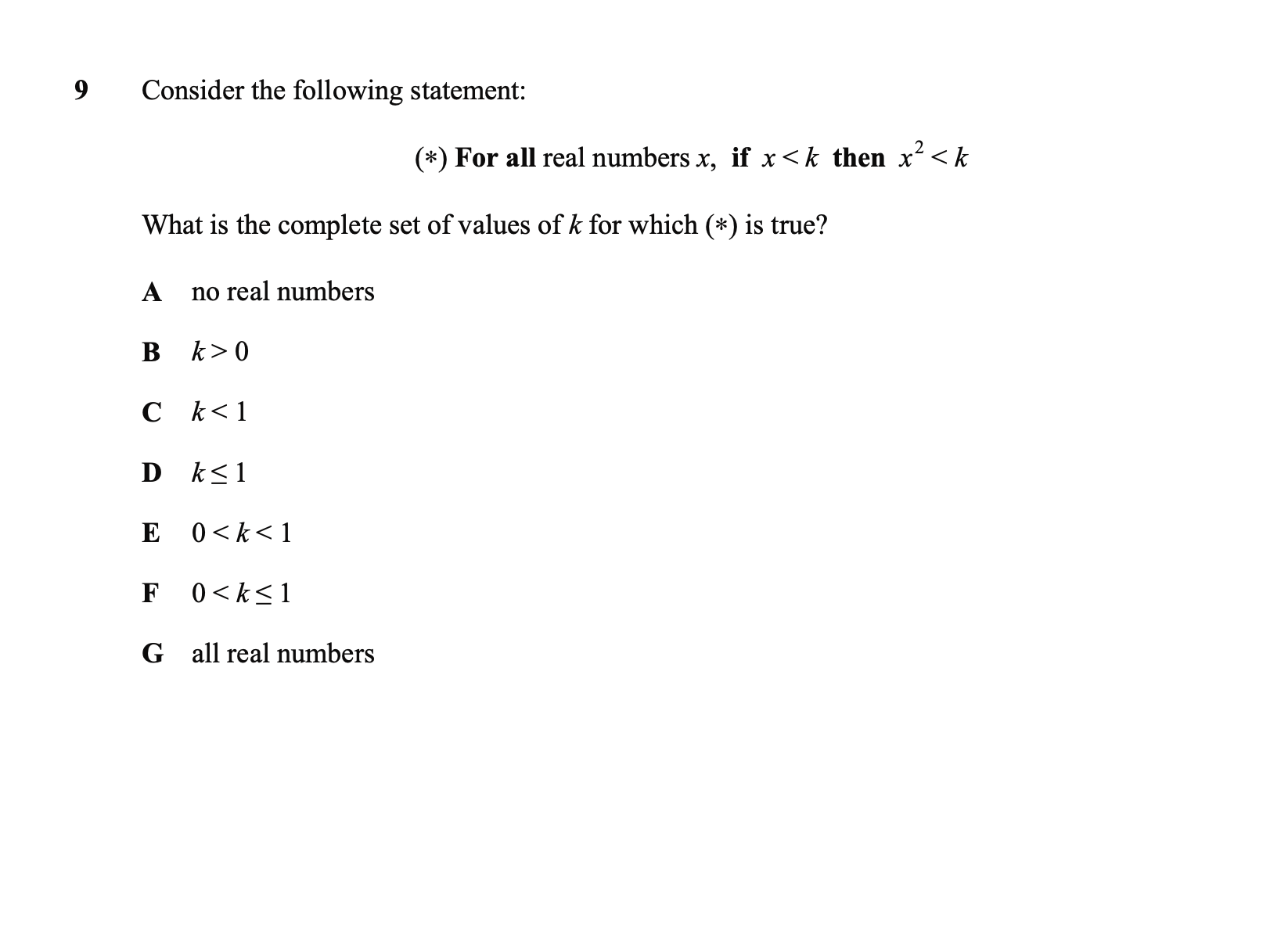
A
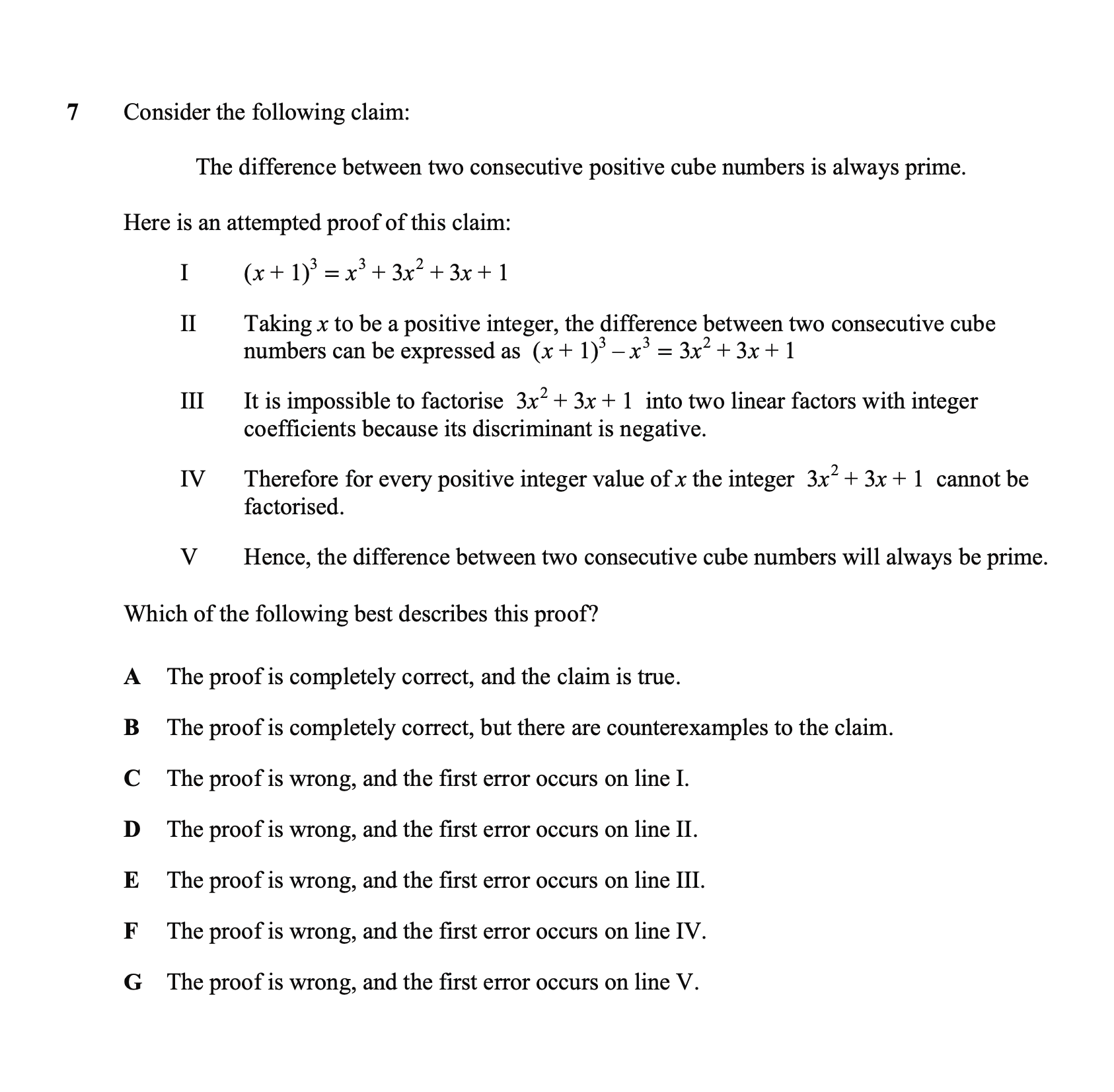
F

G
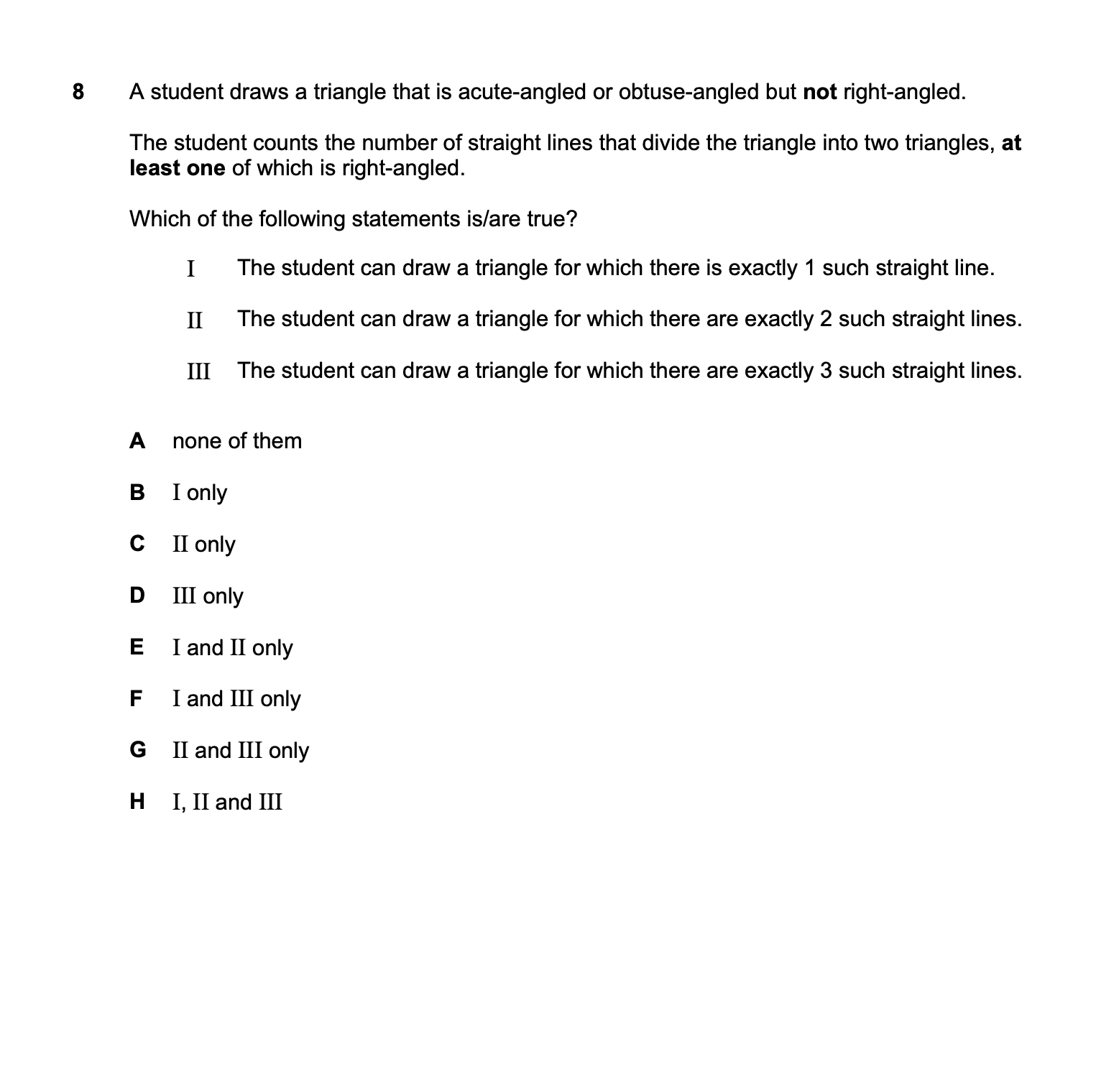
D
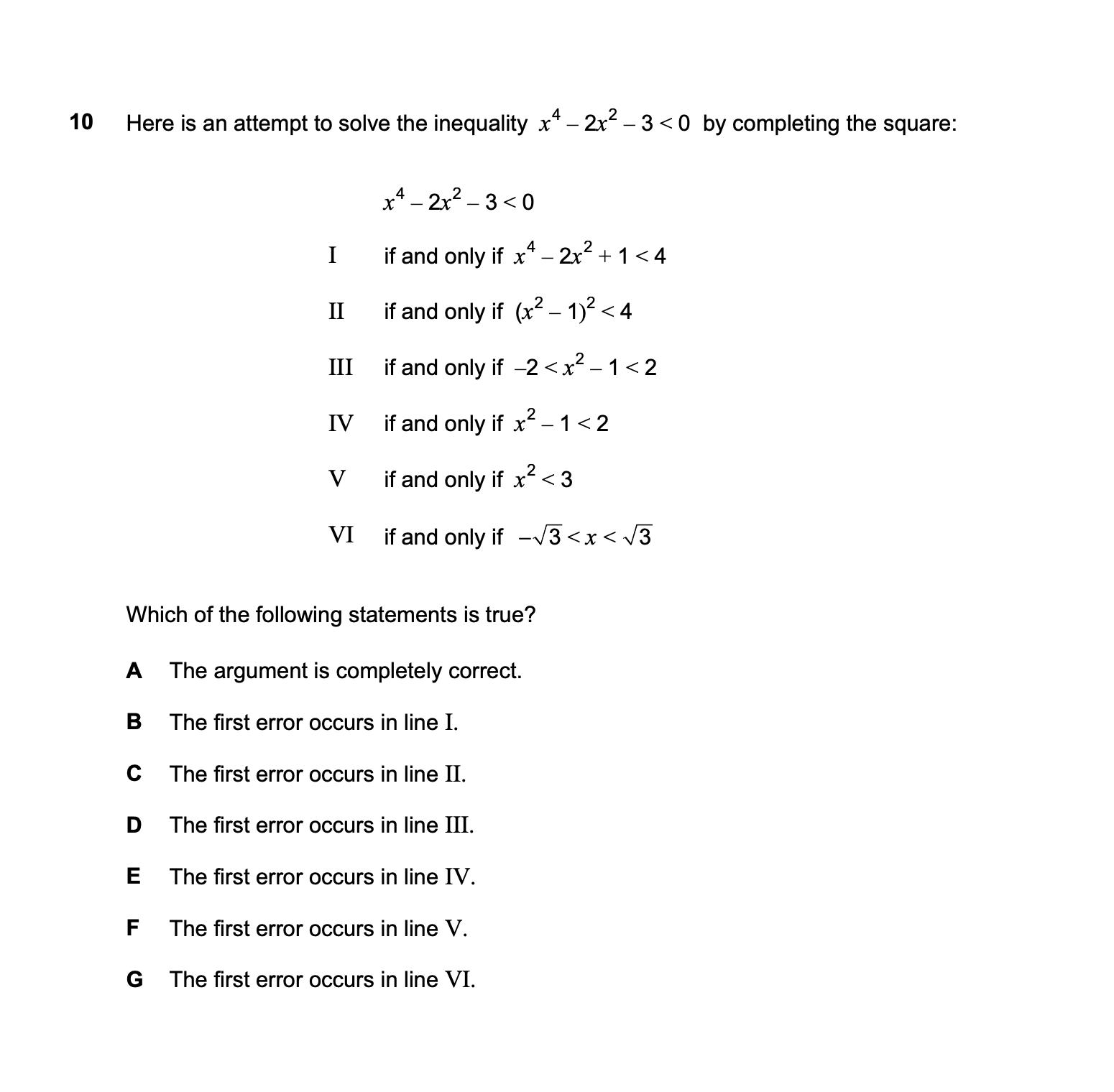
A
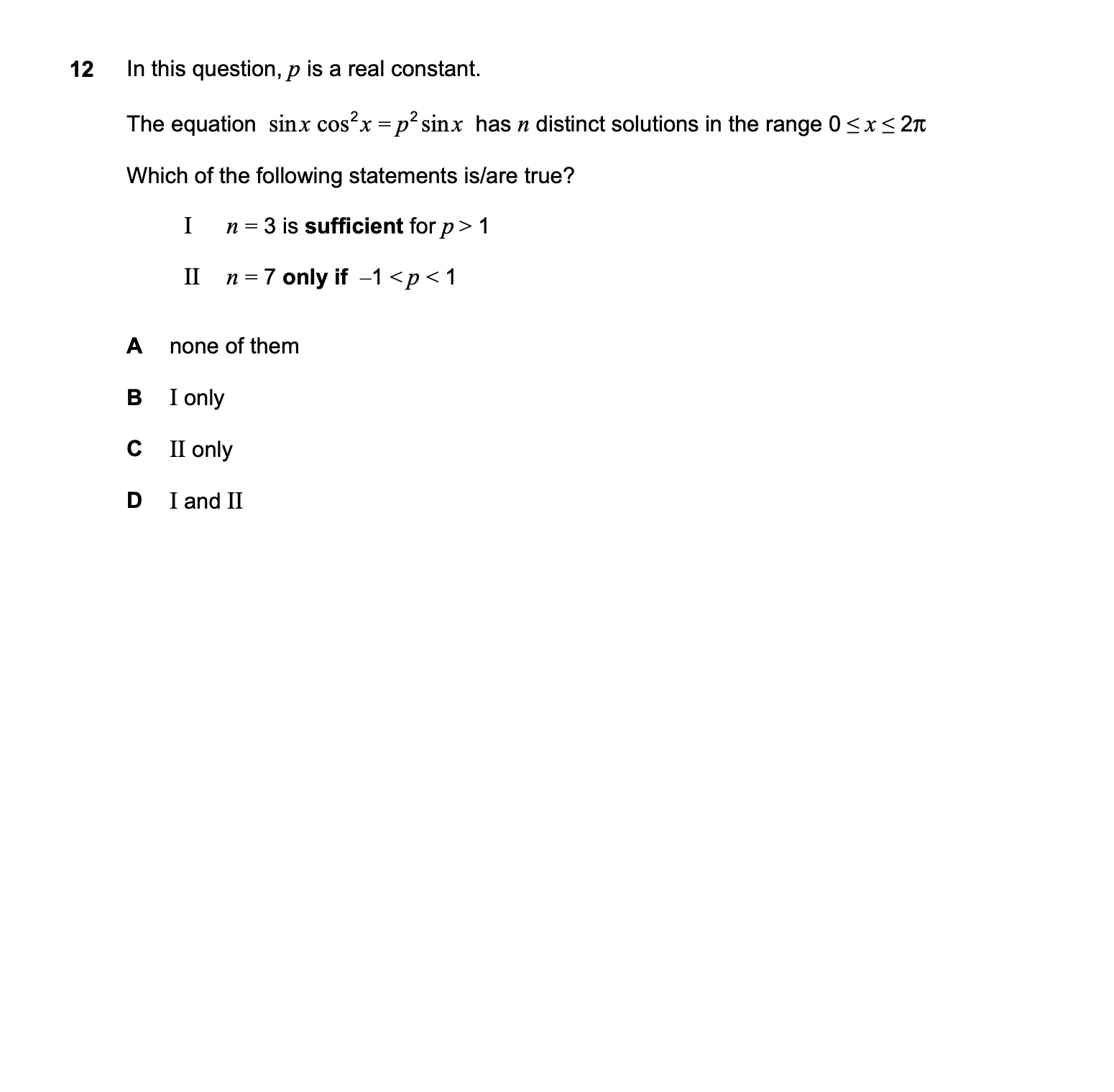
C
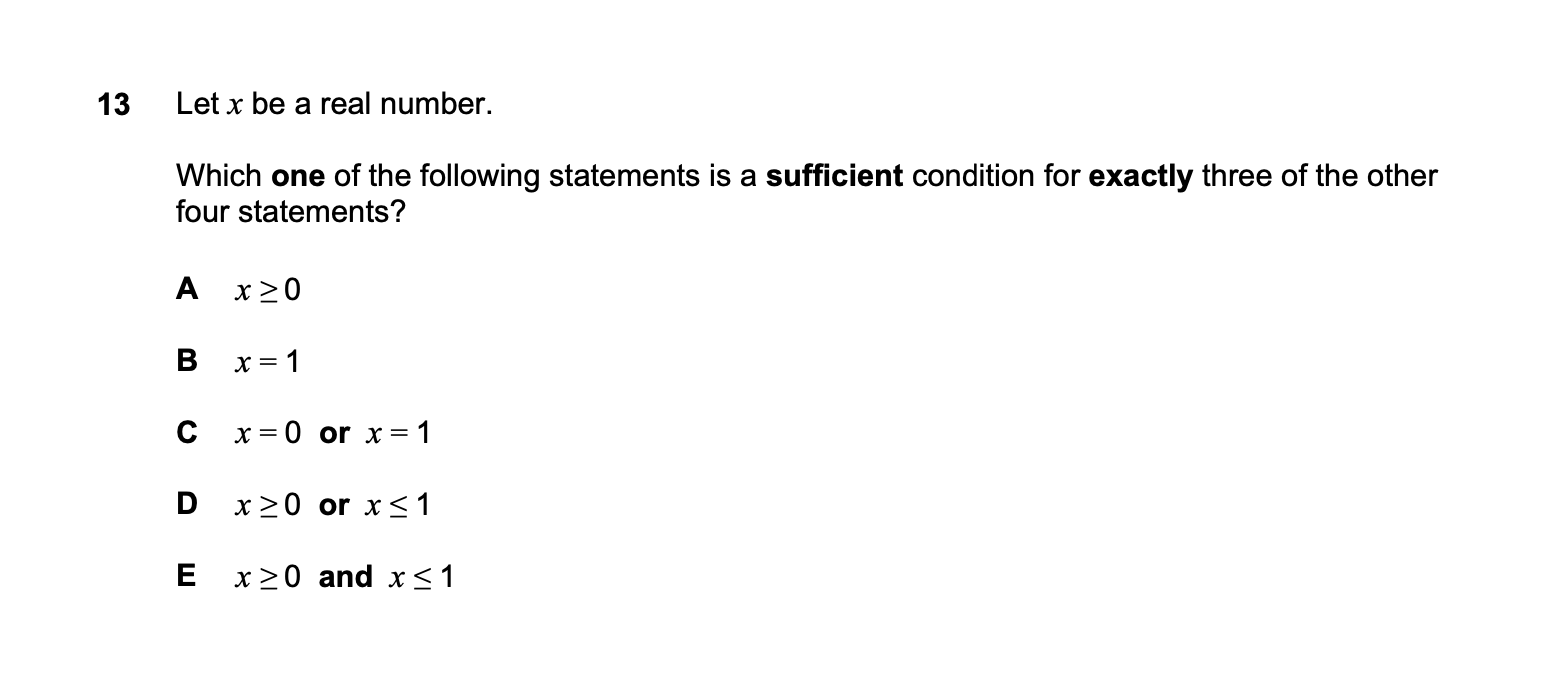
C
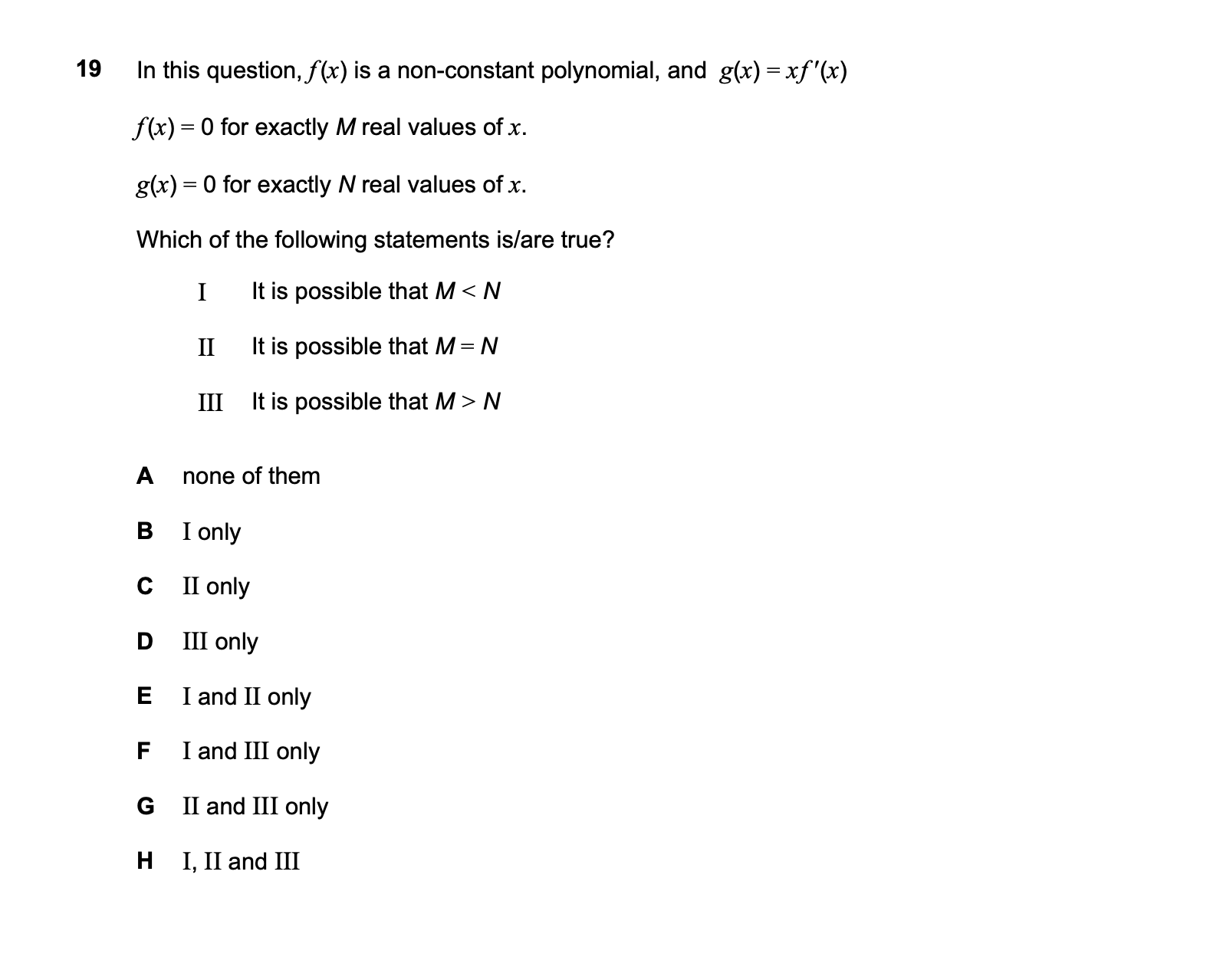
H
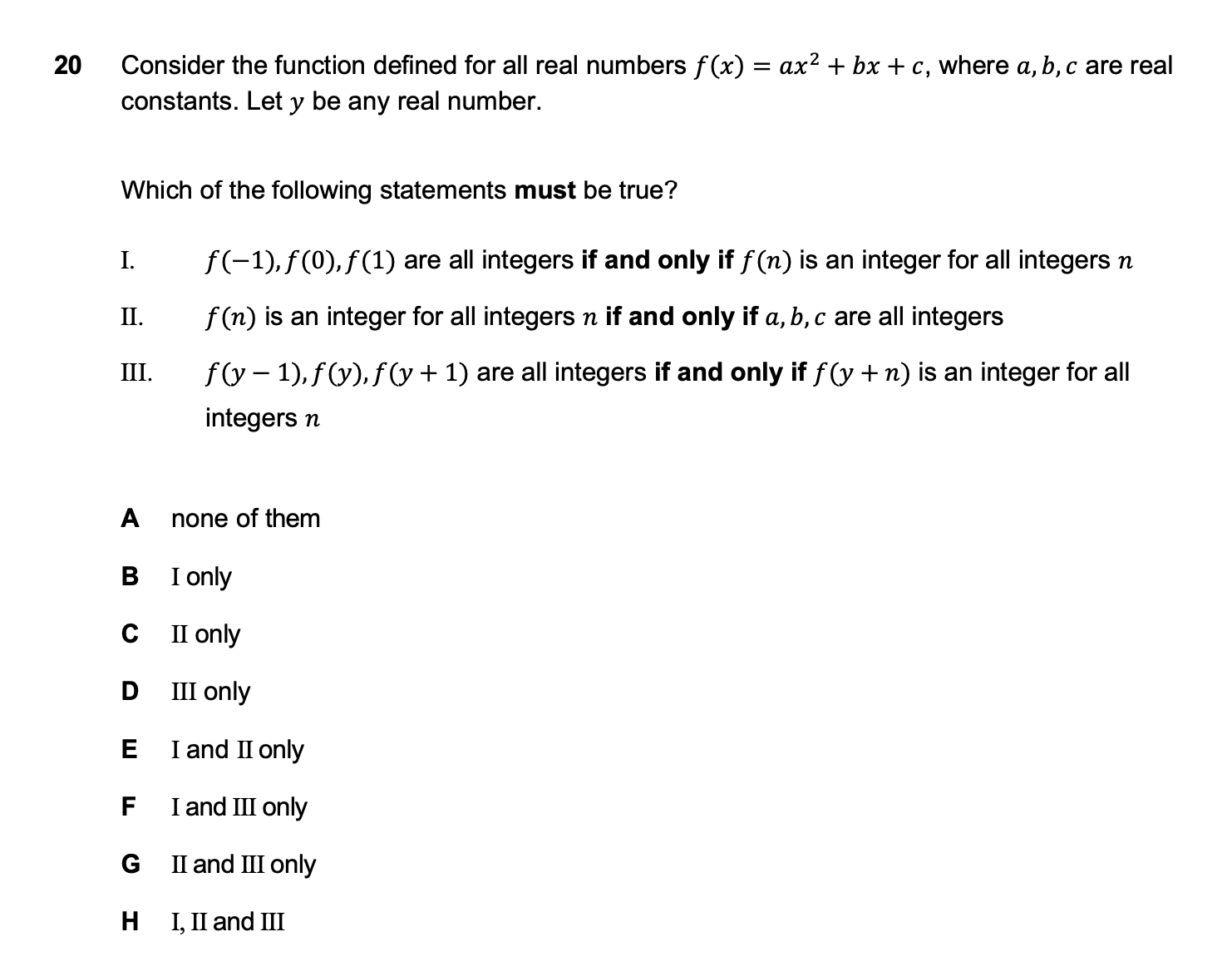
quadratic works for I
for 2 and 3, draw a cubic with 2 TP, meaning N will be 3 due to 0
for 3
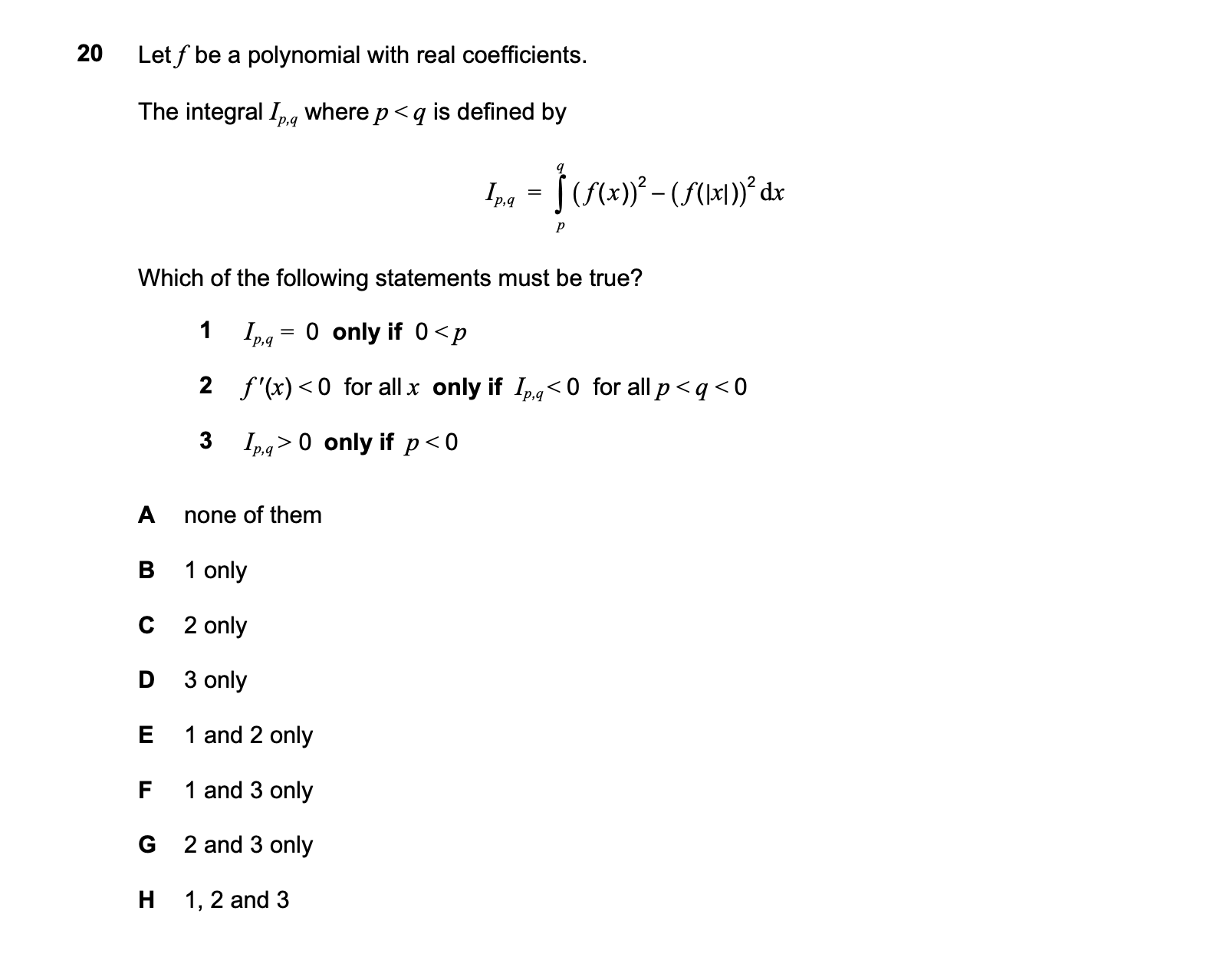
3 only - D
f(x) = x² is a counterexample for 1
f(x) = -x is a counterexample for 2
when p > 0 the mod is irrelevant so I = 0 so it is true

B
I is logical because you add multiples of 7
II you can disprove because u4 can be written as ( 1 + 2b/a) , we can make a = 14 and b = 7
III is disproved as we let u1 = 7x and u2 = 7y, therefore u5 = 14x+21y
when x = 3, y = 2 to provide counterexample

D
square rooting yields a positive and negative root

D
test 0 and 5 which do not work
1 works if p3 is true
2 works if p1 is true and p3/p4 are true

G
1 disprove with counter example
2 common sense
ar^(2n-1) = ar(r²)^n-1
r² > 0 so that statement is just ar < 0
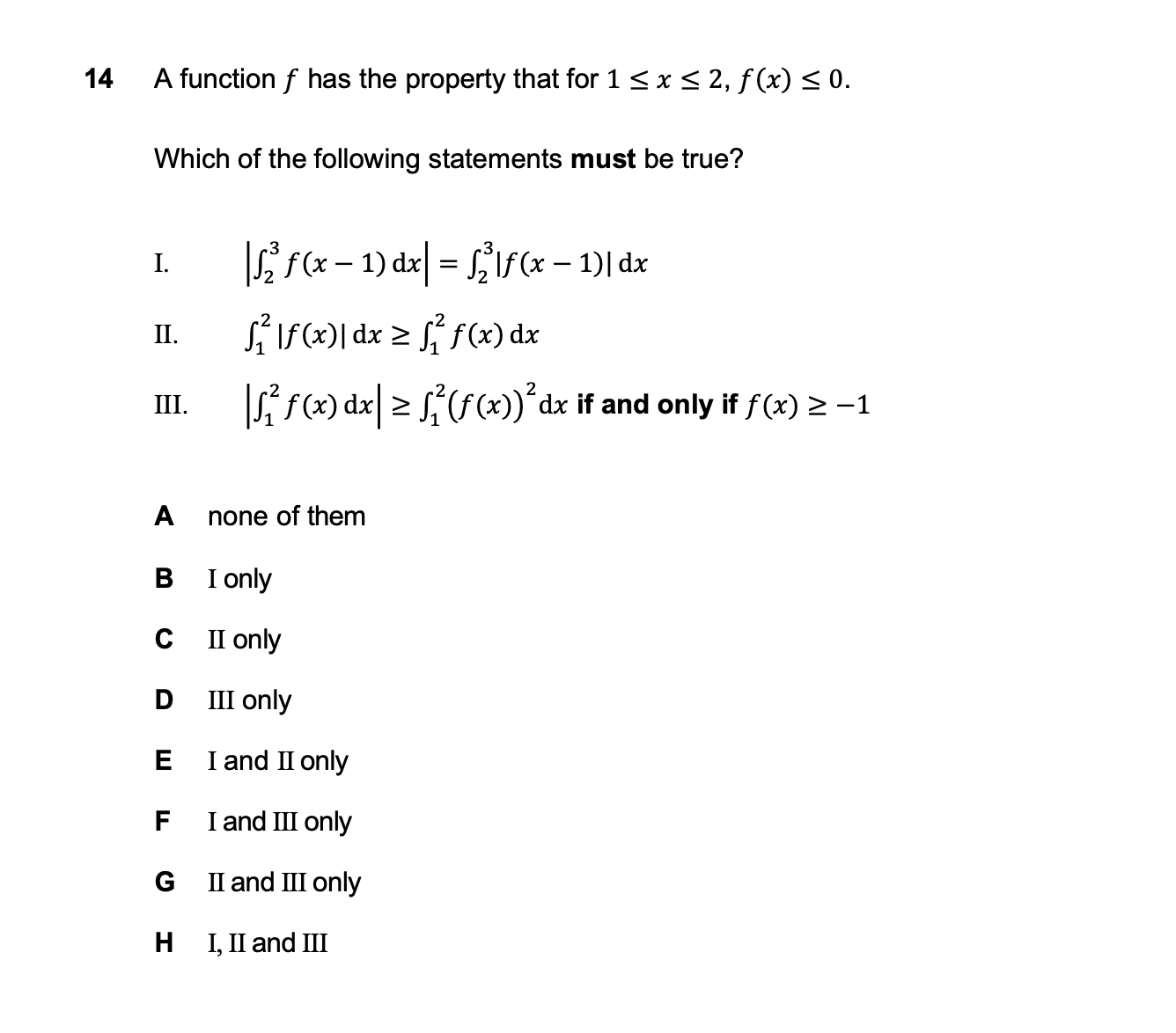
E
1st integral , becomes : - I f(x) = - I f(x)
2nd integral you can turn into 0 >= 2 I f(x) dx
3rd one, counter example is a piecewise function which is -2 from 1 to 1.1 and -0.5 from 1.1 to 2
∣f(x)∣>(f(x))2 whenever −1<f(x)<0,
we create a piecewise function to minimise the region of the graph which it disobeys the rule so the integral is valid but not the condition
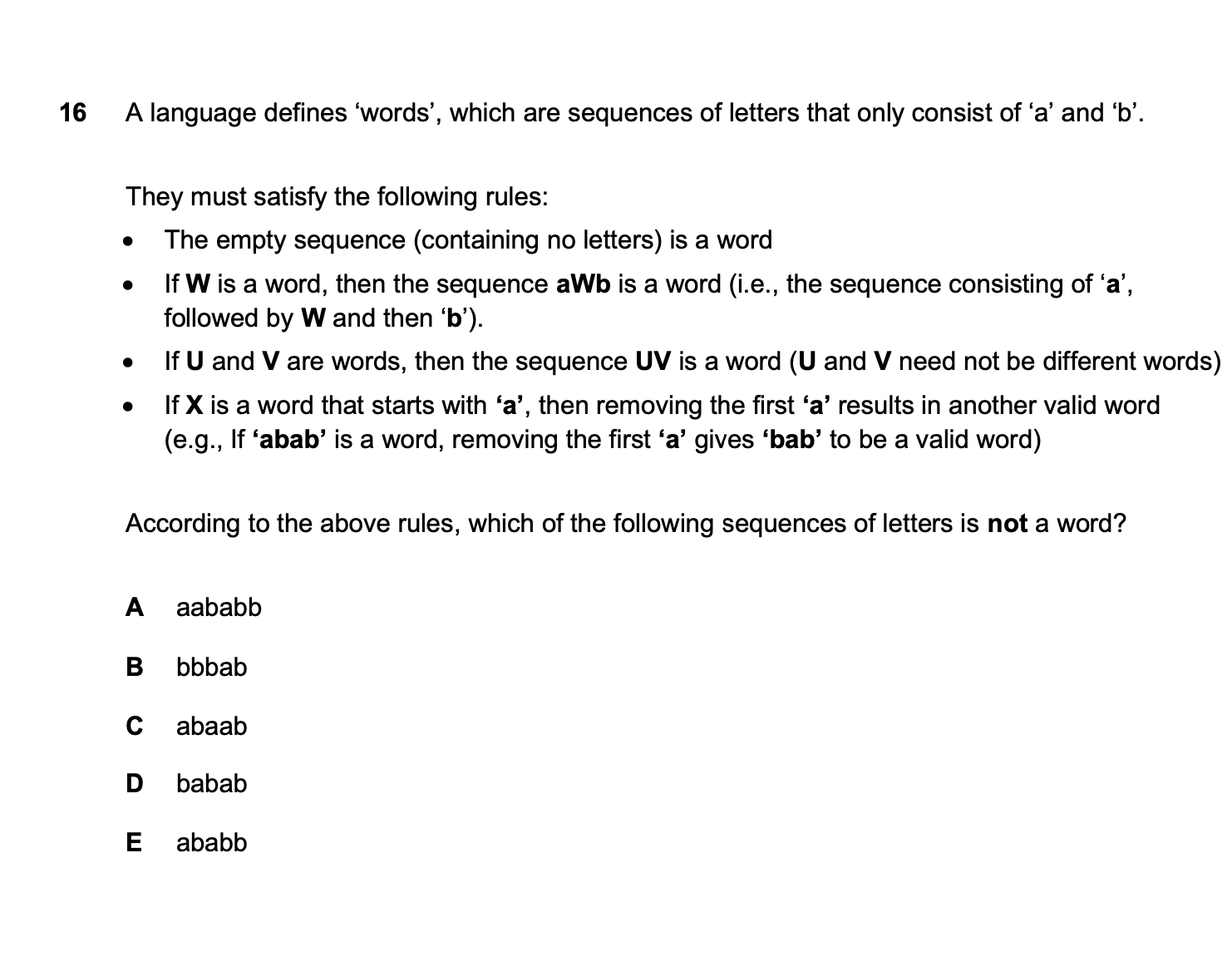
C
2nd rule adds an a and a b meaning the difference is the same
4th rule removes a’s so it decreases the number of a’s compared to b’s
3rd rule combines two words so if both words do not have more a’s than b’s then the combined word does not have more a’s than b’s
it is impossible to have a word with more a’s than b’s

d
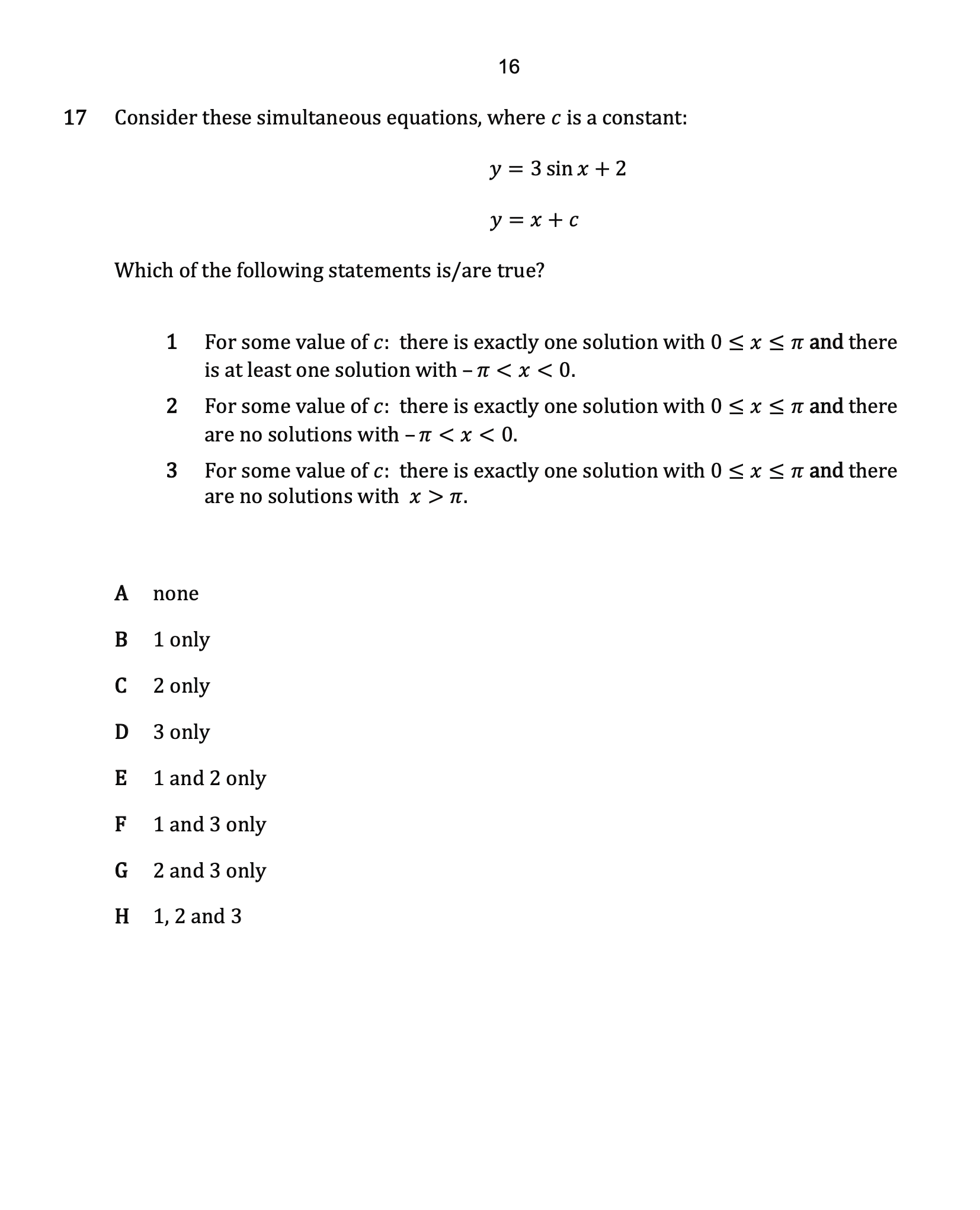
draw graph, -k not k
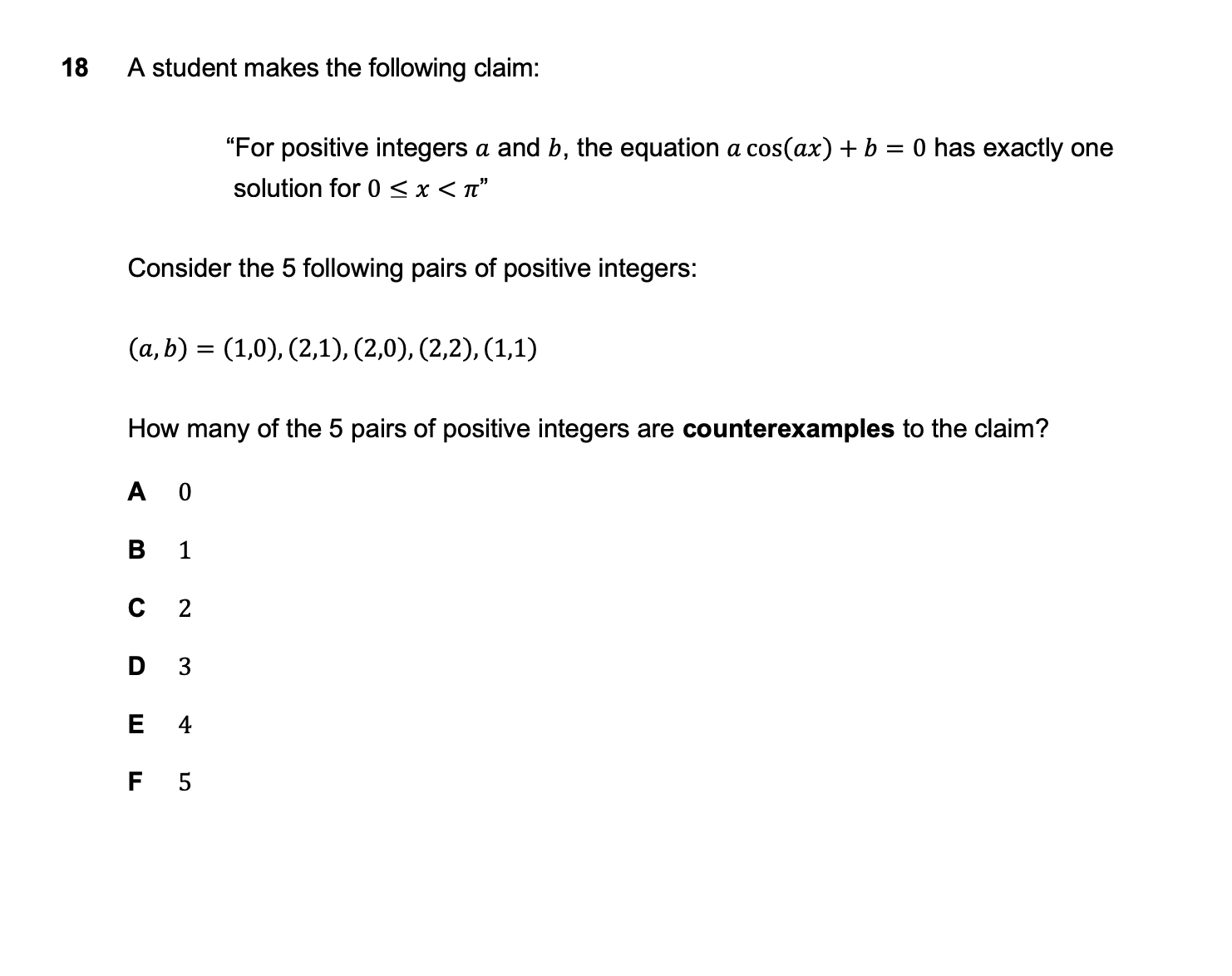
D
< pi meaning that 1,1 has 0 solutions and is a counterexample