Glial Cells: Nervous System Support

0.0(0)
studied byStudied by 0 people
0.0(0)
full-widthCall with Kai
learnLearn
examPractice Test
spaced repetitionSpaced Repetition
heart puzzleMatch
flashcardsFlashcards
GameKnowt Play
Card Sorting

1/12

flashcard set

Earn XP

Description and Tags

Neuroscience

Study Analytics
Name
Mastery
Learn
Test
Matching
Spaced
Call with Kai

No study sessions yet.

13 Terms

1
New cards

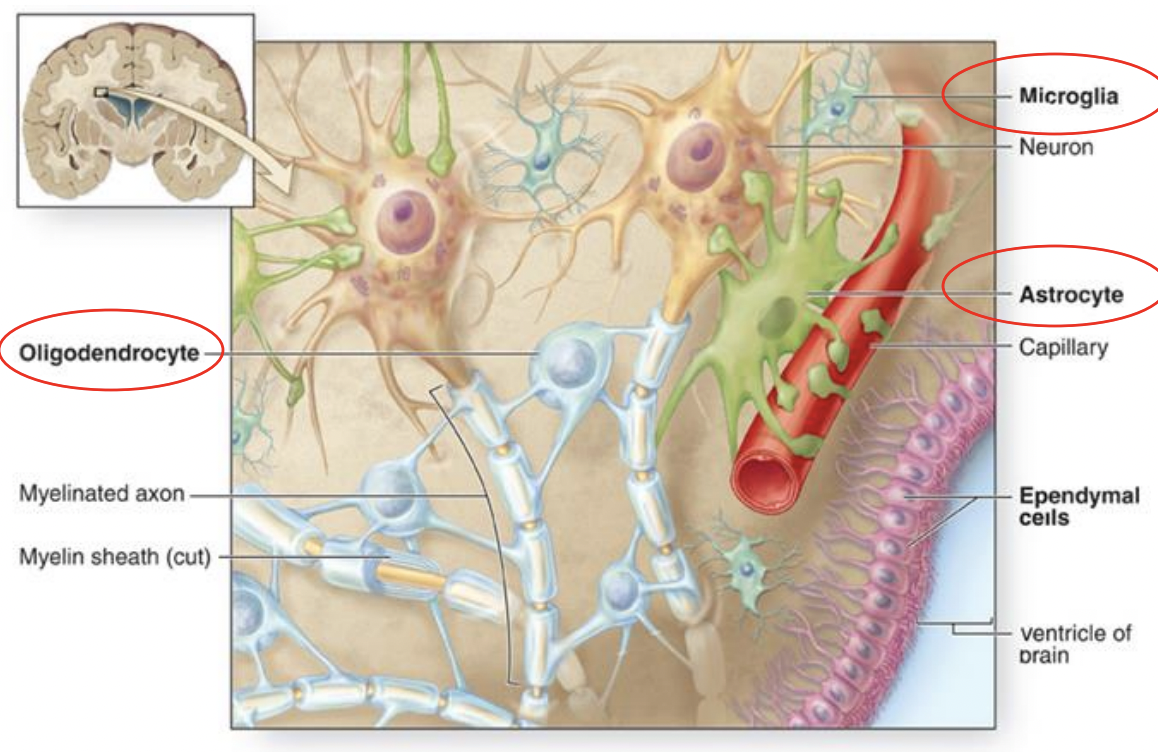
Types of Glial Cells

astrocytes, oligodendrocytes, Schwann cell, microglia
<p>astrocytes, oligodendrocytes, Schwann cell, microglia </p>
2
New cards

Astrocytes

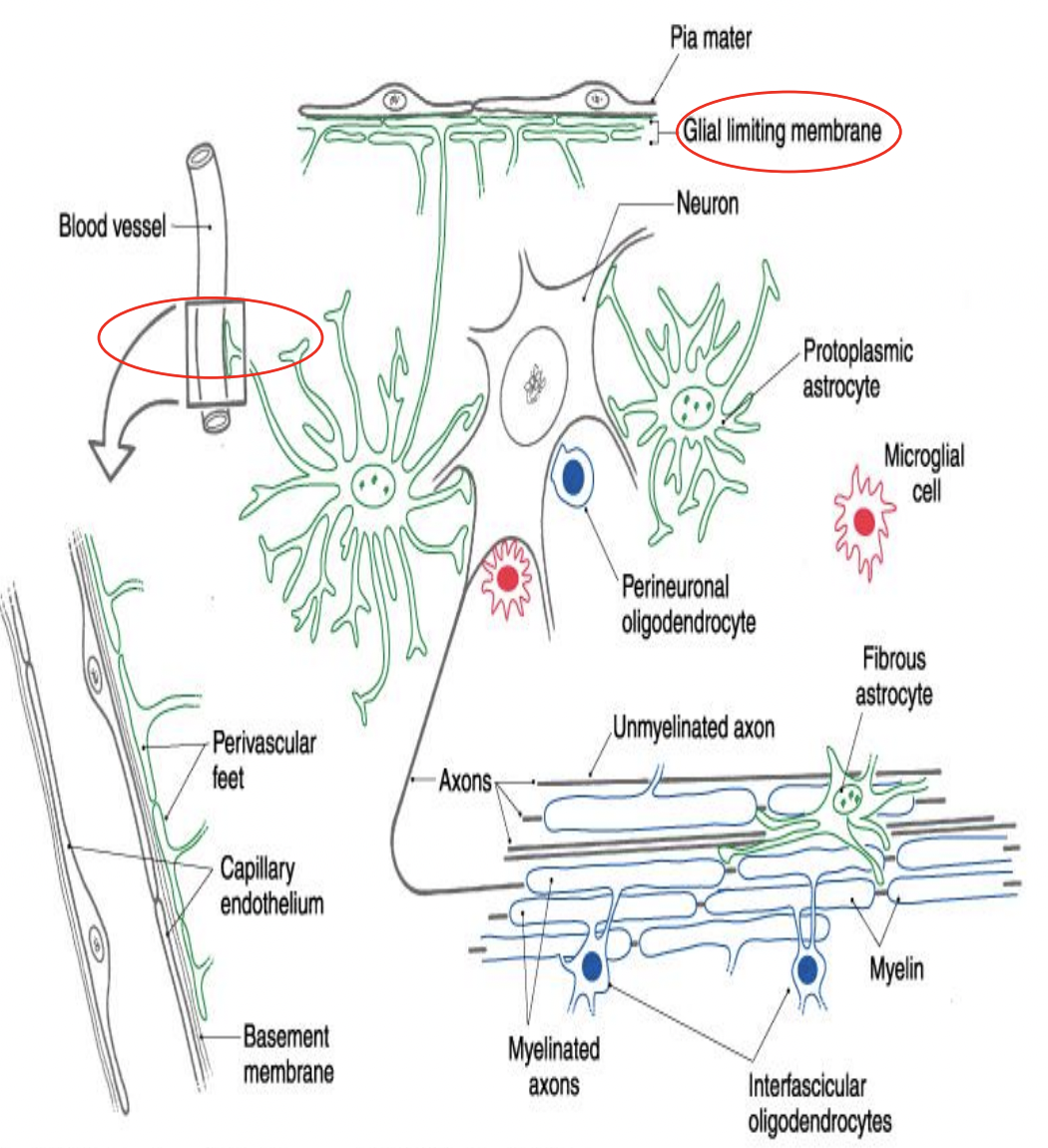
  • star shaped, cover surface of most CNS neurons

  • expansive branches and end-feet

    • line blood vessels

    • blood brain barrier (BBB)

    • participate in neural transmission

  • structural support and metabolic support of neurons

    • control of ionic environment and pH

  • secrete neurotransmitters, cytokines, and growth factors

  • disease/neurological disorder: MS, Alzheimer’s disease
<ul><li><p>star shaped, cover surface of most CNS neurons</p></li><li><p>expansive branches and end-feet </p><ul><li><p>line blood vessels </p></li><li><p>blood brain barrier (BBB)</p></li><li><p>participate in neural transmission </p></li></ul></li><li><p>structural support and metabolic support of neurons</p><ul><li><p>control of ionic environment and pH </p></li></ul></li><li><p>secrete neurotransmitters, cytokines, and growth factors</p></li><li><p>disease/neurological disorder: MS, Alzheimer’s disease </p></li></ul><p></p>
3
New cards

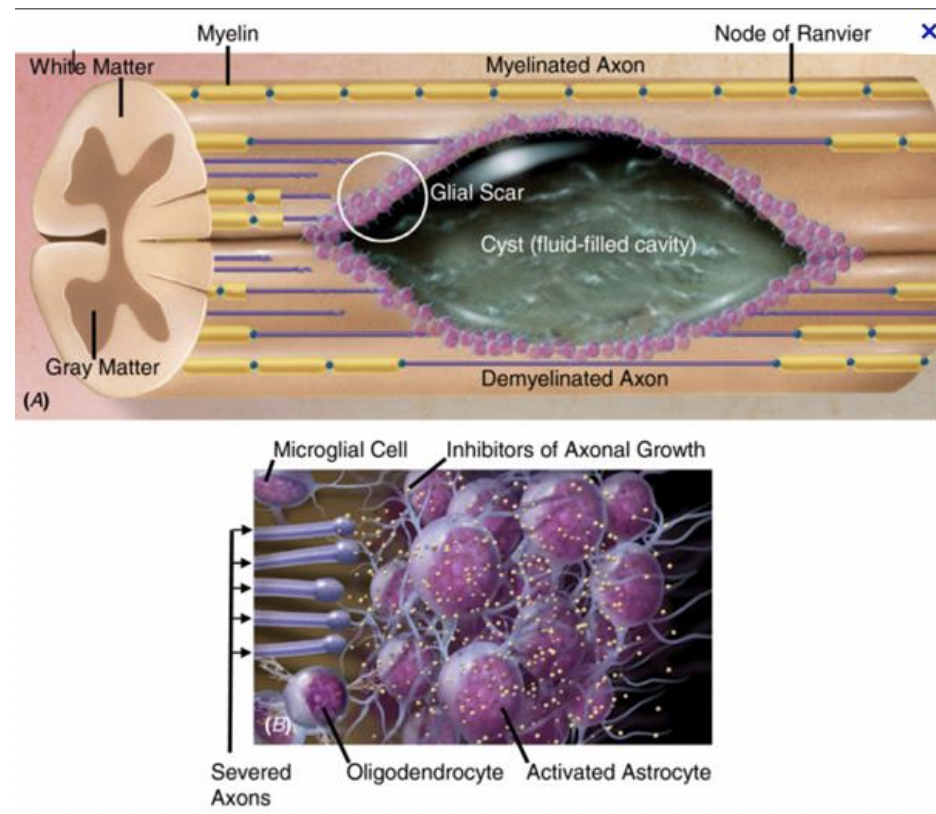
astrocytes: cleaning

  • response to injury

  • astrocytes infiltration and proliferation may result in formation of astrocytic scar

  • CNS injury such as stroke, SCI, and neurodegenerative disease such as multiple sclerosis

  • may restrict regenerative capacity of CNS
<ul><li><p>response to injury</p></li><li><p>astrocytes infiltration and proliferation may result in formation of astrocytic scar</p></li><li><p>CNS injury such as stroke, SCI, and neurodegenerative disease such as multiple sclerosis </p></li><li><p>may restrict regenerative capacity of CNS </p></li></ul><p></p>
4
New cards

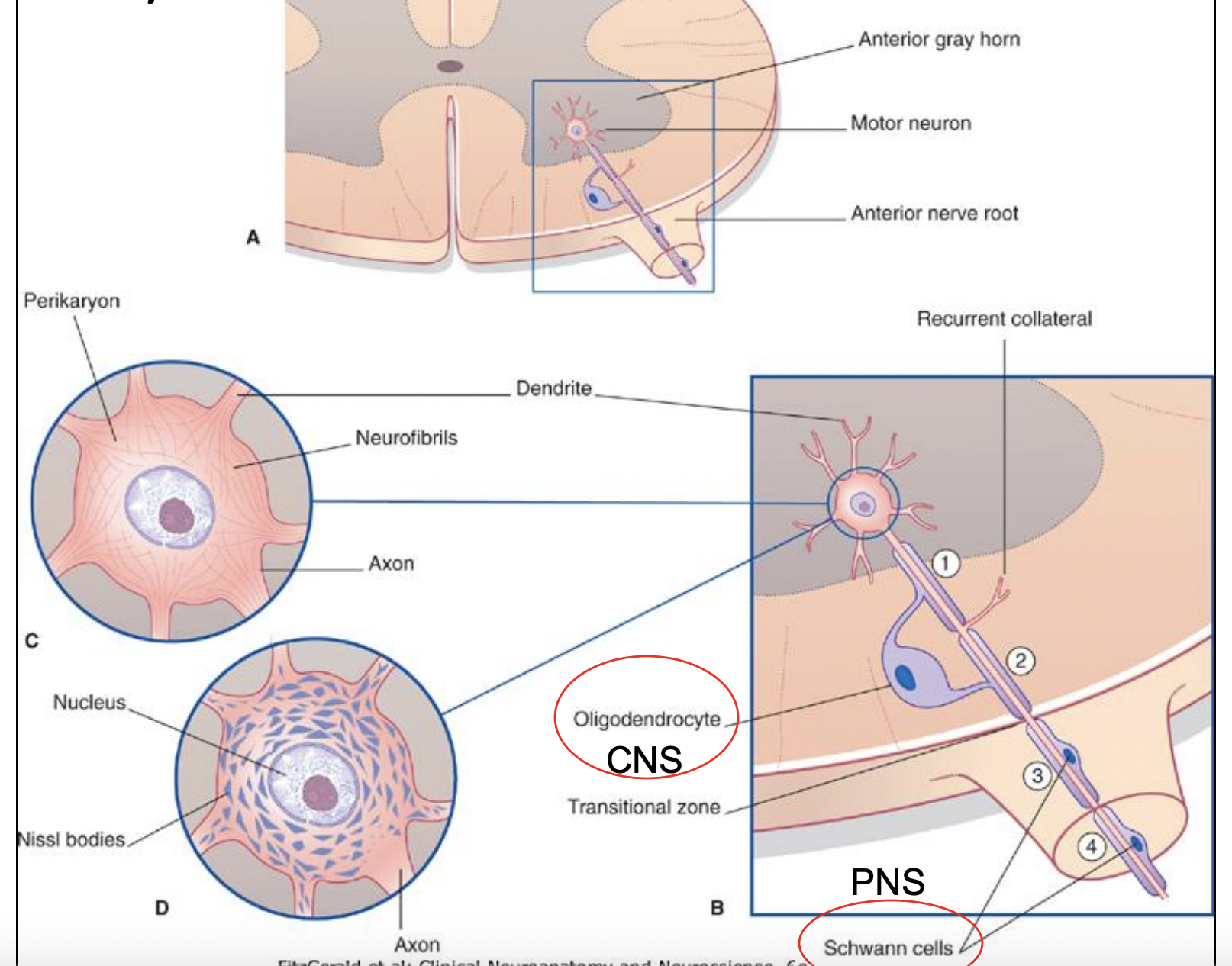
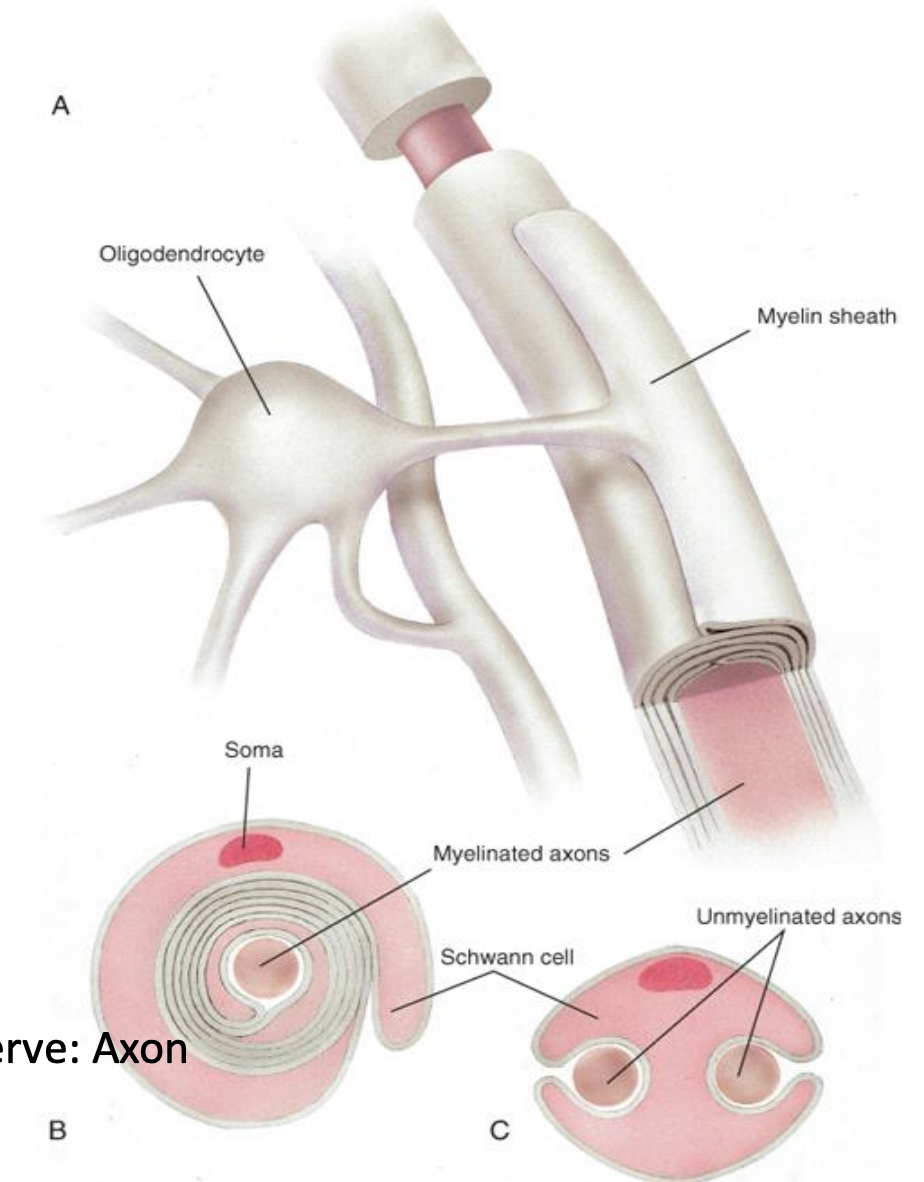
Oligodendrocytes

  • myelin forming cell in CNS

    • one cell myelinates multiple axons (sends out multiple processes)

  • nonmyelinated axons still associated with Oligo
<ul><li><p>myelin forming cell in CNS </p><ul><li><p>one cell myelinates multiple axons (sends out multiple processes) </p></li></ul></li><li><p>nonmyelinated axons still associated with Oligo </p></li></ul><p></p>
5
New cards

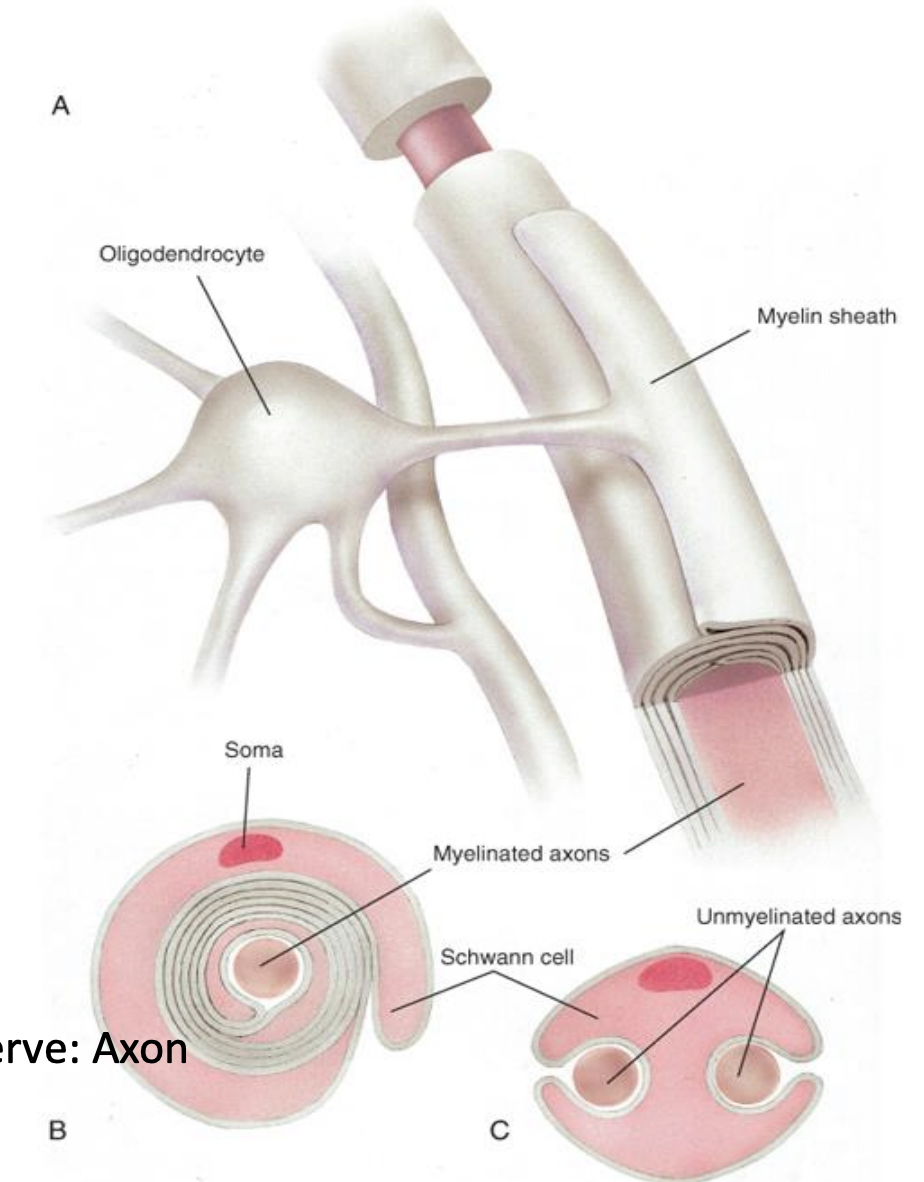
Schwann

  • myelin forming cell in PNS

  • may become phagocytic during degeneration and repair

  • one cell myelinates one axon

  • nonmyelinated axons still associated with Schwann cells
<ul><li><p>myelin forming cell in PNS</p></li><li><p>may become phagocytic during degeneration and repair</p></li><li><p>one cell myelinates one axon </p></li><li><p>nonmyelinated axons still associated with Schwann cells </p></li></ul><p></p>
6
New cards

Myelination in the CNS and PNS

knowt flashcard image
7
New cards

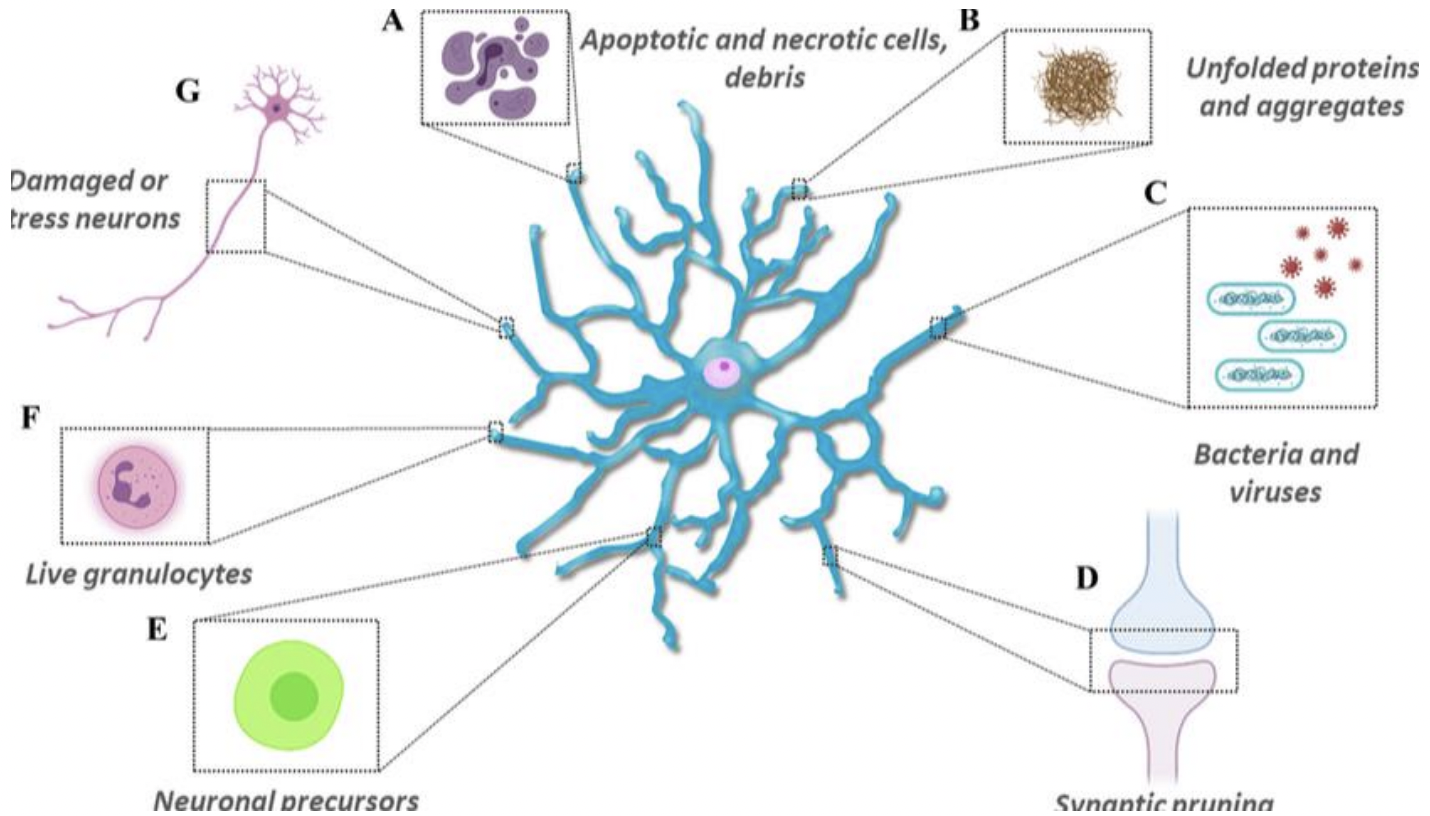
Microglia

clean up and removal

  • comprise 10-20% of all glial cells

    • immune cells of CNS

    • become phagocytic in response in injury and damage

    • involved in CNS inflammation

    • synaptic pruning

  • dysregulation implicated in diseases such as

    • alzheimer’s disease

    • HIV/AIDS

    • Chronic/persistent pain

<p>clean up and removal </p><ul><li><p>comprise 10-20% of all glial cells </p><ul><li><p>immune cells of CNS</p></li><li><p>become phagocytic in response in injury and damage</p></li><li><p>involved in CNS inflammation </p></li><li><p>synaptic pruning </p></li></ul></li><li><p>dysregulation implicated in diseases such as </p><ul><li><p>alzheimer’s disease</p></li><li><p>HIV/AIDS</p></li><li><p>Chronic/persistent pain </p></li></ul></li></ul><p></p>
8
New cards

Neuroinflammation

CNS’s response to infections, diseases and injuries

9
New cards

beneficial effect

initiates intervention by astrocytes and microglia and (clean up and removal of debris)

10
New cards

harmful effects

  • death of neurons and oligodendrocytes, inhibition of neural regeneration

  • correlation between abnormal glial activity and neural damage in stroke, Alzheimer’s disease, Parkinson’s disease, multiple sclerosis, and chronic pain

11
New cards

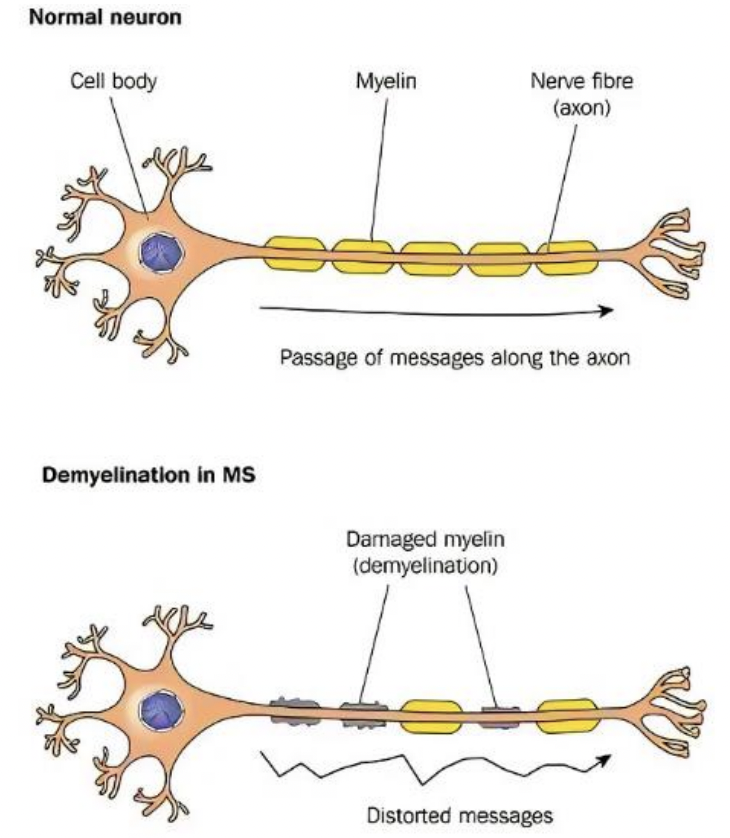
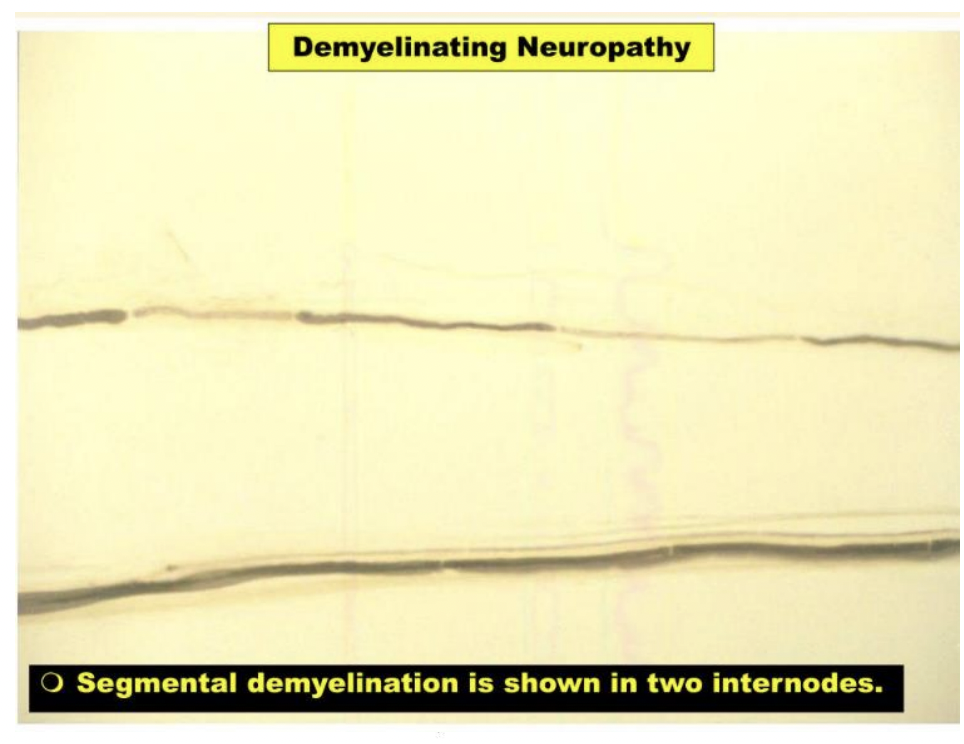
segmental demyelination

  • regional loss of myelin in CNS or PNS resulting in slowing or blockage of action potential

  • PNS

    • guillian barre (acute inflammatory demyelinating polyneuropathy)

  • CNS

    • multiple sclerosis: demyelination plus formation of astrocytic scars (sclerotic plaques)
<ul><li><p>regional loss of myelin in CNS or PNS resulting in slowing or blockage of action potential </p></li><li><p>PNS</p><ul><li><p>guillian barre (acute inflammatory demyelinating polyneuropathy) </p></li></ul></li><li><p>CNS</p><ul><li><p>multiple sclerosis: demyelination plus formation of astrocytic scars (sclerotic plaques) </p></li></ul></li></ul><p></p>
12
New cards

Guillain-Barre Syndrome

  • involves acute inflammation and demyelination of peripheral sensory and motor fibers

  • occurs within 2 to 3 weeks after a mild infection

  • activates the immune system causing production of an antibody that mistakenly cross-reacts with the myelin sheath (Schwann cells)

  • onset is rapid but followed by plateau then gradual recovery; recovery is usually complete

  • Tx: plasmapheresis and intravenous immunoglobulin therapy, PT/OT
<ul><li><p>involves acute inflammation and demyelination of peripheral sensory and motor fibers</p></li><li><p>occurs within 2 to 3 weeks after a mild infection </p></li><li><p>activates the immune system causing production of an antibody that mistakenly cross-reacts with the myelin sheath (Schwann cells) </p></li><li><p>onset is rapid but followed by plateau then gradual recovery; recovery is usually complete</p></li><li><p>Tx: plasmapheresis and intravenous immunoglobulin therapy, PT/OT</p></li></ul><p></p>
13
New cards

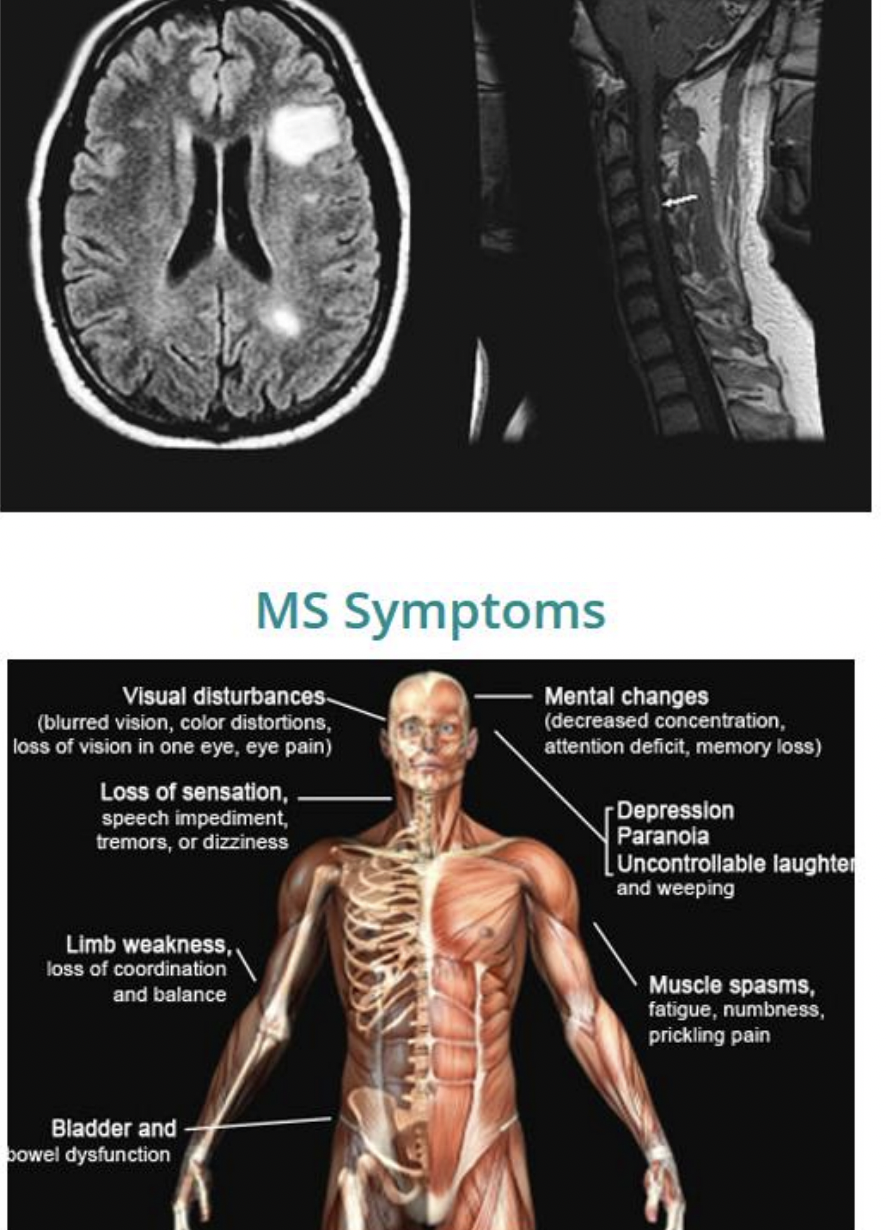
Multiple Sclerosis

  • antibodies attack oligodendrocytes

  • produce sclerotic plaques in the white matter of the CNS

  • signs and symptoms

    • weakness lack of coordination, impaired vision, double vision, impaired sensation, and slurred speech; may also disrupt of memory and emotions

  • diagnosis is difficult:

    • usually manifests with one sign that may completely resolve
<ul><li><p>antibodies attack oligodendrocytes </p></li><li><p>produce sclerotic plaques in the white matter of the CNS</p></li><li><p>signs and symptoms</p><ul><li><p>weakness lack of coordination, impaired vision, double vision, impaired sensation, and slurred speech; may also disrupt of memory and emotions </p></li></ul></li><li><p>diagnosis is difficult: </p><ul><li><p>usually manifests with one sign that may completely resolve </p></li></ul></li></ul><p></p>