9H Short Story Unit Review
 Call Kai
 Learn
Learn Practice Test
 Spaced Repetition
 Match
Match Flashcards
 Knowt Play
1/170

Earn XP
Description and Tags
Test: 10/10
Name | Mastery | Learn | Test | Matching | Spaced | Call with Kai | Chat |
|---|
No analytics yet
Send a link to your students to track their progress
171 Terms
Element
a part or component of the whole - pieces that make the whole 'better.'
Point of View
the perspective - or vantage point - from which a story is told.
Conflict
Struggle or clash between two opposing characters or forces.
Setting
Time and Place - creates mood and provides a background for the action.
Foreshadowing
a literary device used to give an indication or hint of what is to come later in the story.
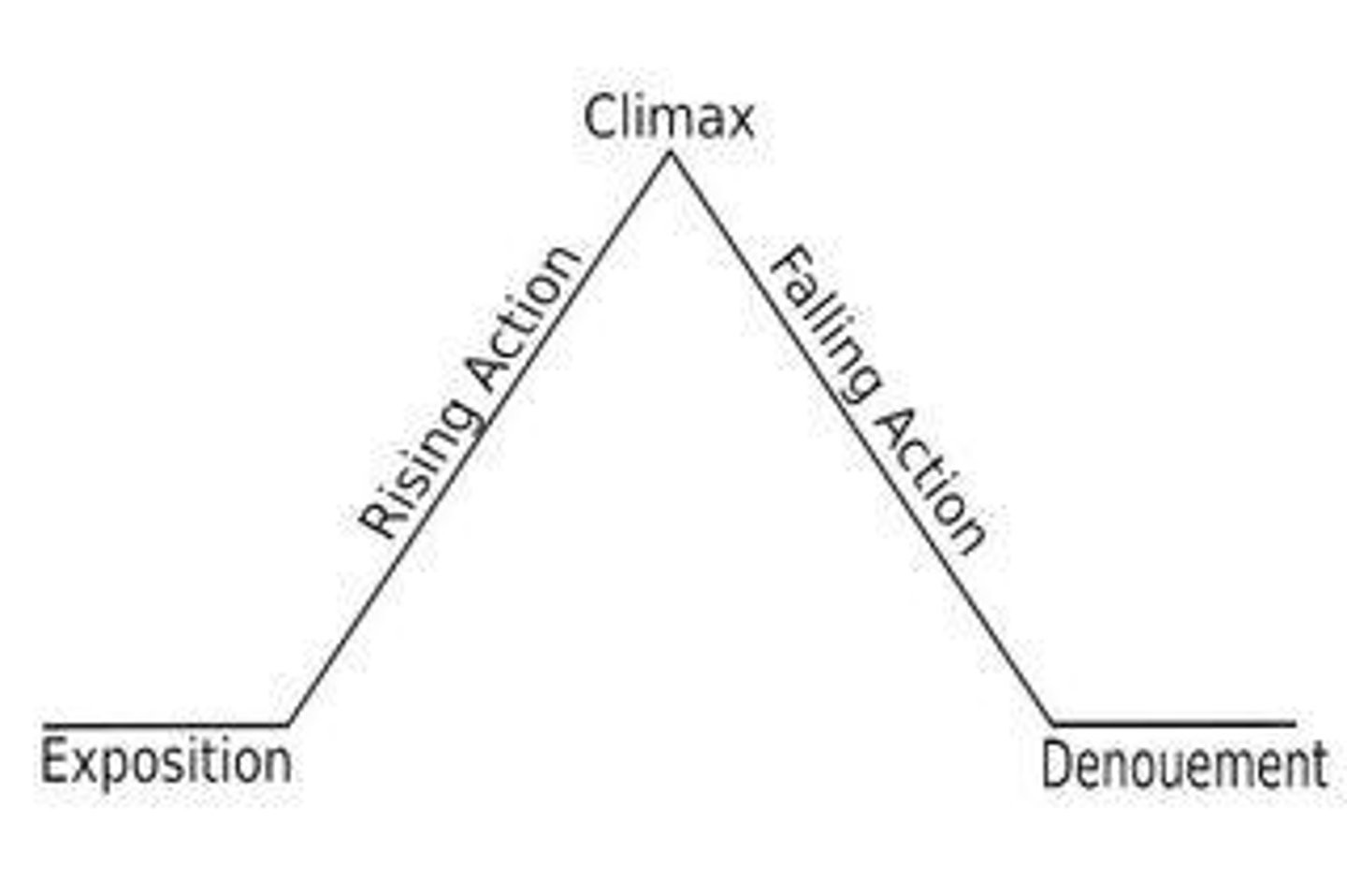
Plot
the sequence of events in a story.
Flashback
a scene set in a time earlier than the main story.
Irony
a literary technique where the intended meaning is different from the actual meaning.
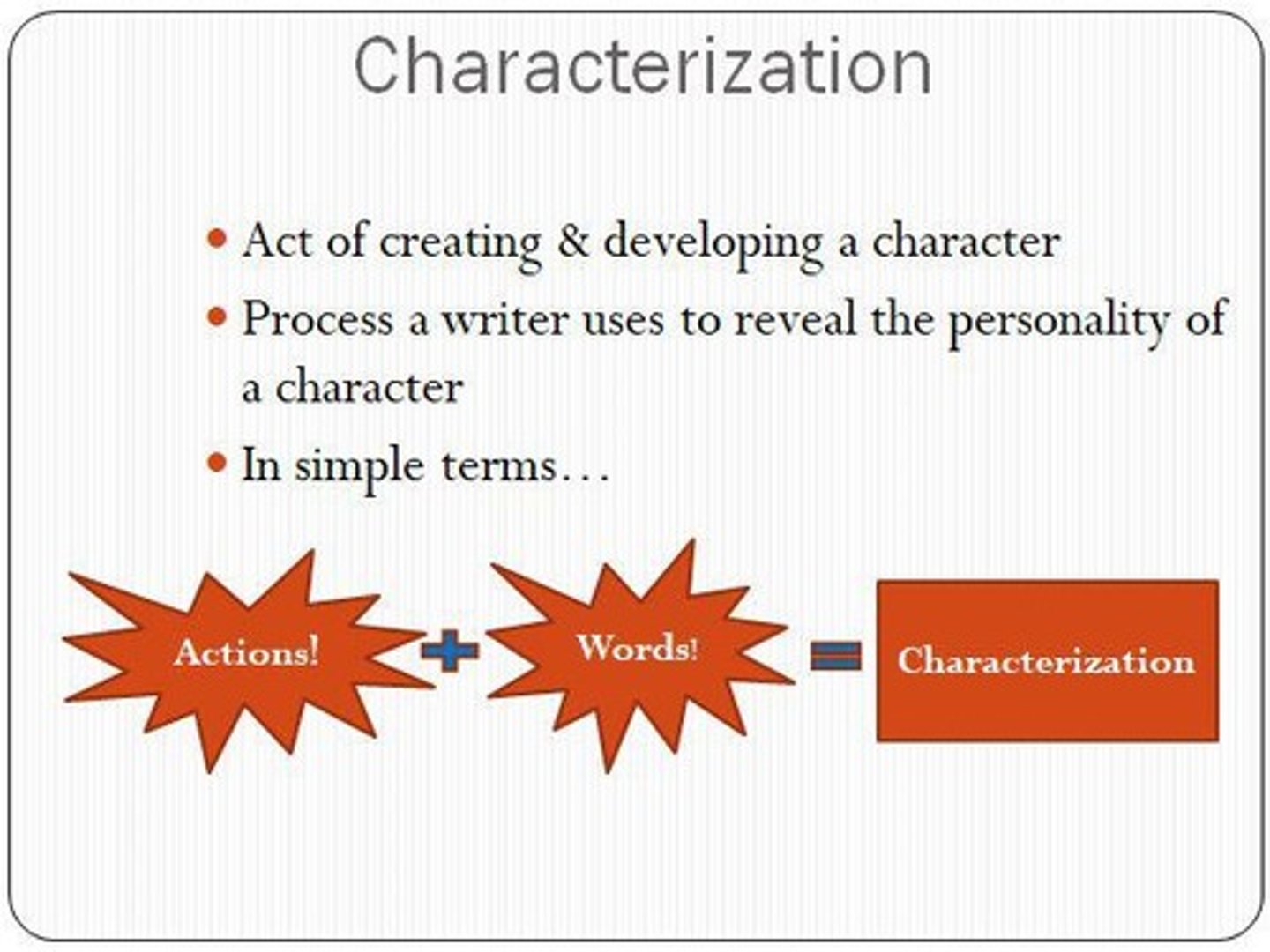
Characterization
the act of creating & developing a character.
Symbolism
the use of symbols to represent ideas or qualities.
Theme
the central topic, subject, or message within a narrative.
Language & Tone
the choice of words and the attitude of the writer towards the subject.
Mood
the atmosphere the reader feels as he/she reads the story.
Antagonist
the character who opposes the protagonist (main character).
Protagonist
the main character in a story, often facing a conflict.
External Conflict
a struggle between a character and an outside force.
Internal Conflict
a struggle within a character's mind.
Character vs. Nature
a conflict where a character faces natural forces.
Character vs. Self
a conflict where a character struggles with their own beliefs or emotions.
Character vs. Society
a conflict where a character stands against societal norms or values.
Character vs. Supernatural
a conflict where a character faces supernatural forces.
Indirect Characterization
the process a writer uses to reveal the personality and psyche of a character.
Third-Person Omniscient
Narrator is not a character and knows and tells what more than one character is thinking and feeling.
Third-Person Limited
Narrator is not a character and zooms in on thoughts and feelings of one character.
First Person
Narrator is a character in the story and we learn only what this character chooses to tell us; may be an unreliable narrator.
Second Person
Narrator addresses the reader as 'you'; less common, often found in 'how-to' books or novels in diary or letter format.
Climax
The turning point of a story.
Symbol
Something that stands for something else; using an object to represent a belief, idea, superstition, or institution.
Situational Irony
When something unexpected happens.
Verbal Irony
When a person means the opposite of what he/she says.
Dramatic Irony
When the reader/audience knows something the characters do not.
Imagery
Descriptive/sensory language that involves any of the five senses.
Visual Imagery
Imagery that appeals to the sense of sight.
Gustatory Imagery
Imagery that appeals to the sense of taste.
Olfactory Imagery
Imagery that appeals to the sense of smell.
Auditory Imagery
Imagery that appeals to the sense of hearing.
Tactile Imagery
Imagery that appeals to the sense of touch.
Simile
A comparison between two unlike things using words 'like' or 'as'.
Metaphor
A comparison between two words but without using 'like' or 'as'.
Personification
Giving human qualities to non-living things.
Hyperbole
An extreme exaggeration.
Pride
A wonderful, terrible thing, a seed that bears two vines, life and death.
Infallibility
The belief in one's own inability to make mistakes or be wrong.
Mercy
Compassion or forgiveness shown towards someone whom it is within one's power to punish or harm.
Solder cracked pride
A metaphor for repairing or mending one's damaged sense of pride.
Development program
A plan to teach Doodle to run, swim, climb trees, and fight.
Doodle's failure
The moment when Doodle collapsed onto the mud, indicating his exhaustion and inability to meet expectations.
Sign of mercy
A gesture or indication that shows compassion towards Doodle from his brother.
Theme of pride
The central idea that pride can lead to both positive and negative outcomes.
Symbolism in the story
The use of symbols to convey deeper meanings and themes.
Crippled brother
Refers to Doodle's physical limitations and the impact on his brother's pride.
Ashamed
The feeling experienced by the narrator due to Doodle's condition.
Tired and frightened
Describes Doodle's emotional and physical state during the story.
Important themes
Key messages or ideas that are significant in the narrative.
Prominent constructed symbol
An original symbol created within the story that holds significant meaning.
Watching for a sign
Doodle's anticipation of his brother's compassion during a moment of vulnerability.
What is suspense in literature?
A device used by writers to create uncertainty and excitement about the outcome of events in a story.
How can writers build suspense?
Through setting, characters, and plot.
What is the unique structure of 'The Open Window'?
The story is a lie, creating a twist that reveals the theme of deception.
What theme does Saki convey in 'The Open Window'?
The theme revolves around the nature of truth and deception.
What is the most important symbol in 'The Open Window'?
The open window itself, symbolizing both opportunity and deception.
How does the meaning of the symbol in 'The Open Window' change towards the end?
It shifts from representing hope and openness to embodying the deceit of Vera's story.
Why does Vera lie to Mr. Nuttel?
To create an elaborate story that entertains her and manipulates Mr. Nuttel.
What fine line is Saki trying to show between sanity and insanity?
The thin boundary between reality and the stories we tell ourselves or others.
What is the significance of the character's thoughts in a suspenseful situation?
They reveal internal conflict and heighten the tension of the narrative.
What role does setting play in creating suspense?
It establishes an atmosphere that can evoke fear, uncertainty, or anticipation.
What is meant by 'romance' in the context of Vera's stories?
It refers to a story with adventurous, mysterious, or heroic characters and plot.
What is an example of a prompt to create suspense?
The girl thought she heard someone in the... (fill in the blank).
What kind of action might a character take in a suspenseful moment?
The character might investigate a disturbing sound or scent despite feeling afraid.
What could be an obstacle in a suspenseful narrative?
A sudden event that forces the character to retreat or reconsider their actions.
What is a potential outcome for a character discovering what's really going on?
They may find that the situation is harmless or uncover a deeper threat.
What is the primary theme of 'The Lottery'?
The story explores the dangers of blindly following traditions and the capacity for violence in ordinary people.
Who is the author of 'The Lottery'?
Shirley Jackson
When was 'The Lottery' first published?
1948 in The New Yorker magazine.
What was the public reaction to 'The Lottery' upon its publication?
It generated more negative letters than any other story published by The New Yorker, with many readers canceling their subscriptions.
What does the term 'scapegoat' refer to in the context of 'The Lottery'?
A scapegoat is a person or group assigned responsibility for the perceived faults of society; in the story, Tessie Hutchinson becomes the scapegoat.
What historical context influenced the writing of 'The Lottery'?
The story was written in the post-World War II era, reflecting societal conformity and fear of communism.
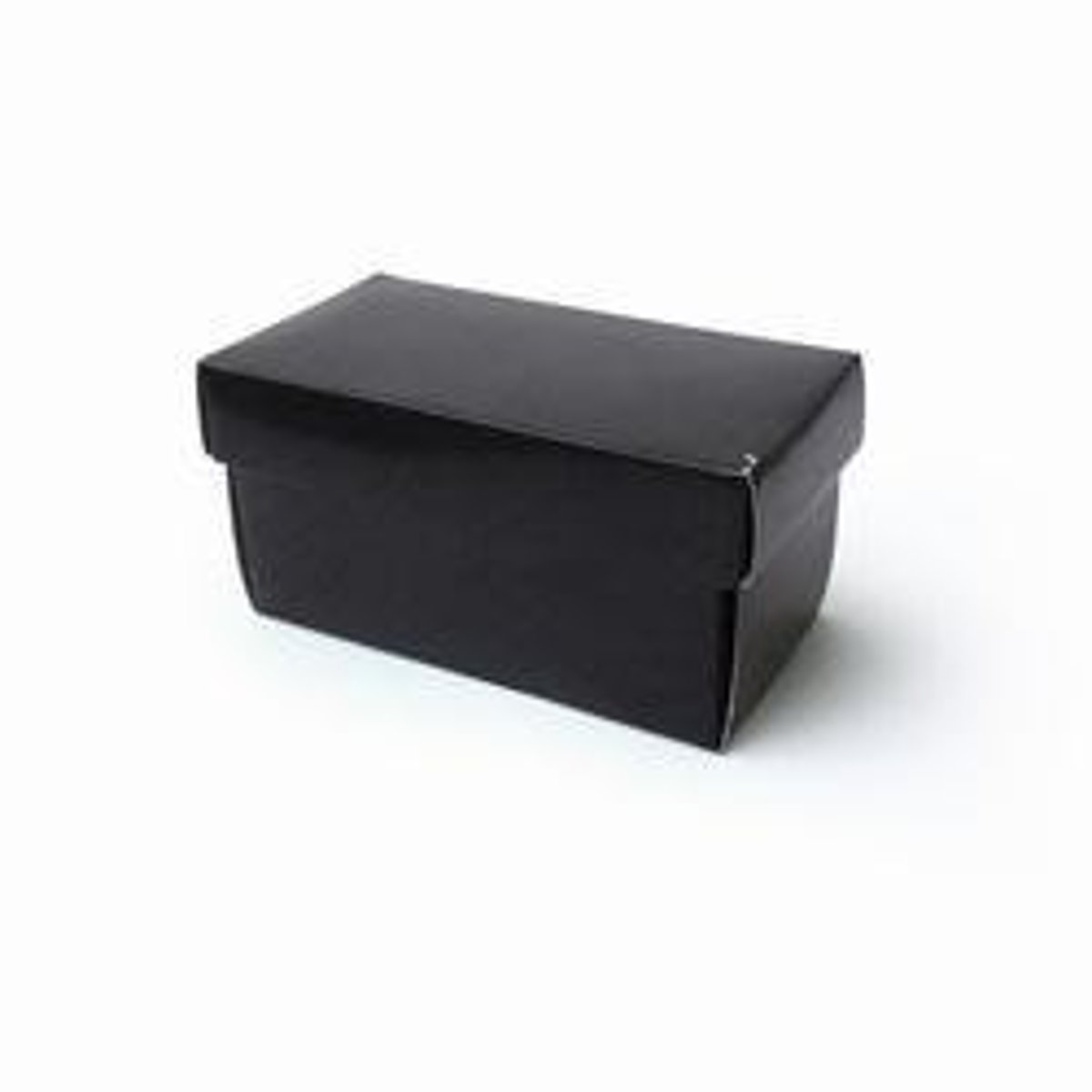
What does the black box symbolize in 'The Lottery'?
The black box symbolizes the fading tradition of the lottery and the villagers' reluctance to question outdated practices.
How does the story depict mob violence?
Mob violence is shown through the townspeople's collective participation in the stoning of Tessie Hutchinson, highlighting how individuals can act inhumanely in groups.
What does the phrase 'Lottery in June, corn be heavy soon' imply?
It suggests that the lottery is tied to agricultural fertility, reflecting ancient beliefs in ritual sacrifice for crop success.
What is the significance of the character names 'Mr. Summers' and 'Mr. Graves'?
Their names symbolize the duality of life and death, with 'Summers' representing life and 'Graves' hinting at death.
What does Shirley Jackson hope to demonstrate through 'The Lottery'?
She aims to shock readers into recognizing the violence and inhumanity present in their own lives.
What is a parable, and how does it relate to 'The Lottery'?
A parable is a story that presents a moral lesson; 'The Lottery' serves as a modern-day parable about the consequences of societal conformity.
What does the story suggest about societal violence?
It suggests that horrifying acts of violence can occur anywhere and can be committed by ordinary people.
What is the tone of Shirley Jackson's works, particularly in 'The Lottery'?
The tone is often odd and macabre, with an impending sense of doom in ordinary settings.
How did Shirley Jackson respond to criticism of 'The Lottery'?
She generally refused to explain the story's meaning but acknowledged her intent to shock readers.
What does the story imply about the examination of traditions?
It implies that society is often reluctant to reject outdated traditions, even when they are harmful.
What literary device is heavily used in 'The Lottery' to build suspense?
Symbolism, particularly through the black box and the lottery itself.
What is the significance of the villagers remembering to use stones?
It indicates that while they have forgotten the ritual's origins, they still participate in the violence.
What does the ending of 'The Lottery' reveal about human nature?
It reveals that individuals can betray their relationships and morals when influenced by mob mentality.
What does the story suggest about the unexamined life?
It suggests that an unexamined life is not worth living and can lead to complicity in violence.
What is the role of conformity in 'The Lottery'?
Conformity leads the townspeople to participate in the lottery without questioning its morality.
What does the term 'ritual without meaning' refer to in the story?
It refers to the villagers' continuation of the lottery tradition despite losing its original significance.
How does the story reflect on the nature of evil?
It suggests that evil can be commonplace and carried out by ordinary people in the name of tradition.
What does the character of Tessie Hutchinson represent?
Tessie represents the individual victim of societal violence and the scapegoat in the lottery ritual.

What is the author's background?
Jamaica Kincaid is a native of Antigua with Black and Jewish ancestry, who lived in a restrictive environment.
What significant name change did Kincaid make?
In 1973, she changed her name to 'Jamaica' as a form of liberation.
What is the narrative perspective in 'Girl'?
The story is delivered in the second person point of view by the mother, with no evident narrator.
How many times does the girl speak in the story?
The girl only speaks twice in the monologue.
What does the continuous sentence structure in 'Girl' represent?
It demonstrates the methodical, continuous roles of women and emphasizes the control the mother has in the relationship.