L6. Microbial Photosynthesis and Decomposition in C cycling
 Call Kai
 Learn
Learn Practice Test
 Spaced Repetition
 Match
Match Flashcards
 Knowt Play
1/30

There's no tags or description
Looks like no tags are added yet.
Name | Mastery | Learn | Test | Matching | Spaced | Call with Kai | Chat |
|---|
No analytics yet
Send a link to your students to track their progress
31 Terms
What defines major microbial metabolic groups?
Energy source: Light → phototrophy; Chemicals → chemotrophy
Electron source: H₂O vs. non‑H₂O; Organic C vs. inorganic compounds
Carbon source: CO₂ → autotrophy; Organic C → heterotrophy
Terminal electron acceptor: O₂ vs. non‑O₂
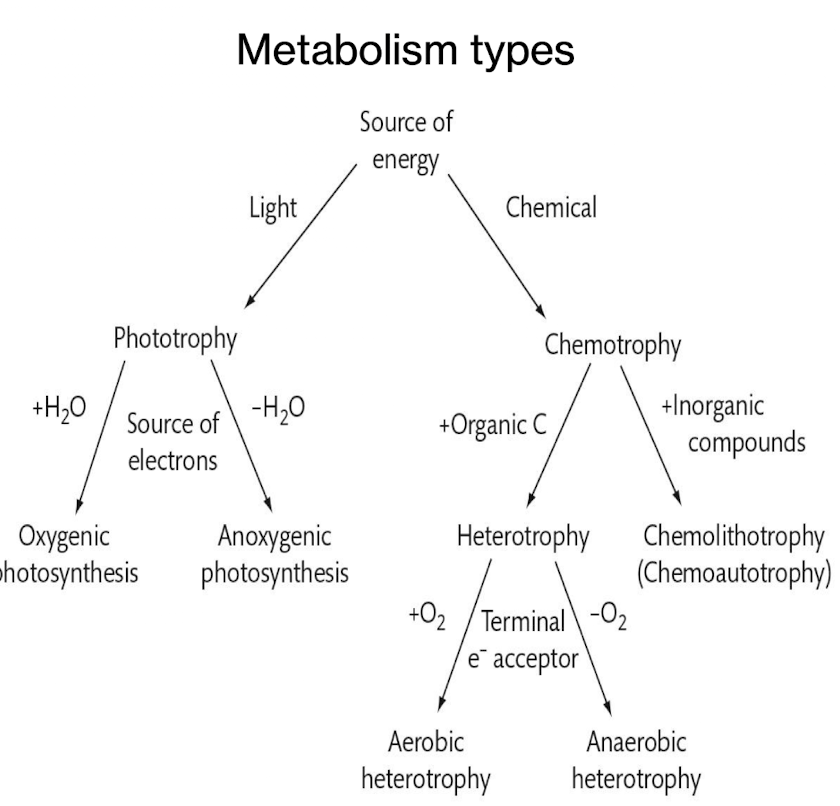
Which combination correctly describes chemolithoautotrophy?
B. Chemical energy, inorganic e⁻ donors, CO₂ as C source
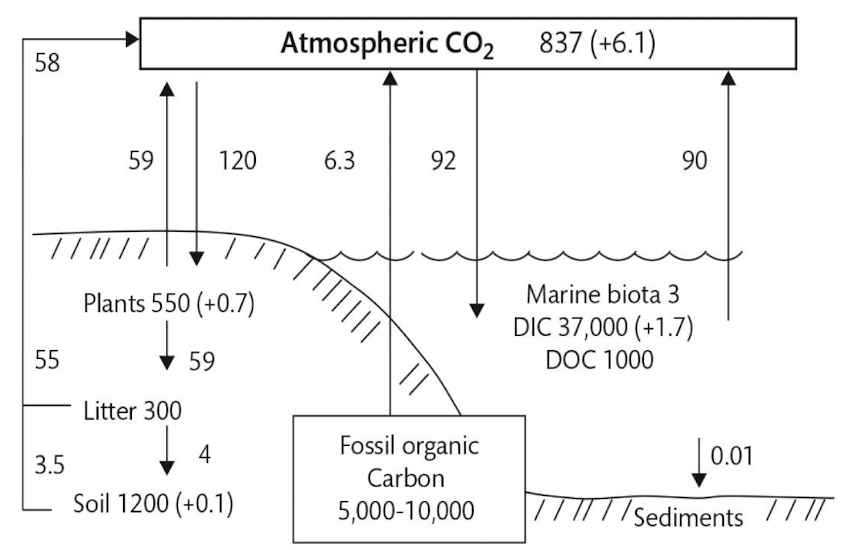
What are the major carbon pools?
Atmosphere: 760–837 Pg
Soils: 1200–2500 Pg
Oceans: 38,400 Pg (largest active pool)
Fossil fuels: 4130 Pg
1 Pg = 1012 Kg = 109 tonnes (1 billion tonnes)
What are major fluxes in C cycling?
Major fluxes in carbon cycling include photosynthesis, respiration, decomposition, and combustion, which transfer carbon among various pools, such as the atmosphere, soils, and oceans.
How much C is fluxed through different processes?
Photosynthesis: ~120 Pg yr⁻¹
Plant respiration: 60 Pg yr⁻¹
Soil respiration: 60 Pg yr⁻¹
Fossil fuel emissions: +3.5 Pg yr⁻¹
Which pool contains the largest amount of carbon?
C. Oceanic pool
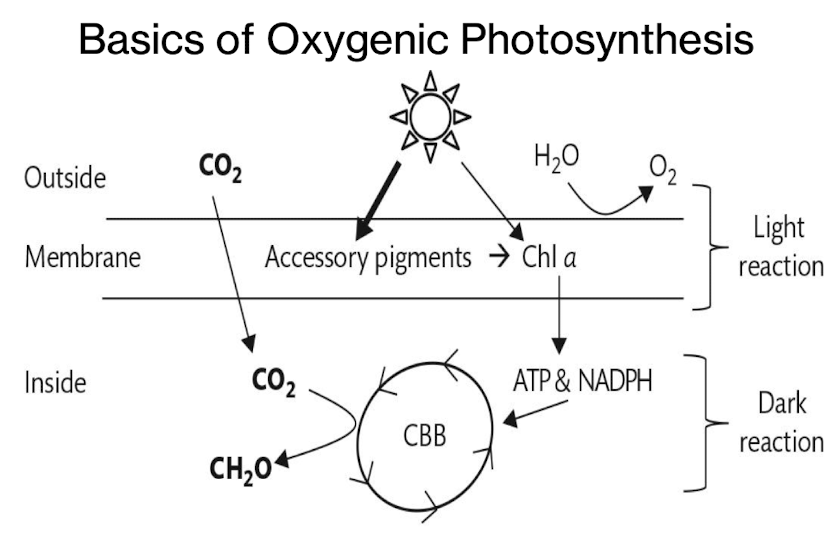
What happens in oxygenic photosynthesis?
Light reaction: Splits water → O₂ + ATP + NADPH
Dark reaction: Calvin–Benson–Bassham cycle fixes CO₂ → CH₂O
Equation summary of photosynthesis + respiration
Photosynthesis: CO₂ + H₂O + light → CH₂O + O₂
Respiration: CH₂O + O₂ → CO₂ + H₂O
Which pigment is universal in oxygenic phototrophs?
C. Chlorophyll a
Why do microbes use different pigments?
Adaptation to light quality in different environments
Pigments include chlorophyll a, carotenoids, phycoerythrin, bacteriochlorophylls
Which pigment absorbs strongly in the green region?
B. Carotenoids
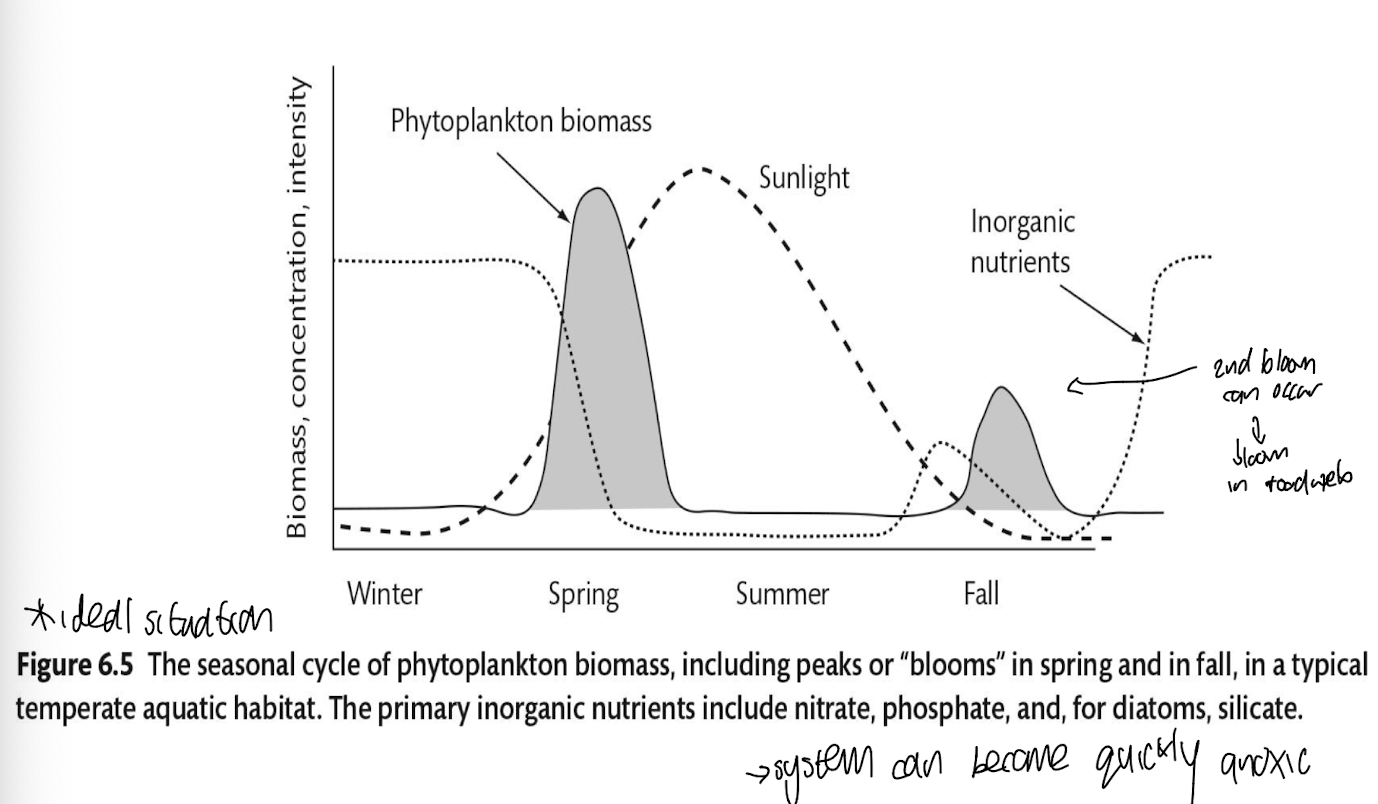
What are the different stages in the seasonal phytoplankton cycle?
Spring bloom: High nutrients + increasing light
Summer: Nutrient depletion → decline
Autumn bloom: Mixing restores nutrients
What is meant by NPP vs GPP?
NPP (Net Primary Production) is the amount of organic matter produced by photosynthesis minus the organic matter consumed by respiration, while GPP (Gross Primary Production) is the total amount of OM produced by photosynthesis.
NPP = GPP – Respiration
Which biome has the highest NPP per m²?
C. Wetlands
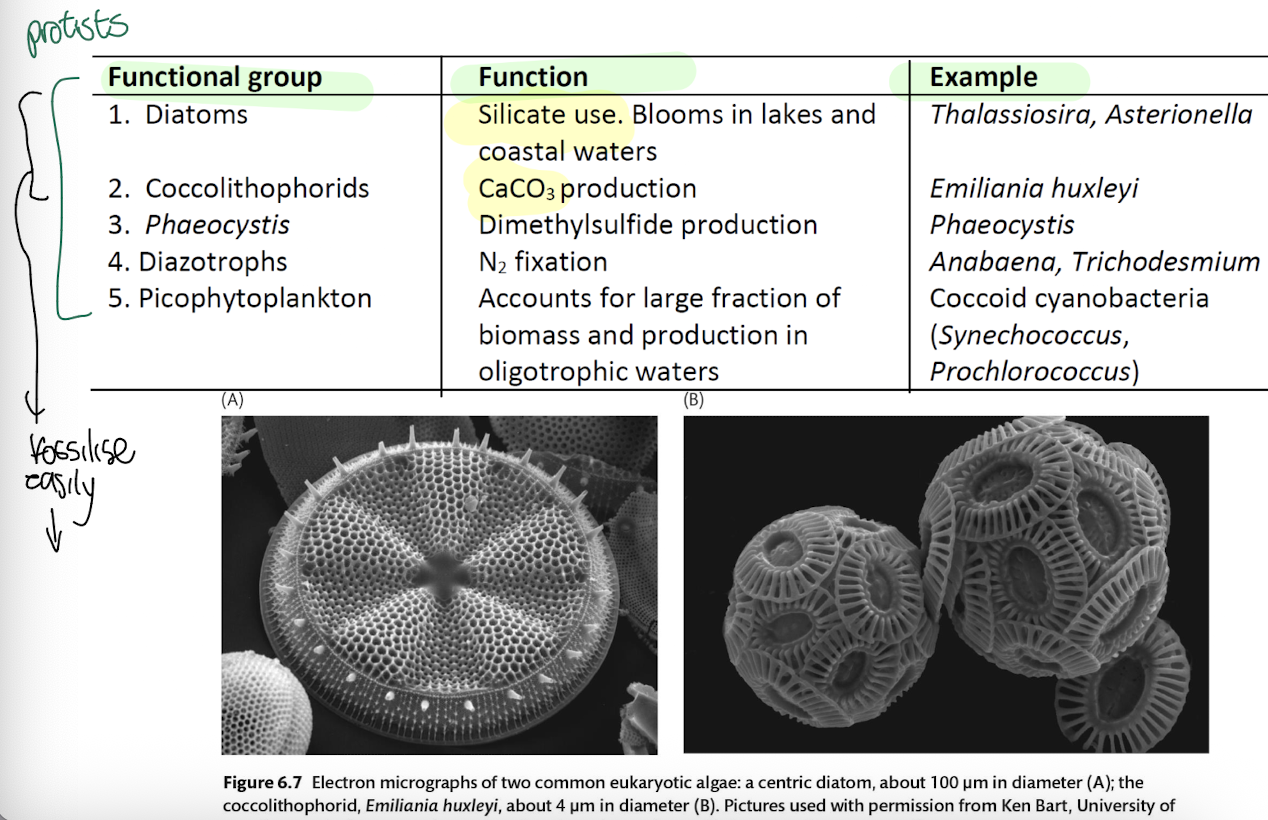
What are the 5 Major phytoplankton groups?
Diatoms: Silicate users; bloom-formers
Coccolithophores: CaCO₃ producers
Phaeocystis: Dimethylsulfide producers
Diazotrophs: N₂-fixers (Anabaena, Trichodesmium)
Picophytoplankton: Synechococcus, Prochlorococcus
2 main Cyanobacteria types?
Filamentous: Anabaena, Trichodesmium (N₂ fixation)
Coccoid: Synechococcus, Prochlorococcus (dominant in oligotrophic oceans)
Which cyanobacterium is a major N₂ fixer in marine systems?
B. Trichodesmium
Key features of microbes capable of anoxygenic photosynthesis?
Uses H₂S, S⁰, S₂O₃²⁻, H₂ as electron donors
Produces no O₂
Pigments: bacteriochlorophylls (a, b, c, d, e, g)
Occurs in anoxic, sulfur-rich environments
3 main Carbon fixation pathways:
RPP (Calvin cycle) – purple bacteria
RCA (reverse TCA) – green sulfur bacteria
3‑HP cycle – green non‑sulfur bacteria
Which group uses the reverse TCA cycle?
B. Green sulfur bacteria
Who performs most respiration, plants or microbes?
Microbes dominate respiration in both aquatic and terrestrial systems, account for 50% or more of global respiration
Small size fractions (<2 µm) contribute disproportionately
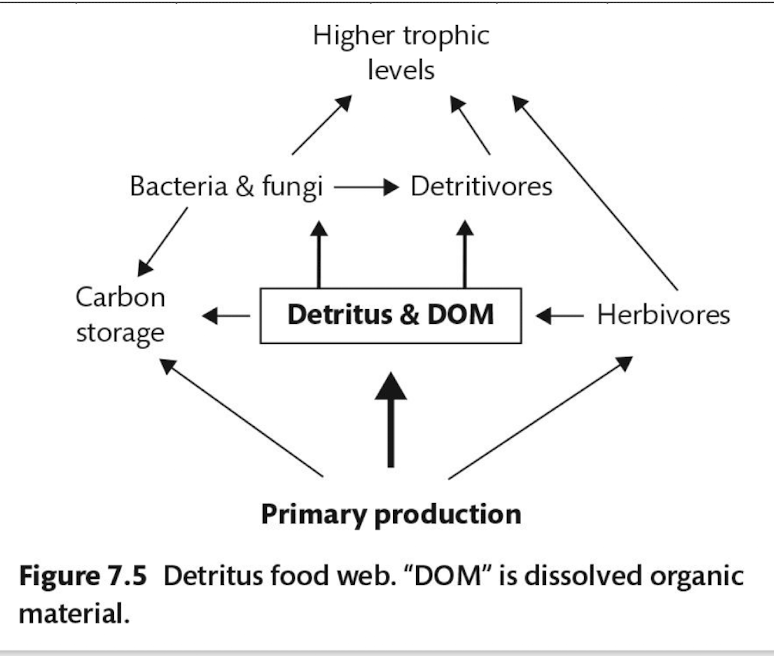
Composition of detritus in terrestrial vs aquatic systems:
Terrestrial: High lignin, high C:N (e.g., pine wood C:N = 640)
Aquatic: High protein, low C:N (e.g., diatoms C:N = 6.7)
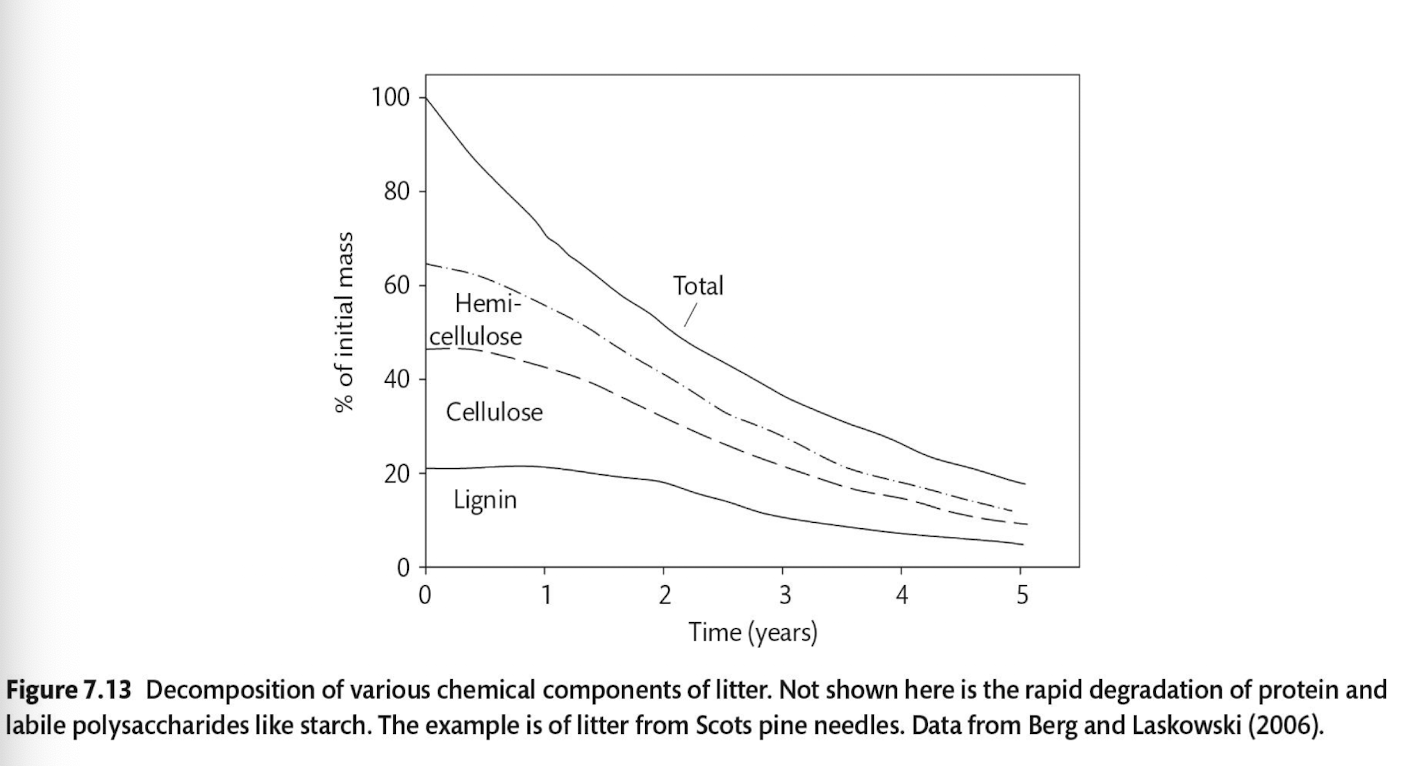
Which component of detritus decomposes slowest?
D. Lignin
4 key hydrolases involved in decomposition:
Proteins: Aminopeptidase, endopeptidase, carboxypeptidase
Chitin: Chitinase
Peptidoglycan: Lysozyme
Cellulose: Cellulase
The fluorogenic substrate Leu-MCA is digested by →
Leu‑MCA → aminopeptidase
The fluorogenic substrate MUF‑phosphate is digested by →
MUF‑phosphate → phosphatase
The fluorogenic substrate MUF‑cellobioside is digested by →
MUF‑cellobioside → cellulase
What is the priming effect?
Plant roots release C‑rich exudates & stimulate microbial degradation of SOM
Leads to increased NH₄⁺ mineralisation
Grazers release additional NH₄⁺
What is the immediate effect of root exudates?
B. Increased SOM mineralisation
Major decomposers
Bacteria: dominate simple soils, aquatic systems
Fungi: dominate lignin‑rich, forest soils
Which group dominates decomposition of lignin?
B. Fungi