Cognitive Neuroscience Quiz 1 (only outline)
 Call Kai
 Learn
Learn Practice Test
 Spaced Repetition
 Match
Match Flashcards
 Knowt Play
1/60

There's no tags or description
Looks like no tags are added yet.
Name | Mastery | Learn | Test | Matching | Spaced | Call with Kai | Chat |
|---|
No analytics yet
Send a link to your students to track their progress
61 Terms
Cognitive Neuroscience integrates what 4 disciplines
neurology
neuroscience
cognitive psychology
computer science/artificial intelligence
neurology
function and pathology of the nervous system
neuroscience
study of the structure and function of all aspects of the nervous system
includes:
cellular (neurons, glial cells)
molecular (neurotransmitters, genes, hormose)
systems (vision, motor)
Each studied in terms of anatomy, physiology, and chemistry
cognitive psychology
how the mind processes information
provide detailed analysis of how information is processed when we perform a complex task
cog psych models can be proposed without considering biological issues
computer science/artifical intelligence
how can computers perform tasks?
can we simulate cognition with neural-like models?
Behavioral Neurology
emphasis on linking regions of the brain with different behaviors and cognitions
important for clinical eval and treatment
accomplished through task-based approaches to characterize the precise nature of deficits
GOLD STANDARD for testing which brain regions are critical for testing which brain regions are critical for a given function
Cognitive Neuroscience
interdisciplinary effort to uncover the neural mechanisms of cognition
interaction is bidirectional
Cognitive Neuroscience Goal
Characterize how various cognitive processes are implemented in the brain
What brain areas are important for converting visual words in phonological representations?
How does it do this?
How does the brain buffer the contents of working memory against distraction?
Cognitive Neuroscience has emerged from these developing methods:
Electrophysiology
single unit recordings in awake monkeys
electroencephalograpy (EEG, ERP)
Neuroimaging
PET
fMRI
Lesion
experimental in monkeys
treatment/accidents in humans
transcortical magnetic stimulation (TMS)
Computational Models
Camillo Golgi
1873: developed a silver stain that allowed visualization of individual neurons
believed vrain was a continuous mass of tissue with a common cytoplasm
Santiago Ramon y Cajal
The Neuron Doctrine (1889)
Used Golgi’s stain to show that the brain was made up of individual nerve cells linked together by long extensions
Soma
cell body

Axon
transmitting

dendrite
receiving process

Synapse
gap between neurons where transmission takes place

In vertebrates, neurons receive inputs from ___ and pass information down the ___ towards the ___
dendrites
axon
nerve terminals
Glial cells roles
structural and metabolic support
produce insulation of axons (myelin)
scavengers; remove debris after injury or cell death
aid in the maintenance and clean up of extracellular ions and neurotransmitters
during development, guide the migration of neurons
form tight junctions with endothelial cells that line capillaries and venules
Neuronal Communication
electrical impulses carry signals within a neuron
chemical transmitters carry signals between neurons
Membrane potential
difference in electrical charge between the inside and outside of a neuron
around -70mV in a resting neuron
postsynaptic potential
a temporary change in the electrical polarization of a neuron's membrane caused by the flow of ions when neurotransmitters bind to receptors on the postsynaptic cellr
receptor potential
a type of local electrical voltage change that happens in a sensory cell when it detects an outside stimulus like light, sound, or touch
Summation of post synaptic potential leads to action potentials
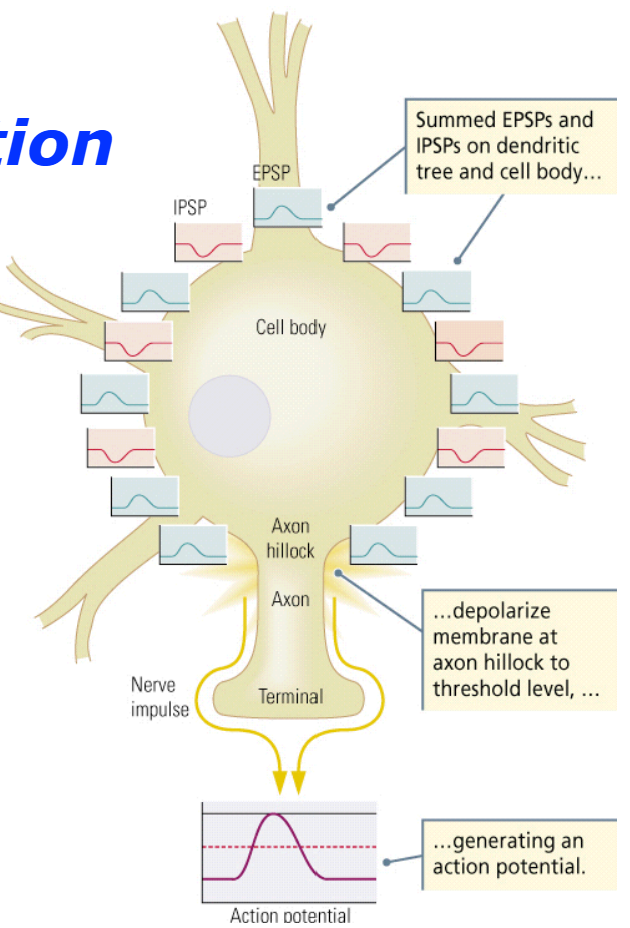
Action potential is conducted better in myelinated axon
unmyelinated axons allow leakage of voltage
output neuronal signaling

neurotransmitters
neurons can produce several NTs
synthesized in cell body or synaptic terminals
released from synaptic vesicles by presynaptic neuron
binds to receptors on postsynaptic neuron
excitatory neurotransmitters
glutamate (Glu)
acetylcholine (Ach)
Inhibitory neurotransmitters
Gamma-aminobutyric acid (GABA)
Glycine (Gly)
Neuromodulators
modulate activity in large regions rather than strictly exciting/inhibiting specific postsynaptic neurons:
dopamins (DA) - origin ventral tegmental area (VTA)
norepinephrine (NE) - Locus coeruleus
serotonin (5-HT)
originate from cell bodies in the midbrain
action potential
a brief, rapid change in the voltage across a cell membrane that lets neurons and muscle cells send electrical signals
common neuromodulators
acetylcholine - facilitates learning and memory
norepinephrine - enhances vigilance and preperation for action
dopamine - facilitates movement, reinforces behaviors, helps keep information in short term (working) memory
serotonin - inhibits some behaviors, many other effects
brain orientation
anterior/rostral - front
posterior/caudal - tail, back
medial - middle
lateral - side
dorsal/superior - above
ventral/inferior - below

Dorsal view

Ventral view
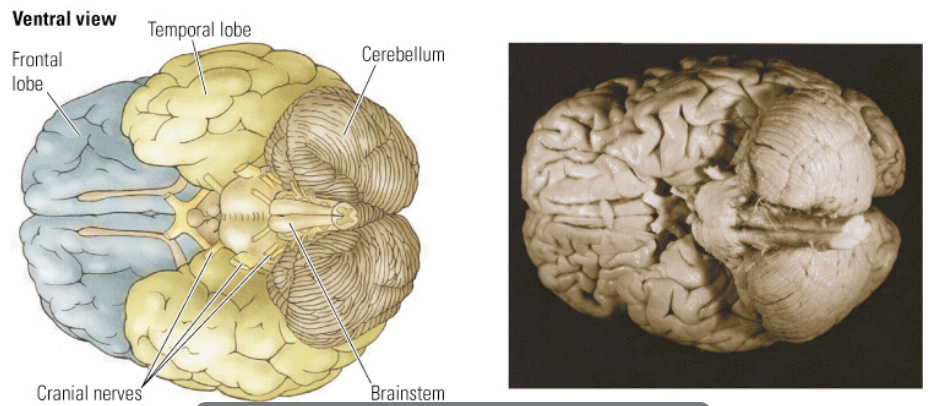
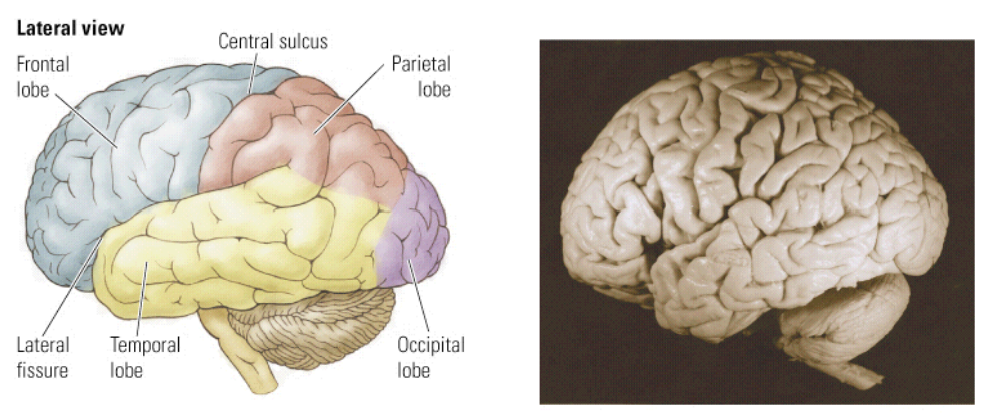
lateral view
medial view

4 lobes of the cerebral cortex
frontal. parietal, occipital, temporal

sulci and gyri
sulcus - depression in brain
gyrus - folds

gray matter and white matter
gray matter - cells make it gray, processes information
white matter - myelin makes it white, routes signals between gray matter
gyral anatomy
ce

central culcus
a landmark
boundary of motor and sensory cortices

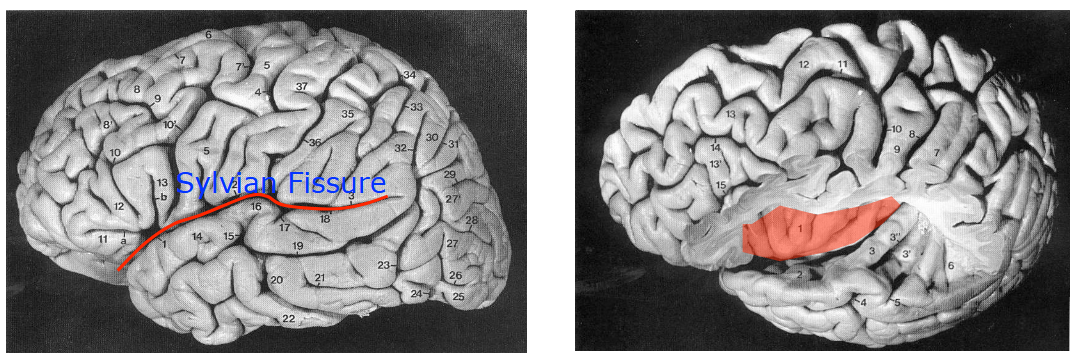
sylvian fissure
separates the temporal lobe from parietal and frontal lobes insula is buried within it
6 cortical layers
layer 4 - main input layer
layer 5 - main output layer

Line of gennari
a visible white stripe of nerve fibers running through the primary visual cortex of the human brain
in the fourth layer of cerebral cortex
Brodmann’s Map
a system that divides the mammalian cerebral cortex into distinct regions based on cell morphology, density, and layering (cytoarchitecture)

retinotopy in primary visual cortex
injected radioaztive glucose into bloodstream developed a photograph in the brain
map of retina produced in brain

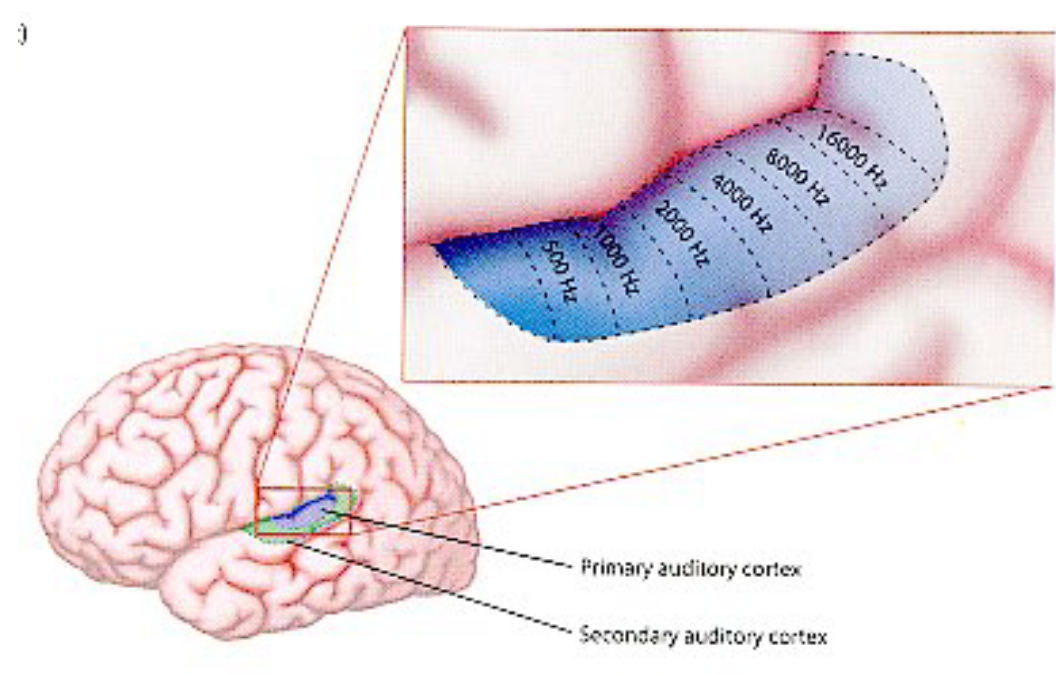
tonotopy
the organized mapping of sound frequencies
Motor cortex topography
movement

Somatosensory cortex topography
the conscious or unconscious process of perceiving bodily inputs such as touch, pain, temperature, vibration, and body position

experimental lesions in animals
tissue removal
tissue destruction
electrical current
excitoxins
neurotoxins
reversible leasions
cryogenic depression
injection of drugs
tissue destruction with excitoxins
kainate, ibotenic acid, and NMDA
advantages - controlled extend of spreading (very precise) and selectively kill neurons while sparing fibers
disadvantages - non reversible
tissue destruction with neurotoxins
6-hydrpxydopamine (6-OHDA)
advantages - selective destruction of dopamine neurons, reduces dopamine in specific brain areas up to 90% for up to 18 months
disadvantages - non reversible
cryogenic depression (cooling)
advantages - fully reversible, can be applied many times, dulls synaptic activity near 20 degrees C, but does not affect fiber tracts in vicinity until below 10 degrees C
disadvantages - cooling spreads, not very localizable, prolonged exposure can damage tissue
pharmacological inactivation
Na+ channel blockers - block action potential conduction. only type that can affect fibers
inhibitory neurotransmitters - hyperpolarize neurons and drastically reduce probability of firing. Inactivate neuronal cell bodies, where the receptors are located and NOT passing axons
state of the artn
neurological patient studies
used to make inferences about brain behavior relationships
especially to test for necessity
stroke
arteriosclerosis - thickening walls of arteries
aneurysms - ballooning in wall of artery
coup brain injury
a type of trauma where the brain is damaged directly below the exact point of impact
contracoup trauma
damage to the brain that occurs on the side opposite the initial point of impact, caused when the moving brain slams against the inner wall of the skull
design flaws of skul?
ethmoid ridge and sphenoid ridge are sharp. brain often injured under these ridges because they get shredded
single dissociation
happens when brain damage or a lesion disrupts one cognitive function (Function A) while leaving another function (Function B) intact
double dissociation
method used to identify specialized functions by comparing two patients
TMS
transcranial magnetic stimulation
a non-invasive medical treatment that uses magnetic pulses to stimulate nerve cells in specific areas of the brain