Biology
 Call Kai
 Learn
Learn Practice Test
 Spaced Repetition
 Match
Match Flashcards
 Knowt Play
1/186

Earn XP
Description and Tags
MCAR
Name | Mastery | Learn | Test | Matching | Spaced | Call with Kai | Chat |
|---|
No analytics yet
Send a link to your students to track their progress
187 Terms
Nucleoid
DNA location for prokaryotes
Nucleolus
Creates ribosomes
Peroxisomes
Break down waste
Rough ER
Creates proteins from mRNA and processes them
Smooth ER
Creates lipids and detoxifies
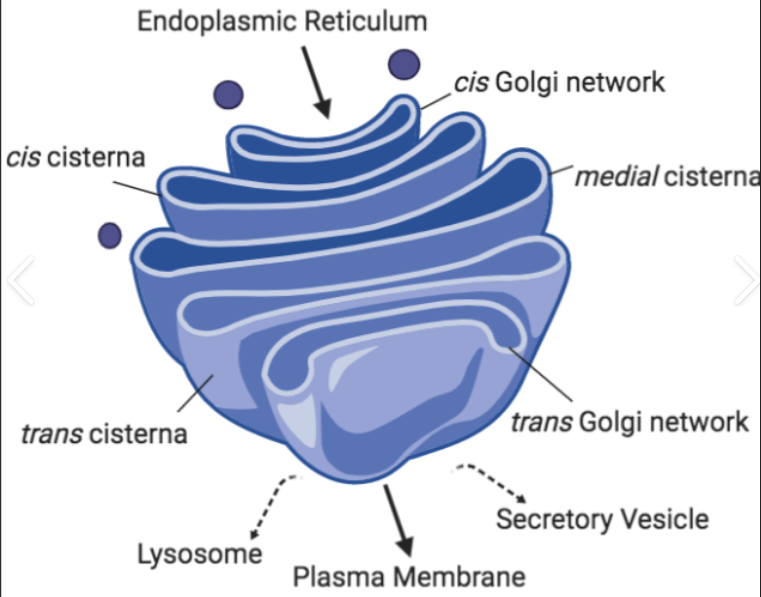
Golgi body
Modify/sort proteins (COPII brings vesicles from ER to golgi and COPI brings vesicles from golgi to membrane)
Centrioles
9 microTUBULUES that pull chromosomes apart
Lysosomes
Recycling center
Plasmids
Circular DNA in prokaryotes
Microfilaments are made of _ and do what?
Actin, act like muscles
Microtubules are made of _ and do what?
TUBulin, support/highway
Intermediate filaments are made of _ and do what?
Keratin and Desmin, adhesion/anchoring/structure against tension
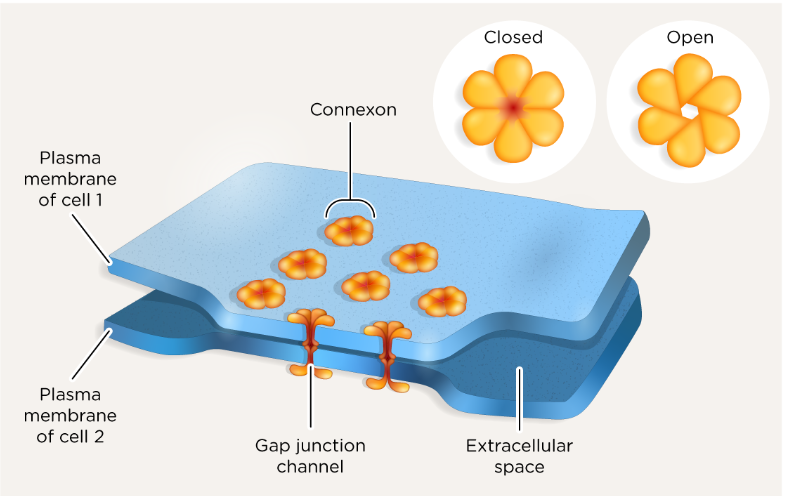
Gap junctions allow for
cell to cell communication through connexons, water/some solutes/signaling NO PROTEINS
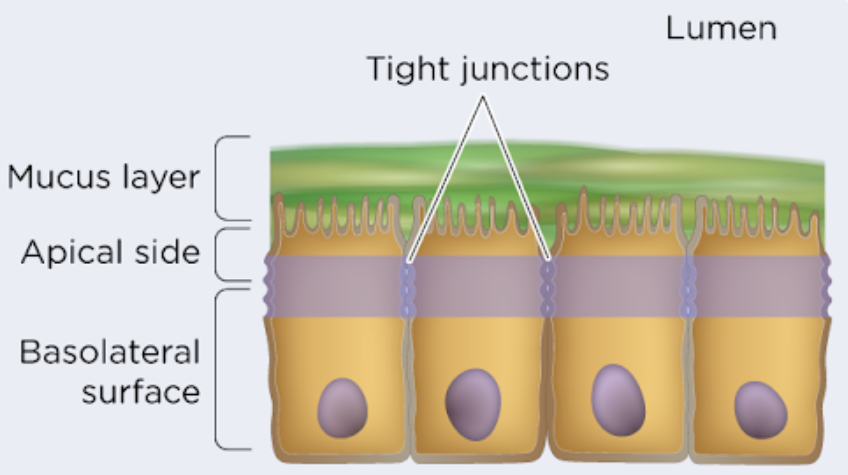
Tight junctions prevent
solutes from leaking between cells, also creates a voltage difference
Desmosomes allow
cells to withstand mechanical stress, velcro
Parenchyma refers to the
functional parts of an organ
Simple:
Stratified:
Pseudostratified:
Cuboidal:
Columnar:
Squamous:
Simple: 1 layer.
Stratified: 2+ layers.
Pseudostratified: 1 layer (looks mult, but really just 1).
Cuboidal: Cube shape.
Columnar: Long and narrow.
Squamous: Flat
What counts as connective tissue
Bone, cartilage, tendon, blood
Shapes of bacteria
Bacilli: rod
Cocci: sphere
Spirilla: spiral
Obligate Aerobe:
Obligate Anaerobe:
Facultative Anaerobe:
Aerotolerant Anaerobe:
Obligate Aerobe: needs O2.
Obligate Anaerobe: Dies in O2.
Facultative Anaerobe: Toggle between
Aerotolerant Anaerobe: Does not use O2 but tolerates it.
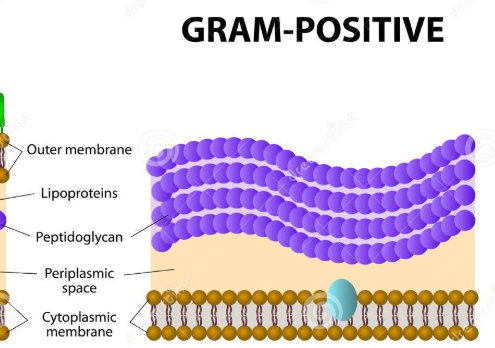
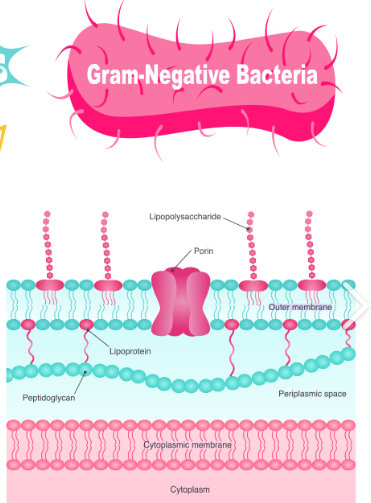
Gram positive
PURPLE, super fat peptidoglycan wall (no outer membrane)
Gram negative
PINK-RED, skinty peptidoglycan wall and has an outer membrane
Transformation:
Conjugation:
Transduction:
Transposons:
Transformation: info comes from environment
Conjugation: sex pili/conjugation bridge.
F+ → F-
or Hfr → recipient
Transduction: bacteriophage moves genetic info
Transposons: can insert/remove themselves.
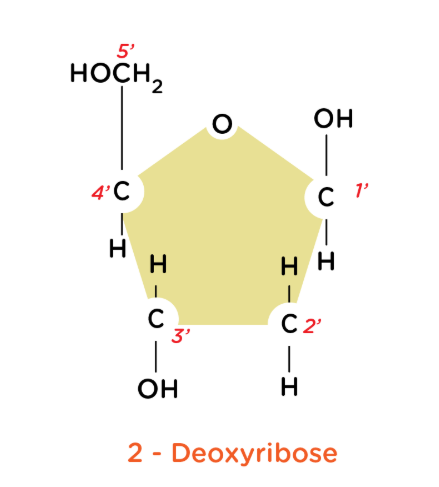
where on the pentose sugar are bases and phosphate group bound to?
Phosphate group binds to 5’
4’ is H
3’ is a hydroxyl group
2’ is an H on deoxyribose but OH in ribose
Nitrogenous base binds to 1’
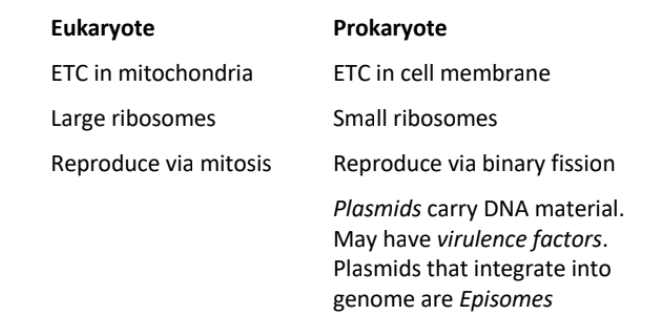
Difference in eukaryote and prokaryote (ETC, ribosome size, reproduction, DNA look)
Capsid:
Envelope:
Virion:
Capsid: Protein Coat.
Envelope: Some have lipid envelope.
Virion: virus particles.
Bacteriophage
virus for bacteria
single strand positive and negative sense
Positive Sense: Can be translated by cell.
Negative Sense: RNA replicase must make a complimentary strand, which can then be translated.
retrovirus
single strand RNA which needs reverse transcriptase to make DNA
lytic vs lysogenic
lytic is evil and will explode the cell
lysogenic will insert itself into genome and activate upon stress
viral genome can be
DNA or RNA
Double or single
Prions
evil proteins caused by misfolding
Viroid
plant virus
Cell cycle steps
G1: Make mRNA and proteins
G0: will enter if it DOES NOT need to divide
G1 Checkpoint: Cell decides if it should divide. P53 in charge
S: DNA replicated
G2: Cell growth. Make organelles
G2 Checkpoint: Check cell size & organelles
M: Mitosis and cytokinesis
Mitosis steps
PMAT
Prophase → envelope dissolves and chromatin condenses into chromosomes
Metaphase → Align in middle
Anaphase → Sister chromatids are pulled apart
Telophase → nuclear envelope reforms
Cytokinesis → cleavage of the two newly made cells
Positive growth signals (3)
CDK + cyclin make complex
Rb phosphorylated to Rb + P
Rb changes shape releases E2F
Cell division continues
Negative growth signals
CDK inhibitor block phosphorylation of Rb
E2F is still attached
cell cycle stops
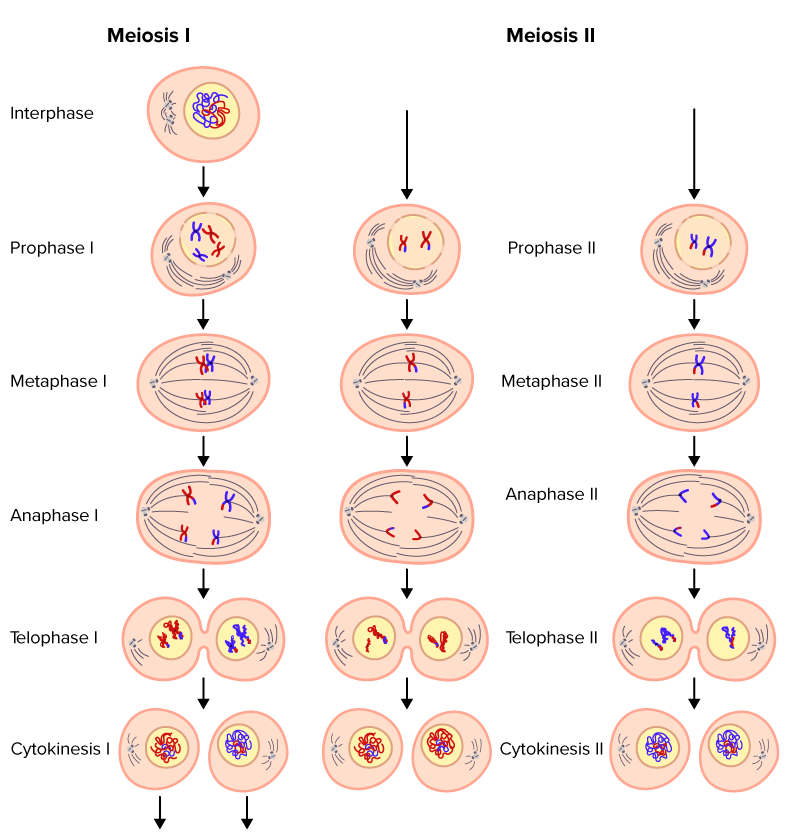
Meiosis
Prophase I: Chromosomes condense, nuclear membrane dissolves + crossing over occurs.
Metaphase I: Spindles connect at centromeres and align them along the middle
Anaphase I: Homologous pairs move to opposite sides. This is
disjunction.
Telophase I: Chromosomes decondense cell
divides (cytokinesis), forms two haploid daughter cells of unequal sizes.
Prophase II: Chromosomes condense + centrosomes
move to opposite poles
Metaphase II: Spindle fibers from opposing centrosomes attach to chromosomes and align them in middle.
Anaphase II: Spindle fibers separate the sister chromatids, chromosomes move to opposite poles.
Telophase II: Chromosomes decondense, nuclear membrane reforms, cells divide
(cytokinesis) to form four haploid daughter cells.
Nondisjunction
chromatids dont separate properly during anaphase
What stage does crossing over occur?
Prophase I
What stage does law of segregation apply?
Anaphase I
What is law of segregation
Alleles will separate during meiosis so that the child will only have one from each parent (Dominant or recessive)
X linked disorder
SEEN IN MALES
women carry
Y chromosome
SRY gene activates man stuff
Semen is made of
sperm + seminal fluid
What cleans out urethra in males
bulbourethral gland
what do seminal vesicles and prostate do
make alkaline fluid so sperm can survive the acidic vagina
seven up sperm pathway
Seminiferous tubules: sperm made here, kids eat free at sertolli cells
Epidiymis: stores sperm
Vas deferens: control movement of bawls (testes)
Ejaculatory duct:
Urethra:
Penis:
Menstrual cycle
Split into follicular and luteal phase
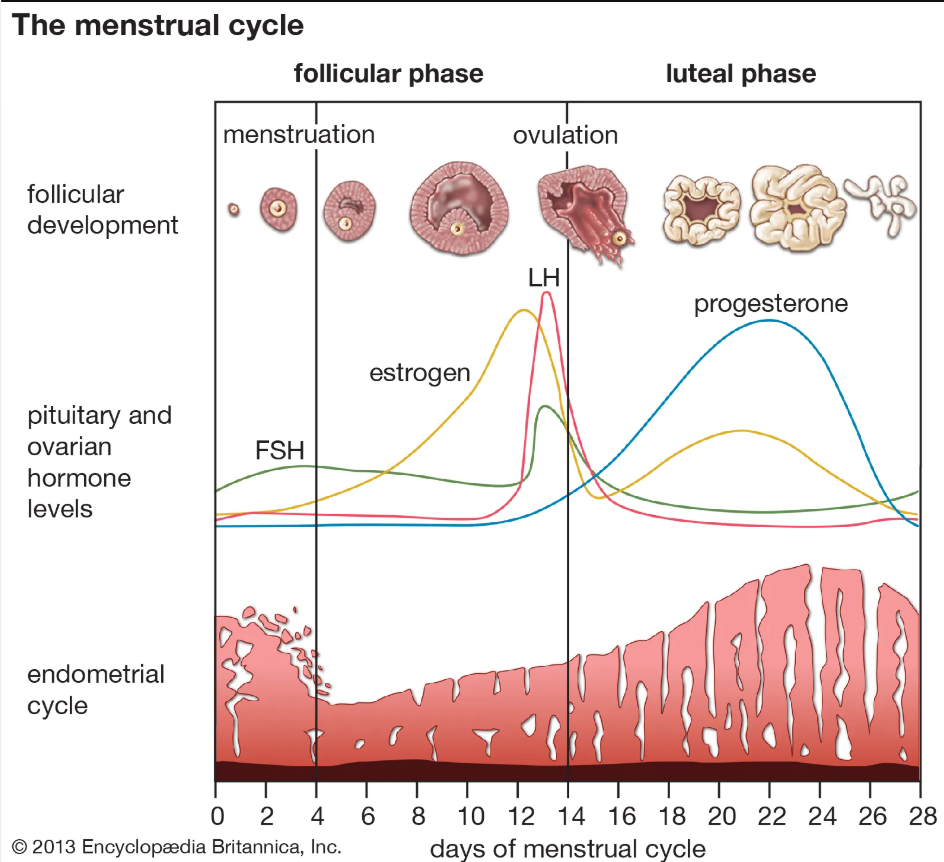
Describe the start and end of follicular phase
Start
FSH high as egg develops
LH low
preovulation/menstruation ovarian phase
Estrogen gradually increases
Progestogen low
0-7 menses uterine phase
End
FSH decreases as egg is released
LH at all time high to induce ovulation
ovulation ovarian phase occurs
Estrogen at all time high
Progestogen low
7-14 proliferative uterine phase
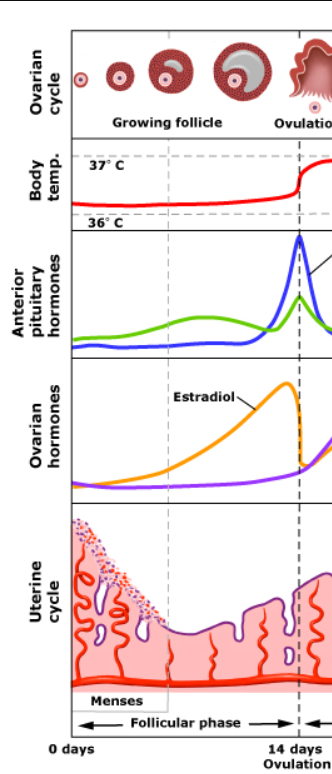
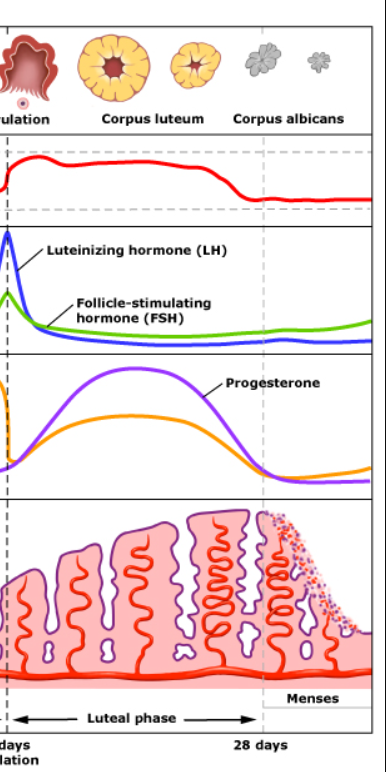
Describe the start and end of luteal phase
Start
FSH low
LH low
postovulatory ovarian phase
Estrogen gradually decreases
Progestogen at all time high
14-28 secretory uterine phase
End
FSH slowly increases to prepare next cycle
LH low
postovulatory phase
Estrogen gradually decreases
Progestogen slowly decreasing
14-28 secretory uterine phase
Where are eggs made?
ovaries but really follicles within them
What thickens uterine wall and reproductive tract
estrogen answers to FSH
What protects the endometrium
Progesterone answers LH
What does Follicle Stimulating Hormone do in males vs females?
men: starts spermatogenesis tells sertolli cells to feed them
women: development of ovary follicles start
What does Luteinizing Hormone do in males vs females?
men: interstitial cells have cells make testosterone
females: ovulation
Stages of embryo
Fertilization
Morula
Blastula
Gastrulation
Neurulation
(Five monkey babies get newshoes)
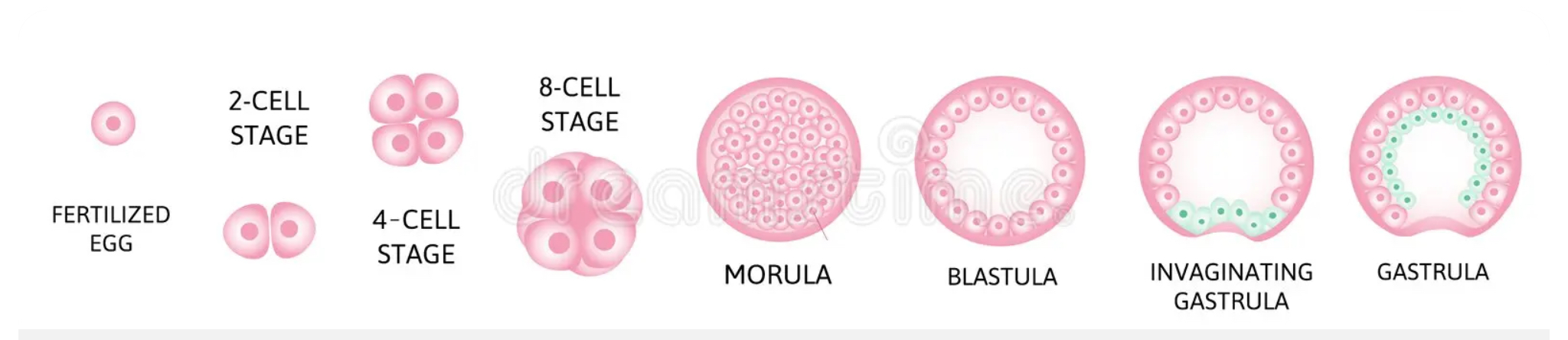
What stage of embryo development is when there is a ball/mass of cells?
Morula
Ectoderm becomes
Nervous system and attract stuff like skin, nails, hair, mouth, booty hole
Mesoderm becomes
Muscoskeleton so circulatory system, gonads, adrenal cortex
Endoderm becomes
Endocrine glands, GI tract, respiratory tract, bronchi, bladder, stomach
Names for twins
Fraternal= dizygotic
Identical = monozygotic
Cell specialization
Determination = ok this is the cell I’m gonna become
Differentiation= ok I am becoming the cell I chose
What is induction
Cells influence the fate of other cells
Autocrine signaling
Cell signals itself
Paracrine
Cell talks to nearby cells through diffusable messengers
Juxtacrine
Cells talks cell to cell
Endocrine
Cells talk through bloodstream
Does umbilical artery or vein give the baby oxygen?
Umbilical vein
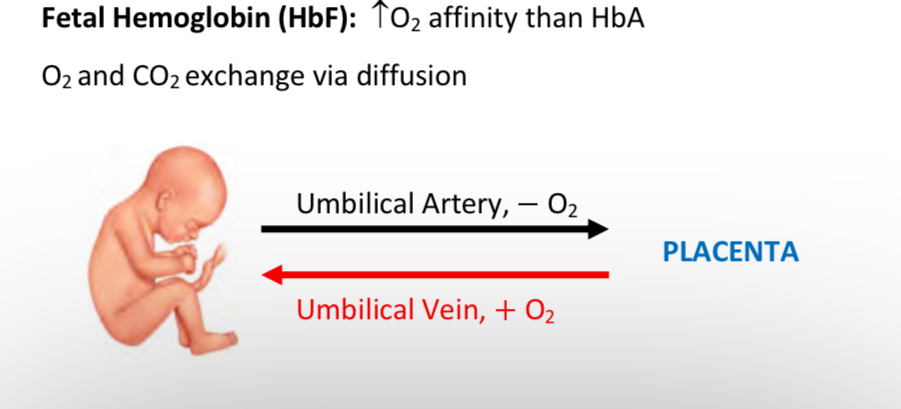
Pathway fetal shunts skip the lungs
Foramen ovule: open R to L atrium
Ductus arteriousus: pulmonary artery to aorta
Pathway fetal shunts skip the liver
Umbilical vein to inferior vena cava
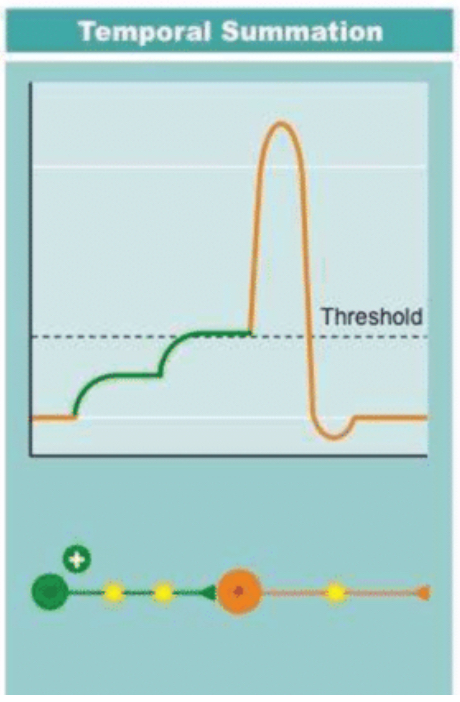
Temporal summation
Tap salt shaker twice
Multiple action potentials from one source
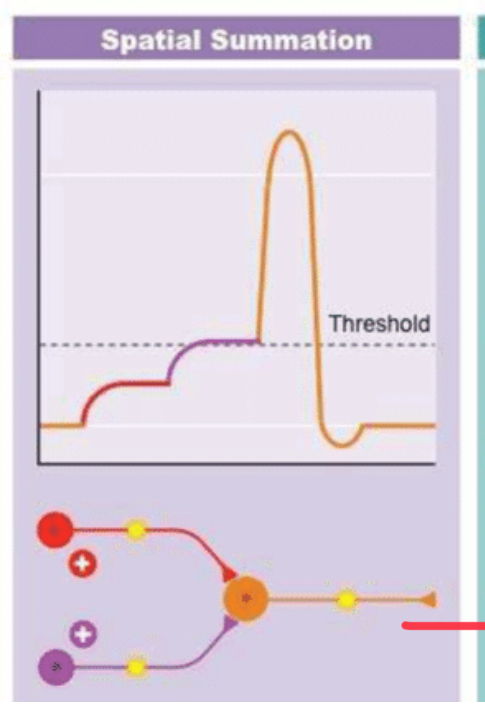
Spatial summation
Tap salt and pepper shaker
Action potentials from different sources
Sodium potassium ATP pump
3 Na+ OUT
2 K+ IN
1 ATP used
Describe action potential graph
-70 mV resting
When a stimulus goes above threshold of -55 mV it triggers cascade
Depolarization is Na+ channels opening bringing sodium in to make membrane positive
+40 is action potential
Repolarization is K+ channels open removing potassium to make membrane negative
what is the blood brain barrier made of?
astrocytes
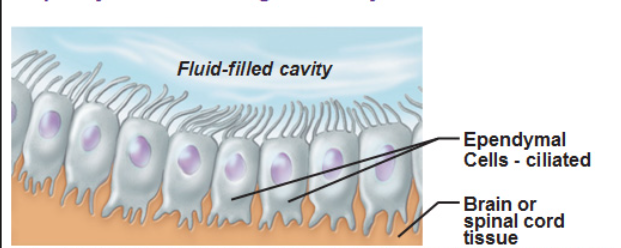
what makes up the barrier between cerebrospinal fluid and the fluid of the CNS
ependymal cells
what does microglia do
digest waste in CNS
schwann cells make what and where?
myelin in PNS
oligodendrocytes make what and where?
myelin in CNS
white matter consists of
myelinated sheaths
gray matter consists of
cell bodies and dendrites
brain
inside white
outside gray
spinal cord matter (in & out)
inside gray
outside white
monosynaptic reflex arc
sensory neuron → motor neuron
polysynaptic reflex arc
sensory → interneuron → motor
synapse pathway
action potential arrives at the terminal
voltage gated Ca2+ channels open (lets calcium in)
Ca2+ allows synaptic vesicle (holding neurotransmitters) to fuse with the membrane
neurotransmitters diffuse out
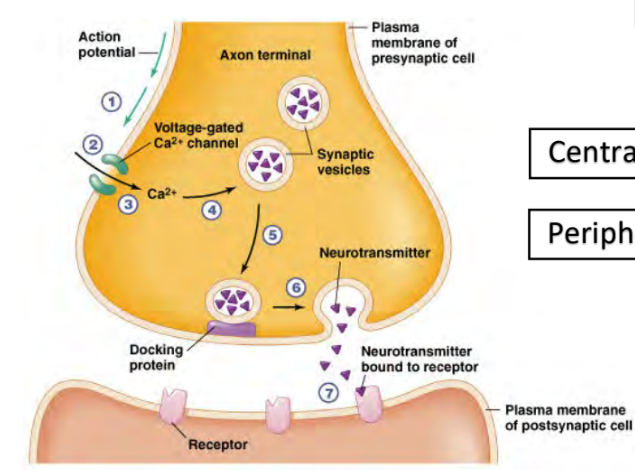
how are neurotransmitters removed from the synaptic cleft
broken down by enzymes
reuptake by the cleft
diffusion out of cleft
PNS splits into
somatic - chose to → sAnsory and motEr (afferent & efferent)
autonomic- auto → sympathetic & parasympathetic
autonomic nervous system splits into
sympathetic → fight/flight
parasympathetic → rest/digest
Preganglionic vs postganglionic
Preganglionic: originate from CNS
postganglionic cell bodies in the ganglia extend to target organs
Sympathetic nervous system neurotransmitters
Preganglionic: Acetylcholine
Postganglionic: Epi/Norepi
Parasympathetic nervous system neurotransmitters
Preganglionic: Acetylcholine
Postganglionic: Acetylcholine
Steps of making peptide hormones (4)
sliced off large polypeptide
Golgi modifies + activates hormones
Golgi puts in vesicle to leave out the cell
POLAR- must leave thru G-protein coupled receptor
(made from amino acids)
Steps to make steroid hormones
Carried to destination by proteins
NONPOLAR- can go thru membrane
Take direct action on DNA
Guanosine-protein coupled receptor steps
1 - Ligand binds to GPCR
2 - GPCR undergoes conformational change
3 - Alpha subunit exchanges GDP for GTP
4 - Alpha subunit dissociates and regulates target proteins
5 - Target protein relays signal as 2nd messenger and triggers cascade response
6 - GTP is hydrolyzed to GDP, everything returns to its original place, ready to repeat the sequence
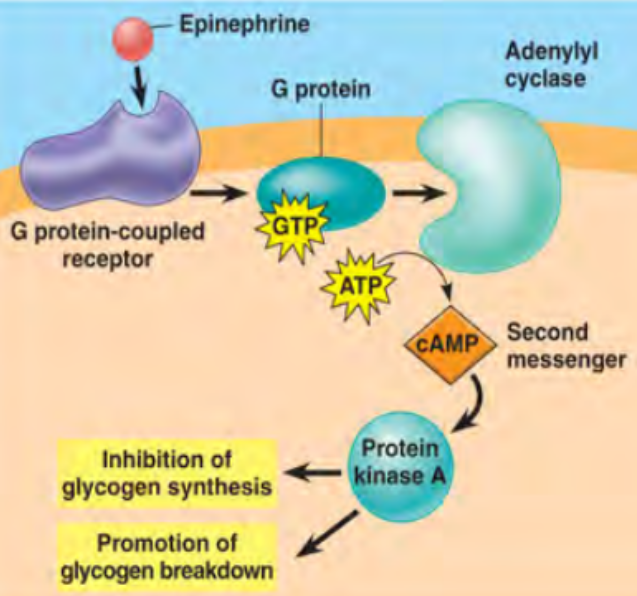
Direct vs tropic hormones
Direct: ac directly on tissue/organ ex. Insulin
Tropic: can only affect endocrine tissues
The 1 vs 2 diabetes
1 u don’t make glucose
2 insulin receptors don’t work
Hypothalamus what it does and hormones it makes (6) ACDGGT
Regulates fight, flight, food, fuqq
Gonadotropin-Releasing Hormone: signal for release FSH and LH
Growth Hormone-Releasing Hormone: signal for release Growth Hormone
Thyrotropin-Release Hormone: signal for release thyroid stimulating hormone
Corticotropin-Releasing Hormone: signal for release adrenocorticotropic hormone from antpituitary
Dopamine: signal for catecholamine increased for rewards
ADH/Oxytocin: made in hypothalamus released from behind pituitary
Ant. (front) pituitary what it does and hormones it makes (7) AEFGLPT
Regulates stress, growth, reproduction, lactation
Follicle Stimulating Hormone: starts spermatogenesis in men and ovarian follicle stim in women
Luteinizing Hormone: induces ovulation in women and testosterone in men
Adrenocorticotropic Hormone: release of cortisol
Thyroid stimulating hormone: tells thyroid to make Thyroxine t4, and Triiodothyronine t3 for metabolism
Prolactin: milk production
Endorphins: decrease pain
Growth Hormone (somatotropin): growth and cell reproduction