test 1: electrostatics & potential mcq
 Call Kai
 Learn
Learn Practice Test
 Spaced Repetition
 Match
Match Flashcards
 Knowt Play
1/15

There's no tags or description
Looks like no tags are added yet.
Name | Mastery | Learn | Test | Matching | Spaced | Call with Kai | Chat |
|---|
No analytics yet
Send a link to your students to track their progress
16 Terms
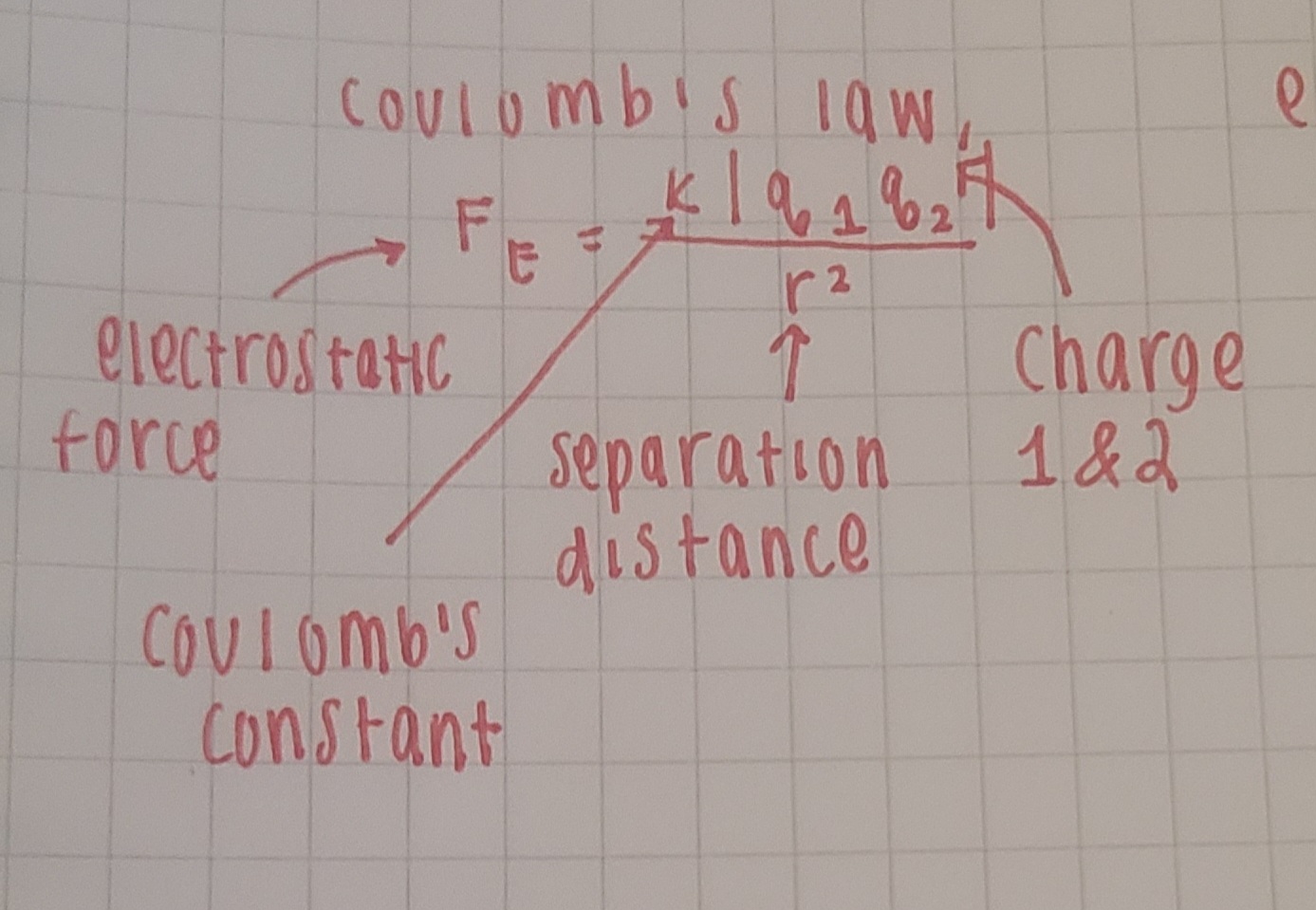
what equation do you use here? what is the answer?
“two point charges of +4.0μ and -2.0μC are separated by 0.30m.
the magnitude of the electric force between them is closest to…”
A) 0.40N
B) 0.80N
C) 1.6N
D) 0.80N
E) 2.4N
coulomb’s law → 0.80N
B) 0.80N
what equation is being used here? what is the answer?
“a (+) test charge is placed in a uniform electric field directed toward the east. the electric force on the charge is…”
A) west
B) east
C) north
D) south
E) zero
electric force,
B) east
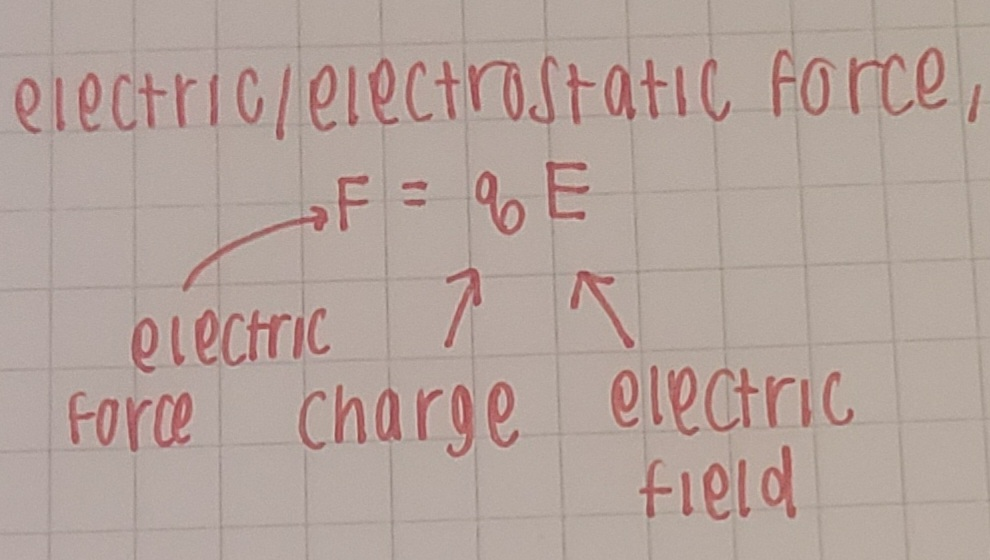
which way does a (+) charge move when it is placed in an electric field?
which way does a (-) charge move when it is placed in an electric field?
it moves in the direction of the field
it moves in the opposite direction of the field
when a (+) charge is placed in an electric field, it moves from a ___ potential to a ___ potential
when a (-) charge is placed in an electric field, it moves from a ____ potential to a ____ potential
(+): high → low potential
(-): low → high potential
when a (+) charge is placed in an electric field, what happens to its electrical potential energy?
when a (-) charge is placed in an electric field, what happens to its electrical potential energy?
(+): electrical potential energy decreases
(-): electrical potential energy increases
when a (+) charge or a (-) charge is placed in an electric field, what happens to its kinetic energy?
(+): kinetic energy increases
(-): kinetic energy increases
what equation is being used here? what is the answer?
"a proton is released from rest in a uniform electric field. which statement is correct?”
A) it moves opposite the electric field
B) it remains at rest
C) its kinetic energy decreases
D) it accelerates in the direction of the electric field
E) its electric potential energy increases
electric force,
D) it accelerates in the direction of the field
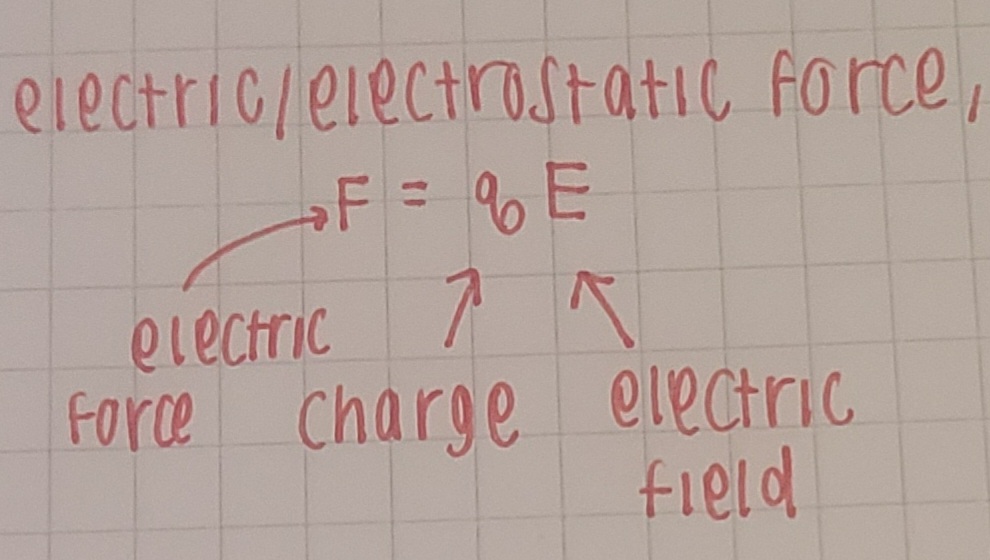
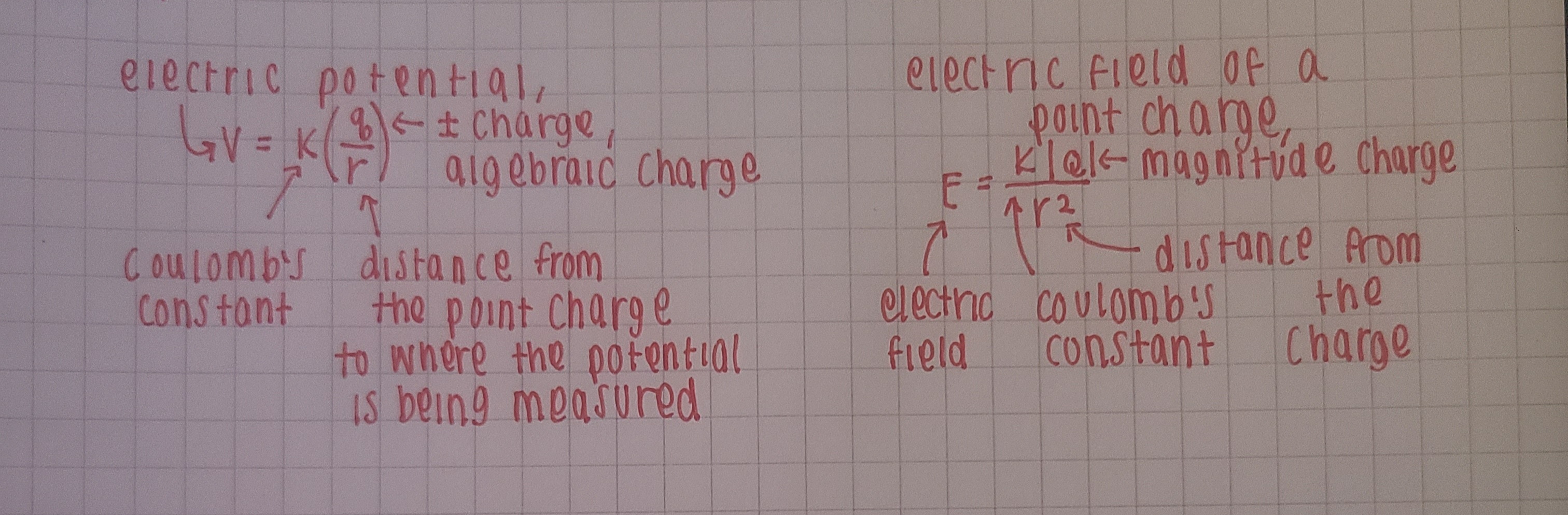
how are electric field and electrostatic force and electric potential related?
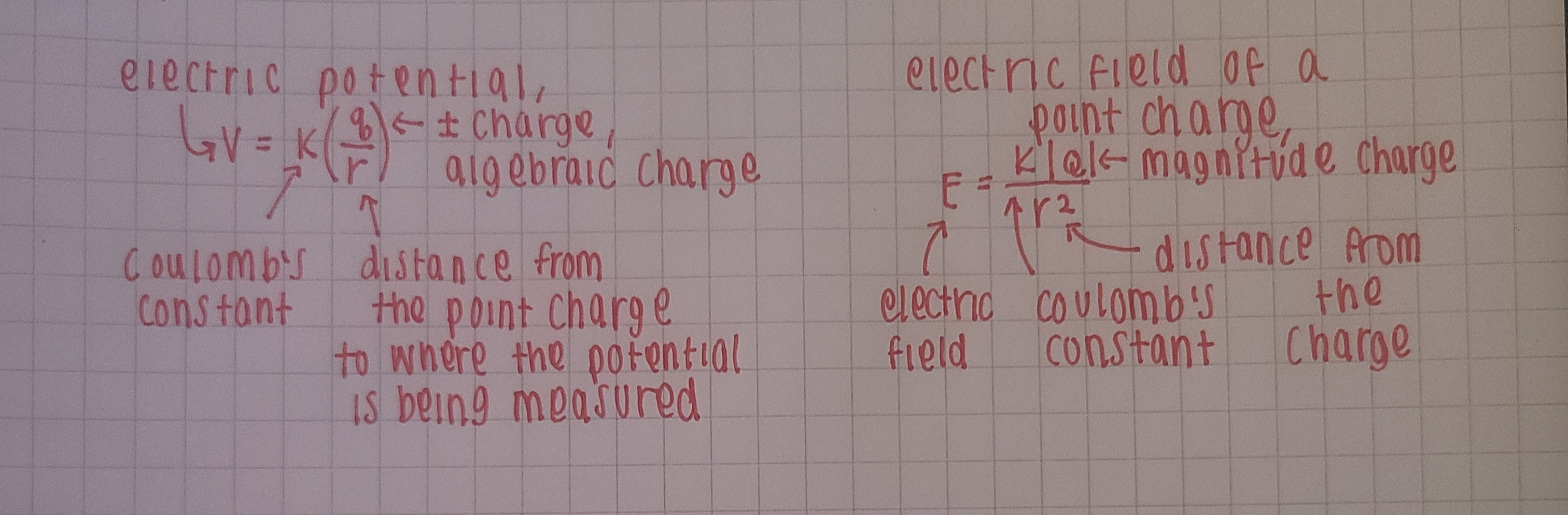
electric field of a charge, E=k|Q|/r², says that the distance r² is inversely proportional to the electric field and magnitude charge |Q|
→ scale of 1/r²
electric potential, V=k(q/r), says that the distance r is inversely proportional to the algebraic charge ±q
→ scale of 1/r
scalar quantity
has only size/magnitude/intensity of a number
→ “walk 5+100 miles”
vector quantity
has size & specific direction
→ “walk 5 miles north”
what equation is being used here? what is the answer?
“at a point midway between two identical (+) charges…”
A) the electric field is zero
B) the electric potential is zero
C) both field and potential are zero
D) both field and potential are negative
E) the electric field is maximum
electric potential & electric field,
V is only scalar but E is vector
→ at the midpoint, E vectors from two identical (+) charges point in opposite directions, so they cancel out to 0
→ V adds together Vnet=V1+V2, so potential is NOT zero
A) the electric field is zero
what equation is being used here? what is the answer?
“the electric field at a distance r from a point charge is E. at a distance 2r the field becomes…”
A) E
B) E/2
C) E/4
D) 2E
E) 4E
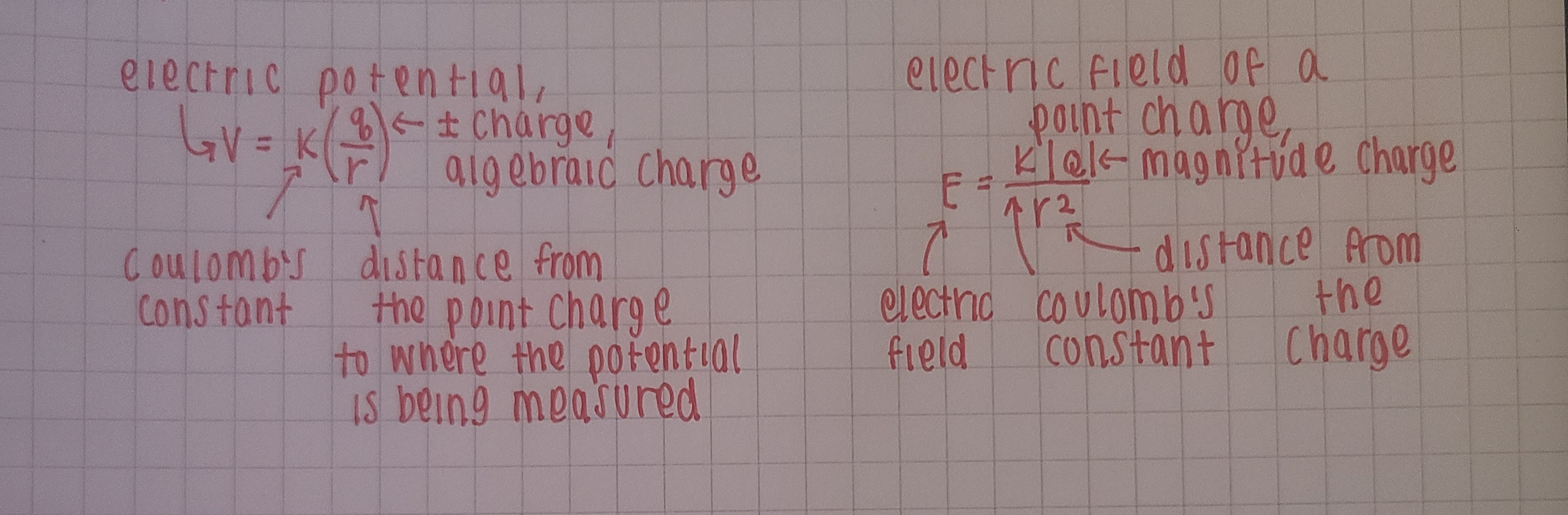
electric field of a charge,
E=k|Q|/r², says that the distance r² is inversely proportional (1/r²) to the electric field
→ if r is doubled it becomes ¼, making the field E ¼ of r
C) E/4
“which material allows electric charges to move most freely?”
A) glass
B) rubber
C) copper
D) plastic
E) wood
conductors (like metal) have free e- that allow charge to move easily
C) copper
what equation is being used here? what is the answer?
“a (-) charged particle moves opposite the direction of a uniform field. it’s electric potential energy…”
A) increases
B) decreases
C) remains constant
D) becomes zero
E) cannot be determined
electric potential energy,
a (-) charge loses electrical potential energy when it moves in the opposite direction of the electric field
B) decreases
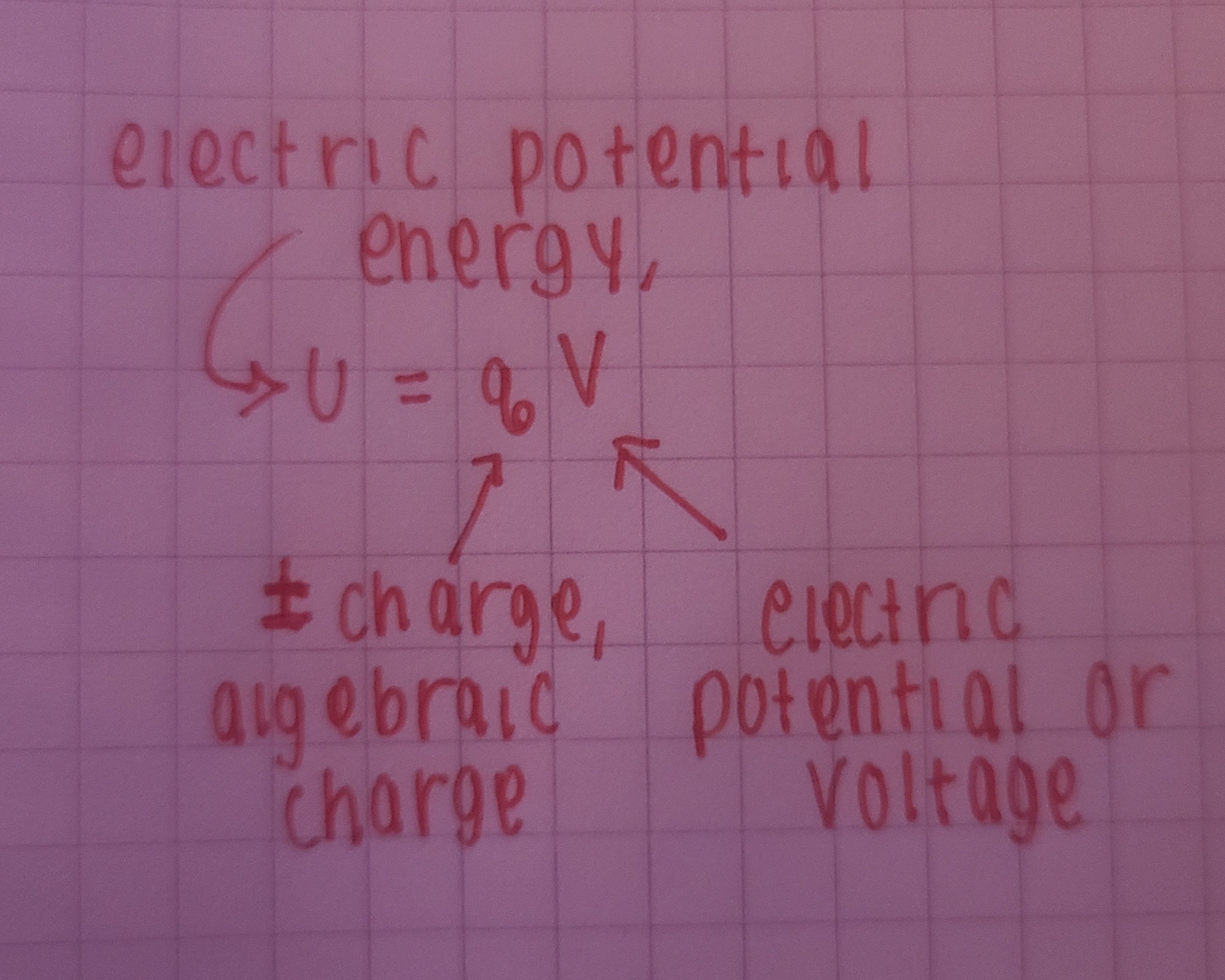
what equation is being used here? what is the answer?
“a proton moves through a potential difference of 200V. its gain in kinetic energy is…”
A) 100 eV
B) 200 eV
C) 400eV
D) 200 J
E) 400 J
change/gain in kinetic energy,
B) 200 eV
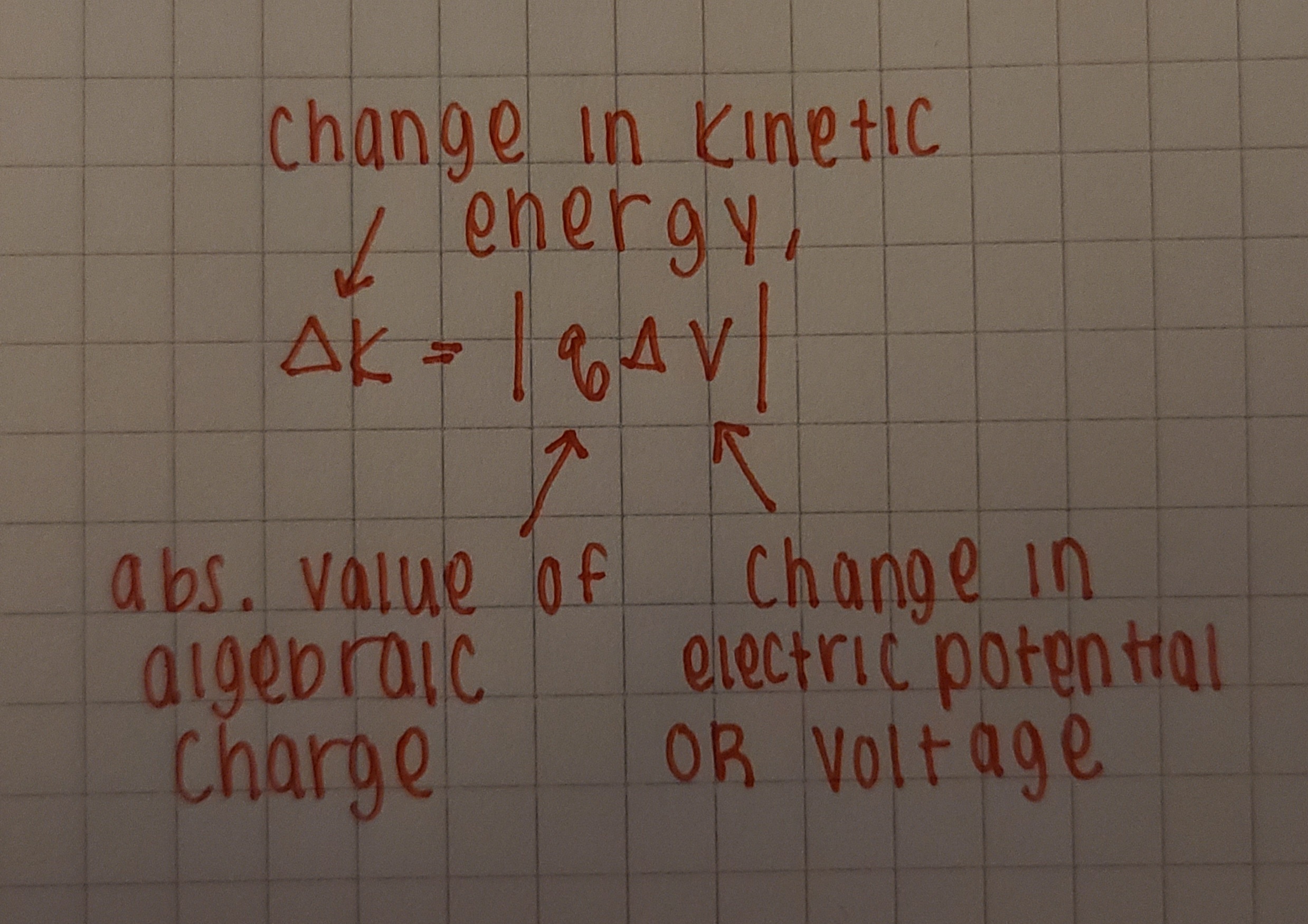
what equation is being used here? what is the answer?
“the electric potential due to a point charge is proportional to…”
A) r
B) r²
C) 1/r
D) 1/r²
E) √r
electric potential,
C) 1/r