Chapter 5: Biological membranes
 Studied by 0 people
 Call Kai
 Learn
Learn Practice Test
 Spaced Repetition
 Match
Match Flashcards
 Knowt Play
1/27

Earn XP
Description and Tags
LIU EENG304
Name | Mastery | Learn | Test | Matching | Spaced |
|---|
No study sessions yet.
28 Terms
Importance of plasma membrane
1. Physically separates interior of cell from external environment
2. Receives information about changes in environment
3. Regulates passage of materials in and out of cell
4. Communicates with other cells
5. Forms compartments to allow separate functions
6. Participates in biochemical reactions
Is the pm completely, selectively, or not permeable? Is it static or dynamic?
Selectively permeable, to control volume and internal composition of cell’s ions and molecules.
Dynamic.
What is the fluid mosaic model?
Plasma Membrane = fluid phospholipid bilayer + mosaic of proteins
Where the lipids are at optimal fluidity (if too fluid→ weak membrane; if too rigid → transport and signalling stop)
Mosaic due to the variety of embedded proteins.
note that fluidity is due to the cholesterol.
Phospholipid Molecules are…
Amphipathic: both hydrophobic and hydrophilic regions
– hydrophilic heads at 2 surfaces of bilayer
– hydrophobic fatty acid chains interior
Properties of the lipid bilayer
Fluid or liquid-crystalline state.
Flexible and self-sealing.
Fuses with other membranes to allow transport of materials within cell.
Forms vesicles that bud from one cell membrane and fuse with another membrane.
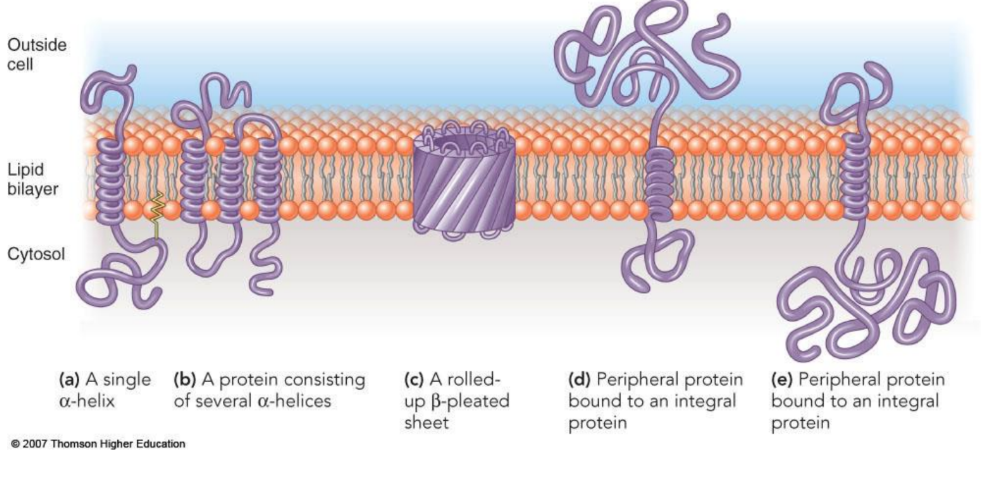
Membrane Proteins are…
• Integral membrane proteins, embedded in bilayer
• Transmembrane proteins, extend completely through membrane
• Peripheral membrane proteins, at surface of bilayer bound to exposed integral proteins
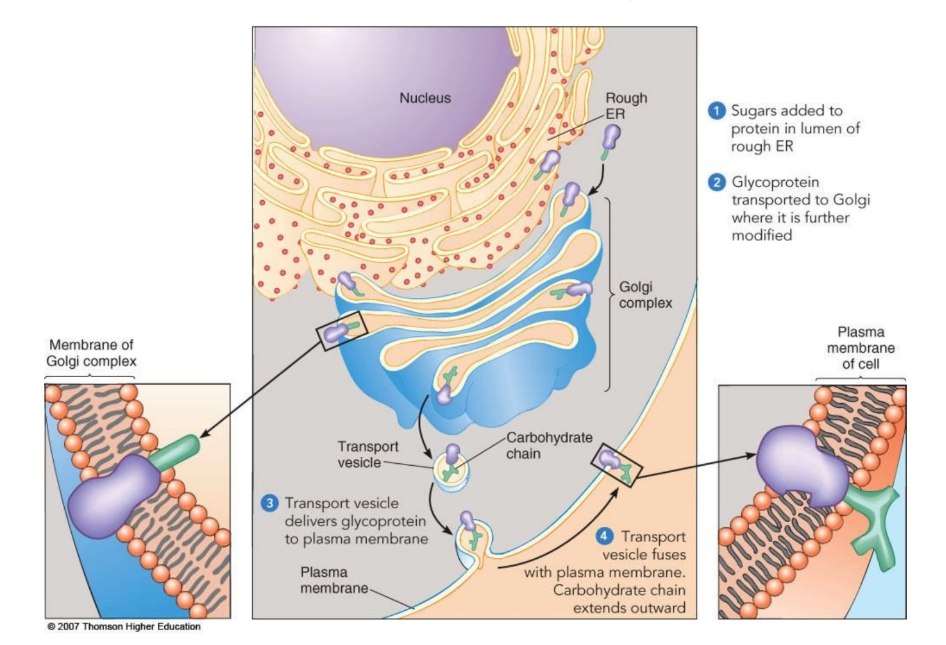
Membrane Protein Synthesis
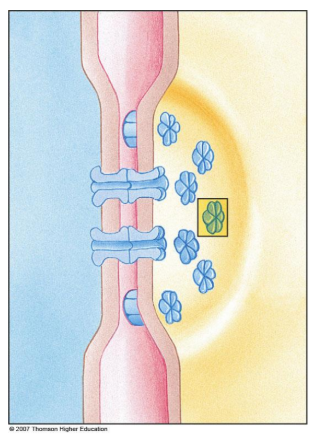
Membrane Proteins functions
• Transport materials: Active/passive transport.
• Act as enzymes or receptors: Enzymatic activity, Signal transduction.
• Recognize cells: Cell recognition
• Structurally link cells: Anchoring, Intercellular junctions.
Active/passive transport
Active: Some transport proteins pumps solutes across the membrane, which requires ATP (up/against concentration gradient).
Passive: Certain proteins form channels for selective passage of ions or molecules, which doesn’t require ATP (down concentration gradient).
Enzymatic activity/ Signal transduction
Enzymatic activity: membrane-bound enzymes catalyze reactions that take place within or along the membrane surface.
Signal transduction: Some receptors bind with signal molecules such as hormones and transmit information into the cell.
Cell recognition
Some glycoproteins function as identification tags. For example, bacterial cells have surface proteins, or antigens, that cells recognize as foreign.
Anchoring/ Intercellular junctions
Anchoring: Some membrane proteins, like integrins, anchor the cell to the ECM and connect to microfilaments within the cell.
Intercellular junctions: Cell adhesion proteins attach membranes of adjacent cells.
What are biological membranes most permeable to?
Small non polar (hydrophobic) molecules which can pass through the bilayer (ex: oxygen and carbon dioxide ).
Membrane transport proteins functions and types
•Facilitate certain ions and molecules through biological membranes
•Two main types: carrier proteins and channel proteins.
•Each type transports a specific kind of ion or molecule or a group of related substances.
Carrier proteins
Also called transporters, bind to a specific solute then they change shape to transport the solute.
One type are the ABC transporters (ATP-Binding Cassette) that use energy from ATP to transport solutes (active).
Channel Proteins
Allow water and certain ions through the membrane (smaller).
One type are porins (large pores) that allow water and certain solutes through membrane (larger).
Diffusion
Net movement of a substance down its concentration gradient (high→low).
Doesn’t require direct metabolic energy (passive).
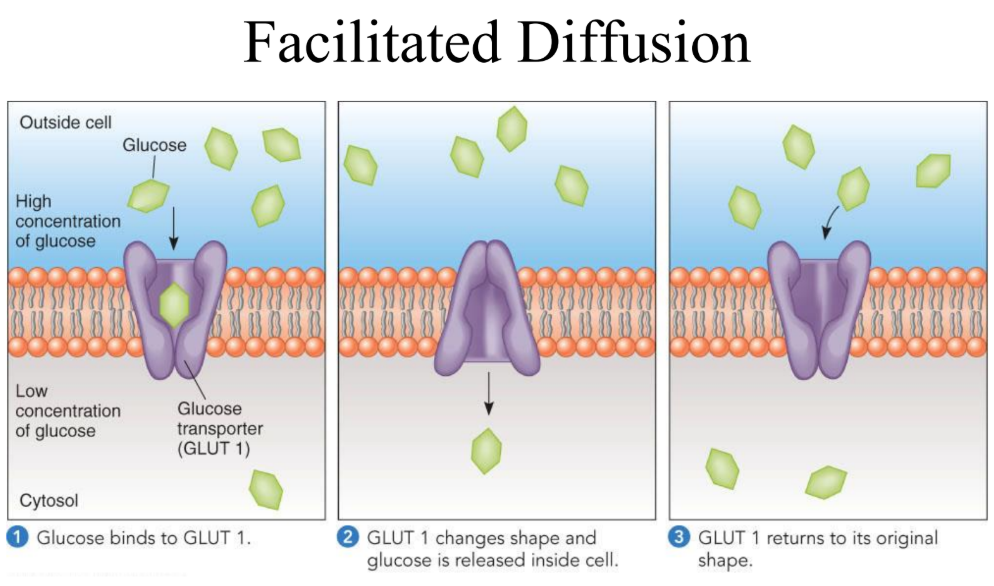
Has 3 types: -Simple diffusion: molecules or ions move directly through the membrane. -Facilitated diffusion: specific transport proteins move solutes across the membrane. -Osmosis
note:all types are down the concentration gradient.
Osmosis, Osmotic Pressure, and Tonicity
Water passes through a selectively permeable membrane from high effective water concentration (low solute) → to low effective water concentration (high solute).
Passive process (no ATP).
Osmotic Pressure: pressure created by concentration of solutes. Higher solute concentration = more pressure.
Cells regulate internal osmotic pressure to prevent shrinking or bursting.
Tonicity: - Isotonic solution: no net movement of water.
- Hypertonic solution: cell shrinks.
- Hypotonic solution: cells swell.
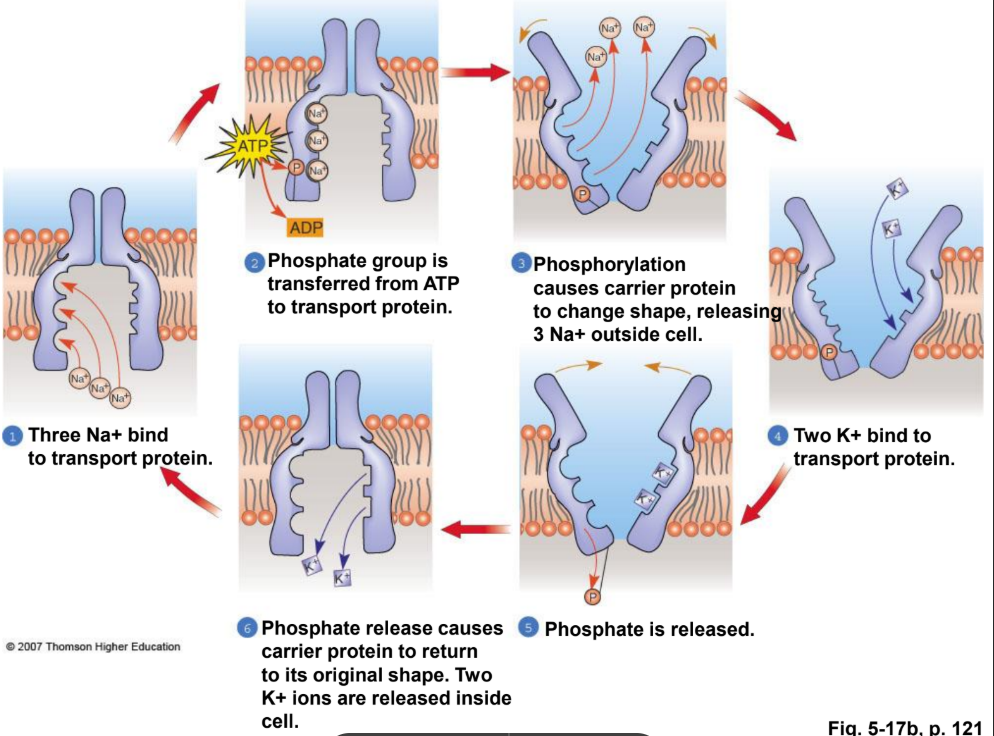
Sodium-Potassium pump (direct)
Direct (the transport protein itself uses the ATP ) active transport.
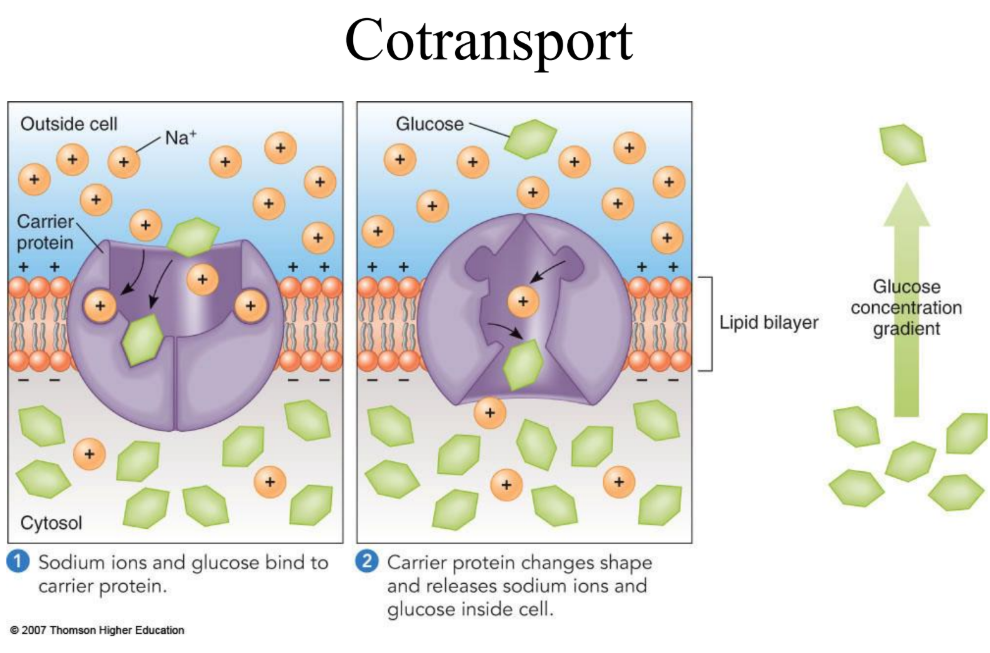
Indirect active transport
Indirect: transport protein does not use ATP itself,
• Cotransporter moves 2 solutes together : -One goes down gradient (favorable)
-One goes against gradient (unfavorable)
• ATP pump maintains gradient (indirect energy source)
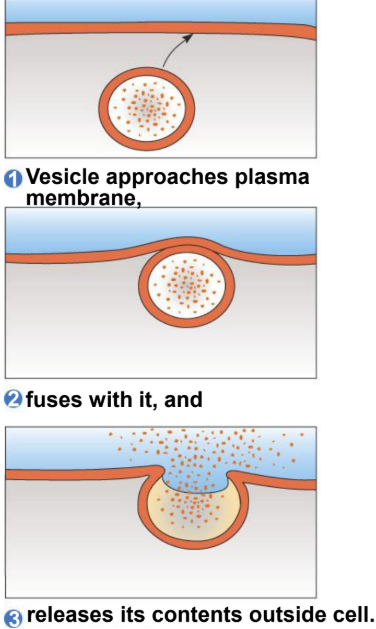
Exocytosis
• Materials exit cell
• Membrane surface area increases (since the vesicle fuses with the pm).
Endocytosis
• Materials enter cell
• Membrane surface area decreases
• 3 types of endocytosis
– phagocytosis
– pinocytosis
– receptor-mediated endocytosis
Phagocytosis
Large particles (like bacteria…) enter cell.
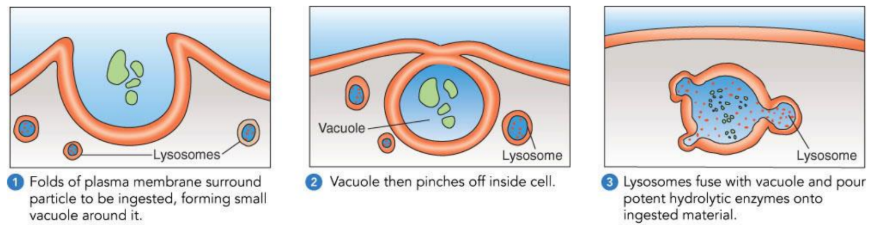
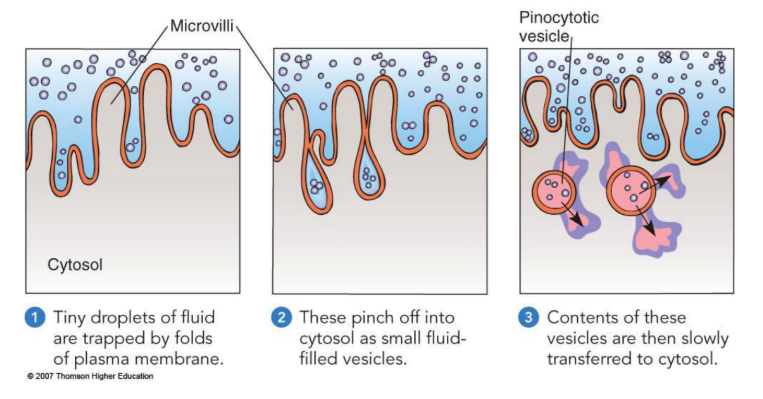
Pinocytosis
Also called cell drinking, Dissolved materials enter cell
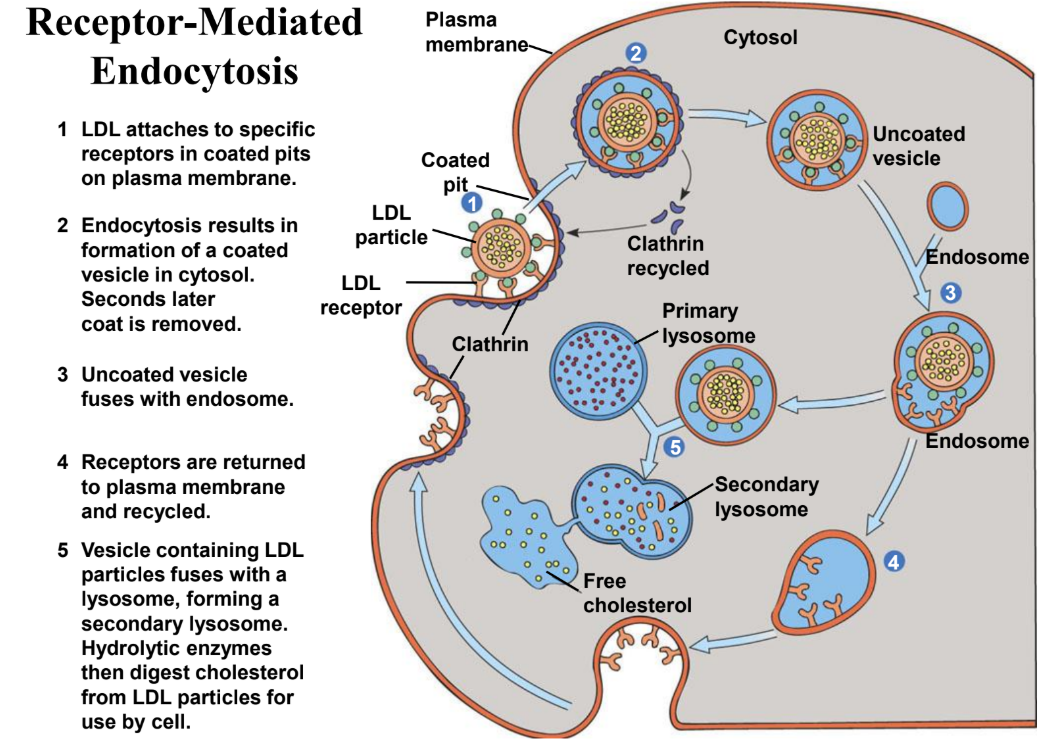
Receptor-Mediated Endocytosis
Cells use specific receptors on clathrin coated pits to bind ligands.
note: ligands= signaling molecule, LDL= low density lipoprotein(increases cholesterol)
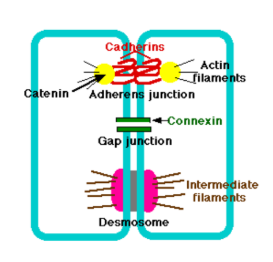
Anchoring junctions
Has 2 types: 1) Desmosome: Use the intermediate filaments to weld cells together, is better for shear (parallel) stress.
2) Adhering junctions: -Use microfilaments to connect cells. -Formed by cadherins which can act as a signal pathway from the outside environment to be transmitted to the cytoplasm.
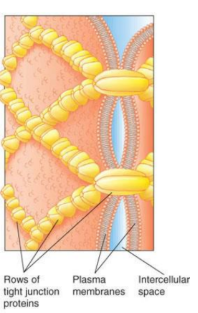
Tight junctions
Seals membranes together and prevents movement between cells. Present in capillary cells of brain to block many substances from blood entering brain.
Gap Junctions
– composed of 6 connexin tubes.
– form channels and allow communication between cells
– Cardiac muscle cells are linked by gap junctions