Physiology test 1
 Call Kai
 Learn
Learn Practice Test
 Spaced Repetition
 Match
Match Flashcards
 Knowt Play
1/41

There's no tags or description
Looks like no tags are added yet.
Name | Mastery | Learn | Test | Matching | Spaced | Call with Kai | Chat |
|---|
No analytics yet
Send a link to your students to track their progress
42 Terms
Superior direction
refers to a position that is above or higher than another part of the body. For example, the head is superior to the neck.
Inferior direction
refers to a position that is below or lower than another part of the body. For example, the stomach is inferior to the heart.
Lateral direction
refers to a position that is farther from the midline of the body. For example, the arms are lateral to the chest.
medial direction
refers to a position that is closer to the midline of the body. For example, the nose is medial to the eyes.
Anterior direction
refers to a position that is towards the front of the body. For example, the chest is anterior to the back.
Posterior direction
refers to a position that is towards the back of the body. For example, the spine is posterior to the chest.
Distal direction
refers to a position that is farther away from the point of attachment or trunk of the body. For example, the fingers are distal to the wrist.
Lateral direction
refers to a position that is away from the midline of the body. For example, the arms are lateral to the chest.
Medial direction
refers to a position that is closer to the midline of the body. For example, the nose is medial to the cheeks.
Superficial direction
refers to a position that is closer to the surface of the body. For example, the skin is superficial to the muscles.
Deep direction
Furthest from the outer surface
The levels of organization smallest to biggest
Organelle, cell, tissue, organ, organ system, organism
What are the four tissue types?
epithelial(skin), nerve, connective, and muscle
What is epithelial tissue
a thin, protective layer of tightly packed cells that covers body surfaces, lines internal cavities and organs, and forms glands
What is nerve tissue?
responsible for controlling and coordinating body activities
What is muscle tissue?
can shorten and contract to create movement
What is connective tissue?
supports, protects, binds, and gives structure to other tissues and organs in the body
What is neural plasticity?
the brain's ability to change, grow, and reorganize itself by forming new connections between brain cells throughout your life

What number is the AXON
3


What number is the CELL BODY
1


What number is the DENDRITES
2

Where is the location of muscle tissue
GI w
where is the location of cardiac tissue
heart
Where is the location of nervous tissue
brain
Where is smooth tissue found
Walls of hallow organs, blood vessels, and internal tracts through body
Where is connective tissue found
Inside dermis of skin, around organs, Within bones, tendons and blood
The layers of skin
Epidermis, dermis, and hypodermis
What is a first degree burn
effects epidermis, red marks
What is a Second degree burn
effects the epidermis and dermis
What is a third degree burn
it destroys the epidermis and dermis
What is a fourth degree burn
It destroys the epidermis and dermis and impacts muscle, bone, tendons, and nerves
What is a sebaceous gland
oily gland that is attached to hair roots

What is a eccrine gland
tiny sweat gland all over the body that relapses water to cool you off

What is a apocrine gland
sweat gland in areas like arm pits that release a thicker sweat when you feel stressed or nervous

What is a ceruminous gland
glands inside your ear canal to make earwax


What is this tissue shape?
Cubiodal
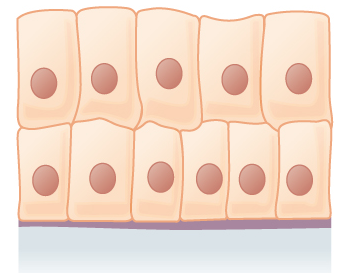
What tissue shape is this?
columnar
What tissue shape is this? Looks like a square
Squamous

Different types of finger prints
Loop, whorl, and arches

What type of finger print is this
Loop
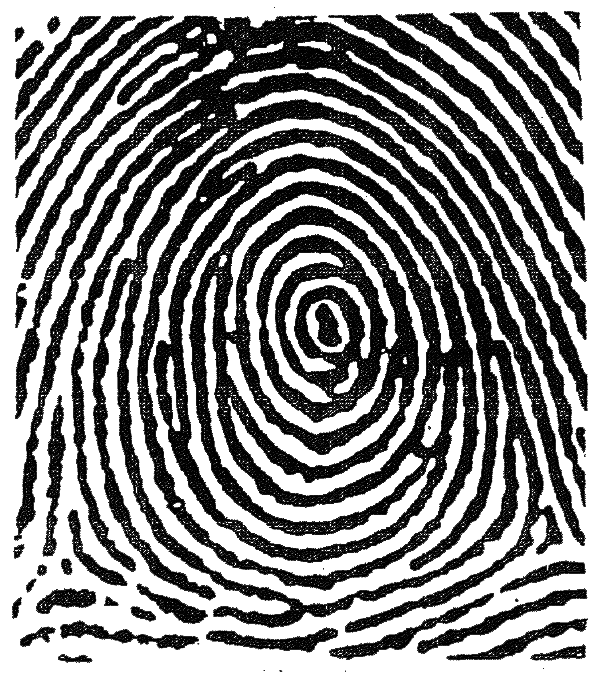
what type of finger print is this
Whorl

What type of finger print is this
Arches