Smart factory - Module 1
 Call Kai
 Learn
Learn Practice Test
 Spaced Repetition
 Match
Match Flashcards
 Knowt Play
1/42

There's no tags or description
Looks like no tags are added yet.
Name | Mastery | Learn | Test | Matching | Spaced | Call with Kai | Chat |
|---|
No analytics yet
Send a link to your students to track their progress
43 Terms
Define production
transformative process, creates goods through combination of production factors
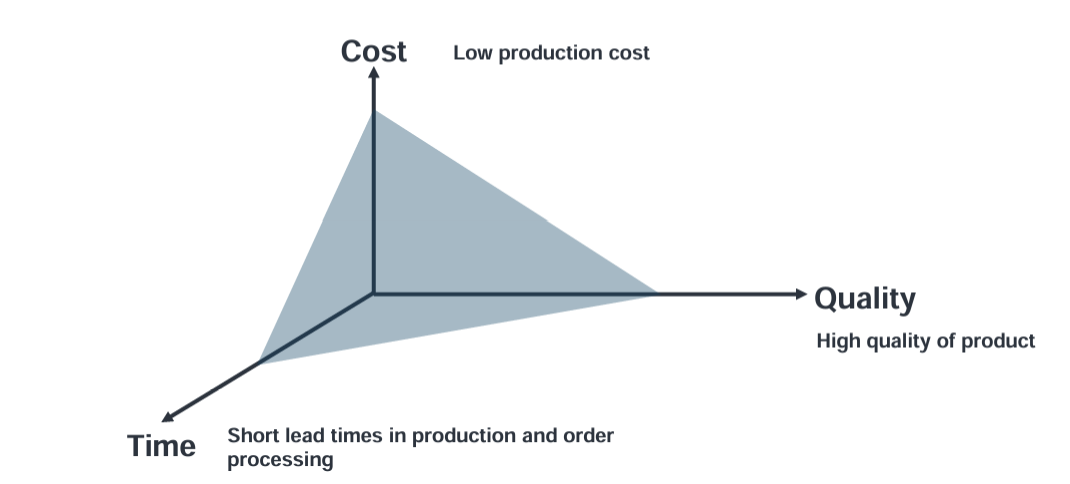
Draw the magic triagle of procuction, what does it signify
Cost, Quality and Time are the three obectives of production but achieving all of them at once is impossible — there must be a tradeoff
What is lead time
total amount of time between star of process and final completion of product
5 factors that contribute to complextities in production, explain each
restrictions (laws, resource scarcity)
quality requirements (tolerances, safety)
market requirements (short product life cycle(more customers come back to buy again), fast production, fluctuating demands)
coordination (globalization, just-in-time)
variety (product variants, new materials)
What is just-in-time
Production and delivery operate accordingly to the demand of the next production unit with small batch sizes, materials ordered only as needed (no waste/overproduction)
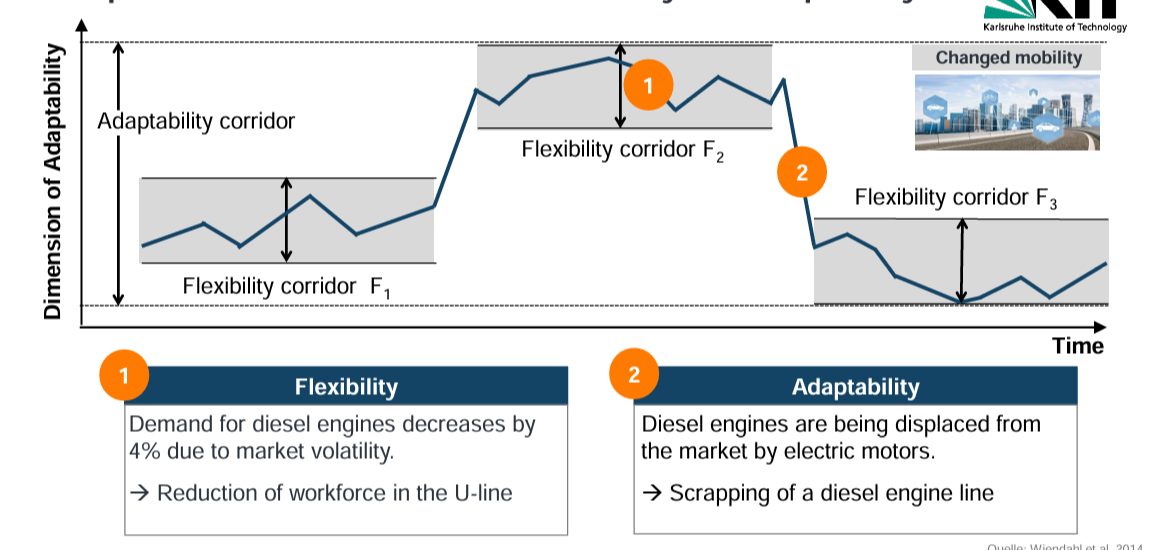
Flexibity vs Adaptability
flexibility : reactive short term willingness to adjust to immediate minor changes, there are limits here, possible solutions are predefined
adaptability : proactive long term ability to change behavior/strategy
Areas in which production can be flexible
Process - make it easy to switch btw diff variants or batch size
Routing - disruption of one station in production should not put stop to all the production
Variants - brand new variants should be able to be produced with ease and quickly (e.g could be produced on same line, no need to change anything)
Volume - Production should be able to adapt itself to demand
Properties that make a production system adaptable (adaptability enablers)
Universatility - prod line built to accomodate to various products/ techs
Mobility - machinery should be able to be displaced freely
Scalability - tech, space and personnel volume should be flexible
Modularity - standardized, functional components (easy to switch out diff ones)
Compatibility - capability to connect everything as needed (standardized interfaces)
What are the two possible reaction in event of disruption in production line
Robustness or Resilience
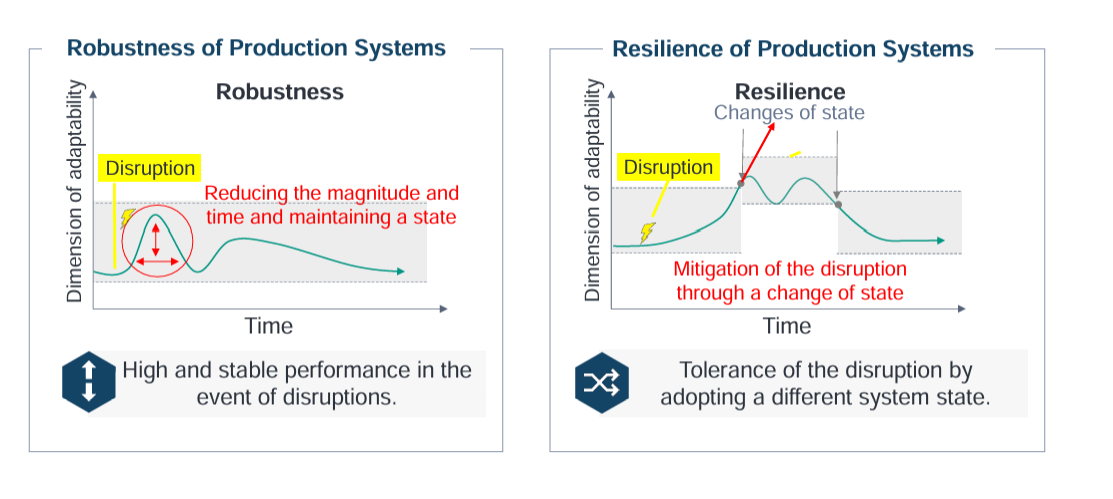
Robustness vs Resilience
robustness : high and stable performance despite disruptions ( it is tolerated)
resilience : disruption dealt with by switching to new system state
What is lean management
focus on maximising productivity and customer value and minimising waste without sacrificing quality
define a bottleneck
slowest part of production process
Evaluating production systems from microeconomics perspective
how individual company can react to market conditions by adjusting internal strategy
(bottom up approach)
Evaluating production systems from macroeconomics perspective
see how political/economical global situation is affecting market conditions and see how this affects the individuals (buyers vs sellers)
(top down approach)
Basic principle of lean management
1 - 1 - 0
1 peice flow - minimal stocks, short lead time, better fault detection
100% added value - no waste, efficient production, maximised productivity
0 errrors - error preventiton, high customer satifastion
what is IPS
Integrated Production System, it is a type of practical implementation of lean management, can be used as a guide for factories, the objectives are productivity, human centered design, and competitiveness
What are the 5 pillars of integrated production systems (IPS)
Production/logistics
Continuous improvement
Standardization and Visualisation
Quality and Stable processes
Work organisation
in IPS what is the production/logistics pillar about
It is concerned with the flow of the production line
Design principles(guideline) of Production/logistics pillar in IPS
Just-in-time
1 peice flow
Pull production
Push vs Pull production system
Push : production operates indep. from demand of next stage in production chain (production decided by central planning authority)
Pull : production and delivery operate according to demand of next production stage ( procuction only starts when customers demands the product from end of supply chain)
1 piece flow
layout of work station follows sequence of production processes
continuous flow btw work stations
no stock of semi finished goods
no generation of waste
short set up times needed
What is set up
all activities between end of processing one product and start of processing of the next
Methods used in Production/logistics pillar in IPS
reduction of set up times
levelling of production times (production smoothing )
Kanban
What is kanban
an inventory control system used in just-in-time (JIT), limits works in progress to promot continuous improvement. It is a visual system to prompt actions needed to keep a steady flow
Design principles(guideline) of continuous improvement pillar in IPS
waste avoidance
kaizen (find problem, analyse problem, find solution, implement solution, analyse solution, standardize solution if good and repeat)
in IPS what is the continuous improvement pillar about
improve continuously without major investments and with minor effort step by step
In which domains can waste avoidance be implemented
Transport
Inventory
Motion (have freely moving stations, arranged in ergonomic way)
Waiting (1 piece flow)
Overprocessing
Overproduction
Defects (rework instead of throwing away)
Method used in continuous improvement pillar in IPS, and relate to standardistion
PDCA — Plan , Do, Check, Act ( same as Kaizen ),, you need to standardise your solutions as you go so if something doesnt work in the future you know what to go back to
Design principles(guideline) of standardisation and visualisation pillar in IPS
standardisation : uniformisation of procedures and methods
visualisation : through info panels, boards and others, to provide better overview of objectives and production
Methods used in standardisation and visualisation pillar in IPS
5S
standard worksheets
What are the 5S in standardisation and visualisation
guidelines for better transparency, quality, safety, through organisation and tidiness in production
Tidiness
Orderliness
Cleanliness
Personal sense of order
Discipline
Design principles(guideline) of Quality and Stable processes pillar in IPS
• Preventive Quality Assurance
• TPM
• Six Sigma
Method used in Quality and Stable processes pillar in IPS
Poka-yoke: precautions taken to prevent errors or detect thel imediatly
what is TPM ( total productive maintenance)
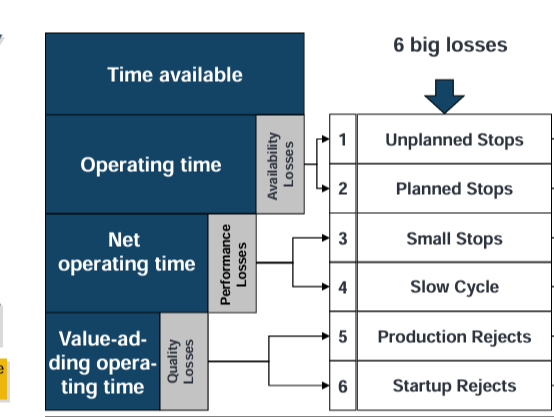
aims to maximise OEE (overall equipment effectiveness) by minimising the 6 big losses
What are the 6 big losses in available time in production
planned and unplanned stops (availability losses)
slow cycles and small stops (performance losses)
startup rejects and production rejects (quality losses)
without these we’re left with fully productive time ( value adding time)
How to calculate availability in production
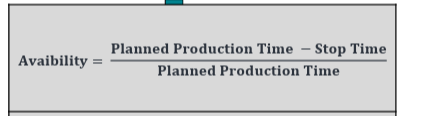
How to calculate performance in production

How to calculate quality in production
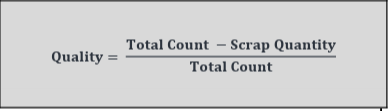
How to calculate OEE (overall equipment effectiveness)
OEE= availabilty x qulity x performance
Design principles(guideline) of work organisation processes pillar in IPS
• Team Work
• Leadership
• Safe Workplace
• Employee
Qualification
Method used in Quality and Stable processes pillar in IPS
• Training / Seminars
• On-the-Job Training
• Island of Learning (Training stations)
• Agreement on Objectives
What concept of production to use when the requirements become two complex for lean management
Smart Factory
What is smart factory
Fully integrated, collaborative manufacturing system that responds in real time to meet changing demands and conditions in the factory, in the supply network and in customer needs