LOCK IN
 Studied by 0 people
 Call Kai
 Learn
Learn Practice Test
 Spaced Repetition
 Match
Match Flashcards
 Knowt Play
1/68

There's no tags or description
Looks like no tags are added yet.
Name | Mastery | Learn | Test | Matching | Spaced |
|---|
No study sessions yet.
69 Terms
Small business – why start your own business?
Independence, profit motive, identifying an opportunity, unemployment, desire for flexibility
Characteristics of a small business
Fewer than 20 employees, owner-operated, local area, owner provides most capital
Entrepreneur
A person who takes risks and seizes opportunities to start and operate a business for profit
Competitive advantage
When a business outperforms competitors by offering better value, quality or prices
Ways to gain competitive advantage
Lower prices, advertising, better quality/perceived quality, meeting customer needs
Economies of scale
Cost savings from producing larger quantities
Outsourcing
Getting goods or services from external suppliers instead of using internal staff
Innovation
A new idea or improved product/process that increases value or efficiency
Product innovation
Changing or improving the features of a product (e.g., new iPhone features)
Process innovation
Changing how a product/service is produced to improve efficiency (e.g., robotics)
Difference between product and process innovation
Product innovation changes the final product; process innovation changes the way it is made
Market segmentation
Dividing the market into groups with common needs/characteristics
Positioning
Creating a unique image for a product in the consumer’s mind
Marketing mix (4Ps)
Product, Price, Place, Promotion
The main purpose of marketing is to increase sales. To do this, businesses will create a marketing strategy by integrating the elements of the marketing mix
Why keep financial records?
To track performance, meet legal requirements, monitor cash, and produce reports
Source documents
Original records of transactions such as receipts, invoices and EFTPOS slips
Cash receipts
All money coming into a business
Cash payments
All money going out of a business
Cash Receipts Journal (CRJ)
Records all cash received
Cash Payments Journal (CPJ)
Records all cash paid out
Cash flow
Money coming into the business (revenue) and going out (expenses)
Importance of cash flow
Needed to pay bills, wages, rent, equipment; business fails without it
Statement of receipts and payments
A summary of all money received and paid during a period
Service business
A business that sells a service using time, labour and expertise instead of physical goods
Reasons for business failure
Poor record keeping, cash flow problems, poor planning, poor management
Balance sheet
A financial report showing assets, liabilities and owner’s equity at a point in time
Assets
Items of value the business owns
Current assets
Assets used within 12 months (cash, stock, accounts receivable)
Non-current assets
Assets held for more than 12 months (vehicles, machinery, equipment)
Liabilities
Debts the business owes
Current liabilities
Debts due within 12 months (accounts payable)
Non-current liabilities
Debts due after 12 months (bank loan)
Owner’s equity
The owner’s investment in the business; business’s net worth
Balance sheet equation
Assets = Liabilities + Owner’s Equity
Revenue
Income earned from selling goods or services
Expenses
Costs incurred to operate the business
Net profit
Revenue minus expenses
Example of revenue
Sales or service fees
Example of cost of goods sold (COGS)
How much it cost the business to buy or make the products that were sold.
Political spectrum
A range of political beliefs from left to right
left- rapid reform
right- slow change, traditions
Political ideology
A system of beliefs/ideas that shapes how a society should be governed
Democracy
A system of government where power is held by the people
Direct democracy
Citizens vote directly on laws and decisions
Representative democracy
Citizens elect representatives who make decisions on their behalf
Features of Australian democracy
Active citizens, inclusive society, free elections, rule of law
Levels of government in Australia
Federal, State, Local
Why we have 3 levels of government
To divide responsibilities and manage different areas effectively
Federal government responsibilities
Defence, immigration, trade, taxation
State government responsibilities
Schools, hospitals, roads, police
Local government responsibilities
Rubbish collection, local roads, parks, permits
Electorate
A geographic voting area represented by a member of parliament
Constitutional monarchy
A system where a monarch is head of state but power is limited by a constitution
Electoral process in Australia
Enrolling, voting in secret, counting votes, forming government
Formal vote
A correctly completed ballot paper showing clear preferences
Informal vote
An incorrectly filled ballot paper that cannot be counted
Electoral roll
The official list of eligible voters
GDP per capita
GDP divided by population; average output per person
GDP growth
The increase in the value of goods/services produced; calculated using percentage change
Ideal GDP growth rate
Around 2–3% per year
Inflation
The general increase in prices over time
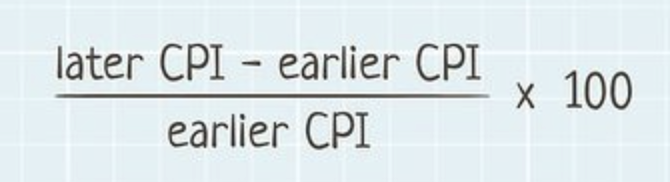
How to calculate inflation
Percentage change in CPI
Target inflation rate
2–3% in Australia
Unemployment
When people who want work cannot find a job
Types of unemployment
Seasonal, frictional, structural, cyclical
Unemployment rate
(Number of unemployed ÷ labour force) × 100
Consequences of unemployment
Loss of income, stress; lower economic output, higher welfare costs
This results in less spending on goods and services, and reduced savings as individuals re-adjust their spending patterns.
A reduced income can;
Place stress on families and relationships as it often means cutting back spending on such things as children’s activities or family social outings.
Create feelings of personal failure associated with the loss of status and friends.
HDI
Human Development Index measuring life expectancy, education and income
What HDI is made up of
Life expectancy, education levels, gross national income per capita
Comparing countries using HDI
Higher HDI =higher living standard