BIOL300: Chapter 11
 Call Kai
 Learn
Learn Practice Test
 Spaced Repetition
 Match
Match Flashcards
 Knowt Play
1/44

There's no tags or description
Looks like no tags are added yet.
Name | Mastery | Learn | Test | Matching | Spaced | Call with Kai |
|---|
No analytics yet
Send a link to your students to track their progress
45 Terms
True or false: we have membranes only on the inside of the cell.
false: we have membranes on both the outside and inside
What are the three things membranes are important for?
1. receiving communication
2. import and export
3. movement
What is a common term for the lipid bilayer that describes its diverse and dynamic structure?
Fluid Mosaic
Does the outer membrane exist on its own?
no, there is a structure of proteins that help stabilize it.
what us the most common phospholipid in the cell membrane?
phosphatidylcholine
what term can we describe to use phospholipids because they have polar and nonpolar regions?
amphipathic
what region of the phospholipids are polar?
their heads
what region of the phospholipids are nonpolar?
their tails
do membranes require energy to aggregate?
no, membranes will aggregate on their own without the presence of energy or enzymes.
hydrophobic
water fearing- uncharged and nonpolar
hydrophilic
water loving- charged and polar
can life exist without the presence of water?
no, all life requires water
phospholipid bilayers spontaneously close in order to make sealed compartments that are
energetically favorable
liposomes
artificial lipid bilayer that can be used for drug and vaccine testing
what are the four types of movements that phospholipids do in the cell membrane?
lateral diffusion, flip flop, flexion, and rotation
lateral diffusion
moving past one-another -> REQUIRES NO ATP OR ENZYME
flip flop
flipping between membrane sides -> REQUIRES ATP AND ENZYMES
what enzyme does aids in flip flop?
flippase
flexion
standing in place while tails are moving -> REQUIRES NO ATP OR ENZYME
rotation
staying in place and spinning -> REQUIRES NO ATP OR ENZYME
What is a lipid raft?
a group of lipids that float together as a unit within a larger sea of lipids (usually perform some sort of cell signaling)
What are the two properties of the hydrocarbon phospholipid tails that affects membrane fluidity and permeability?
length and number of double bonds they contain
longer tails means...
less permeability and fluidity
more double bonds in the phospholipid tails means ....
more permeability and fluidity
cholesterol makes up about how much of the membrane?
20%
Is cholesterol amphipathic?
Yes
What does cholesterol do for the membrane?
- fills spaces between the phospholipids
-stiffens the bilayer in animals at room temp
True or false: the lipid bilayer is symmetrical
False, asymmetrical
Where does new membrane synthesis occur?
the ER
How much os the plasma membrane is proteins?
50%
transmembrane proteins
Integral proteins that span the membrane.
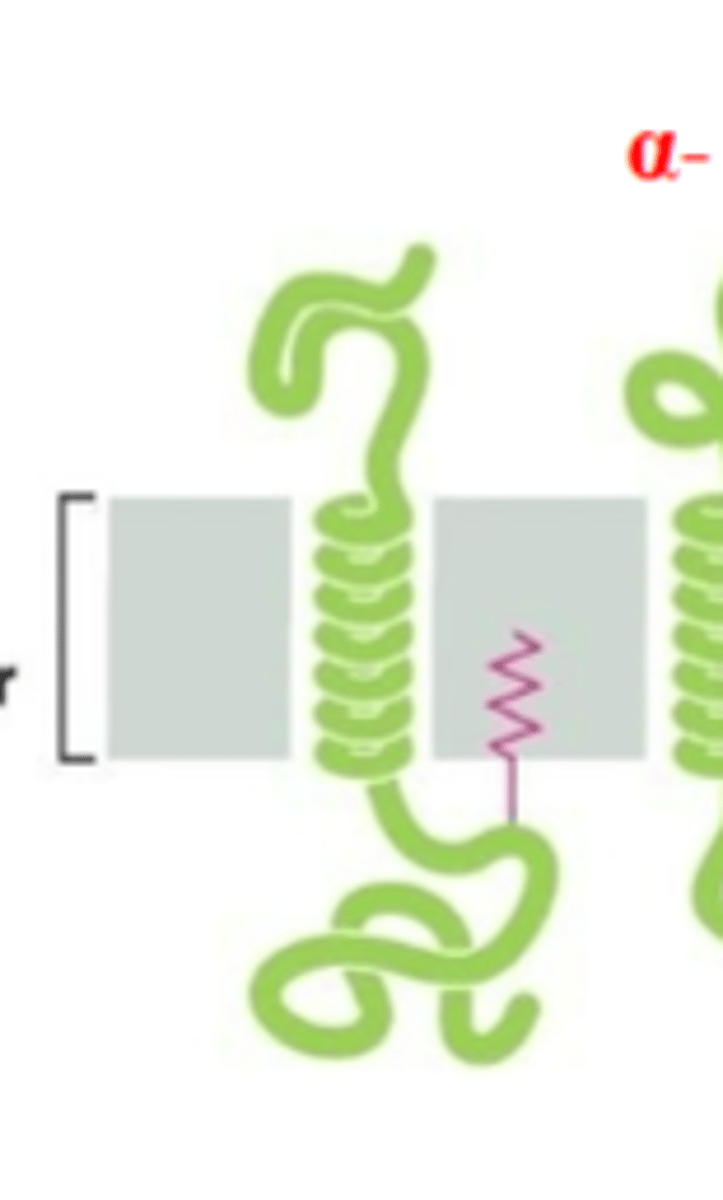
monolayer associated proteins
alpha helix proteins exposed on the surface

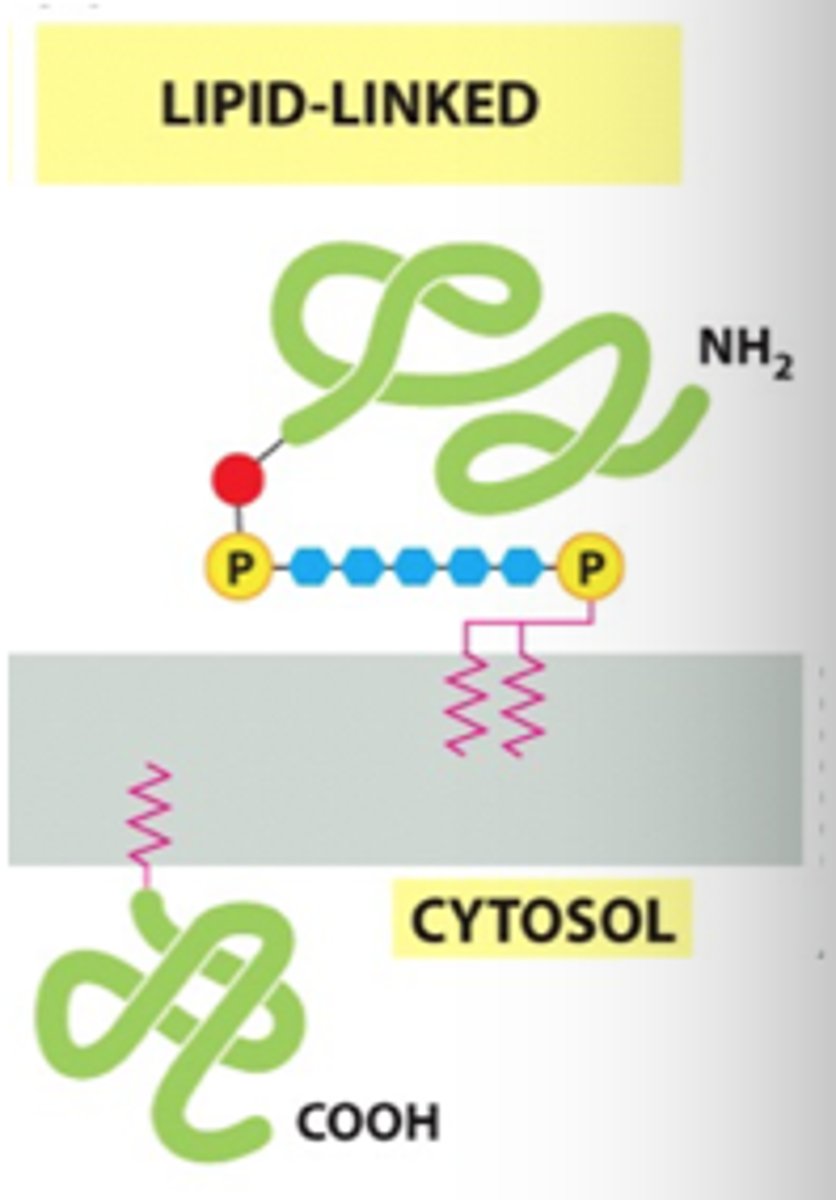
Lipid-linked proteins
not actually in the membrane but covalently linked to a lipid on the membrane
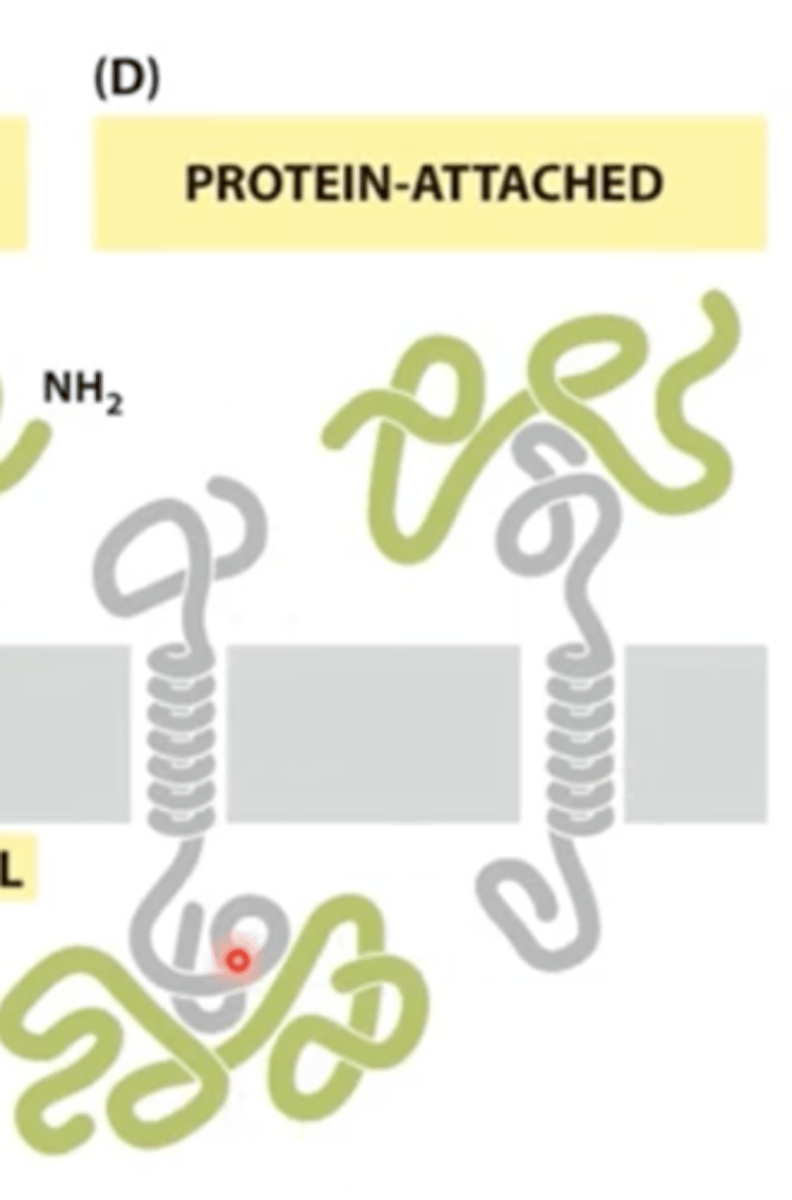
protein-attached proteins
These proteins are attached to the membrane only by relatively weak, noncovalent interactions with other membrane proteins.
The backbone of every protein is identical and ...
HIGHLY CHARGED
true or false, proteins decrease cell signaling
false, they make increase signaling and make it faster
What do detergents do?
They break up the lipid bilayer which allows a release of proteins
detergents are amphipathic and...
their hydrophobic ends bind to the cell membrane
what is the cell cortex
a network of proteins that sits under the bilayer to give it shape and support.
what is an example of a cell cortex?
the spectrin network of red blood cells
What are the four ways of restricting protein movement?
1. tethering them to something on the inside of the cell
2. Attach them to the outside of the cell
3. Attach them to other cells
4. Tight junctions- (road blocks)
what are membrane domains?
functionally specialized regions on the cell or organelle surface where you can find certain proteins
The carbohydrate layer of the plasma membrane is also known as the
sugar layer
What are sugar chains called?
oligosaccharides
what are the three main functions of the carbohydrate layer of the membrane?
1. protection
2. energy source in extreme conditions
3. cell-cell recognition and adhesion