LING 101, unit 1, sections 2 and 5
 Call Kai
 Learn
Learn Practice Test
 Spaced Repetition
 Match
Match Flashcards
 Knowt Play
1/53

There's no tags or description
Looks like no tags are added yet.
Name | Mastery | Learn | Test | Matching | Spaced | Call with Kai | Chat |
|---|
No analytics yet
Send a link to your students to track their progress
54 Terms
sound is produced when:
when air is set in motion after being supplied by lungs
larynx
sound source, the voice box, in upper neck
made of cartilage and muscle
boxlike
vocal folds/cords
the muscles in the larynx that vibrate to create sound
what is the vocal tract
it is the filters in the passages above the larynx
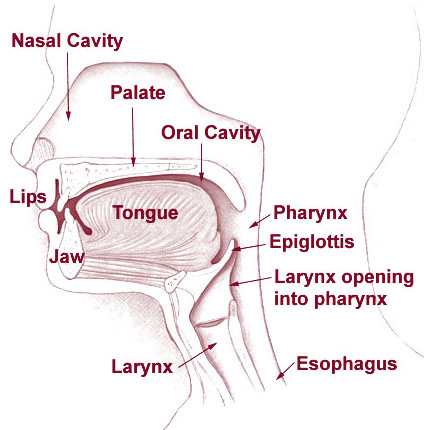
3 parts of the vocal tract
pharynx
oral cavity
nasal cavitypha
what is the pharynx
the throat tube connecting your larynx to the oral cavity
what are the primary air pressure muscles
intercostals (tween ribs)
diaphragm (large sheet muscle tween chest cavity and abdomen)intercostals
action of intercostals
raise ribcage to let air flow through the lungs on inhale
diaphragm
helps control the release of air for speechtrache
what is the trachea
the windpipe, where air passes to get out of lungslary
thyroid cartilage
main portion of larynx
rests on cricoid cartilage
front is like head of plow
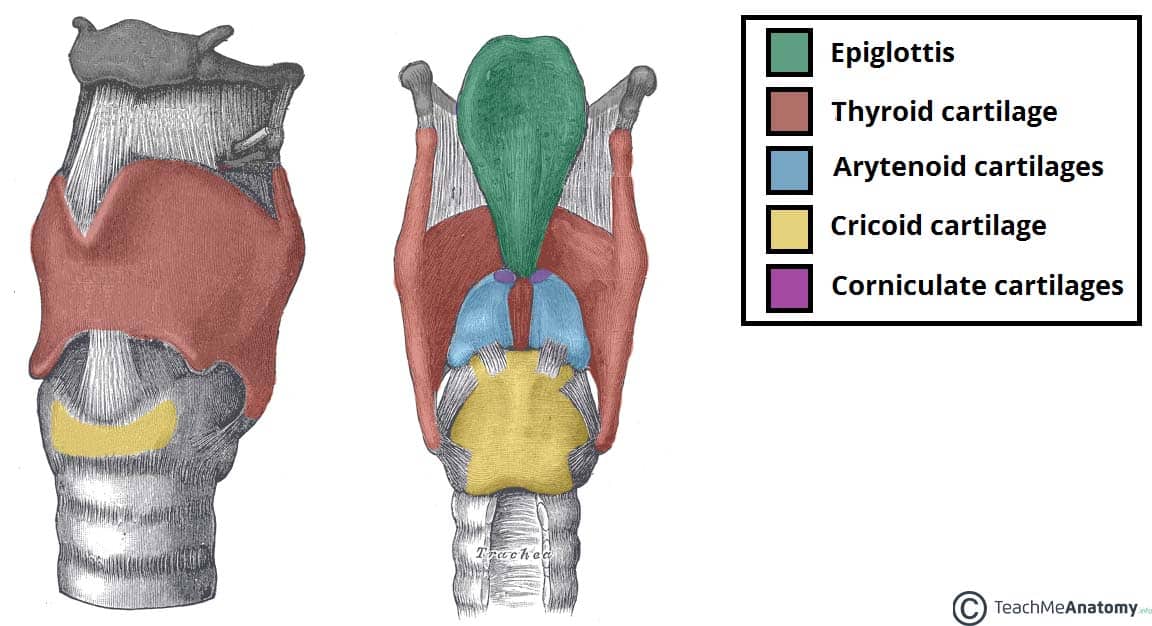
cricoid cartilage
ring-shaped cartilage
forms bottom border of the larynx and top of windpipe

what are and where do paired coral folds attach
fine sheets of muscle flaring from inner sides of thyroid cartilage
inner edges attached to vocal ligaments
back/posterior edges attached to arytenoids
what does the positioning of the paired vocal folds affect
glottal states as air passes through glottis
arytenoids
two small cartilages, pyramid shaped in the larynx that sit on top of the cricoid cartilage
opened and closed by pairs of small muscles
voiceless glottal state
vocal folds pulled apart so air can pass through with littler interference
voiced glottal state
vocal folds close together but not tightly closed
air passing through causes vibrations
whisper glottal state
voiceless but anterior fold pulled close while posterior folds flare out
murmur glottal state
breathy voice
voiced sounds but folds relaxed to let some air escape for breathy effect
only in English for borrowed words from other lang

manners of articulation
how articulators are positioned to modify airflow and produce different sounds
oral sounds
when the velum is raised to cut off airflow to nasal cavity
nasal sounds
velum is lowered to let air pass through the nasal cavity
both consonants and vowels can be
stops
vocal folds drawn firmly together and arytenoids drawn forward
full closure of oral cavity or glottis
glottal stop
momentary closing or airstream at the glottis
[b’] - apostrophe
nasal stops
always voiced
closure of oral cavity (velum lowered) so air through nose
oral stops
consonant sounds made by blocking air to oral cavity while velum prevents air from escaping through nosefric
fricatives
near closure but not complete causing hissing noise
with continuous airflow
part of continuants

Affricate
a closure that is slowly released to create friction
stop + fricative
2 in english [tʃ] and [dʒ]
stop fricatives and affricates are both
obstruents (cause greatest blockage of airflow)
stridents/sibilants
noisier fricatives and affricates
non strident
quite fricatives and affricates
aspiration
lag or delay after releasing certain voiceless stops before voicing of following vowel
extra puff of air that escapes when you say certain consonant sounds
happens mostly with stop or plosive sounds
transcription of aspiration
ex: [pʰ]
unreleased stop
air is held till next sound instead of being released
airflow is blocked completely in v tract but articulators don’t open for an audible burst of air
what are unreleased stops not?
they are not dropped sounds as the mouth still forms the shape
transcription of unreleased stops
ex: [ p̚ ]
what are liquids
liquids are oral sonorous consonants
l and r and their variants
constriction not enough to cause friction of fricative
lateral liquids
varieties of l
where tongue tip contacts alveolar ridge but sides of tongue are lowered so air can escape out the side of the mouth
generally voiced but sometimes voiceless
clear l
l sounds made w/ tongue tip touching alveolar ridge
dark L or velarized L
additional constriction at velum
retroflex r
tongue tip curled back behind the alveolar ridge ridge and/or the tongue is bunched up
transcription of retroflex r
[ɹ] vs [r] for alveolar trill in spanish
flap or tap
brief contact of tip of tongue with the al ridge
never at the start of English words
not a separate phoneme that occurs freely
usually voiced
example of a flap
usually an allophone of [t] and [d] in certain environments such as between vowels or before an unstressed syllable
butter or bitter
sonorous sounds
made with continuous airflow
liquids and nasals are more so than other consonants
they may function as syllabic nuclei
many liquids and nasals are so sonorous that
syllabic means
a sound is acting as the center of a syllable without needing a separate vowel soundsyllabiv
syllabic liquids and nasals
when liquids and nasals act as syllabic nuclei
transcription of syllabic nasals and liquids
ex: [ɹ̩]
glide or semivowel
slight constriction of tract w/ no friction
faster than a vowel
rapidly articulated non syllabic segment
starts as/like vowel but moves fast toward other vowel sound
glides can’t…
can’t form nucleus of syllable w/ out full vowel
2 glides in english
[j] (a palatal glide) and [w] (a rounded velar glide)
more difficult consonants in english
liquid and fricatives because require precise constriction and gestures
order of describing sound
voicing
place of articulation
manner of articulation
ex: [b] = a voiced bilabial stop