Chapter 3 - Macromolecules: Lipids and Proteins
 Call Kai
 Learn
Learn Practice Test
 Spaced Repetition
 Match
Match Flashcards
 Knowt Play
1/19

There's no tags or description
Looks like no tags are added yet.
Name | Mastery | Learn | Test | Matching | Spaced | Call with Kai | Chat |
|---|
No analytics yet
Send a link to your students to track their progress
20 Terms
Lipids
- A diverse group of non polar hydrocarbons
- Are hydrophobic
Functions of lipids include:
- Long term energy storage
- provides insulation
- building blocks for some hormones
- important component of cellular membranes
Types of lipids:
- fats
- oils
- waxes
- phospholipids
- steroids
Fats
Contain 2 main components:
- Glycerol
- Fatty Acids
Triacylglycerol
Formed when joining 3 fatty acids to a glycerol backbone

Ester Linkages
How glycerol molecules are attached to the fatty acids

Saturated Fatty Acids
- Made up of a carbon chain with NO double bonds
- Stearic Acid
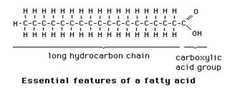
Unsaturated Fatty Acids
- Made up of a carbon chain with at least one double bond
- AKA oil at room temp
- Can be in 1 of 2 positions: Cis or Trans Configurations
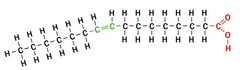
Monounsaturated fat
1 double bond
Polyunsaturated fat
More than 1 double bond
Cis Configuration
- hydrogens on the SAME side of the chain
- have a kink in the chain
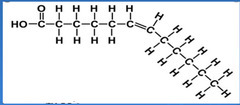
Trans Configuration
- hydrogens on OPPOSITE sides of the chain
- have no kink in the chain

Essential Fatty Acids
Required by our body but out body doesn't produce them so we must consume them in our diet
Phospholipids
A molecule with 2 fatty acids and a modified phosphate group attached to a glycerol backbone

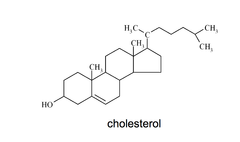
Steroids
- 4 linked carbon rings in a closed ring structure
- are hydrophobic
- are insoluble in water
Protein functions
- Regulatory functions
- Structural functions
- Protective functions
- transportation
- enzymes
- toxins
Enzymes
- catalyst in biochemical reactions
- 3 types: catabolic , anabolic , and catalytic
Catabolic enzymes
enzyme that breakdown substrates
Anabolic enzymes
enzyme that builds more complex structures
Catalytic enzymes
enzymes that affect reaction rates