Chpt. 22: Lymphatic System
 Call Kai
 Learn
Learn Practice Test
 Spaced Repetition
 Match
Match Flashcards
 Knowt Play
1/13

There's no tags or description
Looks like no tags are added yet.
Name | Mastery | Learn | Test | Matching | Spaced | Call with Kai | Chat |
|---|
No analytics yet
Send a link to your students to track their progress
14 Terms
function of lymphatic system?
1) production, maturation, activity of lymphocytes
2) alternative transport system for nutrients, waste, lipid
3) maintain blood volume (3L/day)
what are the lymphatic tissues/organs
lymph
lymphocytes
primary lymphoid organs (red bone marrow, thymus)
secondary lymphoid organs (lymph nodes, spleen, tonsils, MALT)
lymphatic vessels
what are the primary and secondary lymphoid organs responsible for?
primary: production/maturation of lymphocyte
secondary: activation of lymphocytes
list the lymphatic vessels from smallest to biggest (lymphatic…)
capillaries
collecting vessels
trunk
duct
how does the lymphatic system work as an alternative pathway?
intertwined with blood capillaries
reclaims tissue fluid leakage from capillaries
what are lymph nodes? (functions + characteristics)
function: filter lymph, exist in junctions
ex) neck/cervical, axillary, popliteal, inguinal
1) reticular fibers (network)
2) collection of lymphocyte
3) valves
difference between Afferent vs Efferent vessels
afferent: arriving at lymphatic vessel (3)
efferent: exiting lymphatic vessels (2)
lymphatic drainage right vs left side
right: via R lymphatic duct @ R internal jugular/subclavian vein
left: via L thoracic duct @ L internal jugular/subclavian vein
what is the thymus? (functions + characteristics)
function: maturation of T-cell
identify self and do not attack
located at mediastinum
“hormonal” organ
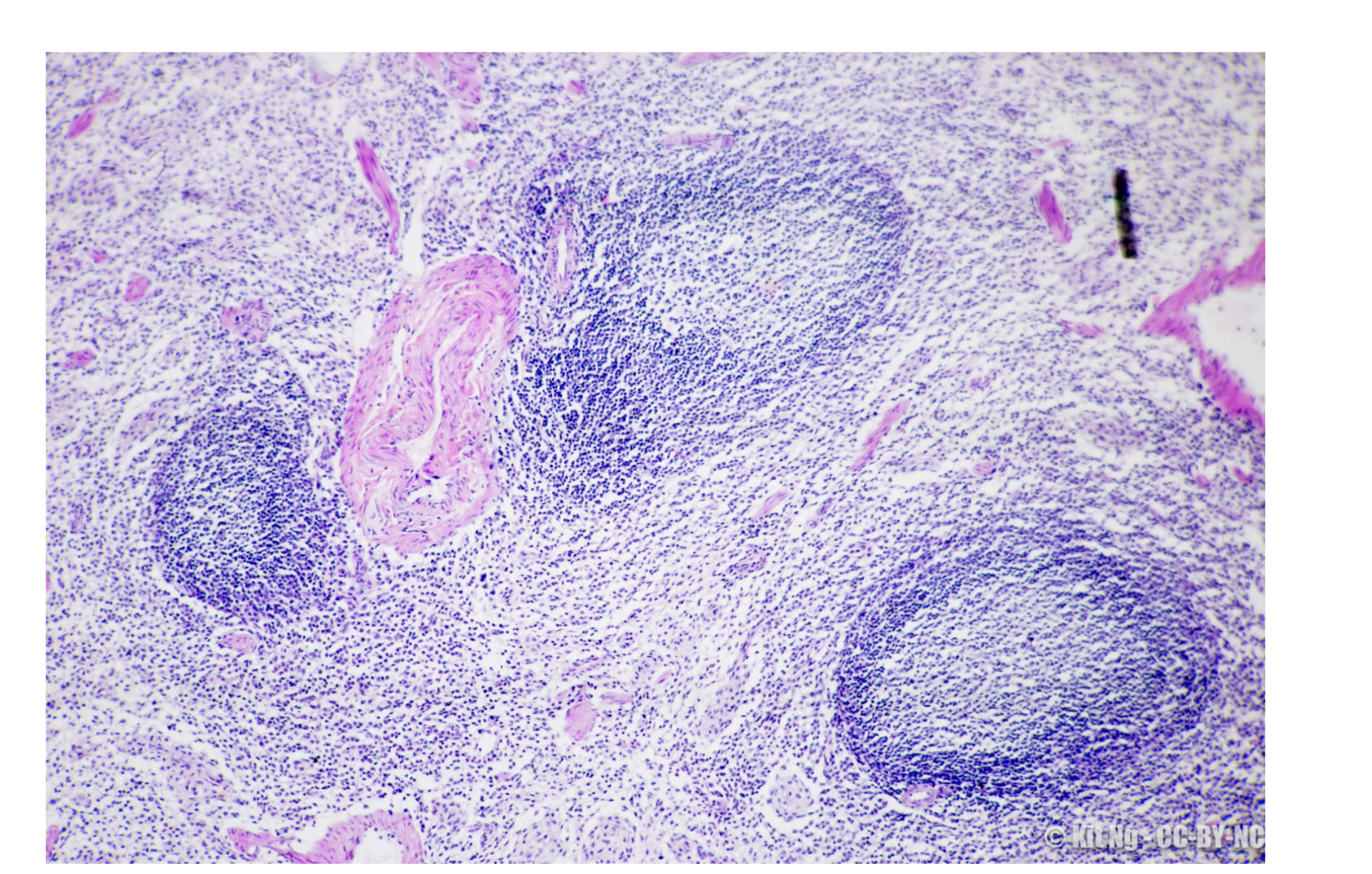
what is the spleen? (functions + characteristics)
function:
white pulp: immune function, filter blood
red pulp: filters old RBC
made of reticular tissue/fibers = weaker organ
what is mucosa-associated lymphoid tissue (MALT)?
epithelium = covered in mucus surface
examples:
NALT (nasal)
GALT (gut)
BALT (bronchus)
what kind of pathogens are there? (2 types)
intracellular (replicate inside cell)
extracellular (replicate outside cell)
process of innate response to pathogens
1) phagocytosis (macrophages + neutrophils)
2) enhance phagocytosis by coating pathogen (acts as antibody)
process of adaptive response
forms immune memory
1) antibody optimization/production
2) helper T-cell produce molecules to stimulate macrophage/neutrophil activity