BMGT350 Exam 2 Ch 7-14
 Call Kai
 Learn
Learn Practice Test
 Spaced Repetition
 Match
Match Flashcards
 Knowt Play
1/96

There's no tags or description
Looks like no tags are added yet.
Name | Mastery | Learn | Test | Matching | Spaced | Call with Kai | Chat |
|---|
No analytics yet
Send a link to your students to track their progress
97 Terms
consumer products
bought by final consumers for personal consumption
industrial products
bought by individuals and organizations for further processing or for use in conducting a business (ex: materials and parts, capital items, suppliers and services)
homogeneous
customer thinks product options basically the same and wants the lowest price
heterogeneous
customer thinks differences in product options and considers other attributes in addition to price
product line
closely related products that have similar functions and customer groups and are sold through similar outlets or fall within given price ranges
width (product mix decision)
number of different product lines the company carries
length (product mix decision)
total number of items a company carries within its product lines
depth (product mix decision)
number of versions offered for each product in the line
consistency (product mix decision)
relativity of the various product lines in end use, product requirements, distribution channels, or some other aspect
brand equity
the differential effect that knowing the brand name has on customer response to the product or its marketing
shopping products
less frequently purchased consumer products and services that customers gather information about and compare carefully on suitability, quality, price, and style before making a purchase decision
social marketing
using traditional business marketing concepts and tools to encourage behaviors that will create individual and societal well-being
service profit chain
connects service customer satisfaction and firm profits with employee satisfaction through internal service quality, satisfied and productive employees, greater service value, satisfied and loyal customers, and healthy service profits and growth
- services characterized by intangible, inseparable, variable, and perishable
stages in new product development
idea generation -> idea screening -> concept development and testing -> marketing strategy development -> business analysis -> product development -> test marketing -> commercialization
internal idea sources
intrapreneurial programs, internal social networks, R&D research centers, repurposing existing products, using technology
external idea sources
learning from competitors, customers, distributors and suppliers
crowdsourcing
inviting broad communities of people into the new product innovation process
marketing strategy statement
describes the target market, planned value proposition, sales, market-share, and profit goals for first few years
business analysis
review of sales, costs, and profit projections for a new product to find out whether projections satisfy company objectives
sales and profits over the product life cycle
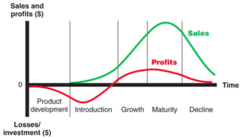
product concept development
detailed version of the new product idea stated in terms that are meaningful to the customer
product life cycle
introduction stage, growth stage, maturity stage, decline stage
style
basic and distinctive mode of expression
fashion
currently accepted or popular style in a given field
fads
temporary period of unusually high sales or interest driven by consumer enthusiasm and immediate product or brand popularity
cost-based pricing
setting prices based on costs of producing, distributing, and selling the product plus a fair rate of return for effort and risk
design a good product -> determine product costs -> set price based on cost -> convince buyers of product's value
value-based pricing
attaching value-added features and services to differentiate a company's offers and charging higher prices, most logical and profitable way
assess customer needs and value perceptions -> set target price to match customer perceived value -> determine costs that can be incurred -> design product to deliver desired value at target price
organizational considerations
determine who should set the price depending on size and type of the company
- small companies = top management
- large companies = divisional or product managers
- industries with price as the key factor = pricing departments
internal price decision factors
marketing strategy, objectives, marketing mix, organizational considerations
external price decision factors
nature of market, demand, economy, reseller needs, and government actions
market skimming
setting a high price to skim maximum revenues layer by layer from the segments willing to pay the high price
market penetration
setting a low price to attract a large number of buyers and a large market share
product line pricing
setting prices across an entire product line
optional-product pricing
pricing optional or accessory products sold with the main product
captive-product pricing
pricing products that must be used with the main product
by-product pricing
pricing low-value by-products to get rid of or make money on them
product bundle pricing
pricing bundles of products sold together
segmented pricing
selling a product or service at two or more prices, where the difference isn't based on differences in costs (ex: customer-segmented, product form, location-based, time-based)
psychological pricing
adjusting for psychological effect
reference prices: buyers carry in their minds and refer to when looking at a given product
compromise effect: tendency to avoid an extreme choice resulting in middle ground option
promotional pricing
temporarily pricing products below the list price to increase short-run sales (ex: discounts and special-event, limited-time offers, free maintenance, longer warranties, low-interest financing)
personalized pricing
adjusting prices in real time to fit individual customer situations, locations, and buying behaviors
dynamic pricing
adjusting prices continually to meet the characteristics and needs of individual customers and situations
international pricing
break even volume
fixed costs / (price-variable costs)
pure competition
market consists of many buyers and sellers trading in a uniform commodity, no single buyer or seller has much effect on the going market price
monopolistic competition
market consists of many buyers and sellers trading over a range of prices rather than a single market price
oligopolistic competition
market consists of only a few large sellers so each one is alert and responsive to competitors' pricing strategies and marketing moves
pure monopoly
market is dominated by one seller
predatory pricing
sellers prohibited from this - selling below cost with intention of punishing competitor or gaining higher long-run profits by putting competitors out of business
price discrimination
sought to be prevented by Robinson-Patman Act by ensuring sellers offer same price terms to customers at given level of trade
supply chains
- upstream partners supply the raw materials, components, parts, information, finances, and expertise needed to create a product or service
- downstream partners serve as distribution channels that link the firm and its customers
marketing channel
set of interdependent intermediary organizations that help make a product or service available for user or consumption by consumer or business user
- channel members perform information, promotion, contact, matching, and negotiation functions to bridge gaps that separate goods and services from users
types of flows
physical flow of products, flow of ownership, payment flow, information flow, and promotion flow
vertical marketing system
channel structure in which producers, wholesalers, and retailers act as unified system (one owns others and has strong contracts with them)
franchise organization
contractual VMS in which franchisor links several stages in production-distribution process by operating through licensed franchisees
horizontal marketing system
two or more companies at one level join together to follow new marketing opportunity
omnichannel distribution systems
single firm sets up two or more channels to reach one or more customer segments, coordinating strategies to maximize total profits across channels
marketing logistics
planning, implementing, and controlling flow of materials, final goods, services, and related information from points of origin to points of consumption to meet customer requirements at a profit, involves outbound (products from factory to resellers and ultimately to customers) and inbound (moving products and materials from suppliers to factory) and reverse (reusing, recycling, refurbishing, or disposing)
integrated logistics management
emphasizes teamwork to maximize performance of logistics system
multimodal transportation
combining two or more modes of transportation, 3% of nation's goods transported
omni-channel retailing
creating a seamless cross-channel buying experience that integrates in-store, online, and mobile shopping, consumers readily research products and prices
self-service retailers
serve customers who are willing to perform their own locate-compare-select process
limited service retailers
carry more shopping goods about which customers need information, provide more sales assistance
full-service retailers
carry more specialty goods, assist customers in every phase of the shopping process
off-price retailers
sells merchandise bought at less-than-regular wholesale prices and sold at less than retail
corporate chain
two or more outlets that are commonly owned and controlled
voluntary chain
independent retailers engaged in group buying and merchandising, sponsored by wholesaler
retailer cooperative
group of independent retailers who jointly establish a central buying organization and conduct joint promotion efforts
retailer strategy
target markets must be segmented and defined, retailers then decide how to differentiate and position themselves in those markets
promotion tools
advertising, personal selling, sales promotion, public relations, direct and social media marketing
power centers
huge unenclosed shopping centers consisting of long strip of retail stores
retail media networks
retailer-owned ad services that led marketers and brands buy ad space across all retailers' interconnected digital touchpoint
recent retails trends
shorter life cycles, rise of mega retailers, retail convergence, rise of new retail forms
integrated marketing communications
integrates and coordinates company's many communications channels, delivers clear/consistent/compelling message about organization and its brands
advertising
reaches masses of buyers at a low cost per exposure, builds long-term image for product, can trigger quick sales, impersonal and lacks direct persuasiveness of salespeople
personal selling
personal interaction, allows customer relationships, buyer feels greater need to listen and respond, most expensive
sales promotion
wide assortment of tools with unique qualities, attracts consumer attention, offers strong incentives, short-lived effects, invites and rewards quick response
targets: final buyers, retailers and wholesalers, business customers, members of the sales force
public relations
very believable to readers, reaches many prospects, effective and economical when well thought out, can dramatize company or product by making consumers part of brand story
functions: press relations, public affairs, lobbying, development, press relations
major tools: news, special events, audiovisual materials, public service activities, company's website, social media
encoding
source decides what it wants to say and translates it into words or symbols that will have the same meaning to the receiver
decoding
the receiver translates the message
push strategy
promotion strategy that calls for using the sales force and trade promotion to push the product through channels
pull strategy
promotion strategy that calls for targeting consumer advertising, promotion, and other content at final consumers to induce them to engage with and buy the product, creating a demand vacuum, that "pulls the product through the channel
selling process
prospecting and qualifying, pre approach, approach, presentation and demonstration, handling objections, closing, follow-up
trade promotions
used to persuade resellers to carry a brand, give it shelf space, and promote it in ads
tools: contests, premiums, displays, free goods, discounts
misinformation
false or inaccurate information
disinformation
false information which is deliberately intended to mislead
sales force management
designing sales force strategy and structure, recruiting and selecting salespeople, training salespeople, setting compensation terms for salespeople, supervising salespeople, and evaluating salespeople
digital marketing process
understanding digital marketing -> preparing for a digital marketing campaign -> employing digital channels in an omni channel strategy -> addressing public policy issues in digital marketing
metaverse
immersive digital environment, often using virtual- augmented-, or mixed-reality technology where people or their virtual avatars can work, play, learn, socialize, shop, and communicate with one another
phishing
type of identity theft that uses deceptive emails and fraudulent online sites to fool users into divulging personal data
category killers
recent years have seen the rapid growth of superstores that are actually giant specialty stores
three product variables for retailers to decide on
product assortment, services mix, store atmosphere
retail convergence
different types of retailers now selling the same products at the same prices to the same consumers
broker
type of wholesaler that does not take title to goods, brings buyers and sellers together, and assists in negotiations
three major groups of wholesalers
merchant wholesalers, brokers and agents, manufacturers' and retailers' branches and offices
rack jobbers
type of wholesalers that price the goods, keep them fresh, set up point-of-purchase displays, and keep inventory records
types of sales promotion tools
consumer, trade, business, sales force