Human Anatomy Unit 1
 Call Kai
 Learn
Learn Practice Test
 Spaced Repetition
 Match
Match Flashcards
 Knowt Play
 Podcast
1/46

There's no tags or description
Looks like no tags are added yet.
Name | Mastery | Learn | Test | Matching | Spaced | Call with Kai | Chat |
|---|
No analytics yet
Send a link to your students to track their progress
47 Terms
Define Anatomy
the study of the structure of body parts and thier relationships to one another
What levels does anatomy cover of the human body?
*chemical level
*cellular level
*tissue level
*organ level
*organ system level
*organismal level
What are type of anatomic study?
microscopic, gross, developmental/embryology, surface, systemic, and regional
Define microscopic anatomy
Examines the body structures that cant be seen by the naked eye
cytology
study of single body cells and thier internal structures
histology
study of tissues, examining how groups of specialized cells and thier products function for a common purpose
gross anatomy
“macroscopic anatomy” that examines the structures and relationships of large body parts visible to naked eye
What are subdivisions of gross anatomy?
developmental, embryology, surface, regional, systemic
define developmental anatomy
examines changes in structure within an individual from conception to maturity
define embryology
examines developmental changes occurring prior to birth
define surface anatomy
examines both superficial and anatomical body markings & internal body structures as they relate to the skin covering them
define systemic anatomy
investigates the gross anatomy of each organ system in the body
define regional anatomy
examines the relationships of all structures in a particular region of the body as one complete unit
what are some examples of regional anatomy?
all bones, muscles, blood vessels, and nerves in a particular limb
what is the universal reference point when looking at a body?
anatomical position
what does anatomical position mean?
body erect, face forward, upper limbs at side, palms forward, lower limbs parallel, feet forward
prone
position of body lying face down
supine
position of body lying face up
sagittal
any vertical plane cutting the body into left and right
median/midsagittal
a vertical plane that passes through the midline of the body, dividing it into equal left and right
frontal/coronal
divides the body into anterior and posterior portions
transverse/horizontal
divides the body into superior and inferior portions
bilateral
occurring on both left and right sides
unilateral
occurring on only one side
ipsilateral
same side of body
contralateral
opposite sides of body
proximal
closer to beginning of limb or point of reference
distal
farther from the beginning of the limb or point of reference
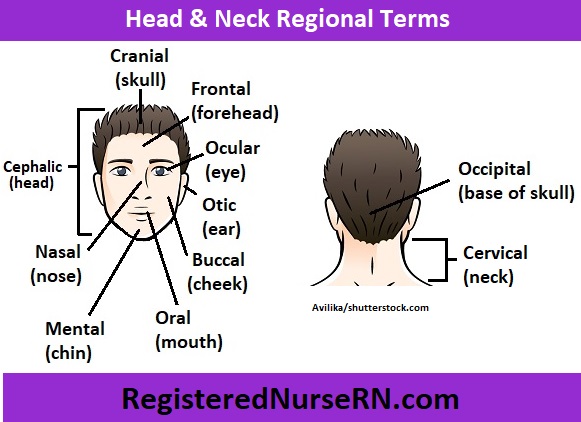
Regional terms: Head & Neck
frontal (forehead), occipital (back of skull), auricular (ear), orbital (eye socket), buccal (cheek), mental (chin), cervical (neck)
Regional terms: Trunk
sternal (breastbone), pectoral (chest), axillary (armpit), inguinal (groin), lumbar (lower back), sacral (base of spine)

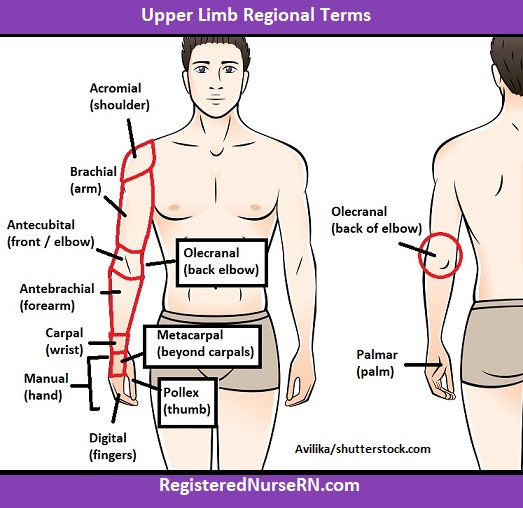
Regional terms: upper limb
Brachial (upper arm), antecubital (front of elbow), olecranal (back of elbow), antebrachial (forearm), carpal (wrist), palmar (palm), dorsum (back of hand), digital (fingers)
Regional terms: lower limb
coxal (hip), gluteal (buttock), femoral (thigh), patellar (kneecap), popliteal (back of knee), crural (lower leg), tarsal (ankle), calcaneal (heel), plantar (sole of foot)

histology
the study of tissues examining how groups of specialized cells and thier products function for a common purpose
methods of microscopic anatomy
light microscope, stains
4 basic tissues
epithelial, connective, muscle, and nervous
epithelial tissue
covers body surfaces, lines body cavities, forms glands
squamous cell
flat cell, flat oval nucleus, wider than tall
cuboidal cell
cube cell, round nucleus, equal length width and height
columnar cell
tall cell, tall oval nucleus, taller than wide
connective tissue
underlies and supports other tissues, structurally and functionally
loose connective tissue
fewer fibers, more ground substance
dense connective tissue
more fibers, less ground substance
nervous tissue
receives, transmits, and integrates information from outside and inside the body, composed of neurons and neurological cells