CHAPTER 9: ANTIMICROBIALS IN PEDIA DENT
 Call Kai
 Learn
Learn Practice Test
 Spaced Repetition
 Match
Match Flashcards
 Knowt Play
1/54

Earn XP
Description and Tags
ppt + sas + notes
Name | Mastery | Learn | Test | Matching | Spaced | Call with Kai | Chat |
|---|
No analytics yet
Send a link to your students to track their progress
55 Terms
Antimicrobials
aka: antiinfectives
Are substances that kill or suppress the growth or multiplication of microorganisms, either bacteria, viruses, fungi or parasites.
-Naturally produced by microorganisms(yeast or fungi) and used to inhibit bacteria and sometimes protozoa
Classification of Antimicrobials
Spectrum of Activity
Narrow-spectrum antibiotics
Extended-spectrum antibiotics
Broad-spectrum antibiotics
Type of Action
Bacteriostatic Drugs
Bactericidal Drugs
Categories of Antibiotic Use
Prophylactic
Empiric
Definitive
Narrow-spectrum antibiotics
Active against a single or limited group of microorganisms(e. g some gram-positive
organisms)
Extended-spectrum antibiotics
Effectiveagainst gram-positiveorganismsandasignificantnumberofgram-negative organisms
Broad-spectrum antibiotics
Act against a wide variety of species
Often initially prescribed to neutropenic or critically ill patients while awaiting the results of culture and sensitivity testing
alters normal flora, risking superinfection
Bacteriostatic Drugs
Limit the spread of the infection by halting bacterial growth and replication.
Effects on microorganisms are reversible
drugs under bactericidal
Penicillins
Cephalosporins
Carbapenems
monobactams
Fluroquinolones
Aminoglycosides
Vancomycin
Metronidazole
Bactericidal Drugs
Act independently of host immune defenses to cause cell death
Effects are irreversible, the microorganism will ultimately die following adequate drug exposure
Preferred for most infections including intraoral infections due to the fact that they act largely independent of host factors, which is an important consideration for rapidly progressing infections
drugs under bacteriostatic
Tetracyclines
Erythromycin
Clindamycin
Chloramphenicol
Sulfonamides
Macrolides (recent addition)
Trimethoprim
Prophylactic
Use of antimicrobials to prevent an infection
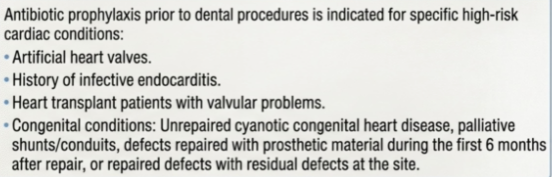
Previous bacterial endocarditis, uncontrolled diabetes, patients under immunosuppressive drug therapy, patients at high-risk for surgery
3 conditions:
prior infection endocarditis
pulmonary shunts
blue baby syndrome
Empiric
Initial use of broad-spectrum antibiotic specially if the patient is seriously ill
Definitive
Occurs following culture and susceptibility tests. After causative organism is identified,
use an agent that is narrower in spectrum to target the specific pathogen.
transpeptidase
the enzyme in …
essential during cell wall synthesis
MOA of B-lactam antibiotics (bacteriacidal)
Inhibition of Cell Wall Synthesis
penicillins, cephalosporins, monobactams, amd carbapenems
Vancomycin
MOA of Clindamycin, Macrolides, Aminoglycosides, Tetracyclines (bacteriostatic)
Inhibition of Protein Synthesis
MOA of Fluroquinolones
Suppression of DNA Synthesis
MOA of antifungals
Alteration of Cell Membrane Permeability
Polyene antifungals → binds to sterols forming pores
Azole antifungals → inhibits fungal CYP450
Antibacterial Agents
Penicillins
Amoxicillin
Amoxicillin/Clavulanate(Co-amoxiclav)
Clindamycin
Metronidazole
Fluroquinolones
classification of penicillin
natural penicillin
G → IV/IM (acid, unstable, taken w meals)
V → oral (acid stable, taken w/o meals)
semi-synthetic penicillin
Penicillinase resistant penicillin:
Methicillin, Cloxacillin
Extended-spectrum penicillin:
Ampicillin → (taken on empty stomach)
Amoxicillin, Carbenicilin,Piperacilin
B-lactamase Inhibitors
Clavulanic acid, Sulbactam
Penicillin
is generally the drug of choice assuming the patient does not have an allergy. Oral absorption of most penicillin is impaired by food and should be given 1 hour or 2 hours after meal. Exceptions to this rule are Penicillin VK and Amoxicillin.
Penicillin G
discovered by Alexander Fleming
- Given intramuscularly, Oral penicillin G is no longer used because it is subject to degradation in the presence of stomach acid
Penicillin V
and amoxicillin have chemical structures that enhance their stability in acidic environments and result in improved oral absorption. Penicillin V can be taken without regard to meals
-Administered orally and dosed at 6-hour interval
- historically, Drug of choice to treat mild to moderate dental infections in non-allergic patients
Amoxicillin
Replaced Pencillin VK as the drug of choice for the prevention of infective endocarditis by the American Heart Association because amoxicillin produces higher and longer sustained blood levels than Penicillin VK
Amoxicillin/Clavulanate(Co-amoxiclav)
Clavulanate helps amoxicillin to work better
used to eliminate beta lactamase enzyme produced by S. aerus
375mg or 625mg every 8hrs for 5 days
Clindamycin
A lincosamide antibiotic
-Both bacteriostatic and bactericidal
-Drug of choice for significant oral infections
-Patients allergic to penicillin can be given clindamycin -Available in 150 and 300 mg
contraindicated for px with clostridium difficile infection (CDI) as this will results to pseudomembranous colitis → managed with metronidazole
pedia note: the 75mg/mL suspension is notoriously unpalatable (horrible smell & taste)
Metronidazole
Active against protozoa in addition to anaerobic bacteria
-Drug of choice for the treatment of mild to moderate C.difficile colitis
-Can be combined with amoxicillin or cephalosporin for the treatment of periodontal disease -Inhibits alcohol-metabolizing enzymes, leading to an accumulation of acetaldehyde and the development of disulfiram-like adverse effects. Patients should not consume alcohol during metronidazole therapy and for at least 3 days after discontinuation.
-Available in 250 and 500 mg
often combined w amox
pedia note: very bitter, requires specialized compound benzoate salt kits to make taste for kids
Fluroquinolones
Bactericidal antibiotics with broad-spectrum activity for a variety of gram-positive, gram- negative and atypical organisms
pedia note: reserved only for multi-drug resistant pathogens with no safe alternative
historically avoided in pedia due to arthropathy / osteochondrosis seen in juvenile animal testing. causes phototoxicity (severe sunburn reactions to UV-A light)
Antifungal Agents
Polyenes → poor effectiveness & high sucrose content
Nystatin
Amphotericin B
Azole antifungals → severe drug interaction & QT prolongation risk
Clotrimazole
Miconazole, Fluconazole, Itraconazole
Nystatin
topical polyene antifungal
-considered as poor antifungal in activity
-only topical polyene for treatment of oral candidiasis
Amphotericin B
broad spectrum of action fungicidal. Mainstay for IV treatment of systemic antifunfal infections prior to development of the echinocandins, and broad-spectrum azoles.
-Called “amphoterrible” because it was noted for nephrotoxicity and infusion-related
reactions
Clotrimazole
(can be used for treatment of candidiasis)
macrolides
binds 50S ribosome
bactariostatic, long post-antibiotic effect allows for shorter, less frequent dosing regimens
drawback in dent → moderate coverage of streptococci but poor coverage of anaerobes
pedia note: high rate of dysgeusia (metallic taste - clarithromycing). high risk of drug-drug interactions. can prolong the QT interval (risk of torsades de pointes)
Antiherpetic Agents
Acyclovir
Valacyclovir
Acyclovir
10 times more potent against herpes viruses than against varicella-zoster virus and is approved for neonates
Valacyclovir
prodrug which is converted to acyclovir in vivo.
-FDA approved for children 12 years of age and older for treatment of herpes labialis
and 2 years of age and older for chickenpox.
effects of streptomycin
GI upset
effects of chloramphenicol
bone marrow suppression
aplastic anemia
gray baby syndrome
bacterial infections
periapical & periodontal abscess
cervicofacial cellulitis
NUG / NUP
periapical & periodontal abscess
pulpal necrosis / purulence or acute periodontal pocket infection
management: localized lesion with appropriate surgical drainage (I&D, extraction, endo) does not require antibiotic therapy
when to prescribe: only if systemic involvement is identifies (fever, lymphadenopathy) or px is immunocompromised develops cellulitis
cervicofacial cellulitis
diffuse, firm, warm, swelling
infection spreading into adjacent soft tissues
management: systemic antibiotics are definitively indicated alongside surgical I&D
H. influenzae type B is a risk in infant buccal cellulitis
NUG / NUP
management: primary tx is debridement and topical antiseptics
when to prescribe: prescribe / metronidazole only if fever and lymphadenopathy occur
Viral Infections
Primary Herpetic Gingivostomatitis
Secondary Herpetic Infections
Herpes Labialis
Herpes Zoster
Primary Herpetic Gingivostomatitis
most common acute viral infection affecting the oral mucosa
Caused by herpes simplex virus and transmission occurs through direct contact
-Most frequent sites of involvement include gingiva,tongue, palate, labial mucosa, buccal mucosa, tonsils, posterior pharynx.
-Heals within 7 to 10 days without scarring
-Management includes palliative care and may include systemic antiviral therapy when
indicated.
abrupt fever, malaise, red swollen mucosa with small vesicles that rupture into painful ulcers with pseudomembranes
pedia note: advise parents not to use otc benzocaine gels for pain in infants/young children due to the risk of methemoglobinemia
Herpes Labialis
-After the primary infection, virus remains latent in neural ganglion until reactivated. - -Predisposing factors for reinfection include illness, trauma, stress, UV light and immunosuppression.
-The most common sites of involvement include lips(herpes labilalis) and intraoral keratinized tissues such as hard palate, dorsal infection and attached gingiva
Herpes Zoster
-Varicella zoster virus causes the primary infection of chicken pox and presents as a recurrent infection in the form of herpes zoster(shingles).
-Recurrent infection usually presents in a unilateral distribution along the trigeminal nerve and extends to the midline.
Candidiasis/ Candidosis
a fungal infection
Most common intraoral superficial mycosis. -Most often caused by Candida albicans
white removable plaques with underlying erythema or red fissuring at commissures (angular cheilitis)
pedia note: infants with cleft lip/palate are highly susceptible due to breast milk/formula pooling in the cleft. caregivers must wipe the area with a moist cloth after feeding
practice question in sas

2 tests when administiring antibiotics
culture & serologic testing → identifies the specific pathogen
sensitivity testing → identifies the appropriate antibiotic
tests under sensitivity testing
rapid catalyst test → identifies the difference of staphy vs strepto
blood agar plate test → focuses on strepto
coagulates test → focuses on staphy
blood agar plate test
focuses on strepto:
if total lysis → B-hemolysis
if partial lysis → a-hemolysis
if no lysis → g-hemolysis
coagulates test
focuses on staphy:
positive → S. aerus (normal flora of the skin)
negative → S. epidermitis (most common in oral cavity & skin)
pharmacological rule

parts in a prescription writing

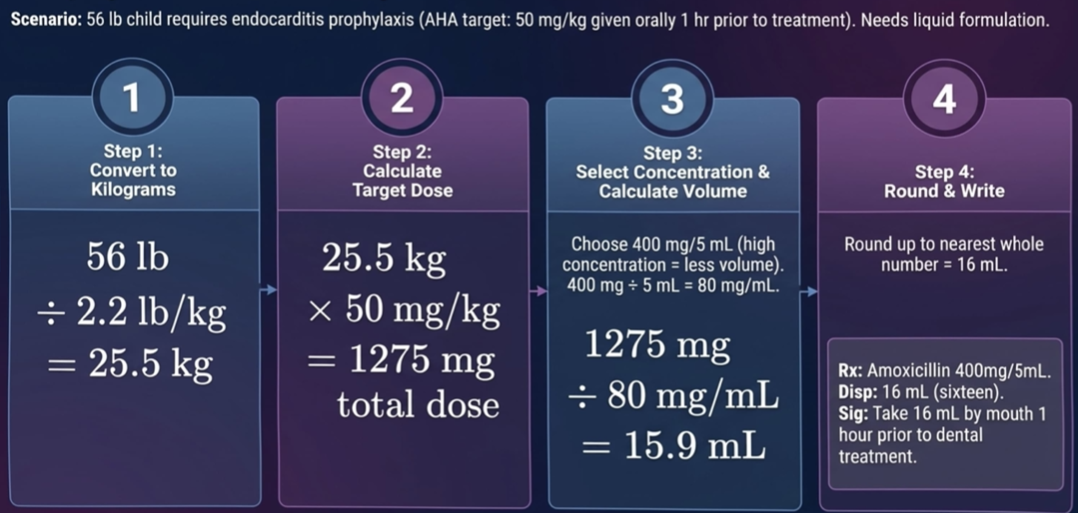
case study for the calculation flow
AHA endocarditis prophylaxis criteria