BPK 340 - Module 9
 Call Kai
 Learn
Learn Practice Test
 Spaced Repetition
 Match
Match Flashcards
 Knowt Play
1/62

There's no tags or description
Looks like no tags are added yet.
Name | Mastery | Learn | Test | Matching | Spaced | Call with Kai | Chat |
|---|
No analytics yet
Send a link to your students to track their progress
63 Terms
What are campaigns
A connected series of operations designed to bring about a particular result
What are health promotion campaigns
Are organized efforts that use targeted strategies to inform, motivate, and support individuals or communities in adopting healthier behaviors
5 defining portions of campaigns
Goal-oriented
Attempt to inform, persuade, or motivate change
Aimed at well-defines, large audiences
Occur during a given time period
Involve an organized set of communication activities
Campaigns have: (8)
Target groups
Central message (objective, slogans)
Strategy (The big plan)
Tactics (The specifics)
Partners
Stakeholders
Gate keepers (obstacle to overcome)
Outcomes
Strategy
A global plan to reach a long-term goal
Tactic
Specific on how you will implement the plan
Strategy vs. Tactic (plus an example)
Strategies = big picture plan (overall approach to achieve health goal)
Tactics = the specific actions you take to carry out that strategy
Example:
Strategy - increase PA among teenagers
Tactic - launch an TikTok dance challenge, partner with local sports clubs, create school-based walking programs
Goal of “Bell Let’s Talk”
Promote mental health awareness & reduce stigma
“corporate social responsibility program”
How the goal has been reached since 2010 of “Bell Let’s Talk”
$139M+ invested in mental health initiatives
Supported 1,500+ mental health partners
Reached millions of Canadians
Key Feature of “Bell Let’s Talk”
Annual Bell Let’s Talk Day
sparks nationwide conversations and awareness
Target groups of “Bell Let’s Talk”
Primary = Canadians with mental illness
Secondary = employers
Central Messages of “Bell Let’s Talk”
It is not your fault
Do not be afraid of being judged
There is help available
Just be open (talk about it!)
Four Pillar Strategy of “Bell Let’s Talk”
Anti-stigma
Community care and access
Research
Workplace mental health
Some examples of tactics of “Bell Let’s Talk”
Social media: for every interaction on social media using #bellletstalk, bell donates 5cents
Bus stand billboards
Television
Spokesperson Clara Hughes
Workshops for senior managers
Fellowships and grants for researchers
Outcomes of “Bell Let’s Talk”
1500+ orgs. provide mental health support supported by Bell Lets Talk
6,956,297 Canadians have been supported through programs funded by Bell Lets Talk
½ of Canadians say they have taken action since Bell Lets Talk Day began
Main controversy of “Bell Let’s Talk”
Corporatization of mental health
Some bell employees said that the company did not promote mental health among workers
Icelandic Model, Basis
Systemic alcohol abuse big problem in Iceland
Based on Social deviance models not behaviour change theory
Goal = reduce substance abuse in adolescents
Target = society/community
Environment and Social context of Icelandic Model
Lack of environmental sanctions
Low individual and/or community investment in traditional and positive values
Lack of opportunities for participation in positive and prosocial development
Social deviance model
People will stray from social norms, reduce the number of people that do so
Areas that are targeted in Icelandic Model
Family
Leisure Time
Peer Group
School
Individual
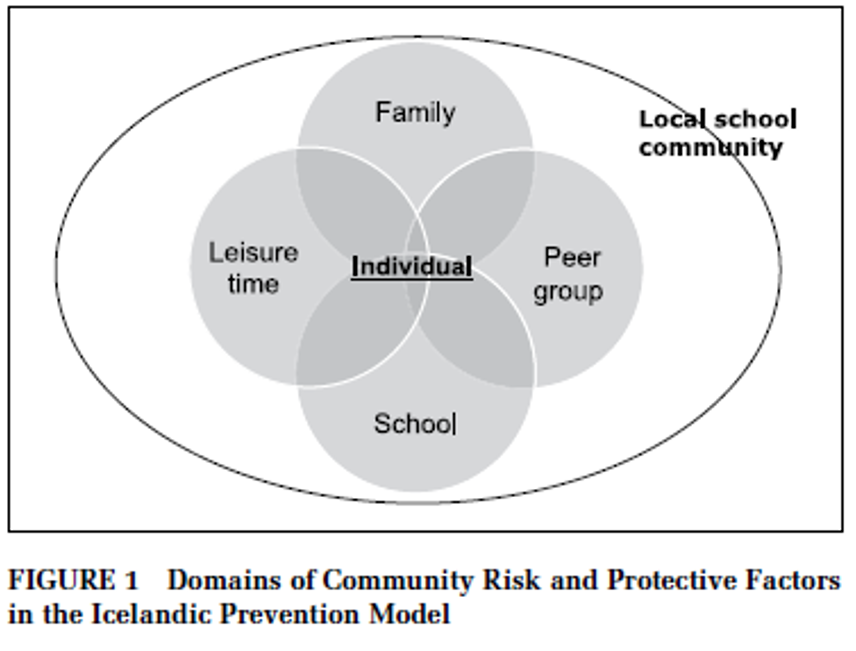
Icelandic Model Guiding Principles (strategies) 5 of them
apply a primary prevention approach that is designed to enhance the social environment
emphasize community action and embrace public schools as the natural hub of neighborhood/area efforts to support child and adolescent health, learning, and life success
engage and empower community members to make practical decisions using local, high-quality, accessible data and diagnostics
integrate researchers, policy makers, practitioners, and community members into a unified team dedicated to solving complex, real-world problems
match the scope of the solution to the scope of the problem, including emphasizing long-term intervention and efforts to marshal adequate community resources
Icelandic Model Tactics
Curfews for different ages
Laws banning tobacco and alcohol under 18 and 20
Banned alcohol and tobacco ads
Law required parental orgs. in schools
Voluntary signed agreements by parent\ to not buy alcohol, check on friend groups, etc.
Talks for parents - not “quality time”
Parental guidance - changing norms
Increased funding for sport, art, music, etc, leisure cared $500 approx
Surveillance
Icelandic Model Outcomes
1997-2012, % youth 15-26 who reported often or almost always spending time with their parents on weekdays increased from 23% to 46%
% who participated in organized sprots at least 4x/week increased from 24 to 42%
Drinking rates in youth dropped from 56 to 5%, cigarettes and cannabis use also dropped
Model disseminated around the world
Challenges identified
D.A.R.E Goal and Strategy
Goal = drug abuse resistance education, reduce drug use in youth
Strategy = prevent use of controlled drugs
Tactics of D.A.R.E
4th to 5th grade students sign pledge not to use drugs = “graduate program”
Police officers inform students about dangers of drugs in interactive school curriculum
Outcomes of D.A.R.E
Students who participated had significantly higher rates of hallucinogenic drug use that those who did not
DARE imparts a large amount of info but has little impact, and many smaller interactive programs were more effective
Target Population of Choose to Move
Community-dwelling, low-active adults over 60 in BC
Design of Choose to Move
Choice-based, flexible, activity coach-supported PA intervention
Program provides support to seniors through group meetings, on-on-one action planning session, ongoing check-ins
Key goals of Choose to Move
Increase PA, help 60+ adults become more active with personalized, manageable plans
Reduce social isolation, encourage connections through group sessions and peer support
Promote long-term health and independence, build confidence and habits that support ongoing active living and quality of life
Expectations of Choose to Move
Personalized guidance
Community connection
It’s not a fitness class, its more about creating lifestyle changes
Backed by science
Strategies of Choose to Move
One-on-one consultation
Motivational group meetings
Telephone check-in’s
Impact of Choose to Move
Increased PA and mobility
Increased social connectedness
Decreased loneliness
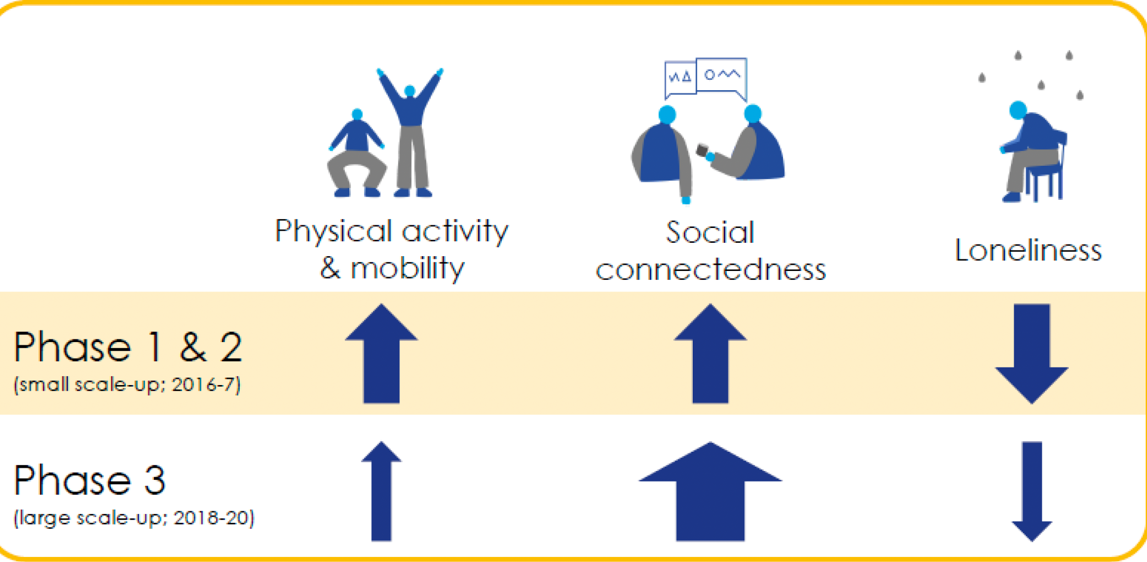
Whats next for Choose to Move
Not fully satisfied with existing reach of Choose to Move
Endeavour to adapt to serve more diverse group
ethnicity and culture
sex and gender
geography
chronic disease and clinical populations
Partnerships
Formal arrangement by two+ orgs./people to develop, manage, and/or evaluate a program and share the results
Relationship involving close cooperation between parties having specified and joint rights and responsibilities
Government, non-government, private enterprises, communities
Benefits of partnerships in health promotion (6)
Expanded reach, partnering with schools, community groups, etc helps reach more diverse populations
Shared resources, combines funding, staff, expertise, and infrastructure, making campaigns more cost-effective and efficient
Enhanced credibility, collab with trusted community leaders or profession orgs. increases public trust and engagement
Diverse expertise, partners bring complimentary skills (e.g. communication, knowledge)
sustainability, shared ownership encourages long-term support and continued impact
innovation & creativity, different perspectives
Partners, Goal, Key Features, and Impact of 9-8-8 Suicide Crisis Helpline
PHAC, Centre for Addiction and Mental health Canada, 40+ local and regional crisis lines
Provide 24/7, culturally informed suicide crisis support nationwide
Accessible trauma-informed support, indigenous-centered services to ensure cultural appropriateness, long-term funding and sustainability plans
Strengthens national mental health support through a coordinated, multi-sectoral approach
Goal, Key Features, and Impact of M7M Food Market and Chron’s and Colitis Foundation of Canada
Raise funds and awareness for inflammatory bowel disease research
Annual charity BBQ day with food sales for donations, gold tournaments, themed item sales, Gusty Walk sponsorship, nationwide community participation
Over 24.3M raised, engages employees customers and communities, demonstrates long-term corporate social responsibility
Goal, Key Features, and Impact of ParticipACTION + Coca-Cola
Promote physical activity among Canadian youth
SOGO Active/Teen challenge program (microgrants & leadership opportunities for local orgs.), engaged 500,000 teens and 5,800+ community orgs nationwide, support participation in events like 2010 Olympic torch relay, Coca-Cola provided $10M in funding
Increased youth engagement in PA< highlighted the potential challenges of partnerships in health promotion (partnership ended n 2015 amid concerns over alignment with sugar beverage)
Partners, Goal,of Alberta Partnerships in Nutrition Education (Alpine)
Improve nutrition of Alberta residents
Partnership of 10 Alberta and national orgs. including: Dieticians of Canada, Alberta Milk, Health Canada, Alberta Cancer board, Canadian Diabetes Assoc.
Stakeholders
People or groups with some of the same interest as ours
Has vested interest in the outcome
Can use them as protentional partners, funders, suppliers, sponsors, etc.
Collaboration of multiple stakeholders in health promotion allows each to contribute:
Resources, expertise, and reach to maximize health impact
Stakeholders in health promotion (government, healthcare providers, community orgs, private sector, schools, media, researchers)
•Government – funding, policy, regulations
•Healthcare Providers – expert guidance, service delivery
•Community Organizations – local outreach, trust-building
•Private Sector – funding, marketing, broad reach
•Schools & Educational Institutions- integrate health program
•Media – raise awareness, shape public perceptions
•Researchers – provide evidence, best practices
Stakeholders involved in Bell Lets Talk
Corporate - Bell: provides funding and media platforms
Nonprofits, mental health orgs: develop content, provide counseling resources
Govern. and public health: Offer guidance on mental health policy and public messaging
Media, and public figures: amplify awareness and normalize conversations
Impact of Stake Holders Bell Lets Talk
Funding and resources, enabled nationwide campaigns and support
Reach and awareness, from media coverage and celeb participation
Credibility and expertise, as ensured accurate and culturally sensitive messaging
Policy alignment due to collab with public health agencies strengthened messaging consistency and sustainability
How many stakeholders in Active Canada 20/20
1,700, including experts, orgs, and communities across Canada
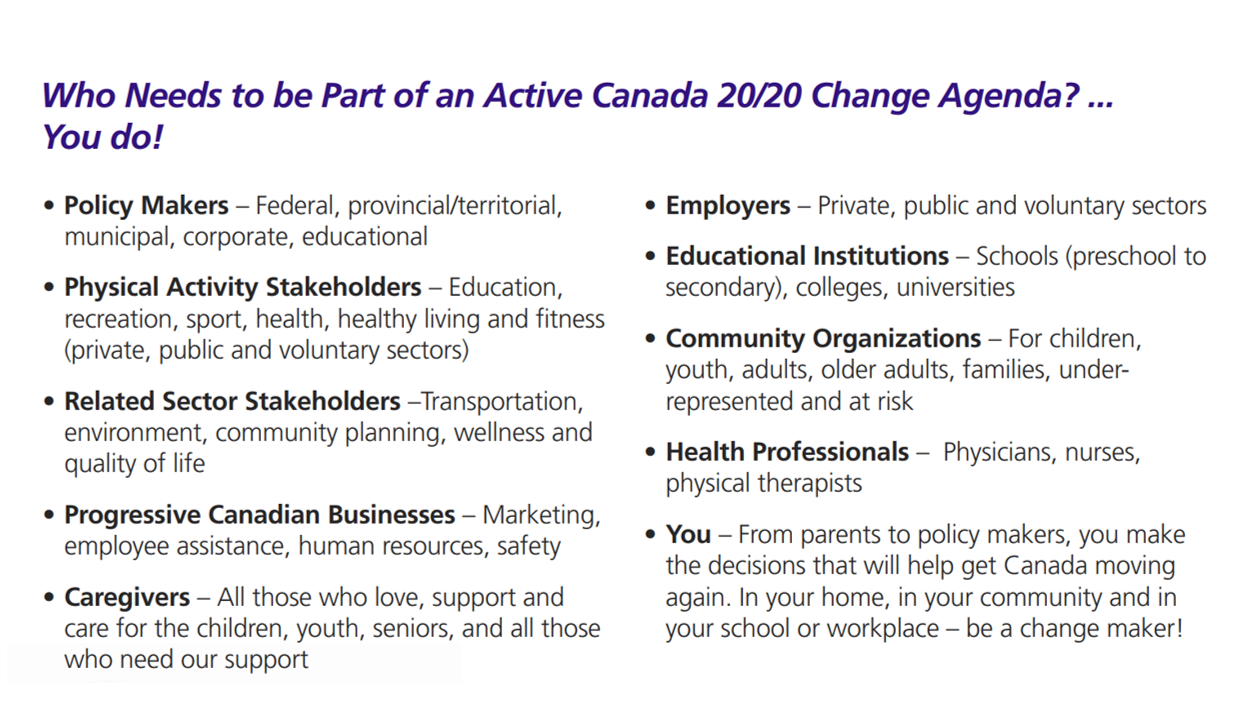
Key objectives of Active Canada 20/20
Increase PA levels across all age groups
Reduce sedentary behavior and related health risks
Promote a culture of active living through coordinated efforts
Strategic areas of focus for Active Canada 20/20
Policy and advocacy: influence policies that support PA
Community engagement: foster environments that encourage active living
Education & awareness: raise public awareness about the benefits of PA
Research and evaluation support research to inform and evaluate strategies
Stakeholders example: Child oral health
They all want children to care for their teeth
Dental hygienists talk to groups of elementary school children
Canadian Dental Association endorses campaign
Colgate supplies free toothpaste
Gatekeepers
People who stand between us and the end user audience. Their permission, support, assistance, and collaboration may be crucial
Eg. if you target schools, you need principals and other admin to be on side
Gatekeepers roles in campaigns
Grant or restrict access to communities, schools, workplaces, or media
Influence trust and credibility of campaign within population
Shape the way messagers are recieved and acted upon
Gatekeeper impact examples
A school principal deciding whether a nutrition program can run in school
Community leaders endorsing or discouraging participation in health screening
Media editors controlling which health messages get published
*engaging gatekeepers effectively is critical for campaign reach, acceptance, and success
Evaluation of Promotion, Purpose and Function
Measures how well a campaign achieves its goals
Function
identifies what works, what doesn’t, and why
ensures resources are used effectively
demonstrates impact to funders, stakeholders, and the community
guides improvements for future campaigns
Evaluation of Promotion, Types
Formative - shapes campaign design before launch
Process - monitors implementation during campaign
Outcome/Impact - assesses short and long-term results
Evaluation turns good intentions into proven results
Measures of success
Check your actions, did you do what you planned?
Measure impact: did it make a difference?
Test approach: was design and theory effective?
Consider costs: was it worth the money?
Assess community goals: were the needs and priorities of community met?
Use evidence: base decisions on solid data
Why does accountability matter in health promotion
shows the public and funders that the money and resources spent made a real difference
Tools/examples of accountability in health promotion
CDC registry of effectiveness
Program assessment rating tool
Canadian best practices portal
PHRED program
Process evaluation
check implementation: were all parts of the program caried out as planned?
track activities: how many materials were created and shared? how many education sessions were held? how many community partners were involved?
test the theory: did the underlying theory work in practice?
replication: can the program be repeated with similar results?
fidelity: was the program delivered the way it was designed?
dosage: did participants get enough exposure to the program to make an impact?
Fidelity vs Dosage
Fidelity - degree of exactness with which something is copied reproduced
Dosage - amount of effect based on investment
Impact Evaluation
Measures change: assesses whether the campaign made a real difference in health behaviors, attitudes, or outcomes
Connects to Goals: shows if the program achieved its intended results
Proves effectiveness: provides evidence to stakeholders and funders that the campaign works
Informs future work: identifies successful strategies and areas for improvement
Supports accountability: demonstrates that resources were used wisely
Bottom line: impact evaluation turns results into proof - and proof into better health programs
Outcome evaluation
Measures long-term results: looks at whether the campaign achieved its ultimate health goals
Assess sustainability: checks if changes in behavior or health outcomes last over time
Demonstrates public health impact: shows improvements in population health, such as reduced disease rates or improved quality of life
Guides policy & funding: provides strong evidence to support continued or expanded programs
Ensures accountability: confirms that investments led to meaningful, lasting change
Bottom line: outcome evaluation proves whether a health promotion campaign creates real, lasting benefits
Outcome Evaluation Community Paramedicine in Social Housing
Goal, Approach, Results, Impact
Goal: improve health and reduce emergency calls for older adults in subsidized housing
Approach: paramedics delivered health checks, risk assessments, and lifestyle advice on-site in 30 Ontario social housing buildings
Results:
~10-11 fewer ambulance calls per 100 units each year
Better diabetes risk scores (CANRISK)
improved quality of life and blood pressure control
Impact: lower emergency service use and healthier residents - proof prevention works
Examples of process, impact, and outcome evaluation
Process: # of workshops held, materials distributed
Impact: increase in PA within 3 months
Outcome: Lower rates of heart disease over 5 years