lipari intro to asthma
 Call Kai
 Learn
Learn Practice Test
 Spaced Repetition
 Match
Match Flashcards
 Knowt Play
1/57

There's no tags or description
Looks like no tags are added yet.
Name | Mastery | Learn | Test | Matching | Spaced | Call with Kai | Chat |
|---|
No analytics yet
Send a link to your students to track their progress
58 Terms
which age group does asthma primarily affect
mostly pediatric but can develop at any age
for pediatric asthma,
majority is diagnosed by __ yrs
half have symptoms by ___yrs
majority boys or girls?
diagnosed by 5yrs
symptoms by 2yrs
more common in boys than girls until adolescence
is asthma more common in females or males? at which ages?
pediatrics: more common in boys
adults: more common in women
general etiologies of asthma
- genetic predisposition
- environmental exposures and timing
- potential link with allergies and atopy
t/f: there is a high link btwn atopies such as hay fever and atopic dermatitis & asthma
true. but not all patients with atopy develop asthma and vice versa
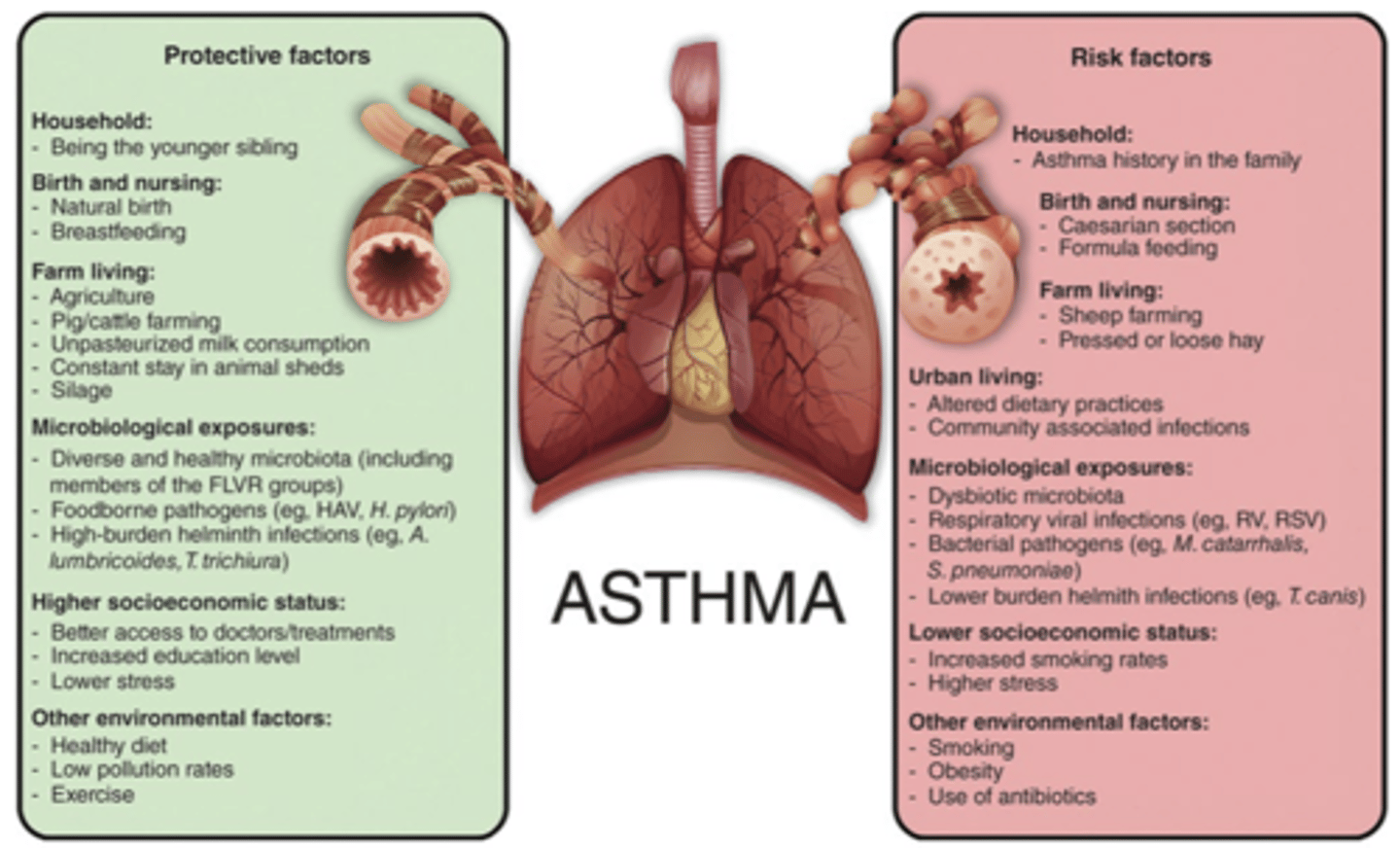
protective factors for asthma (summary)
younger or older sibling?
birth conditions?
environment?
microbes?
other?
- being younger sibling
- natural birth & breastfeeding
- farm living: crops, pigs, unpasteurized milk, silage, animal sheds
- microbes: diverse, healthy, foodborne pathogens, high burden helminth infections
- higher socioeconomic status
- healthy diet, low pollution, exercise
risk factors for asthma (summary)
household?
birth conditions?
environment?
microbes?
other?
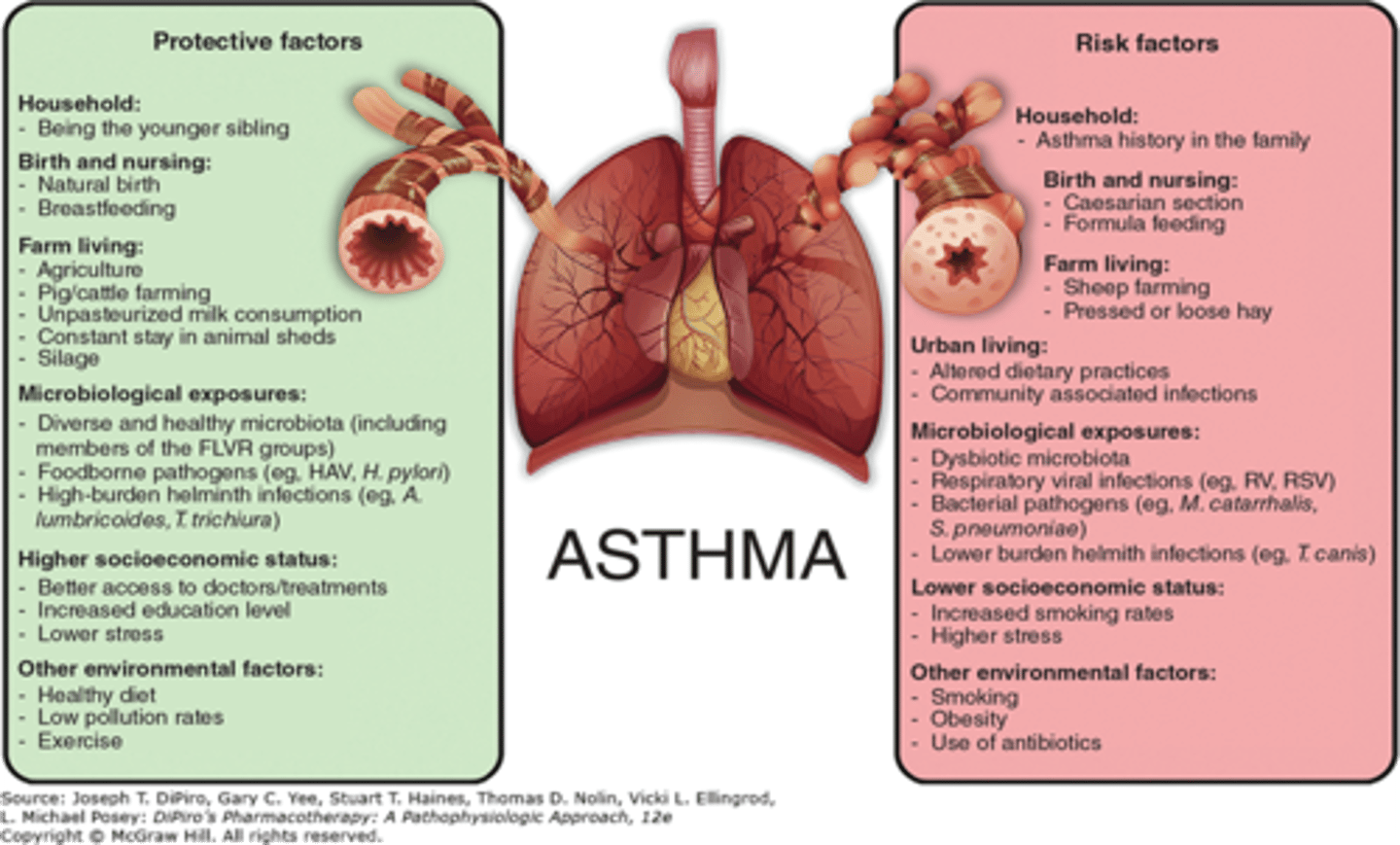
- asthma history in family
- C section, formula feeding
- farm living: sheep farming, hay
- urban living (diet, infections)
- microbes: respiratory viral, dysbiotic, bacterial pathogens, low burden helminth
- increased smoking, stress, obesity, antibiotics
which of the following is a protective factor for asthma
a. being older sibling
b. formula feeding
c. sheep farming
d. urban living
e. cattle farming
e. cattle farming
which of the following is a risk factor for asthma
a. use of antibiotics
b. foodborne pathogens
c. natural birth
d. unpasteurized milk consumption
a. use of antibiotics
asthma is characterized by airway narrowing and inflammation in ___________
medium sized bronchi
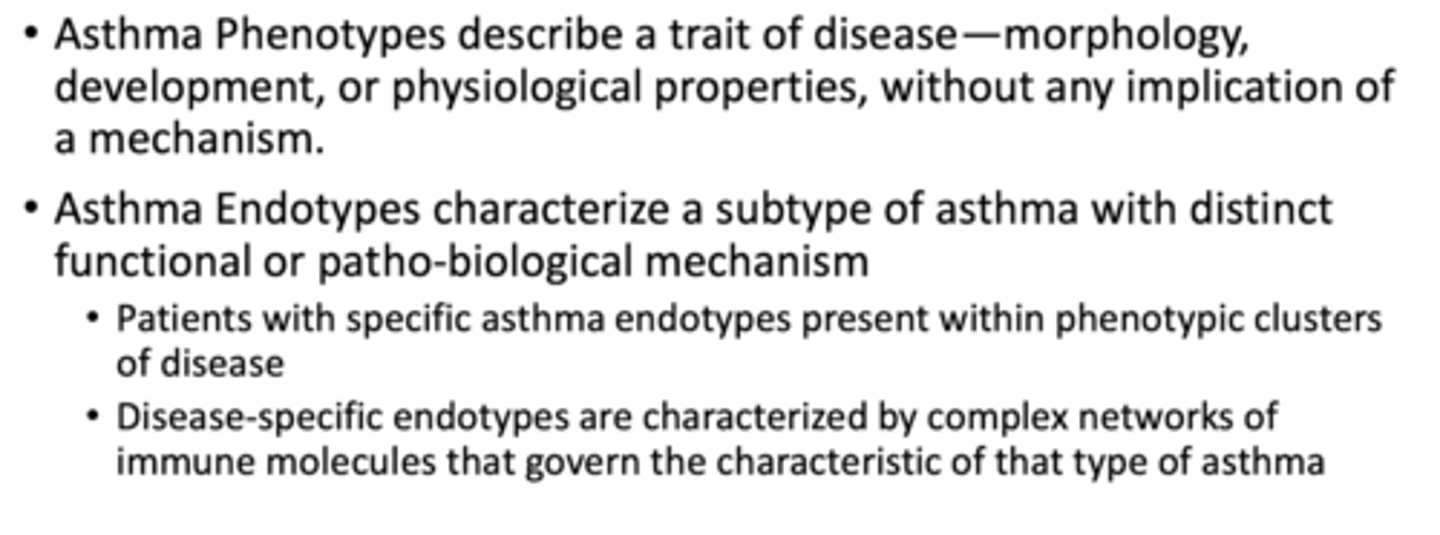
what does it mean by asthma phenotypes vs endotypes
endotype: mechanism behind asthma
- TH2 high or TH2 low
phenotype: how asthma presents
- early onset allergic, AERD, late onset, with obesity, excercise induced, etc
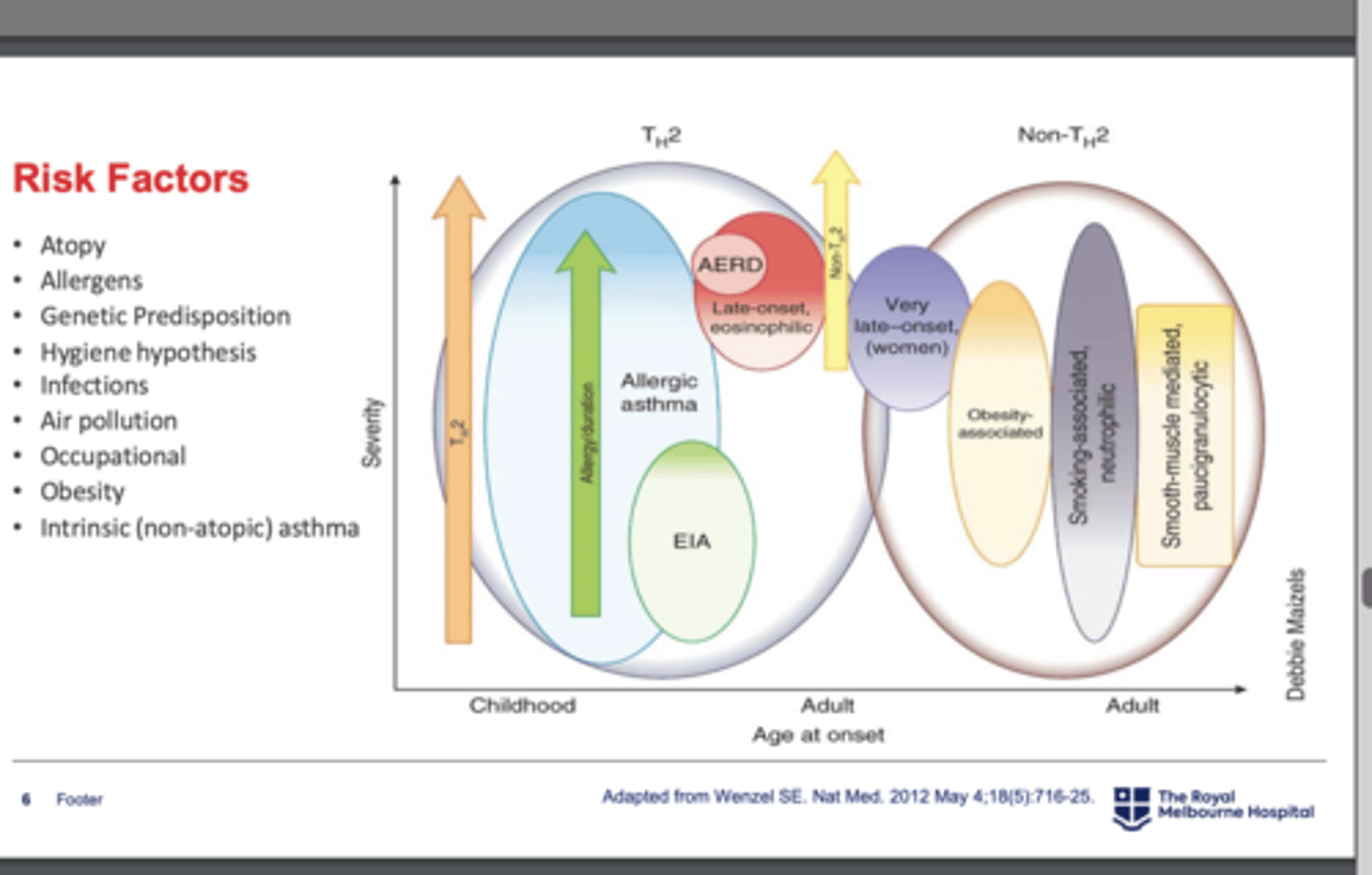
2 asthma endotypes and their corresponding phenotypes (summary)
1. TH2 high endotype (more eosinophils)
- early onset allergic
- late onset eosinophilic
- AERD
- exercise induced
2. TH2 low endotype
- asthma with obesity
- smoking associated
- very late onset
TH2 high phenotypes (4)
- early onset allergic eosinophilic
- late onset eosinophilic non-allergic
- aspirin exacerbated respiratory disease (AERD)
- exercise induced bronchospasm
(so early, late, aspirin, exercise)
TH2 high vs TH2 low endotypes characteristics
mediators?
TH2 high: dependent on cytokine expression, both allergic and nonallergic eosinophilic asthma that will cause inflammation
TH2 low: neutrophilic, mixed, or paucigranulocytic; poorly understood patho
which asthma endotype is more readily understood and often presents with cytokines and eosinophils
TH2 high
which mediators are activated in TH2 high asthma
IL: 25, 33-> 4, 5, 13
non-IL: thymic stromal lymphopoietin (TSLP)
t/f: TH2 high asthma does not often present with inflammation
false. often presents with inflammation either through airways exposure to allergens/pollutants or bc of the mediators
early onset allergic eosinophilic asthma
phenotype:
clinical sx:
molecular mech:
biomarkers:
TH2 high
- well defined, early onset, corticosteroid sensitive
- mech: allergic sensitization
- biomarkers: eosinophil count, high IgE, high FeNO
identifiable, treatable, preserved lung function
late onset non-allergic eosinophilic with concomitant chronic rhinosinusitis & nasal polyps
phenotype:
molecular mech:
biomarkers:
TH2 high
mech = s. aureus enterotoxin
biomarkers: blood/sputum eosinophils, high FeNO
severe from onset and has more frequent exacerbations
late onset non-allergic eosinophilic with AERD
phenotype:
molecular mech:
biomarkers:
TH2 high
mech = dysregulated arachidonic acid metabolism
biomarkers: blood/sputum eosinophils & urinary LTE4
severe from onset and has more frequent exacerbations
t/f: late onset non-allergic eosinophilic often has biomarkers such as high FeNO, high IgE, and high eosinophils
false. IgE only in early onset allergic
the first _____ years of life are the most important for exposures to alter the immune system
2
individuals with TH2 high, early onset asthma respond well to which treatments
ICS, monoclonal Igs to IgE, Th2 targeted therapeutics
TH2 high early onset asthma occurs by
upregulation of:
down regulation of:
upregulation: CD4+ t-helper cell 2 (TH2) lymphocytes
downregulation: CD4+ T helper cell 1 (TH1) lymphocytes
(note TH1 is used for infection defense, this is why antibiotics are a risk factor for asthma since abx downregulate TH1)
t/f: in early onset asthma, TH2 dominance suppresses TH1 responses, making the immune system skewed toward allergic inflammation rather than pathogen defense
true
describe the pathway of acute inflammation in early onset asthma, beginning with an inhaled allergen
(early phase)
allergen-> TH2 response->
1. b cell production of igE
2. pro-inflammatory cytokines
3. chemokines-> recruit MEN (macrophages, eosinophils, neutrophils)
inflammation!!!!!
describe the pathway of acute inflammation in early onset asthma, beginning with an inhaled allergen- LATE PHASE
when does it occur?
what is it characterized by?
activated airways cells lead to
1. cytokines
2. chemokines
= more inflammation
- occurs 4-6hrs after allergen-> lower bronchoconstriction and higher airway hyperresponsiveness/inflammation
t/f: late phase response in early onset asthma occurs 1hr after allergen challenge and is marked by even further bronchoconstriction
false. occurs 4-6hrs after and has LESS bronchoconstriction and MORE hyperresponsiveness and inflammation
in allergic asthma, further exposure to antigen leads to cross linking of ______ leading to _______
cross linking of IgE-> bronchoconstriction for about an hour
(and then less in late phase 4-6hrs after)
development of bronchial hyperresponsiveness (BHR) in chronic early onset asthma leads to (3)
1. increased risk of exacerbations
2. increased symptoms
3. worsening airway obstruction
chronic inflammation in early onset asthma can lead to (2)
1. bronchial hyperresponsiveness (BHR)
2. airway remodeling (fibrosis, smooth muscle, angiogenesis, mucus glands)
in TH2 high adult onset eosinophilic asthma, patients usually have which 3 conditions
1. chronic sinusitis
2. nasal polyps
3. asthma exacerbated by aspirin
treatment for TH2 high adult onset eosinophilic asthma?
treatment for early onset asthma?
adult: ICS and IL-5 monoclonal antibodies
early: ICS, monoclonal antibodies to IgE, TH2 targeted therapies
th2 low phenotypes
- asthma with obesity
- smoking associated
- very late onset
th2 low asthma can be triggered by (3)
- viral respiratory infections
- air pollution
- cigarette smoke
which cells characterize th2 low asthma
neutrophils or paucigranulocytic (low WBCs)
t/f: both th2 high and th2 low asthmas respond well to ICS
fale. th2 low does not respond well to ICS (& doesnt have eosinophils)
t/f: obesity can worsen th2 low asthma
true
is the following a characteristic of th2 high or th2 low asthma?
good response to ICS and often seen in childhood
th2 high
is the following a characteristic of th2 high or th2 low asthma?
mostly neutrophils and fewer allergic symptoms
th2 low
t/f: patients with both th2 low and th2 high asthma tend to have pattern of symptoms (ex: worse at night, or seasonal)
true
clinical presentation of asthma
- wheezing, SOB, chest tightness
- cough that worsens at night
- triggers that worsen symptoms
- tachypnea, tachycardia, hypoxemia
which indicators increase the probability of an asthma diagnosis? what must you do to confirm?
history of:
cough (worsens at night), recurrent wheeze, SOB, chest tightness-> that worsen via triggers
must confirm with spirometry
what is the criteria for an asthma diagnosis when testing lung function variability PLUS airflow limitation (regarding fev1/fvc)
adults:
children:
FEV1 must be low and FEV1/FVC must be reduced at least once during process
adults: <0.75-0.80
children: <0.90
in bronchodilator reversibility testing for asthma diagnosis,
which 2 agents can be used?
what are the appropriate values for adults and children to be able to be diagnosed w asthma?
- methacholine or histamine
>=12 yrs: increase in FEV1 of >12% and >200mL from baseline in lung volume after bronchodilator given
<12yrs: increase in FEV1> 15%
which of the following is not a possible test for asthma diagnoses
a. positive bronchodilator reversibility testing
b. spirometry fev1
c. increases in lung function after 4 weeks of anti-inflammatory therapy
d. excessive variability in twice daily peak flow over 2 weeks or variation in lung function between visits
e. negative exercise challenge
e (should be positive exercise challenge to suggest bronchoconstriction when exercising)
a= positive bronchodilator reversibility [if over 12yrs FEV1 increases 12+% and >200mL OR 15=% if less than 12yo]
b= spirometry FEV1 [low bc of airflow limitation]
c= increases in lung function after 4 weeks of anti-inflammatory therapy (yes)
d= excessive variability in peak flow/lung function (yes= hyperresponsiveness)
what are the differentials between asthma and COPD in terms of the following:
-cough
-reversibility
asthma:
- non productive cough
- cough is worse at night and early morning
- FEv1 reversible
COPD:
- productive cough
- cough is variable throughout day
- FEV1 is unlikely to be reversible [unless low or coexists w asthma]
t/f: while cough in asthma is often productive and worse in the morning, cough in COPD is unproductive and worse at night
false.
asthma= non-productive; worse at night and morning
copd= productive; variable throughout day
what is exercise induced bronchospasm (EIB) & what does it present with
cough, SOB, chest pain, wheezing, endurance problems during exercise
when is EIB provoked most easily
cold, dry air [warm and humid air can block it]
how is EIB confirmed
- a 15% decrease in FEV1 or peak expiratory flow before and after exercise
- measured at 5 min intervals for 20-30 mins
goals of treatment for acute severe asthma
- correction of significant hypoxemia
- rapid reversal of airflow obstruction
- reduction of the likelihood of relapse of the exacerbation
- development of an asthma action plan
t/f: while asthma can present rapidly within 3-6 hrs, it more commonly occurs over a longer period (days or weeks)
true
in which percentile is peak flow for
well controlled asthma:
getting worse:
severe:
well controlled: >80% of personal best
getting worse: 50-79% of personal best
severe: <50% of personal best
what are the presentations for
well controlled asthma:
getting worse:
severe:
well controlled asthma: need reliver <3 times per week, do not wake up, activities not limited
getting worse: need reliever more, wake up with asthma, cannot do normal activities
severe: need reliever more often than 3-4hrs, difficult breathing, wake up with asthma
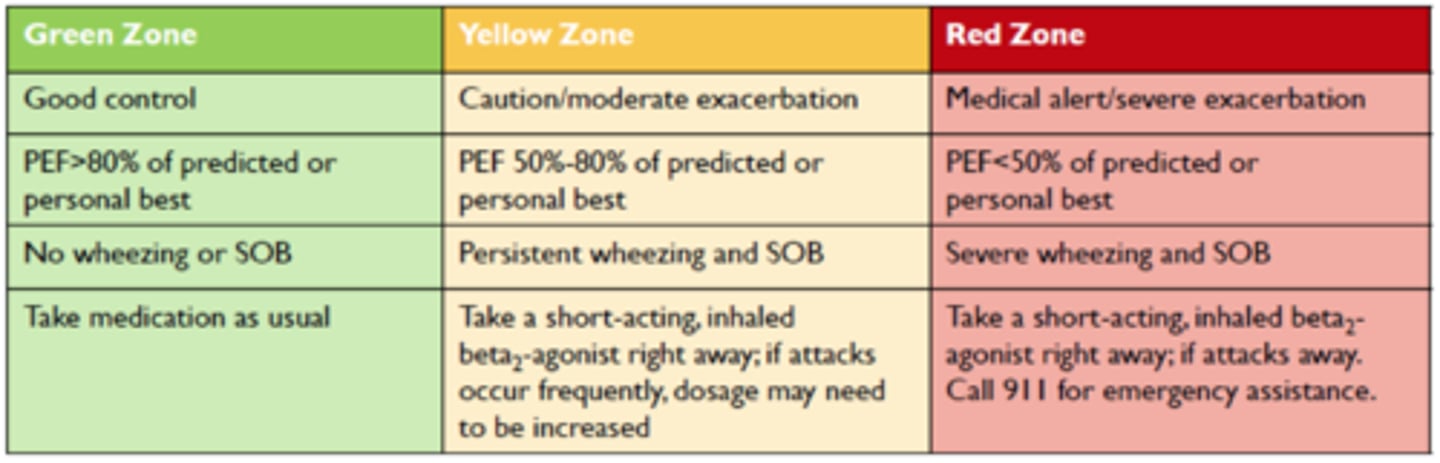
what are the proper medication changes for asthma if there is a loss in control
- increase usual reliever (SABA or symbicort)
- increase controller (ICS + SABA or symbicort)
- add oral corticosteroids if severe and contact doctor
t/f: oral corticosteroids must always be tapered
false. tapering is not necessary if <2 weeks
usual prednisone dose for adults vs children
adults: 1mg/kg/day for 5-7 days
children: 1-2mg/kg/day for 3-5 days