BIO 181 Unit 2 Notes
 Call Kai
 Learn
Learn Practice Test
 Spaced Repetition
 Match
Match Flashcards
 Knowt Play
1/60

There's no tags or description
Looks like no tags are added yet.
Name | Mastery | Learn | Test | Matching | Spaced | Call with Kai | Chat |
|---|
No analytics yet
Send a link to your students to track their progress
61 Terms
Cell theory
the cell is the basic unit/structure and function in organisms
all organisms are composed of one or more cells
cells arise from pre-existing cells
Why don’t cells just keep getting bigger?
SA:V ratio; larger surface area and less volume allows for better oxygen distrubution
Prokaryotic cells
no nucleus, small, one circular DNA (70S), simple cytoskeleton, divides via binary fission, single-celled
Eukaryotic Cells
Membrane bound nucleus, organelles, bigger, multiple linear DNA (80S), complex cytoskeleton, divides via mitosis
Prokaryotic cell architectural regions
cell envelope (plasma membrane covered by a cell wall)
cytoplasmic region - houses DNA, ribosomes, and proteins
flagella/pili projecting from cells surgaceC
Viruses are acellular
True
What is try of viruses
Have genetic material
A cell discovered has the following characteristics:
Membrane-bound nucleus
mitrochondria
no cell wall
multiple linear chromosomes
It is an animal cell
What distinguishes eukaryotes as compared to prokaryotes
compartmentalization

Cell/plasma membrane purpose
membrane that surrounds the cytoplasm of the cells; controls the passage of organic molecules in/out of the cell

Cytoplasm
gel-like inner region between plasma membrane and nuclear envelope
Nucleus
houses Cell’s DNA and directs the synthesis of protein
Ribosomes
Responsible for protein synthesis
Rough endoplasmic reticulum purpose and example
Makes proteins (often found in pancreas producing digestive enzymes)
Endoplasmic reticulum purpose and example
makes lipids (often found in liver detoxifying alcohol/drugs)
Golgi apparatus purpose
Modifies, transports, and packages newly made proteins/lipids in eukaryotic cells
Mitochondria purpose
Provide energy to the eukaryotic cell by converting sugars to ATP
Vesicles
transports materials between organelles within/to the cell membrane
cauole
stores water, nutrients, pigments, waste, and toxins
peroxisomes
used for detoxification and breakdown of fatty acids (prevalent in liver)
Lysosomes
Digestion/recycling of proteins, lipids, polysaccharides, nucleic acids (garbage disposal with acidic interior)
Cytoskeleton
maintains cell shape
organizes organelles
moves materials inside cells
moves the cell
separates chromosomes during cell division
Microfilament structure
smallest, formed of actin protein
Microfilament function
cytokenesis, and support just beneath plasma membrane
intermediate filament structure
medium, made of proteins
intermediate filament purpose
resist stretching, holding organelles in place, strengthen cells
microtubules structure
large, composed of tubulin protein
microtubules functions
transport, form cilia + flagella, separate chromosomes during mitosis
Which organelle inside the animal cell is responsible for modifying newly made proteins
Golgi apparatus
Chloroplasts
Carry out photosynthesis, contain chlorophyll (absorbs light)
Cell walls in plants are made of
cellulose
Extra components of plant cells
Cell wall, chloroplasts, plasmodesmata, plastids
Which pair of organelles contain its own DNA and ribosomes?
Chloroplast and mitochondria
If all microtubules are destroyed in a eukaryotic cell, which process is most likely impaired?
Vesicle transport between organelles
why do cells divide?
growth
repaire/replacement
reproduction
phases of the cell cycle
interphase
M phase
phases of interphase
G1, S, G2
G1
cell growth
checkpoint: conditions are favorable for cell to enter S phase
G0
subset of G1 where cells rest (do not divide); not all cells enter this state
S
DNA is duplicated
checkpoint: ensures accurate DNA replication and looks for damages
G2
growth, duplication of organelles, cytoplasm skeleton is dismantled
checkpoint: checks if cell is ready to divide (if not, cell cannot enter M phase/division phase)
throughout interphase DNA remains in a loosely packed form called. . .
chromatin
how many chromatids does a human somatic cell have after s-phase?
92
M phase stages
division of the nucleus (mitosis, meiosis)
cytokenesis
where do mitosis and meiosis occur
Mitosis occurs in body (somatic) cells; meiosis occurs in reproductive organs
what does mitosis produce
mitosis produces 2 genetically identical daughter cells
what does meiosis produce
4 genetically different daughter cells
what happens to chromosomes in mitosis
the number remains the same. this maintains the same genetic composition
what happens to chromosomes in meiosis
chromosome number is reduced by half. this ensures offspring receive the correct number of chromosomes upon fertilization
what is the purpose of mitosis
cells growth, repair, and asexual reproduction
what is the purpose of meiosis
produce sperm and egg cells
stages of mitosis
prophase
metaphase
anaphase
telophase
prophase
chromosomes condense and become visible
nuclear membrane breaks down
mitotic spindle is assembled in cytosol
microtubules assemble off the centrosome to prepare for separation

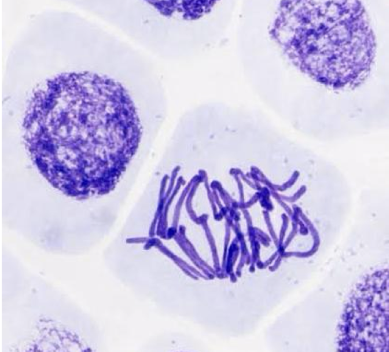
metaphase
the mitotic spindle is fully developed
centrosomes are at opposite poles
chromosomes are aligned at the equatorial place, with sister chromatids on one side of said plate
what is the m checkpoint
it prevents the cell from entering anaphase until every chromosome is correctly attached
anaphase
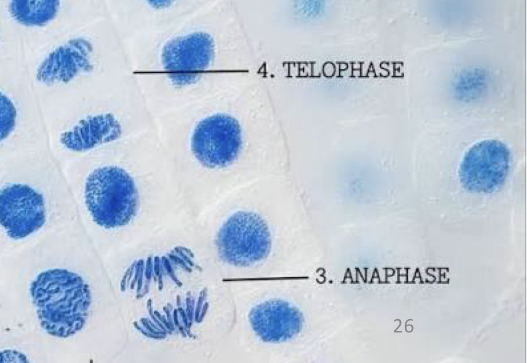
sister chromatids separate and move toward opposite poles

telophase
chromosomes arrive at opposite ends and decondense
the nuclear envelope reassembles and begins to surround each new set of chromosomes
the mitotic spindle assembly breaks down and the division of the cytoplasm begins via cytokinesis
cytokinesis
the physical separation of the cytoplasmic components into 2 daughter cells (results in 2 genetically identical daughter cells)
binary fission
cell copies DNA
cells grow
the two DNA copies seperate
the cell membrane + wall pinch inward
the cell splits into two daughter cells
Why do prokaryotes not undergo mitosis? What do they do to reproduce?
they have no nucleus, only circular DNA; Binary fission