Specific and General Muscles
 Call Kai
 Learn
Learn Practice Test
 Spaced Repetition
 Match
Match Flashcards
 Knowt Play
1/36

There's no tags or description
Looks like no tags are added yet.
Name | Mastery | Learn | Test | Matching | Spaced | Call with Kai | Chat |
|---|
No analytics yet
Send a link to your students to track their progress
37 Terms
Orbicularis oculi - closes eyelids

Orbicularis oris - closes/purses lips
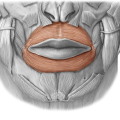
Zygomaticus major
and minor - elevates corners of the mouth
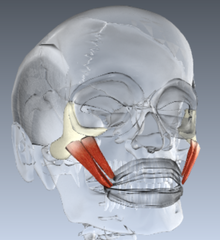
Masseter - elevates the mandible - closes jaw

Temporalis - elevates and retracts mandible

Sternocleidomastoid - flexes neck, rotates head
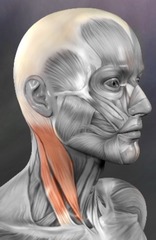
Trapezius - extends the neck, elevates, retracts, and depresses the scapiula

Latissimus dorsi - extends, aducts, and medially rotates arm

deltoid - primary abductor of arm

Supraspinatus, Infraspinatus, Teres minor, Subscapularis
Name the rotator cuff muscles

Rectus abdominis, External oblique, Internal oblique
Name the abdominal muscles

pectoralis major - flexes and adducts the arm, medially rotates the humerus

Intercostal Muscles - move the chest wall during respiration

Biceps brachii - flexes elbow, supinates forearm
Triceps brachii - extends the elbow
Brachialis - primary flexor of the elbow

Gluteus maximus - powerful hip extensor
Gluteus medius - abducts the hip
Adductor muscles - adducts thigh

Biceps femoris, Semitendinosus, Semimembranosus
- all extend hip and flex the knee
Name the hamstring muscles
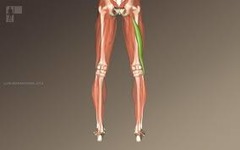
Sartorius - flexes the hip and knee, assists with lateral rotation of the thigh
Quadriceps (Rectus femoris, Vastus lateralis, Vastus medialis, - group of 4 muscles that extend the knee - memorize the 4 muscles of the quadriceps just
Knee Muscles

Tibialis anterior - dorsiflexes and inverts the foot
Extensor digitorum longus - extends toes 2-5/dorsiflexes foot
Extensor hallucis longus - extends the great toe
Muscles of foot

Gastrocnemius - plantarflexes the foot
Soleus - plantarflexes the foot

(Largest) 1) Muscle 2) Muscle Fascicle 3) Muscle Fiber 4) Myofibril 5) Sarcomere 6) Myofilaments (Smallest)
What are the 6 layers of general muscle from largest to smallest?
The arrangement of thick filaments (myosin) and thin filaments (actin) in specific arrangements called Z-discs.
Skeletal and Cardiac muscle are striated, smooth muscle does not have striations.
What causes striations in muscles? Be specific. Which types of muscle have striations and which don't?
Tendons connect muscle to bone, and injuries to tendons are called strains. Ligaments connect bone to bone, and injuries to ligaments are called sprains.
What connects muscle to bone? What connects bone to bone? What are the injuries related to each called?
The sarcomeres are the part of the muscle that actually contracts. Thick (myosin) and thin (actin) filaments work together to contract.
What part of the muscle is responsible for its contracting properties?
Plasma membrane - Sarcolemma
Endoplasmic reticulum - Sarcoplasmic Reticulum
Cytoplasm - Sarcoplasm
What is the name of the plasma membrane of muscle cells? Endoplasmic Reticulum? Cytoplasm?
A motor unit is comprised of a single motor neuron and all of the individual muscle fibers it stimulates
What comprises a motor unit?
Contractability - ability to shorten and contract
Elasticity - ability to relax back to resting tension/position
Excitability - ability to be excited by a nerve cells which lead to contraction
Extensibility - Ability to stretch
What are the four properties of muscle tissue?
Functional Syncytium - even though individual cells are structurally distinct, they act together as one unit
What property do cardiac muscle cells have even though there are many different types of muscle tissue
The Epimysium covers the entire muscle
The perimysium covers each muscle fasicle
The Endomysium covers each muscle fiber
What kind of fascia surrounds the entire muscle? Muscle fasicles? Muscle Fibers?
A T-tubule is a deep invagination in the sarcolemma (muscle plasma membrane) which quickly carry electrical signals deep inside of a muscle cell
What is a T-tubule and what is it's main function?
Long, thin fiber of a neuron that carries electrical impulses away from the cell body and into other cells via the axon terminal
What is an axon?
An innervation ratio is the number of muscle fibers per neuron. Low innervation ratios are great for extremely precise motions, like moving your eyes back and fourth. High innervation ratios are good at producing large force in gross increments.
What is an innervation ratio? What are muscles with high/low innervation rates good at?
Neuromuscular Junction
What is the point called at which the nerve ending and muscle fiber meet?
Synaptic Cleft
What is the point in between the sarcolemma of the muscle tissue and the axon
attatchment
What is the location at which a muscle attaches to a bone?
The attachment where the muscle is connected to the less movable bone
What is the origin?
The attachment where the muscle is connected to the more moveable bone
What is the insertion?
rectus femoris, vastus lateralis, vastus medialis, and vastus intermedius
What are the 4 muscles that make up the quadriceps?