BI421 Lab 1 Practical
 Call Kai
 Learn
Learn Practice Test
 Spaced Repetition
 Match
Match Flashcards
 Knowt Play
1/75

There's no tags or description
Looks like no tags are added yet.
Name | Mastery | Learn | Test | Matching | Spaced | Call with Kai | Chat |
|---|
No analytics yet
Send a link to your students to track their progress
76 Terms
What are some characteristics of the parasites found in Phylum Platyhelminths (flatworms)?
Platyhelminths (flatworms) are dorsoventrally flattened, bilaterally symmetrical, and lack a body cavity (acoelomates). Many of these species lack an anus, but have a blind gut (food exits/enters through the same opening). Most are hermaphroditic (possess male and female parts). Contains both parasitic and free-living species.
What four major groups make up the monophyletic Subphylum Neodermata of the Phylum Platyhelminths?
Aspidogastrea, Digenea, Monogenea, and Cestoda
What do all four of these groups of Subphylum Neodermata possess (Aspidogastrea, Digenea, Monogenea, and Cestoda)?
They all possess a neodermis (new skin).
How do these four groups obtain a neodermis (Aspidogastrea, Digenea, Monogenea, and Cestoda)?
In the early developmental stages of these obligate parasites’ lives, these individuals possess an outer body layer in the form of a normal ciliated epidermis (single layer of ciliated cells) that is shed and replaced with the neodermis (syncytial layer) upon encountering their first host.
Why is the neodermis considered to be syncytial?
The neodermis is considered to be syncytial because the cytoplasm of the cells in this layer is not separated by cell membranes but rather is continuous throughout the entire surface of the animal. The nuclei of these cells are located below the outer muscle layers.
What are the two Classes of the Subphylum Neodermata?
Class Trematoda & Class Cercomeromorpha
What Subclasses make up the Class Trematoda?
Subclass Aspidogastrea & Subclass Digenea
What two Subclasses make up the Class Cercomeromorpha?
Subclass Monogenea & Subclass Cestoda
What do members of the Class Trematoda generally possess (this should include members of the subclasses Aspidogastrea and Digenea)?
They generally posses a ventral, muscular sucker which is sometimes subdivided into loculi.
What do species in the Subclass Aspidogastrea typically parasitize?
They typically parasitize mollusks, and sometimes occasionally fish and turtles.
What is a key feature to the Subclass Aspidogastrea?
Subclass Aspidogastrea is known for their large ventral adhesive disk that is subdivided by muscular septa into individual chambers known as loculi.
What are two species in Subclass Aspidogastrea?
Aspidogaster sp. & Cotylaspis sp.
Does the Aspidogaster sp. adult possess a neodermis?
Yes, it’s a part of the Subphylum Neodermata.
Is Aspidogaster sp. adult monoecious or dioecious?
Monoecious, they are hermaphroditic (possess male and female reproductive organs).

What species is this?
Aspidogaster sp. (Phylum Platyhelminth, Subphylum Neodermata, Class Trematoda, Subclass Aspidogastrea). Know where the buccal funnel (should be the same as the oral sucker, Or s), pharynx (Ph), tubular gut (should be the same as the intestine, In), single ovary (Ov), and testis (Ts) are.
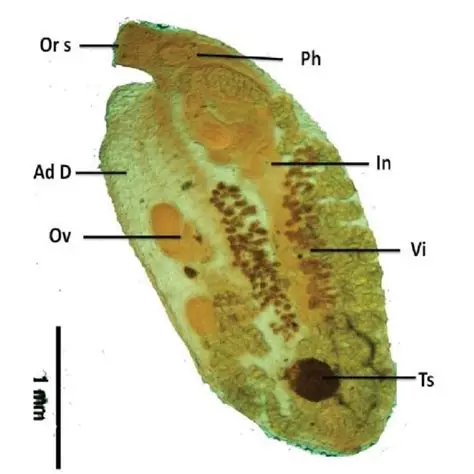

What species is this?
Cotylaspis sp. (Phylum Platyhelminth, Subphylum Neodermata, Class Trematoda, Subclass Aspidogastrea). Be able to locate the ventral adhesive disk, buccal funnel (oral sucker), pharynx, gut, single ovary, and testis.

What is another common name for Digeneans (Phylum Platyhelminthes, Subphylum Neodermata, Class Trematoda)?
They are also commonly known as flukes.
How many hosts do digeneans (flukes) typically have in their life cycle, and what are those hosts typically?
They generally have two or more hosts. Their first intermediate host is almost always a mollusk. The definitive host is typically a vertebrate with the exception occasionally of an invertebrate such as an arthropod.
What unique larval forms do digeneans possess that characterizes them?
Miracidium, sporocyst, redia, cercaria, and metacercaria.
In our lab, where are the digeneans usually found in their definitive hosts?
They are usually found within the liver (or gall bladder) (hence the name Liver Flukes).
What families are found in the Subclass Digenea?
Family Opisthorchidae, Family Fasciolidae, and Family Dicrococoelidae.
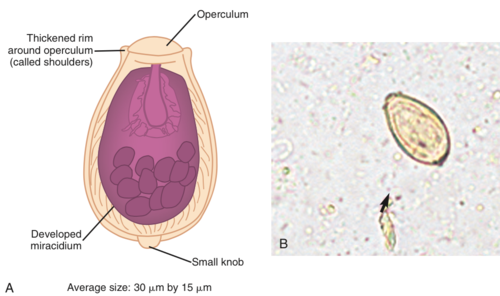
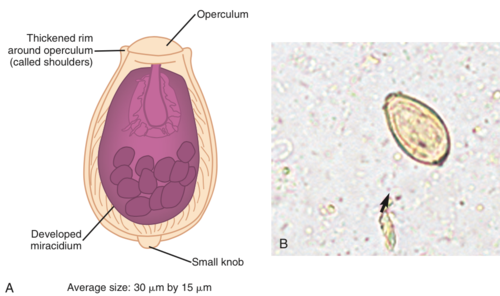
What species is this and what life stage?
Clonorchis sinesis, eggs (Phylum Platyhelminthes, Subphylum Neodermata, Class Trematoda, Subclass Digenea, Family Opisthorchidae). They are distinguished by their small size and the presence of a small knob at the abopercular end (the end opposite of the operculum).
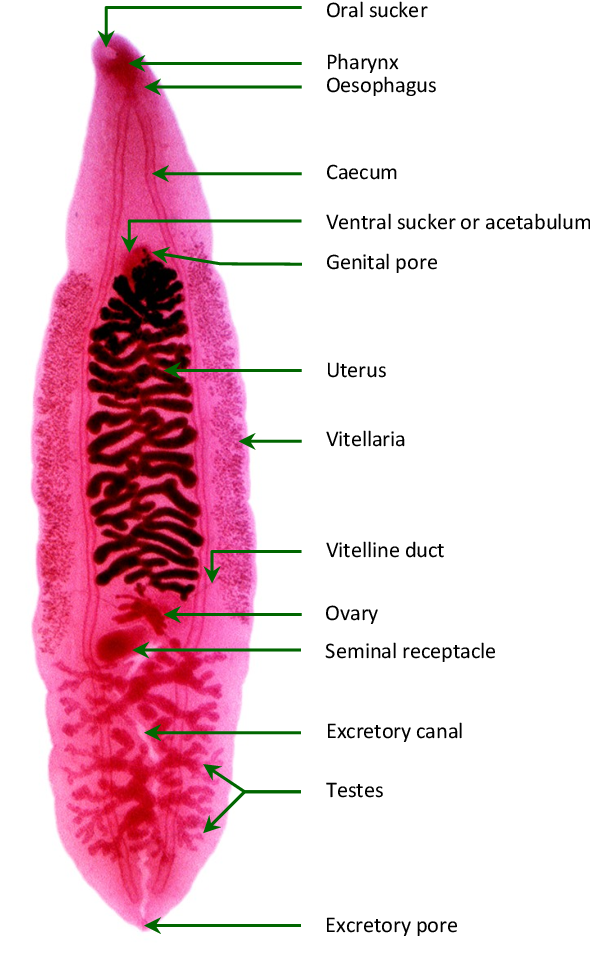
What species is this?
Clonorchis sinesis, Adult, w.m. (Phylum Platyhelminthes, Subphylum Neodermata, Class Trematoda, Subclass Digenea, Family Opisthorchidae). Label the oral sucker, acetabulum, pharynx, esophagus, intestine, testes (branched or dendritic), seminal vesicle, genital pore, uterus, eggs, ovary, seminal receptacle, and vitelline glands.

What is another common name for Clonorchis sinesis?
Chinese liver fluke
What is the function of vitellaria?
It is a nutrient producing organ for eggs

What species is this?
Fasciola hepatica, Adult, wm. (Phylum Platyhelminthes, Subphylum Neodermata, Class Trematoda, Subclass Digenea, Family Fasciolidae). This species possesses a extensively branched ceca, two testes arranged in tandem and branched, and an oral cone fiving the animal an appearance of possessing shoulders. Label the ceca, oral sucker, acetabulum, testes, and ovary.

What is another name for Fasciola hepatica?
Sheep liver fluke
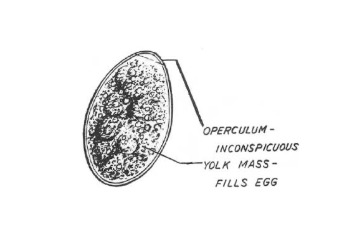
What species is this?
Fasciola hepatica, Ova, wm (Phylum Platyhelminthes, Subphylum Neodermata, Class Trematoda, Subclass Digenea, Family Fasciolidae). Label operculum. No abopercular knob nor thickening.
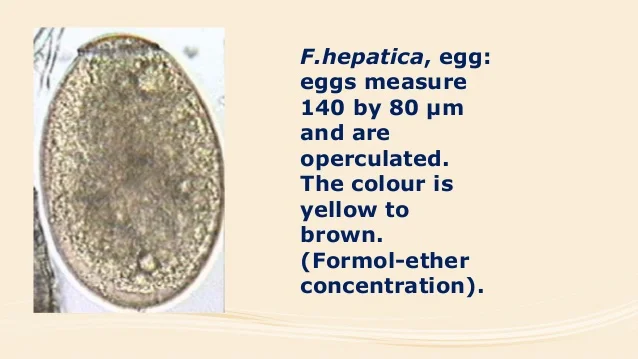

What species is this and life stage?
Fasciola hepatica, Miracidia, wm. (Phylum Platyhelminthes, Subphylum Neodermata, Class Trematoda, Subclass Digenea, Family Fasciolidae). Notice the cilia, eyespots, apical organ, and germ balls.

What will the germ balls become?
Cercariae

What species is this?
Fasciola hepatica, infected snail tissue (sporocysts containing developing rediae). [This may not be on practical - demo slide]
![<p>Fasciola hepatica, infected snail tissue (sporocysts containing developing rediae). [This may not be on practical - demo slide]</p>](https://assets.knowt.com/user-attachments/af7b6f26-c7a6-4390-9dac-fac02433faee.jpg)

What species is this and life stage?
Fasciola hepatica, Rediae, wm (Phylum Platyhelminthes, Subphylum Neodermata, Class Trematoda, Subclass Digenea, Family Fasciolidae). Note the mouth and pharynx. Contains developing cercariae. Found in intermediate host (mollusks).
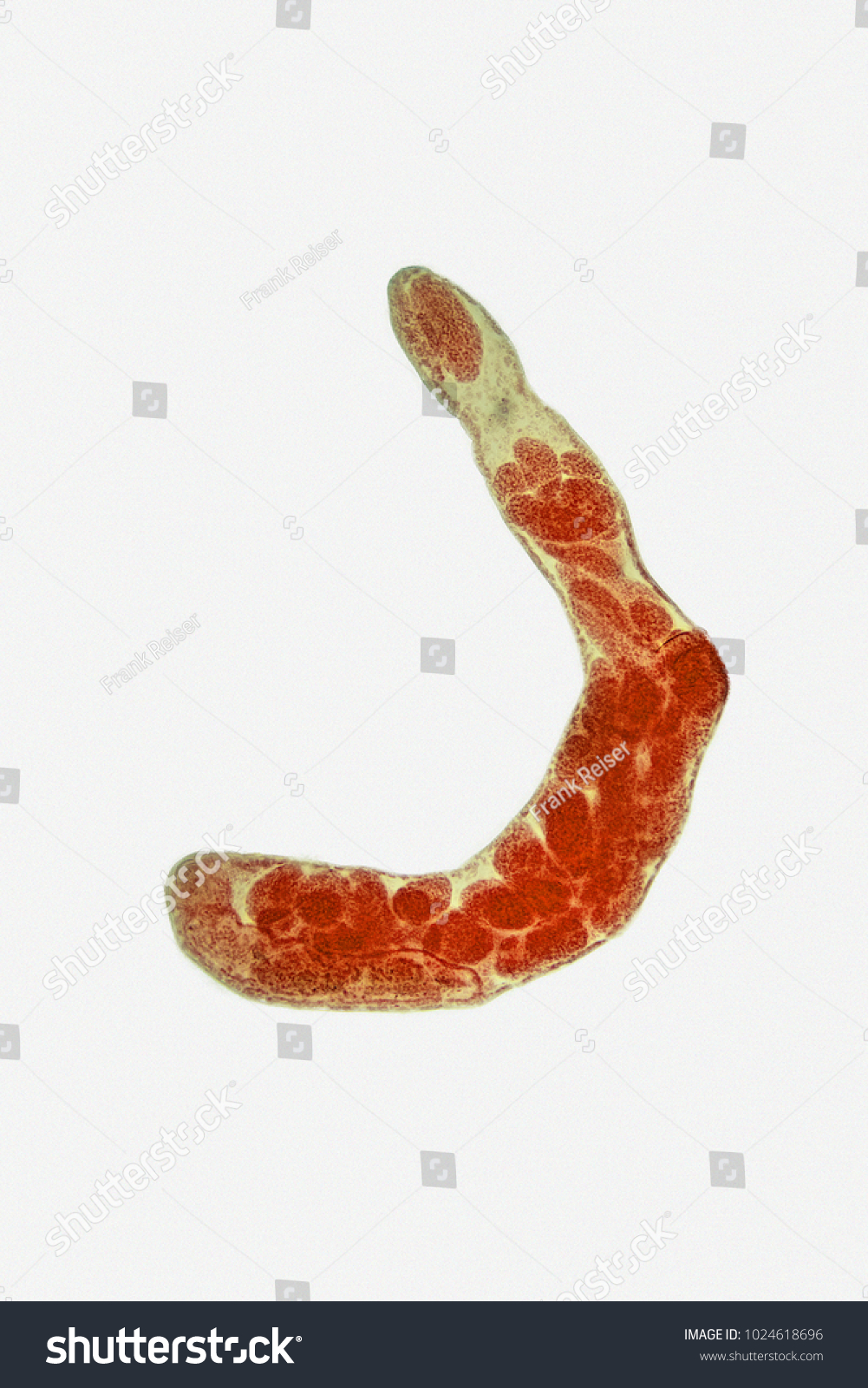

What species and life stage is this?
Fasciola hepatica, Cercariae, wm. (Phylum Platyhelminthes, Subphylum Neodermata, Class Trematoda, Subclass Digenea, Family Fasciolidae). They swim to their next host.


What species is this and life stage?
Fasciola hepatica, Metacercariae, wm. (Phylum Platyhelminthes, Subphylum Neodermata, Class Trematoda, Subclass Digenea, Family Fasciolidae). This metacercaria (and most digenean metacercaria) are almost always enclosed in a bag-like cyst. This metacercaria actually encysts on aquatic vegetation (unlike other flukes which encyst as metacercaria in the tissue of their 2nd IH). Metacercariae is essentially a juvenile adult only differing in that its reproductive system is undeveloped.


What species is this?
Fasciolopsis buski, Adult, wm (Phylum Platyhelminthes, Subphylum Neodermata, Class Trematoda, Subclass Digenea, Family Fasciolidae). This species does NOT inhabit the liver; it inhabits the small intestine. Its ventral sucker is larger than its oral sucker, and it has unbranched ceca and dendritic (branched) testes.

What is the definitive host of Fasciolopsis buski?
ruminants (or humans)

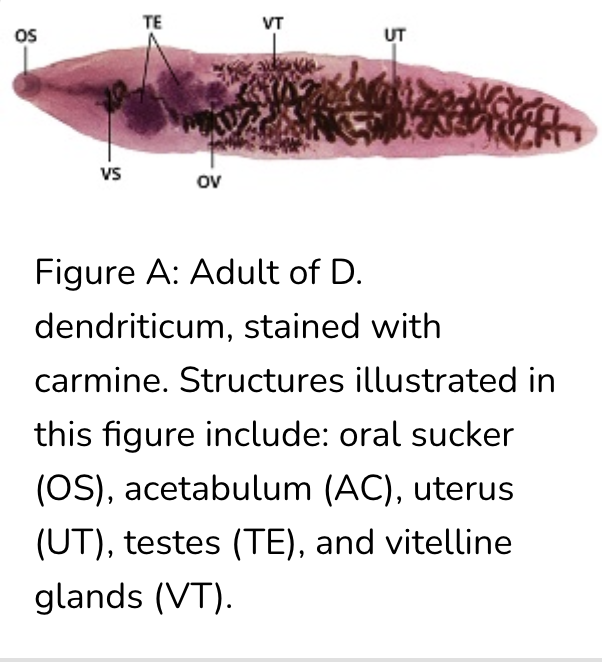
What species is this?
Dicrocelium dendriticum (or D. lanceatum), Adult, wm. (Phylum Platyhelminthes, Subphylum Neodermata, Class Trematoda, Subclass Digenea, Family Dicrocoelidae). The natural definitive host of this species is sheep, goats, cattle pigs, deer, marmots, and rabbits. Their life cycle is fully terrestrial. Notice the lobed testes whereas C. sinesis has dendritic testes. Also, here the ovary is posterior to testes whereas in C. sinesis its anterior.
How are Dicrocelium dendriticum cercaria released by the first intermediate host?
They are released from the cell via a respiratory pore in a slime ball.
What is significant of Dicrocelium dendriticum with ants?
Dicrocelium dendriticum cercariae can migrate to the ant’s ganglion and control its behavior increasing the ants likelihood of being consumed by the DH.

What are each of these morphological types of digenes?
Recognize amphistome (acetabulum near rear), distome, echinostome (presence of spines), gasterostome (mouth on belly?), holostome (two regions), and monostome (one sucker)


Recognize these digene larvae.
Egg (contains operculum), miracidium (contains germ cells, has cilia), sporocysts (contains embryos), rediae (contains immature cercariae), cercaria (contains mouth, acetabulum, tail), and metacercaria (excysts to become adult).


What species is this?
Paragonimus westermani, Adult, wm. (Phylum Platyhelminthes, Subphylum Neodermata, Class Trematoda, Subclass Digenea). This parasite can cause a zoonotic disease in humans known as paragonimiasis coming from wild animals like cats. Note the lobed testes and ovary and short uterus.

What is the common name of P. westermani?
Lung fluke
What are the intermediate hosts in the life cycle of Paragonimus westermani?
Fresh water crustaceans like shrimp and crayfish
How do P. westermani eggs of this species leave the body of the DH?
Coughing and defecation
What is the morphological body type of P. westermani?
Distome

What species is this?
Echinostoma parensei (?), Rediae, wm. (Phylum Platyhelminthes, Subphylum Neodermata, Class Trematoda, Subclass Digenea). These rediae were collected from lymnaeid snails.

What are two typical first intermediate hosts associated with E. parensei?
Biomarphalaria glabrata & Physa rivalis

What species is this?
Echinostoma sp, Cercaria, wm, (Phylum Platyhelminthes, Subphylum Neodermata, Class Trematoda, Subclass Digenea). It takes about 25 days post infection for E. parensei cercariae to emerge.

How do the cercariae of Echinostoma sp, Fasciola hepatica, and Schistoma mansoni differ?
S. mansoni is the only cercaria with a forked tail of these three. Echinostoma is the only one with collar spines. F. hepatica has a leaf-like body.

What species is this?
Echinostoma revolutum, Adult, wm. (Phylum Platyhelminthes, Subphylum Neodermata, Class Trematoda, Subclass Digenea). Short-lived within intestines of DH (pigeons, ducks, humans).

How do Echinostoma revolutum and Echinostoma trivolvis differ as they are often confused?
E. revolutum seems to have a lower and larger genital pore as well as narrower testes.

What species is this?
Echinostoma trivolvis, Adult, wm, (Phylum Platyhelminthes, Subphylum Neodermata, Class Trematoda, Subclass Digenea). This is the most common echinostome species in North America. It is a generalist with multiple DHs. Primarily the parasites of ducks and geese but also reproted in wild birds and mammals (owls, doves, dogs, cats, rabbits, mice, and humans). Not the collar spines (37 total), oral sucker, acetabulum, uterus, testes, ovary, ceca, and viteraria.


What species is this?
Heterophyes heterophyes, adult, wm, (Phylum Platyhelminthes, Subphylum Neodermata, Class Trematoda, Subclass Digenea). This is a very tiny teardrop-shaped fluke found within the small intestine of birds and mammals (including humans). It’s common in North Africa and Asia within their brackish waters of estuaries. Humans can contact the parasite by eating raw fish. This parasite has a strictly aquatic life cycle, but its miracidia are not free swimming and must be ingested by 1st IH. Note the oral sucker, acetabulum, ceca, ovary, testes, and vitellaria.

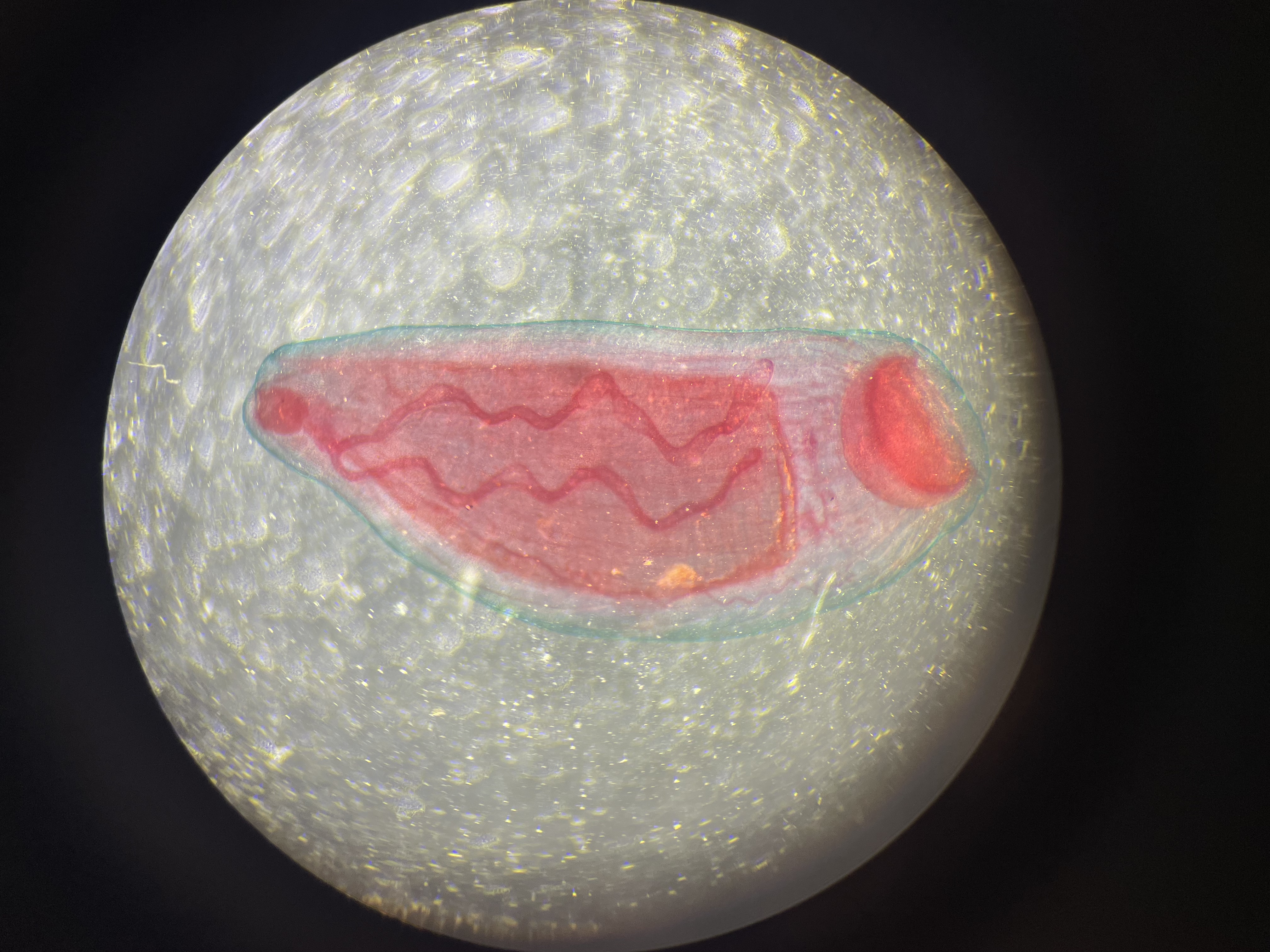
What species is this?
Gastrothylax elongatus (or Fischoederius elongatus), Adult, wm (Phylum Platyhelminthes, Subphylum Neodermata, Class Trematoda, Subclass Digenea). Typically uses cattle or other herd animals as its DH. Note the oral sucker, acetabulum, ceca, vitellaria, ovary, and testes.

What is the morphological body type of G. elongatus?
Amphistome
What is the common name of G. elongatus?
Rumen fluke

What is this species?
Platynosomum fastosum, Adult, wm, (Phylum Platyhelminthes, Subphylum Neodermata, Class Trematoda, Subclass Digenea). A small liver fluke found in biliary ducts and gall bladder of DH cat host. Lizards are typically the 2nd IH. Common within free-ranging cats of southeastern US (ex. Florida) with some areas having a prevalence of up to 85%. Note the oral sucker, acetabulum, uterus, testes, ovary and vitellaria.

What is the common name of P. fastosum?
Lizard poisoning fluke
What are the characteristics of the Family Schistosomatidae?
These blood flukes parasitize the circulatory system of their DH. The schistosomatids parasitize warm-blooded DHs while other families parasitize cold-blooded DHs (like fish, elasmobranchs, or reptiles). The species in this family are dioecious (male & female reproductive organs in different individuals). They also typically lack a metacercarial stage and rather their cercariae locate and penetrate the DH directly. Three species in this family parasitize humans. Other species parasitize both birds and other groups of mammals.
What condition in humans do schistosomes cause?
Swimmer’s itch or clam digger’s itch (caused by cercaria penetration)
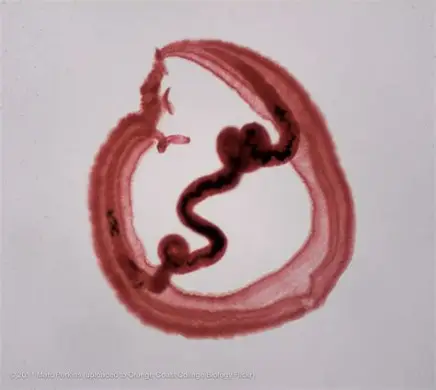
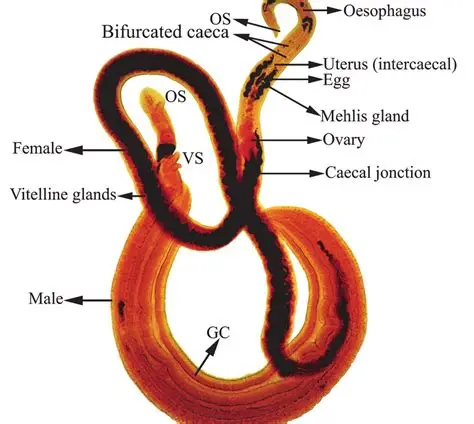
What species is this?
Schistosoma mansoni (Phylum Platyhelminthes, Subphylum Neodermata, Class Trematoda, Subclass Digenea, Family Schistosomatidae). Note the oral suckers and acetabulum in both individuals. The female is in the gynocophoral canal. The male is more robust than the female. Male contains large ventral sucker to maintain his position in the habitat.
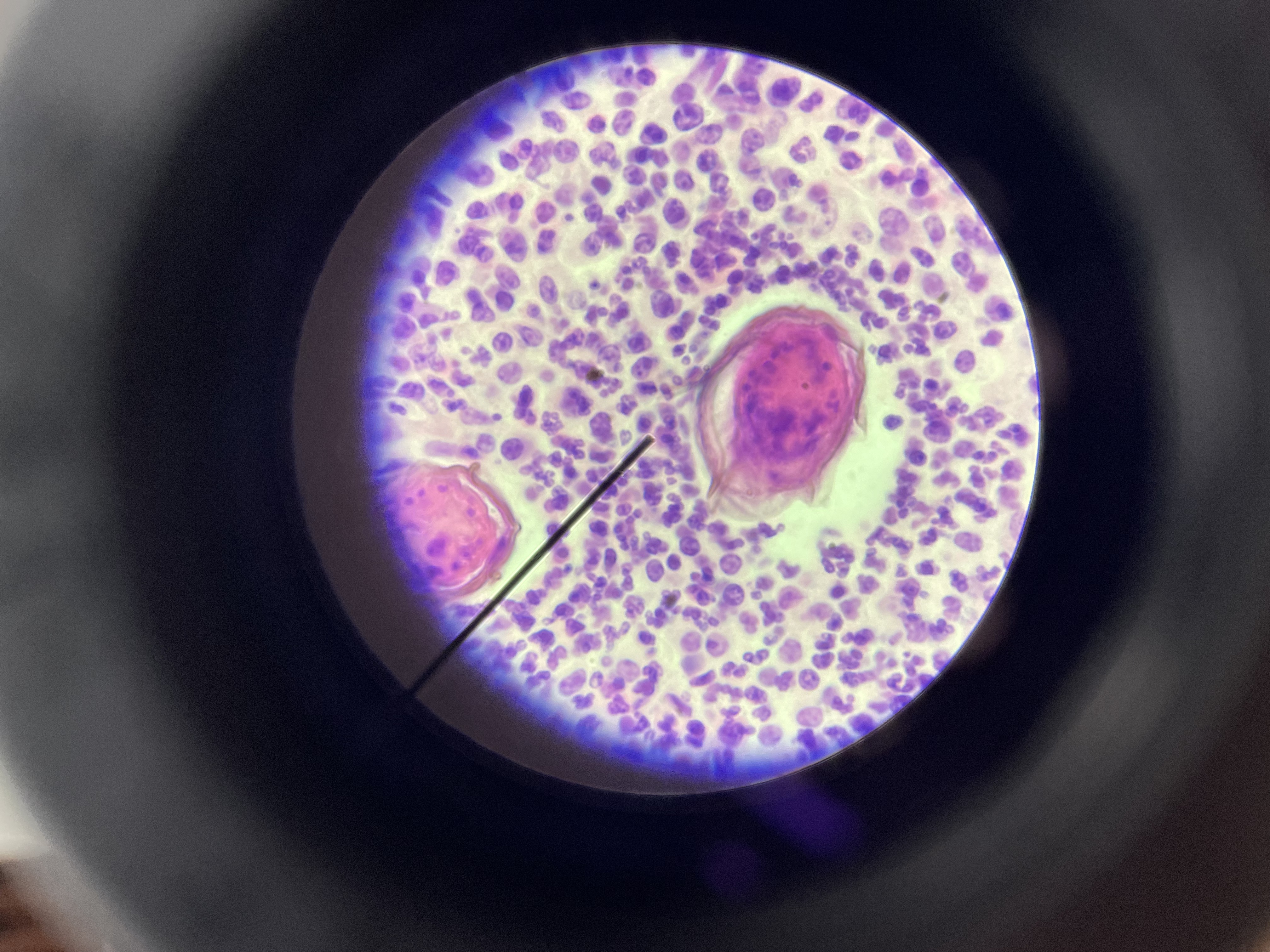
What species is this?
Schistosoma mansoni, Eggs, in fecal smear. (Phylum Platyhelminthes, Subphylum Neodermata, Class Trematoda, Subclass Digenea, Family Schistosomatidae). Note the miracidium, shell and lateral spine. These eggs exit the DH in the feces.


What species is this?
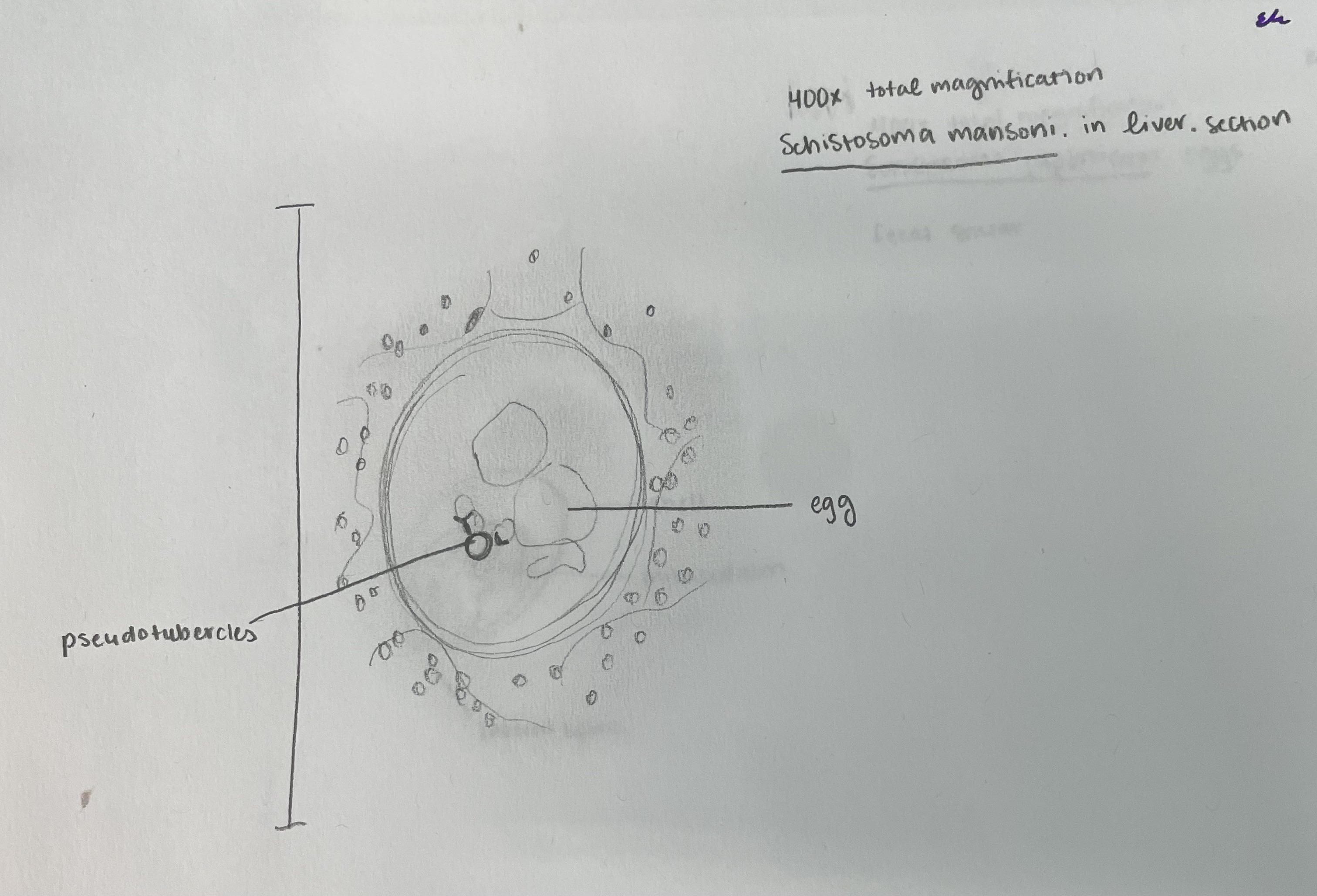
Schistosoma mansoni, in liver. (Phylum Platyhelminthes, Subphylum Neodermata, Class Trematoda, Subclass Digenea, Family Schistosomatidae). Note the pseudotubercles which is a type of granuloma caused by Schistosoma eggs.
What species is this?
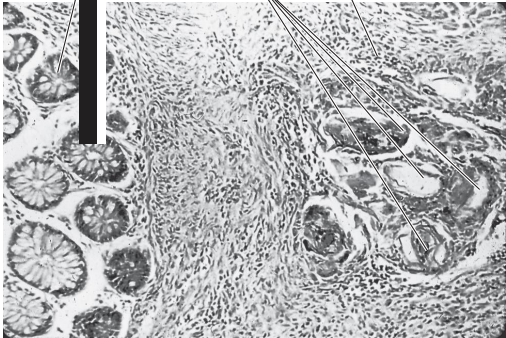
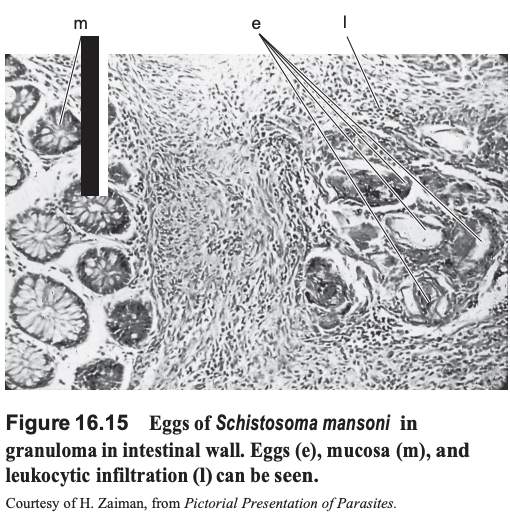
Schistosoma mansoni, eggs, in intestine. (Phylum Platyhelminthes, Subphylum Neodermata, Class Trematoda, Subclass Digenea, Family Schistosomatidae). Note the granulomas filled with eggs.

What species is this?
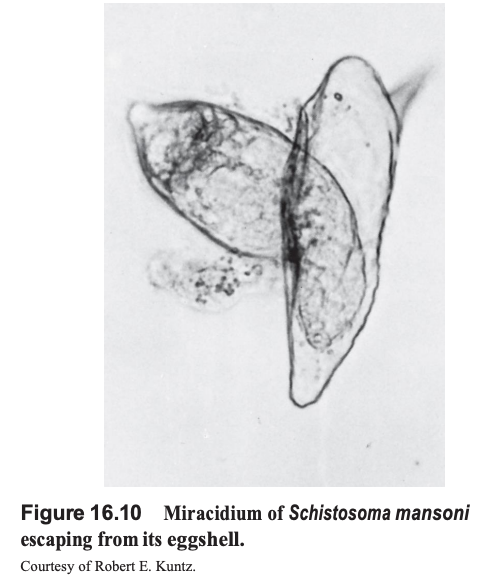
Schistosoma mansoni, miracidia, wm. (Phylum Platyhelminthes, Subphylum Neodermata, Class Trematoda, Subclass Digenea, Family Schistosomatidae). Eggs exiting the human host and entering the water are fully embryonated and ready to hatch. Once they encounter the appropriate snail host, miracidia burrow across the epithelium and develop into a mother sporocysts stage.
How long does a S. mansoni miracidia survive for once hatched?
1-2 hours, unless under optimal positions, then 5-6 hours
What is the genus of snails used by S. mansoni?
Biomphalaria

What species is this?
Schistosoma mansoni, cercariae, wm.
(Phylum Platyhelminthes, Subphylum Neodermata, Class Trematoda, Subclass Digenea, Family Schistosomatidae)
Lacks a pharynx. Has forked tail. Furcocercous morphological form. Locates next host via swimming and penetration through skin.
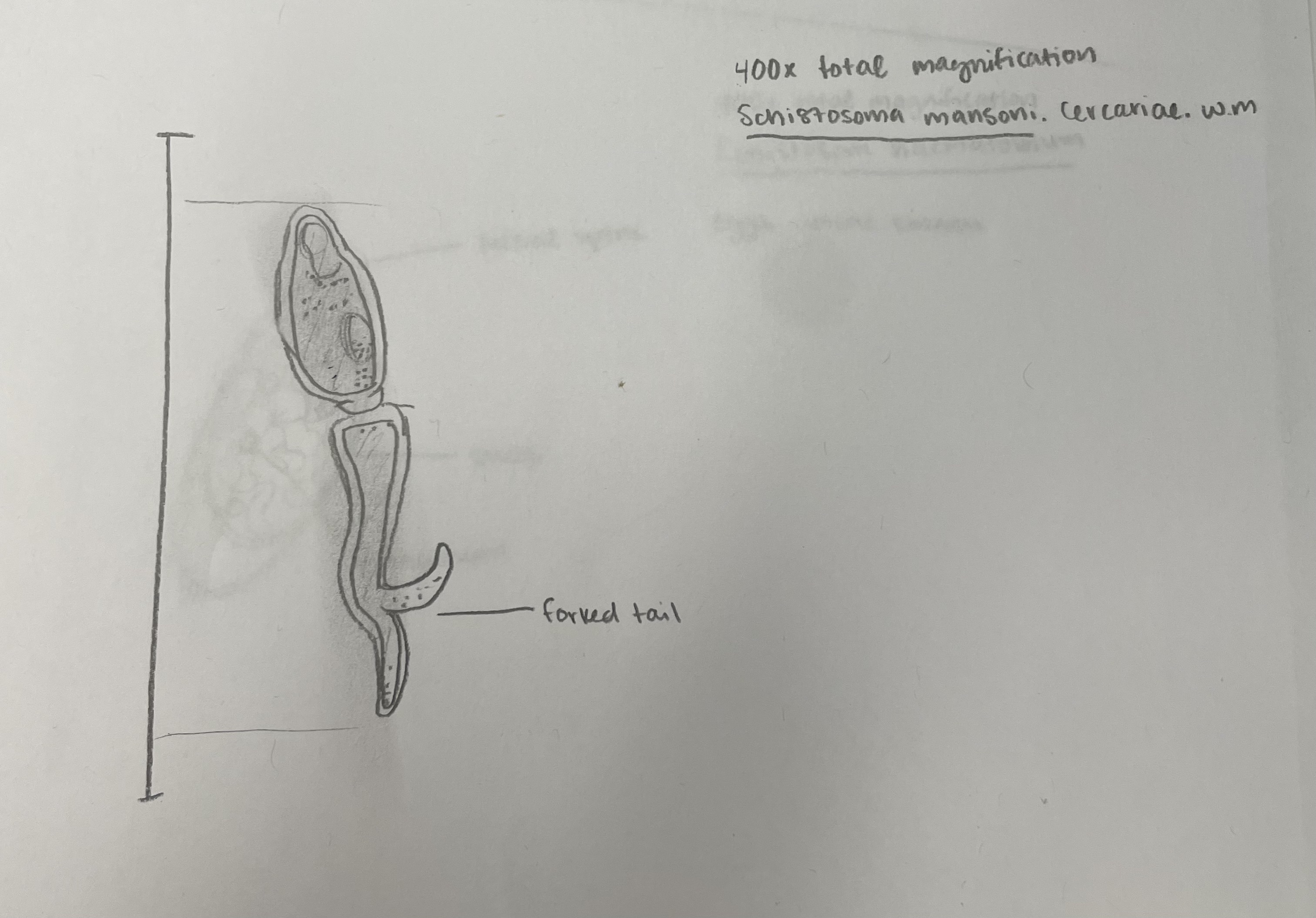

What species is this?
Schistosoma japonicum, eggs in fecal smear.
(Phylum Platyhelminthes, Subphylum Neodermata, Class Trematoda, Subclass Digenea, Family Schistosomatidae)
Note the rudimentary lateral spine which is less prominent than the spine of S. mansoni. Note miracidium, shell, and lateral spine. These eggs exit via defecation.


What species is this?
Schistosoma haematobium, eggs, urine smear.
(Phylum Platyhelminthes, Subphylum Neodermata, Class Trematoda, Subclass Digenea, Family Schistosomatidae)
Note the terminal spine, miracidium, and shell.
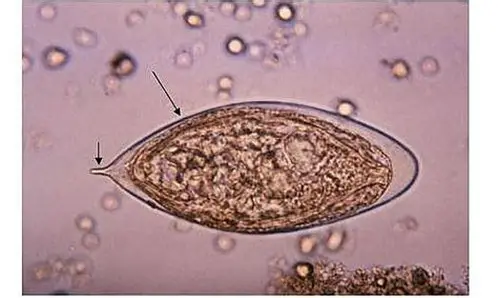
What is characteristic of the Class Cercomeromorpha?
(Phylum Platyhelminthes, Subphylum Neodermata, Class Cercomeromorpha)
Species of this class possess an extension of the body known as “cercomer.” The cercomer bears 3 or more pairs of hooks. This feature is present in both larval cestode and adult stages of monogeneans.
What is characteristic of Subclass Monogenea?
The species of this group are typically ectoparasitic and have monoxenous life cycles (one host). They typically parasitize the skin and gills of fishes. The monogeneans have a cercomer (as a haptor) in the adult stage and eyespots in the larval stage (oncomiracidium).W
What species of Subclass Monogenea can parasitize the eye of a hippo?
Oculatrema hippopotami
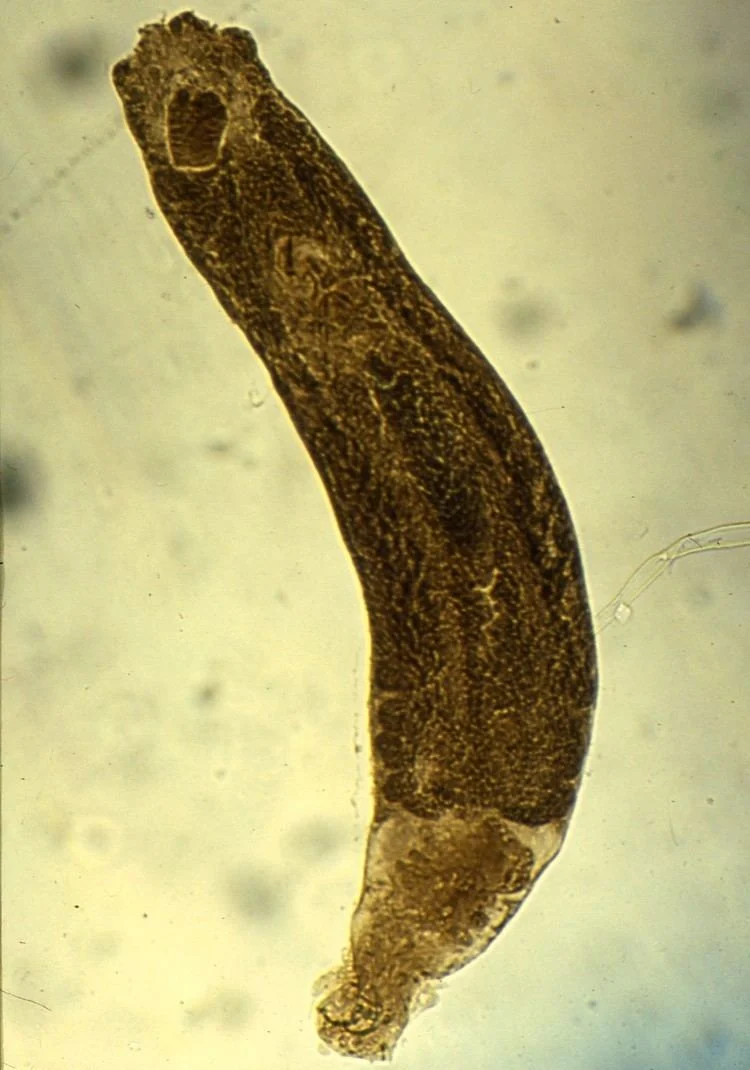
What species is this?
Dactylogyrus extensus, adult, wm.
(Phylum Platyhelminthes, Subphylum Neodermata, Class Cercomeromorpha, Subclass Monogenea)
This is a pathogen of hatchery fish such as carp. The hooks attach to gill filaments of the fish. It has one host.


What species is this?
Neobenedenia melleni, adult, wm
(Phylum Platyhelminthes, Subphylum Neodermata, Class Cercomeromorpha, Subclass Monogenea)
This species is found on a number of marine teleost fish species and is problematic for saltwater aquarium trade. praziquantel is the drug treatment choice.
