Cellular Energetics
 View linked note
 Call Kai
 Learn
Learn Practice Test
 Spaced Repetition
 Match
Match Flashcards
 Knowt Play
1/35

There's no tags or description
Looks like no tags are added yet.
Name | Mastery | Learn | Test | Matching | Spaced | Call with Kai |
|---|
No analytics yet
Send a link to your students to track their progress
36 Terms
What does ATP stand for?
Adenosine triphosphate
How does ATP provide energy for cells?
By breaking its bond to release stored energy
What types of organisms use ATP?
Plants, animals, bacteria, fungi
Define autotroph and give an example.
An organism that can produce its own food; e.g., algae.
Define heterotroph and give an example.
An organism that cannot produce its own food; e.g., humans.
What are the reactants of photosynthesis?
Water, light, and carbon dioxide
What are the products of photosynthesis?
Oxygen and glucose
What is the equation for photosynthesis?
6CO2 + 6H2O + light -> C6H12O6 + 6O2
What is the purpose of photosynthesis?
To make energy.
What organelle is responsible for photosynthesis?
Chloroplast.
Which types of organisms perform photosynthesis?
Plants, algae, and some bacteria.
Is energy stored or released during photosynthesis?
Stored.
What does ‘complementary’ mean in the context of photosynthesis and cellular respiration?
They use each other's products to function.
What is the importance of pigments for photosynthesis?
They absorb as much sunlight as possible
What is the main pigment in chloroplasts?
Green.
Why does chlorophyll look green?
plants reflect green light
What is the difference between chloroplast and chlorophyll?
Chloroplast is where photosynthesis occurs; chlorophyll is the pigment.
What are the two types of fermentation?
Alcoholic and lactic acid.
When does a cell switch from cellular respiration to fermentation?
When a cell runs out of oxygen.
Is cellular respiration an aerobic or anaerobic process?
Aerobic.
Where does cellular respiration occur in the cell?
Mitochondria.
What are the advantages of cellular respiration?
More ATP is made.
What are the advantages of fermentation?
No oxygen is required.
What are the disadvantages of cellular respiration?
Requires oxygen.
What are the disadvantages of fermentation?
Less ATP is made.
What are the products of cellular respiration?
Water, carbon dioxide, and ATP (36-38).
What are the reactants of cellular respiration?
Oxygen and glucose.
What is the purpose of cellular respiration?
To turn energy into food.
How many ATP are produced through aerobic respiration?
36-38.
What gas is released as a byproduct of photosynthesis?
Oxygen.
What is the main function of chloroplasts in plants?
To carry out photosynthesis.
How do autotrophs contribute to the ecosystem?
They produce their own food and provide energy for other organisms.
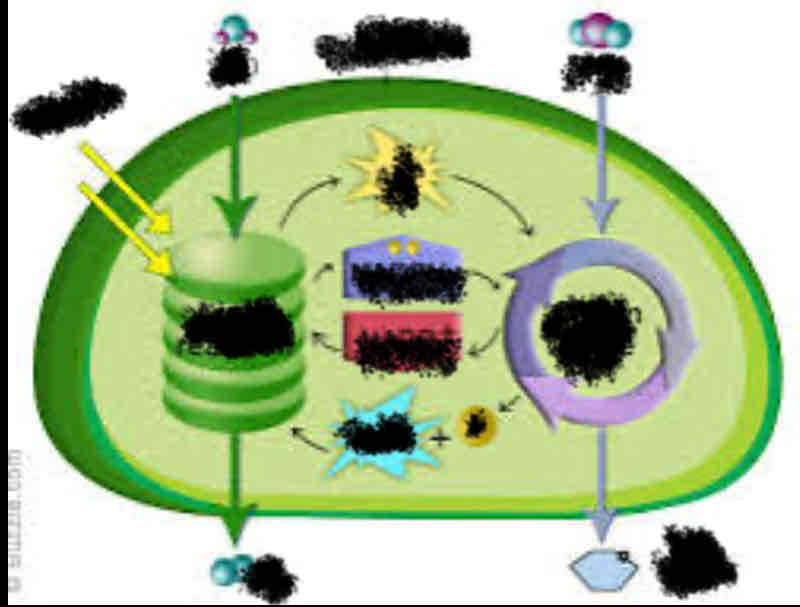
what goes into the calvin cycle and what is released
carbon dioxide, glucose(sugar)
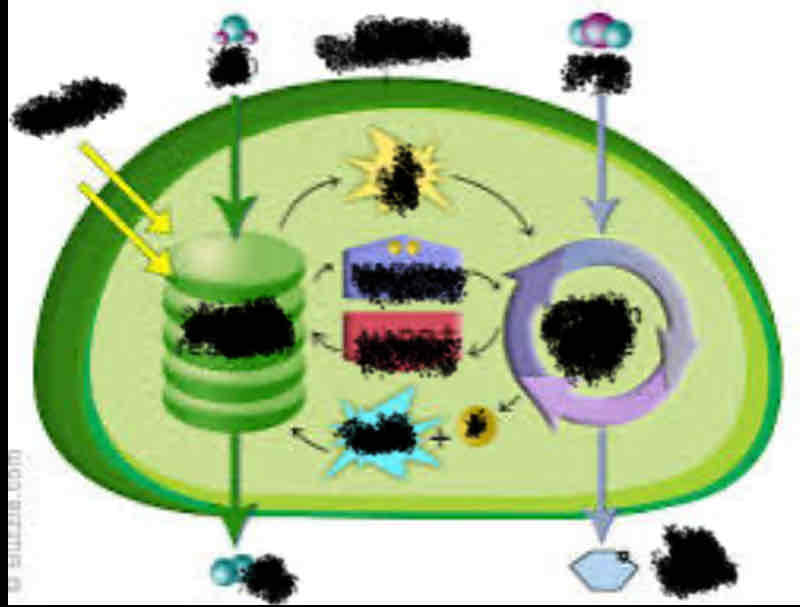
what goes into the light reaction and what is released
light and water goes in, oxygen comes out
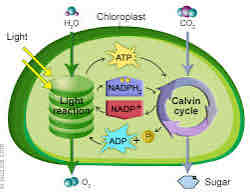
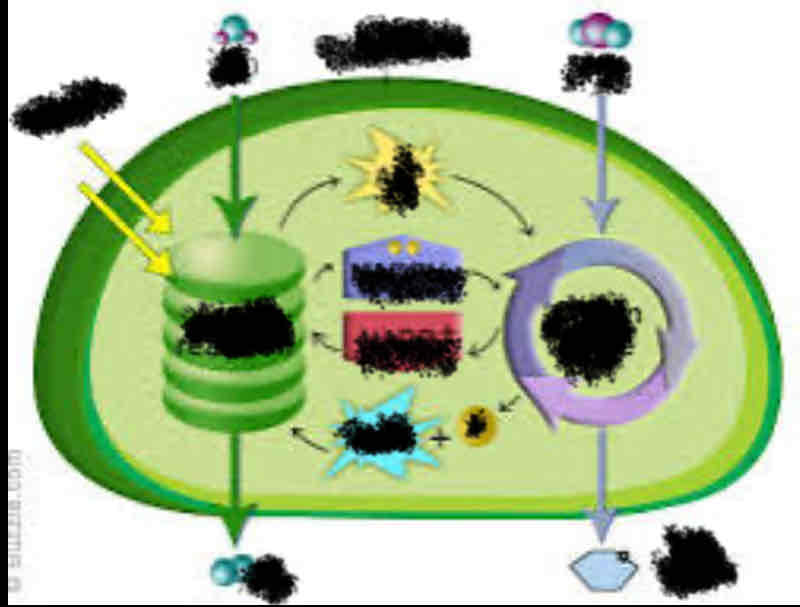
what goes from the light reaction to the calvin cycle
atp and nadph
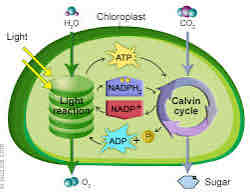
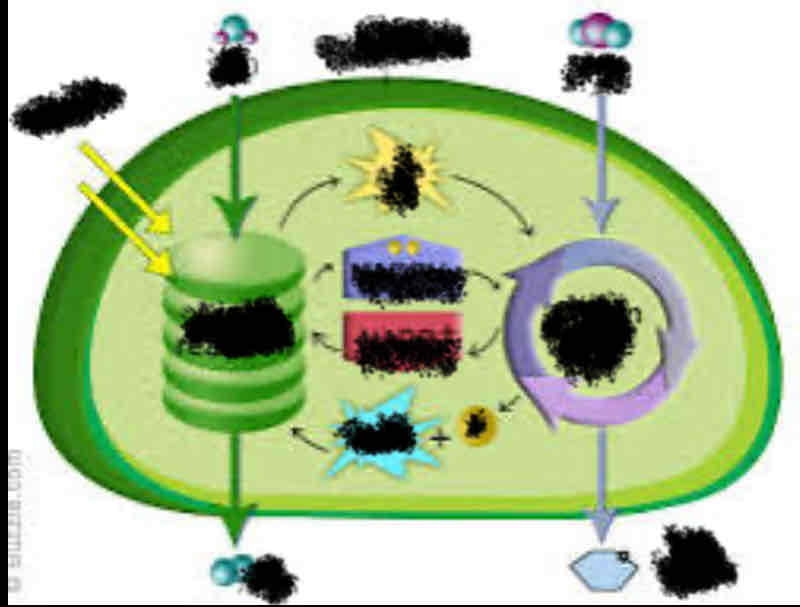
what goes from the calvin cycle to light reactions
adp and nadp