Abnormal Psych - Exam 2
 Studied by 0 people
 Call Kai
 Learn
Learn Practice Test
 Spaced Repetition
 Match
Match Flashcards
 Knowt Play
1/28

Earn XP
Description and Tags
Chapters 6-9
Name | Mastery | Learn | Test | Matching | Spaced | Call with Kai |
|---|
No analytics yet
Send a link to your students to track their progress
29 Terms
What are the main features of the somatic symptom category of disorders?
excessive focus on body symptoms, and worrying about the mean of the symptoms
What are somatic symptoms?
GI, pain, cardio, reproductive, fatigue, difficulty swallowing
Examples of somatic symptom category of disorders
any symptom related to body or physical functioning
What symptoms predominate somatic symptom disorder?
focusing on the symptoms, symptom complaints
What are the characteristic symptoms of illness anxiety disorder?
fear/intense worry that something is wrong
What are the main differences between somatic symptom disorder and illness anxiety disorder?
illness focuses on something wrong, somatic symptoms focuses on the symptoms
What are the defining features of a conversion disorder?
motor, sensory, or seizure-like symptoms to which there is no apparent medical cause
What are some examples of the types of conversion symptoms a person may have?
numbness, muscle weakness, paralysis, dizziness, blindness, psychogenic seizures, tics
What is meant by glove anesthesia?
the lack of feeling does not correspond to the distribution of nerve pathways
What is malingering?
deliberately faking symptoms
What is meant by secondary gain?
secondary gain of any benefit or advantages
How is it different from primary gain?
It is a benefit, where as primary gain is avoiding something
What types of behaviors might someone with a factitious disorder engage in?
sabotaging/interfering with medical care, going under many medical tests and procedures
How is factitious disorder imposed on another different?
A caregiver with elderly or child to gain attention from others
What are some of the main factors (according to the multipath model) that might contribute to the development of a somatic symptom disorder?
misinterpretation of body sensations as dangerous, belief serious illness is common, heightened sensitivity to pain and bodily sensations
What factors generally are focused on in the treatment of the somatic symptom disorders?
focus on empathy, acknowledge important stressors, CBT, identifying secondary gain issues
How does a dissociative event differ from a dissociative disorder?
What is the relationship between a dissociative amnesia & dissociative fugue?
What role do repressed memories play in the dissociative disorders? What has research suggested about the validity of such memories?
What differentiates depersonalization from derealization?
What constitutes a depersonalization-derealization disorder?
What are the main symptoms of dissociative identity disorder?
What are some of the main hypotheses regarding its development?
What are some of the big controversies re: dissociative identity disorder?
How are the different dissociative disorders treated?

The child in the cartoon below is likely afflicted with which of the following somatic symptom disorders?
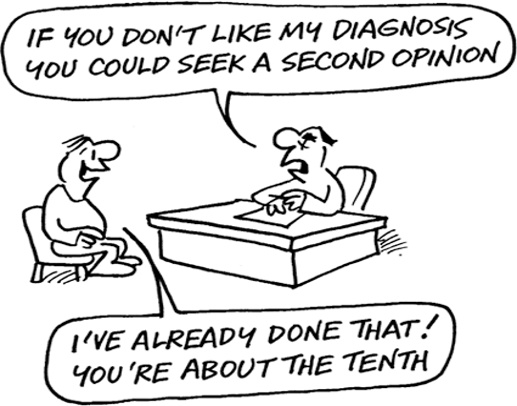
The patient in the cartoon may be experiencing which of the following somatic symptom disorders?
Dissociative experiences
Ron is a 24-year old graduate student who reports that for at least the past year, he has begun to doubt his own reality. He feels as though he is living in a dream and watching his life unfold “from the outside”, like he is watching a movie. As he walks around campus, he questions the reality of his surroundings, wondering if the people he is seeing are really robots. How do you assess Ron’s symptoms?
 Note
Note  Flashcards (69)