Cadaver Anatomy exam 2 - thoracic wall and diaphragm
 Call Kai
 Learn
Learn Practice Test
 Spaced Repetition
 Match
Match Flashcards
 Knowt Play
1/178

There's no tags or description
Looks like no tags are added yet.
Name | Mastery | Learn | Test | Matching | Spaced | Call with Kai | Chat |
|---|
No analytics yet
Send a link to your students to track their progress
179 Terms
Thorax definition
Region between neck and abdomen that houses heart and lungs
Main boundaries of thorax
Ribs, sternum, thoracic vertebrae, diaphragm
thoracic cavity is bounded by
ribs, costal cartilage, sternum, thoracic vertebrae, diaphragm
Main thoracic compartments
Mediastinum and two pleural cavities
Mediastinum contains
Heart, esophagus, structures the conduct blood and air
Pleural cavities contain
pleural fluid
Thoracic floor
Diaphragm
thoracic cage functions
Protect heart and lungs, support thoracic organs, provide muscle attachment, resists the negative internal pressures generated by the elastic recoil of the lungs and inspiratory movements
Thoracic cage resists
Negative pressure generated during inspiration
Thoracic cage protects
Superior abdominal organs
Thoracic cavity shape
Truncated cone
Narrowest part of thoracic cage
Superior thoracic aperture
Widest part of thoracic cage
Inferior thoracic aperture
Thoracic cage properties
Thin-walled but strong
Purpose of thoracic shape
Allow expansion during breathing
Thoracic vertebrae number
12
True ribs
1–7
False ribs
8–10
Floating ribs
11–12
True rib attachment
Direct to sternum
False rib attachment
Indirect to sternum via cartilage
Floating rib attachment
No sternal attachment
Costal cartilage function
Flexibility for respiration
Intercostal space definition
Space between adjacent ribs
Subcostal (infrasternal) angle formed by
Costal cartilages 7–10
what is the name for part of 1st rib and sternum
synchondrosis of 1st rib
where are costochondral joints
on rib side of sternum and rib attachment
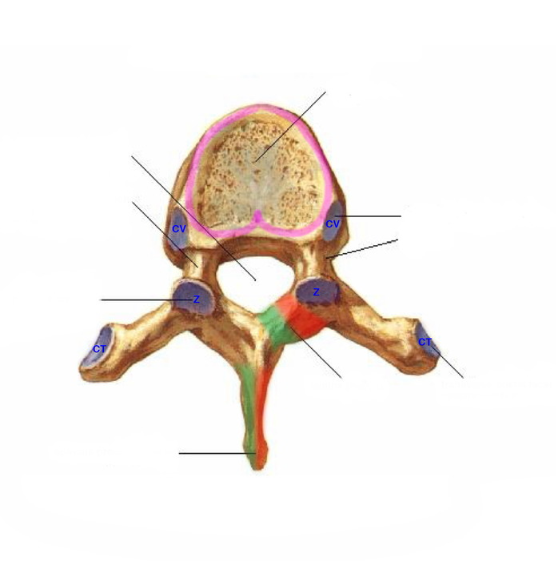
what are the parts? starting from the top and going clockwise (T2- T8)
body, superior costal demi-facet, pedicle, costal facet on the transverse process, lamina, spinous process, superior articular facet, superior vertebral notch, vertebral foramen
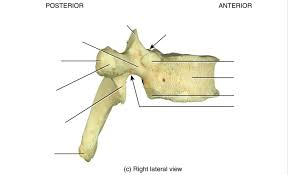
what are the parts? starting from the top and going clockwise (T2- T8)
superior articular process, superior vertebral notch, superior costal demi-facet, body, inferior costal demi-facet, inferior vertebral notch, spinous process, inferior articular process, costal facet, transverse process, pedicle
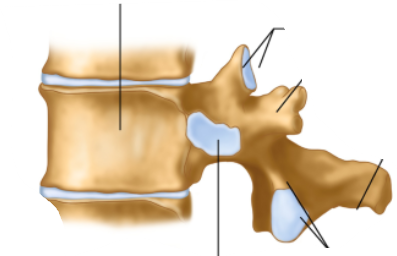
what are the parts? starting from the top and going clockwise (T11/12)
body, superior articular process and facet, transverse process, spinous process, inferior articular process and facet, costal facet
Thoracic vertebrae articulate with
Ribs
Superior costal demi-facet function
Articulates with inferior articular facet on rib (same rib number)
Inferior costal demi-facet function
Articulates with upper part of the next rib head (different numbered vertebra)
how many facets do atypical ribs have on their head
1
how many facets do typical ribs have on their head
2
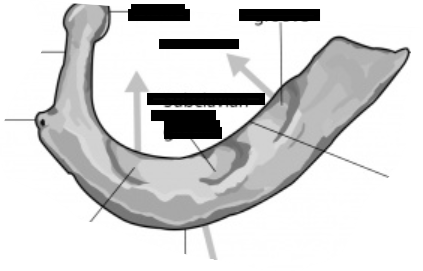
what rib is this and what are the parts
head, subclavian artery groove, subclavian vein groove, scalene tubercle, tubercle, neck (1st rib)
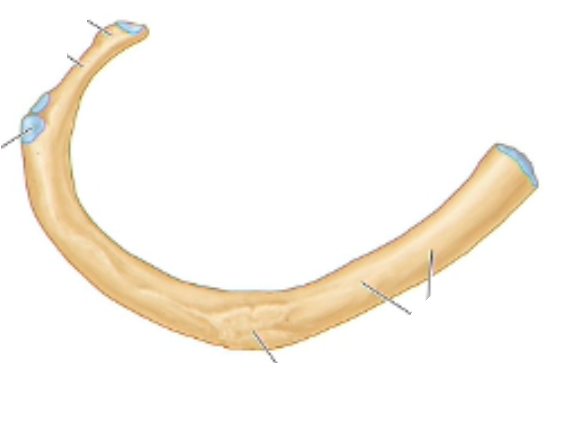
what rib is this and what are the parts
(2nd rib), head, body, tuberosity for serratus anterior, tubercle, neck
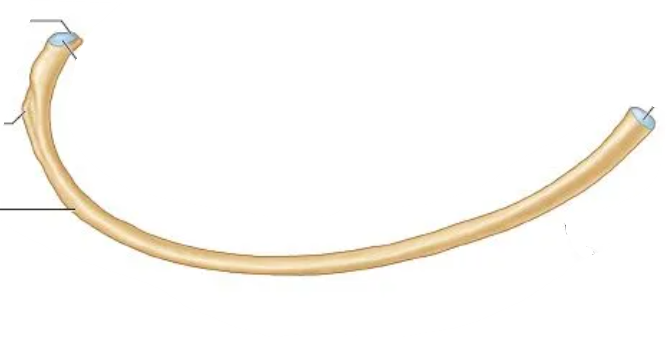
what type of rib is this and what are the parts and what view of the rib is this
(typical rib) crest of head, superior articular facet, cup for costal cartilage, costal angle, tubercle (superior view)
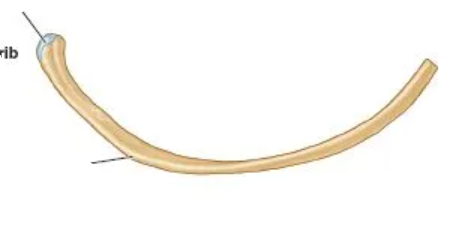
what rib is this and what are the parts
(11th rib) head, costal angle
what does the costal angle of the 11th rib do
lateral limit of attachment for erector spinae muscles
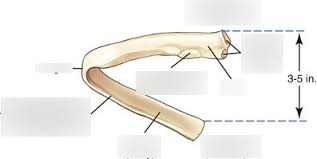
what type of rib is this and what are the parts and what view
(typical rib) (posterior view) superior articular facet, inferior articular facet, head, tubercle, internal surface, costal groove, body
Typical ribs
3–9
Atypical ribs
1–2, 10–12
Rib head articulates with
Vertebral body
articular facet of the rib tubercle articulates with
corresponding transverse process
what does the non articular part of the rib tubercle do
attachment site for the costotransverse ligament
Costal groove contains
Intercostal vein, artery, nerve
Costal angle location
Posterior rib bend
Rib cartilage attachment
Sternum
Sternum parts
Manubrium, body, xiphoid process
Jugular notch location
Superior manubrium
Clavicular notch articulates with
Clavicle
Sternal angle vertebral level
T4–T5
Sternal angle clinical importance
Landmark for tracheal bifurcation
Xiphoid process vertebral level
T9–T10
Tracheal bifurcation occurs at
T4
Sternal angle corresponds to
2nd sternocostal joint
Inferior border of heart level vertebral level
T9
Transverse thoracic plane passes through
T4 intervertebral disc
what is another name for sternum joints
synchondrosis
what vertebral level is the body of the sternum located at
t5-t9
what do the demi-facets at the manubriosternal joint articulate with
2nd rib
where does the aortic arch begin and end
manubriosternal joint
where is the inferior border of the superior mediastinum
manubriosternal joint
what is the term for an abnormal fusion where a joint should be
synostosis or ossification
what part of the sternum does the 7th costal cartilage articulate with
xiphisternal joint
what is the flat cartilaginous process at birth that ossifies and fuses with the sternal body after middle age
xiphoid process
what is the lower limit of anterior thoracic cavity
t10 (end of xiphoid process)
what is the level of the esophageal hiatus in the diaphragm
t10 (end of xiphoid process)
what is the vertebral level of the superior border of the aortic arch
t3
where are costochondral joints
anterior part of rib
what do costochondral joints do
cartilage and bone is bound by periosteum, no movement in the joint costal cartilage provides flexibility
what are costovertebral joints of
joint of head of rib
where is the costoclavicular igament
between clavicle and 1st rib
where are radiate sternochondral ligaments
on the sternalcostal joints
where are Interchondral joints
Between ribs 6–9
Ribs 1–7 movementat the costotransverse joint
Rotation
Ribs 8–10 movement at the costotransverse join
Gliding
Ribs 11–12 articulation
No transverse articulation
The rib moves (elevates and depresses) around …
an axis that traverses the head and neck of the ribs
Purpose of rib movement
Increase thoracic volume
Superior thoracic aperture structures passing through
Trachea, esophagus, vessels, nerves
Inferior thoracic aperture separates
Thorax and abdomen
Organs in the inferior thoracic aperture
Liver, stomach, spleen
Pectus excavatum
Funnel chest
Pectus carinatum
Pigeon chest
Cause of chest deformities
Improper sternal development
Sternal cleft
Incomplete sternum fusion
Ectopia cordis
Heart outside thoracic cavity
what diseases result from barrel chest
COPD (late stage emphysema and chronic bronchitis)
Barrel chest feature
Increased AP chest diameter and increased retrosternal space
result in barrel chest from
chronic overinflation of lungs with air, constant state partial rib cage expansion
what can be mistaken for a bullet wound or sternal disease
sternal foramen
what can a sternal foramen lead to
cardiac tamponade
what is cardiac tamponade
type of pericardial effusion where the pericardial sac accumulates fluid, pus, blood, clots or gas resulting in slow or rapid compression of the heart
what percentage of the population is sternal foramen found in
4-10%
what is the most common part of the sternum to break
manubriosternal joint
what muscle helps to prevent displacement of the sternum during sternum break
pectoralis
what are comminuted fractures
broken into several pieces
what is the mortality rate of a sternal fracture
25-45%