Organic Metabolism
 Call Kai
 Learn
Learn Practice Test
 Spaced Repetition
 Match
Match Flashcards
 Knowt Play
1/24

Earn XP
Description and Tags
A&P Exam 4
Name | Mastery | Learn | Test | Matching | Spaced | Call with Kai | Chat |
|---|
No analytics yet
Send a link to your students to track their progress
25 Terms
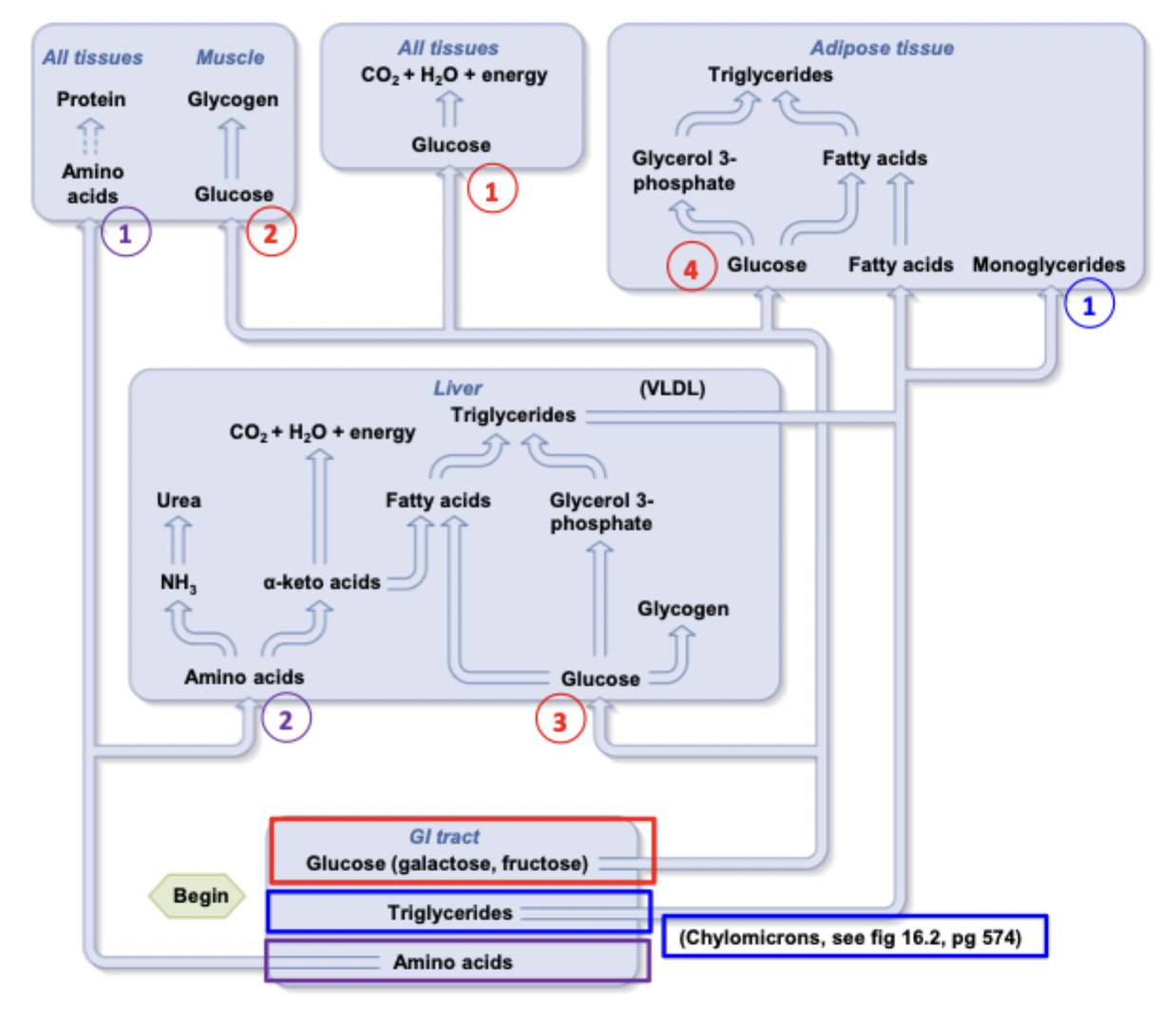
Summarize the metabolism that occurs in the absorptive state
Process is anabolic (builds things)
Most energy comes from absorbed glucose
Most excess nutrients are stored as triglycerides
4 fates of glucose in absorptive state
Goes to all tissues to provide energy
Stored as glycogen in the skeletal muscle
Stored in the liver as glycogen
Stored in adipose tissues as triglycerides, excess stored here
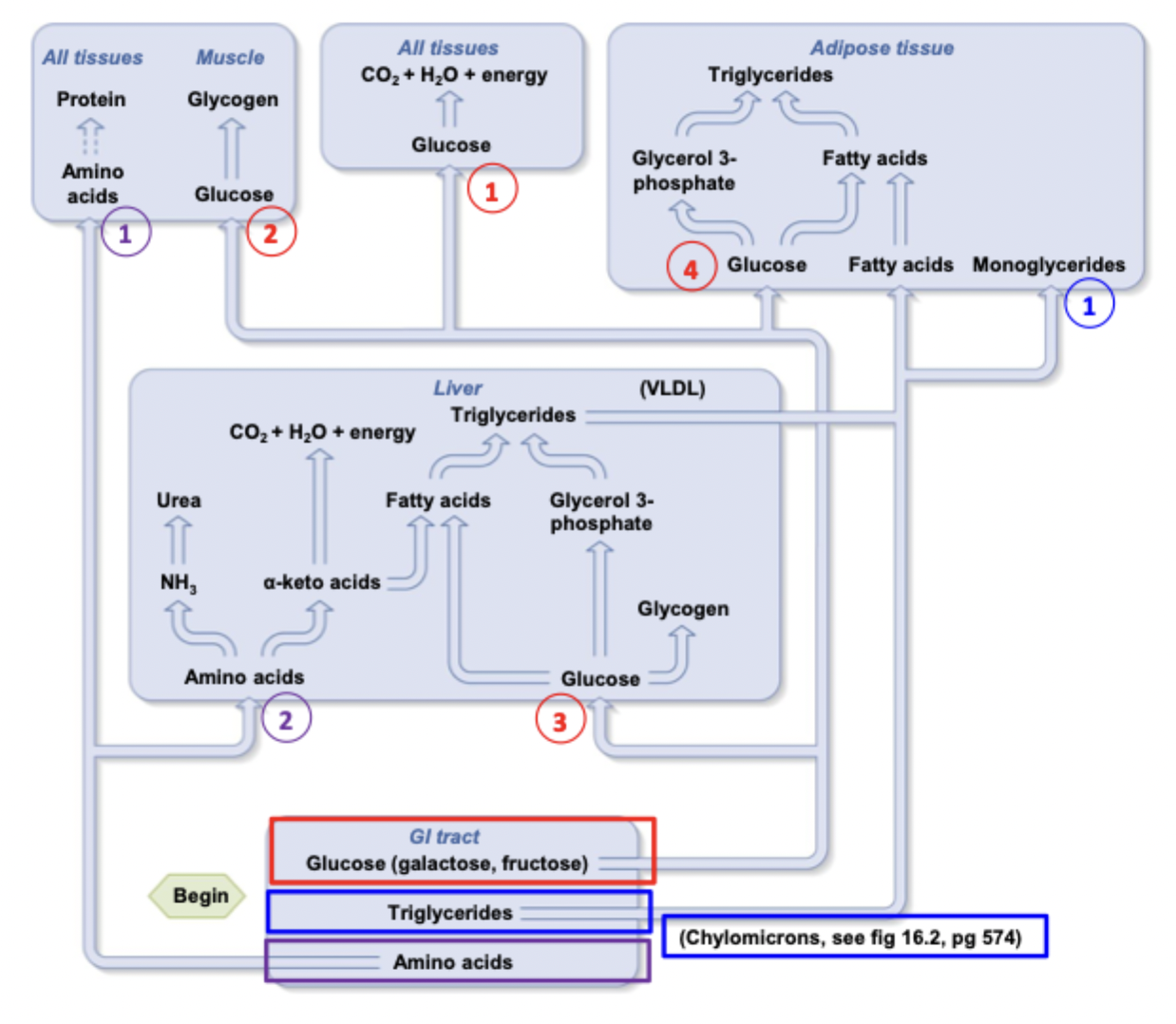
Fate of triglycerides in absorptive state
Broken down into fatty acids and monoglycerides, stored as triglycerides in adipose tissue
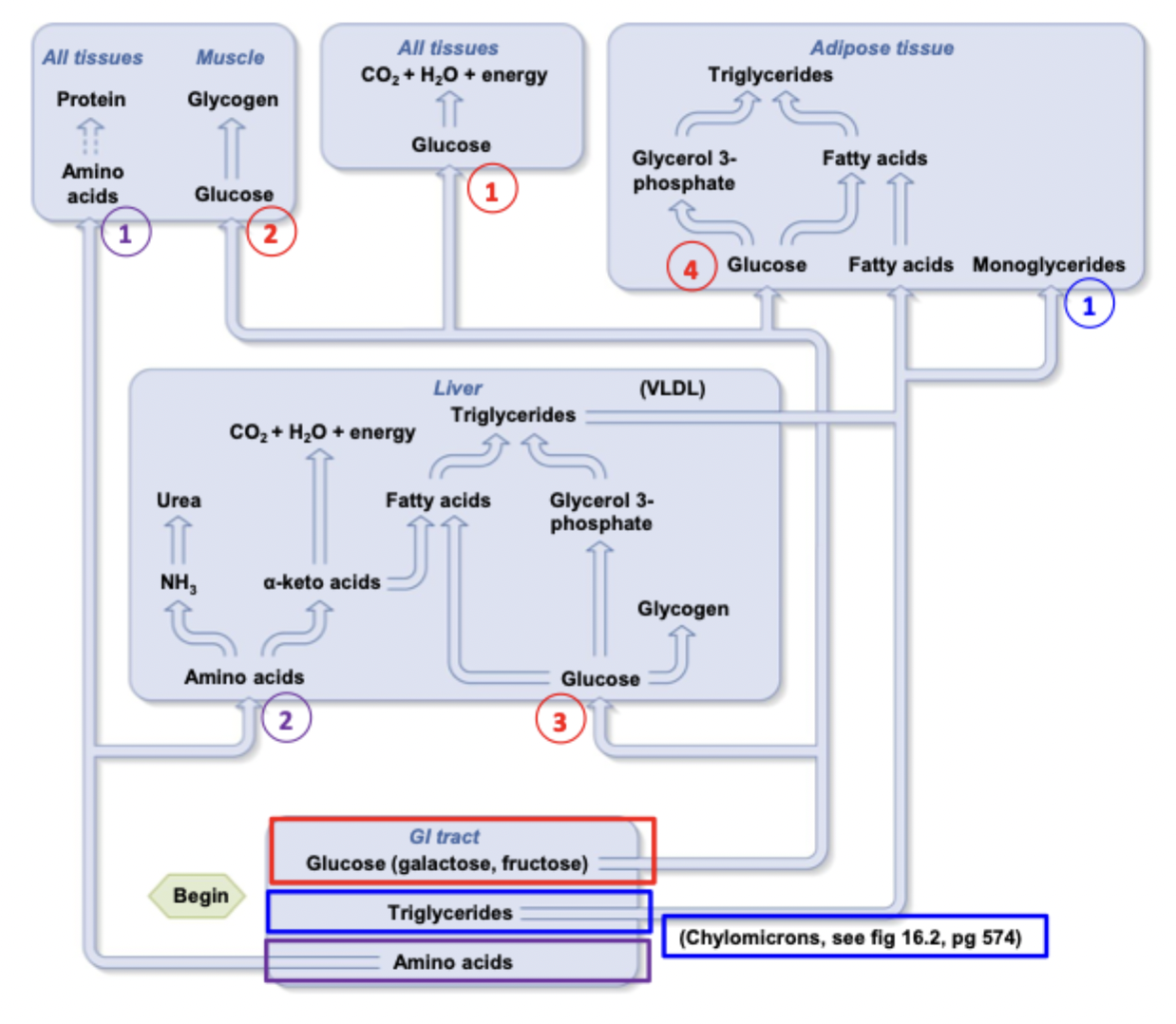
2 fates of amino acids in absorptive state
Goes to all tissues and turnt into protein to meet body’s protein demands
Excess are taken up by liver, converted into triglycerides and stored in adipose tissue
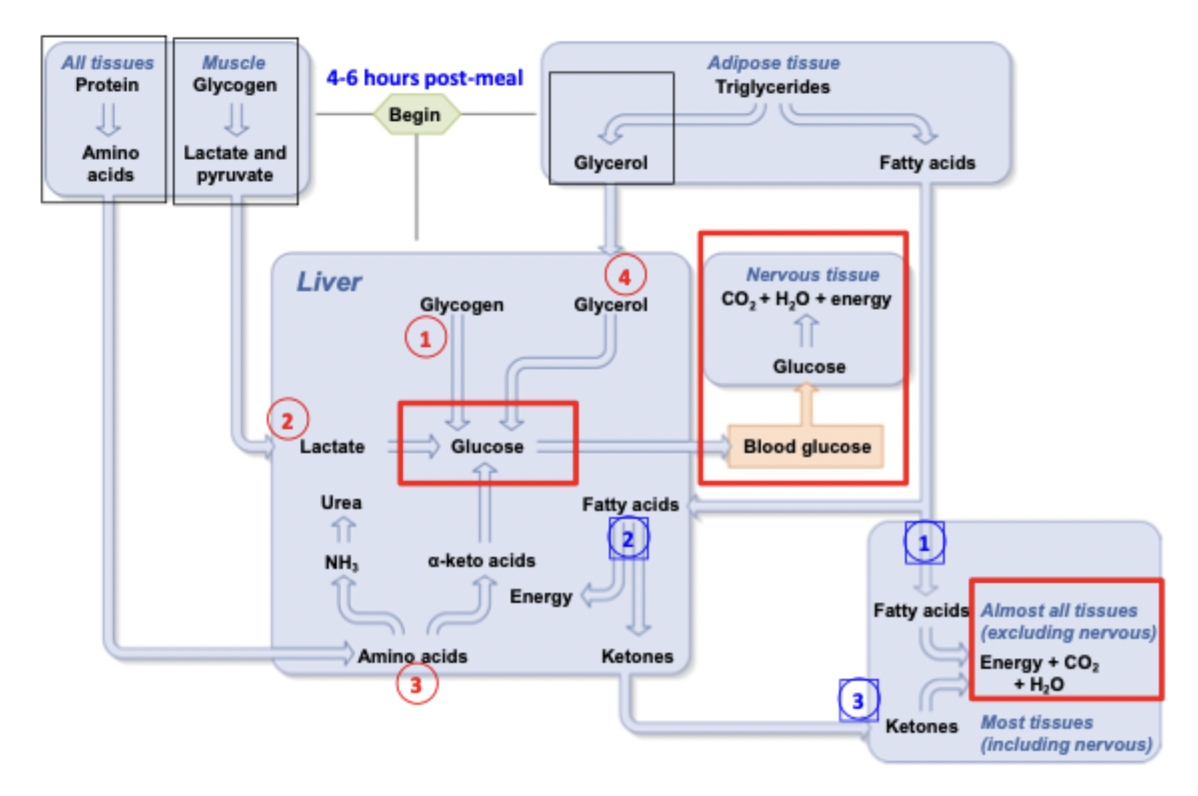
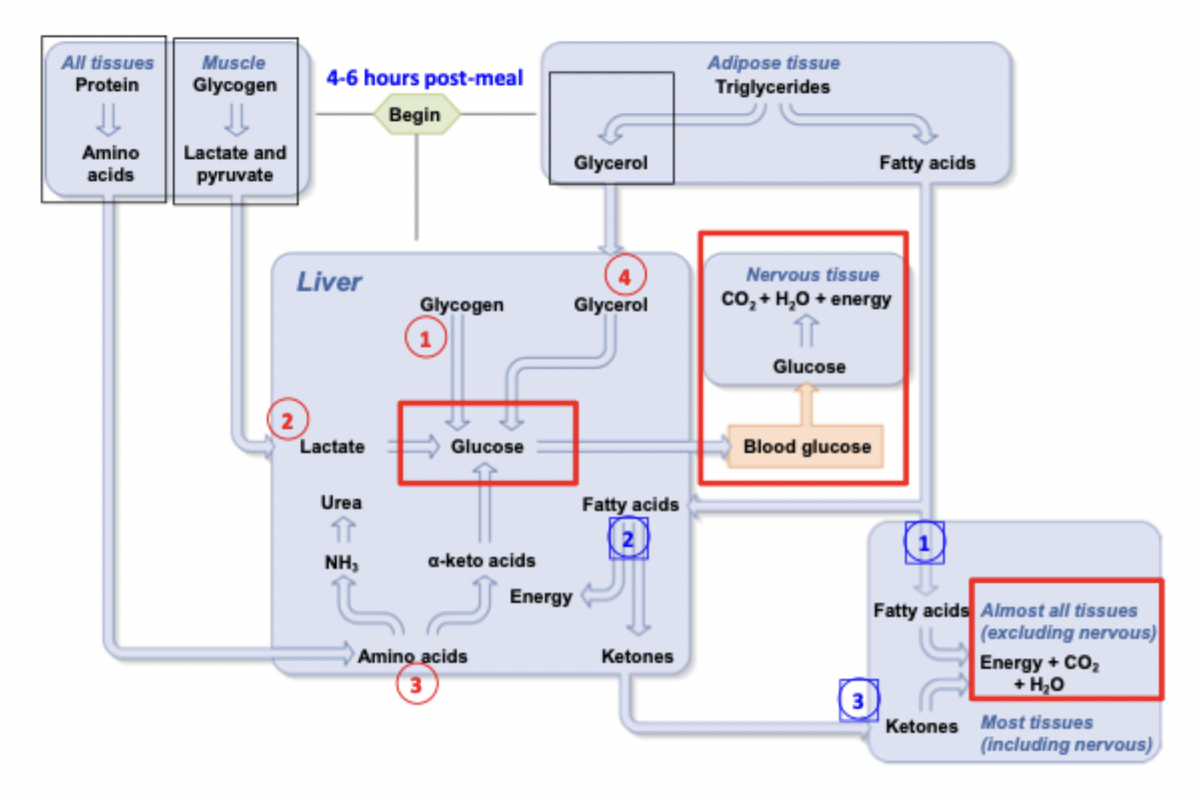
Summarize the metabolism that occurs in post-absorptive state
Is catabolic (breaks things down)
Most energy comes from stored triglycerides
Ultimately needs to make glucose to send to nervous tissue
Glucose sparing occurs
Ketones derived from fatty acids provide neural energy in prolonged fasts, spares protein catabolism
Define glucose sparing
Most tissues reduce glucose utilization saving it for neural tissue
What ways is glucose made in post-absorptive state
Glycogen from the liver
Glycogen from muscle (broken down into lactate and pyruvate → lactate in liver)
Break down proteins into amino acids in severe fasting states
Glycerol from stored triglycerides
What ways are fatty acids made in post-absorptive state
Adipose tissue makes fatty acids that go to all other tissues other than nervous
Can be turned into ketones to provide energy to neural tissue
Keto diet - lack of carbohydrates so ketones are a stand-in energy source for glucose, but it isn’t the nervous syste'm’s preferred fuel source
What does insulin stimulate in absorptive state
Protein synthesis (amino acids → proteins)
Lipogenesis (glycerol 3-phosphate and fatty acids → triglycerides)
Glycogenesis (glucose → glycogen)
What does a decreased insulin stimulate in postabsorptive state
Proteolysis (proteins → amino acids)
Lipolysis (triglycerides → glycerol and fatty acids)
Glycogenolysis (glycogen → glucose)
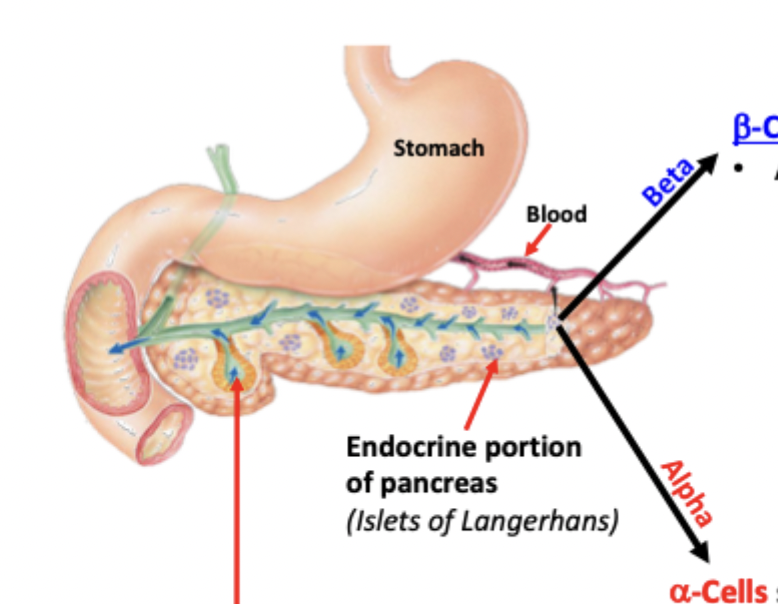
Describe paracrine a and b-cells
B-cells secrete insulin (anabolic/net storage, stimulates absorptive rxns)
a-cells secrete glucagon (catabolic/mobilization, stimulates postabsorptive rxns)
What chemical class are insulin and glucagon? Rs, and Rs coupling
Peptides, receptors are on plasma membrane, coupled to secondary messenger signaling cascades
Where are a and b-cells secreted from
Endocrine portion of pancreas called Islets of Langerhans
How does plasma glucose regulate insulin
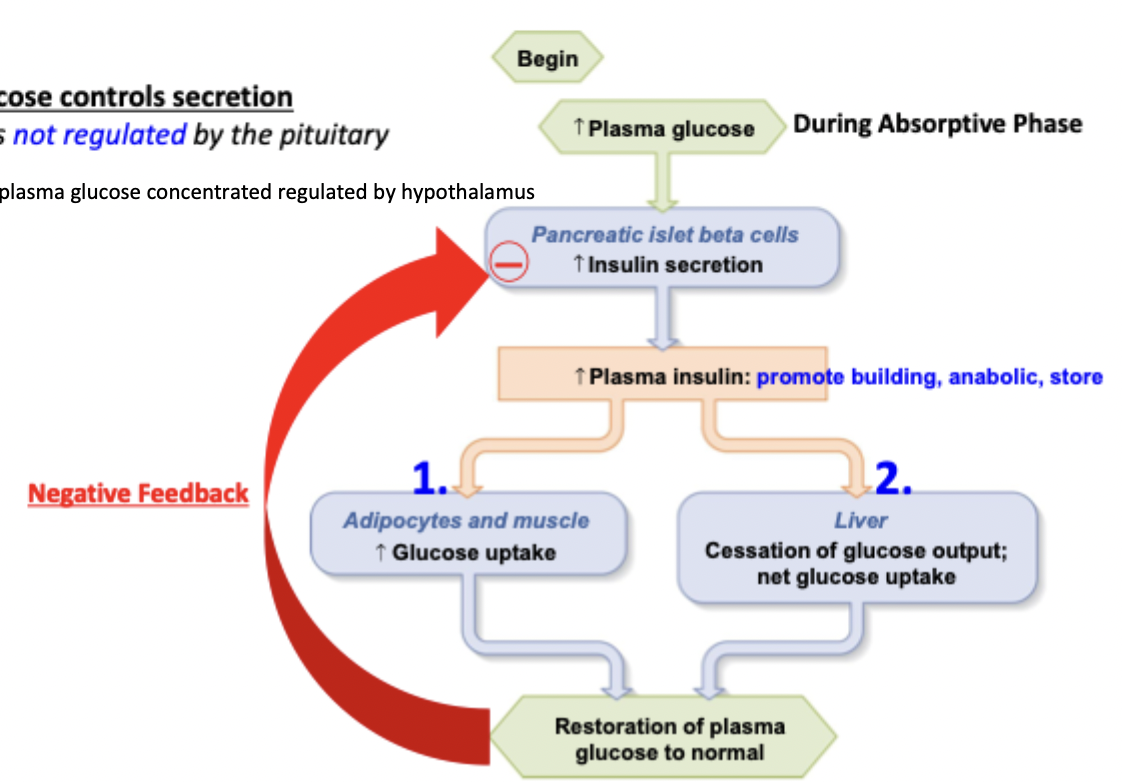
Increased plasma glucose in absorptive phase → more insulin → more glucose uptake and stopping of glucose output → restoration of plasma glucose to normal
How does insulin operate
Binds to receptor → signal transduction pathway → triggers diffusion of glut-4 vesicles with membrane → uptake of glucose out of the plasma into the ICF where it’s stored as glycogen/fat
Extra notes on insulin operation
Brain doesn’t need insulin for glucose transport (glut-2 transporters exist)
Exercising muscles have glucose transporters go to membrane without insulin
There is a transport maximum
How does type II diabetes affect typical insulin pathway
People have lost sensitivity to insulin. Insulin is present but signal transduction pathway doesn’t occur
Severe - body doesn’t produce insulin
Explain neural controls of fuel metabolsim
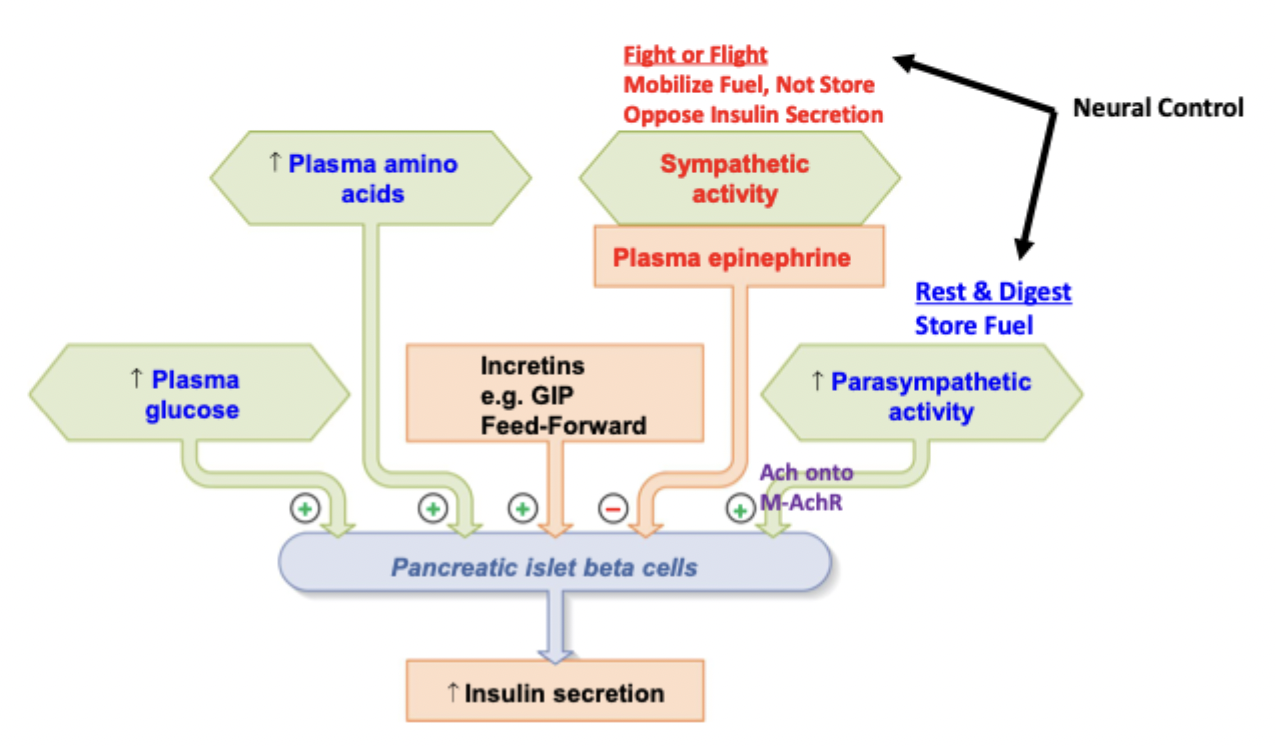
Sympathetic → mobilizes fuel, opposes insulin secretion → releases epinephrine → inhibits pancreatic islet beta cells → decrease insulin secretion
Parasympathetic → stores fuel → ACh onto M-AchR → increases pancreatic islet beta cell secretion → increase insulin secretion
How does plasma glucose regulate glucagon
Low plasma glucose in post0absorptive phase → islet alpha cells secrete glucagon → liver has increased glycogenolysis, gluconeogenesis, ketone synthesis → increased plasma glucose and ketones
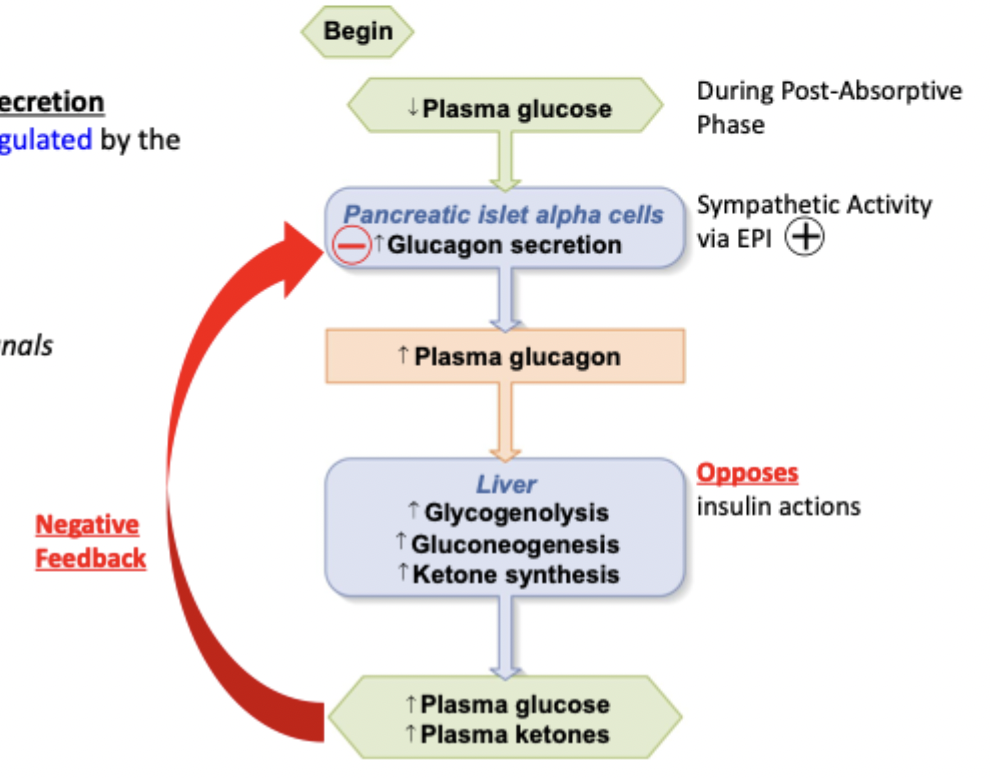
How does hypoglycemia stimulate glucose mobilization
Low blood glucose → increased glucagon secretion and decreases insulin
Gluconeogenesis needs a baseline level of cortisol (high for anti-insulin effect)
What other factors affect energy
Energy intake affects total-body energy stores
Energy intake affects expenditure (diet, low energy stores → low metabolic rate)
Define leptin
A hormone that is secreted form adipocytes in proportion to the fat they contain, affects BMR
Notes on metabolism
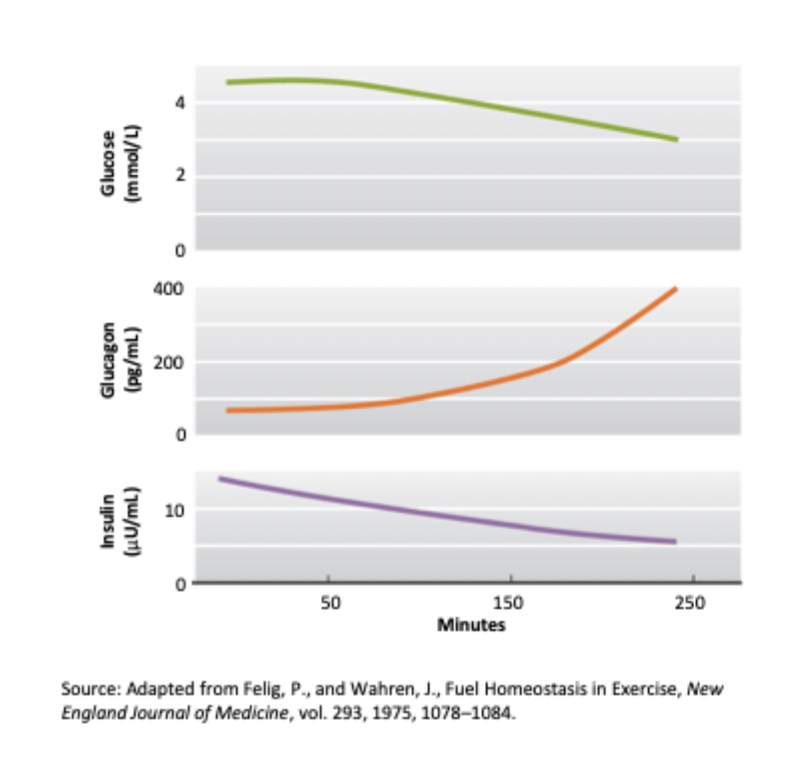
Exercise state is similar to fasted state, needs glucose without food
Why does insulin go down? Sympathetic
Why does muscle glucose uptake stay unaffected? internal glucose transporters
Describe diabetes mellitus (I and II)
Type I - lack of insulin production
Type II - two major pathologies:
Lack of insulin sensitivity at target cells
Lack of insulin secretion from beta cells
Describe diabetic ketoacidosis
Occurs with untreated type I diabetes
Affects renal function - increases glucose in filtrate disrupts osmotic gradient
Affects pH balancing - low insulin → high triglyceride breakdown