McDanel Exam 3
 Call Kai
 Learn
Learn Practice Test
 Spaced Repetition
 Match
Match Flashcards
 Knowt Play
1/68

There's no tags or description
Looks like no tags are added yet.
Name | Mastery | Learn | Test | Matching | Spaced | Call with Kai | Chat |
|---|
No analytics yet
Send a link to your students to track their progress
69 Terms
Type A Reactions
Predictable (80% of all ADR’s)
Related to known pharmacological action of the drug
(Overdose, Side effects, secondary effects, drug interactions)
Type B Reactions
Unpredictable (20% of all ADR’s)
Unrelated to the pharmacologic action of the drug
(Drug intolerance, Nonallergic reactions with immune manifestations, hypersensitivity reactions)
Hypersensitivity reactions make up…
10-25% of ADR’s
What are the most common agents implicated in drug allergy
Penicillin and Sulfonamide antibiotics
Pathophysiology of Drug Reactions
Immunologic response to a pharmaceutical agent and/or excipient
Classically defined as an IgE-mediated reaction
Release of vasoactive mediators from tissue mast cells and peripheral basophils
Type I Reaction
(Anaphylactic or IgE-Mediated)
Allergen binds to IgE on basophils or mast cells, resulting in release of inflammatory mediators
30-120 mins
Type II Reaction
(Cytotoxic)
Antigen-specific antibody to IgG or IgM initiates cell destruction
>72 hrs to weeks
Type III Reaction
(Immune Complex)
Antigen-antibody complexes form, deposit on blood vessel walls → activate complement system
>72 hrs to weeks
Type IV Reaction
(Cell-mediated or Delayed)
Antigens caused activation of T lymphocytes → release of cytokines and recruit effector cells
>72 hrs
When is a drug allergy suspected?
Symptoms are compatible with immune drug reaction
Temporal relationship between drug administration and adverse event
The class/structure of the drug is associated with immune reactions
The patient previously received the drug
Symptoms improved with withdrawal
No other clear explanation for the reaction
Assessment of Drug Allergies
Clinical History: A thorough history is important, careful history and reviewing all available medical records is critical, NO GENETIC PREDISPOSITION
Diagnosis: Clinical history, records, and physical exam, Skin testing and drug challenge, Biopsy
Clinical Evaluation of Drug Allergies
What caused the reaction?
Why were you taking it?
What was the reaction?
How long ago?
Time from symptom to onset?
Length of reaction?
How did you treat the reaction?
Were you taking other meds at the time?
Have you taken same or similar meds since?
Most common to least common drug induced dermatologic reactions
Exanthems → Urticaria, Angiodema, Anaphylaxis → Fixed Drug Eruptions → Others
Exanthems Background
Most common ~ 90% of all drug reactions
AKA morbilliform drug eruption, maculopapular rash
Exanthems Characteristics
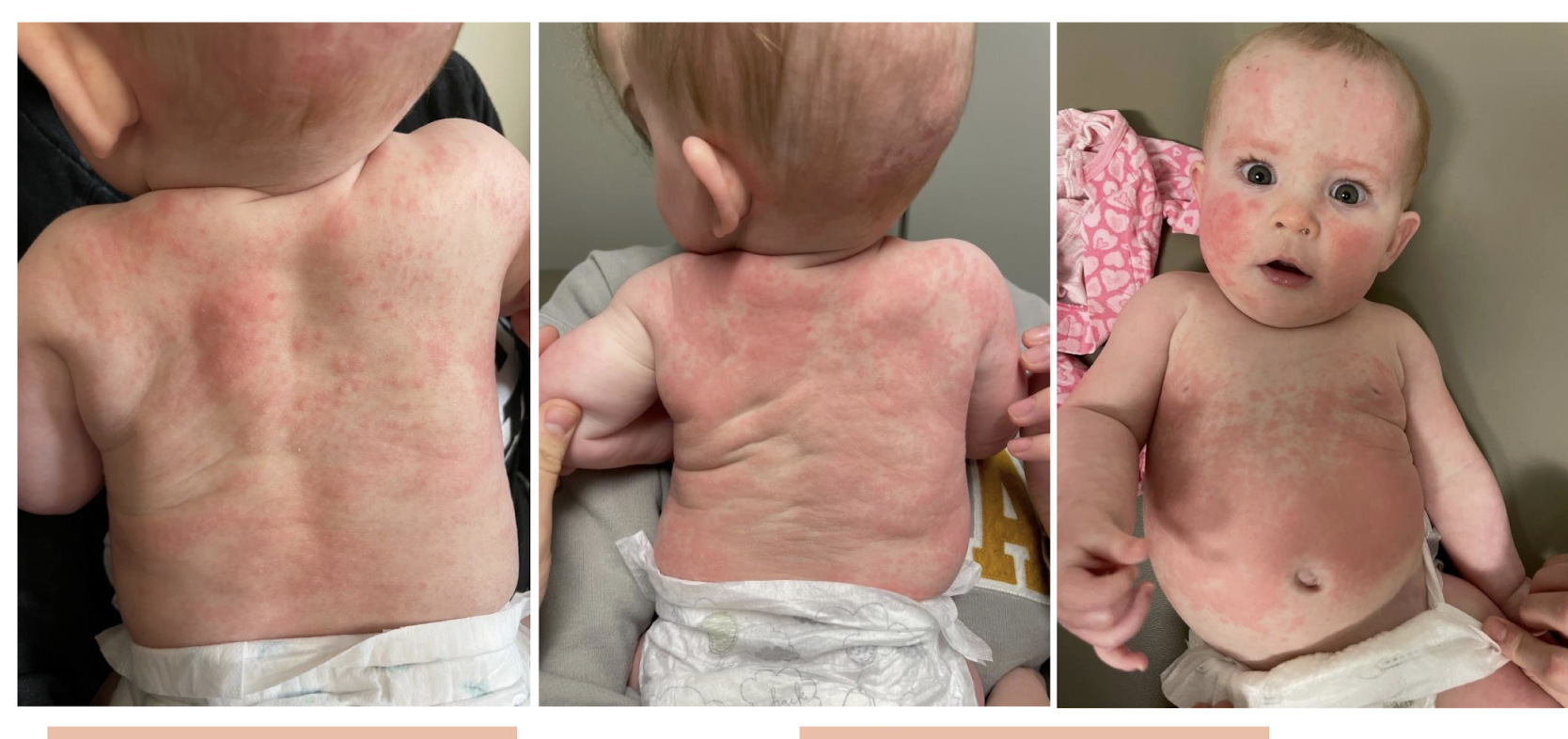
Erythema, burning
Macules = small, flat, and distinct
Papules = small and raised
Pruritis, Mild fever
Trunk; may extend to extremities, sparing the face
Exanthems Allergy
Type IV
Onset: 5-10 days (if previous exposure: 2-3 days)
Resolution: 2-14 days
Exanthems treatment
Stop causative drug
relief of symptoms
antihistamines: pruritis
High potency topical steroids may be used 1-2x/day for 1 week
Prevention: Avoidance, pre-medication
Picture of Exanthems
Common offending drugs for Exanthems
Anticonvulsants: Barbiturates, carbamazepine, phenytoin
Antihypertensives: Captopril, furosemide, thiazide diuretics
Antibiotics: Amphotericin, cephalosporins, erythromycin, gentamicin, nitrofurantoin, penicillins, rifampin, sulfonamides, tetracyclines
Other: Abacavir, allopurinol, golds salts, phenothiazines
Contributing Factors to exanthems
Epstein-Barr Virus
Cytomegalovirus
Herpes
HIV
Cystic Fibrosis
Autoimmune disorders
Multiple Medications
Urticaria Background
2nd most common
1st OR after many uneventful exposures
15% to 20% experience urticaria during their lifetime
>20% of all dermatologic reactions to drugs
Urticaria Characteristics
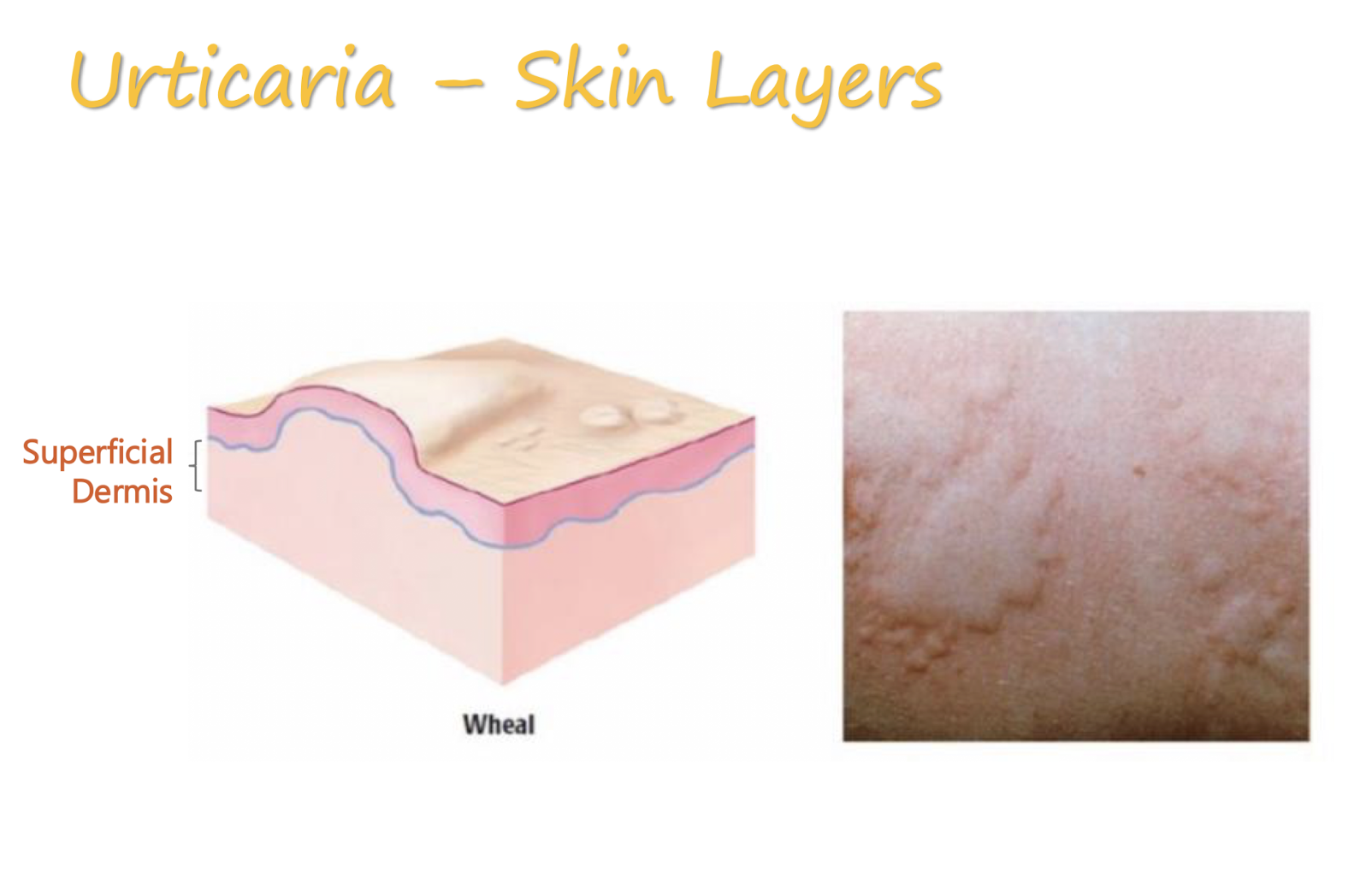
Hives= raised, red, wheals
Pale in the center with surrounding erythema
Intense pruritis
1mm to several cm
Enlarge/combine and migrate
Anywhere on the body
Urticaria Allergy
Type I
Onset: 30-120min, Accelerated: 1-6 hours, Delayed: days
if previous exposure: minutes and likely to progress to anaphylaxis
Resolution: few hours to <24 hours
Urticaria Treatment
Stop causative drug
Relief of symptoms
2nd generation antihistamines help pruritis
Emergent treatment if angiodema, systemic symptoms, or anaphylaxis
Prevention: Avoidance, Evaluation is >5-10 years, Induction of tolerance
Urticaria picture
Angiodema Background
Often accompanies urticaria in 50% of cases
May happen alone
Disfiguring if involves face and lips
May be life threatening if airway obstruction occurs
Angiodema Characteristics
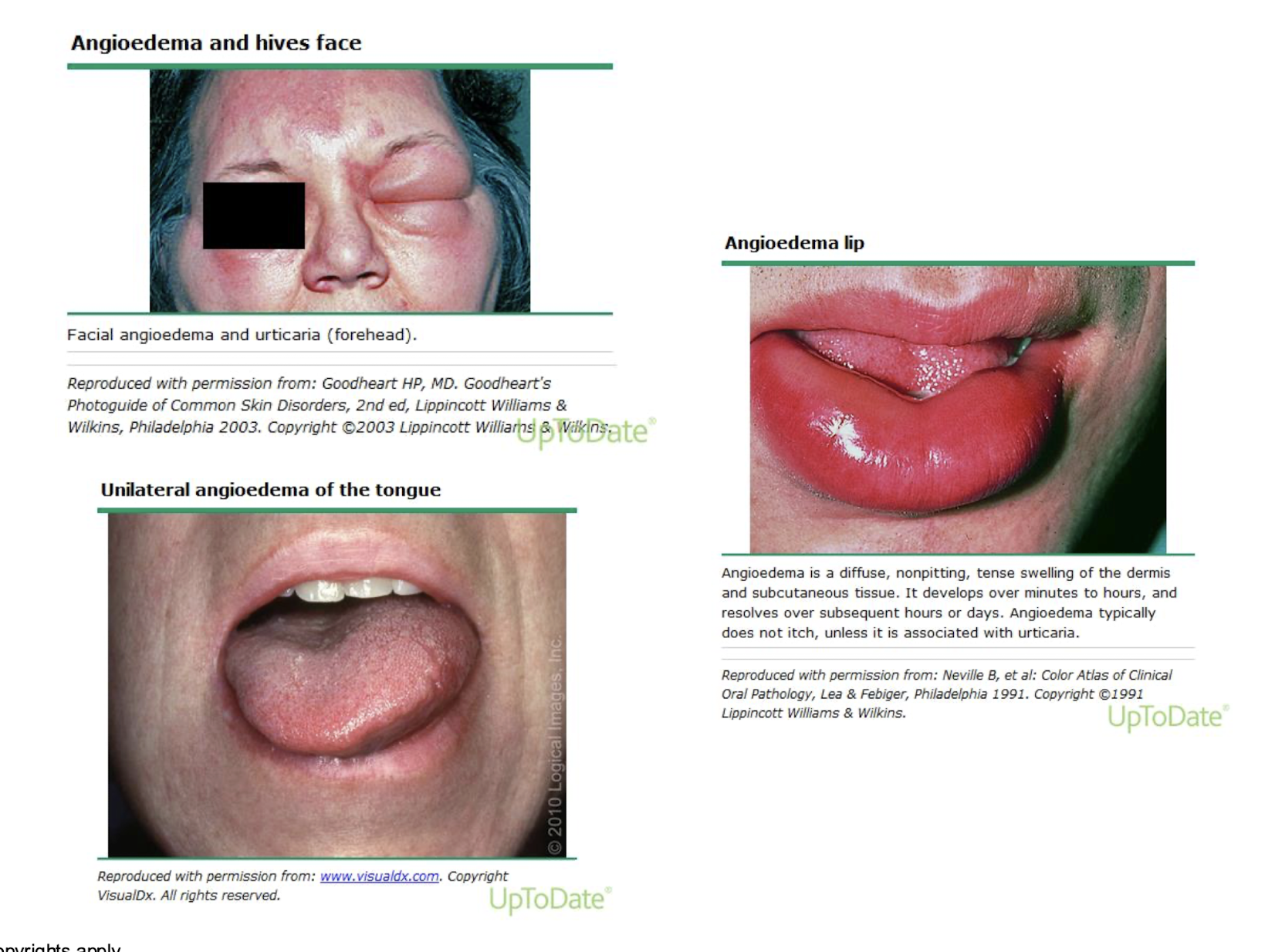
intense asymmetric swelling and mucosal membranes
Not pruritic; painful
Most often involves tongue, lips, and eyelids
May have systemic symptoms or GI involvement
Angiodema Allergy
Type I
Onset: Immediate=30-120mins, Accelerated=30min to 48 hrs
If previous exposure: minutes and likely to progress to anaphylaxis
Resolution: Slow, up to 72 hours
Angiodema Treatment
Stop causative drug
Emergent treatment: Epinephrine, antihistamines, corticosteroids
Prevention: Avoidance, induction of tolerance
Angiodema pictures
Urticaria/Angiodema common offending drugs
~10% per year loss of IgE, thus 80% loss of sensitivity at 8-10 years
Anitbiotics, Anticonvulsants, local anesthetics, radiographic contrast media, ACE-inhibitors, amphetamines, Iron, NSAID’s, Opiate analgesics
Anaphylaxis
Drugs are 2nd or 3rd most common cause of anaphylaxis
Most severe and potentially life-threatening form of immediate type I hypersensitivity
Symptoms: CV, cutaneous, GI, neurologic, respiratory
Should be treated with epinephrine, IV fluids, oxygen
Epinephrine Mechanism of Action
stimulates alpha, beta1 and 2 adrenergic receptors resulting in:
Relaxation of smooth muscle of the bronchial tree
Cardiac stimulation
Dilation of skeletal muscle vasculature
Epinephrine Onset of Action
IM or SQ: Rapid
IV: <5 minutes
Proper administration technique for autoinjectors
IM or SQ injection
Administer at a 90 degree angle into the outer thigh
Autoinjector Administration Pearls
Should always be carrier
Always call 911 after use
Store at room temp
Do not inject into any other part of the body
Can and should give injection through clothing
Massage area for ~ 10 seconds
Intranasal Epinephrine
for adult and pediatric patients aged 4 years and older
Second dose in the same nostril after 5 minutes
Neffy administration pearls
Inhaling is not required
Patient can be in any position
Works through stuffy nose
Avoid sniffing during and after administration
>2 doses should be given under medical supervision
Not for patients with anatomical nasal conditions
May increase systemic absorption of nasal products for 2 weeks
Epinephrine side effects
Palpitations
Dizziness
Sweating
Nausea or vomiting
Headache
Respiratory difficulties
Anxiety
Pallor
Death due to anaphylaxis is often due to…
a delay in giving epinephrine
Angiodema: ACEI-Induced Background
Leading cause of drug-induced angiodema in US
No specific drug/dose
~30% of ETC visits for angiodema
Mortality: Death rate 0.34 per million persons/yr, >50% deaths are in black patients
Angiodema: ACEI-Induced Characteristics
Angiodema of lips, tongue or face
No urticaria
May have GI involvement
Airway involvement is not common, but may occur
Angiodema: ACEI-Induced Allergy
Bradykinin
Onset: 10x higher risk in first 1-4 weeks
Develops over min to hrs, peaks, then resolves
Resolution: 2-5 days
Angiodema: ACEI-Induced Treatment
Stop causative drug
Monitor for resolution
protect airway
Non-FDA-approved meds
Prevention: recurrence may happen in 50% of pts even after stopping, contraindicated all ACEI, aliskiren, & ARBs
ACE-Inhibitors
35% of all antihypertensive prescriptions in US
>40 million patients globally are taking an ACE-I
Routinely used in: hypertension, myocardial infarction, heart failure, diabetes, chronic kidney disease
ACEI-Induced angiodema Risk Factors
Smoking, seasonal, >65 years, black, history of angiodema to NSAID’s, aspirin or NSAID use, History of previous angiodema
ACEI-Induced Angiodema Management
Observe in ED/hospital many don’t need treatment
Non-allergic reaction → antihistamines, corticosteroids, or epinephrine NOT effective but often used
Drugs targeted at bradykinin production or the bradykinin receptor have been evaluated
Fixed Drug Eruption Background
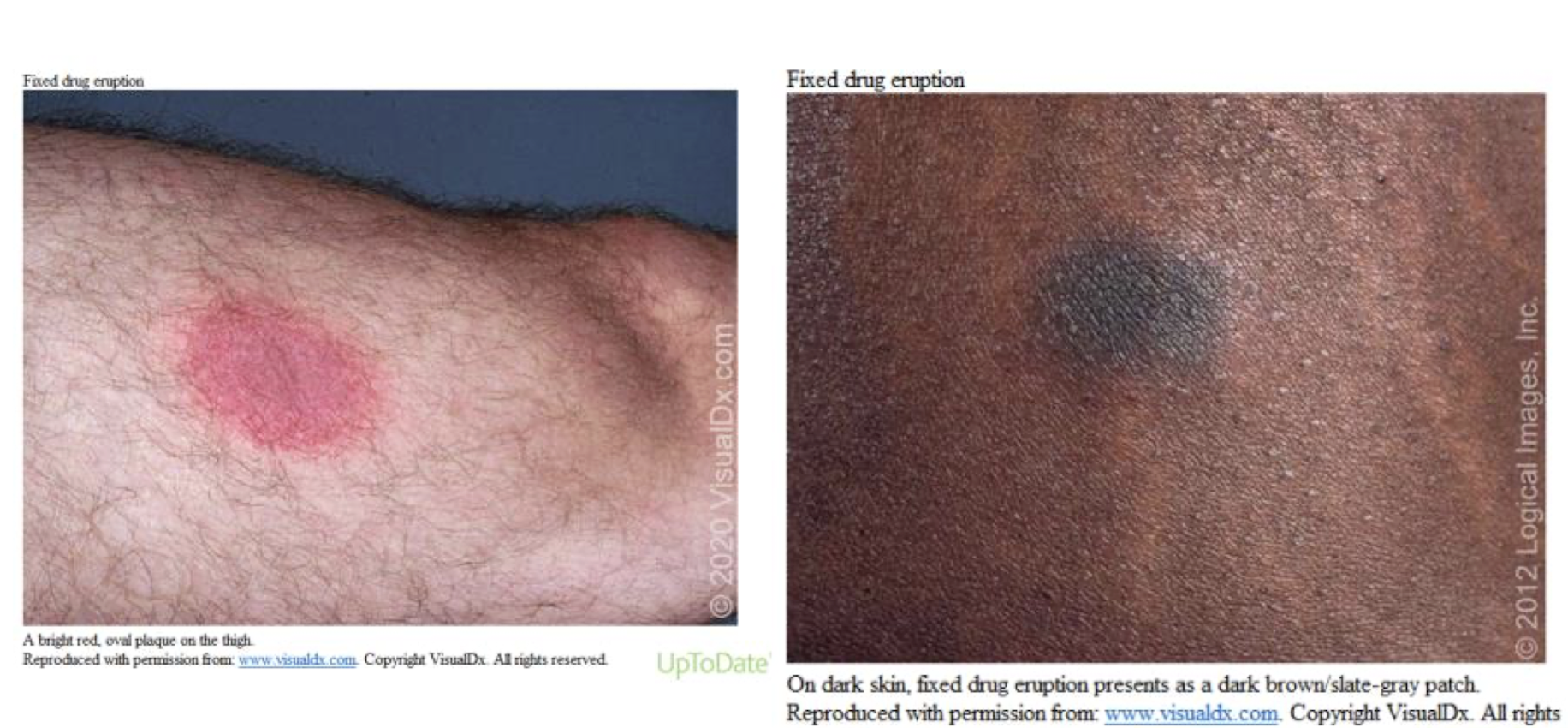
Distinctive FIXED round or oval macule evolving to edematous plaques
Defining Features: post-inflammatory hyperpigmentation and recurrence of lesions at exactly the same sites with drug re-exposure
Fixed Drug Eruption Characteristics
Solitary pruritic/burning erythematous macule (Evolves to edematous plaques, Vesicles/bullae may develop
Can occur anywhere: Lips, tongue, face, hands, feet, penis, or perianal areas, no systemic symptoms
Fixed Drug Eruption Allergy
Type IV
Onset: 30min to 8 hrs up to 2 weeks (may be confirmed by oral re-challenge within hours
Resolution: 7-14 days after drug discontinuation
Fixed Drug Eruption Treatment
Stop causative drug
Mid-high potency topical corticosteroids
Systemic antihistamines
Supportive care if needed for symptomatic relief
Diagnosis: History, biopsy, challenge, or patch test
Fixed Drug Eruption Picture
Fixed Drug Eruptions (Common Offending Drugs)
Antibiotics (Dapsone, Penicillins, Quinolones, Bactrim, Tetracyclines)
Other: APAP, anticonvulsants, Antimalarials, barbiturates, NSAID’s
Types of Severe Cutaneous Adverse Reaction (SCAR)
Stevens-Johnson Syndrome/Toxic Epidermal Necrolysis
(Drug reaction with eosinophilia and systemic symptoms)
(Acute Generalized Exanthematous Pustulosis)
Prodrome for SJS and TEN
Fever/influenza-like illness 1-3 days prior to skin lesions
SJS and TEN differentiation
SJS = <10% BSA
SJS/TEN overlap = 10-30% BSA
TEN = >30% BSA
SJS and TEN Background
all ages, all races and both sexes (female>male)
0.4 to 1.2 cases/million persons annually worldwide
Drug-induced 80-95% of the time
Mortality ~30%
SJS and TEN Characteristics
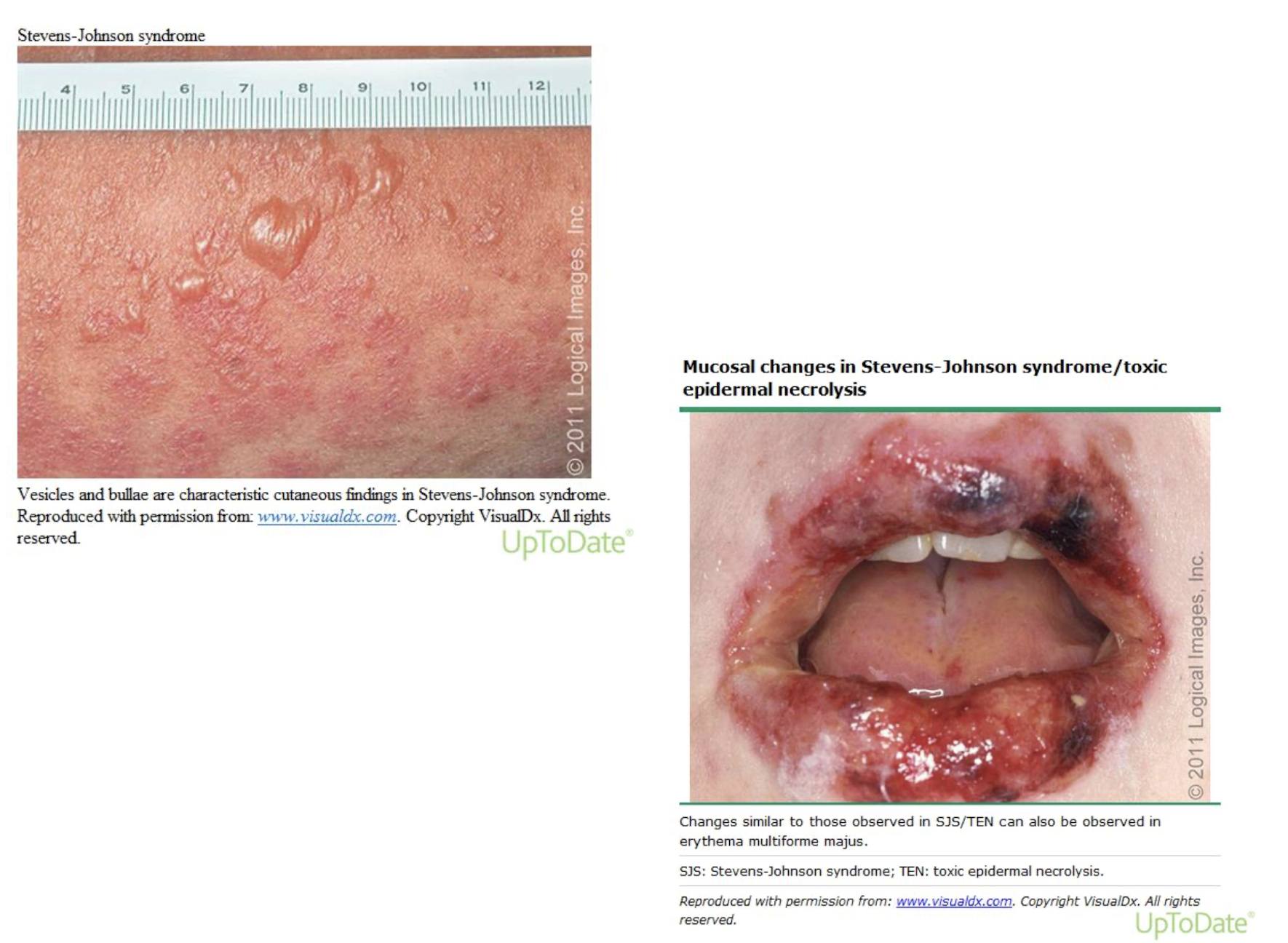
Widely distributed dusky red burning/painful macules → edematous → flaccid blisters → epidermal necrosis, detachment, sloughing
Initially on trunk/face, spread to neck, extremities in 3-4 days
90% have mucosal involvement
SJS and TEN Allergy
Type IV
Causative drugs act as haptens providing antigenic stimulus
Cytotoxic T-cell mediated against keratinocytes, epidermal necrosis
Onset: 4-28 days, Rare: >8 weeks
Resolution: Weeks to months
SJS and TEN Treatment
Prompt withdrawal
supportive care
treat like a burn in the ICU
Absolute avoidance of the culprit drug
pain meds, antihistamines, topical steroids
IV immunoglobulin - first line
SJS and TEN Pictures
SJS/TEN Risk Factors
HIV
Active malignancy
Systemic lupus erythematosus
Radiotherapy
High doses of meds
Autoimmune diseases
Concomitant viral infections
GENETICS
SJS/TEN Genetics
Certain HLA genotypes associated with TEN
Genotypic testing may be considered in higher risk populations
HLA-B*15:02 allele is present in 7-10% of Asian or South Asian ancestry (must be screened before starting carbamazepine, etc.)
SJS/TEN Common Offending Drugs
Allopurinol, carbamazepine, fosphenytoin, lamotrigine, meloxicam, nevirapine, phenobarbital, phenytoin, piroxicam, sulfadiazine, sulfadoxine, sulfamethoxazole, sulfasalazine
Skin Testing
Useful to rule out Type I hypersensitivity, performed in steps
Some protocols for delayed intradermal testing for TypeI V reactions
Step 1: Skin prick test, measured at 15 mins (Histamine control, saline control, and active drug)(positive is wheal >3mm and flare >5mm of neg control)
Step 2: (if negative): intradermal test in duplicates, measured at 20 min
Step 3: (If negative) Drug Challenge followed by observation
Direct Drug Challenge
Type I and IV
More commonly done than skin testing
1 or 2 step drug challenge is indicated if after evaluation they are deemed unlikely to be allergic
Induction of Tolerance
Desensitization
Promote temporary drug tolerance in a patient with a true Type I IgE-mediated allergy
Start at super small dose and give at increasing concentrations
Often completed in 4 to 12 hours
usually done in ICU
Will only tolerate that course of therapy
Procedure will need to be repeated for future courses of therapy
Patch Testing
Type IV
Useful if a drug was applied topically in the instance of contact dermatitis
used in specific dermatologic reactions such as exanthematous, fixed drug eruptions, DRESS
Not useful for SJS/TEN or urticarial reactions
Important documentation for an accurate allergy list
Update with comments to qualify allergy
Accurate reaction symptoms listed
Time since reaction and severity
Remove medications that are not valid
Allergy vs intolerance