Histology
 Call Kai
 Learn
Learn Practice Test
 Spaced Repetition
 Match
Match Flashcards
 Knowt Play
1/32

There's no tags or description
Looks like no tags are added yet.
Name | Mastery | Learn | Test | Matching | Spaced | Call with Kai | Chat |
|---|
No analytics yet
Send a link to your students to track their progress
33 Terms
What’s the organization of living matter
chemistry of life → cells → tissues → organs → organ systems → organism
What are the five principle tissues?
epithelial, connective and supporting, muscular, nervous, and hematolymphoid
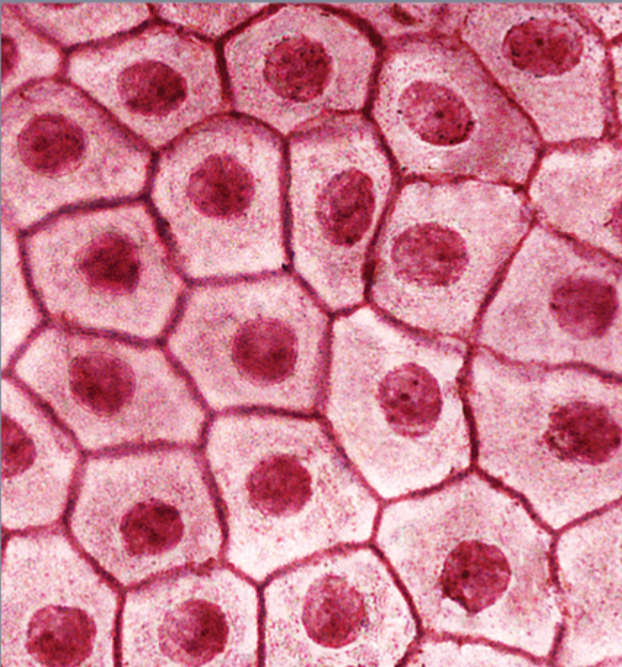
what basic tissue is this
epithelial tissue
nothing but tightly packed cells (no fibers)
avascular
found on surfaces
PEAS (protection, excretion, absorption, secretion)
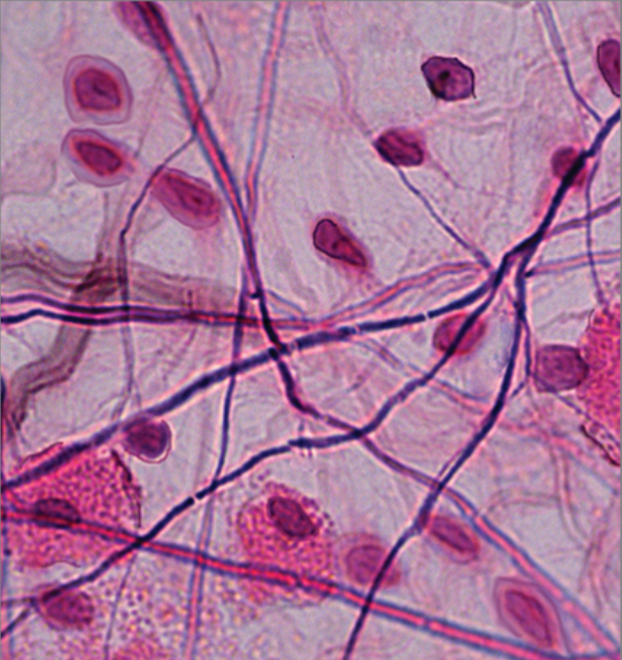
what basic tissue is this
connective and supporting tissue
not as tightly packed as epithelial
cells, ground substance, and extracellular fibers
highly vascular
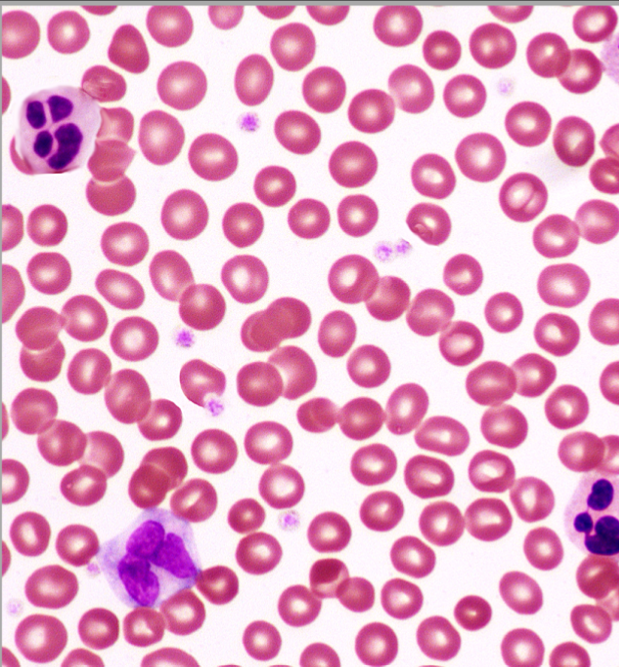
what basic tissue is this
hematolymphoid
the blood and lymph of your body (the fluid)
ex. red blood cells, white blood cells, plasma, etc.

what basic tissue is this?
muscle tissue
made up of muscle fibers and proteins for contraction

what basic tissue is this
nervous tissue
communicative + control tissue

what is the layer between epithelial and connective tissue that connects the two together for vascular support?
basement membrane (basil lamina)

simple squamous epithelium
Structure - one layer of randomly shaped cells
Distribution
Endothelium - lines blood/lymphatic vessels
Mesothelium - lines body cavities
ex. around the lungs, heart, and abdomen
Function - helps reduce friction; E, A, S

simple cuboidal epithelium
Structure - one layer of cube shaped cells
Distribution - the inner lining of glands
Function - E, A, S

simple columnar epithelium
Structure - one layer of column shaped cells (nonciliated)
Distribution - inside lining of the digestive system
Function - E, A, S

pseudostratified columnar epithelium
Structure - one layer of column shaped cells (ciliated)
Distribution - found in respiratory system
Function - movement of mucus; P, E
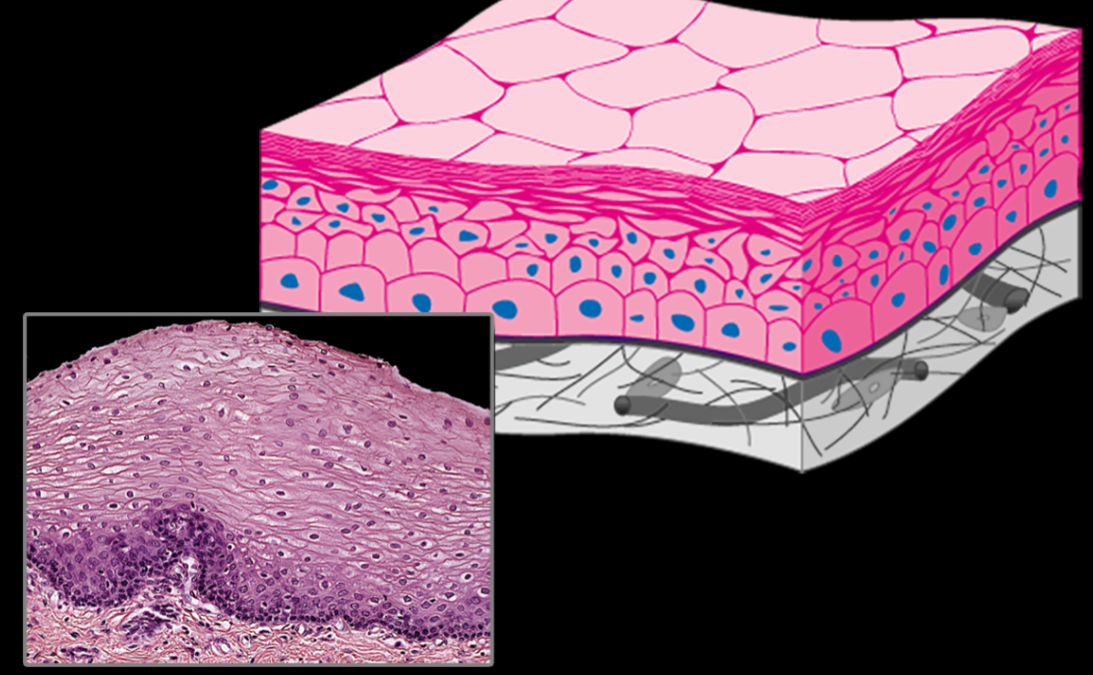
stratified squamous epithelium
Structure
Nonkeratinized - no layer of dead squamous cells
Keratinized - layer of dead squamous cells
Distribution
surface layer of skin (keratinized)
inside nose, eyes, mouth, anus, ears, etc. (nonkeratinized)
Function - P, S
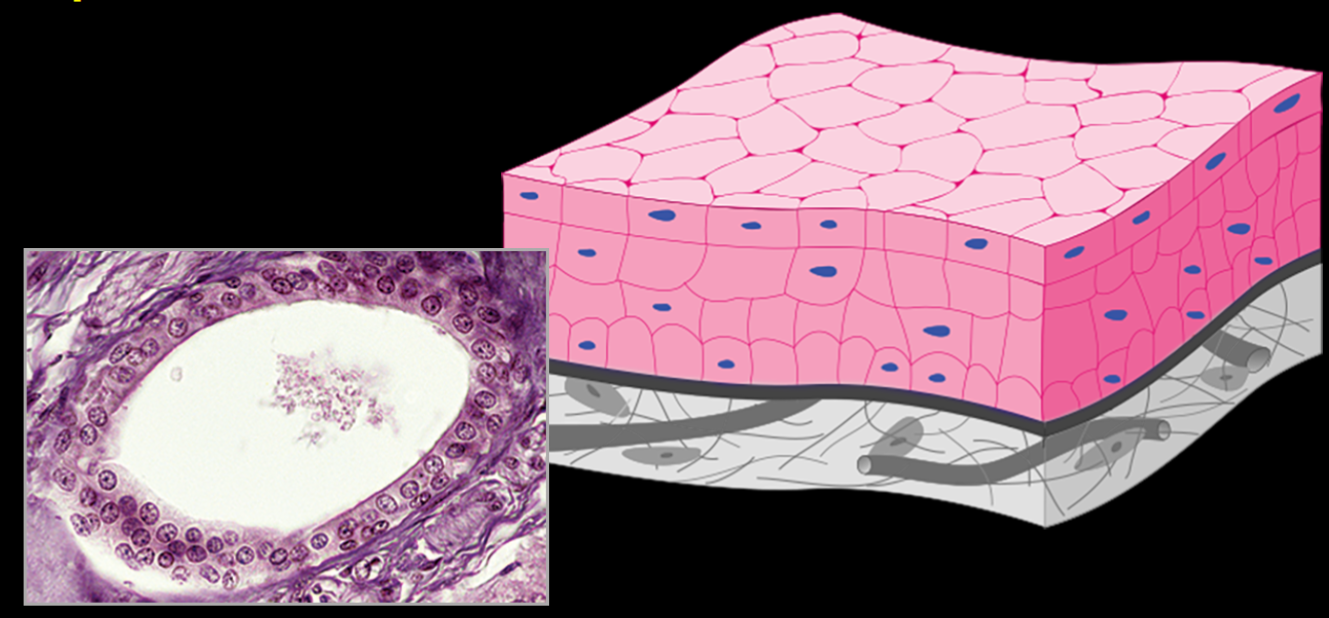
stratified cuboidal epithelium
Structure - multilayered cube shaped cells
Distribution - X
Function - P

stratified columnar epithelium
Structure - multilayered column shaped (ciliated or nonciliated)
Distribution - X
Function - P

urothelium (transitional epithelium)
Structure
Empty - not as compacted as when the organ that it lines is empty
Full (distended) - when the organ it lines is ful
Distribution - urinary system (ex. bladder)
Function - must always be stratifies for protection from all of the nasty stuff being filtered in the urinary system
what are the three basic types of connective and supporting tissues?
general (soft) connective tissues - connective tissue proper, reticular tissue, and adipose tissue
cartilage tissue
bone tissue
what differentiates connective tissues from epithelial tissues?
connective tissues have an extracellular matrix that is made primarily of water (ground substance), but also has fibers floating around
what are the fixed/resident cells found in connective tissues?
mesenchymals, fibroblasts/cytes, and adipocytes

what cell is this and where is it found
mesenchymal; is a resident/fixed cell found in connective tissue
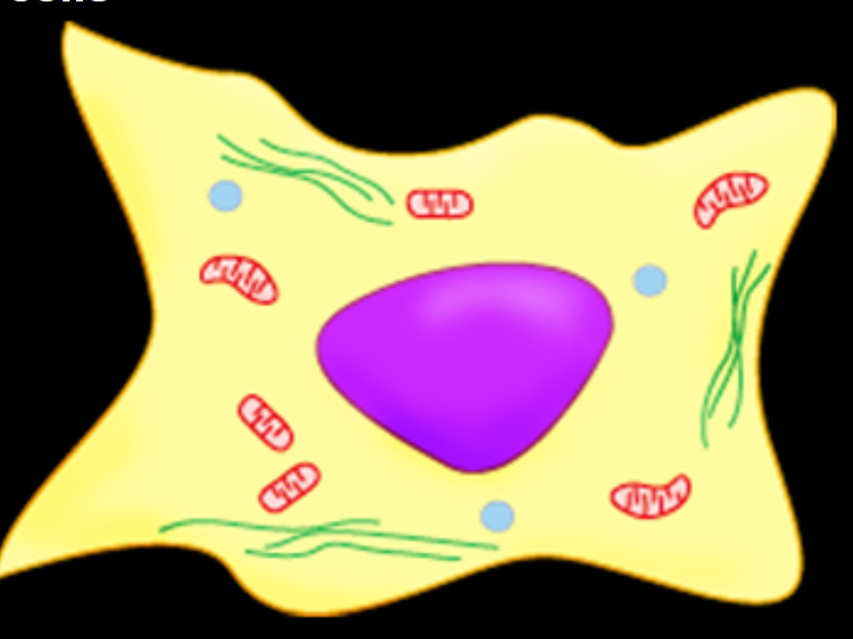
what cell is this and where is it found
fibroblast/fibrocyte; a resident/fixed cell found in connective tissue; they create fibers and secrete them into extracellular surroundings

what cell is this and where is it found
adipose; is a resident/fixed cell found in connective tissue

identify all of the wandering/migrant cells that can be found in connective tissue
macrophage
mastocytes
lymphocytes
plasmocytes

what is good at resisting tension, but not compression?
collagen fibers
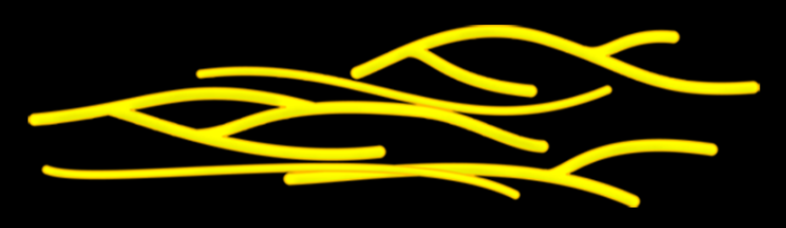
what is good at recoiling to its original shape?
elastic fibers
reticular vs. elastic vs. collagen fibers
elastic fibers are flexible, reticular fibers are flexible and more delicate, and collagen fibers are strong
what are the types of connective tissue proper
loose connective tissue, dense irregular connective tissue, dense regular connective tissue, and elastic tissue

what tissue is this
loose connective tissue (interchangeable with adipose tissue)
Structure - more spread out fibers pointing all different ways
Distribution- everywhere
Function - general glue; fexibility

what tissue is this
dense irregular connective tissue
Structure: dense mesh of fibers going in all directions
Distribution: the dermis, fascia around muscles, periosteum, submucosa of digestional tract, etc.
Function: great at resisting tension in all directions
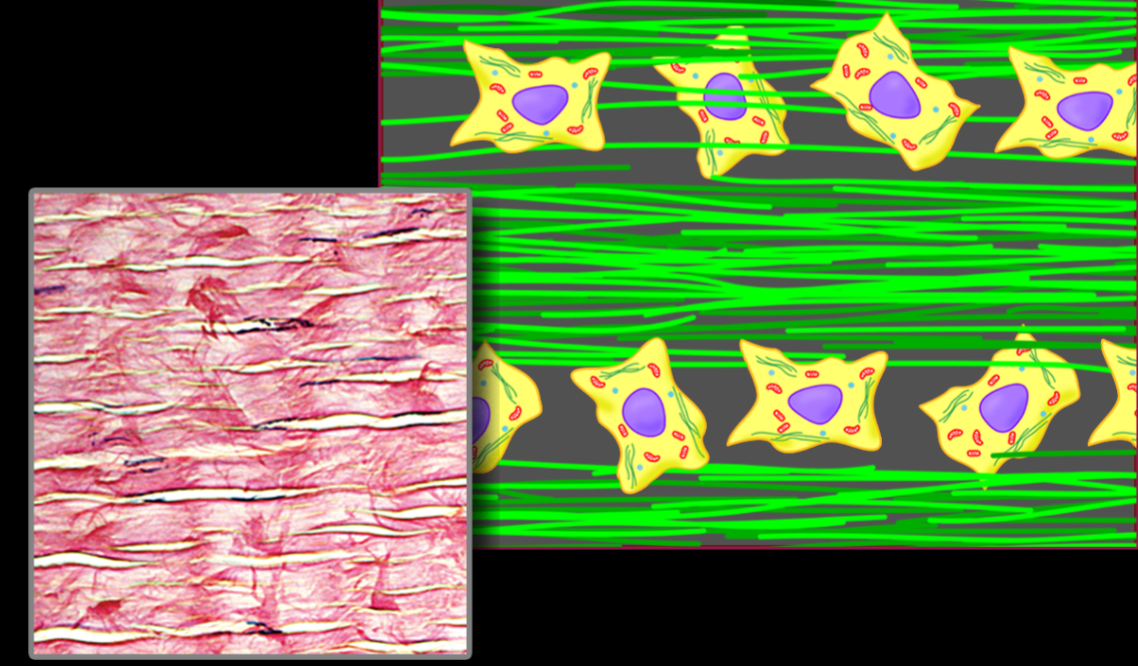
what tissue is this
dense regular connective tissue
Structure - tightly packed, parallel collagen fibers
Distribution - tendons, ligaments, aponeuroses
Function - good at resisting tension in one direction

what tissue is this
elastic connective tissue
Structure - long, thin, branching fibers
Distribution - the wall of major arteries (ex. aorta, lungs, trachea, etc.)
Function - good at recoiling/regaining its original shape

what tissue is this
reticular tissue
Structure - looks like a net
Distribution - lymph nodes
Function - sturctural support for soft organs; maintains shape while being flexible
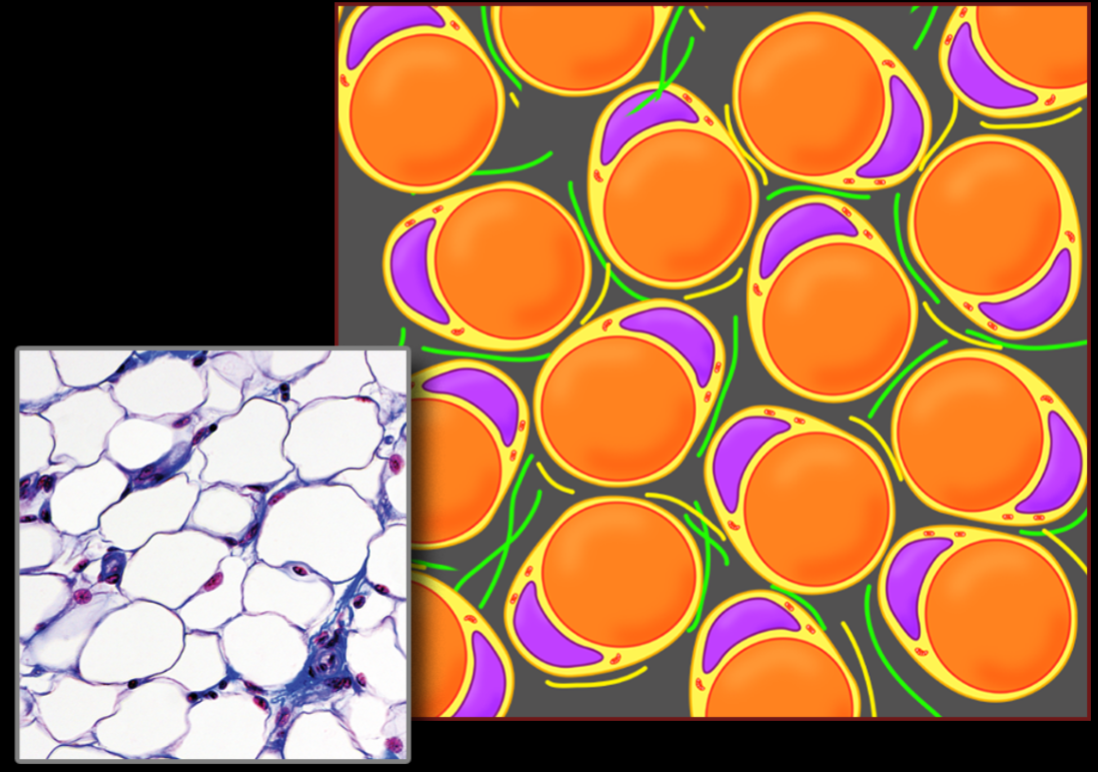
what tissue is this
Structure - interchangeable with loose connective tissues; globular cells
Distribution - underneath the skin; around organs; potentially everywhere
Function - energy storage