2026 UTAH Permit test Road Rules
 Call Kai
 Learn
Learn Practice Test
 Spaced Repetition
 Match
Match Flashcards
 Knowt Play
1/29

There's no tags or description
Looks like no tags are added yet.
Name | Mastery | Learn | Test | Matching | Spaced | Call with Kai | Chat |
|---|
No analytics yet
Send a link to your students to track their progress
30 Terms
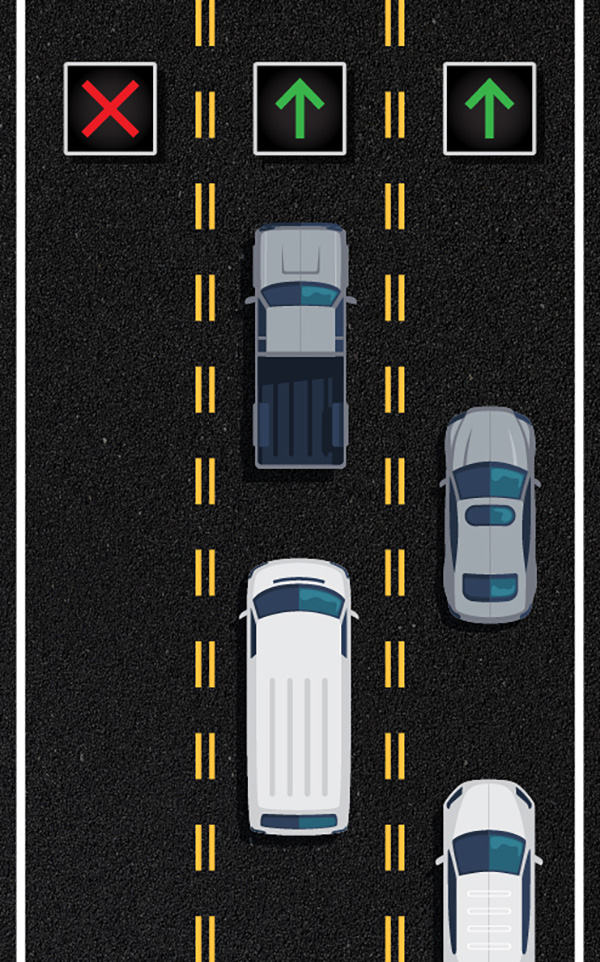
Flex Lane
may be used during rush hours. The lanes may have double-dashed yellow lines to either side. Signals above the lanes show which lane is safe to travel. Some travel lanes are designed to carry traffic in one direction at certain times and in the opposite direction at other times. A green arrow means you can use the lane. A red X means you cannot use the lane. Yellows means you have one minute until it turns red.
Freeway
a highway without tolls
Do not make U-turns on the freeway because…
It is illegal
How much distance should you keep from the following vehicle ahead of you?
2 seconds
Do not use an entrance ramp to exit the freeway
it is illegal, even in a traffic jam.
A vehicle traveling in the left lane must move safely to the?
right when approached from behind to prevent impeding traffic.
When should you change lanes
Change lanes only to pass, get off the freeway or enter the correct lane for an upcoming route separation in the freeway.
Express Lane
Express lanes are travel lanes on I-15 dedicated for high-occupancy vehicles. The express lanes may be used as a carpool lane for those vehicles with two (2) or more persons for free.
When Is it illegal to cross the double white line on an express way?
Always
Acess Points
white dotted striping rather than solid lines. Access points are about 3,000 feet long and located at nearly every interchange along the express lanes. Vehicles are recommended to exit the express lanes one interchange before the desired exit.
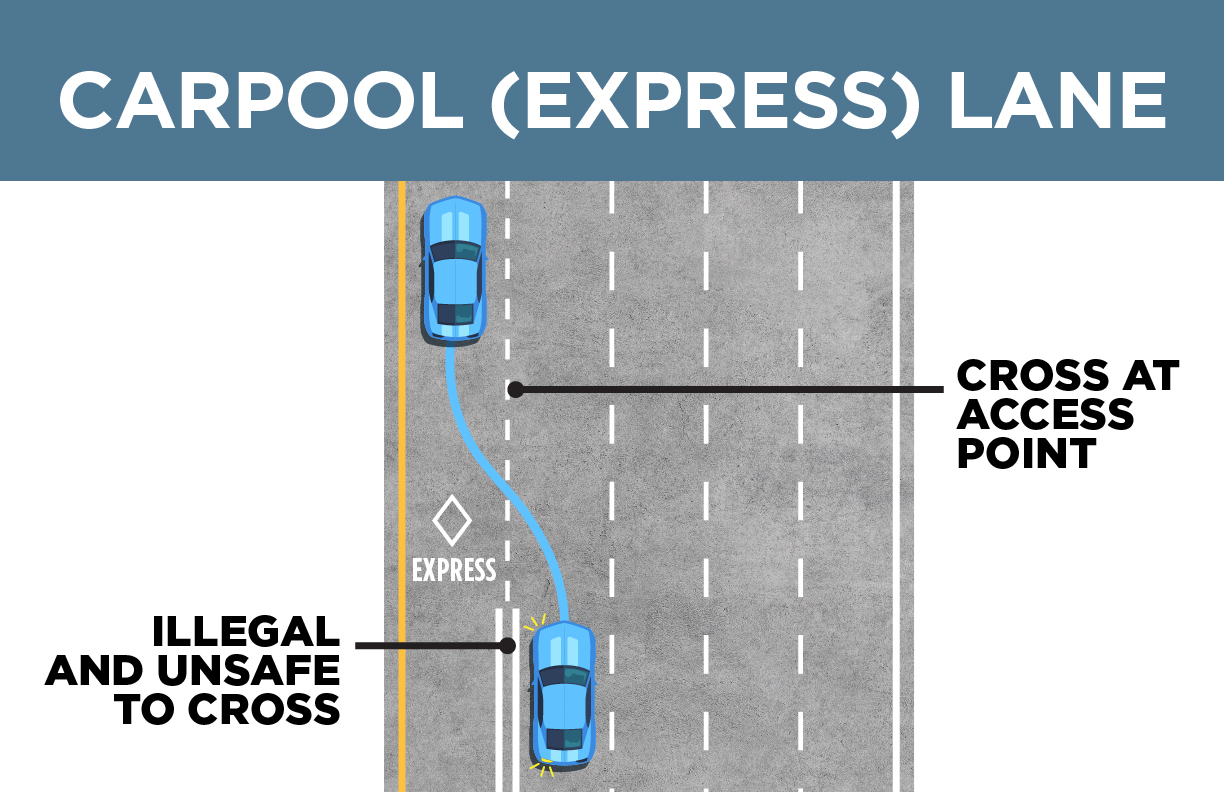
When is it permissible to exit the express lane
When being followed by an emergency or police vehicle with flashing lights, it is permissible, when safe to do so, to make a right-hand lane change out of the express lane.
C-Decals
allow limited single-occupant clean fuel vehicles to use the express lanes without paying a toll after a one-time $10 registration fee. The decals are small stickers placed inside the windshield to the right of the rearview mirror.
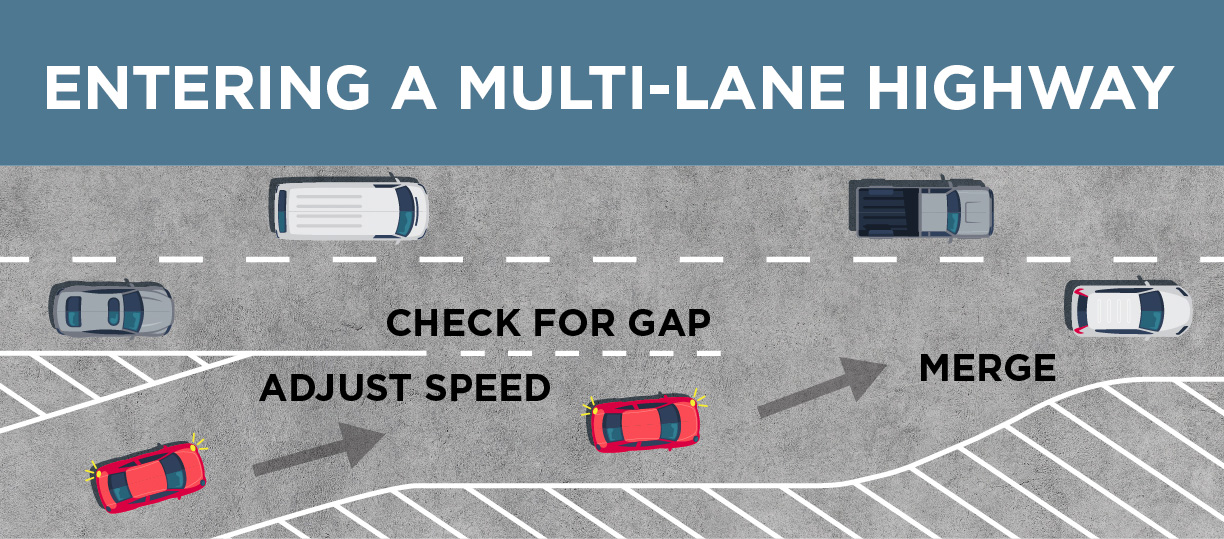
What are the steps for entering a multi lane highway
you should use the acceleration lane to match your speed with other vehicles before pulling onto the roadway. Find a gap in traffic, merge with the traffic, and cancel your turn signal.
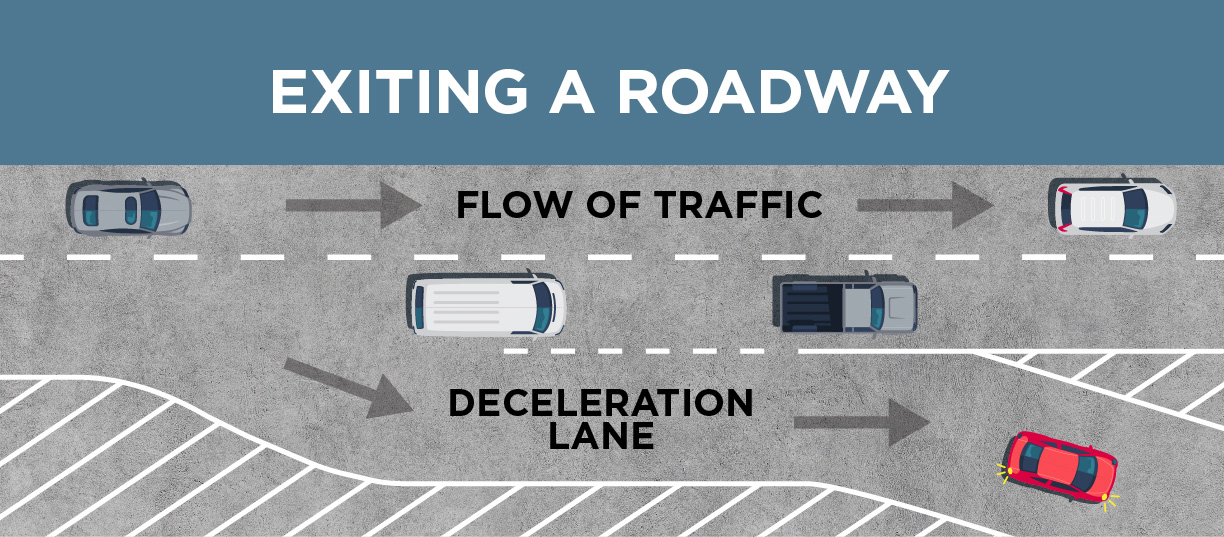
What are the steps for exiting a roadway
you should plan ahead to make a safe exit. Move to the exit lane early to avoid making a quick lane change, and keep a steady speed as long as you are on the main road. Signal, move to the exit or deceleration lane, and slow the exit speed. Check for posted speed in the exit or deceleration lane and cancel your signal.
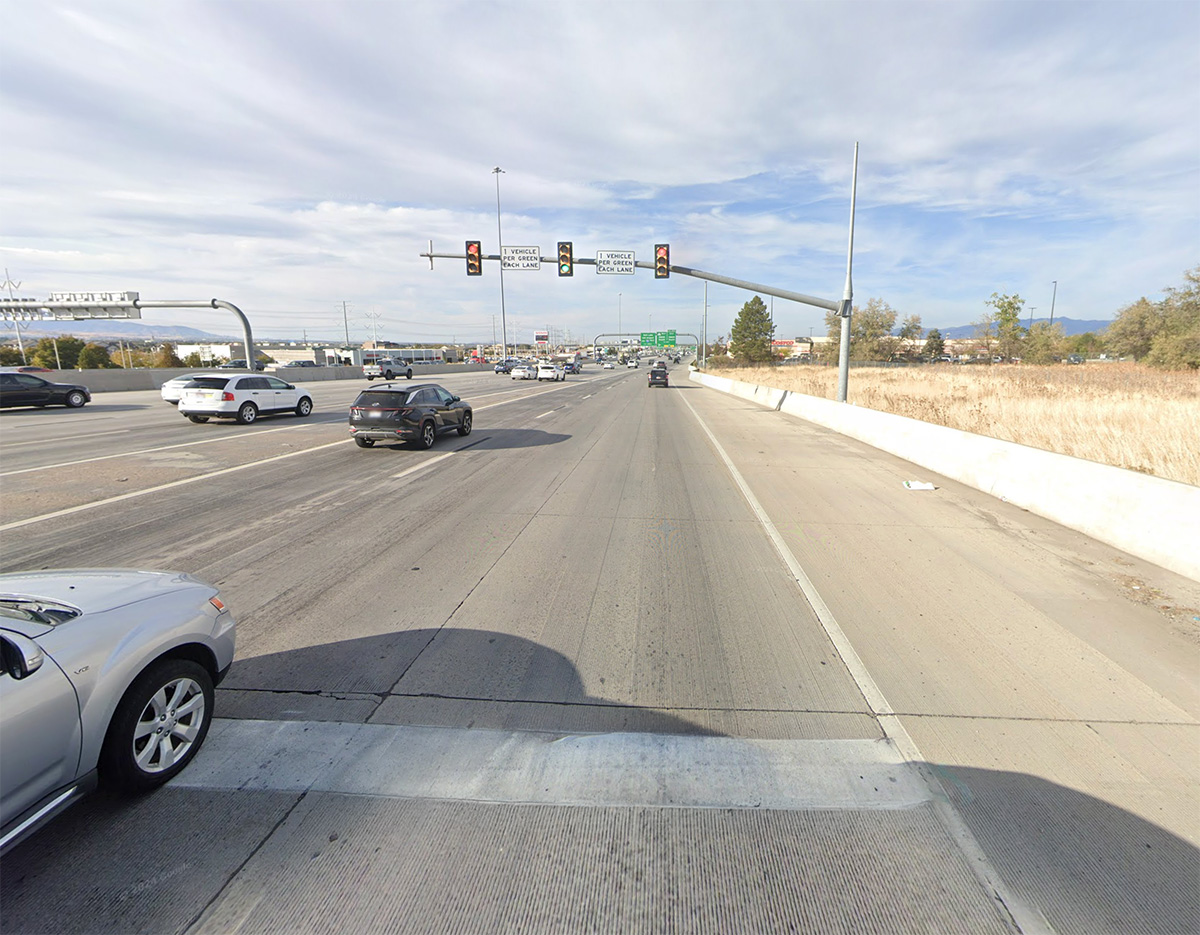
Ramp Meters
help prevent slowdowns and “stop-and-go” conditions that freeway travelers frequently encounter at certain times of the day. Ramp meters look almost like traffic signals you see at intersections, except they only have red and green lights that alternate. Ramp meters are placed on the freeway onramps, and allow only one (unless posted differently) vehicle to pass each time the green light comes on.
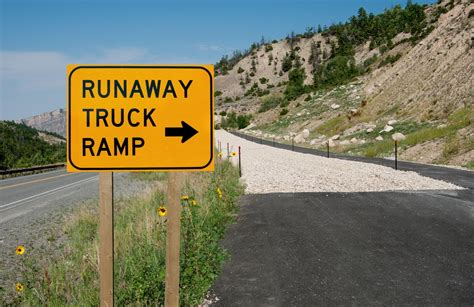
Runaway Vehicle Ramp
is a traffic device that enables vehicles which are having braking problems to stop safely. It is typically a long, sand- or gravel-filled lane connected to a steep downhill grade section of a main road
When can you not use runaway vehicle ramp
You may NOT use a runaway vehicle ramp unless you are in an emergency requiring the use of the ramp to stop your vehicle. You are prohibited from stopping, standing, or parking on a runaway vehicle ramp or in the pathway of a runaway vehicle ramp.
Single Point Urban interchange (SPUI)
more common in constructing freeway interchanges today. It is a type of interchange located either above or underneath the freeway. It is designed so that the intersecting off-ramps and on-ramps are diagonally adjacent to each other.
What are some helping factors while you are on a (SPUI)
Dash lines have been added to these interchanges to guide drivers into the proper lanes. There are also “wrong way” signs on the off-ramps and on-ramps to help drivers avoid entering a ramp against traffic.
When is it legal to make a U-Turn on SPUI
It is legal to make a U-turn from the off-ramp at a single-point urban interchange and re-enter the freeway as long as you face a green arrow when you begin the maneuver.
What should you do when you approach an intersection?
check traffic thoroughly in all directions. Brake smoothly and evenly and maintain lane position.
When stopping at an intersection you should?
ome to a complete stop behind any stop signs, signals, sidewalks, or stop lines. If stopping behind another vehicle, maintain a safe gap. You should be able to see the vehicle’s rear tires ahead of you.
When driving through an intersection you should?
check traffic thoroughly in all directions. Keep both hands on the wheel, slow down, and yield to any pedestrians or traffic in the intersection. Do not change lanes while proceeding through the intersection.
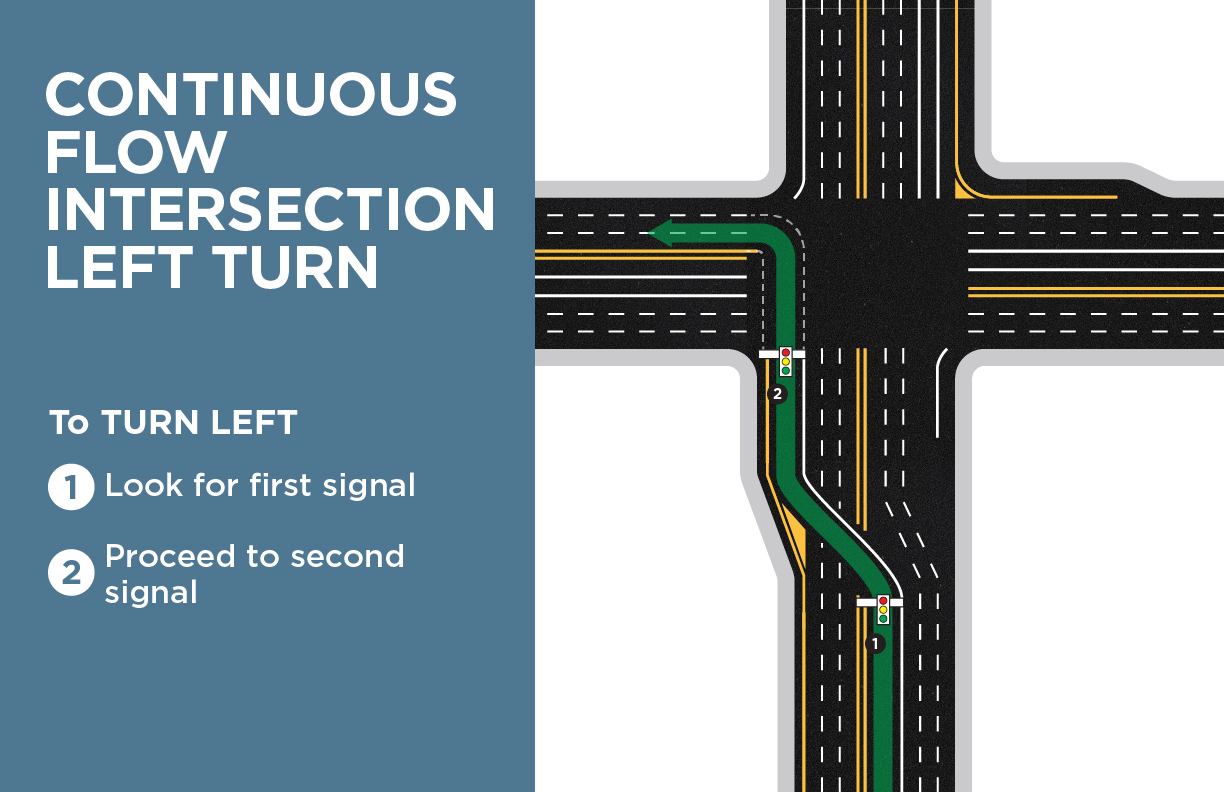
Continuous Flow intersection (Left Turn)
When making a left turn, watch for signs and a signal directing you to turn on the left-hand side of the road. Observe the first traffic signal direction, and proceed when green by crossing the oncoming lanes of traffic. Observe the direction of the second signal, which will be on the far left of the intersection, and proceed when green by making your left-hand turn at the intersection.
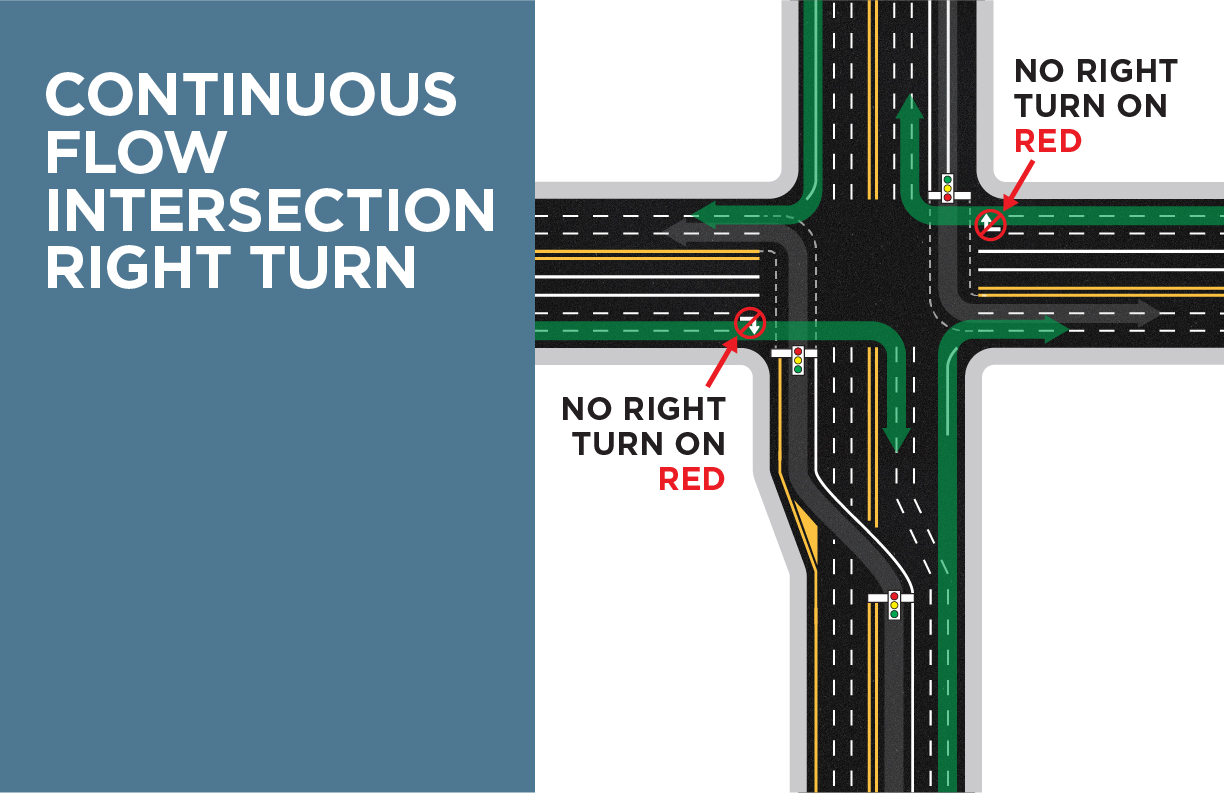
Continuous Flow Intersection (Right Turn)
When turning right, yield to traffic, cyclists, and pedestrians. Make your turn, merge with traffic, and keep going. In most intersections, motorists have free-right turn access or can make a right-hand turn on a red light after stopping and yielding to oncoming traffic. Free-right turns during a red light are restricted in this continuous flow intersection, along with a traditional right-on-red. Motorists should watch for traffic control signs to know when right turns are permitted.
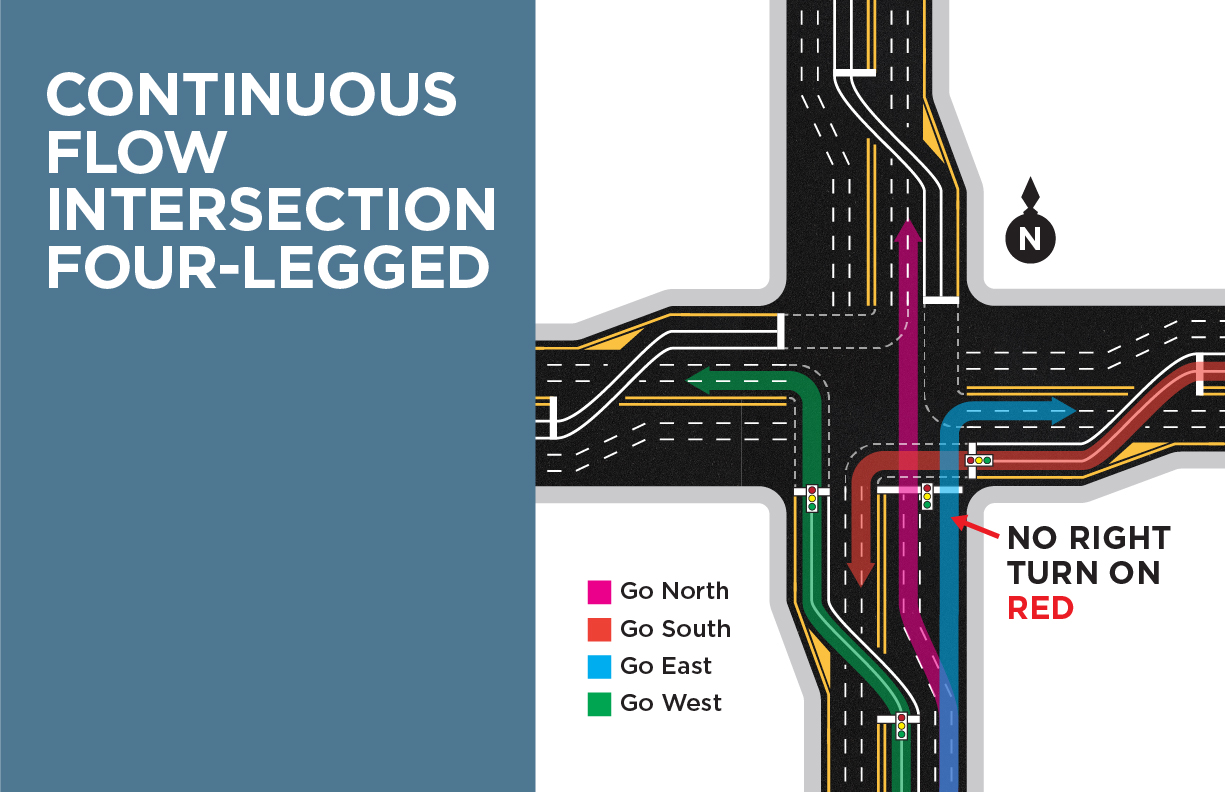
Continuous Flow intersection (Four Legged)
A four-legged continuous flow intersection functions as a regular, continuous flow intersection configuration, but with each leg of the intersection operating with displaced left turns instead of only two (2) legs of the intersection. Follow all directions as with a typical continuous flow intersection on all four (4) legs.
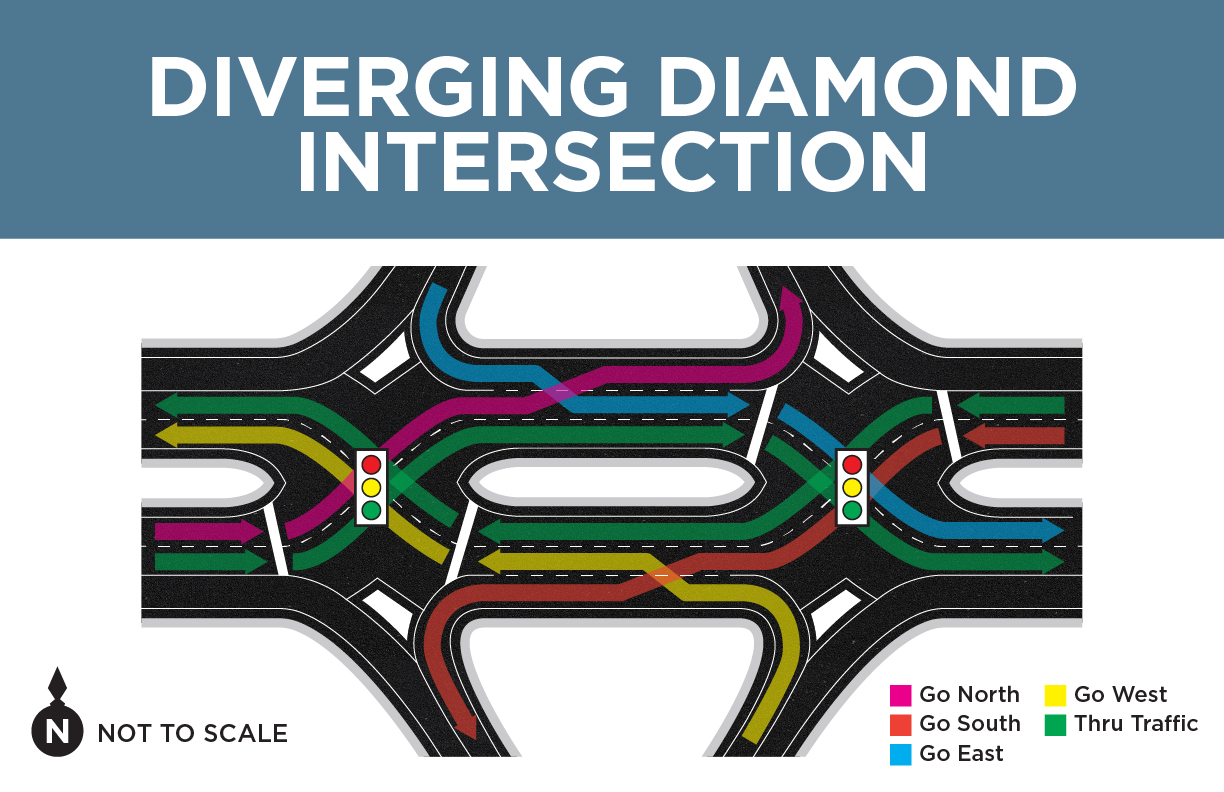
Diverging Diamond Interchange (DDI)
A particular type of highway interchange is one in which two (2) directions of traffic on the non-freeway road cross to the opposite side of the bridge over or under the freeway. It requires traffic on the freeway overpass (or underpass) to briefly drive on the opposite side of the road from what they are accustomed to. Eliminating many of the left-turn conflicts at the ramps, improves interchange efficiency.
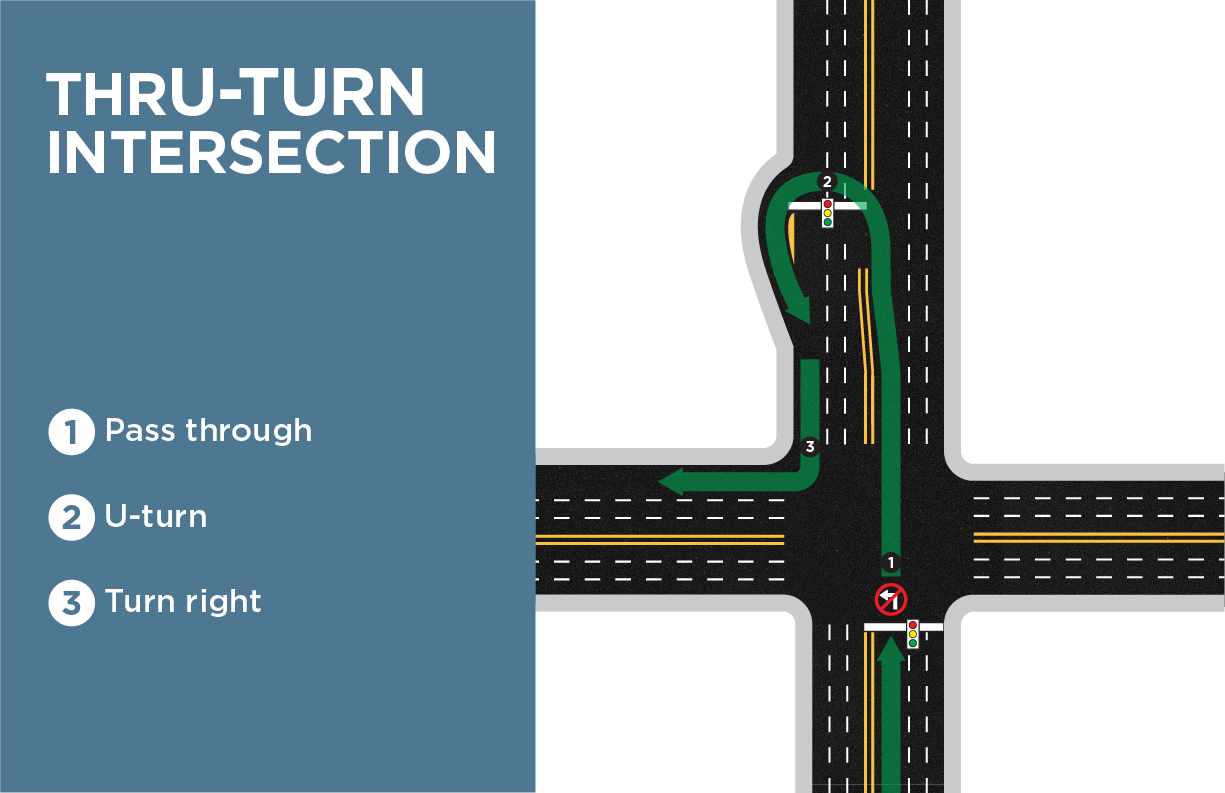
ThrU-Turn (TTI)
It helps to alleviate traffic congestion and improve traffic flow by eliminating left turn movements at the intersection. Instead, motorists travel through the intersection, make a signalized U-turn at a location removed from the intersection, and return to the intersection, where they will make a right turn.
Pavement Markings
Marks painted on the road give you directions or warnings.