HSCI 130 Week 8 Lecture
 Call Kai
 Learn
Learn Practice Test
 Spaced Repetition
 Match
Match Flashcards
 Knowt Play
1/35

There's no tags or description
Looks like no tags are added yet.
Name | Mastery | Learn | Test | Matching | Spaced | Call with Kai | Chat |
|---|
No analytics yet
Send a link to your students to track their progress
36 Terms
Observational studies
researcher does not intervene in any way
Measurement of occurrence of disease or health outcome
Comparing patterns of exposure and disease outcomes
Identifying risk factors associated with health/disease
Both descriptive and analytical can fit here!
Experimental studies
investigator tries to change something and measure the effect on disease outcome
clinical trials, preventive trials
Descriptive Studies
Research that describes the occurrence of disease and/or exposure.
e.g.
Remember: PERSON PLACE TIME
Ask: WHO? WHAT? WHEN? WHERE?
Case reports / case series:
detailed descriptions usually by a doctor or group of doctors identifying diseases that are unusual/interesting; may be related to unusual exposure
Routine data: mortality, life expectancy
Prevalence surveys
Analytic Studies
Primary purpose is to evaluate the ASSOCIATION between an EXPOSURE or CHARACTERISTIC and the development of a particular disease.
WHY?
HOW STRONG?
What’s an Exposure?
Infectious agents
Behaviours
Intrinsic characteristics of individuals
Social or environmental factors
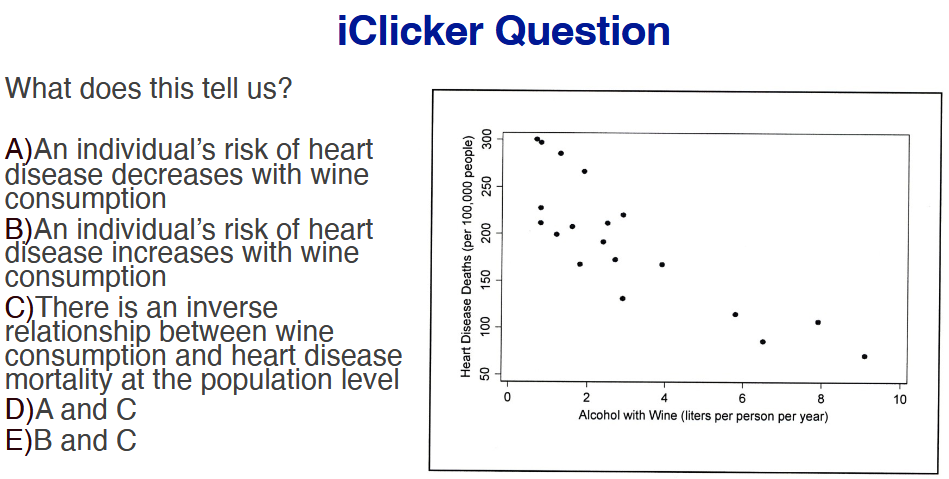
D)
Ecological Studies
Compares the prevalence of exposures and disease occurrence in populations
Warning:
observations collected/displayed at the group level may not apply at the individual level
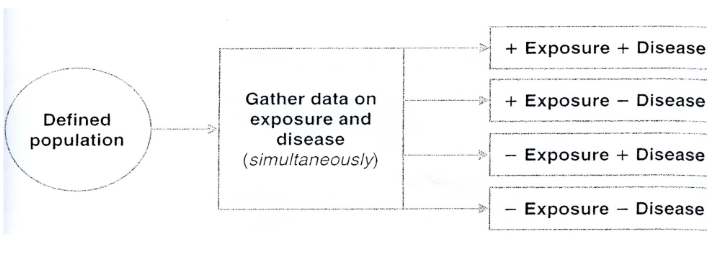
Cross-Sectional studies
Limitation: temporal relationship between exposure and disease
E.g. stress and sleep deprivation
Advantages: inexpensive, can estimate prevalence, can estimate association between variables, can study many diseases and outcomes at the same time
Disadvantages: temporality
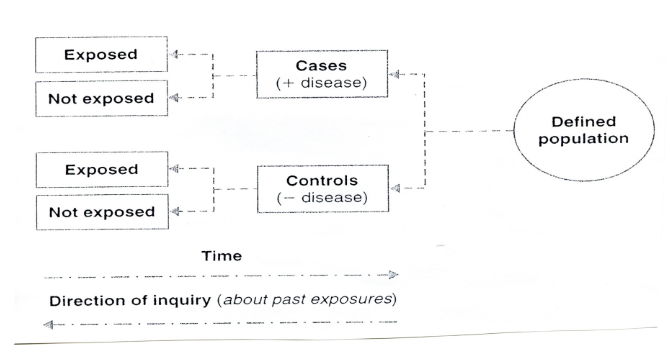
Case Control Study
Choose individuals with disease or outcome of interest and a comparison group without the disease (controls)
Retrospective
Both groups from same environment
Find if cases are more exposed than controls
Good for rare diseases
Not good for rare exposures
Cannot calculate incidence of diseases
Has inaccuracies
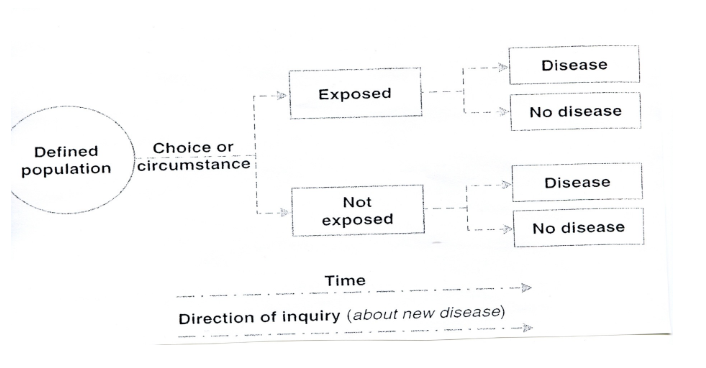
Prospective Cohort Studies
Start with exposures and find cases
Follow people over time to see what happens
Compare rates of occurrence of disease in people with or without particular exposure
Prospective
Advantages:
Better for rare exposures, more confident in temporality,
Disadvantages:
Bad for diseases with long latency period, not well suited to rare disease, long follow up time, lost to follow up.
Rationale and Research Question: example of cohort study
Cocoa consumption may improve CVD outcomes
Research Question: What about habitual consumption in a group of the population at high risk for heart disease?
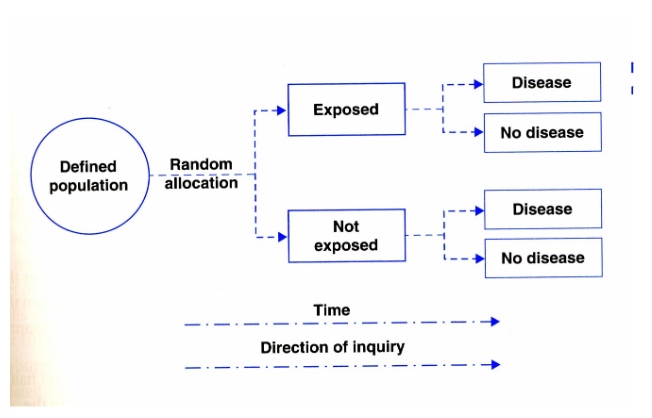
Randomized Controlled Trial
problems:
Ethics issue
Funding
Determinants of Health
Personal
Structural
Personal Determinants of Health
Personal determinants – individual level
Lay health beliefs
Self-health management
Self-care capacity
Coping skills
Biology and genetic endowment
Health protective behaviour
Personal health practices
Healthy lifestyles
Structural Determinants of Health
Social environment
Socioeconomic status AKA Socio-economic position
Social status
Income and income distribution
Education
Employment & working conditions
Gender, ethnicity/race, age, culture
Social support networks
Physical environment
Health-care & social services
Disease prevention
Health promotion
Healthy child development
1848
World-wide cholera epidemic begins
Uprisings in many countries
Start of Second Sikh war against British in India
Revolution in France, which creates a public health advisory committee
Karl Marx and Friedrich Engels publish The Communist Manifesto
Early Evidence: The Condition of the Working Class in England (1844)
Method:
Examined observed differences in mortality rates in suburbs of Manchester
Findings:
observed death rates correlated with quality of housing and quality of streets
“observed death rates correlated with quality of housing and quality of streets—and are worked every day to the point of complete exhaustion of their mental and physical energies.”
Early Evidence: Rudolf Virchow’s Study
Method:
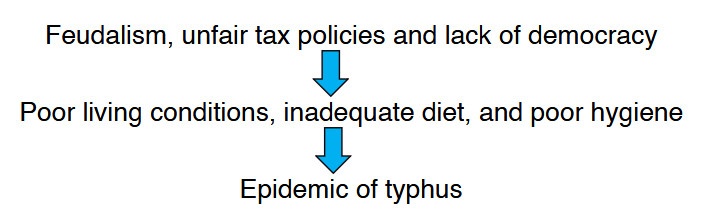
Sent to investigate an epidemic of typhus in Upper Silesia
Findings:
Conclusion/Virchow’s recommendation:
Preserving health and preventing disease requires “full and unlimited democracy“ and radical measures rather than "mere palliatives”
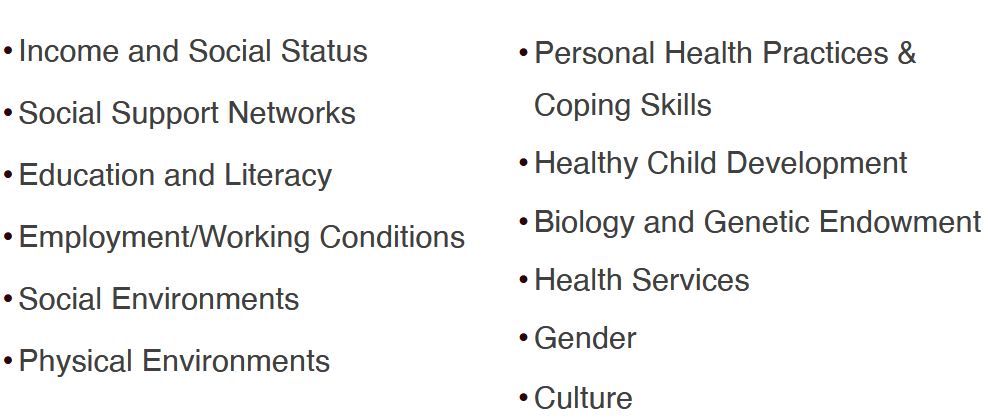
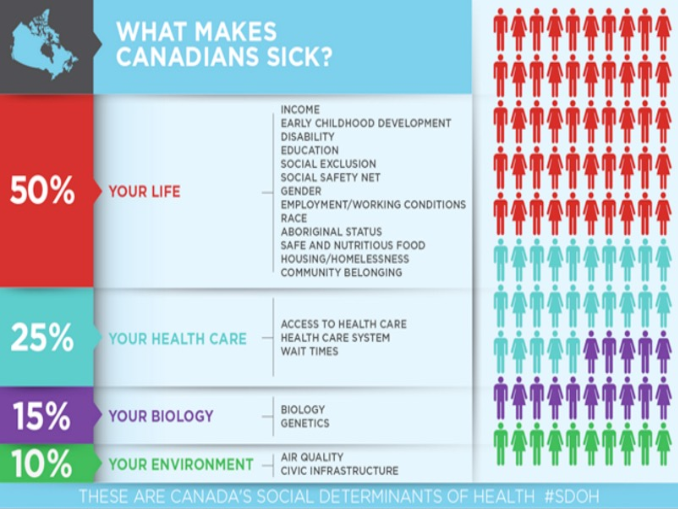
Public Health Agency of Canada:
12 Key Determinants
The Social Gradient In Health
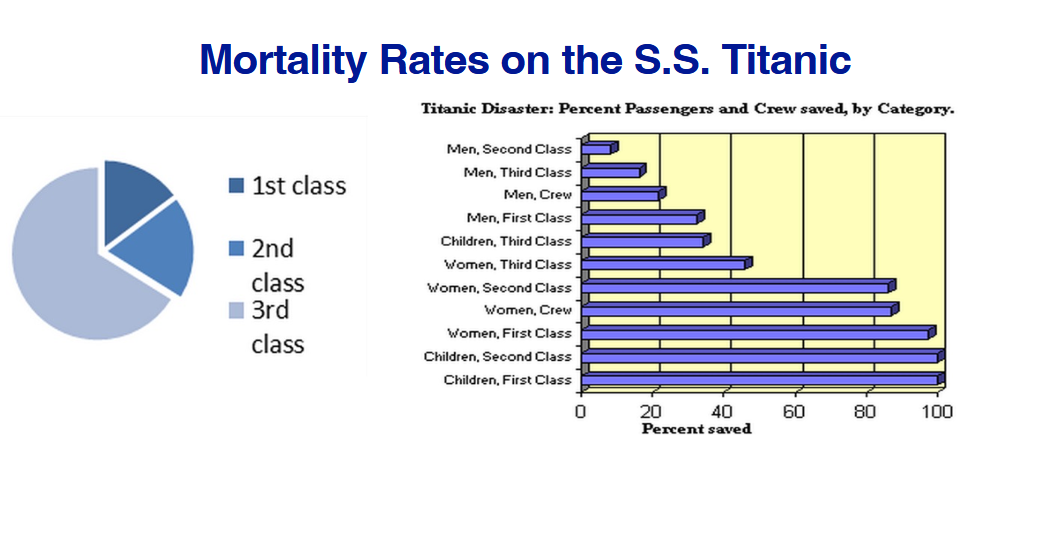
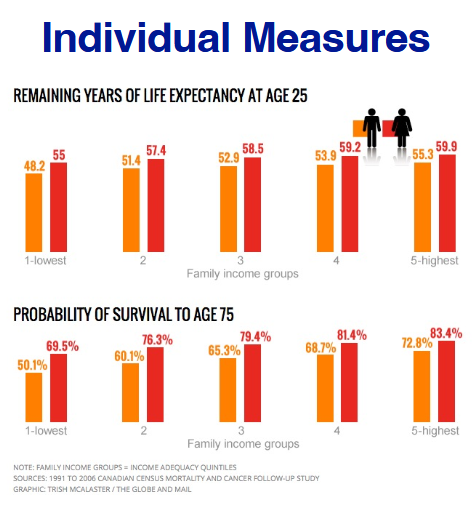
a graded association between the indicator of socioeconomic status and population health
where you stand in the social hierarchy is intimately related to your chances of getting ill and your length of life
Socio-economic position(SEP)
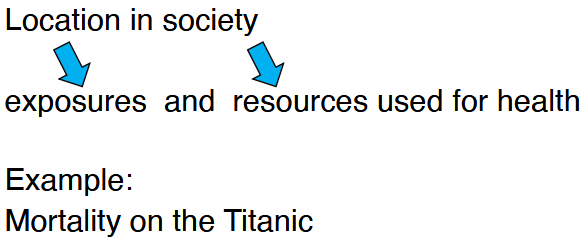
Social and economic factors that influence what position individuals and groups hold in the social structure of a society
Individual Level Measures:
Occupation
Income
Income in relation to poverty level
Education
Wealth
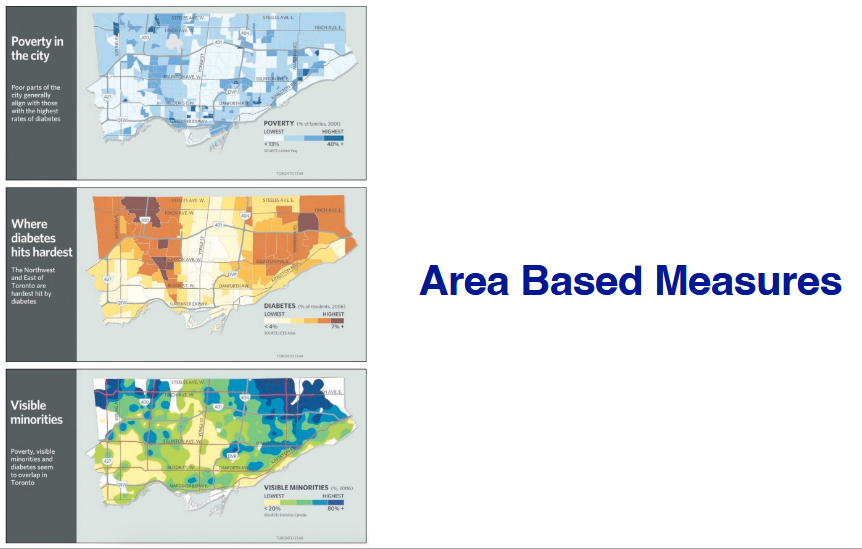
Area Based Measures:
Geographic area
How Does SEP Impact Health?
Political, cultural and institutional factors influence HOW socio-economic conditions influence health outcomes
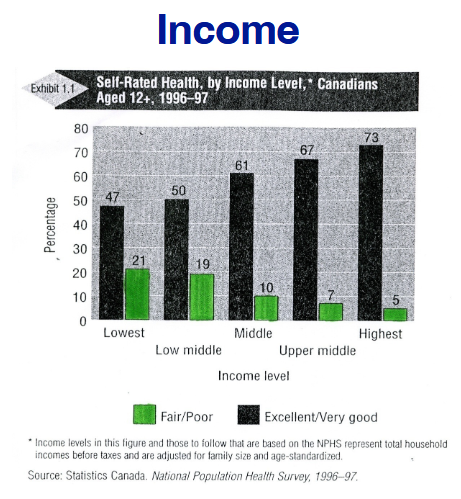
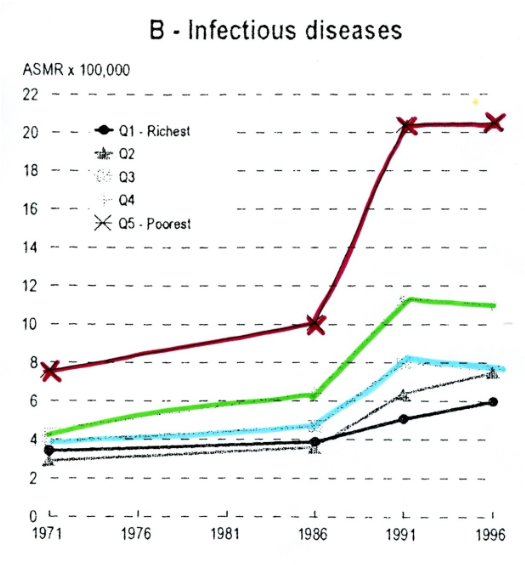
Income & Children’s Health
Uses data from the NPHS and NLSCY (National Longitudinal Study on Children and Youth)
Income associated with:
Low birth weight
Injury related mortality (fire and homicide deaths)
Developmental problems (hyperactivity, psychosocial problems, delinquent behavior, delayed vocabulary)
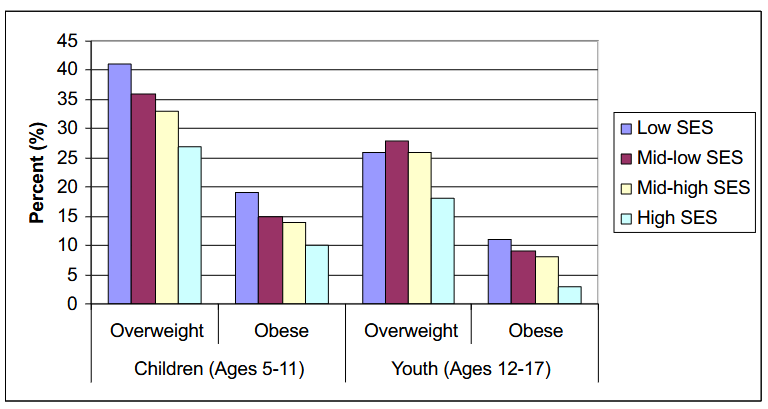
Neighbourhood Income and Obesity
Explanations of Social Gradient
1. Materialist Explanations
2. Cultural Behavioural Explanations
3. Psychosocial Explanations
Materialist Explanations
Differential exposure hypothesis: greater exposure to psychosocial stressors from financial problems, neighbourhood issues and social isolation
People exposed to positive and negative exposures over the life course and outcomes in adulthood are indicators of advantages and disadvantages…
Aspects of the social structure (e.g. differences in SES) are powerful determinants of health
Influenced by the political economy perspective of the conflict paradigm
Neo-materialist Explanations
Health is affected not only by differential access to social and economic resource, but also by the level of funding invested in social infrastructure
e.g., public infrastructure quality
Cultural Behavioural Explanations
How we learn how to behave in society
Lower-SES individuals are less healthy as a result of engaging in health related behaviours such as smoking or poor eating habits (to cope)
Differential vulnerability hypothesis: all have stressors; position in social gradient can help mitigate or make these worse
Assumption:
These individuals do not cope very well with environmental stressors and therefore, experience worse health
Psychosocial Explanations
People’s interpretation of their standing in the social hierarchy matters
Sense of relative deprivation can generate feelings of low self-esteem, shame, envy
Strive and fail → negative health consequences
Social comparison;
perception of hierarchy leads to stress comparisons lead to shame, envy, other mental health outcomes and/or other negative behaviours