Unit 1.4-1.5: The Brain and Sleep
 Call Kai
 Learn
Learn Practice Test
 Spaced Repetition
 Match
Match Flashcards
1/57

There's no tags or description
Looks like no tags are added yet.
Name | Mastery | Learn | Test | Matching | Spaced | Call with Kai | Chat |
|---|
No analytics yet
Send a link to your students to track their progress
58 Terms
biological psychology
the scientific study of the links between biological (genetic, neural, hormonal) and psychological processes.
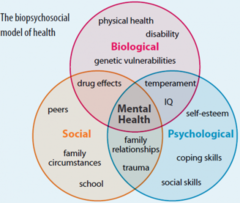
biopsychosocial approach
an integrated approach that incorporates biological, psychological, and social-cultural levels of analysis.
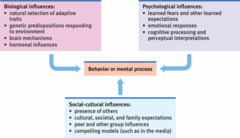
levels of analysis
the differing complimentary views, from biological to psychological to social-cultural, for analyzing any given phenomenon.
neuroplasticity
the brain's ability to change, especially during childhood, by reorganizing after damage or by building new pathways based on experience.
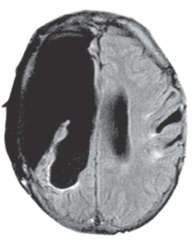
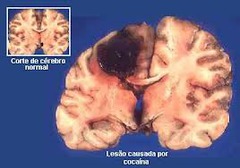
lesion [LEE-zhuhn]
tissue destruction. A brain lesion is a naturally or experimentally caused destruction of brain tissue.
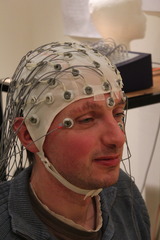
EEG (electroencephalogram)
an amplified recording of the waves of electrical activity sweeping across the brain's surface. These waves are measured by electrodes placed on the scalp.
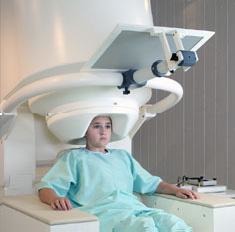
MEG (magnetoencephalography)
a brain imaging technique that measures magnetic fields from the brain's natural electrical activity.
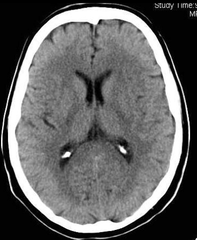
CT (computed tomography) scan
a series of X-ray photographs taken from different angles and combined by computer into a composite representation of a slice of the brain's structure. (Also called CAT scan.)
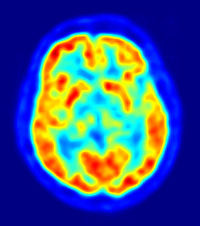
PET (positron emission tomography)
a visual display of brain activity that detects where a radioactive form of glucose goes while the brain performs a given task.
MRI (magnetic resonance imaging)
a technique that uses magnetic fields and radio waves to produce computer-generated images of soft tissue. MRI scans show brain anatomy.
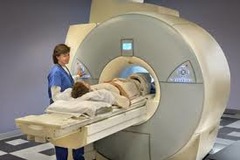
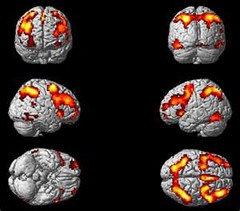
fMRI (functional MRI)
a technique for revealing bloodflow and, therefore, brain activity by comparing successive MRI scans. fMRI scans show brain function as well as structure.
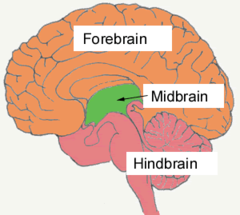
hindbrain
consists of the medulla, pons, and cerebellum; directs essential survival functions, such as breathing, sleeping, and wakefulness, as well as coordination and balance.
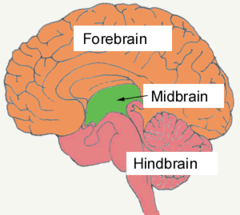
midbrain
found atop the brainstem; connects the hindbrain with the forebrain, controls some motor movement, and transmits auditory and visual information.
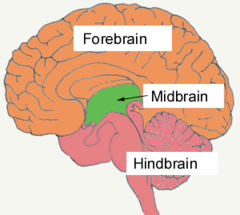
forebrain
consists of the cerebral cortex, thalamus, and hypothalamus; manages complex cognitive activities, sensory and associative functions, and voluntary motor activities.
brainstem
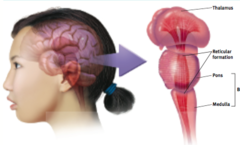
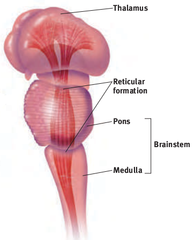
the central core of the brain, beginning where the spinal cord swells as it enters the skull; the brainstem is responsible for automatic survival functions.
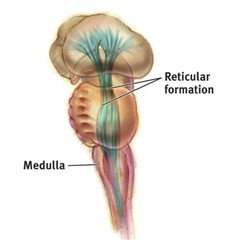
medulla [muh-DUL-uh]
the base of the brainstem; controls heartbeat and breathing.
thalamus [THAL-uh-muss]
the brain's sensory control center, located on top of the brainstem; it directs messages to the sensory receiving areas in the cortex and transmits replies to the cerebellum and medulla.
reticular formation
a nerve network that travels through the brainstem into the thalamus and plays an important role in controlling arousal.
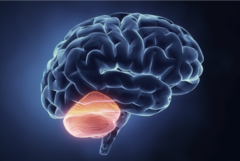
cerebellum [sehr-uh-BELL-um]
the "little brain" at the rear of the brainstem; functions include processing sensory input, coordinating movement output and balance, and enabling nonverbal learning and memory.
limbic system
neural system (including the amygdala, hypothalamus, and hippocampus) located below the cerebral hemispheres; associated with emotions and drives.
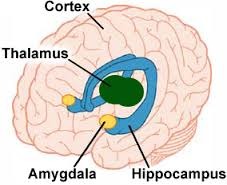
amygdala [uh-MIG-duh-la]
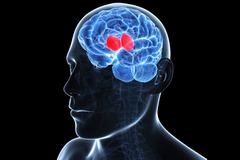
two lima-bean-sized neural clusters in the limbic system; linked to emotion.
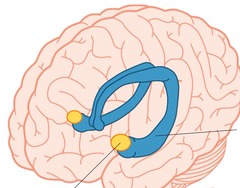
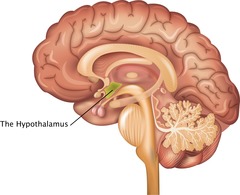
hypothalamus [hi-po-THAL-uhmuss]
a neural structure lying below (hypo) the thalamus; it directs several maintenance activities (eating, drinking, body temperature), helps govern the endocrine system via the pituitary gland, and is linked to emotion and reward.
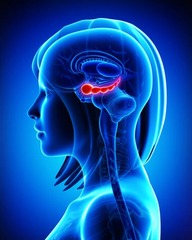
hippocampus
a neural center located in the limbic system; helps process for storage explicit (conscious) memories of facts and events.
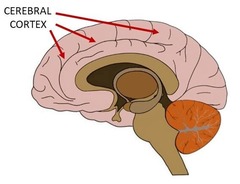
cerebral [seh-REE-bruhl] cortex
the intricate fabric of interconnected neural cells covering the cerebral hemispheres; the body's ultimate control and information-processing
frontal lobes
the portion of the cerebral cortex lying just behind the forehead; involved in speaking and muscle movements and in making plans and judgments.
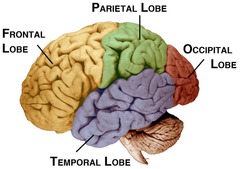
parietal [puh-RYE-uh-tuhl] lobes
the portion of the cerebral cortex lying at the top of the head and toward the rear; receives sensory input for touch and body position.
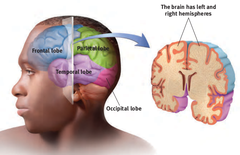
occipital [ahk-SIP-uh-tuhl] lobes
the portion of the cerebral cortex lying at the back of the head; includes areas that receive information from the visual fields.
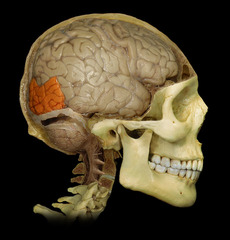
temporal lobes
the portion of the cerebral cortex lying roughly above the ears; includes the auditory areas, each receiving information primarily from the opposite ear.
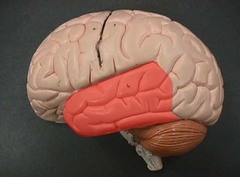
motor cortex
an area at the rear of the frontal lobes that controls voluntary movements.
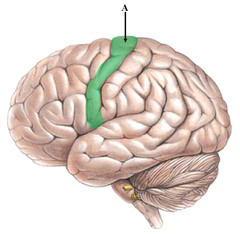
somatosensory cortex
an area at the front of the parietal lobes that registers and processes body touch and movement sensations.
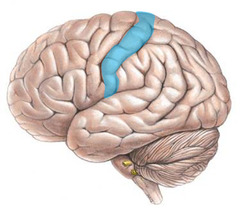
association areas
areas of the cerebral cortex that are not involved in primary motor or sensory functions; rather, they are involved in higher mental functions such as learning, remembering, thinking, and speaking.
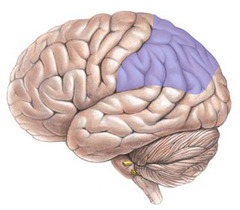
neurogenesis
the formation of new neurons.
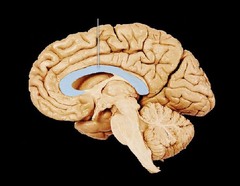
corpus callosum [KOR-pus kah-LOWsum]
the large band of neural fibers connecting the two brain hemispheres and carrying messages between them.
Roger Sperry
studied brain hemispheres by studying cats, monkeys, and humans with split brains.
Michael Gazzaniga
studied brain hemispheres by studying cats, monkeys, and humans with split brains.

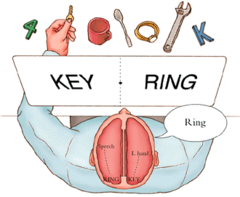
split brain
a condition resulting from surgery that isolates the brain's two hemispheres by cutting the fibers (mainly those of the corpus callosum) connecting them.
consciousness
our subjective awareness of ourselves and our environment.
cognitive neuroscience
the interdisciplinary study of the brain activity linked with cognition (including perception, thinking, memory, and language).
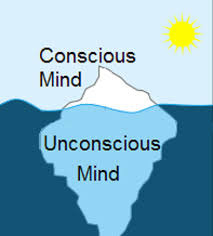
dual processing
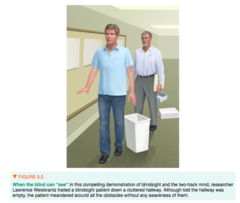
the principle that information is often simultaneously processed on separate conscious and unconscious tracks.
blindsight
a condition in which a person can respond to a visual stimulus without consciously experiencing it.
parallel processing
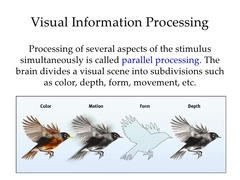
processing many aspects of a problem simultaneously; generally used to process well-learned information or to solve easy problems.
sequential processing
processing one aspect of a problem at a time; generally used to process new information or to solve difficult problems.

sleep
a periodic, natural loss of consciousness — as distinct from unconsciousness resulting from a coma, general anesthesia, or hibernation.
circadian [ser-KAY-dee-an] rhythm
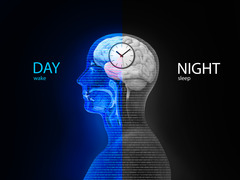
our biological clock; regular bodily rhythms (for example, of temperature and wakefulness) that occur on a 24-hour cycle.
REM sleep
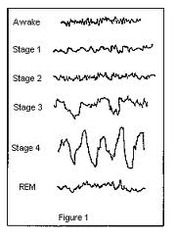
rapid eye movement sleep; a recurring sleep stage during which vivid dreams commonly occur. Also known as paradoxical sleep, because the muscles are relaxed (except for minor twitches) but other body systems are active.

alpha waves
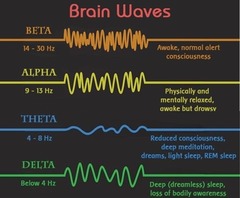
the relatively slow brain waves of a relaxed, awake state.
NREM sleep
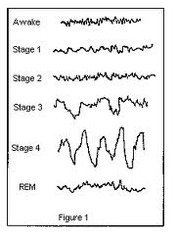
non-rapid eye movement sleep; encompasses all sleep stages except for REM sleep.
hallucinations
false sensory experiences, such as seeing something in the absence of an external visual stimulus.

hypnagogic sensations
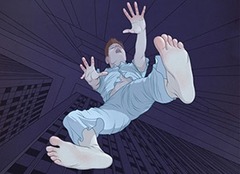
bizarre experiences, such as jerking or a feeling of falling or floating weightlessly, while transitioning to sleep.
delta waves
the large, slow brain waves associated with the deep sleep of NREM-3.
suprachiasmatic nucleus (SCN)
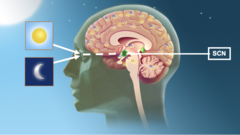
a pair of cell clusters in the hypothalamus that controls circadian rhythm. In response to light, the SCN causes the pineal gland to adjust melatonin production, thus modifying our feelings of sleepiness.
insomnia
recurring problems in falling or staying asleep.

narcolepsy
a sleep disorder characterized by uncontrollable sleep attacks. The sufferer may lapse directly into REM sleep, often at inopportune times.

sleep apnea
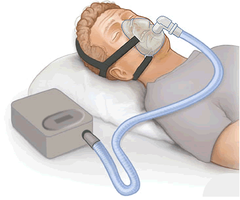
a sleep disorder characterized by temporary cessations of breathing during sleep and repeated momentary awakenings.
REM sleep behavior disorder
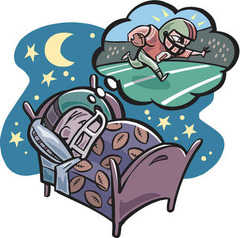
a sleep disorder in which normal REM paralysis does not occur; instead, twitching, talking, or even kicking or punching may occur, often acting out one's dream.

dream
a sequence of images, emotions, and thoughts passing through a sleeping person's mind.
Sigmund Freud
Sigmund Freud offered what he thought was "the most valuable of all the discoveries it has been my good fortune to make." He proposed that dreams provide a psychic safety valve that discharges otherwise unacceptable feelings.
REM rebound
the tendency for REM sleep to increase following REM sleep deprivation.