BIOS 255 Exam 3 with expert curated questions and answers-Chamberlain
 Call Kai
 Learn
Learn Practice Test
 Spaced Repetition
 Match
Match Flashcards
 Knowt Play
1/50

There's no tags or description
Looks like no tags are added yet.
Name | Mastery | Learn | Test | Matching | Spaced | Call with Kai | Chat |
|---|
No analytics yet
Send a link to your students to track their progress
51 Terms
Calculate the client's minute ventilation
Tidal volume = 400 mL; Vital capacity = 4.2 L; Respiratory rate = 14 breaths/minute; Heart rate = 70 beats/min
Describe the layers of the pleural membrane and their location relative to the lungs
Visceral pleura: inner layer, tightly adherent to the lung surface.
Pleural cavity: the small fluid-filled space between the two layers.
Parietal pleura: outer layer, lines the chest wall, diaphragm, and mediastinum
The partial pressure of oxygen
The partial pressure of oxygen in arterial blood is approximately 100 mmHg
Conducting Zone Structures
Trachea
Terminal bronchioles
Larynx
The conducting zone of the respiratory system comprises the structures that facilitate air passage into and out of the lungs, including the nose, pharynx, larynx, trachea, bronchi, and most bronchioles, but not the alveoli
Alveoli
Alveoli are not a conducting zone structures of the respiratory system

Which alveolar cells form the structure of alveoli and permit rapid gas diffusion between air and blood?
Type I alveolar cells, also known as squamous alveolar cells or type I pneumocytes, form the thin walls of the alveoli and enable rapid gas diffusion between air and blood
Divisions of the Left Lung
Superior lobe
Inferior lobe
Internal Respiration
Internal respiration is the term that best describes the movement of gases between blood and tissues
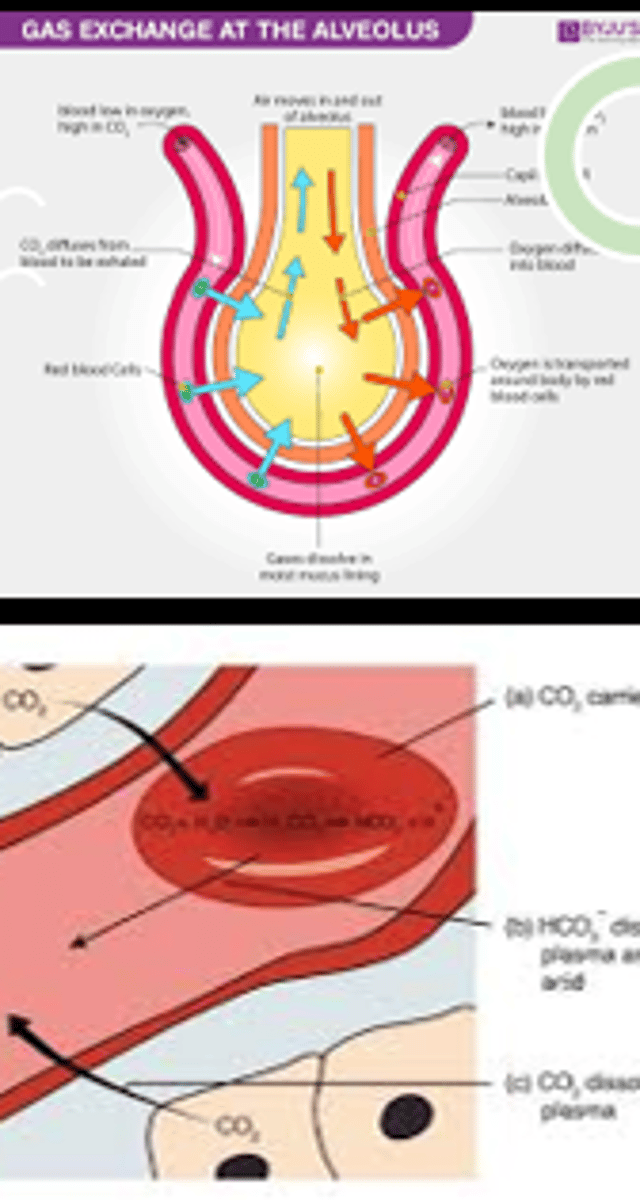
Muscles primarily responsible for inspiration
diaphragm and the external intercostal muscles
Diaphragm
dome-shaped, muscular partition that separates the thoracic cavity (chest) from the abdominal cavity (belly)
Diaphragm Muscle
The primary function of the ____ during expiration is relaxing to decrease thoracic volume
External Intercostal Muscles
A layer of muscles located between the ribs, playing a key role in respiration by elevating the ribs and expanding the chest cavity during inhalation
Carina
The bifurcation of the trachea into the left and right main bronchi

Opsonization
The process by which antibodies mark pathogens for destruction by phagocytes
Helper T-cells
Are crucial white blood cells that play a vital role in the body's immune system
Simple Diffusion
Gases move across the respiratory membrane between tissues and blood via simple diffusion, driven by concentration gradients, where oxygen moves from areas of high concentration (alveoli) to areas of low concentration (capillaries and tissues), and carbon dioxide moves in the opposite direction
Nasal Conchae
Responsible for humidifying, warming, and cleansing inhaled air before it reaches the lungs
IgE
The antibody found on mast cells and basophils that stimulates histamine and other chemicals in response to inflammation and allergens is immunoglobulin
Type I Hypersensitivity
Occurs when IgE antibodies are produced within seconds of exposure to an allergen
Asthma
Bronchoconstriction occurs due to parasympathetic stimulation
Interferons
Antimicrobial proteins released by virally infected cells to prompt neighboring cells to activate defense mechanisms to limit the spread of infection
Phrenic Nerve
The nerve that controls the diaphragm and is crucial for normal breathing
IgM
Upon primary exposure to an antigen, ____ antibody is first produced after 3-6 days
Hemoglobin
Most oxygen in the blood is transported bound to ______, a protein within red blood cells, with a small amount dissolved directly in the plasma.
Obstructive Lung Disorders
Decreased expiratory flow rates is a characteristic of____
Signs of Inflammation
redness, heat, swelling, pain
Bicarbonate Ions
The majority of carbon dioxide (CO2) is transported in the blood as bicarbonate ions (HCO3-), formed when CO2 reacts with water in red blood cells, with a smaller portion carried as carbamino compounds and dissolved in the plasma
IgG
the most common class of immunoglobulins in blood plasma that can also cross the placental barrier is _____
MHC-II proteins occur only on antigen-presenting cells (APCs) and display foreign antigens to which type of cells?
Helper T Cells
Negative Selection
a process that eliminates T cells that strongly react with self-antigens
Natural Killer (NK) Cells
the leukocytes that release perforins and granzymes to induce apoptosis in enemy cells
The Partial Pressure of Oxygen
in arterial blood is typically around 75 to 100 mmHg (millimeters of mercury) at sea level.
External Intercostal Muscles

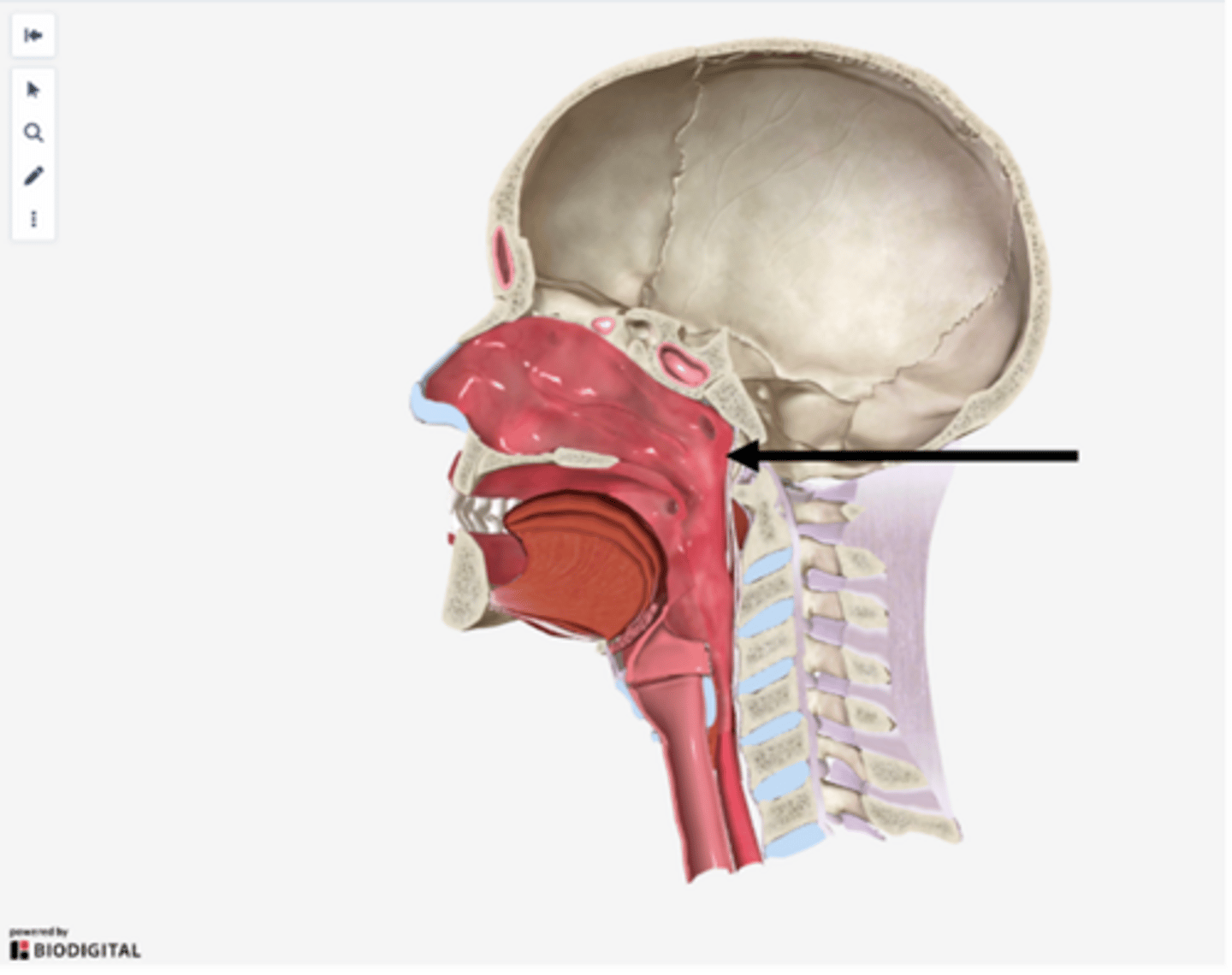
Nasopharynx
Divisions of the Left Lung
Boyle's Law
a fundamental gas law, states that for a fixed amount of gas at a constant temperature, the pressure and volume are inversely proportional, meaning that as pressure increases, volume decreases, and vice versa
Terminal Bronchioles
smallest airways that contain alveoli
The Bronchial Tree
Respiratory bronchioles divide into alveolar ducts that end in alveolar sacs

Diaphragm
The primary function of the ______ during expiration is relaxing to increase thoracic volume
Form first and second lines of defense
Components of Innate or Non-specific Immunity
Bronchioles
The diameter of the ____ primarily determines airway resistance in the respiratory system
Type I Hypersensitivity
occurs when IgE antibodies are produced within seconds of exposure to an allergen
Phrenic Nerve
The nerve that controls the diaphragm and is crucial for normal breathing is the phrenic nerve
Which of the following cells form a part of the cell-mediated immunity?
Anatomical Dead Space
term that describes the volume of air that remains in the conducting zone and does not participate in gas exchange
Central Chemoreceptors
brainstem respond to changes in pH and regulate respiration to maintain stable CO2 levels in the blood
Vital capacity (VC)
represents the total amount of air that can be inhaled and then exhaled with maximum effort
Paratope
The antigen-binding site of an antibody, also known as the _____, is formed by the variable regions (Fab) of both the heavy and light chains, specifically at the tips of the "Y" shaped antibody molecule
The Ventral Respiratory Group (VRG)
the respiratory center that is responsible for generating the basic rhythm of breathing
Variable Region
component of an antibody's structure serves as the antigen-binding site
form a part of the cell-mediated immunity
Cytotoxic T-cells