human genetics unit 1 - final
 Call Kai
 Learn
Learn Practice Test
 Spaced Repetition
 Match
Match Flashcards
 Knowt Play
1/244

There's no tags or description
Looks like no tags are added yet.
Name | Mastery | Learn | Test | Matching | Spaced | Call with Kai | Chat |
|---|
No analytics yet
Send a link to your students to track their progress
245 Terms
how many pairs of autosomes?
22
how many sex chromosomes?
2 (1 pair)
what are autosomes numbered in relation to?
size
chromosomes are composed of mixture of ____ and _____
DNA and proteins
what helps with DNA packaging
histones
each cell contains ___ (length) of DNA if stretched end to end
2 meters or 6 feet
the nucleus of a human cell is ____ in diameter
6 um
when is euchromatin loosened
during interphase
what percentage of the human genome exists as euchromatin?
92%, high gene density
what does heterchromatin contain
a lot of highly repetive sequences
what is function of heterochromatin? and how does it do it?
maintains stability by silencing repetitive DNA, repressing certain genes to retain cell identity and ensure proper organization of chromosomes during cell division
why was euchromatin the main focus when dna sequencing was first coming out?
it’s more useful, it has high gene density, it’s hard to accurately sequence the repetitive sequences in hetchromatin
what time period did HGP take place
1990-2003
what method was used in HGP
sanger sequencing
explain sanger sequencing
pcr reaction conducted with a lot of copies of DNA
dNTP’s incorporated to tag the nucleotides with their identity
ddNTP’s stop the reaction when they are used at random because it lost 3’-OH group so the base physically cannot be tagged
if have enough copies, eventually all spots will be tagged
conduct gel electrophoresis to analyze, read in bottom to top order and use fluorescently labeled tags to identify base
who and when invented sanger sequencing
frederick sanger, 1977
what two things did frederick sanger will nobel prize for
determining insulin sequence, sanger sequencing
what protein is responsible for DNA synthesis
dna polymerase
direction of dna synthesis
5’ —> 3’
what is happening in dna synthesis?
Each new nucleotide is added to the growing chain by linking the 5’ alpha phosphate of the incoming deoxyribonucleoside triphosphate to the 3’ hydroxyl group at the 3’ end of the growing chain
how do fluroescent dyes label nucleotides?
fragments share a common 5′ end sequence (defined by the primer sequence) but have variable 3′ ends due to ddNTP termination so the ddntp does it basically
capillary electrophoresis
long, thin, acrylic-fiber capillary; An electric current pushes the DNA fragments through the capillary; since the capillary is extremely small in diameter, the separation of bands is a lot faster
pitfalls of sanger sequencing
Limited throughput; sequencing one DNA fragment at a time
Max sequence fragment length is ~850 bp
Not cost effective
If sequencing lots of DNA fragments, DNA input is not a trivial amount
what were the two competing approaches when HGP
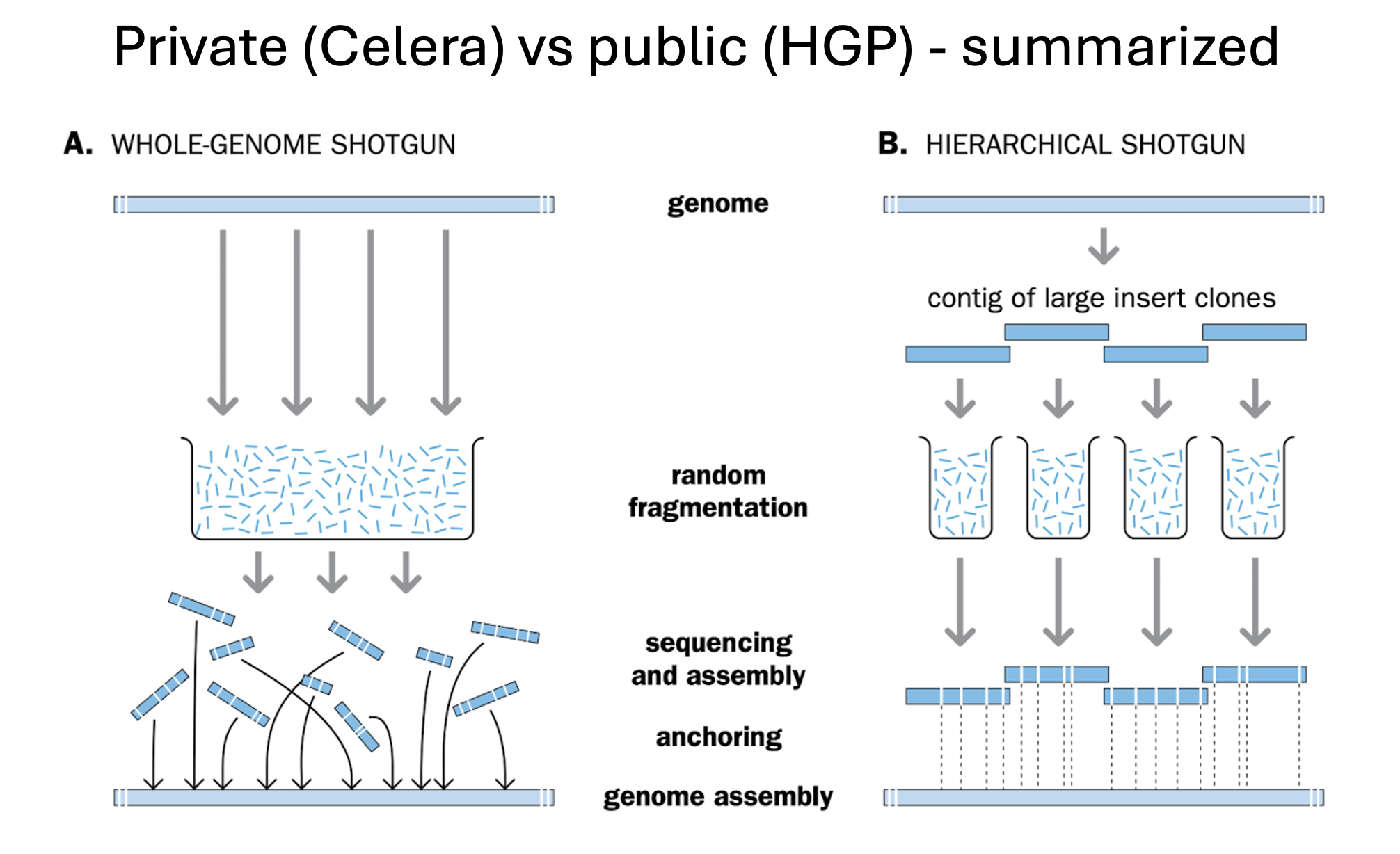
Human Genome Project (publicly funded), cloning DNA fragments and then mapping to determine sequence order vs. Private company (Celera), shotgun sequencing approach
HELP explain the HGP approach to sequencing in more detail
Bacterial and yeast artificial chromosomes
Cloning employed to generate ample DNA template for sequencing and aid with assembly
Sequenced clones were assembled based on overlapping base content
what is clone contig
set of overlapping cloned DNA segments that together provide a continuous physical map of a specific genomic region

explain the private company shotgun sequencing in detail
Large amounts of genomic DNA were fragmented
DNA fragments were sequenced and algorithmically assembled into long stretches of DNA sequence
Computation was a major issue for Celera; assembling the vast number of short DNA fragments proved to be a difficult problem, requiring Celera to build the most powerful supercomputer system in civilian use at the time
private vs public sequencing
what was the scandal with the HGP?
both were basically shit talking each other; Celera DNA source was originally reported as 20 anonymous donors'; Later revealed that the Celera genome mostly represents Craig Venter (company founder)
main benefit of HGP
Improved the practice of medicine (diagnostics, prognostics, management, treatment); made genomic medicine possible
cost of mapping human genome went from ___ to ___
100 million to 500
size of human genome
3.1 Gb
how many different DNA molecules in XX vs XY
23 and 24
how many protein-coding genes
unsure but estimated to 20,000
percentage of protein-coding genes
1-2%
number of RNA genes
uncertain, perchance 20,000
gene density of human genome
1/80kb
number of psuedo genes
15,000
percentage of genome that is repetive
50-67%
what is spliced during RNA processing?
introns
what codes for protein
exon
is promoter considered part of the gene?
no! :p
___ and __ represent the largest protein-coding genes (nucleotide content)
CNTNAP2 and DMD
mean gene size
64.9 kb
mean exon size
268 bp
how many exons per gene?
average of 9
larger genes typically have larger ___
introns
because of how much energy it takes to splice introns out, largely expressed genes typically have ___
short to no introns
around ___ protein-coding genes are associated with a disease so far
5000
something can be a longer gene but ends up translating into a shorter protein, why?
lots of introns bc gene is highly regulated
how does sequencing detect the protein-coding gene?
look for ORF with start and stop codon; often conserved evolutionarily so similar size can help us determine if it is a real gene
Gene number found to be _____ when genome sequence of other mammals was obtained (mouse and dog); gene counterparts in other mammals failed to be found
inflated
what is readthrough transcription
conjoined genes, when a smaller gene is embedded in introns of another gene
genes are often high density in which part of the chromosome?
subtelomeric spaces
if 1-2% of genome is protein-coding genes, what is the remainder?
highly repetitive DNA
satellite DNA
high copy number tandemly repeated DNA (heterochromatin)
ranges for satellite, mini and micro satellite
Satellite DNA (>100 kb), Minisatellite DNA (100 bp - 20 kb), Microsatellite DNA (<100 bp)
what is function of satellite dna
contributes to formation of crucial chromosome structure, heterochromatin establishment, genome stability, and development
what are transposon repeats
DNA that can change its position; increase genetic diversity and can also regulate gene expression; May induce human genetic disease (insertional mutagenesis)
what are the two mechanisms by which genes jump around?
retrotransposons and dna transposons
transposase
cuts the transposon part of gene and relocates it to new location (cut and paste mechanism)
explain retrotransposon
they transcribe DNA into an RNA intermediate and then retrotranscribe into DNA in a different location in DNA
what are the three types of retrotransposons
LINES: transcribe their own RNA, convert it back into DNA, and insert it elsewhere without needing help from other elements.
SINES: "hijack" the reverse transcriptase and endonuclease enzymes produced by nearby LINEs to copy and insert themselves
retrovirus-like elements: persist within the human genome as remnants of ancient retroviral infections (code reverse transcriptase and integrase)
how do dna transposon repeats work
cut and paste mechanism using transposase
what does LINEs stand for
long interspered retrotransposable elements
what does SINEs stand for
short interspersed retrotransposable elemtns
how can transposon negatively impact an individual and give an example
the dna fragment can insert itself in the middle of another gene and disrupt its transcription
ie. apc gene is a tumor suppressor and if a transposon inserts itself, it will no longer suppress cancer
when did whole genome duplication last happen
hundreds of millions of years ago but not many were conserved evolutionarily
tandem duplication
unequal crossing over of homologoous chromosomes and sister chromatids

duplicative transposition by recombination
unstable regions of euchromatin recombine with other chromosomes
rna-directed duplicative transposition
RNAs are reversed transcribed into cDNA and integrated into a new chromosomal location
types of active duplication
rna-directed duplicative transposition, duplicative transposition by recombination, tandem duplication, whole genome duplication
psuedogenes
nonfunctional segments of DNA that resemble functional genes but have been mutated into an inactive form over the course of evolution
three types of puedogenes
non-processed, processed, unitary
what is non-processed psuedogene and what percentage of genome
whole genome duplication in which one gene copy has become inactive due to mutation, 25%
what is processed psuedogene and what percentage of genome
copies of mRNAs that are reverse transcribed into cDNA and integrated into the genome; lack a promoter, and have usually accumulated mutations, 75%
unitary psuedogene
formerly functional gene is no longer required (not evolutionarily advantageous) and is inactivated by mutation (no functional counterpart in the same genome)
what is the largest gene superfamily in the human genome
olfactory receptor proteins
how can psuedogenes cause disease
Non-allelic Homologous Recombination, since the psuedogene can seem similar to regular gene, cell can get confused
why are psuedogenes hard to test diagnostically
Because the sequence of the active gene and the inactive pseudogene are nearly identical, PCR primers often accidentally bind to and amplify both at the same time.
types of small variants (<50bp)
snp, insertion, deletion, indel
types of structural variants (> 50bp)
copy number variant, inversion, translocation
On average, each child is born with ____ new sequence variants (de novo)
around 70
segmental duplication
Segmental duplications are blocks of DNA that typically share 90% sequence identity (~5% of the euchromatin; present only within higher order primates so suggests recent evolutionary origin
why is segmental duplication important in human genetics
many deletion/duplication-related disorders result from recombination between them
copy number variants are adaptive, give an example
populations that consume high-starch diets have more copies of the gene that codes for salivary amylase
how does dna fingerprinting work
Assesses repetitive regions of genomic DNA (mini/microsatellite DNA); unique signature; first conducted using souther blot but now uses pcr amplifying specific short tandem repeats across genome
how does southern blot method of dna fingerprinting work
1. Isolate DNA from blood sample
2. Digest DNA with restriction enzyme(s)
3. Separate DNA fragments using gel electrophoresis
4. Transfer DNA fragments to a nitrocellulose membrane
5. Incubate membrane with radioactively labeled DNA probes (target satellite DNA)
6. Expose to film to visualize labeled DNA fragments
how does the pcr method of dna fingerprinting work
1. Isolate DNA from blood sample
2. PCR amplify STRs of interest
3. Separate DNA fragments using gel electrophoresis
4. Stain DNA fragments (e.g. EtBr)
5. Visualize DNA fragments using UV light source
______ sequencing is still gold standard for sequencing, but newer technologies are more accurate
sanger
sanger vs next gen: gel electrophoresis
needed vs not needed
sanger vs next gen: automation of sequencing
semi automated vs fully automated
sanger vs next gen: recording of sequence during seuqnecing reaction
not possible vs possible
sanger vs next gen: dna template prep
cloned in cells and amplified by PCR vs fragments ligated and amplified by PCR
sanger vs next gen: read lengths
up to 800 nucleotides vs up to 14000 nucleotides
sanger vs next gen: number of DNA templates sequenced per reaction
one vs millions
sanger vs next gen: sequencing error rates
very low vs high for individual fragments but comparing multiple reads is low
sanger vs next gen: applications
routine small scale vs global analyses
illumina sequencing
short read sequencing (typcially 150 bp in length), millions of fragments simultaneously; sequence determined during DNA synthesis
how has illumina sequencing improved
went from 13 years for 1 genome (using Sanger) to 20000 genomes in 1 year