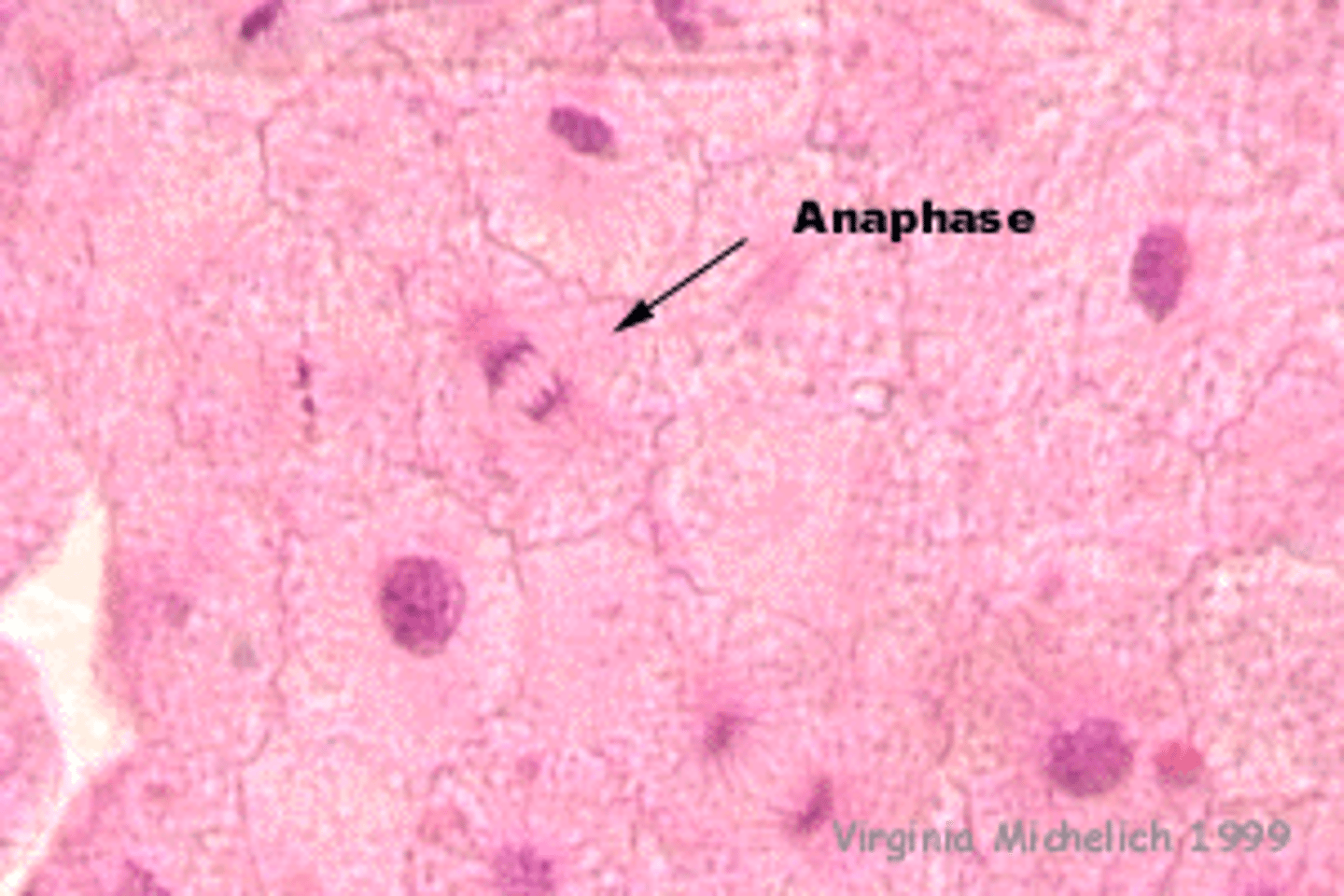
BIOL1406 Lab Final Review
 Studied by 0 people
 Call Kai
 Learn
Learn Practice Test
 Spaced Repetition
 Match
Match Flashcards
 Knowt Play
1/84

There's no tags or description
Looks like no tags are added yet.
Name | Mastery | Learn | Test | Matching | Spaced |
|---|
No study sessions yet.
85 Terms
What ion is responsible for the membrane potential formed across the inner mitochondrial membrane?
K+
H+
Na+
Ca+
H+
Citrate is found in which metabolic pathway?
photosynthesis
electron transport chain
Kreb's cycle
glycolysis
glycolysis
Visible light, the portion of the electromagnetic spectrum that is visible to humans, occupies what part of the electromagnetic spectrum?
the entire upper portion of the spectrum
a small portion in the middle
the lower half of the spectrum
the entire electromagnetic spectrum
a small portion in the middle
What energy-rich organic compound is produced by the Calvin Cycle?
carbon dioxide
NADPH
glucose
ATP
glucose
What are the three cell cycle checkpoints?
S
G2
G1
G0
M
Prophase onset
G2
G1
M
If there are 12 centromeres in a cell in prophase of mitosis, what is the diploid number of chromosomes for that organism?
6
18
12
24
12
A failure of chromosomes to separate in either Meiosis I or Meiosis II is known as:
nondisjunction
translocation
synapsis
meiosis interruptus
nondisjunction
The metabolic pathway, glycolysis involves 10 metabolic reactions or steps. How many different enzymes must be present for glycolysis to take place?
16 -- some of the steps require multiple enzymes
10 -- one for each step
6 -- some enzymes (not all) catalyze more than one reaction
2 -- one for the energy investment reactions and one for the energy yielding reactions
10 -- one for each step
Which of the following statements is true of the reaction:
C6H12O6 + 6 O2 --> 6 CO2 + 6 H2O
C6H12O6 and O2 are reactants and CO2 and H2O are products.
An atom of H12 is converted into 6H2.
More oxygen is present in the reactants than in the products.
More carbon is present in the products than in the reactants.
Water is a reactant and oxygen is a product.
C6H12O6 and O2 are reactants and CO2 and H2O are products.
During what stage of photosynthesis are ATP and NADPH converted to ADP + Pi and NADP+?
the light-independent reactions
the light dependent reactions
photolysis
electron transport
the light-independent reactions
How many carbon atoms are present in one molecule of ribulose bisphosphate?
2
1
6
4
5
3
5
During which stage of mitosis does the nucleolus disappear?
metaphase
prophase
prometaphase
anaphase
telophase
prophase
In a redox reaction,
the substance that is reduced loses energy.
the oxidizing agent donates electrons.
the substance that is oxidized loses energy.
the reducing agent is the most electronegative.
the substance that is oxidized loses energy.
When pyruvate is converted to acetyl CoA:
one turn of the Kreb's cycle is completed.
a multienzyme complex removes a carboxyl group and attaches a coenzyme.
carbon dioxide and ATP are released.
NAD+ is regenerated so glycolysis can continue.
a multienzyme complex removes a carboxyl group and attaches a coenzyme.
The electrons that are excited by sunlight are replaced by electrons from ________________ in photosystem I, and by electrons from _________________ in photosystem II.
photosystem II; water
photosystem II; photosystem I
water; carbon dioxide
water; photosystem I
photosystem II; water
The Calvin Cycle uses which products of the light-dependent reactions of photosynthesis?
ATP and NADPH
ADP and NADP+
ribulose bisphospate and carbon dioxide
water and chlorophyll
ATP and NADPH
During which stage of mitosis are the chromosomes aligned on the equator (middle line) of the cell?
anaphase
prometaphase
telophase
prophase
metaphase
metaphase
A cell is in mitosis. The centrioles are moving apart, each chromosome is composed of two chromatids and the nuclear membrane is still intact. In which stage of mitosis is this cell?
telophase
metaphase
anaphase
prophase
prophase
What happens to the 6 carbon atoms of glucose when it is completely degraded?
They are released as 2 carbon fragments.
They end up in water.
They are released as carbon dioxide, a metabolic waste product.
They are used to make ATP by oxidative phosphorylation.
They are released as carbon dioxide, a metabolic waste product.
The oxygen that is released as a byproduct during photosynthesis comes from:
ATP
glucose
water
carbon dioxide
water
How many phosphate groups are present in one molecule of ribulose bisphosphate?
1
3
4
2
2
Which of the following cell types have defined centrioles present during interphase?
a plant cell
an animal cell
a virus
a bacterial cell
an animal cell
The process of chromosome distribution between two daughter cells is known as:
cytokinesis
cell cycle
M phase
mitosis
mitosis
When citrate was added to yeast with sodium fluoride, why was there still gas production if fluoride blocks glycolytic enzymes?
Citrate is an intermediate of Kreb's cycle which can proceed in the absence of glycolysis.
Citrate tied up the fluoride ions, so glycolysis was no longer inhibited.
Citrate is a coenzyme for the glycolytic enzyme, enolase.
Magnesium was added with the citrate to tie up the fluoride ions.
Citrate is an intermediate of Kreb's cycle which can proceed in the absence of glycolysis.
Chloroplasts are found in
mesophyll cells
bundle sheath cells
vascular tissues of plants
photoautotrophic bacterial cells
mesophyll cells
Light-driven electron transport that takes place in the chloroplast pumps H+ into which space?
the space between inner and outer membranes of the chloroplast
thylakoid lumen
intermembrane space
stroma
thylakoid lumen
What is the correct sequence in the progression of the cell cycle?
G1-M-G2-S
G1-S-M-G2
S-G1-G2-M
G1-S-G2-M
G1-S-G2-M
Which of the following is part of the cell duplication machinery found in animals, but not in plants?
cell plate
centrosome
microtubular organizing center
lysosomes
centrosome
Glyceraldehyde phosphate + NAD+ --> Diphosphoglycerate + NADH + H+
Which molecule is reduced in the reaction?
NAD+
diphosphoglycerate
triose phosphate dehydrogenase
glyceraldehyde phosphate
NAD+
Which of the following statements about photosynthesis is true?
The light-dependent reactions produce the energy-rich compounds that are used to run the light-independent reactions.
Rubisco is a carboxylase enzyme that is active in photosystem II.
Photorespiration is more efficient at producing glucose than is photosynthesis.
The light-dependent reactions can occur only in the light, and the light-independent reactions can only occur in the dark.
The light-dependent reactions produce the energy-rich compounds that are used to run the light-independent reactions.
Dissolution of the nuclear envelope takes place during which phase of mitosis?
prometaphase
telophase
metaphase
anaphase
prometaphase
Define mitosis.
the process of cell division that includes both karyokinesis and cytokinesis
the process of forming two haploid cells from a diploid cell
a method of sexual reproduction
the process of division and distribution of the chromosomes of a cell into two daughter chromosomes
the process of division and distribution of the chromosomes of a cell into two daughter chromosomes
A cell divides to form two cells that are genetically identical to the parent cell.
This statement is true for mitosis and for meiosis I.
This statement is true for mitosis only.
This statement is true for meiosis II only.
this statement is true for mitosis and meiosis II.
This statement is ture for meiosis I only.
This statement is true for mitosis only.
The oxygen consumed during cellular respiration is directly involved in:
glycolysis.
accepting electrons at the end of the electron transport chain.
the oxidation of pyruvate to acetyl CoA
the phosophorylation of ADP.
the Kreb's cycle.
glycolysis.
Why are leaves green?
because they transmit green light
because they absorb green light
because they reflect green light
because they reflect green light
Human somatic cells normally have 46 chromosomes. How many chromosomes does a cell in anaphase (following splitting of centromeres and prior to cytokinesis) have?
92
46
23
96
92
How many sister chromatids would you find in the prometaphase stage of mitosis from a cell with a diploid number of 10?
20
10
15
40
20
What is the genotype of an individual who shows the recessive trait in dominant/recessive inheritance?
homozygous
heterozygous
homozygous
Cellular organelle that serves as the site for energy production in animal cells:
endoplasmic reticulum
mitochondria
nucleus
lysosome
mitochondria
The chemical bond energy of glucose is a form of:
thermal energy.
potential energy.
entropy.
kinetic energy.
potential energy.
What happens during the S phase of interphase?
DNA replication
normal growth and development
replication of the centrioles
cytokinesis
DNA replication
In which stage of Meiosis does reduction division occur (i.e. when does the cell become haploid)?
prophase I
telophase I
prophase II
anaphase I
anaphase II
telophase II
anaphase I
Substrate level phosphorylation occurs within a metabolic pathway where sufficient energy is released by a given chemical reaction to drive the synthesis of ATP from ADP and phosphate. Substrate level phosphorylation is seen in which metabolic pathway(s)?
electron transport chain
Kreb's cycle ONLY
both glycolysis and the Kreb's cycle
glycolysis ONLY
both glycolysis and the Kreb's cycle
At what point in the cell cycle are centrioles duplicated?
G2 stage of interphase
G1 stage of interphase
S phase of interphase
M phase
G2 stage of interphase
What is an organic molecule that speeds up the rate of a reaction without itself being altered by the reaction?
substrate
cofactor
coenzyme
enzyme
enzyme
Which metabolic pathway(s) are involved in the complete degradation of glucose to carbon dioxide and water? Check all that apply.
Kreb's cycle
deamination
electron transport
fermentation
glycolysis
beta oxidation
the urea cycle
Kreb's cycle
electron transport
glycolysis
Which of the following is NOT a characteristic that chloroplasts and mitochondria share?
They both have light-harvesting pigments.
They are capable of reproducing themselves.
They have a double membrane system.
They have their own DNA.
They both have light-harvesting pigments.
The overall reaction, 6 CO2 + 18 ATP + 12 NADPH + water -> 2 glyceraldehyde 3-phosophate + 6 phosphate + 18 ADP + 12 NADP+:
describes the light-dependent reactions of photosynthesis.
occurs only at night.
occurs in the thylakoid membranes.
is highly exergonic.
describes the process of carbon fixation.
describes the process of carbon fixation.
During the M phase, the division of cell cytoplasm is also known as:
karyokinesis
cytolysis
cytokinesis
mitosis
cytokinesis
In what stage of meiosis would chiasma most likely be observed?
Metaphase I
Prophase II
Anaphase I
Metaphase II
Anaphase II
Prophase I
Prophase I
Cytokinesis in plant cells involves the formation of a(n):
centrosome.
cell plate.
cleavage furrow.
central vacuole.
cell plate.
In anaerobic fermentation as seen in yeast in the absence of oxygen, what is the 2-carbon endproduct following fermentation?
NADH
acetylCoA
lactic acid
ethanol
ethanol
Anaphase is part of which stage of the cell cycle?
G1 phase
G2 phase
M phase
S phase
M phase
a haploid cell that participates in the fertilization process (check all that apply):
sperm
zygote
somatic cell
germ cell
gamete
egg
sperm
egg
Oxygen is produced as a byproduct of photosynthesis during:
Oxygen is not a byproduct of photosynthesis.
the Kreb's cycle.
the light dependent reactions.
carbon fixation.
the light dependent reactions.
Glycolysis takes place in:
mitochondria.
the cell cytoplasm.
the Golgi stacks.
the endoplasmic reticulum.
the cell cytoplasm.
The Calvin cycle begins by carboxylation of which molecule?
glyceraldehyde 3 phosphate
ribulose bisphosphate
glucose
3 phosphoglycerate
ribulose bisphosphate
At the end of the first meiotic division, each chromosome consists of:
four copies of each DNA molecule
chiasmata
two sister chromatids
a pair of homologues
two sister chromatids
Which of the following showed gas production in the heated reaction with yeast?
Glucose
Sucrose
Lactose
Galactose
Glucose-F
Glucose-Mg
Glucose-citrate-F
Glucose
Sucrose
Glucose-Mg
Glucose-citrate-F
What was the equation used to calculate gas production in the cellular respiration lab?
height in cm / time in hours
(CO2/hr)
What was the gas released and measured in the cellular respiration lab?
CO2
bubbles that formed and filled the arm of the fermentation (respiration) tube
At what temperature were the fermentation tubes incubated in for the cellular respiration lab?
37 C
What pigment and color were visible at 400 nm?
Chlorophyll a + Beta Carotene ; violet
What pigment and color were visible at 420 nm?
Chlorophyll a + Beta Carotene ; violet
What pigment and color were visible at 440 nm?
Chlorophyll a + Beta Carotene ; violet
What pigment and color were visible at 460 nm?
Chlorophyll a + Beta Carotene ; blue
What pigment and color were visible at 480 nm?
Beta Carotene ; blue
What pigment and color were visible at 500 nm?
Beta Carotene ; blue
What pigment and color were visible at 520 nm?
Phycoerythin ; green
What pigment and color were visible at 540 nm?
Phycoerythin + Phycocyanin ; green
What pigment and color were visible at 560 nm?
Phycoerythin + Phycocyanin ; green
What pigment and color were visible at 580 nm?
Phycoerythin + Phycocyanin ; yellow
What pigment and color were visible at 600 nm?
Phycocyanin ; orange
What pigment and color were visible at 620 nm?
Phycocyanin ; orange
What pigment and color were visible at 640 nm?
Chlorophyll a + chlorophyll. b + Phycocyanin ; red
What pigment and color were visible at 660 nm?
Chlorophyll a ; red
What pigment and color were visible at 680 nm?
Chlorophyll a ; red
What pigment and color were visible at 700 nm?
No pigments are absorbed ; none
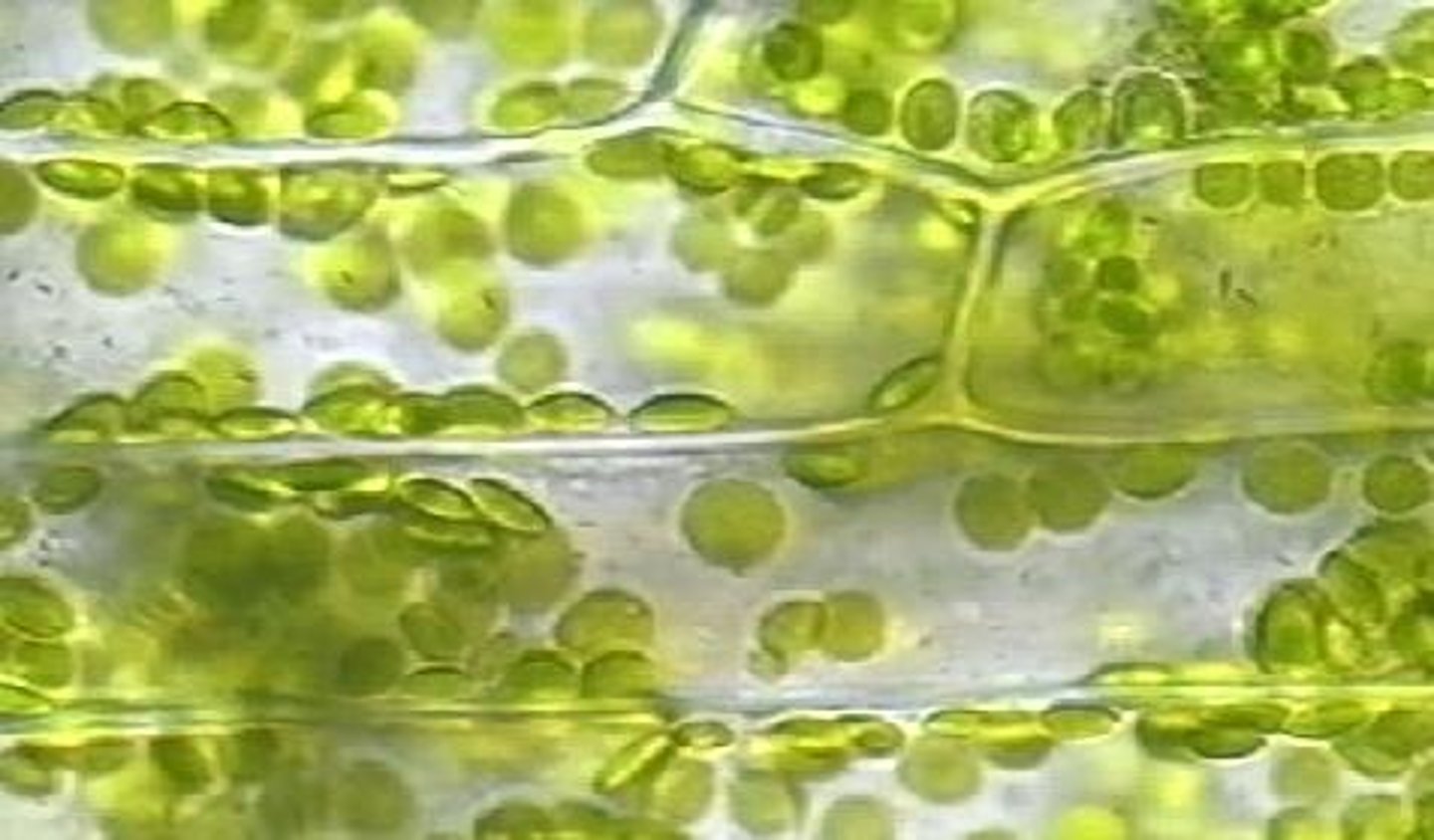
What is most likely the state of the Elodea leaf pictured and what solution would it be found in?
Hypertonic - surrounding solution has lower concentration than leaf.
clumped chloroplasts
NaCl
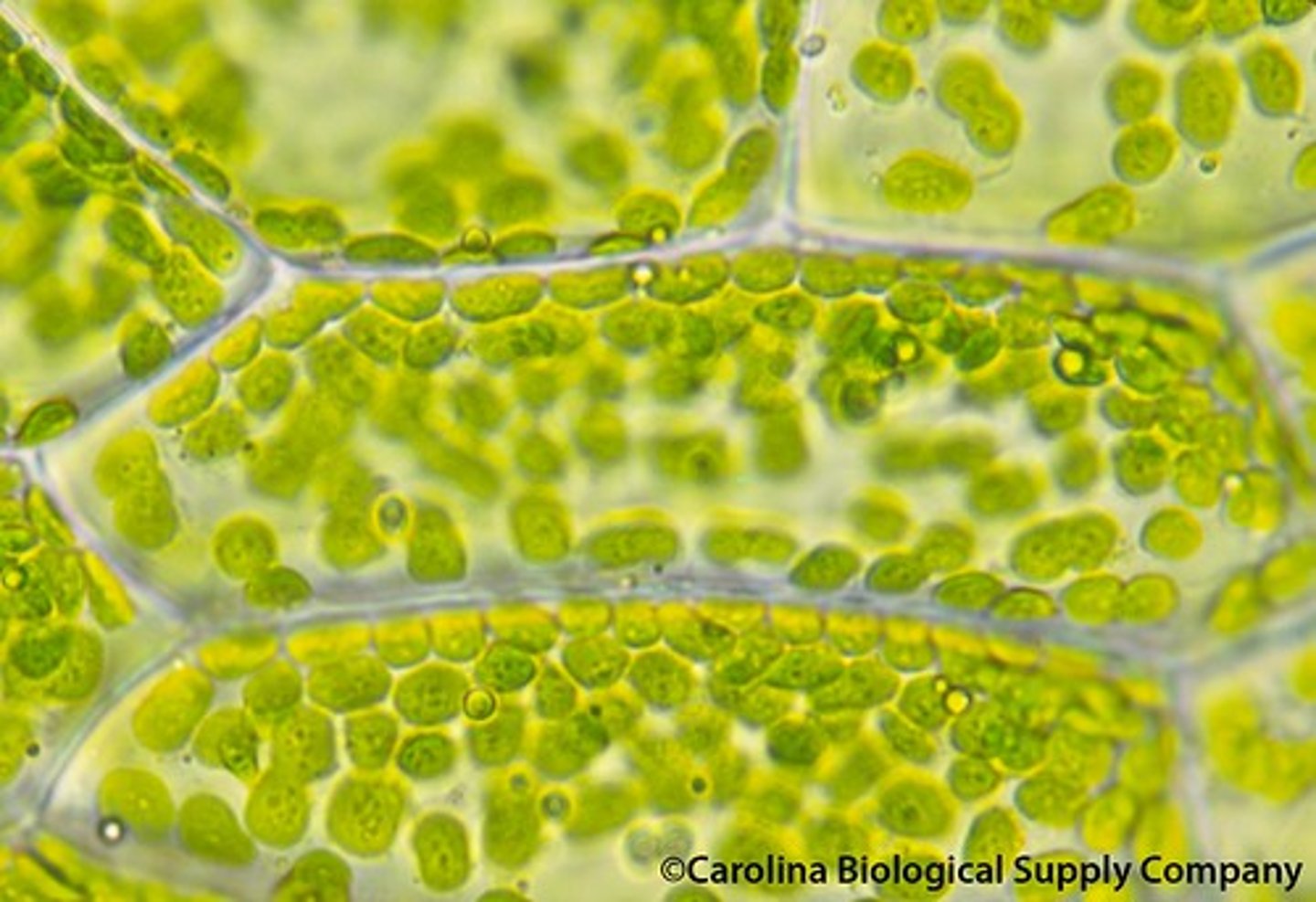
What is most likely the state of the Elodea leaf pictured and what solution would it be found in?
Hypotonic - surrounding solution has higher concentration than leaf.
dispersed chloroplasts
Distilled water
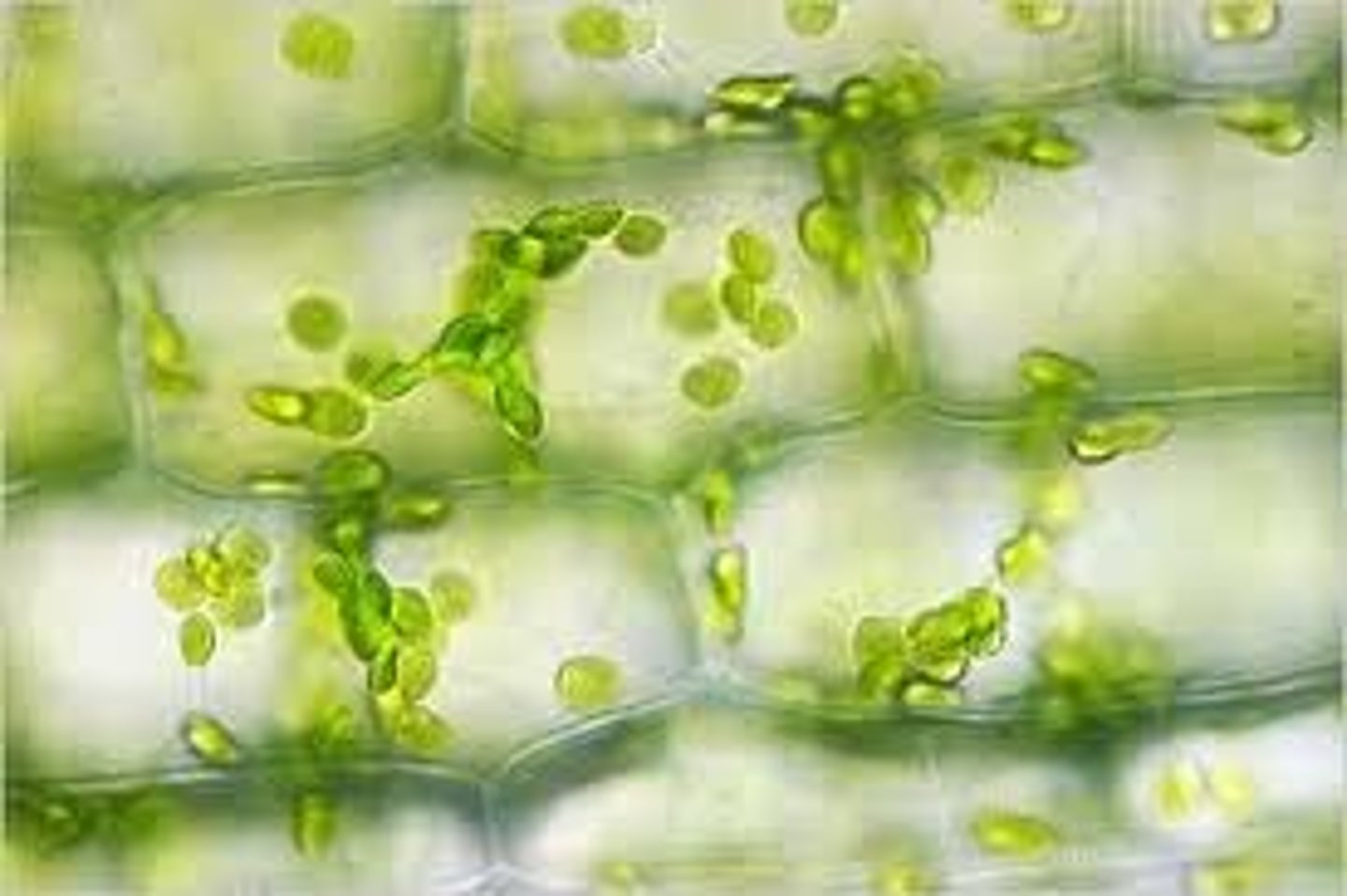
What is most likely the state of the Elodea leaf pictured and what solution would it be found in?
Isotonic - surrounding solution has the same concentration as the leaf.
Tank water
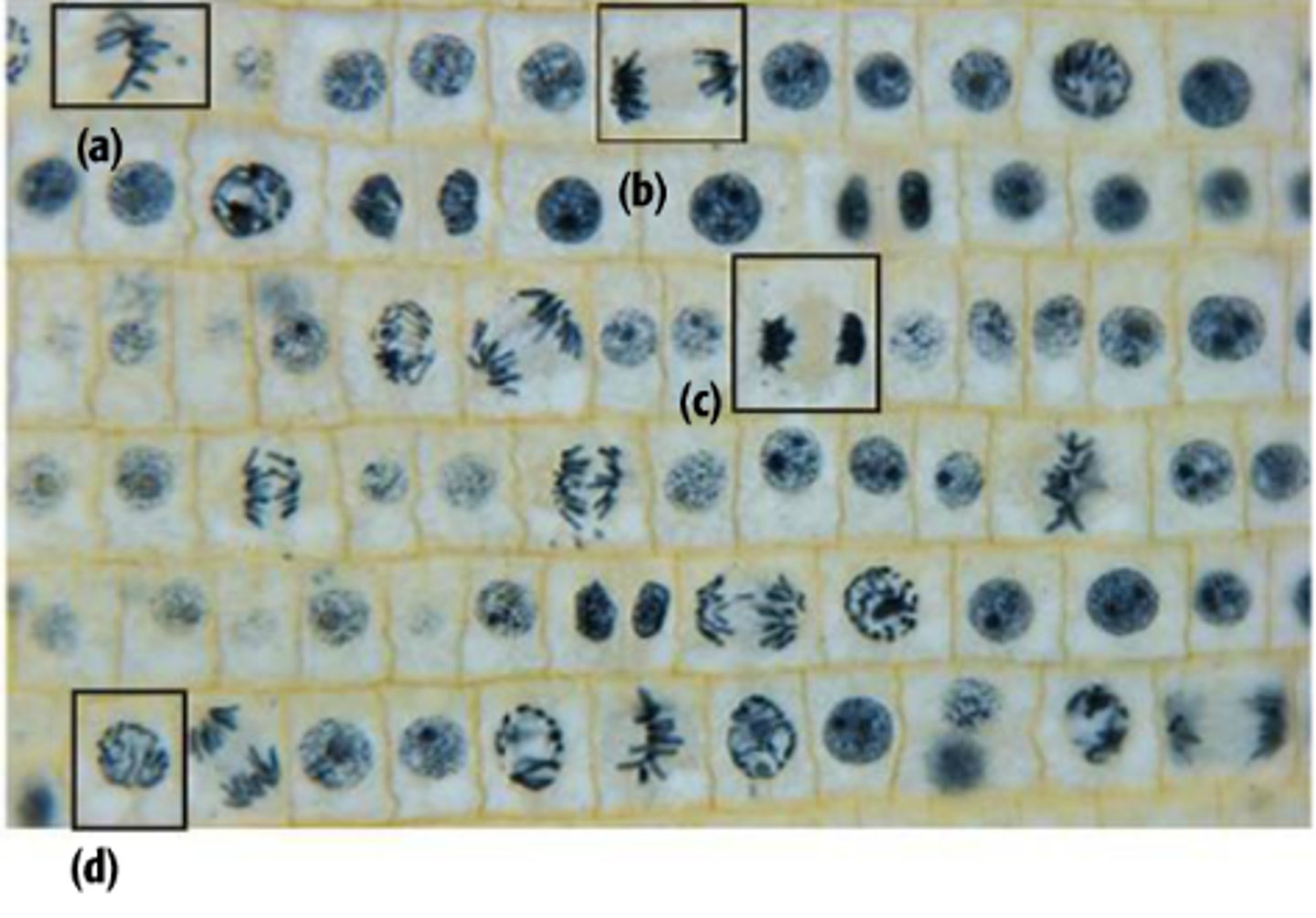
Identify the stage of mitosis in the following for the cell labeled b.
late anaphase
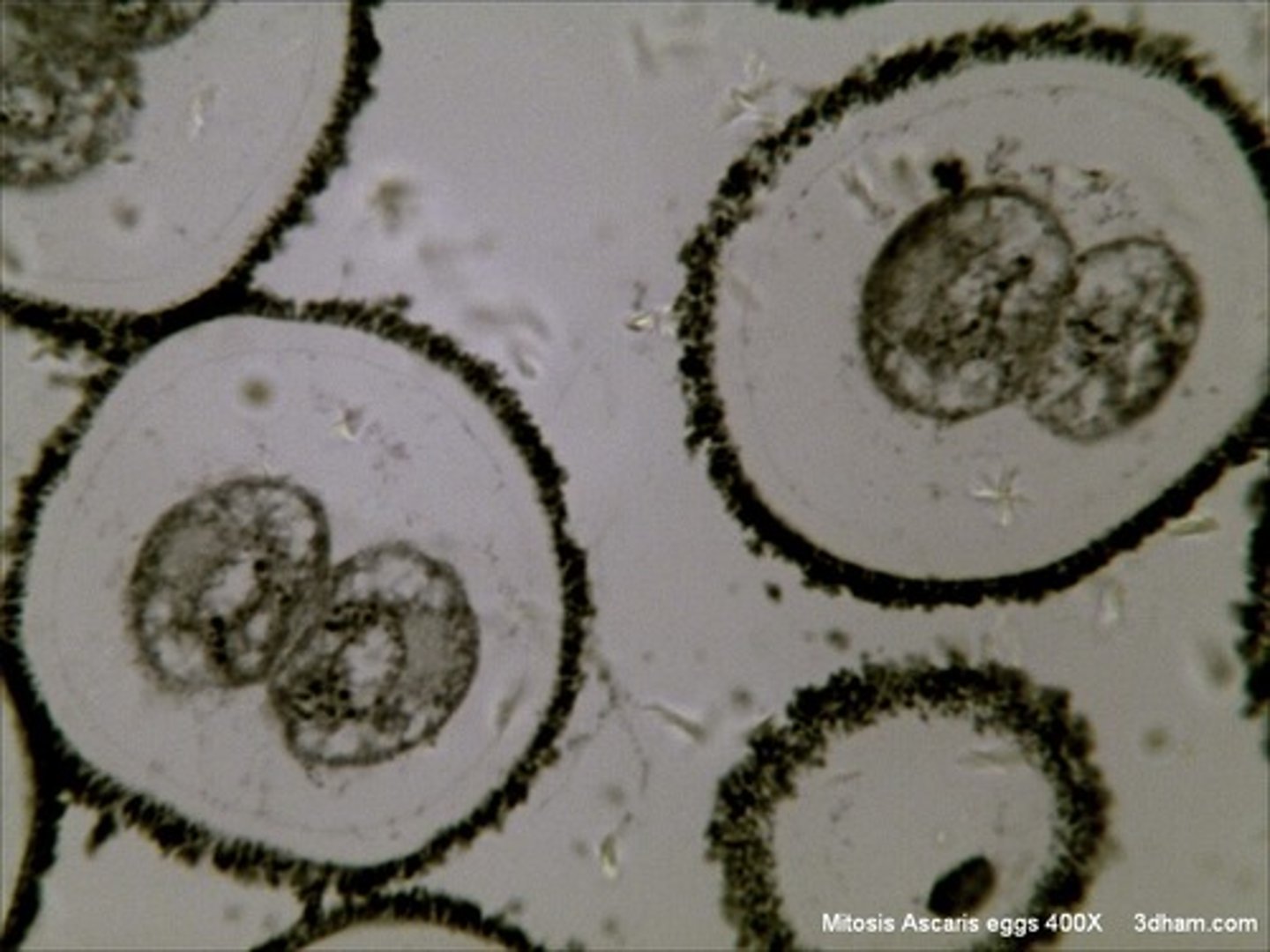
Identify the following organism.
ascaris
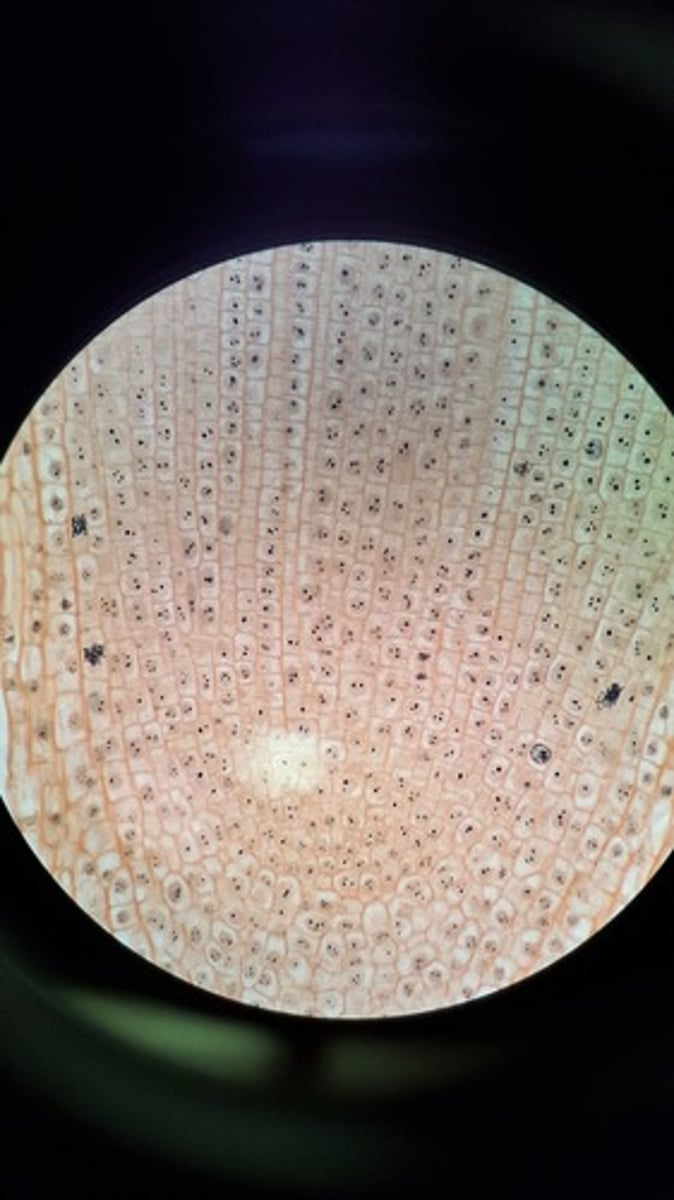
Identify the following organism.
alium root tip
Identify the following organism.
whitefish