ASCI 211 Lab Practical
 Studied by 0 people
 Call Kai
 Learn
Learn Practice Test
 Spaced Repetition
 Match
Match Flashcards
 Knowt Play
1/184

There's no tags or description
Looks like no tags are added yet.
Name | Mastery | Learn | Test | Matching | Spaced | Call with Kai |
|---|
No analytics yet
Send a link to your students to track their progress
185 Terms
A hairnet is optional if your hair is short. (1) True (2) False
(2) False
Chewing gum or eating is NOT allowed in processing areas. (1) True (2) False
(1) True
What does PPE Stand for?
Personal Protective Equipment
What does GMP stand for?
Good manufacturing practices
What does SOP stand for?
Standard Operating Procedures (SOPs)
What does SSOP stand for?
Standard Sanitation Operating Procedures
Which of the following is considered a GMP? (1) Hair and beard nets (2) Chain gloves (3) Hard hat (4) Removing jewelry (5) Apron
(1) Hair and beard nets (4) Removing jewelry (5) Apron
Which of the following is considered PPE? (1) Nitrile gloves (2) Hairnet (3) Arm guard
(3) Arm guard
Which of the following are not considered PPE? (1) Cotten Gloves (2) Hairnet (3) Frock/Lab Coat (4) Arm Guard (5) Ear Plugs (6) Helmet (7) Lock Out/Tag Out
(1) Cotton Gloves (2) Hairnet (3) Frock/Lab Coat
Wash your hands after you put on your _____ and remove your ____
Hairnet and jewelry.
When should hands be washed? (1) Before gloves (2) After touching hair (3) Both
(3) Both
Fingernail polish and fake nails are allowed if wearing gloves. (1) True (2) False
(1) True
What should you do if you have a sore? (1) Leave uncovered (2) Cover with bandage/finger cot (3) Ignore it
(2) Cover with bandage/finger cot
Which is a bacteria source and which is a physical hazard (1) Having open cuts/sores (2) having long fingernails
(1) Having open cuts/sores - bacteria sources
(2) having long fingernails - physical hazard
Which of these is NOT allowed during food prep? (1) Chewing gum (2) Wearing frock (3) Washing hands
(1) Chewing gum
Which are rooms that we have in the plant? (1) Carcass Cooler (2) Sausgae Room (3) Kill Floor (4) Blast Chiller (5) RTE (6) Processing (7) Fabrication (8) Rendering
(1) Carcass Cooler (3) Kill Floor (5) RTE - ready to eat (6) Processing (7) Fabrication
First step when dressing for lab? (1) Wash hands (2) Remove jewelry (3) Put on gloves
(2) Remove jewelry
In what order do you get ready for lab? (1) Jewelry, Hairnet, Wash, Frock, Gloves (2) Wash, Frock, Gloves, Hairnet
(1) Jewelry, Hairnet, Wash, Frock, Gloves
How do you calculate dressing percentage?
Hot carcass wight/ live weight x 100
Which species has the highest dressing percentage? (1) Cattle (2) Hogs (3) Lamb
(2) Hogs
Average dressing percent for cattle? (1) 45–50% (2) 58–67% (3) 70–80%
(2) 58–67% (heifers ~ 1% < steers)
Average dressing percent for hogs? (1) 47% (2) 67% (3) 74%
(3) 74%
Average dressing percent for lamb? (1) 45% (2) 54% (3) 64%
(2) 54%
Average market weight for pork? (1) 150 lbs (2) 282 lbs (3) 400 lbs
(2) 282 lbs
Average market weight for beef? (1) 900 lbs (2) 960 lbs (3) 1,406 lbs (4) 1,506 lbs
(3) 1,406 lbs
Average market weight for lamb? (1) 83 lbs (2) 105 lbs (3) 135 lbs (4) 183 lbs
(3) 135 lbs
What is the dressing percentage in prime steer vs dairy cow?
Prime steer ~ 65%
Dairy Cow ~ 45%
Heavily muscled pigs dress 2-3 % higher
Which factor increases dressing percent? (1) Gut fill (2) Muscling (3) Pregnancy
(2) Muscling
Transportation time limit under federal law? (1) 12 hrs (2) 28 hrs (3) 36 hrs
(2) 28 hrs
Feed is restricted before slaughter for what reason? (1) Reduce contamination (2) Increase gut fill (3) Gain weight
(1) Reduce contamination
Also improves Exsanguination
Which species are commonly stunned electrically? (1) Pigs and Poultry (2) Cattle only (3) Sheep only
(1) Pigs and Poultry
Mechanical concussion stunning is used for which species? (1) Pigs (2) Cattle (3) Broilers
(2) Cattle
Kosher slaughter is exempt from stunning. (1) True (2) False
(1) True
Which sign indicates effective stunning? (1) Rhythmic breathing (2) Limp tongue (3) Righting reflex present (4) Pupillary response
(2) Limp tongue
What percent of blood is removed during exsanguination? (1) 25% (2) 50% (3) 80%
(2) 50% (6-8% of body weight) best if done 5-10 seconds after stun
Scalding water temp for dehairing hogs? (1) 120°F (2) 140–142°F (3) 160°F
(2) 140–142°F
Which species use hide pullers for skinning? (1) Beef and Sheep (2) Pigs (3) Poultry
(1) Beef and Sheep
What organs remain after evisceration? (1) All organs (2) Kidneys only (3) Heart and lungs
(2) Kidneys only
What organs make up the pluck?
Heart and lungs
What does SRM stand for?
Specified Risk Materials
Which materials are SRMs in beef? (1) Brain and spinal cord (2) Lungs (3) Liver (4) Distal ileum (5) Tonsils
(1) Brain and spinal cord (4) Distal ileum (5) Tonsils
What happens if 2 or more groups of lymph nodes are abscesses?
Carcass is condemned
How many US BSE (bovine spongiform encephalopathy) cases have been reported? (1) 2 (2) 5 (3) 10
(2) 5
What organs does USDA inspect?
Heart, lungs, liver, kidneys, head (lymph node, glands, tongue (beef))
Which of the following methods are used to reduce carcass contamination? (1) Hot water rinse (2) Antibiotics (3) Air cooling only (4) Acid wash (5) Trimming
(1) Hot water rinse (4) Acid wash (5) Trimming
Hurdle Technology (Steps to prevent contamination)
Hidden on carcass wash
Steam vacuum
Pre-evisceration wash
Hand Trimming
Hot water application
Antimicrobial rinse
What does FMI stand for?
Fecal, milk, ingests
Does evisceration come before exsanguination?
False
Why doe we chill the carcass after harvest? (1) To make it easier to cut (2) To firm the fat for processing (3) To prevent bacterial growth (4) To improve carcass color
(2) To firm the fat for processing (3) To prevent bacterial growth
The purpose of singeing is to remove any remaining hair and surface contaminants after scalding?
True
What parts of the pigs are removed to reduce containmation?
Ears, eye lids, and hooves
What are the step of swine processing?
Stunning
Shackle
Exsanguination
Dehairing
Head Remioval
Eviseration
Spilitting
Trimming
Cooling
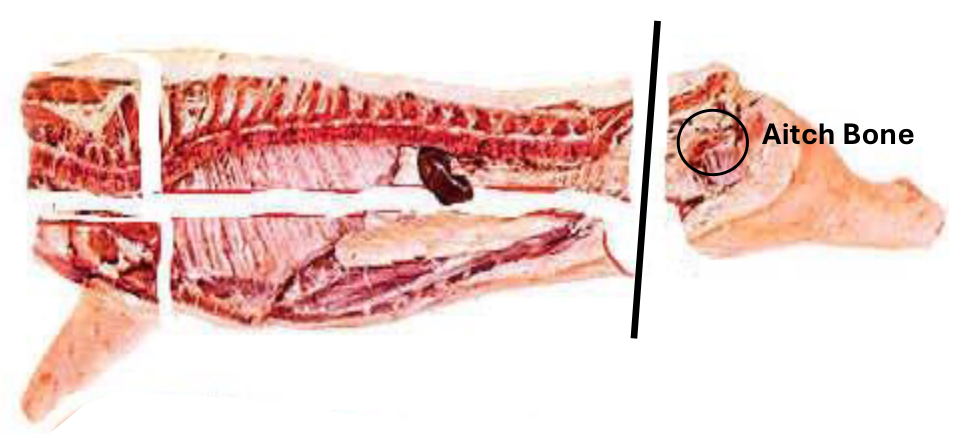
What cuts make the Boston Butt, Picnic Shoulder and leg?
Cut 3-4 rib → shoulder, cut above sternum → Boston Butt (roast or sausage trim) & Picnic Shoulder (sausage trim or chop)
Cut Aitch Bone → leg (cured ham or trim for sausage)
Scapula on shoulder end and to bottom of chop on leg end → separate loin from belly
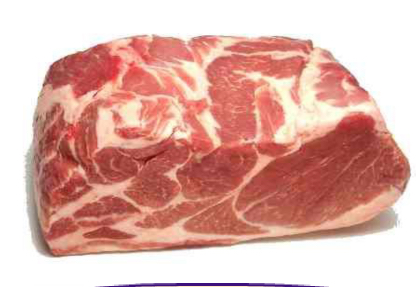
What cut of pork is this?
Boston Butt Roast
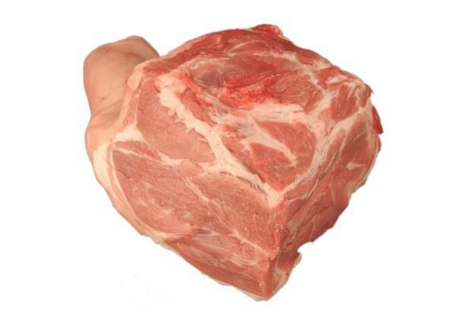
What cut of pork is this?
Picnic shoulder → shoulder chops
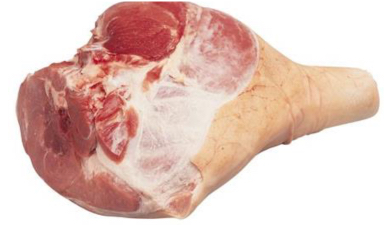
What cut of pork is this?
Leg → ham
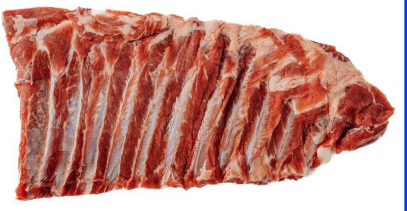
What cut of pork is this? From what primal?
Spareribs from belly
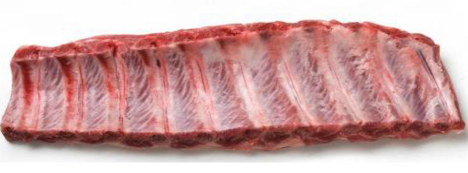
What cut of pork is this? From what primal?
Baby back ribs from loin
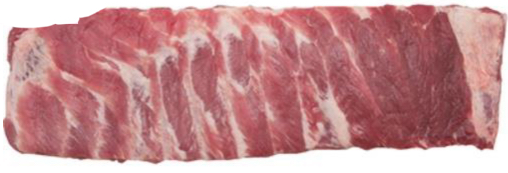
What cut of pork is this? From what primal?
St. Louis rib from belly
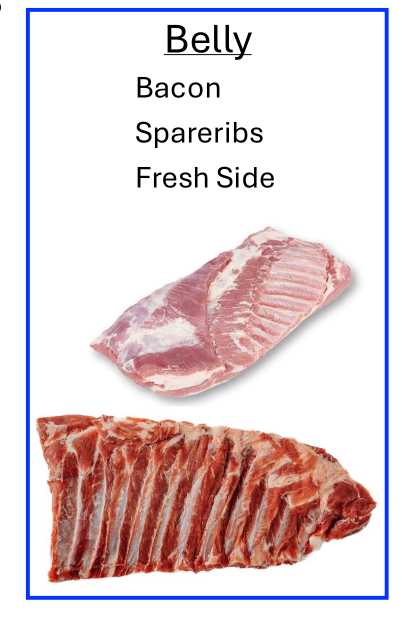
What cuts come from pig belly?
Bacon, spareribs, fresh side
What cuts come from pig loin?
Blade, rib, loin, sirloin chops, tenderloins, loin, sirloin roast, sirloin cutlets, baby back ribs and crown rib roast
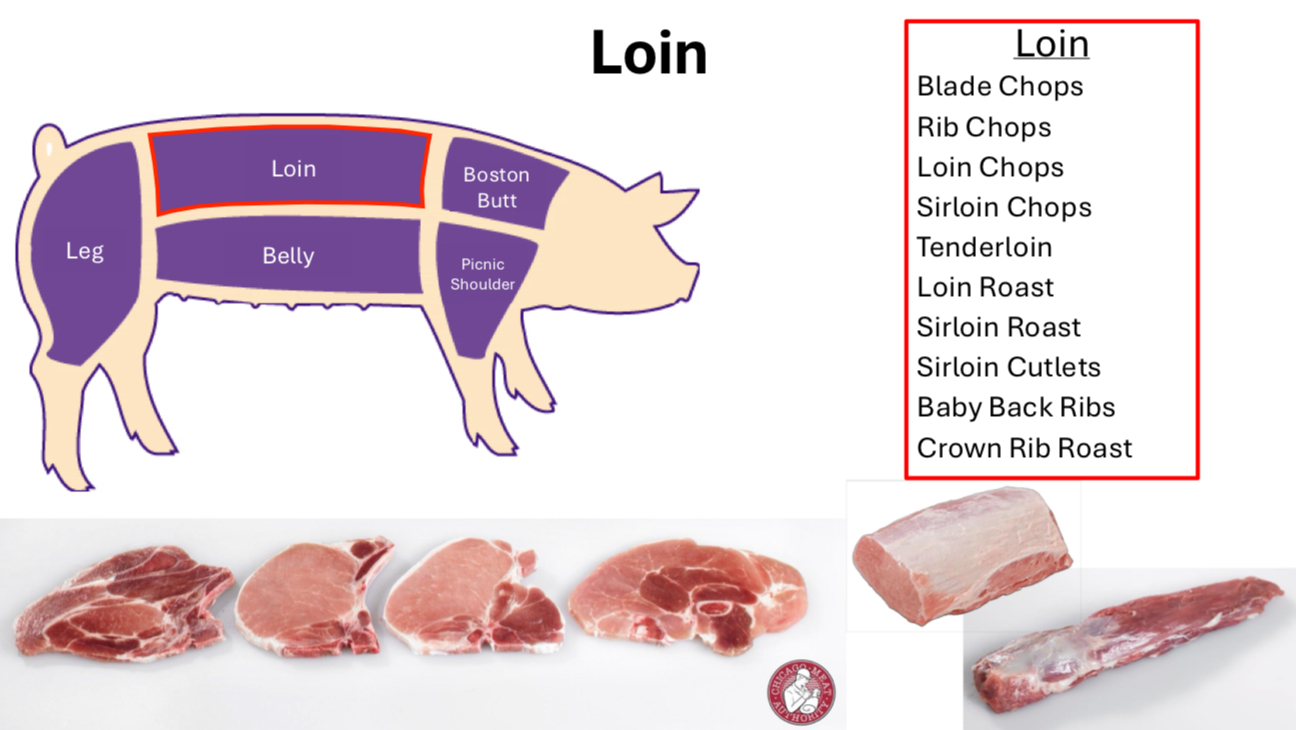
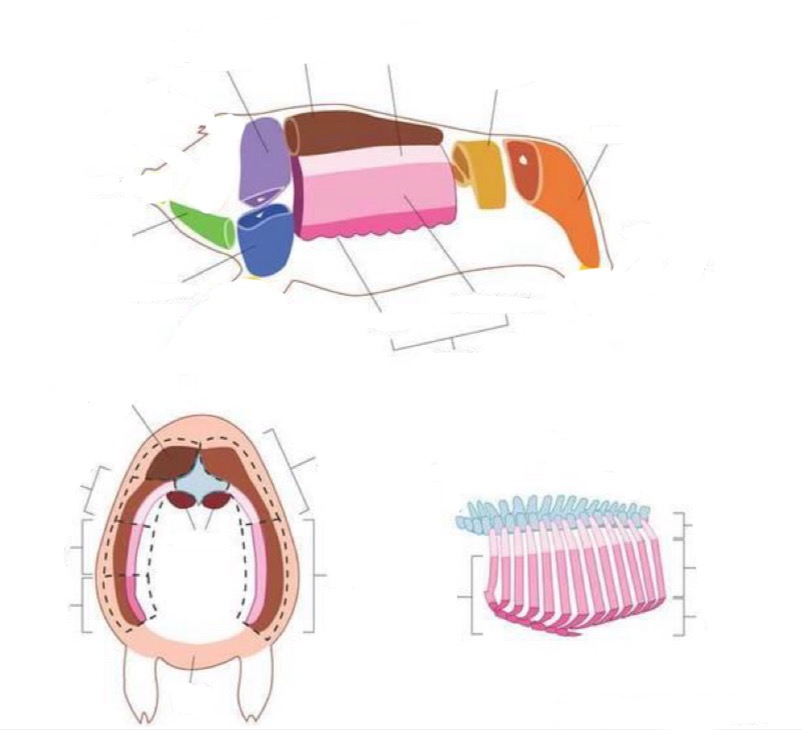
Locate the different cuts of pork
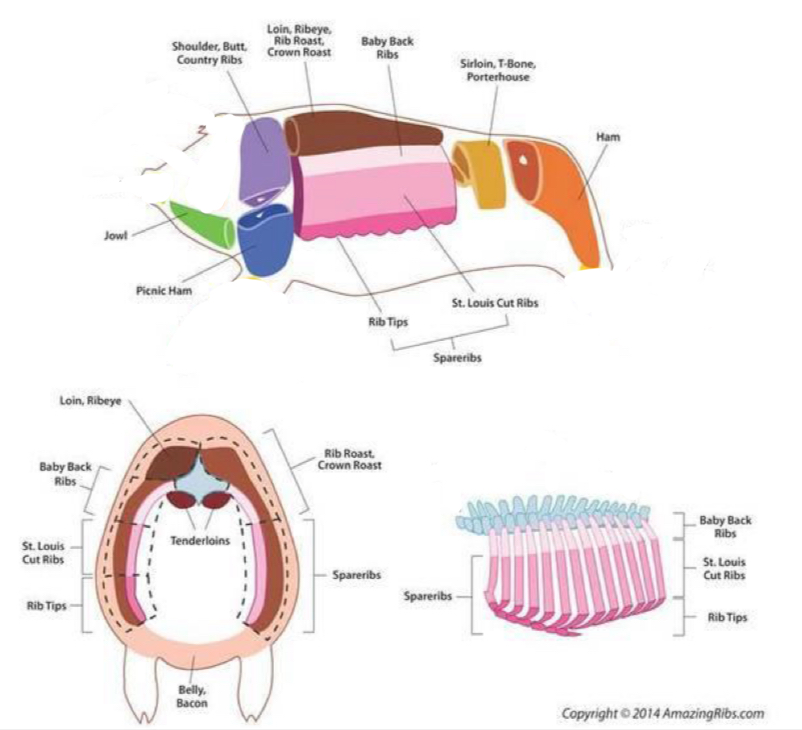
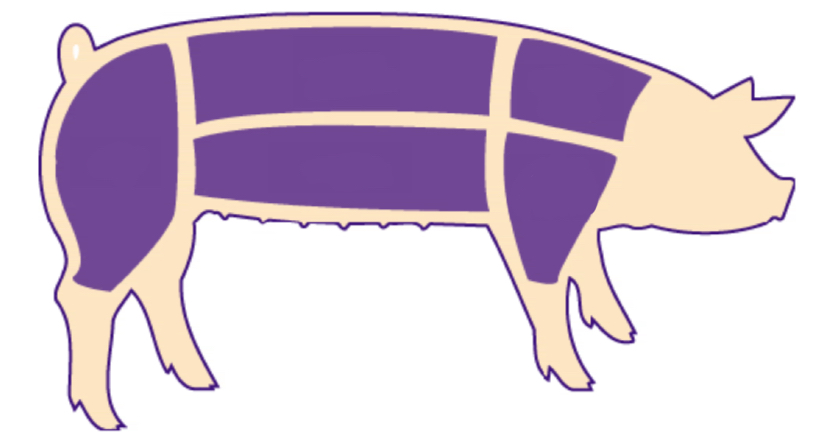
Lab the meat parts of the pig?
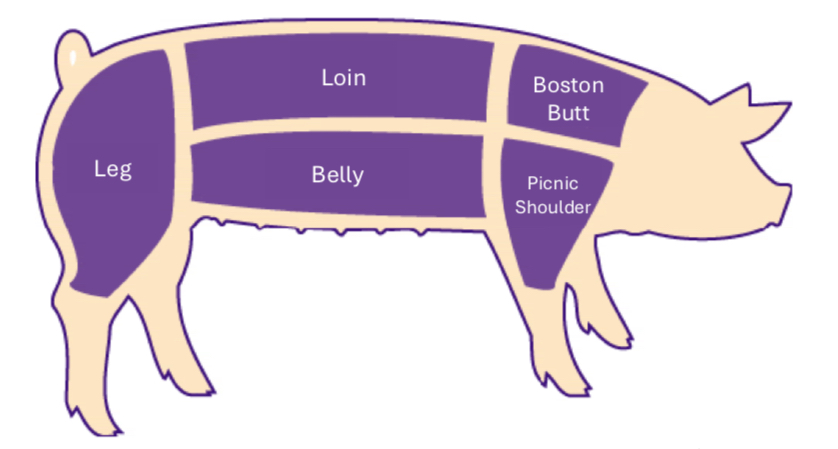
The spare ribs are removed from which primal section? (1) Shoulder (2) Belly (3) Loin (4) Ham
(2) Belly
The skin on pork is usually? (1) Only trimmed on heavy carcasses (2) Left on for all retail cuts (3) Removed prior to making retail cuts (4) Removed after smoking
(3) Removed prior to making retail cuts
Match the primal (loin, shoulder, leg, belly) to the retail cut (pork chop, roast, ham and bacon)
Loin - pork chop, Shoulder - roast, Leg - ham, Belly - bacon
The jowl is part of the shoulder area?
True
BSE is transmitted by what? (1) Air (2) Feed containing meat and bone meal (3) Water
(2) Feed containing meat and bone meal
What is the incubation period of BSE?
2-8 years
What human disease results from BSE exposure? (1) Trichinosis (2) vCJD (3) TB
(2) vCJD (Variant Creutzfeldt-Jakob Disease)
Where are SRMs removed from? (1) All livestock (2) Beef only (3) Poultry only
(2) Beef only
What is tying the weasand?
Tying esophagus and surrounding muscle so Rumania ingests doesn’t spill out when head is removed can be done with weasand rod
What is bunging? (1) Tying esophagus (2) Removing and tying rectum (3) Splitting carcass
(2) Removing and tying rectum
Which organs are checked during visceral inspection? (1) Heart, lungs, liver, kidneys (2) Brain, stomach, spleen only (3) Hooves
(1) Heart, lungs, liver, kidneys
What techniques are use to prevent contamination on beef carcass?
Trimming (FMI), Organic Acid Applictaion (lactic), Hater rinse, chilling for at least 2hrs, E. coli testing
At what temp are beef carcasses chilled post-harvest? (1) 45°F (2) 32°F (3) 50°F
(2) 32°F
What is the order of processes for a beef harvest?
Place the steps in the correct order.
Stunning, Tying the Weasand, Exsanguination, Shackle, Skinning, Head Removal, Bunging, Evisceration, Remove Feet, Ante Mortem inspection, Organic Acid Application, Carcass Chill, Final Wash, Zero Tolerance Inspection,
(1) Ante mortem inspection, (2) Stunning, (3) Shackle, (4) Exsanguination, (5) Head Removal, (6) Tying the Weasand, (7) Remove Feet, (8) Skinning, (9) Bunging, (10) Evisceration, (11) Zero Tolerance Inspection, (12) Final Wash, (13) Organic Acid Application,(14) Carcass Chill
During the harvest process, hair is considered a contaminant because there may be dirt or feces on it.
Select true or false.
True
Which factors affect dressing percentage?
Select the correct answers
Gut fill, Breed, Hide weight, Muscling
Gut fill, Breed, Hide weight, Muscling
Which of the following are considered SRMs (specified risk materials) in cattle over 30 months?
(1) Spinal cord, (2) Distal ileum, (3) Diaphragm, (4) Tonsils
(1) Spinal cord, (2) Distal ileum, (4) Tonsils
The kidney fat is left on the carcass to protect the tenderloin.
Select true or false.
True
What is the first major step after the animal is rendered unconscious during harvest?
(1) Bunging (2) Hide on wash (3) Exsanguination (4) Evisceration
(3) Exsanguination
The heart, liver, and lungs are collectively referred to as the pluck.
Select true or false.
False
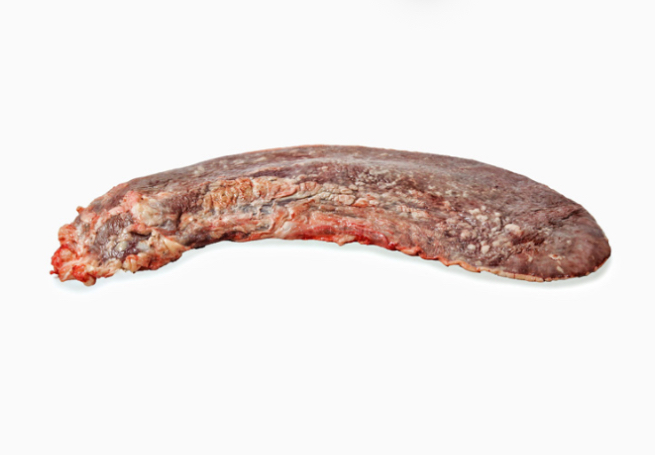
Which beef organ is this?
Spleen
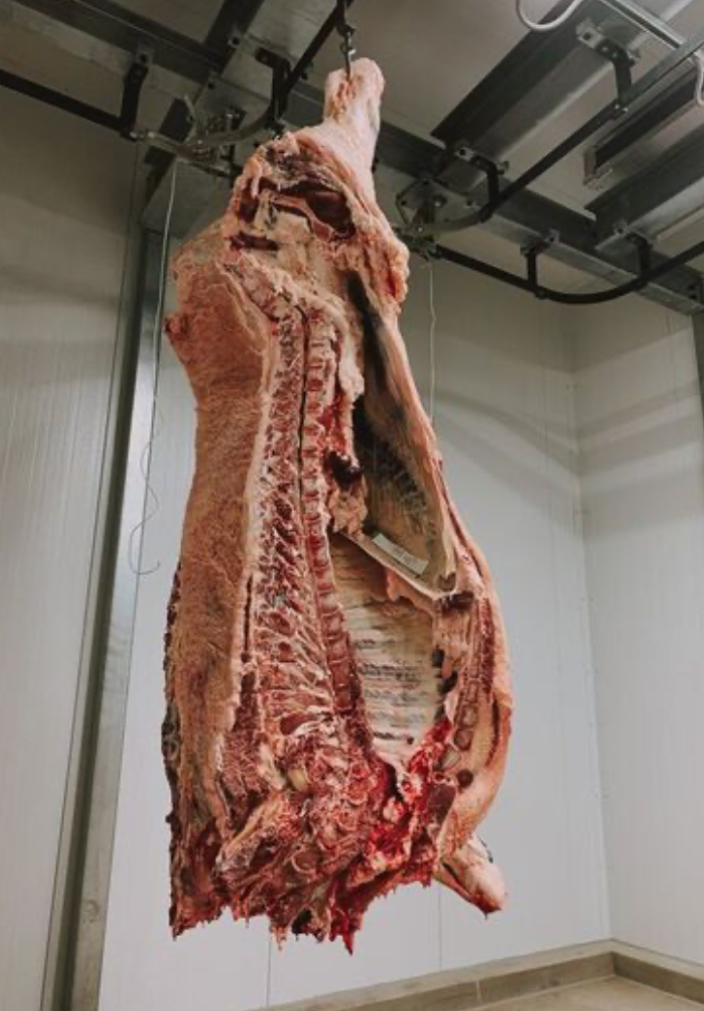
Where is the diaphragm located?
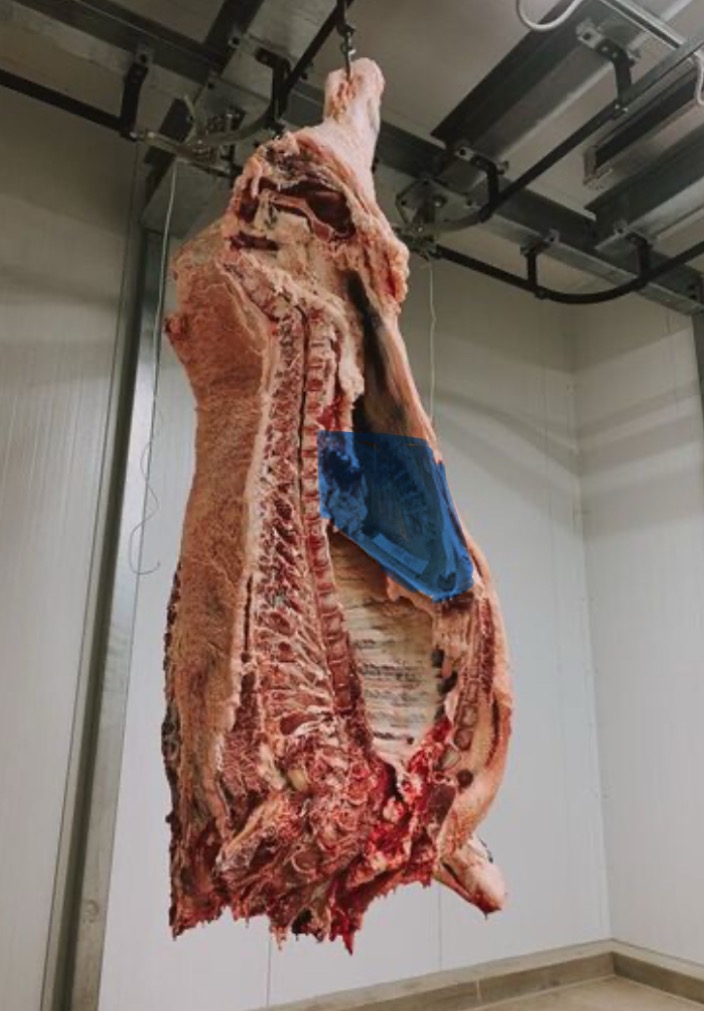
The aitch bone is removed during beef splitting.
Select true or false.
False
Which pork primal is separated first during fabrication? (1) Leg (2) Shoulder (3) Loin
(2) Shoulder
Which bone separates leg from carcass? (1) Aitch bone (2) Scapula (3) Femur
(1) Aitch bone
Which pork cut comes from the Boston Butt? (1) Ham (2) Shoulder Roast (3) Belly
(2) Shoulder Roast
Which section contains baby back ribs? (1) Loin (2) Belly (3) Leg
(1) Loin
What cut is made above the sternum? (1) Separate Butt from Picnic Shoulder (2) Split Belly (3) Remove Ham
(1) Separate Butt from Picnic Shoulder
Bacon comes from which primal? (1) Belly (2) Loin (3) Shoulder
(1) Belly
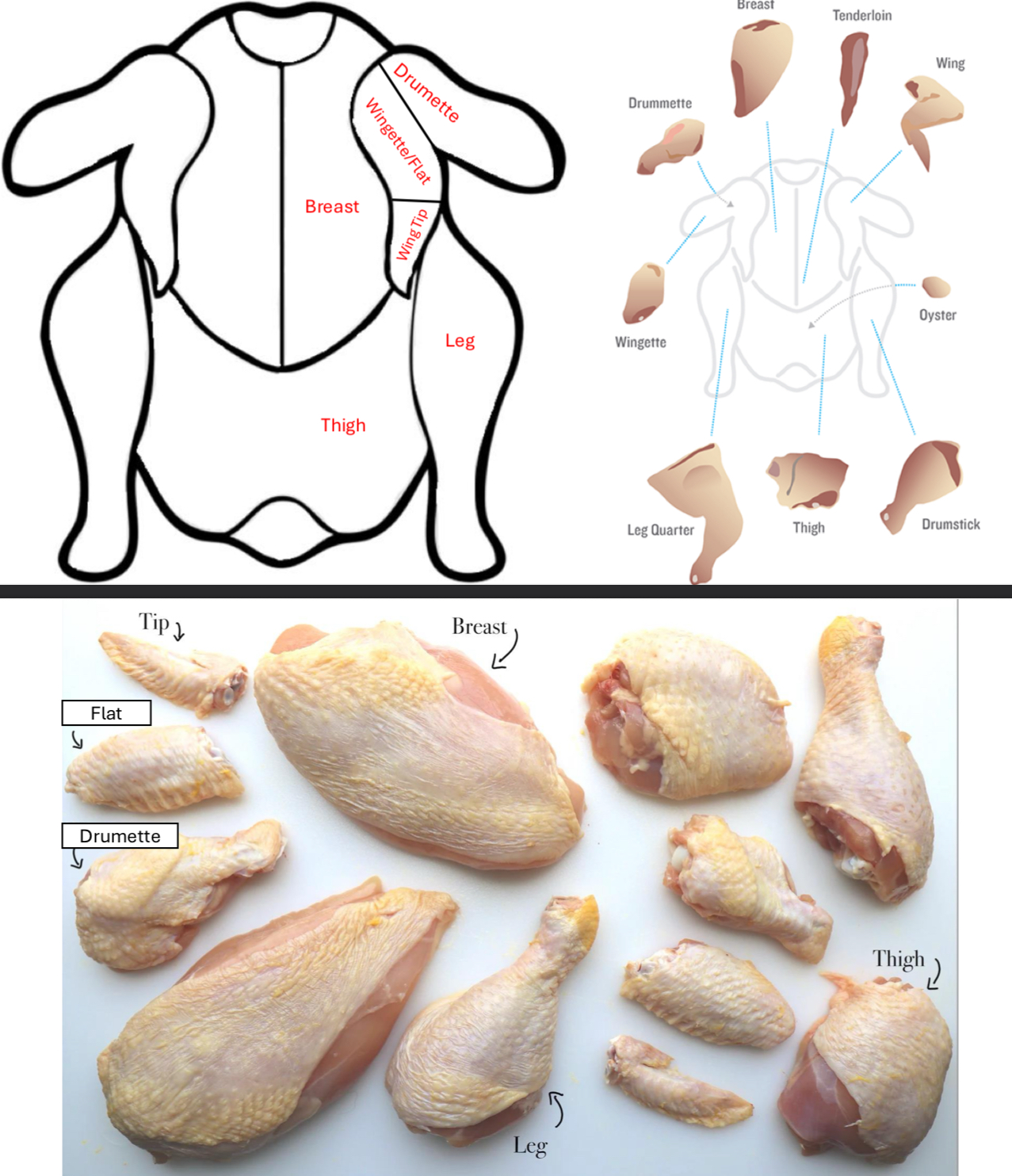
What are the main parts fabricated from a chicken? (1) Leg, Wing, Breast (2) Rib, Loin, Belly (3) Thigh, Neck, Back
(1) Leg, Wing, Breast
Which part includes the drumette and flat? (1) Wing (2) Thigh (3) Breast
(1) Wing

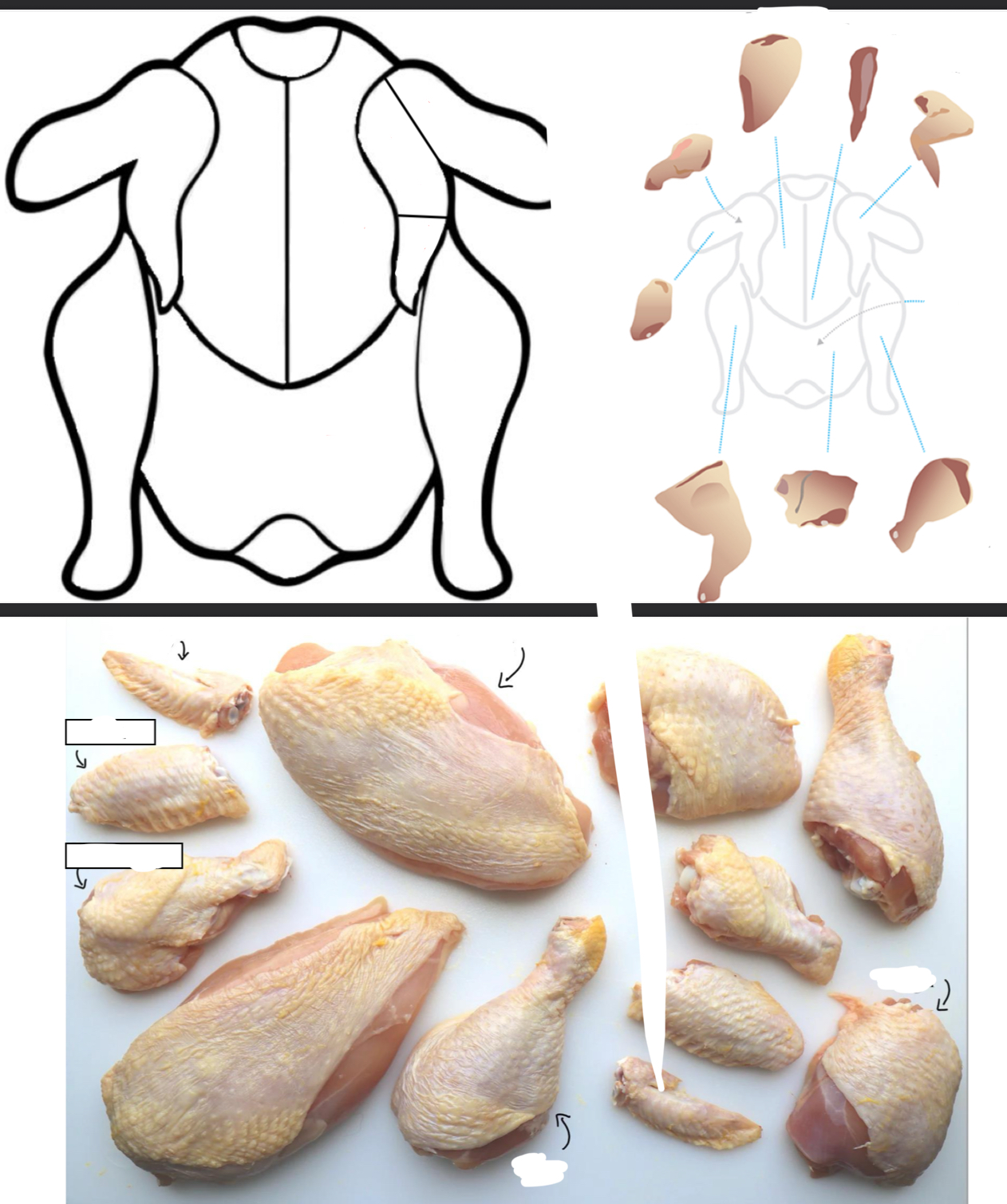
Label the meat cuts of the chicken
What separates the breast and leg in poultry fabrication? (1) Thigh joint cut (2) Aitch bone cut (3) Drumstick cut
(1) Thigh joint cut
Where should knife follow when removing breast meat? (1) Along bone (2) Through center (3) Across skin only
(1) Along bone
The oyster muscles are located on the breast portion of the carcass.
Select true or false.
False
How is the leg removed from the rest of the carcass?
Select the correct answer.
(1) Removing the thigh first and guessing where the joint is
(2) Stretch the leg out
(3) Bend the leg backwards to expose the joint
(4) Cutting straight through the bone with force
(3) Bend the leg backwards to expose the joint
Removing the skin from a chicken breast decreases its retail weight but does not change the muscle yield.
Select true or false.
True
 Note
Note  Flashcards (21)